
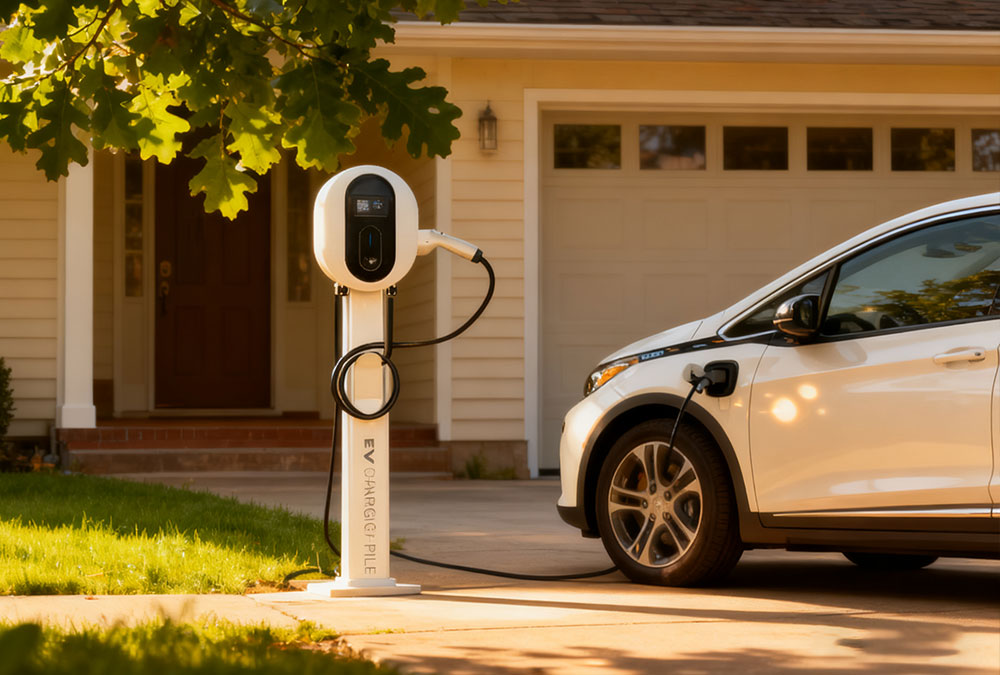
Introduction
In 2025, hybrid cars remain one of the most practical and flexible options for many drivers. While pure EV adoption is growing, hybrid cars 2025 continue to strike a balance between fuel efficiency and real-world usability. For many families, these vehicles aren’t just stopgaps; they are long-term solutions that reduce fuel costs, lower emissions, and avoid dependence on charging stations.
As Mike Tremaine, VP of Sales at ChargeSmart EV, puts it: “I still drive a plug-in hybrid. Not because I doubt the electric future, but because it gives me unmatched flexibility today.”
Market data backs this up.
Market Data Shows Real Consumer Preferences: Hybrid Sales Outpace Electric
According to the U.S. Energy Information Administration (EIA), citing Wards Intelligence 2023 Q3 new vehicle sales data, a milestone has been reached:
- Hybrid and plug-in hybrid vehicles together account for 10% of new car sales,
- Fully electric vehicles (BEVs) make up only about 8%.
This shows that mainstream U.S. consumers are choosing hybrids as their first step toward greener driving.
Looking ahead to 2024–2025, this trend is expected to strengthen. The International Energy Agency (IEA) reports in the Global EV Outlook 2024 that global plug-in hybrid (PHEV) sales grew 27% year-over-year, outpacing BEV growth of 19%.
In regions where charging infrastructure is still developing—like rural parts of the U.S. Midwest, non-urban Europe, or inland Australia—PHEVs are the preferred option. For most everyday users, fully electric still faces practical barriers, while hybrids offer a low-risk, flexible, and anxiety-free path to greener driving.
What is a Hybrid Car?
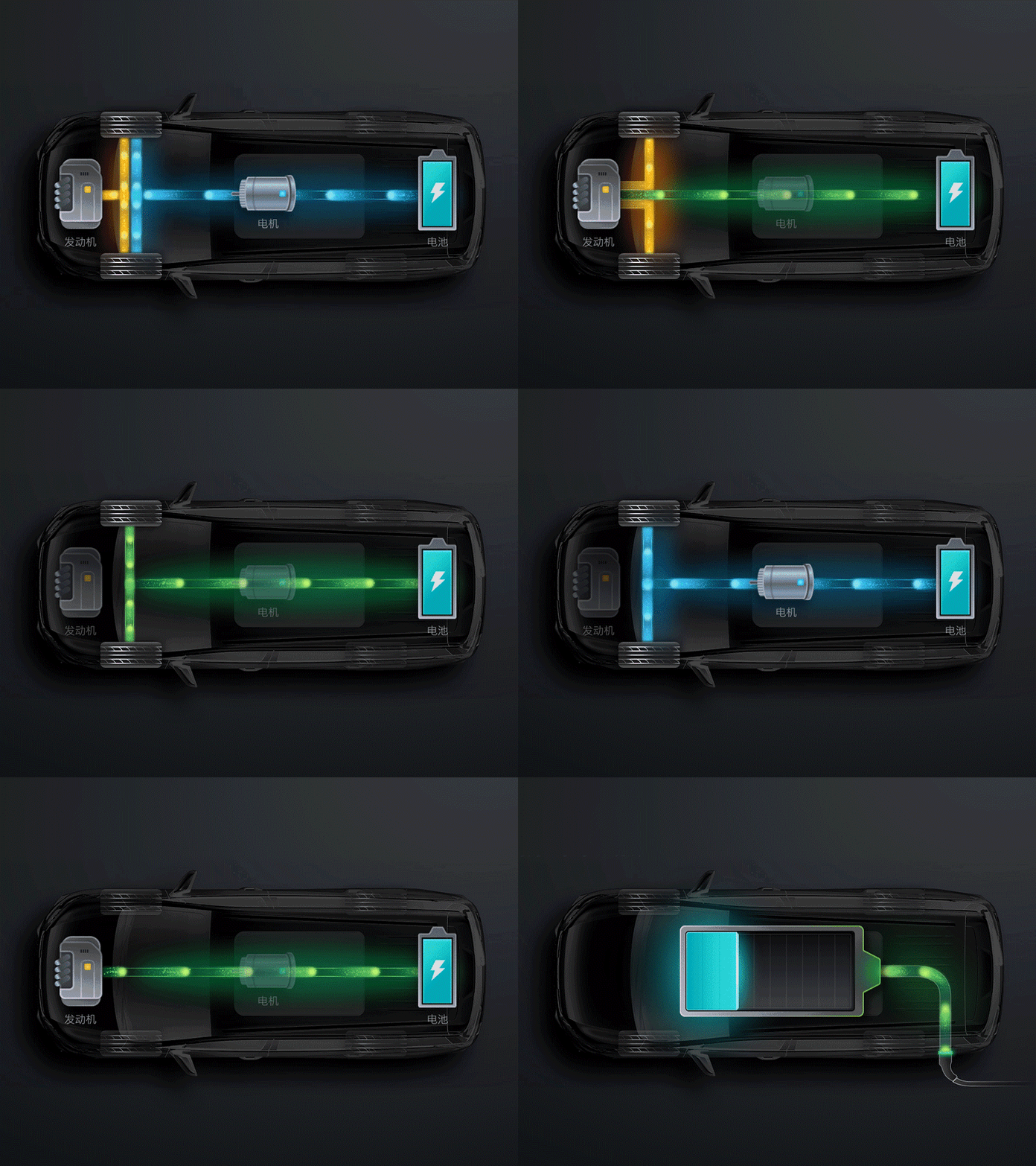
Hybrid vehicles combine a gasoline engine with an electric motor. The motor assists during acceleration and recaptures energy during braking, improving overall efficiency. Unlike plug-in hybrids, standard hybrids don’t require external charging. You fuel them like a traditional car—but you’ll visit the gas station less often.
Understanding Hybrids: How Three Technology Types Affect Your Daily Driving
The core of any hybrid is the smart coordination between the gas engine and the electric motor. This system maximizes efficiency through energy recovery and power distribution. But not all hybrids are the same. The market primarily offers three types, each with distinct driving behavior, charging needs, and fuel efficiency.
Plug-in Hybrid Electric Vehicle (PHEV): Larger battery (8–20 kWh) allows 30–50 miles of pure electric driving, enough for most city commutes. When the battery is depleted, the car automatically switches to hybrid mode using gasoline, eliminating range anxiety. To maximize efficiency, PHEVs must be charged regularly at home or via public chargers.
Full Hybrid (HEV): Traditional hybrids charge their small battery (1–2 kWh) using regenerative braking and engine surplus energy. They use electric power for low speeds or stop-and-go traffic. HEVs cannot drive long distances on electricity alone but significantly reduce fuel consumption in city driving, without changing your routine.
Mild Hybrid: Uses a 48V system to assist the engine for start/stop and high-load functions like AC. Cannot drive solely on electricity. Offers minor fuel efficiency gains, often found in entry-level models, focusing on cost optimization rather than full environmental impact.
Understanding these differences is key to deciding whether a hybrid fits your lifestyle.
Why Are Hybrids More Fuel-Efficient? The Technology Behind the Savings
Hybrids save fuel thanks to a complete energy management system. In city driving, traditional cars waste energy as heat during braking. Hybrids use regenerative braking to capture this energy and store it in the battery for the next start.
Also, electronic continuously variable transmissions (eCVT) keep the engine in its most efficient RPM range. Low speeds use electric power—quiet and emission-free. Highway cruising switches to gasoline, leveraging the engine’s efficiency at constant speeds.
This strategy typically reduces real-world fuel consumption by 20–50% compared to conventional cars (EPA data).
For example, the 2025 Toyota Camry:
- Gas-only: 28 MPG (~8.4 L/100 km)
- Hybrid: 52 MPG (~4.5 L/100 km)
Assuming 15,000 miles/year and gas at $3.50/gal, you can save $600–$1,000 annually, covering years of home EV charging costs.

The Real Advantages of Hybrids: Beyond Fuel Savings
Besides fuel economy, hybrids shine in several areas:
Low dependence on charging infrastructure: Ideal for apartment dwellers, older neighborhoods, or rural areas. HEVs require no charging; PHEVs work even if charging occasionally isn’t possible.
Reliable in cold climates: EV batteries lose 30%+ range in winter. Hybrids heat the cabin quickly using the gas engine. Perfect for Canada, Northern U.S., or Northern Europe.
Lower price barrier: Standard hybrids cost $25,000–$35,000; PHEVs start around $40,000. Far cheaper than most long-range BEVs ($50,000+), thanks to smaller battery packs.
Limitations: Hybrids Are Not Perfect
Policy incentives are limited: Only PHEVs qualify for federal EV tax credits up to $7,500; HEVs do not. State perks often favor BEVs.
Maintenance complexity: Dual systems require skilled technicians. While brands like Toyota and Honda have mature service networks, rural areas may lack qualified repair centers.
Insurance costs: Some insurers charge 5–15% more due to hybrid parts replacement costs.
Environmental impact: Hybrids still emit CO₂. They are a transition solution toward full electrification.
How to Make a Smart Choice: Key Buying Tips
When buying a hybrid, consider your real-life usage:
- Fuel efficiency rating: Check EPA city/highway MPG. Hybrids excel in stop-and-go traffic.
- Battery warranty: Most models offer 8–10 years or 150,000 miles coverage.
- Comfort & features: Cabin space, infotainment, connectivity, safety systems.
- Driving experience: Test acceleration, braking, and electric/gas transition smoothness.
New vs. Used Hybrids
New: Latest tech, full warranty, optimized performance and efficiency.
Used: Avoids early depreciation, retains fuel savings. Check maintenance records, battery health, and have a certified inspection.
Hybrid Incentives & Tax Credits
HEVs usually don’t qualify for federal EV tax credits, but some state/local incentives may apply, including utility rebates, reduced registration fees, or HOV lane access.
Conclusion: Is a Hybrid Right for You?
If you want lower fuel costs and reduced emissions without changing daily habits, a hybrid is a smart choice. Reliable and affordable, hybrids come in multiple sizes and styles—from compact commuter cars to spacious family SUVs. They combine electric driving benefits with the convenience of gasoline when needed.
Regardless of HEV, PHEV, or BEV, AnengJi is building the charging infrastructure for tomorrow. From smart home Level 2 chargers to high-power DC fast-charging networks, we ensure every driver stepping into the electric future gets a seamless, efficient, and worry-free energy experience.
FAQ
Q1: What is the difference between a PHEV and a regular hybrid?
A: PHEVs have larger batteries (8–20 kWh) and can run 30–50 miles on electricity alone, while standard HEVs rely solely on regenerative braking and the gas engine.
Q2: How much does it cost to install a home EV charger for hybrid cars?
A: Installing a Level 2 home charger typically costs $500–$1,500, depending on wiring and equipment. Federal and state incentives may reduce this cost.
Q3: Are hybrid cars worth buying in 2025?
A: Yes. They offer lower fuel costs, reduced emissions, and flexibility for users without full access to EV charging infrastructure.
Q4: How long does a hybrid battery last?
A: Most hybrid batteries last 8–10 years or 150,000 miles, often covered by the manufacturer’s warranty.
Q5: Can a hybrid car handle cold climates?
A: Yes. Unlike EVs, hybrid cars have a gasoline engine for cabin heating, maintaining efficiency even in harsh winter conditions.
Q6: Which hybrid cars qualify for federal tax credits in 2025?
A: Only plug-in hybrid vehicles (PHEVs) are eligible for federal EV tax credits, up to $7,500. Standard HEVs do not qualify.
Q7: What are the best hybrid cars for commuting or families in 2025?
A: Look for models with high fuel efficiency, reliable battery life, and comfort features. Popular choices include Toyota Prius, Toyota Camry Hybrid, Honda Accord Hybrid, and PHEV SUVs.
Q8: How often do PHEVs need charging?
A: Daily charging is recommended to maximize electric driving and fuel savings. Level 2 home chargers reduce charging time to a few hours overnight.
 https://anengjipower.com/wp-content/uploads/2026/09/AnengJipower-European-BESS-Project-Design-Environment-1.webp
675
1000
Charging Station Engineer
https://anengjipower.com/wp-content/uploads/2025/09/anengji-dc-fast-charging-station-manufacturer-and-supplier-logo-white-1.png
Charging Station Engineer2026-09-24 09:05:462026-09-24 09:08:39Battery Energy Storage System Design Guide for Europe
https://anengjipower.com/wp-content/uploads/2026/09/AnengJipower-European-BESS-Project-Design-Environment-1.webp
675
1000
Charging Station Engineer
https://anengjipower.com/wp-content/uploads/2025/09/anengji-dc-fast-charging-station-manufacturer-and-supplier-logo-white-1.png
Charging Station Engineer2026-09-24 09:05:462026-09-24 09:08:39Battery Energy Storage System Design Guide for Europe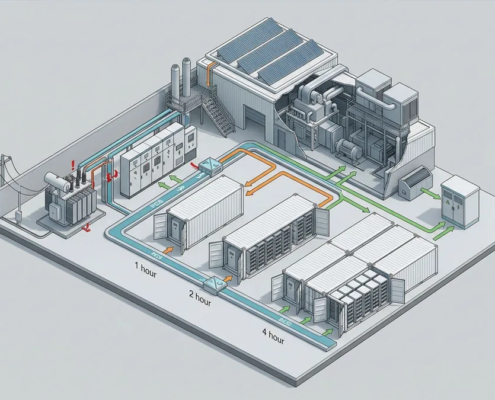 https://anengjipower.com/wp-content/uploads/2026/09/anengjipower-How-BESS-Power-and-Energy-Shape-Storage-Duration.webp
675
1000
Charging Station Engineer
https://anengjipower.com/wp-content/uploads/2025/09/anengji-dc-fast-charging-station-manufacturer-and-supplier-logo-white-1.png
Charging Station Engineer2026-09-23 09:06:532026-09-23 09:08:02BESS Duration Guide: How to Choose 1, 2 or 4 Hours
https://anengjipower.com/wp-content/uploads/2026/09/anengjipower-How-BESS-Power-and-Energy-Shape-Storage-Duration.webp
675
1000
Charging Station Engineer
https://anengjipower.com/wp-content/uploads/2025/09/anengji-dc-fast-charging-station-manufacturer-and-supplier-logo-white-1.png
Charging Station Engineer2026-09-23 09:06:532026-09-23 09:08:02BESS Duration Guide: How to Choose 1, 2 or 4 Hours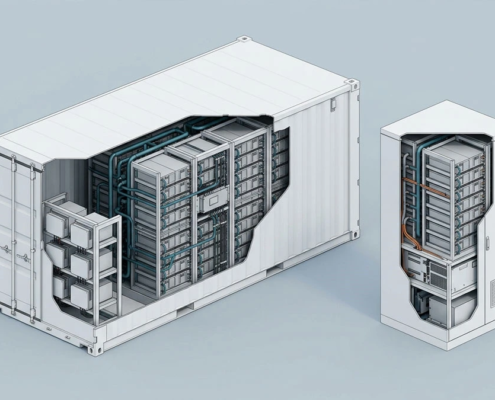 https://anengjipower.com/wp-content/uploads/2026/09/AnengJIPower-Cabinet-vs-Containerized-BESS-3D-Isometric-Structural-Cutaway.webp
675
1000
Charging Station Engineer
https://anengjipower.com/wp-content/uploads/2025/09/anengji-dc-fast-charging-station-manufacturer-and-supplier-logo-white-1.png
Charging Station Engineer2026-09-18 07:19:042026-09-18 07:19:38Cabinet vs Containerized BESS: How to Choose for Large C&I
https://anengjipower.com/wp-content/uploads/2026/09/AnengJIPower-Cabinet-vs-Containerized-BESS-3D-Isometric-Structural-Cutaway.webp
675
1000
Charging Station Engineer
https://anengjipower.com/wp-content/uploads/2025/09/anengji-dc-fast-charging-station-manufacturer-and-supplier-logo-white-1.png
Charging Station Engineer2026-09-18 07:19:042026-09-18 07:19:38Cabinet vs Containerized BESS: How to Choose for Large C&I


Leave a Reply
Want to join the discussion?Feel free to contribute!