As UK electric vehicle ownership hits 1.8 million in 2025 (28% of new car sales)*, home EV charging has become the heart of the electric driving experience. With all the buzz around “22kW 3 phase home EV chargers,” many owners wonder: Is this the ideal upgrade for daily convenience? This guide breaks down the real value of 22kW home charging using the latest policies, technical standards, and market data—covering power infrastructure, vehicle compatibility, installation costs, and real-world use cases—to help you make a smart decision.
What Is 22kW 3 Phase Home EV Charging?
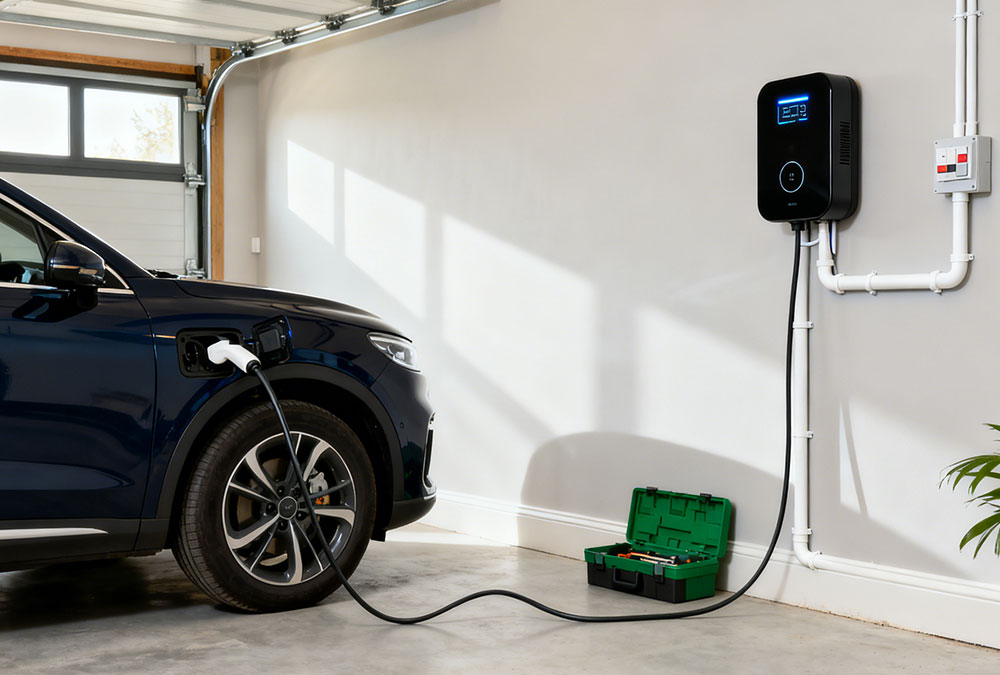
22kW 3 phase charging represents the highest AC fast charging power available for residential settings. It uses three live wires to deliver electricity, tripling the available power at the same current. In theory, a 22kW 3 phase charger for home adds 70 to 90 miles of range per hour, while a standard 7kW single-phase charger only delivers 25 to 30 miles. But it’s crucial to note: 22kW is AC charging, so energy still needs to be converted to DC via the vehicle’s onboard charger (OBC). Its actual performance is fully limited by the vehicle’s OBC power cap—unlike public DC fast charging, which bypasses this step.
This technology is efficient, but it relies heavily on synergy between infrastructure and your vehicle. If either piece doesn’t match, your investment won’t deliver the expected returns. That’s why understanding how it works is the first step in deciding if it’s right for you.
Can You Install a 22kW 3 Phase Charger at Home? 3 Non-Negotiable Requirements
To actually use 22kW charging, three hard conditions must be met: your home has a 3 phase electricity supply, your vehicle supports high-power AC charging, and you complete a compliant installation. Miss any one, and your investment will be wasted or underutilized. In the UK, most homes don’t have pre-installed 3 phase power, and mainstream EVs don’t come with high-power OBCs as standard—making 22kW a “niche choice” for home use.
Home Power Supply: 3 Phase Electricity Is Still Rare
As of 2025, over 95% of UK homes use single-phase 230V power, with main circuit breaker capacities typically 60–100A—maxing out at 7kW charging. 3 phase electricity is mostly found in industrial areas, commercial buildings, or converted factory homes. New high-end residences may have it pre-installed, but overall adoption is less than 5%. To upgrade, you’ll need to contact your Distribution Network Operator (DNO). Costs range from £2,000 to £15,000, and some areas may reject applications due to grid saturation.
To check if you already have 3 phase power: inspect your consumer unit (look for three main circuit breakers), check your electricity meter for a “3Φ” label, or consult a qualified electrician. Even if your property has a 3 phase supply, the internal wiring may not extend to your garage or parking space—requiring additional cabling work.
Vehicle Compatibility: Most EVs Can’t “Max Out” 22kW
The onboard charger (OBC) is the key to home charging speed. As of 2025, only about 12% of new EV models natively support 22kW AC charging. For example, some versions of the Renault Zoe and Smart #1 support 22kW, while all Tesla Model 3 variants top out at 11kW, and the Nissan Leaf only handles 6.6kW. This means even if you install a 22kW 3 phase charger for home, if your vehicle’s OBC only supports 11kW, the actual charging power will be capped at 11kW—wasting the charger’s full potential.
Here’s a quick overview of AC charging capabilities for popular models:
Vehicle Model
Maximum AC Charging Power
Supports 22kW?
Renault Zoe (R135+)
22kW
✅ Yes
Smart #1 Pro+
22kW
✅ Yes
Mercedes-Benz EQS
22kW (optional)
⚠️ Extra Cost Required
Tesla Model 3/Y
11kW
❌ No
Volkswagen ID.4
11kW (high spec)
❌ No
Nissan Leaf
6.6kW
❌ No
Always check your vehicle’s manual or the manufacturer’s website to confirm OBC specifications before deciding.
Installing a 22kW charger is more complex than a 7kW unit:
You must get written DNO approval (G99/G100 compliance) upfront—while 7kW only requires post-installation notification.
Installation must be done by an OZEV-certified electrician.
10–16mm² copper cabling is required (7kW only needs 6mm²).
Your consumer unit must have a dedicated 3 phase circuit, usually 32A or 63A.
These requirements extend installation time and significantly increase labor and material costs. Additionally, smart features like Wi-Fi connectivity and remote control—while not mandatory—are now standard, adding to the total budget.
Charging Efficiency Test: Time Comparison Across Power Levels
Charging speed depends not just on the charger’s power, but also on battery capacity. The table below shows theoretical full charge times for four typical battery sizes (assuming good battery health and no thermal management limits):
Battery Capacity
3.6kW (Slow Charge)
7kW (Standard Fast Charge)
11kW (3 Phase)
22kW (3 Phase)
40 kWh
≈11 hours
≈6 hours
≈4 hours
≈2 hours
60 kWh
≈17 hours
≈9 hours
≈6 hours
≈3 hours
80 kWh
≈22 hours
≈12 hours
≈8 hours
≈4 hours
100 kWh
≈28 hours
≈15 hours
≈10 hours
≈5 hours
Note: Actual times may vary slightly due to ambient temperature, battery SOC range, and the vehicle’s thermal management system.
The table shows 22kW offers significant advantages for large-battery EVs. But for users with batteries under 60kWh who charge overnight, a 7kW charger can fully recharge while they sleep—so the time savings are barely noticeable.
Cost-Benefit Analysis: Time Saved vs. Return on Investment
While a 22kW charger is three times faster than a 7kW unit, the speed advantage is often “out of sight, out of mind” for overnight chargers. For a 60kWh EV, a 7kW charger takes about 8 hours to fully charge, and a 22kW 3 phase charger takes about 2.5 hours—either way, the car is fully charged by morning. The real difference is flexibility, not daily convenience.
If your home needs a 3 phase electricity upgrade, total costs can exceed £9,000. The annual value of the “waiting time” saved is far less than this cost. Unless you need to quick-charge multiple times a day (e.g., for a fleet or ride-hailing vehicle), the economic return is extremely low. In contrast, a 7kW smart charger paired with a time-of-use tariff like Octopus Go keeps annual charging costs between £300–£400—offering much better value.
5-Year Total Cost of Ownership Comparison (Including Power Upgrade)
Item
7kW Solution
22kW Solution (With Upgrade)
Charger Hardware
£650
£950
Installation Fees
£500
£800
3 Phase Upgrade
£0
£8,000
Annual Electricity (60kWh × 200 charges)
£360
£360
5-Year Total Cost
£1,510
£9,750
This model shows the 22kW solution costs over £8,000 extra, while electricity usage and costs remain identical. Only high-frequency daytime charging can make the time value worth the cost.
Real-World Use Cases: Who Actually Needs 22kW?
22kW isn’t for everyone—it’s highly dependent on usage patterns. For single-EV households with daily commutes under 30 miles, 7kW is more than enough. But for specific user groups, 22kW delivers real convenience.
Ideal Users for 22kW 3 Phase Home EV Chargers
Consider a 22kW solution if:
Your home already has 3 phase power (no extra upgrade needed).
You own two or more EVs that support 11kW or 22kW charging.
You frequently drive long distances and can’t rely on public fast charging (e.g., living in a remote area).
You use your EV for high-mileage work like ride-hailing or local delivery.
You want to future-proof for new EV technologies over the next 3–5 years.
Even then, confirm your vehicle’s OBC specs and local DNO* policies first to avoid the frustration of “buying but not using.”
Better Alternatives: 7kW Smart Charging + Energy Synergy
For most UK EV owners, a 7kW smart charger is still the best choice. It works perfectly with existing grids, is compatible with almost all EVs, and maximizes benefits through smart features. For example, brands like Ohme, Wallbox, and Easee offer dynamic tariff response—automatically charging during off-peak hours (usually 00:30–04:30) when electricity can be as low as £0.04/kWh.
Additionally, pairing a 7kW charger with a rooftop solar system (a 5kW system generates about 4,500kWh annually) and home energy storage reduces reliance on the grid. According to Solar Energy UK’s 2025 report*(source), a solar+EV setup can cover over 70% of home charging needs—enabling truly zero-carbon driving. If you lease an EV through a salary sacrifice scheme, you can save 20%–50% on overall costs, with a benefit-in-kind tax rate of just 3% for the 2025/26 financial year—lowering the entry barrier significantly.
Future Outlook: Will 22kW Become Mainstream?
In the short term, 22kW will remain niche for home use. But three long-term trends could change this: some areas in England now require new homes to pre-install 3 phase wiring; the EU is pushing to make 22kW OBCs standard on new EVs; and the National Grid is gradually introducing “dynamic capacity management” to allow automatic load reduction during peak hours, easing local grid pressure.
Looking further ahead, as 800V high-voltage platforms become more common (e.g., Porsche Taycan, Hyundai E-GMP architecture), onboard chargers may be eliminated. Home charging could shift to small DC modules (like 11kW DC), completely reshaping the existing AC charging system. By then, “22kW 3 phase” may become a transitional technology—but it still holds specific value between 2025–2030.
Conclusion: The Best Choice Is the Right One, Not the Fastest
A 22kW 3 phase home EV charger is an advanced but highly scenario-dependent solution. It’s not “faster = better”—it’s “right = optimal.” For most UK households in 2025, a 7kW smart charger paired with time-of-use tariffs and energy management strategies is the most economical, reliable, and sustainable path.
Before investing in 22kW, ask yourself three questions: Does my home have 3 phase power? Does my EV support 22kW? Do I really need quick daytime charging? If any answer is “no,” 7kW is your smart choice. The true essence of green driving isn’t chasing extreme speed—it’s building a daily system that’s sustainable, affordable, and scalable.
https://anengjipower.com/wp-content/uploads/2026/09/AnengJipower-European-BESS-Project-Design-Environment-1.webp6751000Charging Station Engineerhttps://anengjipower.com/wp-content/uploads/2025/09/anengji-dc-fast-charging-station-manufacturer-and-supplier-logo-white-1.pngCharging Station Engineer2026-09-24 09:05:462026-09-24 09:08:39Battery Energy Storage System Design Guide for Europe
Compare 1-, 2- and 4-hour BESS duration options for European C&I sites using load data, usable energy, grid limits and lifetime value for better sizing.
https://anengjipower.com/wp-content/uploads/2026/09/anengjipower-How-BESS-Power-and-Energy-Shape-Storage-Duration.webp6751000Charging Station Engineerhttps://anengjipower.com/wp-content/uploads/2025/09/anengji-dc-fast-charging-station-manufacturer-and-supplier-logo-white-1.pngCharging Station Engineer2026-09-23 09:06:532026-09-23 09:08:02BESS Duration Guide: How to Choose 1, 2 or 4 Hours
Cabinet vs Containerized BESS comparison for large C&I energy storage. Learn footprint, safety, liquid cooling, and CAPEX differences to pick the right solution.
https://anengjipower.com/wp-content/uploads/2026/09/AnengJIPower-Cabinet-vs-Containerized-BESS-3D-Isometric-Structural-Cutaway.webp6751000Charging Station Engineerhttps://anengjipower.com/wp-content/uploads/2025/09/anengji-dc-fast-charging-station-manufacturer-and-supplier-logo-white-1.pngCharging Station Engineer2026-09-18 07:19:042026-09-18 07:19:38Cabinet vs Containerized BESS: How to Choose for Large C&I

 https://anengjipower.com/wp-content/uploads/2026/09/AnengJipower-European-BESS-Project-Design-Environment-1.webp
675
1000
Charging Station Engineer
https://anengjipower.com/wp-content/uploads/2025/09/anengji-dc-fast-charging-station-manufacturer-and-supplier-logo-white-1.png
Charging Station Engineer2026-09-24 09:05:462026-09-24 09:08:39Battery Energy Storage System Design Guide for Europe
https://anengjipower.com/wp-content/uploads/2026/09/AnengJipower-European-BESS-Project-Design-Environment-1.webp
675
1000
Charging Station Engineer
https://anengjipower.com/wp-content/uploads/2025/09/anengji-dc-fast-charging-station-manufacturer-and-supplier-logo-white-1.png
Charging Station Engineer2026-09-24 09:05:462026-09-24 09:08:39Battery Energy Storage System Design Guide for Europe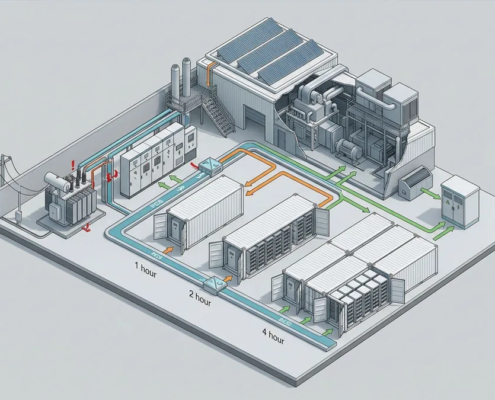 https://anengjipower.com/wp-content/uploads/2026/09/anengjipower-How-BESS-Power-and-Energy-Shape-Storage-Duration.webp
675
1000
Charging Station Engineer
https://anengjipower.com/wp-content/uploads/2025/09/anengji-dc-fast-charging-station-manufacturer-and-supplier-logo-white-1.png
Charging Station Engineer2026-09-23 09:06:532026-09-23 09:08:02BESS Duration Guide: How to Choose 1, 2 or 4 Hours
https://anengjipower.com/wp-content/uploads/2026/09/anengjipower-How-BESS-Power-and-Energy-Shape-Storage-Duration.webp
675
1000
Charging Station Engineer
https://anengjipower.com/wp-content/uploads/2025/09/anengji-dc-fast-charging-station-manufacturer-and-supplier-logo-white-1.png
Charging Station Engineer2026-09-23 09:06:532026-09-23 09:08:02BESS Duration Guide: How to Choose 1, 2 or 4 Hours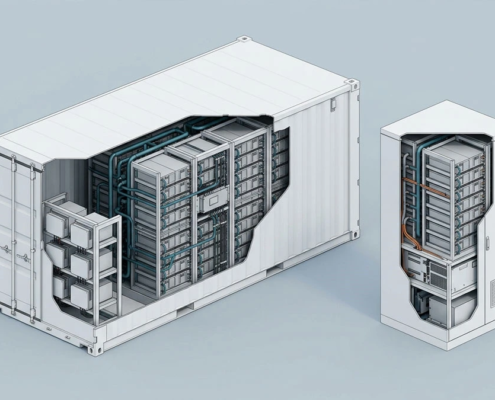 https://anengjipower.com/wp-content/uploads/2026/09/AnengJIPower-Cabinet-vs-Containerized-BESS-3D-Isometric-Structural-Cutaway.webp
675
1000
Charging Station Engineer
https://anengjipower.com/wp-content/uploads/2025/09/anengji-dc-fast-charging-station-manufacturer-and-supplier-logo-white-1.png
Charging Station Engineer2026-09-18 07:19:042026-09-18 07:19:38Cabinet vs Containerized BESS: How to Choose for Large C&I
https://anengjipower.com/wp-content/uploads/2026/09/AnengJIPower-Cabinet-vs-Containerized-BESS-3D-Isometric-Structural-Cutaway.webp
675
1000
Charging Station Engineer
https://anengjipower.com/wp-content/uploads/2025/09/anengji-dc-fast-charging-station-manufacturer-and-supplier-logo-white-1.png
Charging Station Engineer2026-09-18 07:19:042026-09-18 07:19:38Cabinet vs Containerized BESS: How to Choose for Large C&I


Leave a Reply
Want to join the discussion?Feel free to contribute!