
Introduction
By 2025, the world’s leading ev charging station companies are powering an EV fleet that has surpassed 48 million vehicles (IEA), nearly five times the size of 2020. Yet the surge in EV adoption is only half the story. What truly determines whether drivers are ready to say goodbye to the gas tank is their ability to recharge quickly and reliably whenever they need it. According to the International Energy Agency, for every additional one million EVs, about 150,000 to 200,000 public charging points must be added. In this context, charging infrastructure is no longer a supporting role—it has become the invisible engine powering global electrification.
The global EV charging market is expanding at a remarkable pace. Statista reports that the market for EV charging infrastructure has reached $52 billion in 2025, and is projected to exceed $200 billion by 2030. In this multi-trillion-dollar race, a number of companies stand out due to their technology leadership, network scale, or integration capabilities.
This report examines the Top 10 EV charging station companies in 2025—including Western leaders, innovative challengers, and the rising power of China. Among them, AnengJi Power, a leading Chinese EV charging station manufacturer, enters the list with its full-stack R&D and global deployment capabilities.
Types of EV Charging Stations: Understanding Slow Charging, Fast Charging, and Future Standards
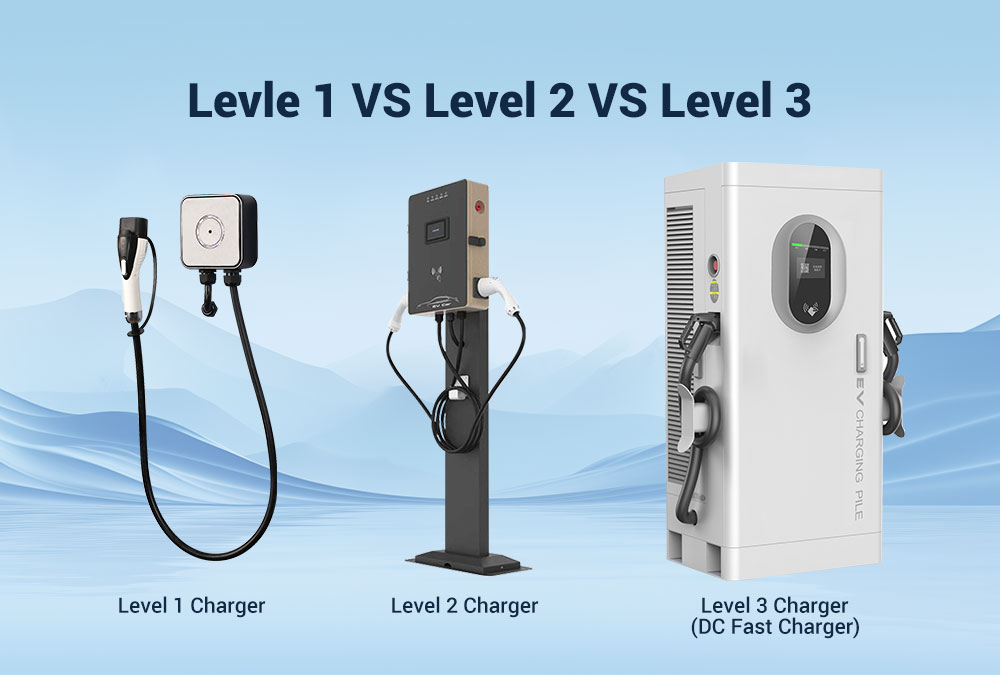
Before analyzing each company’s strengths, it’s essential to understand the basics of EV charging technology:
Level 1 Charging: Uses a 120V household outlet with a power range of 1.4–1.9 kW. Suitable for overnight home charging; rarely used in public settings.
Level 2 Charging: Uses 240V AC with a power range of 3.3–19.2 kW. Widely deployed in malls, offices, and residential buildings. It remains the backbone of today’s public and shared charging network.
DC Fast Charging: Provides 50–350 kW+ power, enabling 20–30 minute charging to 80%. Designed for long-distance travel, though installation costs are significantly higher and stations are almost always paid use.
With the rapid development of CCS, NACS (Tesla’s North American Charging Standard), and ChaoJi, connector standardization has become a new battleground for EV charging infrastructure companies worldwide.
Top 10 EV Charging Station Companies (2025)
1. Tesla
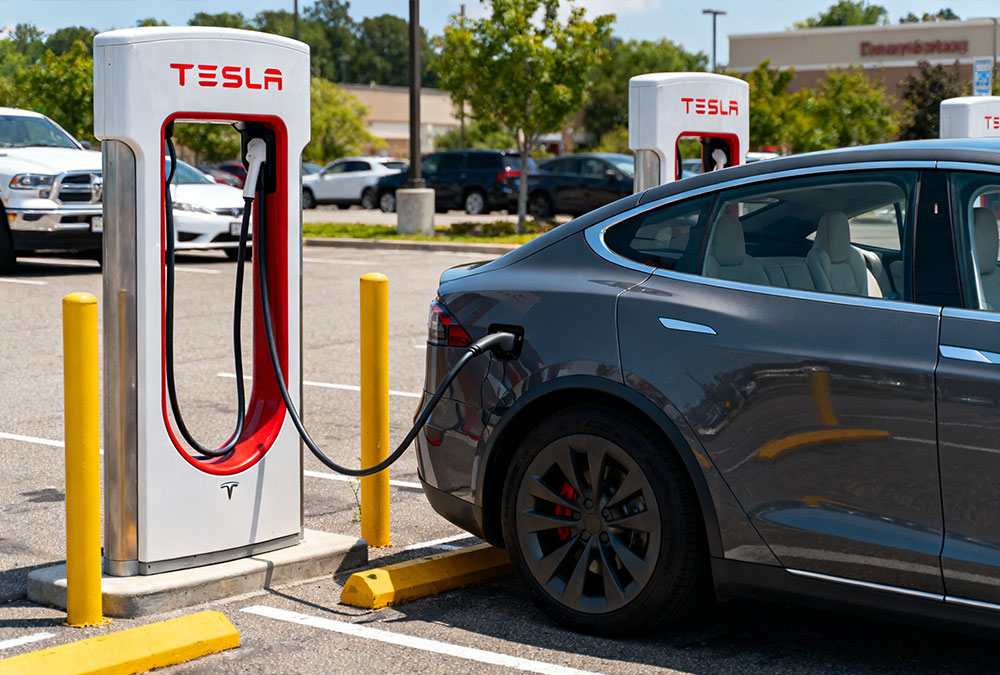
As an industry disruptor, Tesla began building its proprietary Supercharger network as early as 2012. By 2025, the global Tesla Supercharger network has exceeded 50,000 chargers, covering major highway systems across North America, Europe, and the Asia-Pacific region.
Since 2023, Tesla has gradually opened its NACS connector to non-Tesla models and signed agreements with Ford, GM, Rivian, and others—making NACS the de facto charging standard in North America.
Tesla not only leads in hardware, but also in charging speed. Its V3 and V4 Superchargers deliver peak power up to 350 kW, combined with liquid-cooled cables that support “5 minutes of charging for 100 miles.” Its energy ecosystem also integrates solar roofs and the Powerwall home storage system, forming a unified vehicle-home-grid platform.
2. ChargePoint
Founded in 2007, ChargePoint is one of the earliest independent companies dedicated to charging network operations. As of 2025, its platform connects more than 225,000 charging points across 14 countries, serving private drivers and large fleet operators.
ChargePoint’s core strength lies in its cloud-based software platform, which supports remote monitoring, dynamic pricing, load management, and smart charging software capable of V2G interaction. Since its SPAC listing in 2021, ChargePoint has expanded aggressively into Europe and now provides custom charging solutions for commercial clients like Disney and Walmart, blending retail experiences with EV charging.
3. Shell Recharge
Energy giant Shell has rapidly transformed itself into a comprehensive energy service provider. Its charging division, Shell Recharge, has become Europe’s largest public charging network, integrating more than 700,000 charging points across 33 countries by 2025. Shell leverages its 40,000-station fuel network by adding fast chargers at fuel stations, lowering user adoption barriers.
Shell Recharge focuses on 350 kW ultra fast charging, supported by a unified mobile app for locating chargers, navigation, and payment. The company partners with IONITY and Allego to build high-power charging corridors across Europe and has pledged to use 100% renewable electricity for all charging services.
4. Electrify America
Electrify America (EA) was created following Volkswagen’s Dieselgate settlement, committing $2 billion toward zero-emission infrastructure. By 2025, EA operates more than 900 stations and nearly 4,000 DC fast charging ports across 46 U.S. states and Canada, making it North America’s largest open fast-charging network.
EA is known for its 150–350 kW high-power charging, liquid-cooled cables, and plug-and-charge authentication. It is also piloting premium “charging lounges” in locations such as San Francisco, featuring coffee bars, WiFi, and children’s play areas. Siemens invested $450 million in EA in 2022, strengthening its technology foundation.
5. BP Pulse
BP Pulse, the charging division of British Petroleum, continues to grow as a key energy-transition player. By 2025, BP Pulse operates 8,000+ fast chargers in the UK and Germany and plans to deploy 100,000 global chargers by 2030.
BP Pulse focuses on transport hubs and highways and partners with ride-hailing platforms like Uber and Lyft to serve high-mileage drivers.
BP also offers BP Pulse Home, a smart home charger that supports solar-first charging and grid-responsive features, connecting at-home and public charging ecosystems.
6. EVgo
As the first U.S. company dedicated to DC fast charging to go public, EVgo differentiates itself with 100% renewable electricity across its network. By 2025, EVgo operates over 1,000 stations in 40 states and maintains a strong partnership with GM—providing charging benefits for Ultium platform EV owners.
EVgo’s modular, prefabricated station design reduces installation time by 60%, cutting deployment costs significantly. In 2024, EVgo launched EVgo Plus, a subscription plan offering unlimited charging for a flat monthly fee, attracting many urban commuters.
7. Allego
The Netherlands-based Allego is known for its robust integration capabilities across Europe. By acquiring operators in France and Germany, Allego now manages 35,000+ charging points in 16 countries—all powered by renewable energy.Allego’s plug-and-charge compatibility eliminates the need for apps or QR codes by enabling automatic authentication.
In 2025, Allego partners with Shell and Mercedes-Benz to deploy heavy-duty truck charging stations along key logistics corridors, expanding into the commercial EV segment.
8. Blink Charging
Blink Charging has grown rapidly with its “asset-light + fast expansion” strategy. By 2025, Blink operates more than 90,000 chargers across 25 countries, with 70% being Level 2 chargers placed in communities, hotels, and commercial buildings.
Blink’s self-developed IQ 200 smart charger supports remote diagnostics, OTA updates, and multilingual interfaces—ideal for emerging markets. Blink has also established assembly lines in Brazil and Mexico to meet LATAM electrification needs.
9. InstaVolt
The UK-based InstaVolt has gained a strong reputation with its “minimalist fast charging” philosophy. InstaVolt chargers feature no screens, require no registration, and allow direct credit-card payment—enabling drivers to start charging in 30 seconds. By 2025, InstaVolt has deployed 2,000+ chargers (150–160 kW) in the UK and expanded through a partnership with McDonald’s to install chargers alongside drive-through lanes.
International expansion is accelerating, with InstaVolt building the largest charging hub in Iceland and planning entry into Spain and Portugal by 2026.
10. AnengJi Power
As the only Chinese company on the list, AnengJi Power is breaking Western dominance with its full-stack R&D and global delivery model. Its product portfolio includes AC chargers, DC fast chargers, cluster charging systems, and 480 kW liquid-cooled ultra-fast chargers, achieving “1 second = 1 km of range.”
AnengJi Power exports chargers to 100+ countries across Europe, the U.S., Southeast Asia, and the Middle East, serving commercial complexes, bus depots, government fleets, and private EV owners.
Its 40,000 m² smart factory is equipped with advanced German Trumpf laser equipment, Yawei bending centers, and a full testing line—ensuring compliance with CE, TUV, CB, and CCC certifications.
In 2024, AnengJi built China’s largest DC fast charging station in the southwest region, setting a benchmark for the industry.
Innovative Technologies in EV Charging Stations
Faster Charging Speeds
Ultra-fast charging: Next-generation solutions aim to match the refueling experience of gasoline, minimizing wait times.
DC fast charging: Compared with AC charging, DC fast charging dramatically reduces wait time and is key to highway travel.
Bidirectional Charging
Vehicle-to-Grid (V2G): Allows EVs to send stored energy back to the grid, improving grid resilience.
Vehicle-to-Load (V2L): Enables EVs to power appliances or tools, making them portable energy sources for emergencies or outdoor activities.
Renewable Energy Integration
Solar charging: Allows EVs to be powered by solar panels, supporting sustainable charging practices.
Off-grid charging: Battery-powered and mobile charging stations provide service in areas with limited or no grid access.
Conclusion
By 2025, global public charging points exceed 4.8 million (IEA), yet distribution remains uneven—China holds 58%, Europe 22%, and North America just 15%.
This imbalance means enormous growth opportunities ahead, alongside intensifying competition.
The companies on this list lead not only because of powerful hardware, but because they build complete ecosystems—hardware + software + energy + services.
Chinese companies like AnengJi Power are progressing from “exporting chargers” to becoming true global EV charging solutions providers that shape industry standards.
As Elon Musk stated, “The charging experience defines the ceiling of the EV industry.”
In the race that will reshape energy, transportation, and climate policy, EV charging companies are the real players behind the scenes.
 https://anengjipower.com/wp-content/uploads/2026/09/anengjipower-How-BESS-Power-and-Energy-Shape-Storage-Duration.webp
675
1000
Charging Station Engineer
https://anengjipower.com/wp-content/uploads/2025/09/anengji-dc-fast-charging-station-manufacturer-and-supplier-logo-white-1.png
Charging Station Engineer2026-09-23 09:06:532026-09-23 09:08:02BESS Duration Guide: How to Choose 1, 2 or 4 Hours
https://anengjipower.com/wp-content/uploads/2026/09/anengjipower-How-BESS-Power-and-Energy-Shape-Storage-Duration.webp
675
1000
Charging Station Engineer
https://anengjipower.com/wp-content/uploads/2025/09/anengji-dc-fast-charging-station-manufacturer-and-supplier-logo-white-1.png
Charging Station Engineer2026-09-23 09:06:532026-09-23 09:08:02BESS Duration Guide: How to Choose 1, 2 or 4 Hours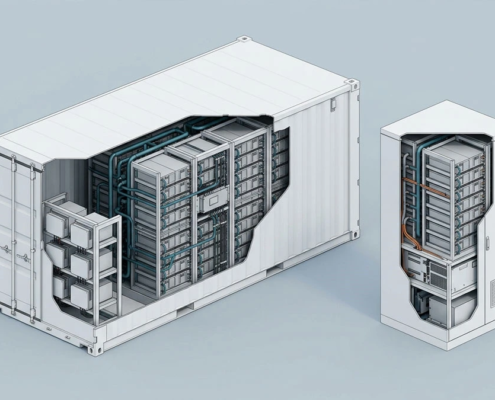 https://anengjipower.com/wp-content/uploads/2026/09/AnengJIPower-Cabinet-vs-Containerized-BESS-3D-Isometric-Structural-Cutaway.webp
675
1000
Charging Station Engineer
https://anengjipower.com/wp-content/uploads/2025/09/anengji-dc-fast-charging-station-manufacturer-and-supplier-logo-white-1.png
Charging Station Engineer2026-09-18 07:19:042026-09-18 07:19:38Cabinet vs Containerized BESS: How to Choose for Large C&I
https://anengjipower.com/wp-content/uploads/2026/09/AnengJIPower-Cabinet-vs-Containerized-BESS-3D-Isometric-Structural-Cutaway.webp
675
1000
Charging Station Engineer
https://anengjipower.com/wp-content/uploads/2025/09/anengji-dc-fast-charging-station-manufacturer-and-supplier-logo-white-1.png
Charging Station Engineer2026-09-18 07:19:042026-09-18 07:19:38Cabinet vs Containerized BESS: How to Choose for Large C&I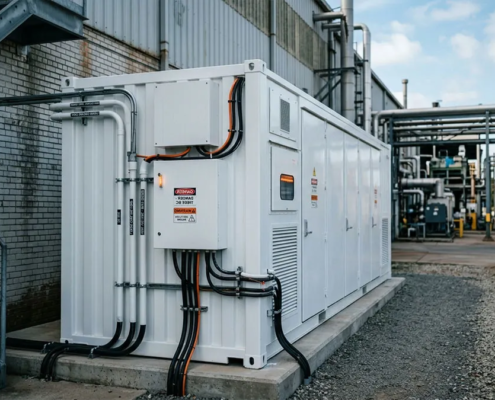 https://anengjipower.com/wp-content/uploads/2026/09/AnengjiPower-Modern-CI-Energy-Storage-System-Cabinet-Detail.webp
675
1000
Charging Station Engineer
https://anengjipower.com/wp-content/uploads/2025/09/anengji-dc-fast-charging-station-manufacturer-and-supplier-logo-white-1.png
Charging Station Engineer2026-09-17 07:38:352026-09-17 07:39:08C&I vs Utility-Scale Energy Storage: Key Differences in Applications, Technology, Cost & ROI
https://anengjipower.com/wp-content/uploads/2026/09/AnengjiPower-Modern-CI-Energy-Storage-System-Cabinet-Detail.webp
675
1000
Charging Station Engineer
https://anengjipower.com/wp-content/uploads/2025/09/anengji-dc-fast-charging-station-manufacturer-and-supplier-logo-white-1.png
Charging Station Engineer2026-09-17 07:38:352026-09-17 07:39:08C&I vs Utility-Scale Energy Storage: Key Differences in Applications, Technology, Cost & ROI


Leave a Reply
Want to join the discussion?Feel free to contribute!