
Introduction
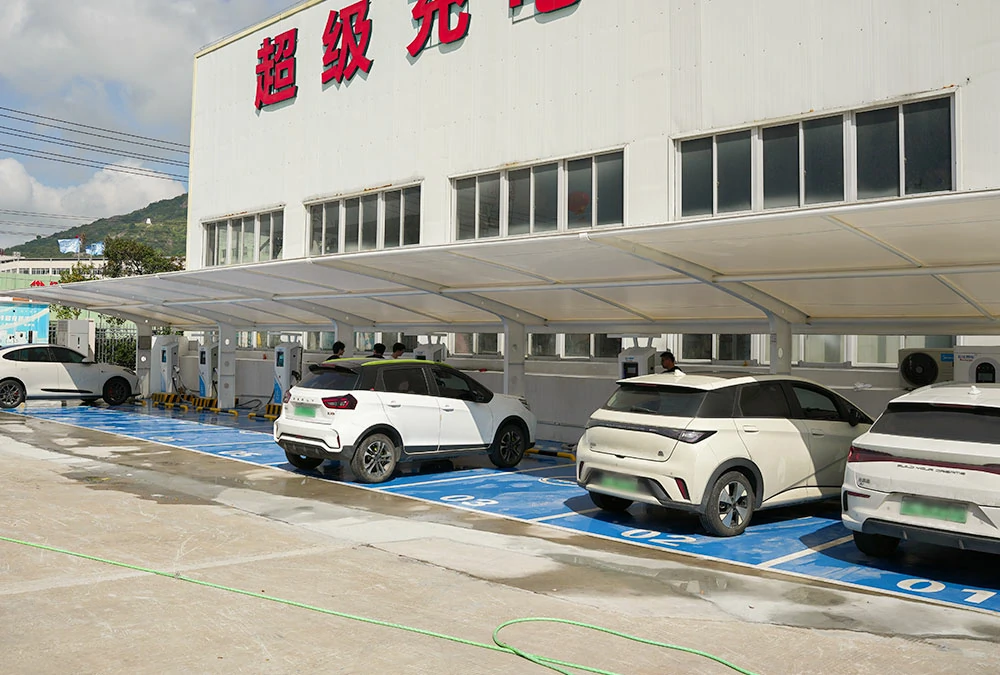
By 2025, the electric vehicle industry has officially shifted from policy-driven incentives to organic market growth. According to the latest IEA reports, global EV ownership has surged past 42 million units. In the U.S. alone, annual sales reached 1.43 million, accounting for nearly 13% of the new car market. However, our public EV charging infrastructure is struggling to keep pace. As we head into 2025, the U.S. has approximately 126,000 Level 2 AC chargers but only about 30,000 Level 3 DC fast charger ports. This puts the car-to-pile ratio at 17:1—far above the ideal safety threshold of 10:1. This structural gap isn’t just a frustration for drivers; it represents a historic commercial EV charging station investment window.
For property owners, car dealerships, logistics parks, and municipal agencies, deploying a commercial EV charging station is no longer optional—it is a strategic necessity for customer retention, asset appreciation, and brand survival. It turns stagnant parking spaces into revenue streams and builds a sustainable cash flow. However, facing six-figure upfront investments, complex grid requirements, and rapidly evolving tech, many businesses are hesitant. This guide systematically deconstructs the 2025 total cost of ownership (TCO), technical selection logic, policy benefits, and high-level ROI models to help you make a future-proof investment.
I. AC vs DC EV Charger for Commercial Use: Defining Your Strategy
The industry often uses “slow” vs. “fast” to describe the difference between an AC and DC charging station, but that oversimplification hides the real business logic. Understanding these differences is the first step in any EV charging station investment.
Commercial AC Charging Station: The “Dwell Economy” Infrastructure
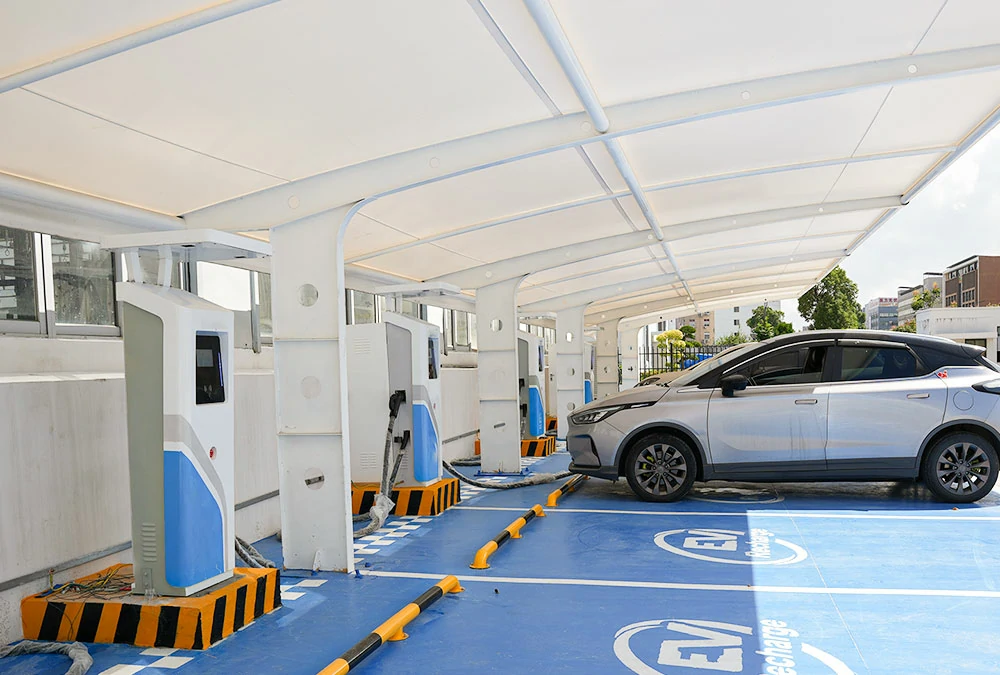
A commercial AC charging station (Level 2) typically connects to a 240V grid with power ranging from 3.3 to 19.2 kW. It relies on the vehicle’s onboard charger (OBC) to handle the power conversion from AC to DC. Therefore, speed is capped by the car’s OBC—even if your charger supports 19.2 kW, a car limited to 7.2 kW will only pull that much. For a 60kWh battery, a full charge takes 4 to 10 hours. This is the perfect fit for “long-stay” scenarios like offices, hotels, and multifamily housing. The value here isn’t speed; it’s about turning “wait time” into an experience. Shopping centers report that users stay 15% longer when they can charge, directly boosting retail and F&B sales.
Commercial DC Fast Charging Station: High-Velocity Revenue Generation
In contrast, a commercial DC fast charging station outputs high-voltage DC power directly to the battery, bypassing the car’s converter. With power between 50kW and 500kW, a vehicle can regain 80% of its range in 15 to 25 minutes. This “charge and go” nature makes it ideal for highway stops, dealerships, and fleet hubs. More importantly, it has a much higher monetization ceiling. You can set electricity prices at $0.40 to $0.80 per kWh—3 to 5 times the residential rate. Integrated 32-inch screens can also run local ads. On high-traffic routes like California’s I-5, a dual-port 350kW site can serve 120 cars a day, with annual revenue easily exceeding $80,000.
| Dimension | AC Charging (Level 2) | DC Fast Charging (Level 3) |
| Power Output | 3.3–19.2 kW | 50–500 kW (Up to 3.75MW for MCS) |
| Charging Time (60kWh) | 4–10 Hours | 15–60 Minutes |
| Total Cost per Port | $3,500–$15,000 | $18,000–$350,000+ |
| Grid Requirement | 240V Single/Three Phase | 480V+ High Voltage Transformer |
| Core Business Value | Customer loyalty & long dwell interaction | Fast turnover & high-margin monetization |
II. Understanding the Lifecycle Cost of EV Charging Station Investment
A common mistake is thinking “buying the box” is the only cost. In reality, the hardware is often less than half of the total budget. Installation cost and grid upgrade cost are the real variables, often making up 40% to 60% of the total.
Hardware: From Basic Utility to Smart Ecosystems
As of 2025, the market is tiered. For AC, a basic non-networked wall box is $600 to $2,500. But for a business, you need a smart pedestal (4G/5G, RFID, dynamic pricing, remote monitoring) costing $3,000 to $10,000. For DC fast chargers, the gap is wider: a 50kW unit (air-cooled) is $15k–$25k; a 150kW mainstream unit (liquid cooled) is $40k–$80k; and a 350kW flagship (NACS compatible, dynamic power sharing) is $150k–$250k. Premium brands like AnengJi Power or ABB might cost 10% more upfront, but their 30% lower failure rate drastically improves your lifecycle cost.
The Power Grid: The Hidden Budget Killer
This is where projects often stall. Most commercial sites can’t support high-power DC charging without a transformer upgrade ($20k–$80k). Underground high-voltage cabling averages $80 to $200 per foot. Then there are monthly demand charges—the fees utilities charge for your highest power spike. A 350kW station without battery storage can incur $4,500 a month in demand charges alone, which could eat your entire profit. A 2025 WattLogic survey of 200 U.S. sites found that grid upgrades alone averaged $180,000—38% of the total investment.
Construction, Software, and Maintenance Pillars
Civil works (trenching, concrete, lighting, ADA compliance) add $5,000 to $15,000. Your charging management system (SaaS) runs $300 to $1,500 per port annually. We also recommend a maintenance budget of 4% to 6% of your initial CAPEX. For example: an office installing four 19.2kW AC chargers spends ~$40k and nets ~$6k/year; whereas a highway site with two 350kW DC chargers spends ~$680k and nets ~$85k/year. With subsidies, the DC site’s payback period often drops to just 3–4 years.
III. 2025 Policy Credits: The “Golden Window” for Funding
The U.S. government is in a massive push for infrastructure. By stacking these three incentives, you can slash your actual out-of-pocket spend.
- Federal 30C Tax Credit: Available through June 30, 2026, this offers a credit of up to $100,000 per port. It covers hardware, labor, and even the grid upgrade cost. A dual-port 350kW charger is treated as two ports, potentially yielding $200,000 in credits.
- State & Local Grants: California (CEC) offers up to $100k for DC stations. New York (NYSERDA) provides $40k per port for DC and $4k for AC. Texas offers sales tax exemptions and 3% low-interest green loans.
- Utility Rebates: Companies like DTE Energy or PG&E offer “make-ready” programs where they pay for the transformer and conduit. DTE, for instance, offers $35k per DC pile and covers 50% of the transformer costs.
IV. EV Charging Station Profitability: High-Level Revenue Models
Selling electrons isn’t the only way to make money. Savvy owners are turning their commercial EV charging station into a multi-revenue node.
- Dynamic Pricing & Membership Tiers: Use software to auto-adjust rates. Raise fees by 30% during peak hours (4 PM – 9 PM) and offer discounts at night. Membership plans (e.g., $29.90/mo for VIP access) have an 87% retention rate and can double your customer lifetime value (LTV).
- Ad and Data Monetization: A DC charger with a 32″ screen is a digital billboard. Local cafes or car insurance companies will pay $15–$30 CPM for these impressions. One California operator netted $120,000 a year just by selling anonymized traffic heatmaps to city planners for urban route optimization.
- Retail Synergy & Dwell Time: At Westfield Mall in Seattle, 350kW chargers were paired with coffee kiosks and Wi-Fi lounges. Users stayed 125 minutes on average (up from 78), driving an 18% increase in retail and restaurant sales.
- Fleet EV Charging Solution Agreements: Partner with Uber, FedEx, or local delivery fleets. They prioritize uptime (>98%) over price. FedEx uses 10-year maintenance agreements with local operators to ensure 24/7 service. This provides you with a guaranteed, recession-proof anchor tenant.
- Virtual Power Plants (VPP): If you install battery storage (like Tesla Powerpack), you can buy power low and sell it back to the grid during peak events. An Midwest pilot of “Solar-Storage-Charge” integrated sites showed a 42% revenue increase over charging-only models.
V. The Tech Frontier: 5 Key Evolutions for 2025
Today’s chargers are IoT-enabled powerhouses. Look for these five features to avoid obsolescence:
- Dynamic Power Sharing (DPS): Instead of splitting power 50/50, DPS shifts power based on the car’s charging curve. If one car needs 250kW and the other 100kW, the system adjusts instantly. This saves you from buying massive, expensive transformers you don’t always need.
- Liquid Cooled Supercharging: Standard cables get hot. Liquid cooled charger tech supports 500A continuous current while keeping cables thin and light. It’s essential for 150kW+ stations to maintain speed in extreme summer or winter.
- Modular Upgrades & NACS Support: With Tesla opening their NACS standard, your EV charger manufacturer should offer “3-in-1” connectors (CCS1, CHAdeMO, NACS). Modular design means you can swap a connector in 2026 without replacing the whole machine.
- ISO 15118 (Plug & Charge): No apps or cards. The car and charger talk to each other to handle ID and billing. This is now a requirement for federal funding in the U.S.
- AI-Driven Predictive Maintenance: Modern sensors monitor electrical waves and thermal management to predict a part failure 7–14 days in advance. This pushes uptime to 98.5%, a standard now written into SLAs by leading DC fast charger suppliers like AnengJi Power.
VI. The 7-Step Roadmap to Deployment
Installing a commercial EV charging station is a long-term engineering project. Follow this proven framework:
Step 1: Data-Driven Demand Audit: Don’t guess. Use LPR cameras or parking data to see your current EV traffic. Check competitors within 3 miles to find under-served gaps.
Step 2: Electrical Load Study: Hire a licensed electrician to analyze your current transformer. In states like California, getting a new grid connection can take 6–9 months, so start early.
Step 3: Future-Proof Planning: Install more conduit than you need today. Leave 20% spare capacity in your panels. It’s 10x cheaper to do it now than to dig up the concrete in three years.
Step 4: Stack Your Funding: Hire a turnkey EV charging solution provider who can file your federal 30C, state grants, and utility rebates at once. This can cut your $680k project down to ~$370k in real net spend.
Step 5: Select a Lifecycle Partner: Don’t just buy a box. Choose an EV charging station supplier that offers 10-year warranties and local maintenance teams with 4-hour response times.
Step 6: Build the Software Ecosystem: Your platform must support Apple Pay, dynamic pricing, and CRM integration to market directly to your highest-spending users.
Step 7: Launch, Monitor, and Pivot: Once live, track your daily revenue per port (Target: $5+ for AC, $120+ for DC). Use the data to tweak your peak-hour pricing and ad rotations.
FAQ: Investing in Commercial EV Charging
Q: How much does a commercial EV charging station cost?
A: A Level 2 AC port is $3,500–$15,000 installed. A Level 3 DC fast charger can be $40,000 to $250,000+ depending on the grid upgrade cost.
Q: Which is better for business, AC or DC?
A: It’s about “dwell time.” If people stay 4+ hours (hotels), go AC. If they stay 30 minutes (gas stations/retail), go DC.
Q: What is the typical ROI for an EV charging station?
A: Between tax credits, grants, and usage fees, most well-placed sites reach break-even in 3 to 5 years and remain profitable for over a decade.
Q: Do I need a transformer upgrade for my chargers?
A: For DC fast chargers, almost certainly. Most commercial buildings require a transformer upgrade to handle the high-voltage demand without causing outages.
 https://anengjipower.com/wp-content/uploads/2026/09/AnengJipower-European-BESS-Project-Design-Environment-1.webp
675
1000
Charging Station Engineer
https://anengjipower.com/wp-content/uploads/2025/09/anengji-dc-fast-charging-station-manufacturer-and-supplier-logo-white-1.png
Charging Station Engineer2026-09-24 09:05:462026-09-24 09:08:39Battery Energy Storage System Design Guide for Europe
https://anengjipower.com/wp-content/uploads/2026/09/AnengJipower-European-BESS-Project-Design-Environment-1.webp
675
1000
Charging Station Engineer
https://anengjipower.com/wp-content/uploads/2025/09/anengji-dc-fast-charging-station-manufacturer-and-supplier-logo-white-1.png
Charging Station Engineer2026-09-24 09:05:462026-09-24 09:08:39Battery Energy Storage System Design Guide for Europe https://anengjipower.com/wp-content/uploads/2026/09/anengjipower-How-BESS-Power-and-Energy-Shape-Storage-Duration.webp
675
1000
Charging Station Engineer
https://anengjipower.com/wp-content/uploads/2025/09/anengji-dc-fast-charging-station-manufacturer-and-supplier-logo-white-1.png
Charging Station Engineer2026-09-23 09:06:532026-09-23 09:08:02BESS Duration Guide: How to Choose 1, 2 or 4 Hours
https://anengjipower.com/wp-content/uploads/2026/09/anengjipower-How-BESS-Power-and-Energy-Shape-Storage-Duration.webp
675
1000
Charging Station Engineer
https://anengjipower.com/wp-content/uploads/2025/09/anengji-dc-fast-charging-station-manufacturer-and-supplier-logo-white-1.png
Charging Station Engineer2026-09-23 09:06:532026-09-23 09:08:02BESS Duration Guide: How to Choose 1, 2 or 4 Hours https://anengjipower.com/wp-content/uploads/2026/09/AnengJIPower-Cabinet-vs-Containerized-BESS-3D-Isometric-Structural-Cutaway.webp
675
1000
Charging Station Engineer
https://anengjipower.com/wp-content/uploads/2025/09/anengji-dc-fast-charging-station-manufacturer-and-supplier-logo-white-1.png
Charging Station Engineer2026-09-18 07:19:042026-09-18 07:19:38Cabinet vs Containerized BESS: How to Choose for Large C&I
https://anengjipower.com/wp-content/uploads/2026/09/AnengJIPower-Cabinet-vs-Containerized-BESS-3D-Isometric-Structural-Cutaway.webp
675
1000
Charging Station Engineer
https://anengjipower.com/wp-content/uploads/2025/09/anengji-dc-fast-charging-station-manufacturer-and-supplier-logo-white-1.png
Charging Station Engineer2026-09-18 07:19:042026-09-18 07:19:38Cabinet vs Containerized BESS: How to Choose for Large C&I


Leave a Reply
Want to join the discussion?Feel free to contribute!