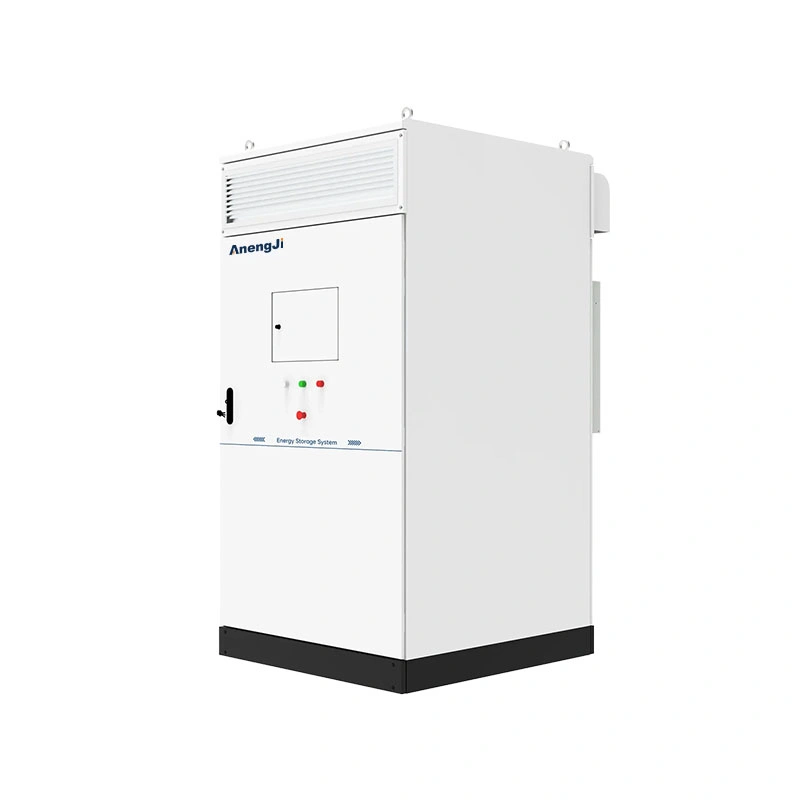
101kWh Air-Cooled Energy Storage Cabinet
Product Features
- Compact 101kWh storage in a single cabinet
- High efficiency >89% with >95% depth of discharge
- Plug-and-play, ready for fast deployment
- IP55 protection with precise thermal management

Product Features
The 101kWh air-cooled energy storage cabinet is built for small to medium commercial sites, community businesses, solar-plus-storage charging stations, small microgrids, and telecom towers.
It’s designed for projects where space is tight, deployment speed matters, and reliability can’t be compromised.
This cabinet hits a sweet spot between small 64kWh units and larger 200kWh+ systems. You get flexible installation without sacrificing performance or efficiency.
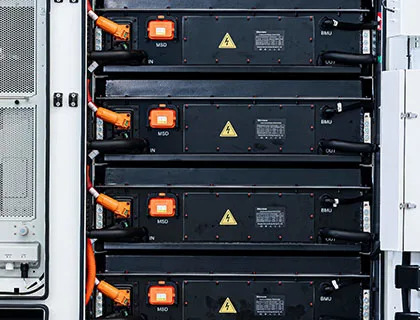
The all-in-one design integrates:
It supports wide-voltage input and multiple operating modes, making it ideal for:
Cost-Efficient
System conversion efficiency exceeds 89%, and battery DOD is over 95%, giving maximum usable capacity and strong ROI.
Green and Sustainable
Store excess solar or wind energy efficiently. Improve self-consumption and support your company’s energy transition goals.
Smart Operation and Monitoring
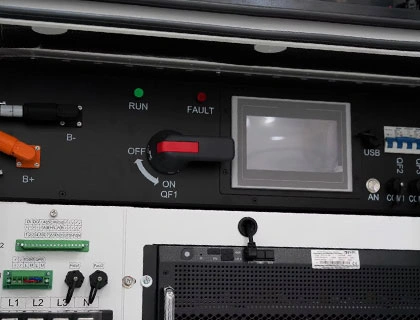
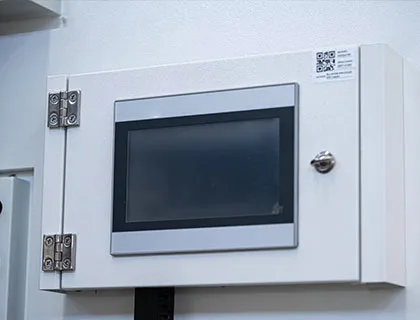
Operate locally via HMI, or monitor remotely with an app or web platform. Track real-time status, alerts, and energy performance from any device.
Designed for Reliability
All core systems—PACK, BMS, PCS, and EMS—are developed in-house. Hardware and software work together seamlessly, making upgrades simple and reliable.
Fast Response for Critical Loads
Supports up to 1C charge/discharge. Handles sudden load spikes or emergency power demands without issue.
Safety You Can Count On
IP55-rated cabinet. Optimized air-flow keeps cell temperature differences under 5°C, ensuring long-term stable operation.
Small to Medium Commercial Facilities
Reduce peak demand, improve energy costs, and maintain reliable backup power.
Community Business Centers & Retail Sites
Compact storage fits tight spaces, providing energy reliability for daily operations.
Solar + Storage Charging Stations
Store solar during the day for EV charging and reduce peak grid loads.
Small Microgrids & Telecom Towers
Support renewable integration, stabilize power, and provide backup during outages.
| DC Battery Parameters | |
|---|---|
| Cell Type | LFP/120 Ah |
| Battery Pack Configuration | 9.22kWh/1P24S |
| Battery System Configuration | 101.38kWh/1P264S |
| Rated System Voltage | 845Vdc |
| Voltage Range | 739~950Vdc |
| AC Side Parameters | |
| Rated AC Power | 100kW |
| Maximum AC Power | 110kW(for 1 min) |
| AC Current Total Harmonic Distortion (THDi) | ≤3% |
| DC Injection (DC Component) | <0.5%Ipn |
| Rated Grid Voltage | 400Vac/3P+N+PE |
| Adjustable Power Factor Range | -1~1 |
| Rated Grid Frequency | 50Hz/60Hz |
| System Parameters | |
| Maximum System Efficiency | ≥89% |
| Charge/Discharge Rate (C-rate) | 0.5P(Optional 1p) |
| Depth of Discharge (DoD) | 95% |
| Cycle Life | ≥ 5,000 cycles |
| Protection Rating | Ethernet /RS485 CE-EMS |
| Cooling Method | IP55 |
| Operating Temperature | Forced air cooling |
| Relative Humidity | 0~95% RH (non-condensing) |
| Altitude | 2000m (Derating above 2000m) |
| Fire Protection System | Smoke/Heat Detection + Aerosol (Pack-level & Cluster-level) + Water Fire Suppression |
| System Dimensions (W × D × H) | 1250*1200*2150mm |
| Weight | 2000kg |
| Compliance Standards | GB/T 36276、GB/T 34120、GB/T 34131 UN38.3、IEC62477、IEC61000、IEC62619、IEC63056、UL9540A 、EN50549 |
What is the DC configuration and nominal voltage of the 241kWh system?
The cabinet is built around high-safety LFP battery modules integrated into a standardized DC architecture.
The nominal system voltage and DC operating range are optimized to match mainstream PCS configurations used in commercial and industrial applications. This ensures smooth integration, stable inverter performance, and high round-trip efficiency.
Detailed voltage range and current parameters can be provided for system-level design calculations.
Does the system support AC-side parallel operation?
Yes.
The cabinet is designed for AC-side parallel expansion. Multiple units can be connected to build systems ranging from hundreds of kWh to several MWh.
This architecture simplifies expansion. There is no need to modify the internal battery structure when scaling capacity. It also reduces engineering complexity during phased project deployment.
For multi-cabinet projects, load balancing and communication coordination are handled through the integrated EMS logic.
What fire protection strategy is implemented at the cabinet level?
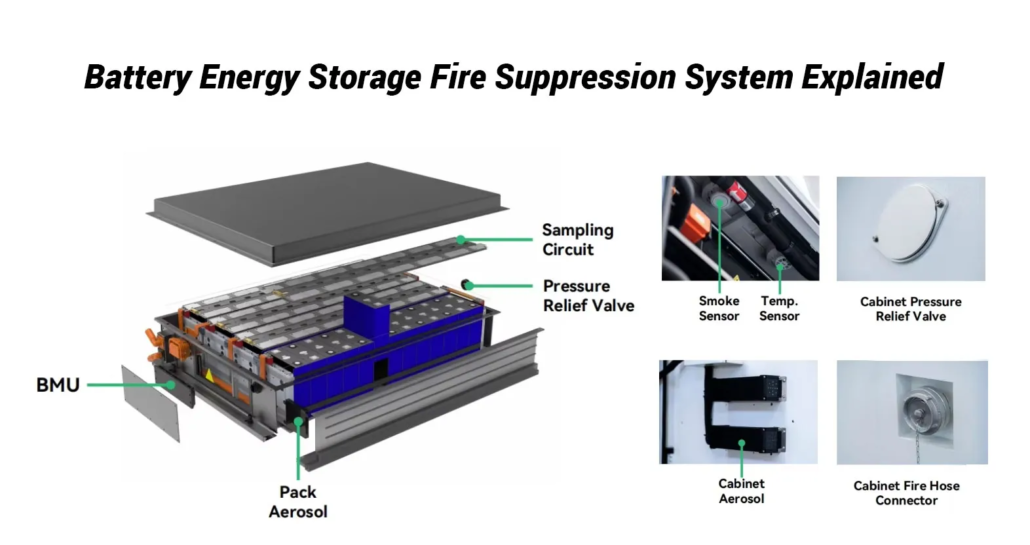
The system includes PACK-level fire detection and an automatic aerosol fire suppression system.
Detection is triggered by abnormal temperature rise or early fire indicators inside the battery PACK. Once activated, the aerosol system suppresses combustion locally and helps prevent thermal propagation to adjacent modules.
The protection logic is integrated with the BMS for fast response and coordinated shutdown when required.
Is this system suitable for outdoor installation?
Yes.
The cabinet is rated IP55, which protects against dust and water ingress. It’s designed for outdoor commercial and industrial environments.
The optimized air-cooling system keeps internal temperature differences within about 5°C, helping ensure long-term stability even in demanding conditions.
What type of battery does it use?
The system uses long-life lithium iron phosphate (LFP) cells.
LFP chemistry is known for strong thermal stability, high cycle life, and improved safety compared to other lithium battery types. It’s widely used in commercial and industrial energy storage applications.
What safety features are included?
Safety is built into every layer.
The cabinet includes PACK-level fire detection and an automatic aerosol fire suppression system. This helps detect issues early and suppress potential thermal events before they spread.
In addition, the integrated BMS continuously monitors voltage, temperature, and operating conditions in real time.
How can I monitor and manage the system?
You have multiple options.
The system supports local HMI access, remote app monitoring, and a dedicated cloud platform. You can view real-time operating data, alarms, performance metrics, and energy statistics anytime.
This makes daily management easier and reduces maintenance response time.
How is thermal management handled under continuous high-load operation?
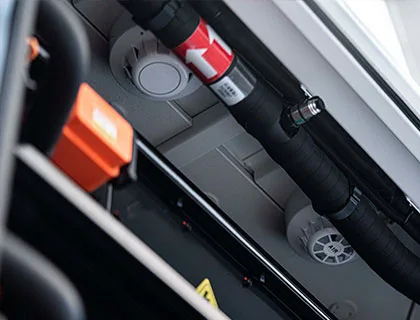
The system uses an optimized forced-air cooling design with controlled airflow paths.
Cell temperature difference is maintained within approximately 5°C under normal operating conditions. This helps:
The air-cooling approach simplifies maintenance compared to liquid-cooled systems and avoids risks related to coolant leakage.
How does the system integrate with external EMS or SCADA platforms?
The cabinet supports standard industrial communication protocols and can interface with higher-level EMS or SCADA systems.
It provides real-time operational data including:
Remote monitoring is available via local HMI, mobile application, or cloud platform. For grid-tied projects, communication parameters can be aligned with site-level control strategies.
Commercial and Industrial Battery Energy Storage Systems (C&I BESS) are designed to help businesses manage energy more efficiently and maintain stable power supply. These systems store electricity and discharge it during peak demand or grid instability, providing fast, clean, and reliable energy support for daily operations.
Battery energy storage enables peak shaving and load shifting, helping businesses reduce electricity costs and demand charges. It also delivers reliable backup power during outages, protecting critical equipment and minimizing downtime. When integrated with solar or other renewable sources, C&I BESS improves energy utilization and reduces dependence on diesel generators.
Due to higher power demand and system requirements, commercial and industrial energy storage is typically deployed in factories, logistics centers, EV charging hubs, commercial buildings, data centers, and solar-plus-storage projects where stable, scalable, and high-availability power is essential.
AnengJi provides scalable commercial and industrial battery energy storage solutions with flexible capacity configurations and seamless integration into existing energy systems. Designed for long-term reliability and easy deployment, our C&I BESS helps businesses lower operating costs, enhance energy resilience, and support sustainable growth.
From factory delivery to on-site commissioning, every BESS project is supported by our experienced engineering team.
We provide dedicated local service support across Europe, ensuring fast response and minimal downtime. In key regions, our engineers can arrive on-site within 8 hours, with emergency response available in as fast as 2 hours.
Our team is committed to resolving issues efficiently on-site, ensuring your energy storage system operates safely, reliably, and without unnecessary delays.
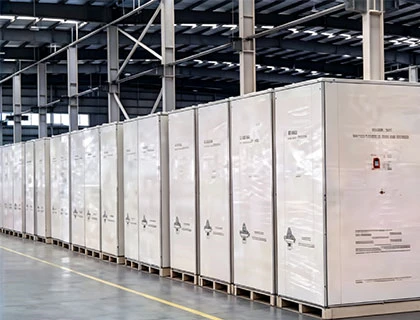
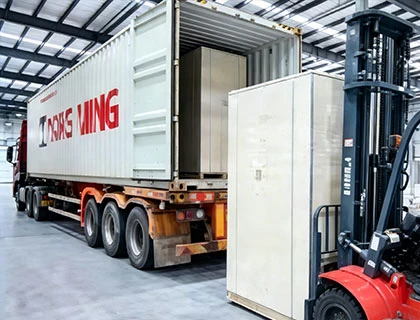
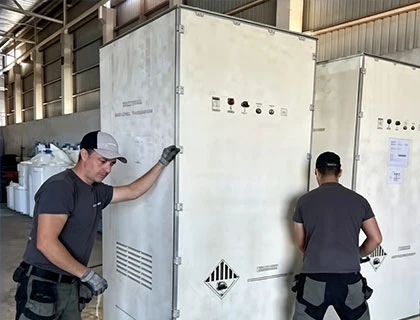
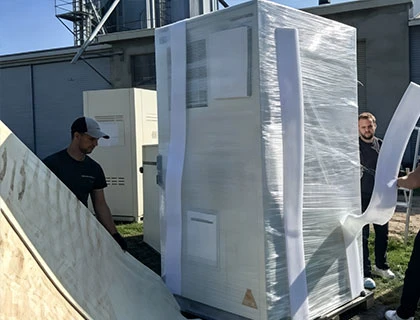
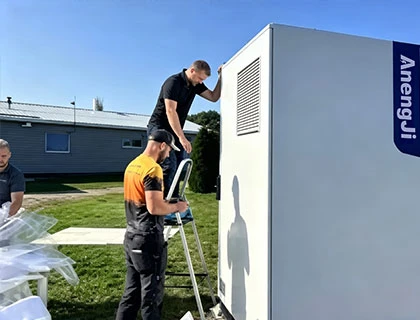
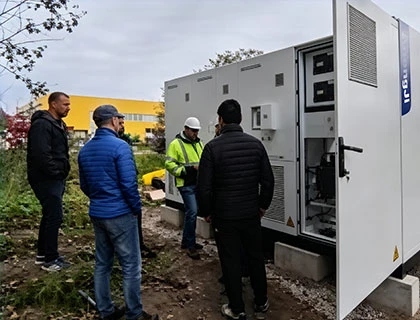
From factory delivery to on-site commissioning, every BESS project is supported by our experienced engineering team.
We provide dedicated local service support across Europe, ensuring fast response and minimal downtime. In key regions, our engineers can arrive on-site within 8 hours, with emergency response available in as fast as 2 hours.
Our team is committed to resolving issues efficiently on-site, ensuring your energy storage system operates safely, reliably, and without unnecessary delays.
 https://anengjipower.com/wp-content/uploads/2026/06/1mwh-ess-container-liquid-cooled-all-in-one-on-off-grid-battery-storage-white.webp
800
800
Charging Station Engineer
https://anengjipower.com/wp-content/uploads/2025/09/anengji-dc-fast-charging-station-manufacturer-and-supplier-logo-white-1.png
Charging Station Engineer2026-06-20 03:35:122026-07-07 09:12:231MWh Containerized Energy Storage System | C&I BESS Solution (PV + Diesel Hybrid)
https://anengjipower.com/wp-content/uploads/2026/06/1mwh-ess-container-liquid-cooled-all-in-one-on-off-grid-battery-storage-white.webp
800
800
Charging Station Engineer
https://anengjipower.com/wp-content/uploads/2025/09/anengji-dc-fast-charging-station-manufacturer-and-supplier-logo-white-1.png
Charging Station Engineer2026-06-20 03:35:122026-07-07 09:12:231MWh Containerized Energy Storage System | C&I BESS Solution (PV + Diesel Hybrid) https://anengjipower.com/wp-content/uploads/2026/02/418kwh-liquid-cooled-bess-cabinet-front-view.webp
800
800
Charging Station Engineer
https://anengjipower.com/wp-content/uploads/2025/09/anengji-dc-fast-charging-station-manufacturer-and-supplier-logo-white-1.png
Charging Station Engineer2026-04-22 07:19:522026-07-07 09:11:35418kWh Liquid-Cooled Battery Energy Storage Cabinet | High-Density BESS
https://anengjipower.com/wp-content/uploads/2026/02/418kwh-liquid-cooled-bess-cabinet-front-view.webp
800
800
Charging Station Engineer
https://anengjipower.com/wp-content/uploads/2025/09/anengji-dc-fast-charging-station-manufacturer-and-supplier-logo-white-1.png
Charging Station Engineer2026-04-22 07:19:522026-07-07 09:11:35418kWh Liquid-Cooled Battery Energy Storage Cabinet | High-Density BESS https://anengjipower.com/wp-content/uploads/2026/02/100-120kwh-all-in-one-solar-battery-storage-cabinet-white.webp
800
800
Charging Station Engineer
https://anengjipower.com/wp-content/uploads/2025/09/anengji-dc-fast-charging-station-manufacturer-and-supplier-logo-white-1.png
Charging Station Engineer2026-04-22 06:00:512026-09-22 09:43:42100kWh Solar Battery Storage Cabinet | All-in-One Commercial BESS
https://anengjipower.com/wp-content/uploads/2026/02/100-120kwh-all-in-one-solar-battery-storage-cabinet-white.webp
800
800
Charging Station Engineer
https://anengjipower.com/wp-content/uploads/2025/09/anengji-dc-fast-charging-station-manufacturer-and-supplier-logo-white-1.png
Charging Station Engineer2026-04-22 06:00:512026-09-22 09:43:42100kWh Solar Battery Storage Cabinet | All-in-One Commercial BESS https://anengjipower.com/wp-content/uploads/2026/02/5mwh-liquid-cooled-battery-energy-storage-container-front-view.webp
800
800
Charging Station Engineer
https://anengjipower.com/wp-content/uploads/2025/09/anengji-dc-fast-charging-station-manufacturer-and-supplier-logo-white-1.png
Charging Station Engineer2026-04-22 02:24:222026-07-09 07:33:3540ft 5MWh Liquid-Cooled Battery Storage Container | Utility-Scale Energy Storage
https://anengjipower.com/wp-content/uploads/2026/02/5mwh-liquid-cooled-battery-energy-storage-container-front-view.webp
800
800
Charging Station Engineer
https://anengjipower.com/wp-content/uploads/2025/09/anengji-dc-fast-charging-station-manufacturer-and-supplier-logo-white-1.png
Charging Station Engineer2026-04-22 02:24:222026-07-09 07:33:3540ft 5MWh Liquid-Cooled Battery Storage Container | Utility-Scale Energy StorageWe’re here to help you build a more efficient and resilient energy future—without unnecessary operating costs. Every battery energy storage system we deliver meets strict international standards, including CE, CB, TUV, UL, IEC, and RoHS. Safe, stable, and engineered for long-term performance.
Our energy storage specialists work with you to design the right C&I BESS solution for your project. Whether you’re deploying storage for factories, commercial buildings, EV charging hubs, microgrids, or solar-plus-storage systems, we support you through system sizing, energy strategy planning, and deployment options.
Have questions? Contact us by phone or email, or simply fill out the form on the right. Our team will respond within 24 hours with free professional consultation and technical support.

AnengJi supplies commercial and industrial battery energy storage systems, AC/DC EV charging equipment and integrated solar-storage-charging solutions. Project support can include system engineering, equipment integration, OEM/ODM manufacturing, factory testing, delivery coordination and commissioning support according to the agreed scope.

 64kWh solar battery storage cabinet | Compact Commercial BESS