
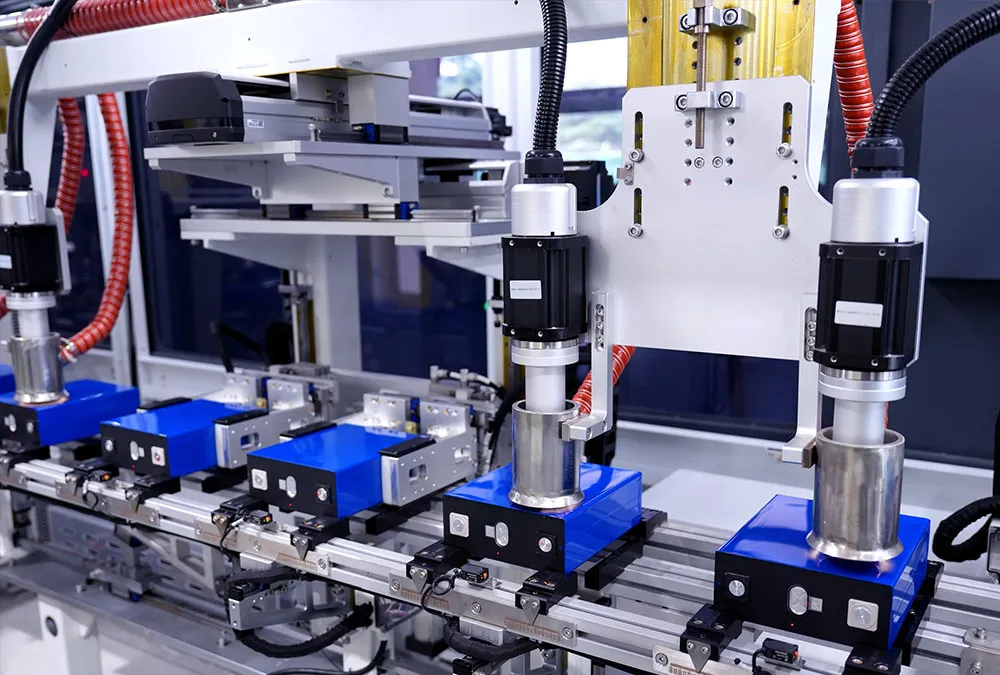
Selecting a qualified battery energy storage system manufacturer goes far beyond comparing upfront equipment quotes or looking at nameplate battery capacity. After managing grid installations and technical procurement for over two decades, I have seen too many projects hit cost overruns because buyers treated storage cabinets like commoditized off-the-shelf electronics. Choosing a supplier purely based on low initial price often destroys project returns.
A true manufacturing partner must bring verified factory production capability, seamless component integration, strict safety compliance, field experience, and long-term service support to guarantee project profitability over a 15-to-20-year lifespan.
Key Takeaways for BESS Buyer Evaluation
| Evaluation Pillar | Critical Verification Factor | Direct Buyer Benefit |
|---|---|---|
| System Integration | In-house integration of LFP cells, BMS software, PCS inverters, and cooling controllers. | Prevents communication bugs and multi-vendor blame games during grid outages. |
| Safety Compliance | Verified system-level UL 9540, UL 9540A, and IEC 62619 factory test reports. | Speeds up AHJ grid permits and lowers facility property insurance rates. |
| Quality Assurance | Automated SMT circuit assembly, 100% cell sorting, and full factory testing. | Eliminates early cell imbalance and prevents thermal safety hazards. |
| Lifecycle Value | Guaranteed Round-Trip Efficiency (RTE ≥88%) and clear battery expansion plans. | Protects project revenue over 15 to 20 years of continuous operation. |
What Is a Battery Energy Storage System Manufacturer?
When evaluating vendors, you will notice that the market uses the term loosely. Some trading companies buy modules from third parties, wire them into metal boxes, and call themselves a system builder. Others only manufacture chemical cells and leave complex system integration entirely to the customer.
An established battery energy storage system manufacturer designs, fabricates, integrates, and tests complete energy storage hardware and controlling software ecosystems. They convert raw electrochemical cells into dispatchable AC power built for strict grid compliance.
What Does a BESS Manufacturer Actually Manufacture?
To know who you are negotiating with, you need to break down the production chain. A complete system manufacturing process covers eight core building blocks:
- Battery cells: Basic electrochemical energy storage units, primarily Lithium Iron Phosphate (LFP) chemistry.
- Modules: Individual cells laser-welded together with thermal pads and voltage sensing circuits.
- Battery packs: Sealed module groups with integrated cooling channels and high-voltage fuse protection.
- Racks: Vertical battery frame structures housing high-voltage breakers and smart control hardware.
- Battery Management System (BMS): Three-tier control hardware managing state-of-charge (SOC) and thermal health.
- Battery cabinets: Outdoor IP55/IP66 or NEMA 3R weatherproof enclosures engineered for commercial sites.
- Containerized BESS: High-density 20ft or 40ft ISO modular enclosures housing large utility-scale storage racks.
- System integration: Connecting battery DC systems with Power Conversion Systems (PCS) and Energy Management Systems (EMS).
Battery Manufacturer vs BESS Manufacturer vs System Integrator
Confusing these vendor profiles leads to unexpected project risks and unclear warranty liability. Here is how roles differ across the industry:
| Vendor Type | Main Responsibility | Core Expertise | Direct Buyer Advantage |
|---|---|---|---|
| Cell Manufacturer | Raw cell chemistry and automated high-volume production | Chemical cell manufacturing | Provides low unit cost for raw battery cells. |
| Battery Pack Manufacturer | Module assembly, busbar welding, and pack enclosure builds | Mechanical and thermal pack structure | Custom voltage and physical layouts for specialized footprints. |
| BESS Manufacturer | Complete storage hardware, BMS software, and integrated cabinets | Full electrical and thermal system engineering | Single warranty contact with pre-tested safety performance. |
| System Integrator | Sourcing third-party cells, inverters, and EMS controls | Multi-vendor hardware integration | Offers flexible component choices across different brands. |
| EPC Contractor | Civil works, permits, grid connection, and onsite installation | Field construction management | Handles local field labor, permitting, and grid connection. |
How to Verify a Real Battery Energy Storage System Manufacturer
Let’s talk openly about procurement realities. Many trading agents present polished websites claiming to operate large manufacturing bases. Buying multi-megawatt systems without auditing real factory QA introduces severe operational hazards. Here is how to complete real due diligence before signing procurement agreements.
Verify the Manufacturing Facility
Schedule a live virtual factory audit or hire an independent inspection agency (such as TÜV Rheinland or DNV) to verify production lines. Check for specific equipment signs:
- Dust-free cleanrooms (Class 10,000 rating or better) for automated module laser welding.
- Surface Mount Technology (SMT) assembly lines for producing internal BMS controller circuit boards.
- Robotic pack assembly systems fitted with automated bolt torque control sensors.
- High-voltage testing bays equipped with grid simulators and programmable electrical load banks.
Review the BESS Manufacturing Process
Quality manufacturing follows a strict sequence to prevent early field failures:
Check Production Capacity and Delivery Capability
Look beyond general marketing materials showing empty factory space. Ask for verified operational metrics:
- Annual capacity (GWh): What is the actual factory output over the past 12 months?
- Production utilization: Are assembly lines running near full capacity today?
- Delivery lead times: Is the turnaround 8 weeks or 24 weeks for liquid-cooled outdoor cabinets?
- Spare parts inventory: Are spare BMS boards, PCS modules, and liquid pumps kept in stock?
Auditing a potential storage vendor’s production plant?
Does the Manufacturer Offer a Complete Battery Energy Storage System?
Buying individual components from separate vendors often creates costly integration delays. Sourcing cells from one brand, inverters from another, and EMS software from a third party usually results in technical protocol mismatches. Partnering with a dedicated bess manufacturer for commercial and industrial projects eliminates these headaches before installation starts.
Commercial and Industrial BESS Solutions
For factories, commercial buildings, data centers, and EV hubs, decentralized outdoor battery cabinets offer fast deployment. Key applications include:
- Peak shaving: Automatically capping peak electricity demand charges.
- Time-of-Use (TOU) arbitrage: Charging during low-cost off-peak hours and discharging during expensive peak periods.
- Solar self-consumption: Storing daytime rooftop PV energy for night operations.
- EV charging support: Buffering high-power DC fast-charging demand spikes to avoid utility transformer upgrades.
Utility-Scale BESS Solutions
Building large renewable sites requires an experienced utility scale battery energy storage system manufacturer capable of supplying modular 20ft or 40ft container units. Key use cases include:
- Frequency regulation: Providing sub-second power response to keep grid frequency stable.
- Renewable integration: Smoothing output from large solar and wind assets.
- Black start support: Helping restore local grid capacity after major transmission outages.
Recommended Commercial & Industrial BESS Hardware Architectures
Selecting the right cabinet size or container layout depends directly on site space, expansion plans, and duty requirements:
| Capacity Class | System Architecture | Cooling Method | Core Selling Features | Direct Buyer Benefit |
|---|---|---|---|---|
| 100kWh | All-in-One Outdoor Cabinet | Air-Cooled or Liquid-Cooled | Compact size, internal PCS inverter, quick plug-and-play setup. | Fits small commercial spaces; reduces civil work costs. |
| 261kWh | Modular Liquid-Cooled Cabinet | Precision Liquid Cooling | High energy density, cell temp variance ≤2.5°C, IP55 protection. | Ideal balance for EV charging buffers and factory peak shaving. |
| 418kWh | High-Density Industrial Cabinet | Liquid-Cooled Loop | Delivers maximum energy capacity per square meter. | Allows space-constrained urban facilities to deploy large storage capacity. |
| 1MWh – 5MWh | 20ft / 40ft ISO Container | Industrial Liquid Chillers | 1500V DC architecture, built-in fire suppression, SCADA connectivity. | Delivers maximum economy of scale for solar farms and industrial parks. |
Look Beyond the Battery Cell: Evaluate System-Level BESS Technology
Here is an important principle from engineering practice: a storage system is far more than a collection of battery cells. Cells are passive components. The surrounding electrical controls, thermal systems, and software govern whether equipment operates reliably for 15 years or fails early.
Battery System and LFP Battery Technology
Lithium Iron Phosphate (LFP) is the standard chemistry for stationary storage projects. Compared to Nickel Manganese Cobalt (NMC), LFP offers high thermal stability, zero oxygen release during high-temperature events, and long lifespan (typically 6,000 to 10,000 cycles at 80% Depth of Discharge). When choosing an energy storage battery manufacturer, confirm they use Grade-A LFP cells with full barcode traceability.
Battery Management System (BMS)
The BMS serves as the digital controller of the storage system. A dependable BMS handles three continuous tasks:
- Cell monitoring: Tracking cell voltage down to millivolts and monitoring pack temperatures.
- SOC & SOH algorithms: Providing accurate State-of-Charge and State-of-Health monitoring to prevent cell degradation.
- Active cell balancing: Transferring charge dynamically between cells to extend pack life compared to passive balancing systems.
Power Conversion System (PCS)
The PCS converts bidirectional DC energy from battery cells into synchronized AC power for your site or grid. Essential PCS requirements include high conversion efficiency (>98.5%), fast switching response times, and grid support capabilities.
Energy Management System (EMS) and EV Charging Integration
The EMS acts as master software, coordinating with local meters, solar inverters, grid SCADA, and EV fast chargers.
Technical Context: EV Charging Battery Technology & Peak Buffering
Electric vehicles are shifting toward high-voltage 800V battery systems to enable rapid DC charging (>240kW). However, connecting fast 240kW-400kW charging loads directly to local grids causes heavy demand charges or requires expensive utility line upgrades.
The BESS Alternative: Working with an experienced battery storage system manufacturer for solar projects allows site owners to install liquid-cooled BESS buffers. The storage unit charges slowly from the grid or solar PV, then discharges rapidly into vehicles during charging sessions. This process, called peak shaving, protects local transformers from overload.
Thermal Management, Fire Protection and SCADA
Maintaining uniform cell temperatures is essential for battery longevity. Modern liquid cooling systems cut auxiliary power consumption by over 30% compared to air conditioning, while keeping temperature differences between cells under 2.5°C.
Safety design requires multi-stage protection: combustible gas detection, pack-level aerosol or Novec 1230 gas suppression, and water sprinkler connections built to NFPA 855 standards.
How to Verify Battery Quality and BESS Safety
Evaluate Cell Chemistry and Supplier Traceability
Supply chain transparency is critical for safe storage assets. According to the Clean Energy Associates (CEA) Energy Storage Quality Report 2024, over 26% of factory-inspected battery storage systems exhibited manufacturing defects or cell assembly errors prior to shipping. Choosing a transparent industrial battery energy storage system manufacturer who provides full QR code cell tracking reduces these risks.
Verify Battery and System-Level Safety Testing
Avoid a common buyer trap: vendors claiming “The system is UL certified” when only the raw cell holds a test certificate. Require complete documentation across three levels:
- Cell testing: UL 1642 and IEC 62619 (Impact, overcharge, and puncture testing).
- Pack & transport testing: UN 38.3 (Safe shipping compliance).
- Full system testing: UL 9540 and UL 9540A (Thermal runaway fire propagation test reports).
Check BESS Certifications for Your Target Market
Installing uncertified equipment leads to failed local AHJ building reviews, rejected grid connections, and denied facility insurance coverage.
Certifications for North American BESS Projects
- UL 9540: Standard for Energy Storage Systems and Equipment.
- UL 9540A: Fire Test Method for Thermal Runaway Propagation.
- NFPA 855: Standard for Stationary Energy Storage Installations.
- IEEE 1547 / UL 1741 SB: Inverter Grid Interconnection Safety.
Certifications and Compliance for European BESS Projects
- IEC 62619: Safety requirements for secondary lithium industrial batteries.
- IEC 62477-1 / IEC 61000: Power converter safety and EMC compliance.
- CE Mark & VDE-AR-N 4110 / 4120: European grid code compliance.
Verify That Certifications Match the Exact BESS Configuration
Always check that model numbers on certificates match your hardware configuration. A UL 9540 report issued for an air-cooled 100kWh cabinet does not cover a 261kWh liquid-cooled unit. Buying uncertified variations forces expensive field re-testing on site.
Why Manufacturing Quality Control Matters More Than Factory Size
Large production plants do not automatically ensure superior product quality. A massive factory using manual assembly with inconsistent quality checks will produce imbalanced, troublesome battery packs. Strict quality control protocols always matter more than raw facility footprint.
The BESS Quality Control Chain™
- Incoming Inspection (IQC): 100% automated voltage, capacity, and resistance sorting for incoming raw LFP cells.
- Assembly Control (IPQC): Optical inspections on laser-welded busbars and automatic torque monitoring on structural bolts.
- Electrical & Leak Testing: High-voltage insulation tests, BMS calibration, and pressure testing on liquid cooling lines.
- Full System Testing: Multi-cycle charge and discharge burn-in testing for integrated cabinets.
- Factory Acceptance Test (FAT): Client-witnessed grid response and emergency shutdown testing before shipping.
Does the BESS Manufacturer Have Proven Project Experience?
Avoid using commercial facilities as experimental test beds for new vendors. Request verified reference installations that match your project specs across six criteria: Application type, Operating capacity, Installation country, Grid voltage, Local climate, and Operating duty cycle.
The Project Reference 5-Point Verification Test
When vendors claim broad global experience, verify these five points:
- 1. Verified GPS location or named facility owner.
- 2. Installed system capacity (kW / kWh rating).
- 3. Commercial operation date (COD).
- 4. Operating profile (e.g., 2 cycles/day peak shaving).
- 5. Verifiable performance logs (e.g., average monthly efficiency).
How to Evaluate OEM and ODM Capability
For energy providers, EPC contractors, or equipment distributors planning custom storage lines, finding a capable oem odm bess manufacturer is essential.
OEM BESS Manufacturing
The manufacturer builds equipment directly according to your supplied engineering drawings, bill of materials (BOM), and branding specifications.
ODM BESS Customization
The supplier handles complete development—designing custom cabinets, adjusting BMS communications (Modbus/CAN/SunSpec), setting liquid cooling capacity, and supporting regional compliance certifications.
When Does a Custom BESS Make Sense?
Custom design pays off when working under unusual site conditions: extreme ambient temperatures (-30°C arctic or +55°C desert climates), high-altitude grid requirements, tight urban noise limits (<65dB at 1 meter), or specialized microgrid controls.
Evaluate Technical Support Before Signing a BESS Contract
Industrial energy storage systems are long-term 15-to-20-year operational assets. Technical service support must be evaluated before signing contracts, not after equipment encounters field faults.
- Engineering design support: Do they offer software simulations to predict degradation and optimize capacity?
- Onsite commissioning: Do field engineers assist with grid interconnection testing and initial startup?
- Remote monitoring: Does their EMS offer real-time fault tracking and diagnostic tools?
- Spare parts availability: Are critical replacement components stored in regional warehouses for prompt shipping?
Compare Total Lifecycle Value, Not Just Initial BESS Price
Low-cost storage systems frequently end up costing more over time. According to the Lazard Levelized Cost of Storage Analysis (LCOS 2023), system efficiency losses, capacity degradation, and ongoing maintenance represent over 45% of total storage lifetime costs. Low-quality systems suffer from higher auxiliary power losses and rapid battery aging that reduce long-term returns.
BESS Lifecycle Value Model™
| Cost Metric | Low-Quality BESS Risk | High-Quality Manufacturer Standard | Financial Impact on Buyer |
|---|---|---|---|
| Round-Trip Efficiency | <83% (High HVAC energy consumption) | ≥88% (Optimized liquid cooling) | Saves significant power costs annually per MWh stored. |
| Degradation Rate | Faster capacity loss (>3.5% per year) | Controlled linear loss (<1.8% per year) | Delays expensive battery augmentation by 4 to 6 years. |
| Unscheduled Downtime | Frequent BMS trips and hardware faults | 99.2% system uptime availability | Protects daily peak shaving and arbitrage income streams. |
How to Compare Battery Energy Storage System Manufacturers
When reviewing proposal bids, use this structured evaluation matrix to score prospective suppliers:
| Evaluation Category | Weighting | Key Verification Criteria |
|---|---|---|
| Manufacturing & Integration Capability | 20% | In-house pack assembly, SMT lines, automated testing, annual GWh output. |
| Safety & Compliance Testing | 20% | UL 9540, UL 9540A, IEC 62619, and NFPA 855 test documentation. |
| Lifecycle Economics & Performance | 20% | System RTE (≥88%), warranty degradation curves, auxiliary power efficiency. |
| Track Record & Field References | 15% | Verifiable project operating data in target region matching your application. |
| Technical Support & Service Terms | 15% | Commissioning support, regional spare parts response times, remote diagnostics. |
| OEM / ODM Engineering Flexibility | 10% | Custom cabinet choices, protocol customization, branding options. |
How to Choose a BESS Manufacturer for Different Project Types
Commercial & Industrial (C&I)
Prioritize: Compact footprint, low noise liquid cooling (<65dB), all-in-one cabinets, and pre-integrated peak shaving EMS software.
Utility Solar + Storage
Prioritize: 20ft/40ft modular containers, 1500V DC high-voltage architecture, high RTE, and SCADA grid control compliance.
EV Fast-Charging Stations
Prioritize: Fast discharge capability, dynamic load buffering, and direct integration with high-power DC fast chargers.
Why AnengJi Is a Reliable Battery Energy Storage System Manufacturer for Global Projects
If you are seeking a reliable battery energy storage system manufacturer china partner to support your project pipeline, AnengJi provides full-stack, utility-grade storage equipment built for long-term operational performance.
Integrated BESS Manufacturing and Assembly
Operating automated manufacturing bases, AnengJi oversees the complete production process—from cell testing and module welding to cabinet integration and full-load factory testing.
Complete Commercial, Industrial, and Modular Product Range
AnengJi supplies liquid-cooled energy storage systems engineered for diverse project requirements:
- C&I Liquid-Cooled Cabinets (100kWh / 261kWh / 418kWh): High-density enclosures designed for factory peak shaving, microgrids, and EV charging buffering.
- Utility Containerized BESS (1MWh – 5MWh): High-voltage 1500V modular ISO containers engineered for solar farm integration and utility grid support.
Flexible OEM & ODM Engineering Capabilities
We partner with energy providers, distributors, and EPC companies on OEM and ODM customization—adjusting cabinet structures, communication protocols, BMS settings, and visual branding for local markets.
BESS Manufacturer Selection Checklist
Procurement Audit Checklist
□ Manufacturing Audit: Verified automated module welding and BMS SMT assembly lines?
□ Cell Traceability: Confirmed Grade-A LFP cells with full factory barcode tracking?
□ Safety Testing: Obtained full UL 9540, UL 9540A, or IEC 62619 test reports for your model configuration?
□ Thermal Control: Confirmed cell temperature variance ≤2.5°C during liquid-cooling tests?
□ Reference Check: Verified at least three field installations matching your duty cycle?
□ Service SLA: Confirmed commissioning support availability and local spare parts coverage?
Request a BESS Project Assessment
Developing a commercial, industrial, or utility energy storage project? Contact our engineering team today to receive sizing estimates, single-line diagrams (SLD), and factory proposal quotes for your site.
Ready to Plan Your BESS Project?
Get technical support from our application engineers and receive a detailed system proposal.
 https://anengjipower.com/wp-content/uploads/2026/06/epc-vs-turnkey-solar-project-bess.webp
675
1000
Charging Station Engineer
https://anengjipower.com/wp-content/uploads/2025/09/anengji-dc-fast-charging-station-manufacturer-and-supplier-logo-white-1.png
Charging Station Engineer2026-06-22 07:16:042026-06-24 07:13:17What Is the Difference Between EPC and Turnkey Contract Models in Energy Projects?
https://anengjipower.com/wp-content/uploads/2026/06/epc-vs-turnkey-solar-project-bess.webp
675
1000
Charging Station Engineer
https://anengjipower.com/wp-content/uploads/2025/09/anengji-dc-fast-charging-station-manufacturer-and-supplier-logo-white-1.png
Charging Station Engineer2026-06-22 07:16:042026-06-24 07:13:17What Is the Difference Between EPC and Turnkey Contract Models in Energy Projects? https://anengjipower.com/wp-content/uploads/2026/06/anengji-commercial-solar-plus-storage-benefits-site.webp
675
1000
Charging Station Engineer
https://anengjipower.com/wp-content/uploads/2025/09/anengji-dc-fast-charging-station-manufacturer-and-supplier-logo-white-1.png
Charging Station Engineer2026-06-20 14:34:102026-06-20 14:37:43What Are the Top Benefits of Solar Battery Storage in Factories?
https://anengjipower.com/wp-content/uploads/2026/06/anengji-commercial-solar-plus-storage-benefits-site.webp
675
1000
Charging Station Engineer
https://anengjipower.com/wp-content/uploads/2025/09/anengji-dc-fast-charging-station-manufacturer-and-supplier-logo-white-1.png
Charging Station Engineer2026-06-20 14:34:102026-06-20 14:37:43What Are the Top Benefits of Solar Battery Storage in Factories? https://anengjipower.com/wp-content/uploads/2026/06/modular-commercial-solar-battery-storage-cabinet.webp
675
1000
Charging Station Engineer
https://anengjipower.com/wp-content/uploads/2025/09/anengji-dc-fast-charging-station-manufacturer-and-supplier-logo-white-1.png
Charging Station Engineer2026-06-18 09:16:522026-07-03 03:05:13What Is Solar Battery Storage? Complete C&I Engineering Guide
https://anengjipower.com/wp-content/uploads/2026/06/modular-commercial-solar-battery-storage-cabinet.webp
675
1000
Charging Station Engineer
https://anengjipower.com/wp-content/uploads/2025/09/anengji-dc-fast-charging-station-manufacturer-and-supplier-logo-white-1.png
Charging Station Engineer2026-06-18 09:16:522026-07-03 03:05:13What Is Solar Battery Storage? Complete C&I Engineering Guide


Leave a Reply
Want to join the discussion?Feel free to contribute!