
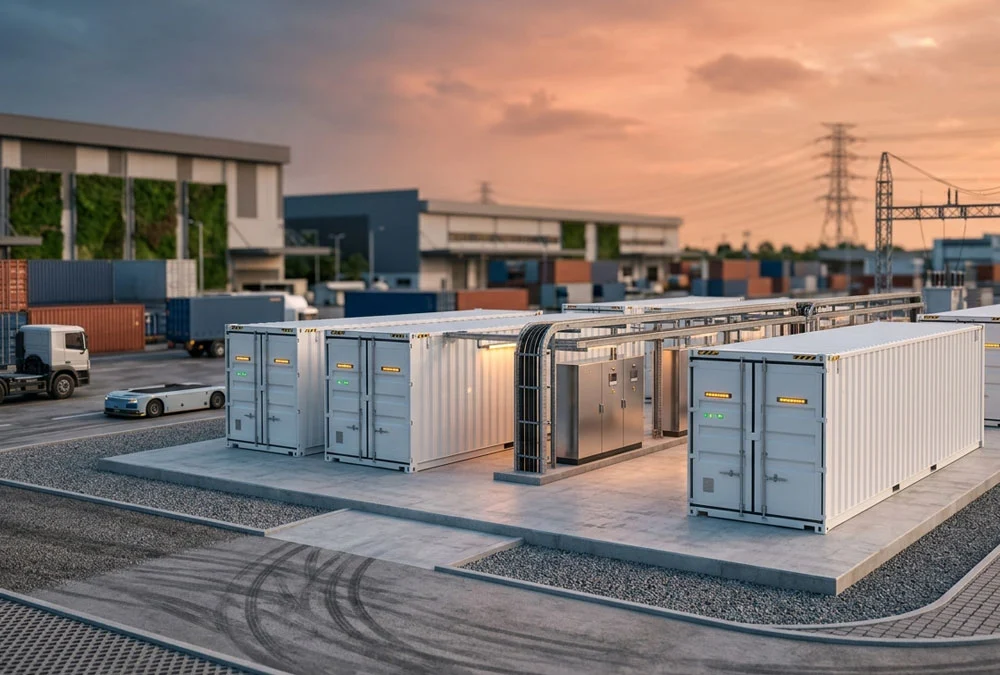
A C&I battery energy storage system make money through reduced electricity bills, peak shaving, energy arbitrage, solar optimization, flexibility services, and ancillary markets. The most profitable installations stack multiple income streams rather than rely on single-use cases. According to the CBRE 2026 European Power and Energy Storage Market Update [1], localized grid constraints, capacity market mechanisms, and persistent power-price volatility directly dictate BESS economic viability. European commercial revenue models are bifurcating fast, making structural design far more critical than raw battery capacity.
How Can a Battery Energy Storage System Make Money?
Unlocking value from a commercial battery energy storage system make money mechanisms requires shifting away from passive power consumption toward dynamic energy management. Revenue availability strictly depends on nation-specific regulations, tariff structures, grid access, local network constraints, and aggregator integration models.
Energy Arbitrage
Energy arbitrage leverages wide electricity price spreads throughout the day. By charging the battery energy storage system during low-cost or negative price hours and discharging during peak demand windows, facility owners capture net price differentials across day-ahead and intraday markets.
Peak Shaving and Demand Charge Reduction
Utilities assess heavy demand charges based on a commercial facility’s single highest power spike within a billing cycle. Peak shaving discharges the BESS instantly when facility loads cross preset thresholds. This dampens network capacity fees without forcing operational shutdowns.
Solar Self-Consumption and Curtailment Reduction
Commercial rooftop solar installations often generate maximum power during mid-day periods when site load is low. Storing surplus solar energy locally prevents uncompensated feed-in or forced curtailment. This boosts commercial solar battery storage ROI Europe projections by replacing expensive grid imports during evening operational windows.
Demand Response and Flexibility Services
Grid operators pay commercial facilities to adjust their electricity usage on demand. Commercial BESS assets respond in milliseconds to curtail grid import or export stored power, generating recurring revenue payments under contracted flexibility programs.
Ancillary Services and Frequency Regulation
Transmission System Operators (TSOs) maintain grid frequency stability through fast-acting reserve markets like FCR (Frequency Containment Reserve) and aFRR (automatic Frequency Restoration Reserve). Battery storage systems provide rapid power injection or absorption to stabilize the grid, commanding premium availability payments.
Capacity Market Revenue
In markets like the UK, France, and emerging regions in Germany and Spain, capacity mechanisms award multi-year contracts to battery assets simply for being available to discharge during forecasted grid stress periods, securing predictable underlying revenue streams.
Revenue Stacking Across Multiple Services
Single-use BESS configurations struggle to deliver fast paybacks. BESS revenue stacking Europe strategies combine behind-the-meter bill savings with front-of-the-meter market opportunities, maximizing the financial yield of every kilowatt-hour of capacity.
| Revenue Stream | How It Creates Value | Main Operational Requirement | Buyer ROI Advantage & Impact |
|---|---|---|---|
| Peak Shaving | Cuts peak demand charges by suppressing load spikes. | Fast discharge capability during maximum site load windows. | Directly slashes fixed monthly network capacity surcharges without slowing facility production lines. |
| TOU Optimization | Shifts grid power import to low-cost tariff hours. | Access to structured Time-of-Use utility rate plans. | Locks in predictable, lower blended electricity costs per kWh across daily operational cycles. |
| Energy Arbitrage | Captures spot market price spreads (Day-Ahead & Intraday). | Wholesale market access or dynamic spot price contract. | Converts extreme electricity market price volatility into a continuous, active profit center. |
| Solar Self-Consumption | Stores surplus midday PV output for peak evening usage. | On-site solar array integration with automated controls. | Maximizes ROI on solar assets by avoiding uncompensated feed-in or grid export limits. |
A BESS Needs a Revenue Strategy, Not Just a Capacity Rating
Sizing a battery simply by matching peak power ratings is an expensive mistake. Real commercial BESS payback period Europe performance depends on defining the primary financial job before procuring hardware.
Why BESS Power and Energy Capacity Do Not Determine Profitability
A 1 MW system with poor energy management software (EMS) control will underperform a well-optimized 250 kW battery. Profitability stems from dynamic discharge timing, high round-trip efficiency, and low degradation costs—not gross footprint size.
Match BESS Power to the Load Profile
Facilities with sharp, short-duration load spikes (e.g., plastics manufacturing or EV fast charging stations) require high C-rate power output. Conversely, continuous commercial facilities need steady energy discharge over longer durations.
Match Energy Capacity to the Revenue Window
Arbitrage spreads often last 2 to 4 hours in European day-ahead spot markets. Buying a 6-hour duration battery for 2-hour arbitrage windows leaves expensive lithium-ion capacity sitting idle, severely inflating payback metrics.
Avoid Oversizing the Battery
Oversized systems suffer from inflated capital expenditure (CAPEX) and lower utilization factors. As highlighted in community discussions on platforms like Reddit regarding industrial storage economics, buyers frequently over-specify storage capacity without analyzing local grid transformer limits, creating severe grid connection bottlenecks.
Define the Primary Revenue Stream Before Sizing the BESS
Engineers must model whether the primary duty cycle is demand charge reduction, solar shifting, or ancillary market bidding. Hardware configuration, Power Conversion System (PCS) sizing, and cell chemistry selection should strictly follow the primary revenue target.
Commercial Hardware Selection Matrix & Buyer Advantage
Selecting the correct modular energy node ensures maximum utilization rates without capital over-allocation.
| Model Capacity | Target Facility Type | Core Application | Buyer Value & ROI Advantage |
|---|---|---|---|
| 100 kWh Cabinet System | Small Commercial / EV Hubs | Peak Shaving & TOU Optimization | Ultra-compact footprint allows plug-and-play installation in congested urban commercial spaces. |
| 261 kWh Liquid-Cooled BESS | Medium Industrial Plants | Demand Charge Suppression + Solar Self-Consumption | Liquid cooling extends cell life by 20% compared to air-cooled models, drastically reducing long-term degradation costs. |
| 418 kWh All-in-One Container | Heavy Manufacturing / Logistics Parks | Multi-use Revenue Stacking & Backup | High energy density cuts civil preparation costs while providing sustained high C-rate bursts for continuous loads. |
| 1 MWh Modular Utility Node | Large Factories / Grid Connection Parks | Wholesale Arbitrage & Ancillary Services | Delivers maximum economy of scale, making seamless integration into VPP platforms highly lucrative for aggregators. |
How Does Energy Arbitrage Turn Electricity Price Volatility Into Profit?
Understanding battery energy storage arbitrage Europe dynamics requires looking closely at daily wholesale power trading dynamics. Driven by renewable generation intermittency, power prices swing radically within 24-hour cycles.
How BESS Energy Arbitrage Works
A commercial facility automatically charges its battery energy storage system when market electricity rates crash—often during peak solar output at midday or overnight wind expansion—and discharges energy when regional prices surge.
Day-Ahead and Intraday Electricity Markets
While Day-Ahead markets provide structured hourly price curves, Intraday markets offer extreme short-term volatility. Advanced EMS platforms trade automatically in intraday spot markets, capturing brief price spikes caused by sudden generation outages or weather shifts.
Charge During Low-Price Periods & Discharge During High-Value Periods
In regions like the Netherlands, Germany, and Spain, negative power prices are increasingly common during solar peak hours. BESS operators are paid to absorb excess power from the grid, earning income on both the charging cycle and the subsequent evening discharge cycle.
How Round-Trip Efficiency Changes the Real Spread
Systems do not operate without energy losses. Round-Trip Efficiency (RTE) accounts for conversion losses in the inverter, battery chemistry resistance, and HVAC auxiliary power consumption.
Net Spread Formula = (Discharge Price × AC-to-AC RTE) – Charging Purchase Price – Degradation Cost per Cycle
How Battery Degradation Changes Arbitrage Profit
Every cycle wears down lithium iron phosphate (LFP) cells slightly. If the spread between charge and discharge prices does not cover the marginal cell wear cost (typically €0.03-€0.05 per kWh cycled), performing arbitrage erodes total project asset value.
Why Simple Buy-Low, Sell-High Calculations Can Be Misleading
Naive spreadsheet financial models assume theoretical maximum daily price spreads. Real-world dispatch must factor in non-linear grid fees, dynamic efficiency degradation, and unexpected market adjustments.
When Does Peak Shaving Actually Make Money for a C&I BESS?
How Peak Shaving Works
Peak shaving relies on high-speed load monitoring. When building electrical draws approach contracted demand ceilings, the BESS discharges instantly to absorb local loads, ensuring grid power consumption remains under penalty thresholds.
Demand Charges vs. Energy Charges
Energy charges cover total kilowatt-hours consumed. Demand charges (€/kW/month) bill facilities for the single highest 15-minute power draw registered in a billing cycle. In heavy industrial tariffs across Italy and the UK, demand charges can represent up to 40% of total electric utility bills.
Evidence Source [3]: The ENTSO-E 2025 Network Tariff Structure Report documents that capacity-based demand charges across EU Member States increased by an average of 18.4% year-over-year. This regulatory pivot directly amplifies the direct financial savings generated by behind-the-meter peak shaving systems.
Why Load Profile Matters More Than Annual Electricity Consumption
A continuous 24/7 facility with stable loads gets minimal benefit from peak shaving. Conversely, a commercial facility with short, intense operational spikes—such as batch processing or multi-charger EV stations—can achieve massive financial savings with a compact power-focused BESS.
How to Calculate Peak-Shaving Savings
Savings stem from multiplying the avoided peak power (kW) by the utility tariff demand rate (€/kW/month), then adjusting for battery system efficiency losses and standby parasitic loads.
When Peak Shaving May Not Pay Back
If local electricity distribution tariffs rely primarily on flat volumetric charges without capacity-based demand surcharges, dedicated peak shaving yields minimal financial return.
How BESS Power Rating Affects Peak-Shaving Value
The inverter’s continuous power rating (kW) determines the maximum load reduction achievable. Ensuring the battery inverter matches the facility’s peak load duration avoids running out of energy halfway through a prolonged load spike.
Can Solar + BESS Earn More Than Solar Alone?
Renewable-Linked BESS vs. Grid-Charged BESS
Integrating renewable generation directly with storage creates a clean, resilient power ecosystem. While grid-charged batteries rely strictly on tariff dynamics, solar-linked storage optimizes internal green power generation utilization.
Increase Solar Self-Consumption
Commercial feed-in tariffs in Europe have plummeted to near zero or non-existent levels. Storing mid-day solar power for evening facility operations replaces retail electricity grid imports, maximizing site power self-sufficiency.
Shift Midday Solar to Higher-Value Hours
Instead of exporting excess clean power during mid-day market slumps, a commercial BESS shifts solar discharge to evening peak windows when grid power rates spike significantly.
Reduce Solar Curtailment
Grid operators frequently curtail commercial solar exports when local distribution networks face thermal overload. On-site storage absorbs excess solar output during curtailment orders, keeping green energy generation alive.
Improve the Capture Price of Solar Generation
“Cannibalization” occurs when overwhelming solar volume drives wholesale midday prices down. Pairing BESS hardware elevates the effective capture price of generated solar power above base market averages.
Evidence Source [4]: The International Energy Agency (IEA) 2026 Electricity Market Report emphasizes that unassisted solar PV capture rates in Western Europe dropped to 58% of average baseload wholesale prices during peak summer months. Adding 2-hour C&I battery storage restored effective solar capture prices to over 89% of baseload values.
How Do Flexibility, Ancillary Services, and Capacity Markets Create BESS Revenue?
Demand Response
Facilities enrolled in demand response programs receive direct financial compensation for reducing grid draws during system stress events. A BESS fulfills these commitments automatically without requiring factory operational shifts.
Frequency Regulation
Sub-second response capabilities make battery storage uniquely suited for fast frequency regulation services (FCR/aFRR). Systems earn continuous availability fees simply for remaining connected and ready to assist grid frequency control.
Ancillary Services & Local Flexibility
Distribution System Operators (DSOs) contract localized flexibility to relieve transformer congestion. BESS deployments located at vulnerable grid nodes secure lucrative long-term location-specific flexibility contracts.
How Aggregators Enable C&I BESS Market Participation
Individual commercial sites rarely meet minimum wholesale bidding sizes (often 1 MW or 5 MW). Third-party aggregators pool decentralized C&I systems into virtual power plants (VPPs), opening wholesale ancillary revenue streams for smaller site operators.
Evidence Source [5]: The European Commission’s Electricity Market Design Directive Implementation Update (2026) mandates that independent aggregators be granted non-discriminatory market access across all EU Member States, lowering minimum VPP bidding thresholds down to 100 kW to accelerate distributed commercial battery participation.
How Does BESS Revenue Stacking Work in Europe?
Unlocking maximum commercial BESS revenue streams Europe potential requires combining behind-the-meter utility savings with front-of-the-meter market programs.
What Is BESS Revenue Stacking?
Revenue stacking orchestrates multiple operational objectives dynamically. An intelligent EMS directs the battery to perform peak shaving during factory operation hours, trade energy arbitrage during midday price drops, and provide frequency support overnight.
How EMS Prioritizes Competing Revenue Streams
Conflicting demands will arise: a sudden grid frequency signal might call for discharge just as the facility hits its internal peak load limit. Modern EMS algorithms use predictive machine learning to prioritize high-value local peak reduction over lower-tier market signals, preventing costly utility penalties.
AnengJi BESS Profitability Gate™: C&I Decision Model
To streamline commercial BESS evaluation, we apply a structured multi-gate investment screening framework before specifying hardware.
| Decision Gate | Evaluation Focus | Validation Criteria | Buyer Risk Reduction Advantage |
|---|---|---|---|
| 1. Tariff Analysis Gate | Price spreads & demand fees | Peak/off-peak spread > €0.08/kWh or demand fee > €8/kW/month | Eliminates misallocated capital expenditure in unsuitable flat-tariff utility zones. |
| 2. Load Profiling Gate | 15-min interval load logs | Predictable daily load spikes matching battery discharge duration | Prevents over-specifying system capacity based on inaccurate estimated power usage. |
| 3. Grid Feasibility Gate | Transformer & connection limits | DSO connection clearance secured without major substation retrofits | Protects buyers from unexpected grid expansion penalties after purchasing hardware. |
| 4. Financial Yield Gate | 10-Year Lifecycle Cash Flow | Target IRR > 12% under conservative degradation assumptions | Delivers bankable, risk-adjusted financial models that easily pass CFO investment scrutiny. |
Key Technical Concepts: EV Charging Integration and Alternative Storage Options
Commercial energy storage projects increasingly intersect with electric vehicle infrastructure and alternative power backup technologies.
Batteries in EV Fast-Charging Infrastructure (Buffer BESS)
Installing Ultra-Fast EV Chargers (150 kW – 350 kW) often triggers multi-hundred-thousand-euro transformer upgrade requests from utilities. A “Buffer BESS” charges slowly from limited grid connections during idle periods and discharges at maximum speed into EVs during charging sessions, bypassing transformer constraints.
BESS vs. Conventional Alternatives (Diesel Generators & Gas Microturbines)
Traditional backup relies on diesel generators. While cheaper in initial CAPEX, diesel systems produce emissions, incur high maintenance costs, and sit entirely idle without generating daily savings. A BESS acts as an active income-generating asset every day while providing millisecond uninterruptible power supply (UPS) capabilities during unexpected blackouts.
Which European Markets Are Most Attractive for C&I BESS in 2026?
Regional attractiveness varies widely based on local network regulations and energy market design.
- Germany: Excellent high price spreads, high industrial grid fees, and strong demand response aggregator networks.
- United Kingdom: Mature capacity markets, dynamic frequency services, and severe local transformer congestion drivers.
- Netherlands: Extreme negative power pricing volatility coupled with severe grid capacity bottlenecks.
- Spain & Italy: Massive mid-day solar curtailment risks coupled with rapidly reforming national capacity services.
Common Mistakes When Building a Profitable C&I BESS Project
- Procuring hardware based strictly on battery energy storage system make money claims without real interval load profiles.
- Assuming single-stream energy arbitrage alone covers full hardware CAPEX and interest rates.
- Ignoring battery cell capacity degradation driven by aggressive, multi-cycle daily duty patterns.
- Overlooking hidden aggregator management fees or market access telemetry integration costs.
Regulatory References & Authoritative Sources
- CBRE Research: European Power and Energy Storage Market Update 2026.
- Fraunhofer Institute for Solar Energy Systems (ISE): Commercial Storage Efficiency & Revenue Benchmarks (2025).
- ENTSO-E: Overview of Transmission & Distribution Tariff Structures in Europe (2025).
- International Energy Agency (IEA): Electricity Market Report & Renewable Integration Metrics (2026).
- European Commission: Implementation Directive on Distributed Flexibility & Aggregation (2026).
Request Your Commercial BESS Profitability Assessment
Stop guessing battery ROI figures. Work directly with senior energy storage engineers to model your facility’s exact 15-minute load profiles, local utility tariffs, and dynamic revenue stacking potentials.
 https://anengjipower.com/wp-content/uploads/2026/06/epc-vs-turnkey-solar-project-bess.webp
675
1000
Charging Station Engineer
https://anengjipower.com/wp-content/uploads/2025/09/anengji-dc-fast-charging-station-manufacturer-and-supplier-logo-white-1.png
Charging Station Engineer2026-06-22 07:16:042026-06-24 07:13:17What Is the Difference Between EPC and Turnkey Contract Models in Energy Projects?
https://anengjipower.com/wp-content/uploads/2026/06/epc-vs-turnkey-solar-project-bess.webp
675
1000
Charging Station Engineer
https://anengjipower.com/wp-content/uploads/2025/09/anengji-dc-fast-charging-station-manufacturer-and-supplier-logo-white-1.png
Charging Station Engineer2026-06-22 07:16:042026-06-24 07:13:17What Is the Difference Between EPC and Turnkey Contract Models in Energy Projects? https://anengjipower.com/wp-content/uploads/2026/06/anengji-commercial-solar-plus-storage-benefits-site.webp
675
1000
Charging Station Engineer
https://anengjipower.com/wp-content/uploads/2025/09/anengji-dc-fast-charging-station-manufacturer-and-supplier-logo-white-1.png
Charging Station Engineer2026-06-20 14:34:102026-06-20 14:37:43What Are the Top Benefits of Solar Battery Storage in Factories?
https://anengjipower.com/wp-content/uploads/2026/06/anengji-commercial-solar-plus-storage-benefits-site.webp
675
1000
Charging Station Engineer
https://anengjipower.com/wp-content/uploads/2025/09/anengji-dc-fast-charging-station-manufacturer-and-supplier-logo-white-1.png
Charging Station Engineer2026-06-20 14:34:102026-06-20 14:37:43What Are the Top Benefits of Solar Battery Storage in Factories? https://anengjipower.com/wp-content/uploads/2026/06/modular-commercial-solar-battery-storage-cabinet.webp
675
1000
Charging Station Engineer
https://anengjipower.com/wp-content/uploads/2025/09/anengji-dc-fast-charging-station-manufacturer-and-supplier-logo-white-1.png
Charging Station Engineer2026-06-18 09:16:522026-07-03 03:05:13What Is Solar Battery Storage? Complete C&I Engineering Guide
https://anengjipower.com/wp-content/uploads/2026/06/modular-commercial-solar-battery-storage-cabinet.webp
675
1000
Charging Station Engineer
https://anengjipower.com/wp-content/uploads/2025/09/anengji-dc-fast-charging-station-manufacturer-and-supplier-logo-white-1.png
Charging Station Engineer2026-06-18 09:16:522026-07-03 03:05:13What Is Solar Battery Storage? Complete C&I Engineering Guide

Leave a Reply
Want to join the discussion?Feel free to contribute!