Introduction
“Can I get free electric car charging for my EV?”
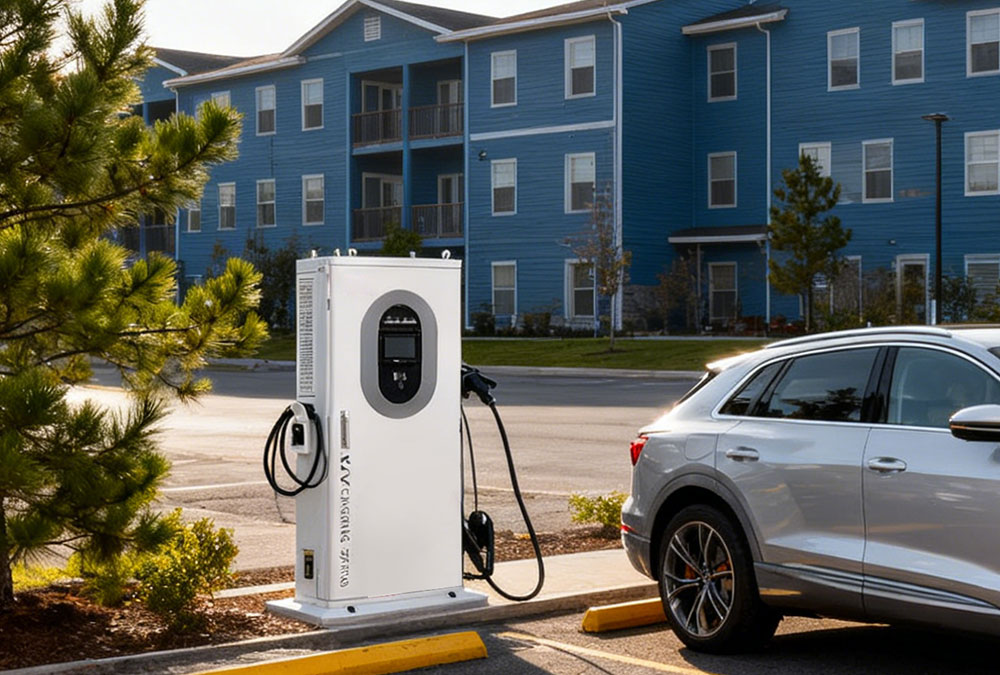
This simple question has a big impact on every electric vehicle owner’s daily experience. Picture this: You finish a long workday, pull into a shopping mall’s underground garage, and spot a row of brand-new chargers with a clear “Free EV Charging” sign. In that moment, the convenience and elegance of EV life feel right within reach—until you realize that not all free EV charging stations live up to the hype. But when you plug in the charger with excitement, the system pops up a message: “Members only” or “Must leave within 30 minutes after charging” — otherwise, you’ll face a steep parking fee. Suddenly, the shine of “free” quickly fades.
But here’s the reality: By 2025, global EV adoption has hit 40 million vehicles, according to the IEA. Among the more than 180,000 public charging stations in North America, fewer and fewer free EV charging stations are open to everyone long-term. Free charging isn’t a universal perk anymore—it’s a well-crafted business strategy, policy tool, or temporary marketing tactic. To truly understand the boundaries and value of these free electric vehicle charging options, we first need to learn about the different types of charging stations, then dig into the operational logic and technological advancements behind them.
Fast forward to 2025: About 31% of public Level 2 EV charging stations offer free service, mostly at consumer locations like shopping malls and hotels—these are the most accessible free public charging stations for daily use. Almost all DC fast charging stations, however, charge fees. Free EV charging is never a permanent benefit; it serves as a strategic tool for drawing in customers, securing government subsidies, or managing power grids.
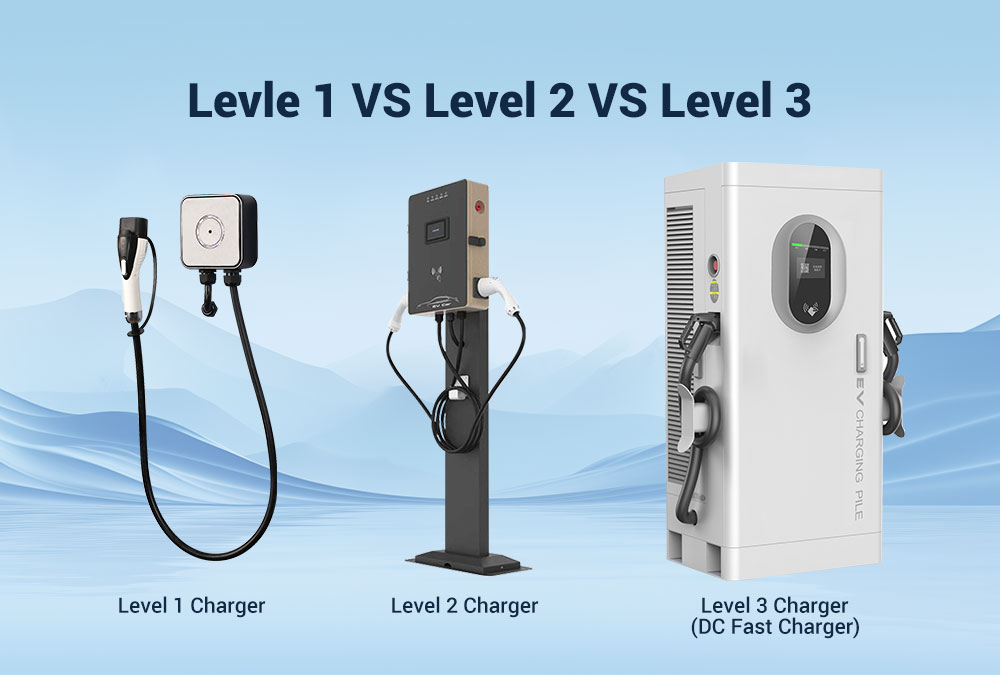
Not all EV charging stations are the same. Based on power supply methods, output power, and usage scenarios, EV charging equipment falls into three main levels. Each level differs greatly in cost structure, deployment purpose, and pricing strategy.
Level 1 charging uses a standard 120-volt household outlet, with power usually no more than 1.9 kW. It only adds about 3 to 8 kilometers of range per hour. This “trickle charging” method is almost exclusively for overnight home charging or plug-in hybrid electric vehicles. It’s extremely rare in public areas, so it never comes up in discussions about free public charging stations.
Level 2 charging forms the backbone of the public charging network. It runs on 240-volt alternating current, with power ranging from 3.3 kW to 19.2 kW. It can add 16 to 64 kilometers of range per hour. This is where free EV charging thrives—these spots let customers linger longer and spend more. So businesses are willing to cover electricity and maintenance costs to boost customer loyalty. From our experience working with U.S. retailers and municipalities, we’ve seen that free Level 2 charging at malls drives 2x more repeat visits than paid stations. Learn more about our Level 2 EV charging stations for home and business.
DC fast charging works on an entirely different logic. Its power ranges from 50 kW to 350 kW, and it can charge a battery to 80% in just 20 to 30 minutes. It’s an essential piece of infrastructure for long-distance trips. But this high power comes with huge costs—expensive equipment, fees for connecting to the power grid, and ongoing operational expenses. While some government pilot programs or automaker marketing campaigns occasionally offer limited-time free DC fast charging, almost all DC fast charging stations charge by kilowatt-hour or time.
The table below clearly shows the key parameters and free availability of the three charger levels:
Source: U.S. Department of Energy – Alternative Fuels Data Center, Q1 2025
These numbers come directly from the U.S. Department of Energy’s Q1 2025 report—so you can trust they’re up-to-date for American drivers. In short, the main places to find free EV charging stations are Level 2 slow-charging networks, not fast-charging stations that prioritize speed.
To wrap up the key takeaways: Level 1 is nearly always free (but only for home use), Level 2 offers the best chance of free public charging (31% of stations), and DC fast charging is almost always paid (less than 6% free). This aligns with how each charger is designed—Level 2 stations are for long stays (and customer retention), while DC fast stations are for quick top-ups (and need to recoup costs).
Let’s use authoritative data to clear up misunderstandings first.
According to the Public Charging Station Pricing Report released by the U.S. Department of Energy in Q1 2025, here’s the breakdown for publicly accessible chargers across the country:
Source: U.S. Department of Energy – Alternative Fuels Data Center, Q1 2025
This means about one-third of public Level 2 chargers still offer free service, but almost all fast chargers charge fees. Free services are mostly found at destination charging spots—for example, you could shop at Whole Foods for 90 minutes and add 30 kilometers of range while you’re there. This seamless “unnoticeable charging” is the key value of free EV charging stations.
Free EV charging doesn’t come out of nowhere. So who is secretly covering these costs? The answer lies with five key groups, each with its own goals.
Large retailers like Costco, Target, and Whole Foods install free EV charging stations not to sell electricity, but to attract customers. Studies show that customers who use free electric vehicle charging stay nearly 50 minutes longer and spend about 20% more. For these businesses, a charger that costs a few thousand dollars gives a better return on investment than traditional advertising. This strategy of “trading electricity for customers” makes charging a natural part of the shopping experience.
At the same time, tech giants and manufacturing companies have integrated free workplace EV charging into their ESG (Environmental, Social, and Governance) strategies. Google, Amazon, and Walmart have installed charging facilities at their headquarters campuses. This not only shows their commitment to carbon neutrality but also helps attract young talent and build a green employer brand. Here, chargers are more than just infrastructure—they’re a way to show the company’s values.
On the government side, free charging is promoted through financial subsidies. For example, California’s Clean Transportation Fund covers up to 80% of equipment costs for small and medium-sized businesses. One condition is that these businesses must offer free public charging stations to the public for the first two to three years. Such policies lower the barrier for new EV users and speed up the widespread adoption of electric vehicles.
Power companies are also exploring new ways to offer free EV charging. During late-night hours when the power grid is under low load, some utility companies open certain community chargers for free use. This is a test of “demand response charging”—a way to balance the grid by shifting charging to off-peak hours. This may seem like a benefit, but it’s actually an important test for the future vehicle-to-grid (V2G) ecosystem.
Finally, traditional automakers like Ford and General Motors offer free charging at their flagship stores and test drive centers. This is essentially a form of customer education. When potential buyers experience the seamless convenience of charging while parking, their anxiety about driving range drops significantly. This makes their car-buying decision much easier.
Even though they’re labeled “free,” many charging stations have restrictions. A small mistake could end up costing you more. The most common trap is fines for overstaying your parking time. Some malls require you to leave within 30 minutes after charging ends. If you don’t, you could be charged $10 or more per hour. In 2024, a shopping mall in Los Angeles faced a class-action lawsuit and paid over $200,000 in compensation for failing to clearly post such rules.
To help owners spot these common restrictions, we’ve compiled the five most typical hidden rules at free EV charging stations and their potential impacts:
- Parking Overstay Fees: Always set a phone alert for when charging finishes—even 5 minutes late can cost you $10+.
- App Registration Hassles: Check PlugShare beforehand to see if you need to download an app—register ahead of time to avoid delays.
- Partial Charging Limits: If you need a full charge, avoid free stations with 80% caps—opt for a paid Level 2 or DC fast charger instead.
- Time-Slot Restrictions: Plan your trip around free hours (usually weekday mornings/afternoons) or confirm fees for off-peak use.
- Brand Exclusivity: Double-check if the station is limited to specific EV models—Tesla drivers, for example, can’t use Nissan-exclusive free chargers.
These hidden rules remind us: Free charging never comes with no strings attached. It’s always an exchange with clear expectations. Before using a free charger, be sure to read on-site instructions carefully. You can also check recent user reviews on platforms like PlugShare to avoid the hassle of “nominally free but actually expensive” charging.
Early free charging relied on subsidies or corporate goodwill. But the future of free charging will increasingly depend on smart technology to stay sustainable. Smart charging isn’t just about connecting to the internet—it’s an ecosystem that combines communication, data analysis, and automatic control, reshaping the business model of charging services. Discover our smart EV charging management system to learn more.
Through demand response charging, smart chargers can communicate with the power grid in real time. They start charging automatically when electricity prices are low or when renewable energy generation is high. They pause or slow down charging during peak grid load times. This lets power companies safely offer free charging during specific periods without straining the grid.
Remote monitoring lets users check charging status, start or stop charging, and set completion alerts right from their phone apps. This greatly improves efficiency and reduces the problem of chargers being occupied by fully charged cars. Load management technology takes it a step further: It allows multiple cars to share the same circuit and dynamically distributes power while keeping the total output stable. This lets limited power resources serve more users looking for free EV charging.
More importantly, smart systems collect a large amount of usage data. They track when chargers are idle, which locations have high demand, and what payment methods users prefer. These insights help operators make smart decisions—like if a shopping mall should keep offering free charging long-term or if a community needs time-of-use pricing. Free charging is no longer a one-size-fits-all strategy; it’s a data-driven, targeted operation.
Wood Mackenzie predicts that by the end of 2025, over 60% of public charging stations in North America will support smart charging. This is a huge jump from less than 25% in 2021. Free charging and smart technology are no longer opposites—they’re working together.

As the charging ecosystem gets more complex, owners need a smarter approach to using free chargers. Here’s how to make the most of them:
Prioritize Destination Charging Spots: Choose free Level 2 charging stations at large supermarkets, high-end hotels, or airport VIP parking lots. They’re not only reliable but also offer good supporting services (like restrooms or cafes) while you wait.
Use Apps to Plan Ahead: Make good use of third-party apps like PlugShare and A Better Routeplanner. Filter for the “Free” tag and check user reviews from the past week to confirm the stations are still free. Avoid charging during peak hours on weekends and holidays—this will greatly increase your chances of finding an available charger.
Avoid Hidden Fees: Always set an alert for when charging is done to avoid high parking fees from overstaying. Also, check if the station requires a membership or minimum purchase to qualify for free charging.
Consider Home Charging for Long-Term Savings: For frequent EV users, installing a Level 2 home charger is still the best long-term choice. Off-peak electricity prices at night are usually between $0.08 and $0.12 per kWh—much cheaper than the average public charging rate of $0.30 to $0.50 per kWh. You could save hundreds of dollars on electricity bills each year. For frequent drivers, a smart EV charger at home isn’t just convenient—it’s cheaper than relying on public stations. Our commercial-grade Level 2 home charger works with all EV models and cuts your charging costs by up to 70%.
Are EV charging stations free? The answer is more than a simple yes or no. It’s a question that changes over time, shaped by the complex interactions of business interests, policy directions, technological progress, and user behavior.
True freedom in electric driving isn’t about finding a free charging port—it’s about having access to a stable, efficient, flexible, and predictable charging network wherever you go. This lets you plan every trip with ease. The widespread use of smart charging technology is making this vision a reality faster than ever.
Free charging may become less common, but the convenience and reliability of EV charging will only keep getting better.
Tired of chasing unreliable free public charging? Our best Level 2 EV charger lets you enjoy 24/7 low-cost charging at home—with remote monitoring and load management to fit your lifestyle. It’s compatible with all EV models and works with U.S. voltage standards. View our products now.

 https://anengjipower.com/wp-content/uploads/2026/03/industrial-solar-battery-storage-solutions-container.webp
675
1000
Charging Station Engineer
https://anengjipower.com/wp-content/uploads/2025/09/anengji-dc-fast-charging-station-manufacturer-and-supplier-logo-white-1.png
Charging Station Engineer2026-03-18 07:10:422026-03-18 07:11:38Solar Energy Battery Storage: Commercial Guide & ROI Analysis
https://anengjipower.com/wp-content/uploads/2026/03/industrial-solar-battery-storage-solutions-container.webp
675
1000
Charging Station Engineer
https://anengjipower.com/wp-content/uploads/2025/09/anengji-dc-fast-charging-station-manufacturer-and-supplier-logo-white-1.png
Charging Station Engineer2026-03-18 07:10:422026-03-18 07:11:38Solar Energy Battery Storage: Commercial Guide & ROI Analysis https://anengjipower.com/wp-content/uploads/2026/03/containerized-energy-storage-system-for-industrial-use.webp
675
1000
Charging Station Engineer
https://anengjipower.com/wp-content/uploads/2025/09/anengji-dc-fast-charging-station-manufacturer-and-supplier-logo-white-1.png
Charging Station Engineer2026-03-18 02:55:302026-03-18 02:56:51Energy Storage System Guide: Types, ROI & Technical Comparison
https://anengjipower.com/wp-content/uploads/2026/03/containerized-energy-storage-system-for-industrial-use.webp
675
1000
Charging Station Engineer
https://anengjipower.com/wp-content/uploads/2025/09/anengji-dc-fast-charging-station-manufacturer-and-supplier-logo-white-1.png
Charging Station Engineer2026-03-18 02:55:302026-03-18 02:56:51Energy Storage System Guide: Types, ROI & Technical Comparison https://anengjipower.com/wp-content/uploads/2026/03/containerized-energy-storage-system-industrial-park.webp
675
1000
Charging Station Engineer
https://anengjipower.com/wp-content/uploads/2025/09/anengji-dc-fast-charging-station-manufacturer-and-supplier-logo-white-1.png
Charging Station Engineer2026-03-13 09:04:512026-03-13 09:05:40What Are Commercial Energy Storage Systems?
https://anengjipower.com/wp-content/uploads/2026/03/containerized-energy-storage-system-industrial-park.webp
675
1000
Charging Station Engineer
https://anengjipower.com/wp-content/uploads/2025/09/anengji-dc-fast-charging-station-manufacturer-and-supplier-logo-white-1.png
Charging Station Engineer2026-03-13 09:04:512026-03-13 09:05:40What Are Commercial Energy Storage Systems?


Leave a Reply
Want to join the discussion?Feel free to contribute!