
Introduction
As of 2025, global electric vehicle (EV) ownership has surpassed 65 million, while the total number of public EV charging stations stands at only around 9 million—resulting in a vehicle-to-charger ratio of over 7:1, and as high as 10:1 in some cities. This structural gap not only fuels drivers’ “range anxiety” but also creates a $120 billion infrastructure blue ocean with a compound annual growth rate exceeding 25%.
Once seen as a supplementary service for real estate or retail, EV charging infrastructure has evolved into a core asset capable of independent profitability and long-term cash flow. Unlike typical startups, a successful EV charging station business relies heavily on regulatory compliance, power coordination, strategic site selection, and systematic operations. This guide breaks down the full journey from market research to persified revenue streams, helping you launch and scale steadily worldwide.
Before committing capital, clarify your position in the industry chain:
- Self-operated operator: Ideal for enterprises with capital and site resources. Generate long-term revenue through electricity fees, advertising, and value-added services.
- Charging solution provider: Offer turnkey “equipment + installation + maintenance” services to B2B clients like malls, hotels, and office buildings—perfect for electrical engineering firms or licensed electricians looking to pivot.
- Equipment distributor/agent: Focus on hardware sales with lower entry barriers but require strong channel capabilities.
- Hybrid model: Balance light and heavy assets. Build cash flow through installation services initially, then invest in high-potential DC fast charging business sites for flexible expansion.
Regardless of your choice, register a formal business entity with a scope including “EV charging facility construction and operation.” This not only facilitates government incentive applications but also lays the groundwork for future power upgrades and commercial partnerships.
Site selection is make-or-break. Successful stations thrive in “charging deserts”—areas with clear demand but insufficient supply. Blindly following trends leads to inefficient competition.
Prioritize cities with EV registration growth exceeding 20%, such as Los Angeles, Berlin, Oslo, or Sydney. These regions not only have large user bases but also strong local government incentives. Next, use platforms like PlugShare, Google Maps, or the U.S. Department of Energy’s AFDC to map existing charging station hotspots. Identify gaps in retail-dense areas, commuter corridors, or highway exits lacking fast charging options.
Align with user behavior: Deploy 7–22kW Level 2 chargers for commuters (3–6 hour stays) and DC fast chargers (60kW+) for long-distance travelers (15–40 minute top-ups). Finally, consult local utility companies to assess transformer capacity and confirm land use permits for public charging facilities—avoid project delays due to power or zoning issues.
EV charging is a specialized electrical project—compliance is non-negotiable. The process typically has three phases:
- Business registration and qualification preparation: Register an LLC and obtain electrical contractor certifications (e.g., NABCEP EVITP in North America or EN 50110 in the EU).
- Power feasibility assessment: Submit a load capacity request to the utility company and sign a site agreement (minimum 5 years) clarifying power upgrade cost sharing.
- Administrative permit processing: Secure building permits, electrical safety approvals, ADA compliance, and right-of-way permits (if located near public roads).
The process takes 3–4 months on average, but digital permit management platforms like AnengJi can automate region-specific applications and enable parallel pre-approval across departments—significantly reducing timelines.
Launching an EV charging business requires calculating both “setup costs” and “operational costs.” As of 2025, typical investment and operational structures are:
- Level 2 chargers: $3,000–$8,000 per unit (including equipment, cabling, electrical upgrades, and installation).
- DC fast chargers: $50,000–$150,000 per unit, with costs varying by grid connection complexity and transformer upgrades.
- Electricity: The biggest variable. Commercial rates include “energy charges” (per kWh) and “demand charges” (per peak power). Demand charges are critical for fast charging—simultaneous full-load operation can trigger high fees that erode profits.
- Software & payment processing: $300–$1,000 per unit annually, plus 1–3% transaction fees.
- Maintenance: $200–$600 per unit annually (cable replacement, screen repairs, firmware updates).
- Insurance & liability coverage: $500–$1,500 annually, depending on the number of stations and location risk.
- Inspection & customer service: In-house staff or outsourced to professional maintenance providers.
After selecting equipment, follow a standardized installation process:
- Civil engineering: Excavate cable trenches, pour foundations, install bollards, and mark parking lines.
- Power connection: Lay cables, install circuit breakers, and set up grounding systems.
- Equipment installation & software integration.
- Joint acceptance by municipal, electrical, and fire departments.
The total timeline is 4–10 weeks. Many regions offer 30–50% subsidies for equipment and installation—leveraging these can significantly reduce initial cash outlays. Some utilities also provide “demand charge reduction” pilot programs to optimize long-term operational costs.
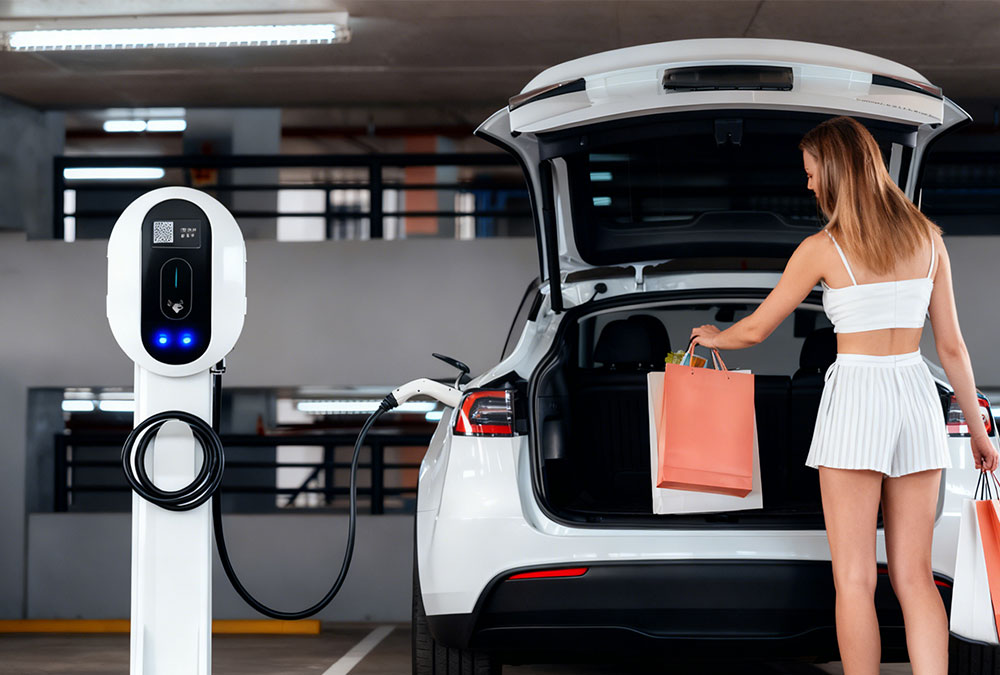
Chargers without software are like cafes without coffee. A robust backend system is not just an operational tool but a key to controlling costs.
Ideal software should support real-time monitoring, remote diagnostics, flexible pricing (per kWh, time, or subscription), booking navigation, and automatic fault alerts. Critically, it should be based on open standards (e.g., OCPP/OCPI) to avoid vendor lock-in. For example, AnengJi’s platform is compatible with 99% of OCPP-compliant devices and offers API integration with CRM/ERP systems for true intelligent management.
Advanced features like load balancing and smart charging flatten peak electricity usage, avoiding high demand charges—this is one of the core strategies to reduce annual electricity costs.
Only by understanding the full lifecycle costs can you develop a scientific pricing and revenue model. Take a 150kW DC fast charger as an example:
- Initial investment: $80,000 (after subsidies)
- Annual operational costs: $8,000–$12,000 (electricity, software, maintenance, insurance)
- Daily charging volume: 300kWh
- Pricing: $0.45/kWh
- Annual revenue: ~$49,000
- Gross profit (after electricity costs at $0.12/kWh): ~$36,000
- Net profit: $24,000–$28,000
- Payback period: 2.5–3.5 years
Enhance profitability with dynamic pricing (peak-hour surcharges) and idle fees (per-minute charges after charging completion) to boost turnover. Government incentives like the U.S. Inflation Reduction Act (up to 30% investment tax credit) and the EU’s “Fit for 55” program cover part of equipment costs, further shortening the payback period.
Go beyond electricity fees: Generate additional income through digital screen advertising, app splash ads, and partnerships with local businesses (e.g., “charge and get a coffee coupon”). For B2B clients, offer charger leasing, annual maintenance contracts, or solar-storage-charging integrated solutions to create stable cash flow.
Even the best station fails if users can’t find it. List your station on major platforms like Google Maps, Apple Maps, PlugShare, and ChargeHub. Upload high-quality photos, clearly indicate operating hours and payment methods, and respond to user reviews promptly—unaddressed negative reviews within 24 hours significantly hurt new customer conversion.
Daily operations are equally critical. Track four key metrics monthly:
- Equipment uptime (target ≥98%)
- Average repair time (<4 hours)
- User rating (≥4.5/5)
- Monthly utilization rate (fast charging >15%, Level 2 >30%)
Regular inspections of cables, connectors, and grounding systems, plus automatic alerts, minimize downtime and ensure user satisfaction.
Despite strong prospects, entrepreneurs face four key challenges: high upfront investment, complex permits, grid capacity limits, and growing competition.
Overcome these with a systematic approach:
- Reduce initial costs with government subsidies and leasing.
- Accelerate permits with digital tools.
- Alleviate grid pressure with smart load balancing or solar-storage integration.
- Focus on niche scenarios (e.g., logistics parks, taxi depots) or local ecosystems (e.g., integrating with mall loyalty programs) to create differentiation and avoid price wars.
An EV charging station business is essentially about building a new infrastructure node connecting energy, transportation, and digital life. It requires entrepreneurs to combine engineering expertise, compliance awareness, user insight, and business acumen.
By 2025, the industry has entered a “precision operation” phase. Only stations with complete permits, strategic locations, efficient operations, and persified revenue streams will achieve sustainable profitability. With full-stack support from professional partners in hardware compatibility, software management, permit applications, and data analysis, you can confidently enter this $100 billion track—reaping commercial rewards while driving the green mobility revolution.
The next charging network could start with your decision today. If you’re ready to start an EV charging business, AnengJi is your trusted ev charging hardware supplier and turnkey ev charging solution provider—offering OEM services, project consultation, and partner programs to support your growth.

 https://anengjipower.com/wp-content/uploads/2026/03/industrial-solar-battery-storage-solutions-container.webp
675
1000
Charging Station Engineer
https://anengjipower.com/wp-content/uploads/2025/09/anengji-dc-fast-charging-station-manufacturer-and-supplier-logo-white-1.png
Charging Station Engineer2026-03-18 07:10:422026-03-18 07:11:38Solar Energy Battery Storage: Commercial Guide & ROI Analysis
https://anengjipower.com/wp-content/uploads/2026/03/industrial-solar-battery-storage-solutions-container.webp
675
1000
Charging Station Engineer
https://anengjipower.com/wp-content/uploads/2025/09/anengji-dc-fast-charging-station-manufacturer-and-supplier-logo-white-1.png
Charging Station Engineer2026-03-18 07:10:422026-03-18 07:11:38Solar Energy Battery Storage: Commercial Guide & ROI Analysis https://anengjipower.com/wp-content/uploads/2026/03/containerized-energy-storage-system-for-industrial-use.webp
675
1000
Charging Station Engineer
https://anengjipower.com/wp-content/uploads/2025/09/anengji-dc-fast-charging-station-manufacturer-and-supplier-logo-white-1.png
Charging Station Engineer2026-03-18 02:55:302026-03-18 02:56:51Energy Storage System Guide: Types, ROI & Technical Comparison
https://anengjipower.com/wp-content/uploads/2026/03/containerized-energy-storage-system-for-industrial-use.webp
675
1000
Charging Station Engineer
https://anengjipower.com/wp-content/uploads/2025/09/anengji-dc-fast-charging-station-manufacturer-and-supplier-logo-white-1.png
Charging Station Engineer2026-03-18 02:55:302026-03-18 02:56:51Energy Storage System Guide: Types, ROI & Technical Comparison https://anengjipower.com/wp-content/uploads/2026/03/containerized-energy-storage-system-industrial-park.webp
675
1000
Charging Station Engineer
https://anengjipower.com/wp-content/uploads/2025/09/anengji-dc-fast-charging-station-manufacturer-and-supplier-logo-white-1.png
Charging Station Engineer2026-03-13 09:04:512026-03-13 09:05:40What Are Commercial Energy Storage Systems?
https://anengjipower.com/wp-content/uploads/2026/03/containerized-energy-storage-system-industrial-park.webp
675
1000
Charging Station Engineer
https://anengjipower.com/wp-content/uploads/2025/09/anengji-dc-fast-charging-station-manufacturer-and-supplier-logo-white-1.png
Charging Station Engineer2026-03-13 09:04:512026-03-13 09:05:40What Are Commercial Energy Storage Systems?


Leave a Reply
Want to join the discussion?Feel free to contribute!