
Introduction
As we navigate through the energy landscape of 2026, the adoption of industrial BESS solutions for manufacturing plants has transitioned from an environmental “nice-to-have” to an absolute economic necessity. According to the IEA World Energy Outlook 2025, industrial electricity prices in Central Europe have faced significant volatility, with Poland seeing a 16% year-on-year increase in peak demand surcharges. For a factory, a single 15-minute spike in power usage can now inflate the entire month’s utility bill by over €12,000.
A high-performance Battery Energy Storage System (BESS) is no longer just a backup power source; it is a sophisticated financial instrument. By performing peak shaving, optimizing renewable energy self-consumption, and ensuring grid stability, these systems are delivering an average ROI of 3.5 to 4.5 years for Polish manufacturing facilities.
Overview of BESS for Industrial Manufacturing in Poland
Why Industrial Manufacturing Needs BESS in 2026
The Polish manufacturing sector—ranging from heavy steelworks to automotive assembly—is currently facing a “triple threat”:
- Rising Grid Instability: With the rapid integration of offshore wind and solar, the Polish grid (PSE) requires industrial players to provide more “flexibility.”
- Peak Demand Charges: Utilities are increasingly aggressive with penalties for exceeding contracted capacity.
- Decarbonization Targets: Under the EU Green Deal, manufacturers must lower their “Scope 2” emissions to remain in global supply chains.
The Growth of Energy Storage in Poland
Data from the Polish Energy Storage Association (PSME) 2026 Report indicates that the C&I (Commercial & Industrial) segment has overtaken utility-scale projects in terms of annual growth rate. This is fueled by the PLN 4 billion national subsidy scheme and the rollout of industrial microgrid solutions across the Katowice and Wrocław industrial hubs.
What Is a Battery Energy Storage System (BESS) for Industrial Manufacturing?
Core Components: The Engineering Harmony
To an engineer, a BESS is a complex harmony of four distinct sub-systems:
- Battery System (LFP): In 2026, Lithium Iron Phosphate (LFP) has become the gold standard due to its 10,000+ cycle life and thermal stability.
- PCS (Power Conversion System): The bi-directional “heart” that handles AC/DC conversion.
- BMS (Battery Management System): The “safety gatekeeper” preventing cell degradation.
- EMS (Energy Management System): The AI-driven “brain” that automates battery storage for peak demand reduction.
Top 10 Battery Energy Storage System Manufacturers in Poland (2026 List)
This list combines global technology leaders with major Polish domestic manufacturers who provide localized engineering and grid compliance.
1. Impact Clean Power Technology (Poland’s Domestic Leader)
- Best for: Heavy-duty industrial applications and customized containerized solutions.
- Key Strength: Truly Polish “GigafactoryX” production. They specialize in high-energy density systems with proprietary BMS developed in-house.
- Technical Highlights: Offers the Battery Container 4MWh series featuring liquid cooling and a 20-year design life.
- Strategic Advantage: Local technical support and deep understanding of Polish fire safety (PPOŻ) regulations.
2. LG Energy Solution (Wrocław Manufacturing Base)
- Best for: High-performance LFP systems with local European logistics.
- Key Strength: Operates one of the world’s largest battery plants in Wrocław, Poland. They have shifted significant capacity to dedicated factory energy storage solutions.
- Technical Highlights: Their new LFP-based grid-scale systems offer a round-trip efficiency (RTE) of >90%.
- Strategic Advantage: “Made in Poland” status helps in securing local government grants and reducing Scope 3 transportation emissions.
3. APS Energia (Polish Power Electronics Expert)
- Best for: Industrial power quality and mission-critical backup power.
- Key Strength: A Polish powerhouse in power electronics. Their systems are renowned for high-reliability inverters and seamless PCS BMS EMS integration.
- Technical Highlights: APSTORE BESS series designed for 400V/15kV grid connection with modular scalability from 100kWh to 5MWh.
- Strategic Advantage: Decades of experience in the Polish energy sector, providing turnkey O&M (Operation and Maintenance).
4. CATL (Global Innovation Benchmark)
- Best for: Large-scale energy-intensive factories requiring ultra-long cycle life.
- Key Strength: The EnerOne and EnerC series. They lead the market in cell-level thermal management.
- Technical Highlights: 280Ah/314Ah high-capacity LFP cells with up to 12,000 cycles.
- Strategic Advantage: Unmatched economy of scale, leading to the lowest battery energy storage system for factories cost per kWh.
5. BYD Energy Storage
- Best for: Safety-critical indoor installations and modular expansion.
- Key Strength: The “Blade Battery” technology. It is virtually immune to thermal runaway during nail penetration tests.
- Technical Highlights: MC Cube-T system featuring a “Cell-to-System” design, increasing space utilization by 33%.
- Strategic Advantage: Highly standardized modules that allow for “Plug & Play” installation on factory floors.
6. AnengJi Power (C&I & EV Integrated Solutions)
- Best for: Mid-to-large factories looking for integrated BESS + EV Charging.
- Key Strength: Specializes in commercial and industrial energy storage suppliers in Poland who need to balance EV fleet charging with factory loads.
- Technical Highlights: Smart liquid-cooled cabinets (215kWh/100kW) with integrated fire suppression (Aerosol + Water).
- Strategic Advantage: Faster deployment and higher flexibility than Tesla or BYD for C&I “behind-the-meter” scenarios. Supports OEM/ODM for Polish integrators.
7. Tesla Energy
- Best for: Rapid deployment and minimalist, all-in-one software.
- Key Strength: The Megapack 3. It is the most vertically integrated system, with an industry-leading software suite (Autobidder).
- Technical Highlights: 3.9MWh per unit with an integrated 1.9MW bi-directional inverter.
- Strategic Advantage: Extremely fast site commissioning; however, local Polish service relies on a centralized European team.
8. Fluence Energy
- Best for: AI-driven energy trading and complex industrial microgrids.
- Key Strength: The Gridstack Pro platform. Their “Fluence OS” is a leader in maximizing revenue from frequency regulation and DSR markets.
- Technical Highlights: Advanced predictive analytics that reduce auxiliary power consumption by 20%.
- Strategic Advantage: Best-in-class cybersecurity (SOC 2 compliant), essential for critical Polish infrastructure.
9. Sungrow Power Supply
- Best for: Solar-heavy industrial parks and high-efficiency power conversion.
- Key Strength: The PowerTitan and PowerStack series. Sungrow is the world’s leading PCS manufacturer, ensuring the highest conversion efficiency.
- Technical Highlights: Liquid-cooled system with a cell temperature difference maintained within ±2.5°C.
- Strategic Advantage: Highly competitive pricing and a strong distribution network within the Polish PV market.
10. Ekoenergetyka (Polish EV-to-Grid Pioneer)
- Best for: Transport hubs and factories with large electric logistics fleets.
- Key Strength: A Polish leader in high-power charging, now offering industrial backup power solutions integrated with charging hubs.
- Technical Highlights: Axon Side DLBS intelligent power units that manage BESS discharge for ultra-fast EV charging.
- Strategic Advantage: Leading the “Charging + Storage” transition in Poland with a massive local R&D center in Zielona Góra.
Data Analysis: Why ROI for Polish BESS is Accelerating in 2026
To understand the battery energy storage system for factories cost, we must look at the “Value Stack.” In Poland, a 1MWh system typically provides savings across four streams:
| Savings Category | Mechanism | Est. Annual Impact (PLN) |
| Peak Shaving | Lowering contracted capacity | 250,000 – 450,000 |
| Arbitrage | Charging at night (low tariff) | 120,000 – 200,000 |
| PV Self-Consumption | Avoiding grid sell-back losses | 180,000 – 300,000 |
| Grid Services | DSR and frequency response | 50,000 – 150,000 |
Pro Tip from the Field: “If your factory’s demand charge (Moc umowna) exceeds 40% of your total bill, your BESS will likely pay for itself in under 42 months.”
[Click here to get a customized ROI calculation for your Polish facility →]
Industrial Applications: How Polish Factories Use BESS
1. Peak Shaving for Manufacturing Plants
For heavy industries (steel, glass, paper), a BESS acts as a “buffer.” It discharges during high-load periods, ensuring the factory never exceeds its grid limit. This is the #1 driver for industrial BESS solutions for manufacturing plants in Poland.
2. Renewable Energy Storage Integration
With Poland’s new net-billing rules, selling solar power to the grid at midday is financially inefficient. A BESS allows factories to “time-shift” their solar energy to the evening shift, maximizing energy independence.
3. Backup Power for Critical Production Lines
In pharmaceutical or high-tech manufacturing, even a 100ms power dip can ruin a batch. Modern BESS units provide UPS-grade protection with a seamless transition (<20ms).
How to Choose the Right BESS Manufacturer in Poland (Buyer’s Guide)
1. Liquid Cooling vs. Air Cooling
In the variable Polish climate, liquid cooling is superior. It ensures uniform temperature across all cells, extending the battery’s life by up to 25% compared to air-cooled systems.
2. Local Compliance and Fire Safety
The system must comply with NC RfG grid codes and Polish fire safety standards. Choosing a manufacturer with a strong local presence (like Impact or APS Energia) ensures a smoother permitting process with local fire departments (PSP).
3. EMS & Software Intelligence
An “intelligent” BESS can talk to the Polish Power Exchange (TGE). Look for systems that use AI to predict tomorrow’s energy prices and optimize charging schedules accordingly.
The Future of Industrial Energy in Europe: BESS + EV + AI
By 2027, the “Smart Factory” in Poland will be a self-contained energy ecosystem. We are seeing a massive trend toward industrial microgrid solutions where the BESS acts as the central hub, managing rooftop solar, the factory load, and a fleet of electric trucks. Integrated solutions from providers like AnengJi Power are specifically designed for this convergence, offering high-power output and modular scalability.
Ready to Electrify?
Discover how our 2026 Liquid-Cooled C&I BESS can reduce your operational costs by up to 60%.
FAQ – BESS for Industrial Manufacturing
What is BESS in industrial manufacturing?
BESS (Battery Energy Storage System) is an integrated system of lithium-ion batteries and power electronics that stores electricity to reduce costs, provide backup, and stabilize the factory grid.
How much can a factory save with BESS?
In Poland, most factories reduce their total energy bill by 30% to 50% by eliminating peak demand charges and optimizing solar usage.
Is BESS safe for indoor installation?
Modern systems using LFP (Lithium Iron Phosphate) chemistry and integrated fire suppression are safe for installation in or near industrial buildings, provided they meet local PPOŻ regulations.
What is the lifespan of an industrial BESS?
A high-quality system from a leading manufacturer (e.g., CATL or Impact) is designed for a 15–20 year lifespan, typically supporting 6,000 to 10,000 cycles.
How long does it take to install a BESS?
A modular, containerized system can be installed and commissioned in 4 to 8 weeks, assuming the grid connection permits are already in place.
As an engineer with two decades in power systems, I’ve seen many trends come and go, but the shift to BESS is permanent. In the Polish market, the “best” manufacturer isn’t just the one with the lowest price—it’s the one that provides local service, grid compliance, and the software intelligence to turn a battery into a profit center.
 https://anengjipower.com/wp-content/uploads/2026/03/romania-3-5mw-industrial-bess-pcs-array.webp
675
1000
Charging Station Engineer
https://anengjipower.com/wp-content/uploads/2025/09/anengji-dc-fast-charging-station-manufacturer-and-supplier-logo-white-1.png
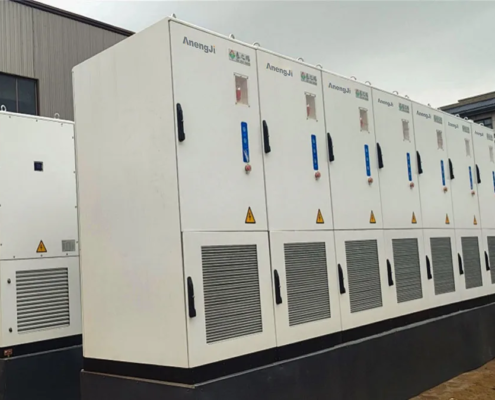
Charging Station Engineer2026-03-06 17:30:032026-03-06 09:27:24Romania 3.5MW/7.3MWh Industrial Energy Storage: High-Capacity Grid Integration
https://anengjipower.com/wp-content/uploads/2026/03/romania-3-5mw-industrial-bess-pcs-array.webp
675
1000
Charging Station Engineer
https://anengjipower.com/wp-content/uploads/2025/09/anengji-dc-fast-charging-station-manufacturer-and-supplier-logo-white-1.png
Charging Station Engineer2026-03-06 17:30:032026-03-06 09:27:24Romania 3.5MW/7.3MWh Industrial Energy Storage: High-Capacity Grid Integration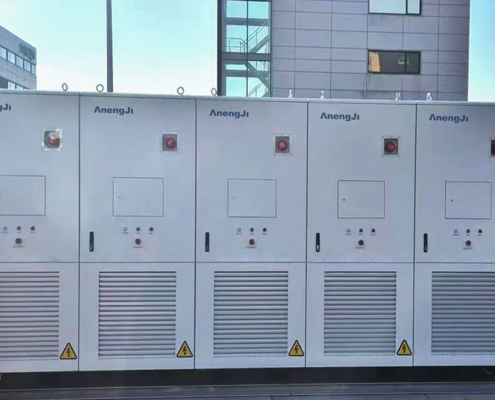 https://anengjipower.com/wp-content/uploads/2026/03/new-zealand-500kw-industrial-bess-outdoor-installation.webp
675
1000
Charging Station Engineer
https://anengjipower.com/wp-content/uploads/2025/09/anengji-dc-fast-charging-station-manufacturer-and-supplier-logo-white-1.png
Charging Station Engineer2026-03-06 07:28:092026-03-06 07:28:31New Zealand BESS: 500kW/1165kWh Frequency Regulation Solution
https://anengjipower.com/wp-content/uploads/2026/03/new-zealand-500kw-industrial-bess-outdoor-installation.webp
675
1000
Charging Station Engineer
https://anengjipower.com/wp-content/uploads/2025/09/anengji-dc-fast-charging-station-manufacturer-and-supplier-logo-white-1.png
Charging Station Engineer2026-03-06 07:28:092026-03-06 07:28:31New Zealand BESS: 500kW/1165kWh Frequency Regulation Solution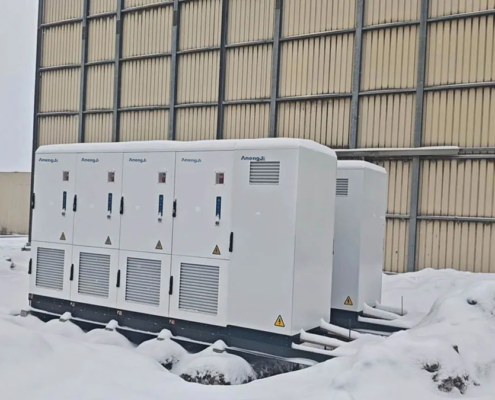 https://anengjipower.com/wp-content/uploads/2026/03/Ukraine-1MW2MWh-battery-energy-storage-system-installation.webp
675
1000
Charging Station Engineer
https://anengjipower.com/wp-content/uploads/2025/09/anengji-dc-fast-charging-station-manufacturer-and-supplier-logo-white-1.png
Charging Station Engineer2026-03-06 07:05:042026-03-06 07:21:46Ukraine 1MW/2MWh Energy Storage: 20ms Seamless Backup for Industrial Resilience
https://anengjipower.com/wp-content/uploads/2026/03/Ukraine-1MW2MWh-battery-energy-storage-system-installation.webp
675
1000
Charging Station Engineer
https://anengjipower.com/wp-content/uploads/2025/09/anengji-dc-fast-charging-station-manufacturer-and-supplier-logo-white-1.png
Charging Station Engineer2026-03-06 07:05:042026-03-06 07:21:46Ukraine 1MW/2MWh Energy Storage: 20ms Seamless Backup for Industrial Resilience

Leave a Reply
Want to join the discussion?Feel free to contribute!