
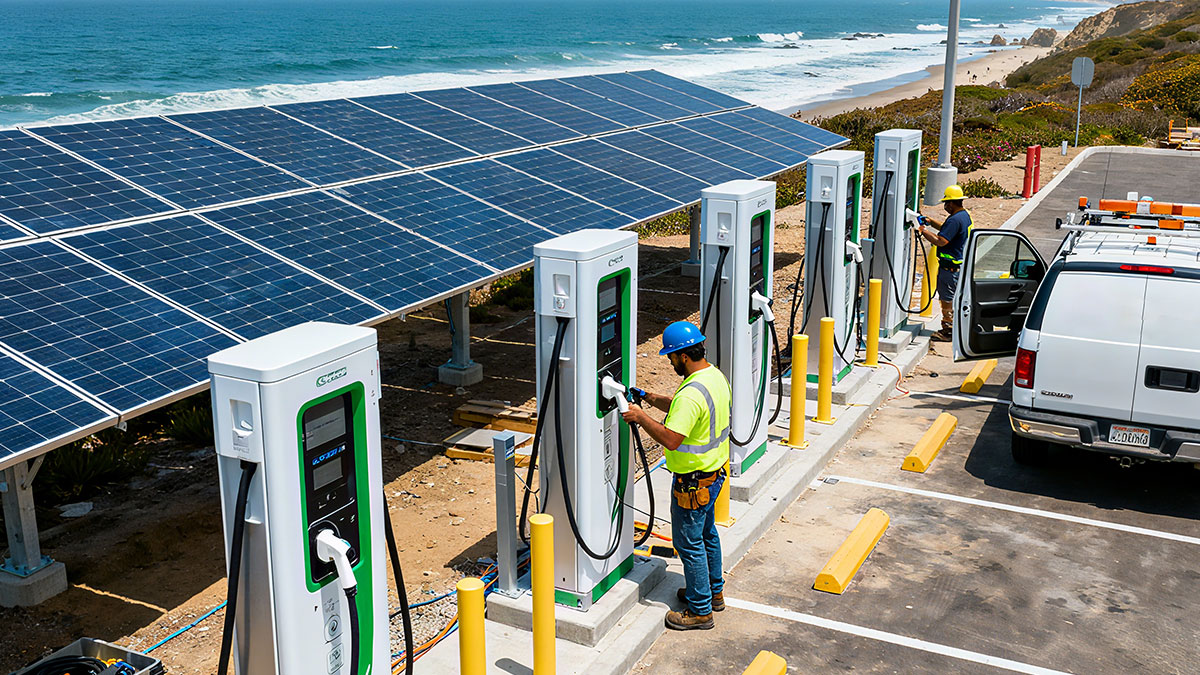
How Much Does It Cost to Install an EV Charger?
If you’re planning to install an electric vehicle (EV) charger for your home or business, one of the first questions you’ll ask is: how much does it cost to install an EV charger?
With EV adoption accelerating globally, both private owners and business operators are increasingly focusing on charging infrastructure. Whether you’re upgrading for convenience, improving customer experience, or positioning for the future energy transition, understanding the full EV charger installation cost is essential for making an informed investment.
This guide takes you through a detailed breakdown of home and commercial EV charger installation costs, covering everything from equipment pricing and electrical upgrades to permits, labor, and long-term maintenance—so you can plan your budget with confidence.
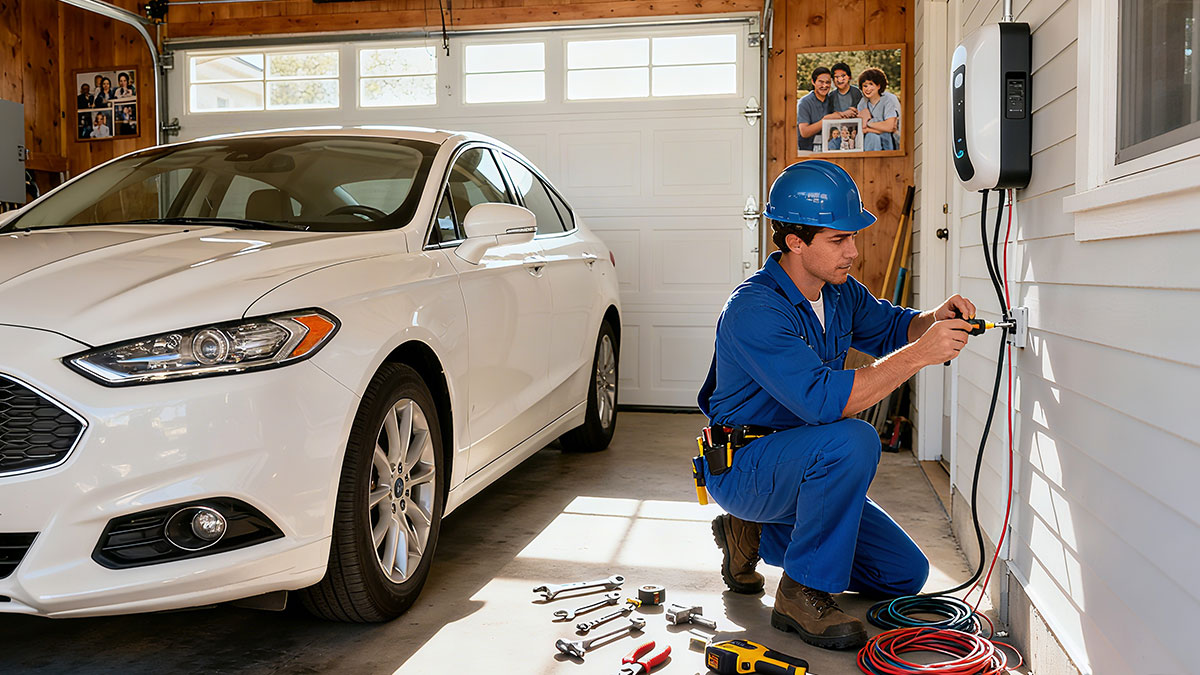
Home EV Charger Installation Cost Breakdown
For most EV owners, the portable Level 1 charger that comes with the vehicle is convenient but painfully slow—it adds only about 3–5 miles of range per hour. Fully charging a standard EV battery can take over 24 hours. Clearly, that’s not practical for daily use.
That’s why most drivers choose to install a Level 2 home charger (240V). A Level 2 charger can add 20–50 miles of range per hour, fully charging most EVs overnight in 6–10 hours. This setup offers the ideal balance between speed and cost, making it the most popular choice for residential charging in 2025.
Based on current U.S. market data, the total cost of installing a home EV charger typically ranges from $500 to $2,500. However, the actual price depends heavily on your home’s electrical system, the charger model, installation complexity, and local labor rates.
If you already have a nearby NEMA 14-50 outlet and a panel with sufficient capacity, installation could be as low as $500–$1,000. But if you need new wiring or an electrical panel upgrade, expect to spend $1,000–$1,500. For older homes requiring significant rewiring, the total could exceed $2,000.
Equipment Cost: The Heart of the Investment
The charger itself makes up a large part of your total cost. Level 2 chargers vary from $300 to $1,200, depending on the brand, build quality, and smart features.
Basic plug-and-play units are cheaper but lack connectivity or energy management options. Smart chargers, on the other hand, support Wi-Fi or Bluetooth connections, app control, real-time monitoring, and time-of-use charging to take advantage of off-peak rates. These models generally range from $600 to $1,200, with premium units like Tesla Wall Connector or ChargePoint Home Flex at the higher end.
If your EV supports bidirectional charging (V2G or V2H), investing in a compatible charger may pay off long-term. These advanced systems can provide backup power during outages or even feed energy back to the grid, turning your EV into part of a distributed energy network.
Additional Electrical Upgrade Costs
In many older homes, the existing electrical system wasn’t designed for high-power EV charging. Before installation, a certified electrician must assess whether your home’s wiring and electrical panel can handle the added load.
Installing a dedicated 240V circuit from your main panel to the charger typically costs $200–$800, depending on cable length and building type. If your electrical panel capacity is under 100 amps, you might need to upgrade to a 200-amp panel—an upgrade that costs between $500 and $2,000, and sometimes more.
Longer cable runs or complex routing (e.g., through finished walls or underground conduits) increase labor and material costs. To save money, choose a charger location as close as possible to your electrical panel.
Even if your garage already has a NEMA 14-50 outlet, a professional inspection is essential. Some outlets aren’t designed for continuous high-current loads. Using undersized wiring or mismatched breakers can pose overheating or fire hazards.
Labor, Permits, and Inspection Costs
Installing a high-voltage EV charger isn’t a DIY project. It must be performed by a licensed electrician, as required by most local regulations. Labor rates vary by region but typically range between $400 and $1,500 per installation.
If wall cutting, trenching, or drywall repair is needed, additional fees may apply.
Most municipalities also require installation permits and safety inspections to ensure compliance with the National Electrical Code (NEC) and local building codes. These administrative costs typically fall between $50 and $500, depending on your area.
Estimated Cost Breakdown for a Home EV Charger Installation
| Cost Item | Typical Range (USD) |
|---|---|
| Charger equipment | $300 – $1,200 |
| Wiring and materials | $200 – $800 |
| Electrical panel upgrade | $500 – $2,000 |
| Electrician labor | $400 – $1,500 |
| Permit and inspection fees | $50 – $500 |
| Optional accessories (mounts, surge protector, etc.) | $50 – $300 |
| Total Estimated Range | $500 – $2,500+ |
Ongoing Costs and Long-Term Value
Once installed, operating costs are relatively low. Some smart chargers charge a small subscription fee ($5–$15/month) for cloud-based monitoring and software updates. Hardware maintenance is minimal, and most chargers last 8–10 years.
Electricity cost remains the main expense. At an average U.S. electricity rate of $0.15 per kWh, fully charging a 75 kWh EV battery costs about $11, far cheaper than refueling a gasoline vehicle.
From an investment standpoint, a home EV charger can also increase property value. Studies show homes with installed chargers sell for 3–5% higher on average. Plus, in the U.S., homeowners may qualify for a federal tax credit up to $1,000 (IRC 25C), with many states offering additional rebates.
Commercial EV Charging Station Installation Cost
For businesses, installing EV charging stations isn’t just about going green—it’s about attracting customers, improving brand image, and creating new revenue opportunities. Whether you manage a hotel, shopping mall, office building, or industrial park, offering EV charging services can make your property more appealing and future-ready.
Commercial charging setups are generally divided into Level 2 AC chargers and DC fast chargers, each with distinct installation costs and ROI potential.
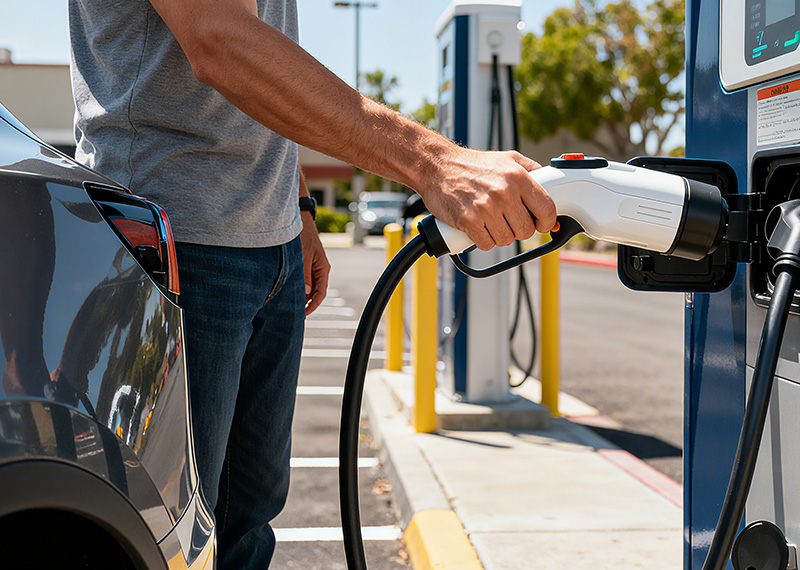
Level 2 Commercial Chargers: Lower Cost, Steady Returns
Commercial-grade Level 2 chargers are ideal for workplaces, parking lots, retail centers, and residential complexes. With power outputs between 7kW and 22kW, they can recharge most EVs in several hours—perfect for vehicles parked for extended periods.
Compared to residential units, commercial chargers are built for durability. They feature IP65-rated enclosures, RFID or QR code activation, and Energy Management Systems (EMS) for load balancing and remote monitoring.
The combined equipment and installation cost for each unit typically ranges from $3,000 to $10,000, depending on brand, site condition, and feature set.
Electrical upgrades are often the biggest variable. In cases where power capacity is insufficient, transformer or high-voltage system upgrades can add tens of thousands of dollars. Multi-unit sites may also need a centralized charging management platform for billing, user management, and analytics.
Despite the higher upfront cost, Level 2 commercial chargers generally achieve ROI within 3–5 years, especially in high-traffic locations.
DC Fast Chargers: High Investment, High Return
If your goal is to create a rapid-charging hub—such as along highways, at gas stations, or near transportation hubs—then DC fast chargers (DCFC) are the right choice.
Modern DC chargers can add 80% of a battery’s capacity in just 30 minutes, serving a wide range of vehicles from compact EVs to large SUVs. Common power levels include 50kW, 120kW, 180kW, and even 350kW liquid-cooled chargers.
But these systems are significantly more expensive to build. A single DC fast charger unit costs between $10,000 and $50,000. Installation is also more complex due to heavy power requirements, often requiring transformer upgrades, cooling systems, and utility coordination. The total installed cost per charger can easily reach $50,000–$200,000.
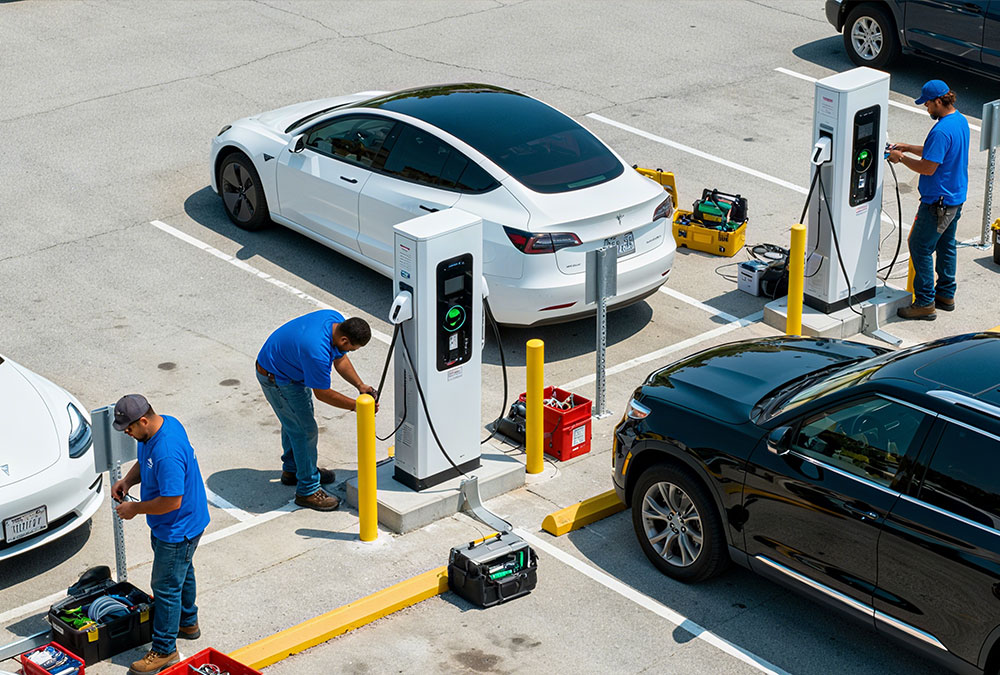
Estimated Cost Breakdown for a DC Fast Charging Station
| Cost Item | Typical Range (USD) |
|---|---|
| DC fast charging equipment | $10,000 – $50,000 |
| High-voltage connection & transformer | $20,000 – $100,000+ |
| Site preparation (paving, canopy, lighting) | $5,000 – $20,000 |
| Charging management software (CSMS) | $5,000 – $15,000 |
| Permits & grid connection fees | $1,000 – $10,000 |
| Total per station | $50,000 – $200,000+ |
Despite the high cost, demand for DC fast charging is rising rapidly. As EV ownership exceeds 20% in many regions, strategically placed fast chargers can become valuable long-term assets, generating steady revenue from charging fees, advertising, and partnerships.
Balancing Short-Term Costs and Long-Term Value
Whether you’re a homeowner or a business investor, installing an EV charging station is both a technical and financial decision. The true value lies not just in immediate convenience but in future readiness and sustainability.
For individuals, a home EV charger offers daily convenience, time savings, and property appreciation. For businesses, charging infrastructure strengthens brand reputation and opens new income streams through customer loyalty and paid charging services.
As technology advances and global carbon goals tighten, today’s investment will continue paying off for years to come. Proper planning, certified installation, and leveraging government incentives ensure your EV charger installation is both safe and financially sound.
FAQ: Common Questions About EV Charger Installation Cost
1. How much does a home EV charger installation cost in the U.S. (2025)?
Between $500 and $2,500, depending on equipment, labor, and electrical upgrades.
2. How long does it take to install an EV charger?
Most home installations take 3–6 hours. Commercial DC stations may take several weeks due to permits and grid connection.
3. Can I install an EV charger myself?
No. Installation should always be done by a licensed electrician to ensure compliance and safety.
4. What rebates or tax credits are available for EV charger installation?
The U.S. federal government offers up to $1,000 in tax credits, with additional state or utility rebates in many areas.
5. Is it worth installing an EV charger for business use?
Yes. Beyond sustainability, commercial charging can drive customer retention and generate new revenue.
Conclusion
Investing in EV charging infrastructure—whether for personal or commercial use—means preparing for a cleaner, smarter transportation future.
As the market expands, choosing reliable products and professional installation services ensures long-term safety, efficiency, and ROI.
For tailored EV charging solutions, OEM/ODM customization, or global logistics and installation support, contact us today — your trusted partner in advanced charging technology.
 https://anengjipower.com/wp-content/uploads/2026/09/AnengJipower-European-BESS-Project-Design-Environment-1.webp
675
1000
Charging Station Engineer
https://anengjipower.com/wp-content/uploads/2025/09/anengji-dc-fast-charging-station-manufacturer-and-supplier-logo-white-1.png
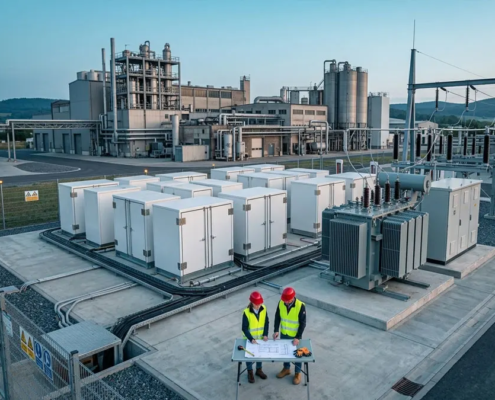
Charging Station Engineer2026-09-24 09:05:462026-09-24 09:08:39Battery Energy Storage System Design Guide for Europe
https://anengjipower.com/wp-content/uploads/2026/09/AnengJipower-European-BESS-Project-Design-Environment-1.webp
675
1000
Charging Station Engineer
https://anengjipower.com/wp-content/uploads/2025/09/anengji-dc-fast-charging-station-manufacturer-and-supplier-logo-white-1.png
Charging Station Engineer2026-09-24 09:05:462026-09-24 09:08:39Battery Energy Storage System Design Guide for Europe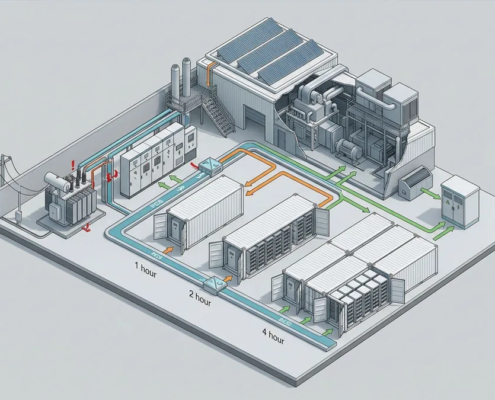 https://anengjipower.com/wp-content/uploads/2026/09/anengjipower-How-BESS-Power-and-Energy-Shape-Storage-Duration.webp
675
1000
Charging Station Engineer
https://anengjipower.com/wp-content/uploads/2025/09/anengji-dc-fast-charging-station-manufacturer-and-supplier-logo-white-1.png
Charging Station Engineer2026-09-23 09:06:532026-09-23 09:08:02BESS Duration Guide: How to Choose 1, 2 or 4 Hours
https://anengjipower.com/wp-content/uploads/2026/09/anengjipower-How-BESS-Power-and-Energy-Shape-Storage-Duration.webp
675
1000
Charging Station Engineer
https://anengjipower.com/wp-content/uploads/2025/09/anengji-dc-fast-charging-station-manufacturer-and-supplier-logo-white-1.png
Charging Station Engineer2026-09-23 09:06:532026-09-23 09:08:02BESS Duration Guide: How to Choose 1, 2 or 4 Hours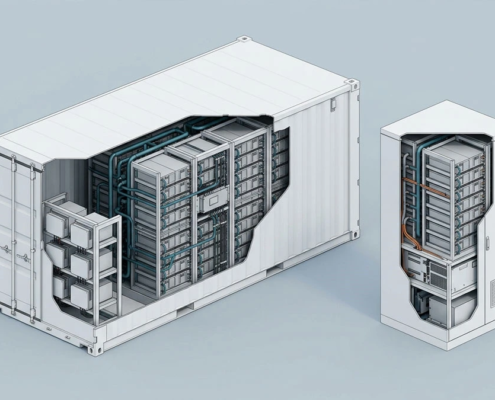 https://anengjipower.com/wp-content/uploads/2026/09/AnengJIPower-Cabinet-vs-Containerized-BESS-3D-Isometric-Structural-Cutaway.webp
675
1000
Charging Station Engineer
https://anengjipower.com/wp-content/uploads/2025/09/anengji-dc-fast-charging-station-manufacturer-and-supplier-logo-white-1.png
Charging Station Engineer2026-09-18 07:19:042026-09-18 07:19:38Cabinet vs Containerized BESS: How to Choose for Large C&I
https://anengjipower.com/wp-content/uploads/2026/09/AnengJIPower-Cabinet-vs-Containerized-BESS-3D-Isometric-Structural-Cutaway.webp
675
1000
Charging Station Engineer
https://anengjipower.com/wp-content/uploads/2025/09/anengji-dc-fast-charging-station-manufacturer-and-supplier-logo-white-1.png
Charging Station Engineer2026-09-18 07:19:042026-09-18 07:19:38Cabinet vs Containerized BESS: How to Choose for Large C&I


Leave a Reply
Want to join the discussion?Feel free to contribute!