
Introduction
As industrial electricity tariffs become increasingly volatile in 2026, the demand for precise energy management has never been higher. For facility managers and electrical engineers, performing an accurate BESS sizing calculation is the first and most critical step in transitioning toward energy independence and operational cost reduction. A poorly sized system—whether under-powered or over-invested—can result in missed ROI targets or, worse, failure to support critical industrial loads during grid fluctuations. This guide provides a technical roadmap for battery energy storage system sizing, ensuring that your infrastructure is optimized for peak shaving, renewable integration, and long-term financial viability.
What Is BESS Sizing Calculation and Why It Matters in Industrial Energy Storage
Definition of Battery Energy Storage System Sizing (kW vs kWh)
In the context of industrial power systems, a BESS sizing calculation is the process of determining two distinct yet related variables: Power (kW/MW) and Energy (kWh/MWh).
- Power (kW): Defines the instantaneous “strength” of the system—how much load it can support at any given second.
- Energy (kWh): Defines the “endurance”—how long the system can maintain that power output.
Understanding this distinction is vital for industrial energy storage sizing, as a system designed for 15 minutes of high-power peak shaving looks very different from one designed for 4 hours of emergency backup.
Why Accurate BESS Sizing Is Critical for Industrial Facilities
For manufacturing plants, an accurate BESS system design guide prevents “capital leakage.” Over-sizing leads to high upfront costs and extended payback periods. Conversely, under-sizing prevents the system from effectively capping “demand charges,” which in many 2026 utility structures, account for up to 50% of the total electricity bill.
Common Mistakes in Energy Storage Sizing
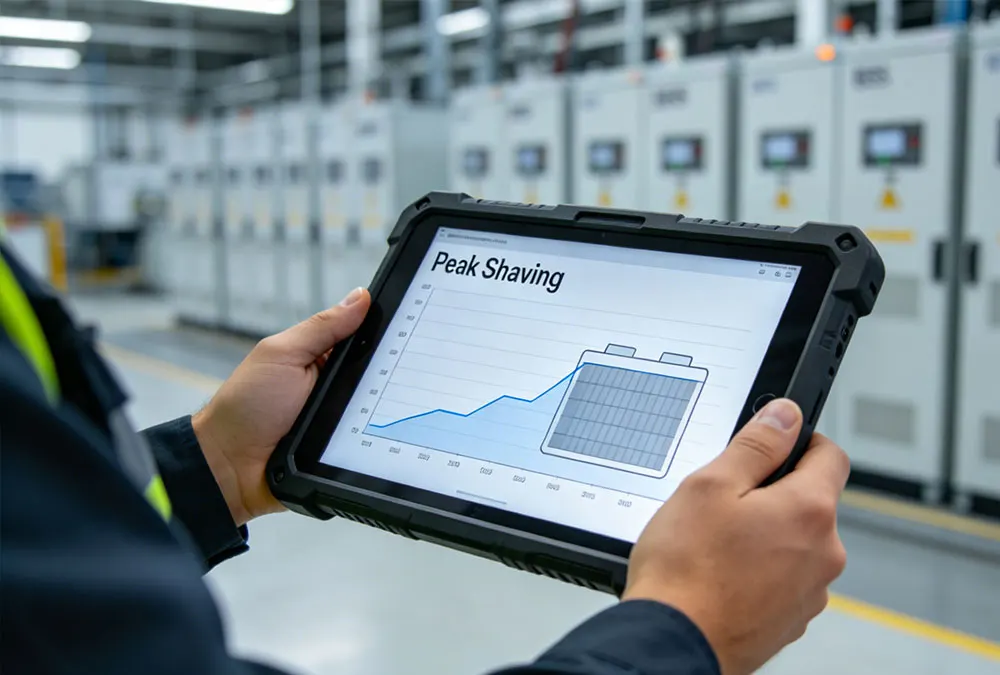
The most frequent error is relying on “average” monthly consumption rather than peak load demand analysis. Industrial environments are high-variance; a motor startup can draw five times the running current. Ignoring these transient spikes leads to system tripping or accelerated battery degradation.
Key Parameters in BESS Sizing Calculation (Power, Energy, Load Profile)
Power vs Energy: Understanding kW, kWh, and Storage Duration
The relationship between Power (P) and Energy (E) is expressed by the storage duration calculation (hours):
In industrial applications, “Power-intensive” systems (0.5h to 1h duration) are used for frequency regulation, while “Energy-intensive” systems (2h to 4h+) are the standard for load profile analysis and shifting.
Load Profile Analysis for Industrial Manufacturing
To calculate the correct size, you must analyze the 15-minute interval data (Smart Meter data) over a full year. This reveals the “Load Shape.”
- Flat Loads: Require less power but consistent energy.
- Spiky Loads: Require high-power discharge (high C-rate) for short bursts.
Peak Demand and Demand Charge Considerations
In 2026, many global grids utilize “Time-of-Use” (TOU) pricing. Industrial battery storage sizing must account for the specific hours when the utility hits you with the highest penalties.
Grid Constraints and Renewable Integration Factors
If you are integrating solar, the how to size battery energy storage system for solar plant methodology shifts. You must calculate the “surplus” energy generated during the day that needs to be “time-shifted” to the evening ramp.
Step-by-Step BESS Sizing Calculation Method for Industrial Applications
Step 1: Collect and Analyze Energy Consumption Data
Obtain at least 12 months of “Green Button” data or interval meter data. This is the foundation of battery storage design calculation.
Step 2: Identify Peak Shaving or Backup Requirements
Determine your “Target Peak.” If your current peak is 1,000 kW and you want to cap it at 700 kW, your BESS must provide at least 300 kW of discharge power.
Step 3: Calculate Required Battery Capacity (kWh)
Using the target peak, calculate the area under the curve where the load exceeds your cap.
Step 4: Determine Power Rating (kW or MW)
Factor in the power vs energy sizing (kW vs kWh) ratio. For industrial UPS/Backup, ensure the PCS (Power Conversion System) can handle the inrush current of your largest motors.
Step 5: Define Storage Duration (2h, 4h, 6h Systems)
Most bess sizing for industrial facilities targets a 2-hour or 4-hour window, as this aligns with most utility peak windows in 2025-2026.
BESS Sizing Calculation Formulas Explained (With Examples)
Basic BESS Capacity Formula
To determine the usable energy (E-usable), we use the standard bess capacity calculation formula kwh mw explained:
Where:
- DoD: Depth of Discharge (typically 0.80-0.90 for LFP).
- Efficiency: Round-trip efficiency (typically 0.85-0.92).
Peak Shaving Calculation Example for Factories
Scenario: A factory wants to shave 200kW off their peak for a duration of 2 hours daily.
- Required Discharge Energy: 200 kW × 2 h = 400 kWh.
- Accounting for DoD (90%): 400 / 0.90 = 444.4 kWh.
- Accounting for Efficiency (90%): 444.4 / 0.90 = 493.8 kWh.
Result: The factory needs a system rated at approximately 200kW / 500kWh.
Solar + Storage Sizing Calculation Example
When looking at how to size battery energy storage system for solar plant, the goal is “Self-Consumption.” If your solar produces a 500kWh surplus during the day, your BESS capacity should be at least $500kWh / \eta$ to capture all “clipped” energy.
EV Charging + BESS Sizing Scenario
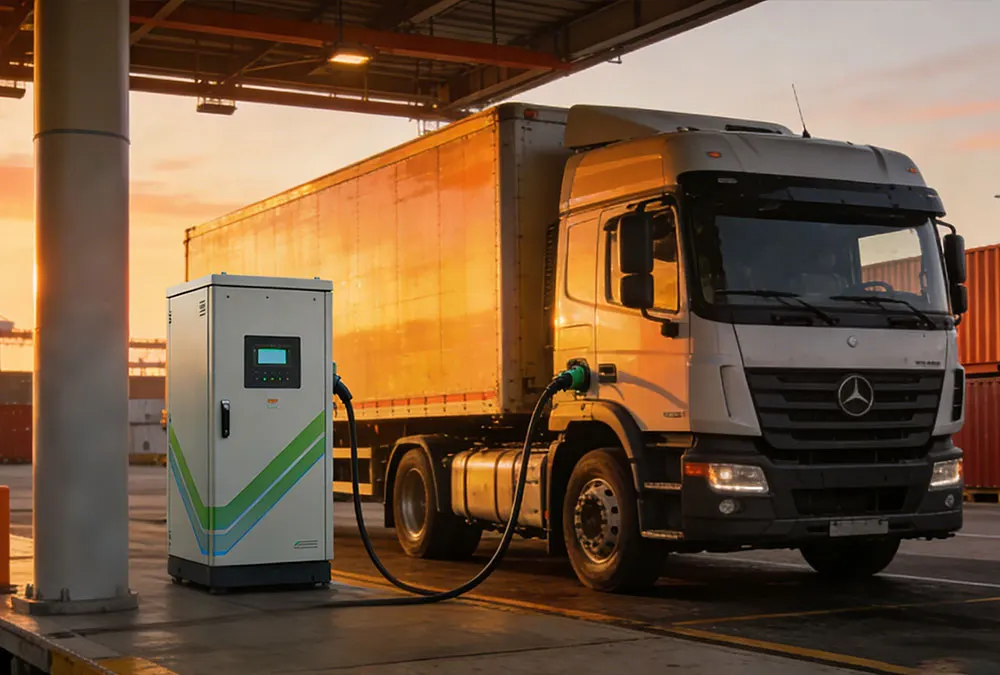
For bess sizing for ev charging station applications, sizing is based on the “Buffer” needed to prevent grid overloading. If you have two 120kW DC Fast Chargers but only a 100kW grid connection, the BESS must provide the 140kW deficit.
BESS Sizing for Different Industrial Use Cases
Peak Shaving for Manufacturing Plants
Focus on the bess capacity calculation formula kwh mw explained to ensure the C-rate (ratio of power to energy) matches your machine cycles. High-precision manufacturing often requires 1C or 2C batteries for rapid response.
Backup Power for Critical Operations
Here, battery storage sizing for peak shaving industrial load takes a backseat to “Autonomy Time.” Sizing is determined by how many hours the facility must run during a blackout.
EV Charging Infrastructure with Energy Storage
As 2026 sees more electric fleets, BESS sizing for ev charging station applications becomes about “Transformer Relief.” The BESS acts as a “Power Reservoir” that refills slowly from the grid and empties quickly into the vehicles.
Economic Analysis in BESS Sizing Calculation (ROI, Payback, Cost Savings)
How BESS Reduces Electricity Bills (Demand Charge Reduction)
The primary driver for battery storage ROI calculation is the reduction of demand charges. In many industrial sectors, reducing the peak by 20% can yield a 15% reduction in the total monthly bill.
Payback Period and ROI Calculation
Recent 2026 industry data suggests that with the falling cost of LFP (Lithium Iron Phosphate) cells, the average payback for an industrial BESS is now 3.5 to 5.5 years, depending on local incentives.
Industry Benchmark Data (2025-2026 Trends)
| Industry Sector | Typical System Size | Average Storage Duration | Estimated ROI |
| Manufacturing | 500kW – 2MW | 2 Hours | 4.2 Years |
| Data Centers | 1MW – 10MW | 0.5 – 1 Hour | 5.8 Years |
| Logistics/EV | 200kW – 1MW | 4 Hours | 3.9 Years |
| Solar Farms | 5MW – 50MW | 4+ Hours | 6.2 Years |
Advanced Factors in BESS Sizing Calculation
Battery Efficiency and Round-Trip Losses
Every conversion from DC to AC and back results in “Heat Loss.” A BESS sizing methodology must over-size the capacity by roughly 10-15% to account for these system-level losses.
Degradation and Lifecycle Considerations
Batteries lose capacity over time (typically 2-3% per year). To ensure the system still meets your peak shaving targets in Year 10, you must include a “Degradation Margin” in your initial bess capacity calculation formula kwh mw explained.
Role of BMS, PCS, and EMS in System Optimization
- BMS (Battery Management System): Protects the cells during high-power discharge.
- PCS (Power Conversion System): The bi-directional inverter.
- EMS (Energy Management System): The software “brain” that decides when to trigger the BESS based on real-time market prices.
Choosing the Right BESS System Design
Containerized Battery Energy Storage Systems (MWh Scale)
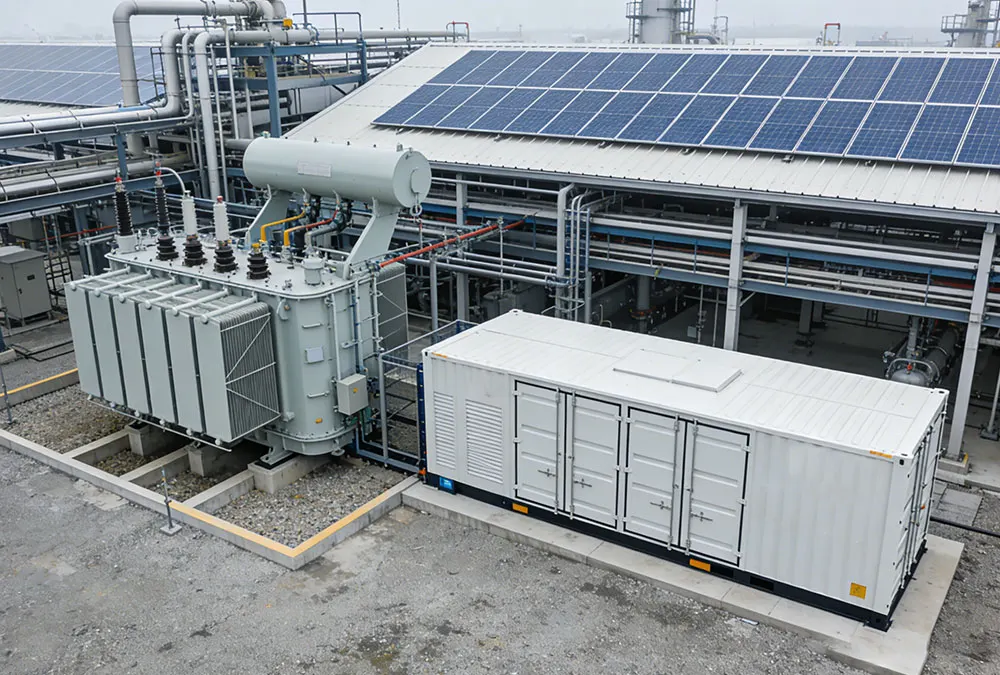
For large factories, containerized battery energy storage system for industrial use offers a “turnkey” solution. These 20ft or 40ft units are pre-integrated with HVAC and fire suppression.
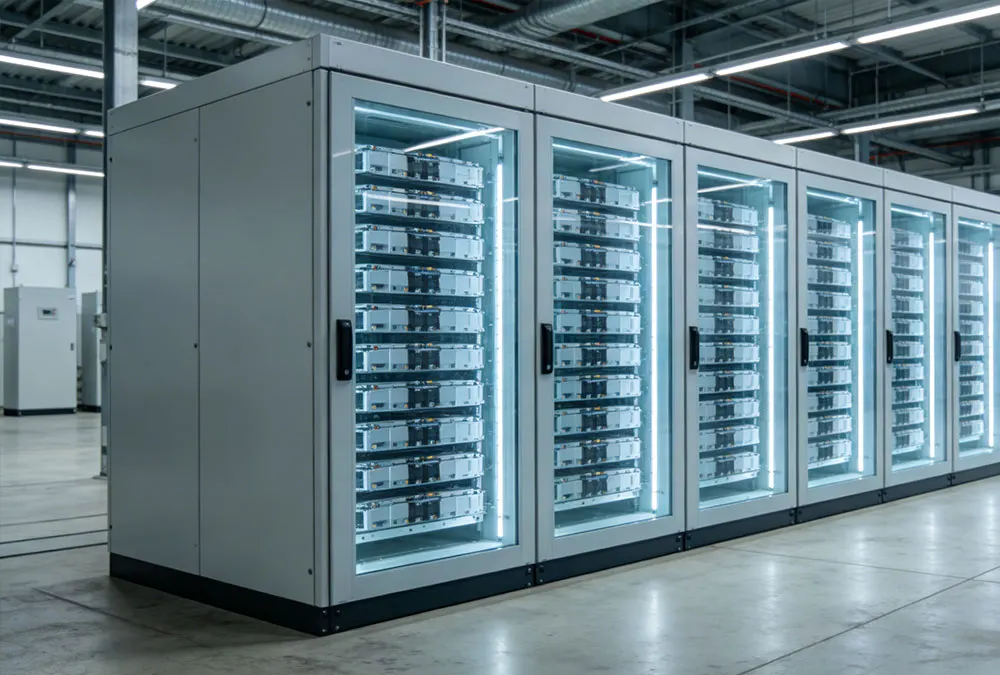
Integrated Battery Cabinets (kWh–MWh Scale)
For smaller commercial footprints, integrated battery cabinets like the AnengJi series provide a compact, modular alternative that can be scaled as the facility grows.
How to Select Based on Industrial Needs
If your facility has limited space, a high-density liquid-cooled cabinet is superior. For massive solar plants, containerized solutions offer the best industrial energy storage sizing economics.
How AnengJi Supports Accurate BESS Sizing and Deployment
At AnengJi, we move beyond simple spreadsheets. We use high-granularity load data to provide a customized BESS design tailored to your specific utility tariff.
- Integrated Solutions: Our 261kWh and 1MWh+ units feature high-efficiency PCS and intelligent EMS.
- Fast Deployment: Designed for industrial projects, our systems are pre-commissioned to reduce on-site engineering time.
- Expert Consulting: We assist with the bess sizing calculation for industrial facilities to ensure your investment is protected by real-world performance data.
Common Challenges in BESS Sizing Calculation and How to Avoid Them
Over-Sizing vs Under-Sizing Risks
Over-sizing kills your ROI; under-sizing fails to provide the promised demand charge relief. Always use a 10% safety buffer but avoid “Gold-Plating” the specs.
Ignoring Load Variability
Seasonality affects energy use. A factory in summer (high HVAC load) has a different profile than in winter. Ensure your how to calculate battery capacity for factory logic accounts for the worst-case month.
FAQ: Frequently Asked Questions About BESS Sizing Calculation
How do you calculate BESS size for industrial use?
To calculate the size, follow this formula:
- Identify the Peak Shaving Gap (kW).
- Calculate Usable Energy: kWh = kW Gap × Time.
- Adjust for Efficiency and DoD: Total Capacity = Usable Energy / (0.9 × 0.9).
What is the difference between kW and kWh in BESS sizing?
kW (Kilowatts) is the measure of power (how much energy can be delivered at once). kWh (Kilowatt-hours) is the measure of energy (the total volume of power stored). Think of kW as the width of a pipe and kWh as the size of the water tank.
What size battery storage system does a factory need?
A typical medium-sized factory often requires a system between 250kW/500kWh and 1MW/2MWh. The exact size depends entirely on your peak demand spikes and local utility “Demand Charge” rates.
How long should a BESS system last (2h vs 4h vs 6h)?
For demand charge reduction calculation, 2-hour systems are usually sufficient. For “Solar Shifting” or “Renewable Firming,” 4-hour systems are the 2026 industry standard to cover the evening peak.
What factors affect BESS sizing calculation?
The primary factors include:
- Peak load magnitude and duration.
- Utility tariff structure (TOU and Demand Charges).
- Battery chemistry (LFP vs Solid State).
- System round-trip efficiency.
- Required backup duration during outages.
This guide was developed to provide authoritative engineering insight into the BESS sizing calculation process. For a detailed site analysis and a customized BESS proposal, consult with a qualified energy storage engineer.
 https://anengjipower.com/wp-content/uploads/2026/03/romania-3-5mw-industrial-bess-pcs-array.webp
675
1000
Charging Station Engineer
https://anengjipower.com/wp-content/uploads/2025/09/anengji-dc-fast-charging-station-manufacturer-and-supplier-logo-white-1.png
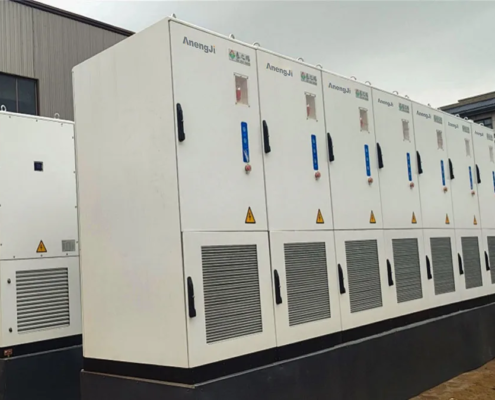
Charging Station Engineer2026-03-06 17:30:032026-03-06 09:27:24Romania 3.5MW/7.3MWh Industrial Energy Storage: High-Capacity Grid Integration
https://anengjipower.com/wp-content/uploads/2026/03/romania-3-5mw-industrial-bess-pcs-array.webp
675
1000
Charging Station Engineer
https://anengjipower.com/wp-content/uploads/2025/09/anengji-dc-fast-charging-station-manufacturer-and-supplier-logo-white-1.png
Charging Station Engineer2026-03-06 17:30:032026-03-06 09:27:24Romania 3.5MW/7.3MWh Industrial Energy Storage: High-Capacity Grid Integration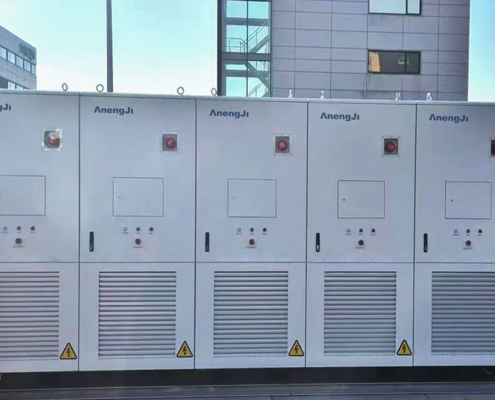 https://anengjipower.com/wp-content/uploads/2026/03/new-zealand-500kw-industrial-bess-outdoor-installation.webp
675
1000
Charging Station Engineer
https://anengjipower.com/wp-content/uploads/2025/09/anengji-dc-fast-charging-station-manufacturer-and-supplier-logo-white-1.png
Charging Station Engineer2026-03-06 07:28:092026-03-06 07:28:31New Zealand BESS: 500kW/1165kWh Frequency Regulation Solution
https://anengjipower.com/wp-content/uploads/2026/03/new-zealand-500kw-industrial-bess-outdoor-installation.webp
675
1000
Charging Station Engineer
https://anengjipower.com/wp-content/uploads/2025/09/anengji-dc-fast-charging-station-manufacturer-and-supplier-logo-white-1.png
Charging Station Engineer2026-03-06 07:28:092026-03-06 07:28:31New Zealand BESS: 500kW/1165kWh Frequency Regulation Solution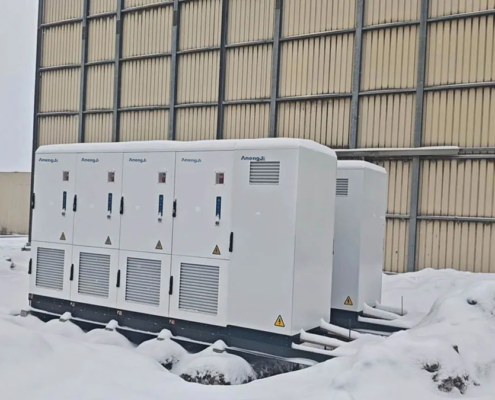 https://anengjipower.com/wp-content/uploads/2026/03/Ukraine-1MW2MWh-battery-energy-storage-system-installation.webp
675
1000
Charging Station Engineer
https://anengjipower.com/wp-content/uploads/2025/09/anengji-dc-fast-charging-station-manufacturer-and-supplier-logo-white-1.png
Charging Station Engineer2026-03-06 07:05:042026-03-06 07:21:46Ukraine 1MW/2MWh Energy Storage: 20ms Seamless Backup for Industrial Resilience
https://anengjipower.com/wp-content/uploads/2026/03/Ukraine-1MW2MWh-battery-energy-storage-system-installation.webp
675
1000
Charging Station Engineer
https://anengjipower.com/wp-content/uploads/2025/09/anengji-dc-fast-charging-station-manufacturer-and-supplier-logo-white-1.png
Charging Station Engineer2026-03-06 07:05:042026-03-06 07:21:46Ukraine 1MW/2MWh Energy Storage: 20ms Seamless Backup for Industrial Resilience


Leave a Reply
Want to join the discussion?Feel free to contribute!