
Introduction
The global energy landscape is undergoing a seismic shift. As we navigate through 2026, the transition from centralized fossil fuel power to decentralized renewable energy has reached a critical tipping point. Central to this revolution is the deployment of battery farming energy storage systems for grid stability. These massive installations, once considered experimental, are now the primary defense against grid volatility and the essential backbone for the next generation of high-power EV charging infrastructure. For industrial stakeholders and utility providers, understanding the mechanics of grid-scale battery storage is no longer a matter of “if,” but “how soon.”
What Is Battery Farming in Energy Storage?
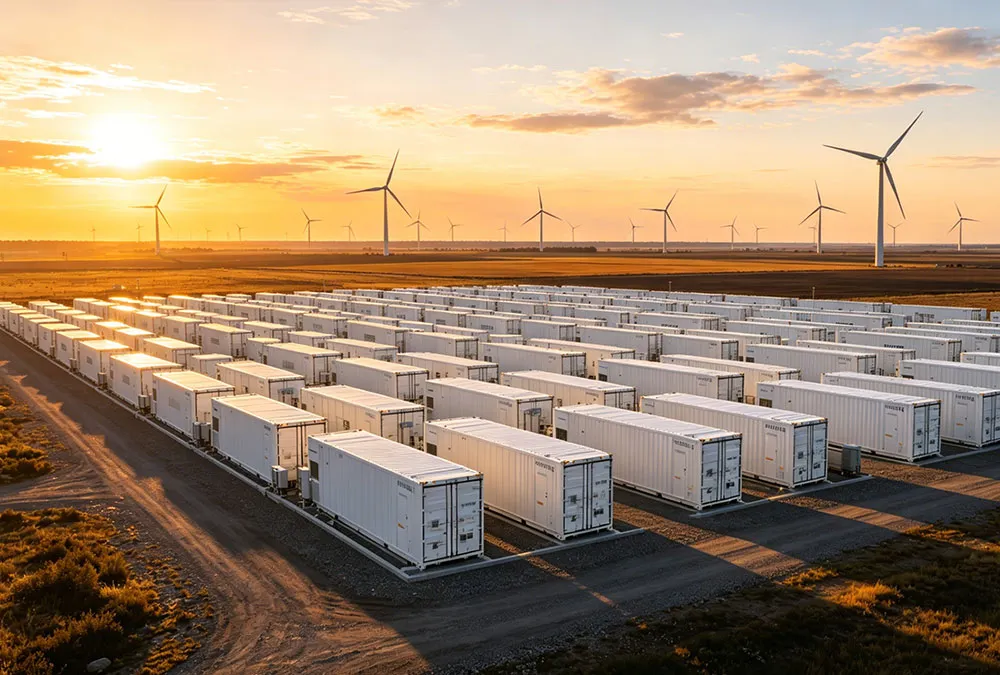
Battery farming refers to the large-scale deployment of battery energy storage systems (BESS) that store electricity from the grid or renewable sources and dispatch it when needed. These “battery farms” help stabilize the grid, reduce carbon emissions, and support high-demand applications such as EV charging infrastructure. By acting as a buffer, they ensure that the surplus energy generated during the day isn’t wasted and is available during peak evening hours.
Recommended Reading:What Is Energy Storage?
Where Is the Largest Battery Farm in the World?
One of the world’s largest battery farms is the Moss Landing Energy Storage Facility in California, USA. With a capacity exceeding several gigawatt-hours (GWh), it is a prime example of utility-scale battery storage used for grid stabilization, renewable energy storage, and peak demand management.
Industry Background: The Explosive Growth of BESS
The demand for battery farming energy storage systems for grid applications has skyrocketed due to the inherent intermittency of solar and wind power. According to the International Energy Agency (IEA) World Energy Outlook 2025, global energy storage capacity is expected to increase sixfold by 2030 to meet net-zero targets. Furthermore, BloombergNEF (BNEF) reports that the cost of lithium-ion battery packs has fallen significantly, making large-scale lithium battery storage more economically viable than ever before.
As coal and gas plants are decommissioned, the grid loses its traditional “inertia.” Energy storage farm projects provide a digital version of this inertia, responding to frequency imbalances in milliseconds. This transition is further accelerated by the rapid adoption of electric vehicles, which creates localized “power hunger” that traditional infrastructure cannot satisfy without the support of industrial energy storage systems.
Battery Farm vs. Traditional Power Plants: A Strategic Comparison
To understand why utility-scale battery storage is replacing traditional fossil fuel “peaker” plants, we must compare their operational efficiency and environmental impact.
| Feature | Battery Farm (BESS) | Traditional Gas Peaker Plant |
| Response Time | Milliseconds (Ultra-fast) | Minutes to Hours (Slow) |
| Carbon Emissions | Zero (when charged by renewables) | High (CO2, NOx) |
| CAPEX | Moderate (decreasing rapidly) | High (infrastructure-heavy) |
| Operational Flexibility | High (bi-directional energy flow) | Low (generation only) |
| Footprint | Compact & Modular | Large & Site-Specific |
| Water Usage | Minimal to None | High (for cooling) |
The renewable energy storage integration offered by battery farms allows for a level of flexibility that gas turbines simply cannot match. While a gas plant must “burn” fuel to remain in a state of readiness, a battery farm stays in a state of potential energy, consuming nothing until the grid requires a discharge.
How Battery Farming Works in Large-Scale Systems
Understanding how to build a battery farm for renewable energy requires looking at the sophisticated ecosystem of power electronics and chemical engineering.
Core Components of a Battery Farm (BESS Architecture)
A modern battery storage farm project consists of four primary technical layers:
- The Battery System (LFP Dominance): Most farms utilize Lithium Iron Phosphate (LFP) cells. Unlike the NMC batteries in consumer electronics, LFP offers superior thermal stability and a cycle life of 6,000 to 10,000 charges.
- Power Conversion System (PCS): This is a bi-directional inverter. When the farm is “charging,” it converts AC from the grid to DC for the batteries. When “discharging,” it converts DC back to AC.
- Battery Management System (BMS): This monitors every cell’s voltage and temperature. It is the “safety officer” that prevents thermal runaway.
- Energy Management System (EMS): The high-level intelligence that monitors market prices and grid health, deciding exactly when to charge or discharge.
Energy Flow: From Generation to Dispatch
The integration of a solar farm battery storage setup follows a logical cycle:
- Generation: Solar panels produce DC power.
- Storage: Instead of immediate conversion to AC for a saturated grid, the energy is diverted into the lithium battery farms.
- Dispatch: During the evening peak, the EMS triggers a discharge, releasing stored green energy when electricity prices are highest.
Global Case Studies: Real-World Battery Farming
The viability of large scale battery storage solutions is proven by the massive projects currently in operation. These serve as blueprints for how to build a battery farm for renewable energy in other regions.
Leading Global Battery Farms
| Project Name | Location | Capacity | Primary Use Case |
| Moss Landing | California, USA | 750MW / 3000MWh | Peak Shaving & Grid Support |
| Victorian Big Battery | Australia | 300MW / 450MWh | Renewable Integration |
| Hornsdale Power Reserve | South Australia | 150MW / 194MWh | Frequency Control (FCAS) |
| Minety Battery Farm | Wiltshire, UK | 100MW / 150MWh | Grid Balancing |
These projects illustrate that battery farming is not just about capacity; it is about providing critical services like frequency regulation and black-start capabilities that keep national grids from crashing during outages.
Carbon Reductions and the Path to Net-Zero
The environmental value of battery farming energy storage systems for grid management is multi-dimensional. By 2026, the data from the U.S. Energy Information Administration (EIA) suggests that grid-scale storage is the single largest factor in reducing “curtailment”—the wasteful practice of shutting down wind or solar farms because the grid cannot handle the surge.
- Decarbonizing Peak Demand: By replacing gas-fired peaker plants with batteries, we eliminate the dirtiest part of the power generation cycle.
- Enabling Low-Carbon EV Charging: Utilizing battery energy storage farm for EV charging infrastructure ensures that vehicles are charged with stored solar or wind energy rather than coal-heavy nighttime grid power.
- Reducing Fossil Fuel Dependence: As lithium battery farms scale, the economic necessity for maintaining expensive fossil fuel reserves diminishes.
Business Model, ROI, and Costs
For investors, the battery farm cost per MWh installation is the primary metric. In 2026, turnkey costs for a large-scale project typically range between $280,000 and $350,000 per MWh, depending on the duration (2-hour vs 4-hour systems).
Revenue Streams and ROI Formula
A battery farm project development generates revenue through “Stacked Services”:
- Arbitrage: Buying low and selling high.
- Frequency Regulation: Selling millisecond response services to the grid operator.
- Capacity Market: Being paid to remain available during emergencies.
Annual Revenue Calculation (Text Format):
Total Annual Revenue = (Average Spread per MWh * Annual Cycles * Capacity) + Grid Service Contract Fees - Annual O&M Costs
Simple Payback Period:
Payback Period = Total Capital Investment / Annual Net Cash Flow
In current markets, the payback period for a well-located industrial energy storage system is typically 5 to 8 years, with a project lifespan of 15 to 20 years.
Application Focus: EV Charging Infrastructure
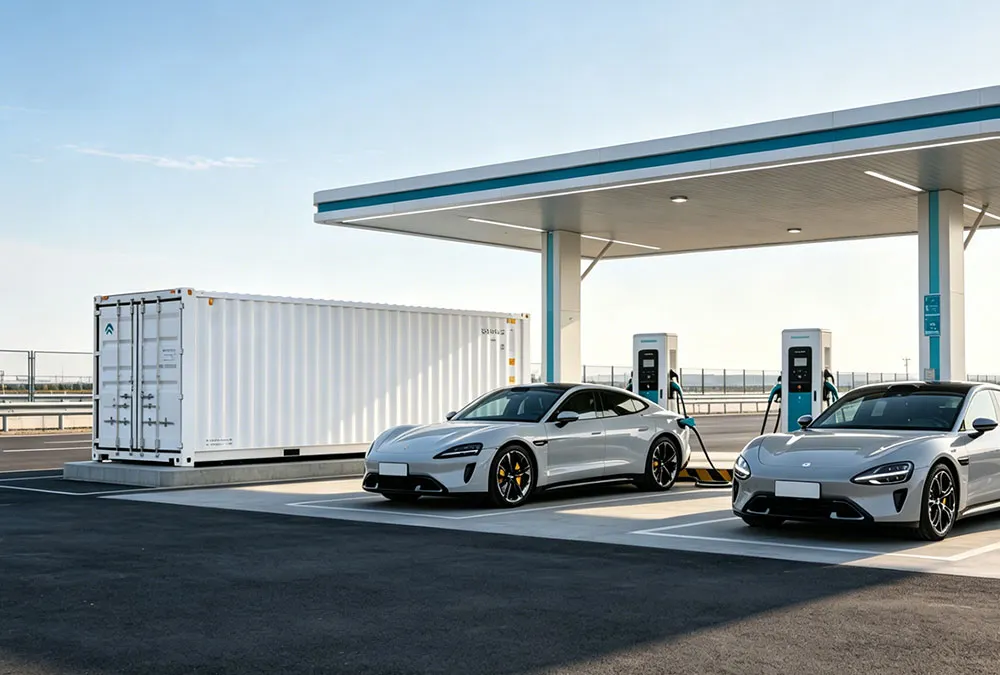
This is the most critical growth area for battery farming. High-power DC fast chargers (180kW – 360kW) put immense strain on the local grid. If a site installs ten 360kW chargers, the peak demand is 3.6MW—often exceeding the local transformer’s capacity.
The BESS + EV Solution
By deploying a battery energy storage farm for EV charging infrastructure, operators can:
- Peak Shave: The battery provides the burst of power needed for fast charging, while the grid “refills” the battery at a slow, steady rate.
- Avoid Demand Charges: Industrial utility bills are often based on the highest “peak” of usage. Batteries eliminate these peaks, saving thousands in monthly fees.
- Grid Stability: Large-scale charging hubs can actually support the local grid during emergencies by discharging stored power back into the network.
Challenges and Risk Management
To maintain high E-E-A-T standards, we must address the technical hurdles in large-scale battery storage solutions:
- Thermal Management: Liquid cooling is now the industry standard to prevent cell degradation and fire risks.
- Grid Connection Queues: In many markets, waiting for a grid connection takes longer than building the farm itself.
- Battery Degradation: All lithium systems lose capacity. Advanced EMS software is required to manage “State of Health” (SoH) and ensure long-term ROI.
Top 10 Global Battery Storage Companies (2026)
The 2026 energy market is dominated by a few key players who have standardized liquid-cooled LFP architecture and AI-driven dispatch. These leaders in large-scale battery storage solutions are evaluated based on their deployment scale, safety record, and ability to support complex grid services and EV infrastructure.
| Company | Main Product | Application | Core Advantage |
| Tesla | Megapack 2XL | Utility Grid | Best-in-class “Autobidder” software. |
| AnengJi | Liquid-Cooled BESS | C&I / EV Charging | High energy density and superior safety. |
| Fluence | Gridstack | Grid Services | Expertise in massive utility integration. |
| CATL | EnerD | Utility / Commercial | Dominant supply chain and cell reliability. |
| BYD | MC Cube | Transport / Grid | Innovative “Blade Battery” safety design. |
| Sungrow | PowerTitan | Solar + Storage | Global leader in PCS and inverter tech. |
| Wärtsilä | Quantum | Hybrid Systems | Expertise in flexible energy balancing. |
| Powin | Stack750 | Long-duration | Modular design for easy maintenance. |
| Saft | Intensium Max | Industrial | High performance in extreme environments. |
| LG Energy | Enblock S | Commercial | Compact footprint and high cell density. |
Recommended Solution: Integrated Industrial BESS
For commercial developers and EV network operators, choosing an integrated provider like AnengJi is essential for reducing project complexity.
Why choose AnengJi BESS solutions?
Scalability: Modular designs that grow from 100kWh to multiple GWh.
Safety: Integrated multi-stage fire suppression and AI-based early warning systems.
Efficiency: High-efficiency PCS that ensures minimal energy loss during the AC-DC conversion cycle.
XI. Summary FAQ: Key Takeaways
What is battery farming?
It is the use of battery farming energy storage systems for grid and industrial use to balance energy supply and demand.
What is the battery farm cost per MWh installation?
As of 2026, it averages between $280k and $350k per MWh for large-scale turnkey projects.
How does it support renewable energy?
By storing solar and wind power during times of low demand and releasing it during peak hours, reducing waste.
Is it safe?
Modern systems use LFP chemistry and advanced liquid cooling, making them significantly safer than older lithium-ion technologies.
Conclusion for Stakeholders
The deployment of battery farming energy storage systems for grid resilience is no longer an optional upgrade; it is the fundamental infrastructure for a sustainable world. Whether you are aiming to reduce carbon emissions or build a profitable EV charging infrastructure, large-scale battery storage is the key to unlocking the full potential of renewable energy.
For more information on high-performance industrial BESS, contact the experts at AnengJi to discuss your next project development.
 https://anengjipower.com/wp-content/uploads/2026/10/AnengjiPower-BESS-Battery-Passport-Data-Handover.webp
675
1000
Alex Yang
https://anengjipower.com/wp-content/uploads/2025/09/anengji-dc-fast-charging-station-manufacturer-and-supplier-logo-white-1.png
Alex Yang2026-10-23 03:24:462026-10-23 03:25:06What Is the EU Battery Regulation? BESS Compliance Guide
https://anengjipower.com/wp-content/uploads/2026/10/AnengjiPower-BESS-Battery-Passport-Data-Handover.webp
675
1000
Alex Yang
https://anengjipower.com/wp-content/uploads/2025/09/anengji-dc-fast-charging-station-manufacturer-and-supplier-logo-white-1.png
Alex Yang2026-10-23 03:24:462026-10-23 03:25:06What Is the EU Battery Regulation? BESS Compliance Guide https://anengjipower.com/wp-content/uploads/2026/10/AnengjiPower-Multi-Service-BESS-Dispatch-at-a-CI-Site.webp
675
1000
Alex Yang
https://anengjipower.com/wp-content/uploads/2025/09/anengji-dc-fast-charging-station-manufacturer-and-supplier-logo-white-1.png
Alex Yang2026-10-22 06:21:262026-10-22 06:21:47Multi-Service BESS Dispatch: EMS Priority Guide
https://anengjipower.com/wp-content/uploads/2026/10/AnengjiPower-Multi-Service-BESS-Dispatch-at-a-CI-Site.webp
675
1000
Alex Yang
https://anengjipower.com/wp-content/uploads/2025/09/anengji-dc-fast-charging-station-manufacturer-and-supplier-logo-white-1.png
Alex Yang2026-10-22 06:21:262026-10-22 06:21:47Multi-Service BESS Dispatch: EMS Priority Guide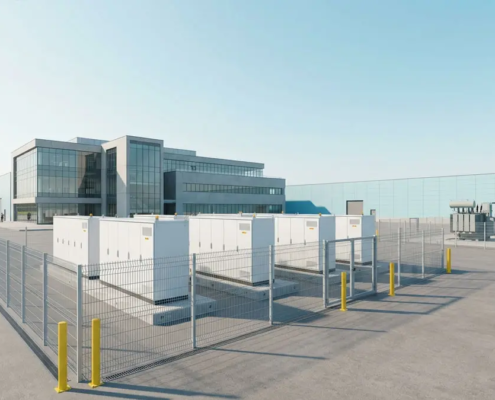 https://anengjipower.com/wp-content/uploads/2026/10/AnengjiPower-Time-of-Use-Battery-Storage-at-a-European-CI-Site.webp
675
1000
Alex Yang
https://anengjipower.com/wp-content/uploads/2025/09/anengji-dc-fast-charging-station-manufacturer-and-supplier-logo-white-1.png
Alex Yang2026-10-21 03:56:212026-10-21 03:56:32Time-of-Use Battery Storage for European C&I Sites
https://anengjipower.com/wp-content/uploads/2026/10/AnengjiPower-Time-of-Use-Battery-Storage-at-a-European-CI-Site.webp
675
1000
Alex Yang
https://anengjipower.com/wp-content/uploads/2025/09/anengji-dc-fast-charging-station-manufacturer-and-supplier-logo-white-1.png
Alex Yang2026-10-21 03:56:212026-10-21 03:56:32Time-of-Use Battery Storage for European C&I Sites


Leave a Reply
Want to join the discussion?Feel free to contribute!