
Introduction
As the global energy landscape transitions toward high-penetration renewables, the demand for reliable, long-duration energy storage has reached an all-time high. By 2026, utility providers and industrial facility managers are looking beyond traditional chemical batteries to solve the intermittency of wind and solar. Liquid air energy storage (LAES) has emerged as a frontrunner in the Long Duration Energy Storage (LDES) sector, offering a unique mechanical approach to grid stability. Unlike lithium-ion systems that rely on rare-earth minerals, LAES utilizes the most abundant resource on Earth—the air we breathe—to store gigawatt-hours of electricity for days or even weeks.
What Is Liquid Air Energy Storage (LAES)? (Long Duration Energy Storage Explained)
Definition of Liquid Air Energy Storage
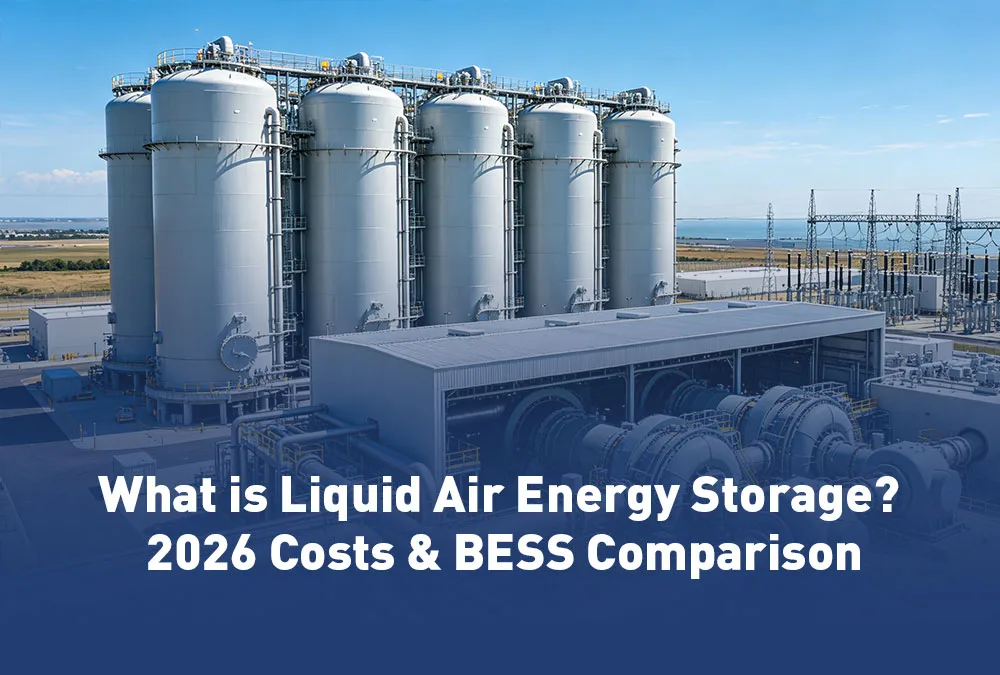
Liquid air energy storage is a thermo-mechanical energy storage technology that captures electricity by cooling ambient air to cryogenic temperatures (approximately -196°C), turning it into a liquid. This liquid air is stored in low-pressure, insulated tanks. When energy is needed, the liquid is pumped to high pressure, heated, and expanded through a turbine to generate electricity.
Why LAES Is Considered Long Duration Energy Storage (LDES)
In the engineering world, “Long Duration” typically refers to systems capable of discharging at full power for 8 to 100+ hours. While lithium-ion batteries are excellent for short-term (1–4 hour) bursts, their marginal cost per kilowatt-hour increases linearly with capacity. In contrast, increasing the capacity of a cryogenic energy storage system simply requires larger storage tanks, which are significantly cheaper than adding more battery cells.
Role of LAES in Renewable Energy Integration
As we integrate more energy storage for wind and solar, we face the “Dunkelflaute” problem—periods of low wind and no sun that last for days. LAES serves as a strategic “time-shifting” asset, absorbing excess energy during peak production and releasing it during prolonged shortages, ensuring a stable, 24/7 renewable grid.
How Liquid Air Energy Storage Works (LAES Working Principle)
To understand how does LAES work, one must view it as a sophisticated application of the compression cycle and thermodynamics.
1. Air Compression and Liquefaction Process
The cycle begins with an industrial-scale air liquefier. Using excess electricity from the grid, ambient air is cleaned, compressed, and cooled. Through a series of heat exchangers and expansion valves (the Joule-Thomson effect), the air eventually reaches its liquid state. This process is the primary energy consumption phase of the system.
2. Cryogenic Storage at Low Temperatures
The liquid air is moved into specialized, large-scale vacuum-insulated tanks. Because the energy is stored in a liquid state, the energy density is much higher than compressed air energy storage (CAES). These tanks can maintain the cryogenic state for weeks with minimal “boil-off” losses.
3. Expansion and Power Generation Process
When the grid demands power, the liquid air is drawn from the tanks. It is pumped to a high-pressure state and exposed to heat (often waste heat from industrial processes or the compression phase). The liquid rapidly expands back into a gas, increasing its volume by roughly 700 times. This high-pressure gas drives a cryogenic turbine coupled to a generator.
4. System Efficiency and Energy Loss Analysis
A significant point of discussion is liquid air energy storage efficiency and losses. Currently, standalone LAES systems operate at a Round-Trip Efficiency (RTE) of approximately 50% to 60%. However, when integrated with industrial waste heat or “cold storage” recovery systems, the efficiency can climb toward 70%.
Key Features of Liquid Air Energy Storage Systems (LAES Characteristics)
Long Duration Storage Capability (8–100+ Hours)
The primary advantage of LAES is its duration. It is specifically designed for multi-day storage, making it a critical tool for grid resilience.
No Geographic Limitations vs. Pumped Hydro
Unlike Pumped Hydro storage, which requires specific mountains and water reservoirs, a liquid air battery technology facility can be built anywhere. It has a relatively small footprint and can be co-located with existing power plants or substations.
Scalability for Utility-Scale Energy Storage
LAES plants are typically designed in the 50MW to 200MW+ range. The modular nature of the tanks allows for easy expansion as the grid’s needs grow over time.
Low Energy Density and Infrastructure Requirements
Compared to lithium batteries, LAES has a lower energy density, meaning it requires more physical space. Additionally, the complex rotating machinery (turbines and compressors) requires specialized maintenance, similar to a traditional power plant.
What Is a Liquid-Cooled Battery Energy Storage System (BESS)?
While LAES handles the “long haul,” liquid-cooled battery storage systems have become the standard for Commercial & Industrial (C&I) and short-duration grid support.
Definition of Liquid-Cooled Energy Storage
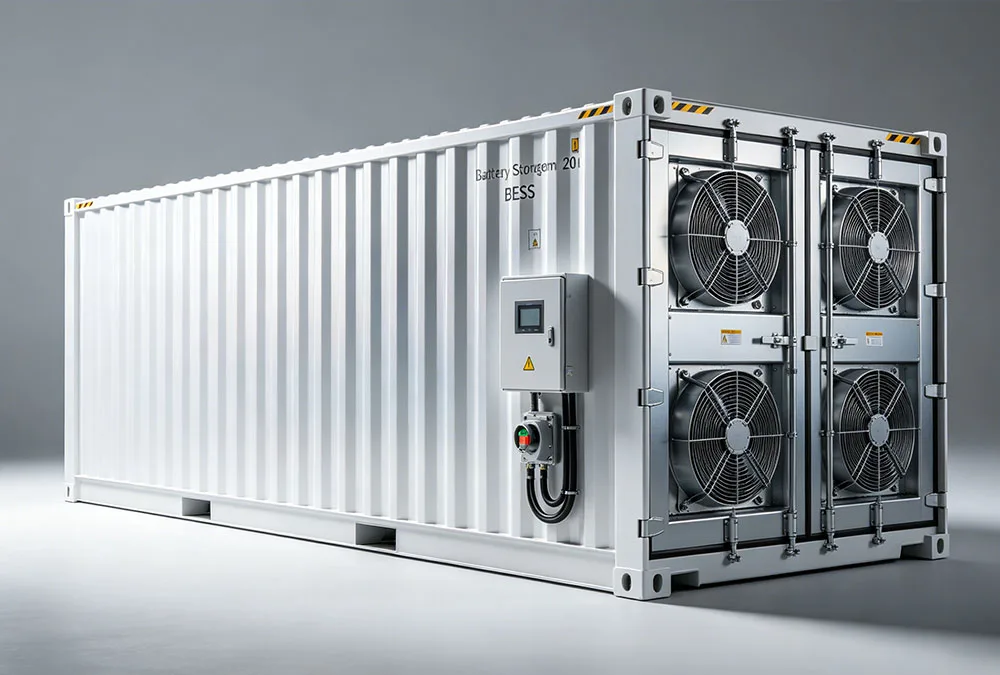
A liquid-cooled BESS utilizes a circulating coolant (typically a water-glycol mixture) to maintain optimal temperature across thousands of battery cells. By surrounding the cells with cooling plates or pipes, the system prevents “hot spots” and thermal runaway.
Core Components: Battery, PCS, BMS, EMS
- Battery Modules: Usually high-density LFP (Lithium Iron Phosphate).
- PCS (Power Conversion System): Bi-directional inverters that convert DC to AC.
- BMS (Battery Management System): Monitors voltage and temperature at the cell level.
- EMS (Energy Management System): The software brain that decides when to charge or discharge based on market prices.
Importance of Thermal Management in High-Power Systems
In high-power applications like EV fast charging, batteries generate immense heat. Liquid cooling is essential to keep cells within their ±2°C “sweet spot,” ensuring safety and longevity.
Advantages of Liquid-Cooled Battery Energy Storage Systems
High Efficiency (90%+ Round-Trip Efficiency)
When evaluating liquid air energy storage vs lithium ion battery, efficiency is the most stark difference. BESS systems lose very little energy during the charge/discharge cycle, making them ideal for high-frequency trading and arbitrage.
Improved Battery Lifespan and Safety
Active liquid cooling can extend the life of an LFP battery by up to 20% compared to air-cooled systems, as it prevents the accelerated aging caused by heat stress.
Compact Footprint and High Energy Density
A 2MWh liquid-cooled BESS can fit into a standard 20-foot container, making it perfect for urban environments and commercial parking lots.
Fast Deployment and Modular Expansion
BESS units are “plug-and-play.” A facility can be commissioned in months, whereas a large LAES plant takes years to engineer and build.
Liquid Air Energy Storage vs. Liquid-Cooled BESS (Key Differences)
Technical Comparison Table (2026 Data)
| Feature | Liquid Air Energy Storage (LAES) | Liquid-Cooled BESS (Lithium) |
| Duration | 8 to 100+ Hours | 1 to 4 Hours |
| Round-Trip Efficiency | 50% – 65% | 88% – 92% |
| Response Time | Minutes (Mechanical start) | Milliseconds (Electronic) |
| Geographic Limits | None | None |
| Lifespan | 30+ Years | 10 – 15 Years |
| Safety Risk | High Pressure / Cryogenic | Thermal Runaway (Fire) |
Efficiency and Cost per kWh Comparison
The liquid air energy storage cost per kWh becomes competitive only at very high capacities. For small-scale projects (under 10MWh), lithium-ion is significantly cheaper. However, at the 1GWh scale, the marginal cost of LAES tanks makes it the winner.
Response Time and Grid Flexibility
BESS can respond to grid frequency deviations in milliseconds. LAES, requiring turbines to ramp up, is better suited for “Bulk Power” shifting and firming renewable capacity.
Applications of Liquid-Cooled Battery Energy Storage Systems
For industrial facilities and the EV sector, the liquid-cooled BESS is the undisputed leader.
- Commercial & Industrial Peak Shaving: Reducing expensive “Demand Charges” by discharging during peak hours.
- EV Fast Charging Infrastructure Support: Buffering the grid against the massive surges required by 350kW DC chargers.
- Solar + Storage Integration: Smoothing out the “Duck Curve” for small-to-medium solar farms.
- Microgrid and Backup Power Systems: Providing instantaneous power during grid outages.
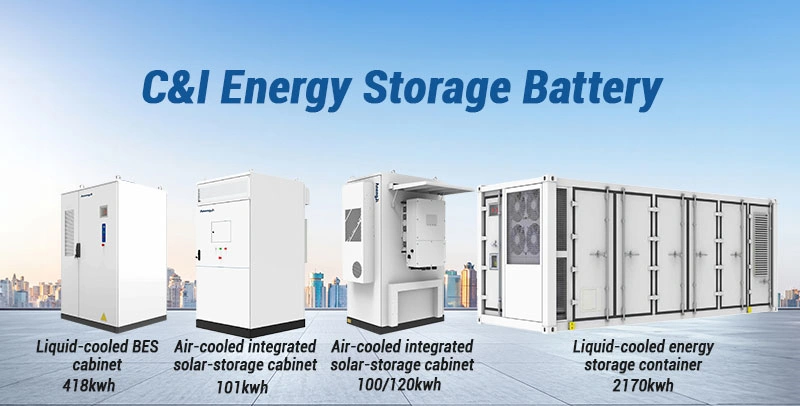
Industrial Recommendation: For C&I projects requiring high reliability and fast ROI, we recommend the AnengJi ECO series liquid-cooled cabinets. These units feature an integrated fire suppression system and an advanced BMS that optimizes cell balancing for a 15-year service life.
Applications of Liquid Air Energy Storage
- Renewable Energy Time Shifting: Storing afternoon solar for use throughout the following three days.
- Grid Stability and Frequency Regulation: Providing inertia to the grid—a physical mechanical benefit that batteries cannot easily replicate.
- Long-Duration Backup for Utilities: Replacing decommissioned coal or gas plants with clean, long-term storage.
Cost of Liquid Air Energy Storage vs. Battery Storage (2026 Analysis)
According to the NREL FY25/26 data and Ember Energy reports, the cost trajectory of storage is diverging based on duration.
Cost Comparison Table (USD per kWh – 2026 Projections)
| System Type | 4-Hour Duration ($/kWh) | 24-Hour Duration ($/kWh) |
| Lithium-Ion BESS | $280 – $350 | $220 – $280 |
| Liquid Air (LAES) | $500 – $700 | $150 – $200 |
Lithium Battery Cost Trends
As stated in the EnergySage 2025/2026 report, lithium prices have stabilized due to new LFP manufacturing capacity. This keeps BESS the preferred choice for short-duration grid scale energy storage solutions.
ROI Comparison by Application Scenario
The liquid air energy storage ROI and payback period are heavily dependent on government subsidies for LDES and the volatility of the energy market. For BESS, the ROI is usually 4–6 years; for LAES, it is a 10–15 year horizon, designed for infrastructure-level investment.
Energy Storage System Design and Deployment Considerations
Site Selection and Grid Integration
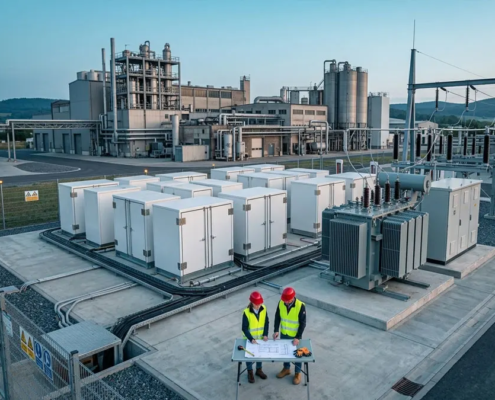
LAES requires access to the high-voltage grid and, ideally, a source of waste heat (like a data center or factory) to boost efficiency. BESS is more flexible and can be installed in basements or parking lots.
System Architecture: PCS + BMS + EMS Coordination
Regardless of the technology, the EMS is the most critical component. It must be able to communicate with the local utility via protocols like OpenADR to participate in lucrative demand-response programs.
Safety Design and Thermal Management Strategies
For BESS, safety means preventing thermal runaway through liquid cooling and NFPA 855-compliant fire suppression. For LAES, safety involves managing high-pressure piping and cryogenic liquid handling.
Future of LAES and Liquid-Cooled Battery Storage (2026–2030 Outlook)
The future of long duration energy storage is not a winner-take-all scenario. We are moving toward a hybrid model:
- Lithium-Ion will handle the 0–4 hour peaks and frequency regulation.
- LAES and other industrial energy storage technologies (like flow batteries or gravity storage) will handle the 8–48 hour energy shifts.
Is Liquid Air Energy Storage Worth It? (Decision Guide)
When to Choose LAES
- Your project requires 10+ hours of discharge.
- You have a capacity requirement exceeding 100MWh.
- You have access to industrial waste heat or “cold” from an LNG terminal.
When to Choose Liquid-Cooled BESS
- You need a response time in milliseconds.
- The project is for a commercial facility or EV charging hub.
- Space is limited and you need a modular, scalable solution.
Featured Snippets & Quick Answers
What is liquid air energy storage?
Liquid air energy storage (LAES) is a long-duration energy storage technology that stores electricity by liquefying air and releasing it to generate power when needed. It is a type of cryogenic energy storage system.
How does liquid air energy storage work?
LAES works by compressing and cooling air into liquid form, storing it at low temperature, and expanding it to drive turbines for electricity generation.
What is a liquid-cooled battery energy storage system?
A liquid-cooled BESS uses liquid thermal management to regulate battery temperature, improving efficiency, safety, and lifespan by circulating coolant around the cells.
Which is more efficient: LAES or battery storage?
Battery energy storage systems are significantly more efficient (90%+) compared to LAES (typically 50–60%).
Which energy storage is better for EV charging?
Liquid-cooled battery storage is better for EV charging due to its fast response, high power output, and compact design.
When should you use liquid air energy storage?
LAES is best for grid-scale, long-duration storage (8+ hours) and renewable energy balancing where large amounts of energy must be shifted across days.
Summary: Key Takeaways on Liquid Air Energy Storage and Battery Systems
The choice between liquid air energy storage and liquid-cooled BESS comes down to the “Energy vs. Power” trade-off. LAES is a bulk energy tool, providing the long-term backbone for a decarbonized grid. BESS is a precision power tool, providing the speed and efficiency needed for modern commerce.
Decision Matrix:
- Duration < 4 hours? Use Liquid-Cooled BESS.
- Duration > 12 hours? Evaluate LAES.
- Commercial ROI? Use Liquid-Cooled BESS.
- Utility Grid Firming? Use LAES.
Reference Sources:
- EnergySage: Latest Battery Cost Analysis (2025-2026)
- NREL: FY25 Annual Technology Baseline: Long Duration Storage Costs
- Ember Energy: How Cheap Is Battery Storage? (2026 Global Insights)
- IEA: Grid-Scale Storage Outlook for Net Zero 2050
 https://anengjipower.com/wp-content/uploads/2026/09/AnengJipower-European-BESS-Project-Design-Environment-1.webp
675
1000
Charging Station Engineer
https://anengjipower.com/wp-content/uploads/2025/09/anengji-dc-fast-charging-station-manufacturer-and-supplier-logo-white-1.png
Charging Station Engineer2026-09-24 09:05:462026-09-24 09:08:39Battery Energy Storage System Design Guide for Europe
https://anengjipower.com/wp-content/uploads/2026/09/AnengJipower-European-BESS-Project-Design-Environment-1.webp
675
1000
Charging Station Engineer
https://anengjipower.com/wp-content/uploads/2025/09/anengji-dc-fast-charging-station-manufacturer-and-supplier-logo-white-1.png
Charging Station Engineer2026-09-24 09:05:462026-09-24 09:08:39Battery Energy Storage System Design Guide for Europe https://anengjipower.com/wp-content/uploads/2026/09/anengjipower-How-BESS-Power-and-Energy-Shape-Storage-Duration.webp
675
1000
Charging Station Engineer
https://anengjipower.com/wp-content/uploads/2025/09/anengji-dc-fast-charging-station-manufacturer-and-supplier-logo-white-1.png
Charging Station Engineer2026-09-23 09:06:532026-09-23 09:08:02BESS Duration Guide: How to Choose 1, 2 or 4 Hours
https://anengjipower.com/wp-content/uploads/2026/09/anengjipower-How-BESS-Power-and-Energy-Shape-Storage-Duration.webp
675
1000
Charging Station Engineer
https://anengjipower.com/wp-content/uploads/2025/09/anengji-dc-fast-charging-station-manufacturer-and-supplier-logo-white-1.png
Charging Station Engineer2026-09-23 09:06:532026-09-23 09:08:02BESS Duration Guide: How to Choose 1, 2 or 4 Hours https://anengjipower.com/wp-content/uploads/2026/09/AnengJIPower-Cabinet-vs-Containerized-BESS-3D-Isometric-Structural-Cutaway.webp
675
1000
Charging Station Engineer
https://anengjipower.com/wp-content/uploads/2025/09/anengji-dc-fast-charging-station-manufacturer-and-supplier-logo-white-1.png
Charging Station Engineer2026-09-18 07:19:042026-09-18 07:19:38Cabinet vs Containerized BESS: How to Choose for Large C&I
https://anengjipower.com/wp-content/uploads/2026/09/AnengJIPower-Cabinet-vs-Containerized-BESS-3D-Isometric-Structural-Cutaway.webp
675
1000
Charging Station Engineer
https://anengjipower.com/wp-content/uploads/2025/09/anengji-dc-fast-charging-station-manufacturer-and-supplier-logo-white-1.png
Charging Station Engineer2026-09-18 07:19:042026-09-18 07:19:38Cabinet vs Containerized BESS: How to Choose for Large C&I


Leave a Reply
Want to join the discussion?Feel free to contribute!