
Introduction
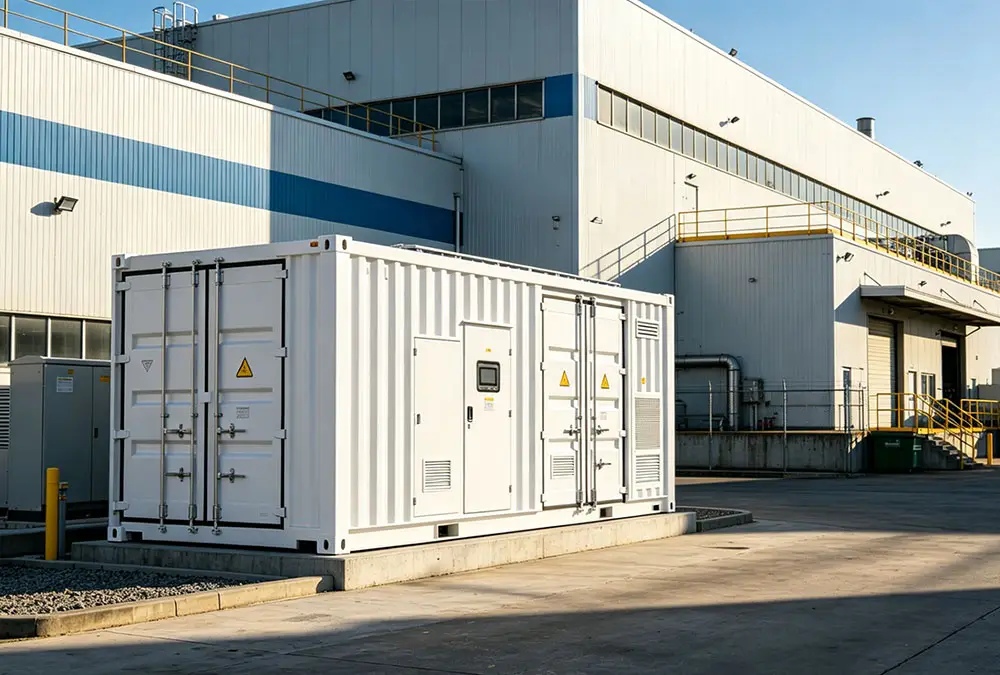
The global energy landscape of 2026 is defined by a paradox: while electricity generation is becoming greener, the volatility of the grid is increasing. For commercial facility managers and electric vehicle (EV) infrastructure developers, this volatility translates into one specific, painful line item on their utility bills: demand charges. To combat these rising costs, implementing a peak shaving battery energy storage system for commercial use has transitioned from a niche sustainability trend to a fundamental financial necessity. By strategically deploying stored energy during periods of high consumption, businesses can effectively “shave” the tops off their demand spikes, ensuring operational continuity without the punitive costs associated with peak grid reliance.
What Is Peak Shaving in Energy Management?
Peak Shaving Definition
Peak shaving is the process of reducing electricity demand during peak periods by using battery energy storage or alternative power sources. By discharging stored energy when the facility’s load is highest, businesses prevent exceeding a pre-set power threshold, thereby significantly lowering “demand charges” imposed by utility companies.
Why Peak Demand Drives Electricity Costs
For most commercial and industrial (C&I) entities, electricity bills are split into two categories: Energy Consumption (kWh) and Demand Charges (kW). While consumption tracks how much power you use over a month, demand charges are calculated based on the single highest 15-minute or 30-minute interval of usage during that billing cycle.
In many regions, demand charges can account for 30% to 70% of the total monthly utility bill. A short-duration high-power event—such as a factory’s heavy machinery starting up simultaneously or multiple DC fast chargers activating at once—creates a “peak” that sets the billing rate for the entire month. This “short-time high-power = high bill” reality is the primary driver for behind-the-meter energy storage adoption.
How does peak shaving work?
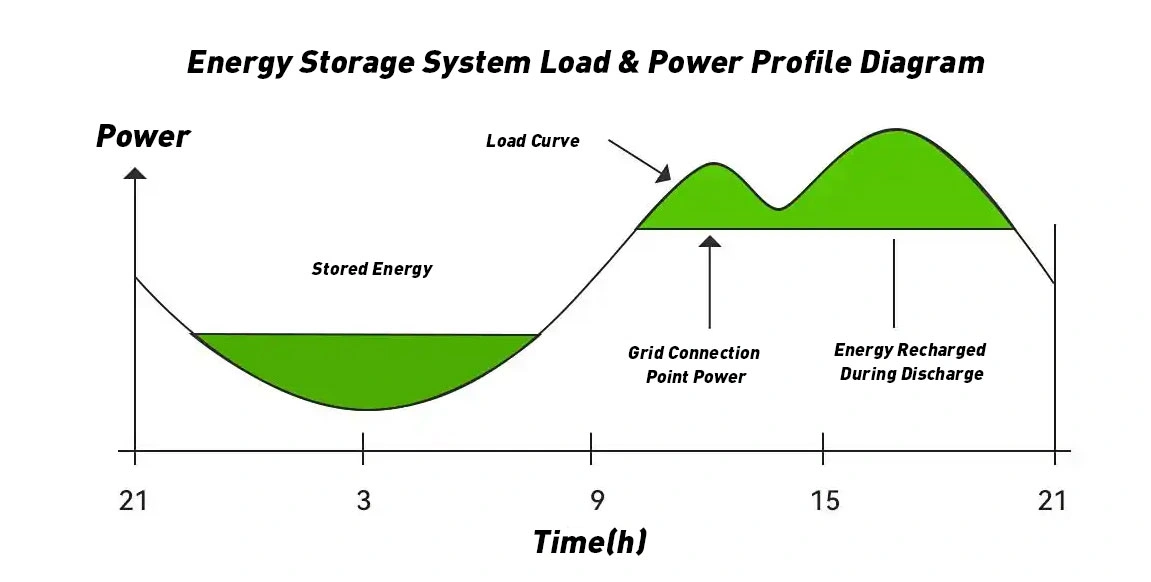
The integration of a peak shaving energy storage system allows a facility to manipulate its load profile without changing its core operations. This is achieved through a sophisticated “Charge low, Discharge high” strategy.
Step-by-Step: How Peak Shaving Is Performed
- Off-Peak Charging (Storing Low-Cost Energy): During nighttime or periods of low activity when grid demand is low and electricity prices are at their floor, the BESS draws power from the grid to charge its batteries.
- Threshold Monitoring: The system’s Energy Management System (EMS) constantly monitors the facility’s real-time power draw.
- Peak Discharge (Reducing Maximum Demand): When the facility’s load approaches a pre-defined “peak threshold,” the BESS begins to discharge. The batteries provide the “extra” power needed, so the grid meter never sees the spike.
- EMS Intelligent Dispatch: Using AI-driven forecasting, the system ensures that enough capacity is reserved for predicted peaks throughout the day.
Core Components of a Peak Shaving System
To achieve a reliable peak shaving solution for EV charging stations or industrial plants, four hardware and software layers must work in harmony:
- Battery System: The chemical storage unit, typically utilizing Lithium Iron Phosphate (LFP) for its safety and long cycle life.
- Power Conversion System (PCS): The bi-directional inverter that converts DC from the batteries to AC for the building (and vice versa).
- Battery Management System (BMS): The hardware that protects cells from overcharging, overheating, and degradation.
- Energy Management System (EMS): The “brain” that executes peak shaving algorithms and integrates with building automation.
Peak Shaving vs. Load Shifting: What’s the Difference?
In the world of commercial energy storage, “Peak Shaving” and “Load Shifting” are often used interchangeably, but for an engineer, they represent two different financial strategies.
Key Differences Between Peak Shaving and Load Shifting
| Feature | Peak Shaving | Load Shifting |
| Primary Goal | Reduce maximum demand (kW) | Move consumption to cheaper times (kWh) |
| Does it lower the Peak? | Yes, absolutely | Not necessarily (it just moves it) |
| Utility Impact | Lowers Demand Charges | Lowers Time-of-Use (TOU) rates |
| Typical Tech | BESS (Battery Storage) | Scheduling / BESS / Thermal Storage |
When to Use Peak Shaving Instead of Load Shifting
While load shifting is excellent for facilities that can move production to nighttime, many businesses have non-shiftable critical loads.
- EV Fast Charging: You cannot tell a customer to wait until 2 AM to charge their car.
- Data Centers: Cooling and server loads are constant or driven by user traffic.
- Limited Grid Capacity: If your local transformer is maxed out, peak shaving is the only way to add more load (like new machinery) without a multi-million dollar grid upgrade.
Benefits of Peak Shaving: Cost Savings, Grid Stability & Carbon Reduction
Implementing a battery energy storage system for peak shaving provides a trifecta of benefits that resonate with CFOs, facility engineers, and sustainability officers alike.
Reduce Demand Charges and Electricity Bills
The most immediate “hard ROI” comes from the monthly utility bill. By capping the demand at a lower kW level, the savings are locked in regardless of the total energy consumed.
Lower Carbon Emissions Through Optimized Energy Use
Peak periods on the grid are often serviced by “Peaker Plants”—typically older, less efficient gas turbines. By using a peak shaving battery energy storage system for commercial use, you reduce the need for these high-carbon plants to fire up, effectively cleaning the grid’s overall profile.
Avoid Expensive Grid Upgrades
For many industrial sites, adding a new production line or a fleet of EV chargers requires a transformer upgrade. This can cost hundreds of thousands of dollars and take 12-18 months for utility approval. A BESS acts as a “virtual transformer,” providing the necessary power locally.
Battery Energy Storage for Peak Shaving: Key Technologies
As an engineer, selecting the right battery chemistry is vital for a system’s 15-year lifecycle. Not all batteries are created equal for the high-power requirements of peak shaving.
Why Batteries Are Ideal for Peak Shaving
Unlike traditional generators, batteries have millisecond response times. When a large motor starts, the BESS can inject power instantly to prevent the grid meter from registering the surge.
Battery Technologies Explained
- Lithium Iron Phosphate (LFP): The current industry standard. It offers 6,000+ cycles and is thermally stable. Perfect for daily peak shaving cycles.
- Sodium-ion (Na-ion): A rising alternative for 2026. While less energy-dense than Lithium, it is becoming more cost-effective for stationary storage where space is not a premium.
- Flow Batteries (Vanadium): Ideal for very long-duration discharge (4-10 hours), though they have a larger footprint and higher initial CAPEX.
Peak Shaving for EV Charging Stations: Solving High-Power Demand
This is arguably the most critical application for a peak shaving solution for EV charging stations. A single DC fast charger can draw 180kW to 360kW. If four cars plug in simultaneously, the site demand jumps by over 1MW in seconds.
How Peak Shaving Enables More Chargers
Without a BESS, a site operator might be limited to just one or two chargers due to grid constraints. By adding a peak shaving battery energy storage system for commercial use, the batteries “buffer” the chargers.
Example Scenario:
- Grid Limit: 250kW
- Charging Demand: 500kW (two cars charging)
- BESS Contribution: 250kW
- Result: The cars charge at full speed, but the grid only sees a 250kW load.
Is Peak Shaving Worth It? ROI, Payback & Cost Analysis
According to the 2025 BNEF Energy Storage Outlook, the cost of fully integrated BESS has dropped to roughly $250 – $350 per kWh for commercial-scale systems.
Typical BESS Costs for Peak Shaving
A standard 100kW / 200kWh industrial system may cost approximately $60,000 to $85,000 (excluding installation). However, federal tax credits (such as the ITC in the US) and local state incentives can often cover 30% to 50% of the project cost.
Payback Period Calculation
To calculate your estimated payback, use the following text-based formula:
Annual Savings = (Monthly Demand Charge Reduction * 12) + (Arbitrage Savings)
Payback Period = (Total System Cost - Incentives) / Annual Savings
For a typical factory in a high-tariff region (like California, New York, or Germany), the payback period is currently between 3.5 and 5.5 years.
Real-World Applications of Peak Shaving Systems
Manufacturing & Industrial Facilities
Factories with large motors, arc welders, or CNC machines experience massive “inrush current.” A battery energy storage system for peak shaving ensures these startups don’t trigger massive surcharges.
Commercial Buildings & Data Centers
HVAC systems are the primary source of peaks in office buildings. Modern EMS can predict hot afternoons and pre-charge batteries to handle the cooling load.
Recommended Product: Industrial Liquid-Cooled BESS
For high-demand environments, we recommend the Anengji ECO-Series Liquid-Cooled BESS. Liquid cooling ensures the battery stays at an optimal 25°C, preventing the degradation caused by the high-power discharge cycles required for peak shaving.
How to Size a Peak Shaving Battery System
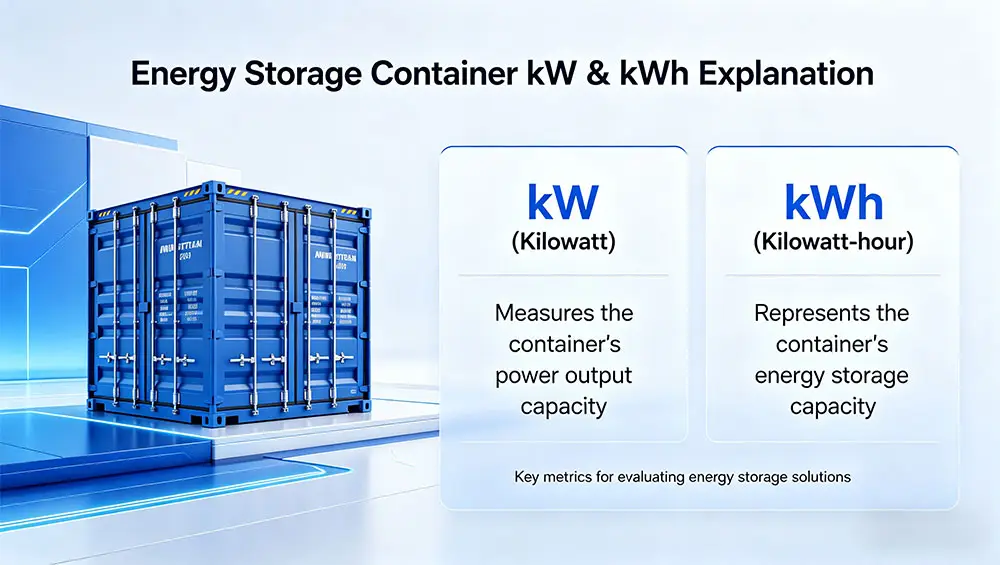
Sizing is the most common point of failure in BESS design. You must distinguish between Power (kW) and Energy (kWh).
- kW (The “Pipe”): This determines how much of the peak you can shave. If your peak is 500kW and you want to cap it at 300kW, you need a 200kW system.
- kWh (The “Tank”): This determines how long you can shave that peak. If your peak lasts for 2 hours, you need at least 400kWh of energy.
Common Sizing Mistakes
Many operators buy a system with enough Power (kW) but not enough Energy (kWh). If the peak lasts longer than the battery can discharge, the system will empty, and the facility will hit a new peak, resetting the demand charges for the month.
Challenges of Peak Shaving Systems
While the benefits are clear, there are technical hurdles to consider:
- Initial Investment: Despite falling prices, the CAPEX is still significant for many SMBs.
- Battery Lifecycle & Degradation: Repeated daily cycling affects battery health. Choosing a system with a robust BMS and high-grade cells is essential for a 10+ year ROI.
- System Integration Complexity: Integrating a BESS with existing switchgear and building management systems requires professional electrical engineering.
Future Trends: AI, Smart Grid & Virtual Power Plants
By 2027, we expect to see the rise of Virtual Power Plants (VPPs). In this model, your peak shaving battery energy storage system for commercial use doesn’t just save you money—it makes you money. When the grid is under extreme stress, the utility may pay you to discharge your battery, providing a secondary revenue stream beyond just demand charge reduction.
Peak Shaving FAQs
What is peak shaving in simple terms?
It is using a local power source (like a battery) to supplement grid power when your electricity usage is at its highest, preventing expensive demand charges.
How is peak shaving different from load shifting?
Peak shaving reduces the intensity of your power draw (kW), while load shifting moves the time of your power use (kWh) to cheaper hours.
What is the best technology for peak shaving?
Lithium Iron Phosphate (LFP) Battery Energy Storage Systems (BESS) are currently the most effective due to their high power density and safety.
Peak Shaving Summary: Key Insights for Decision Makers
- Demand charges are the hidden profit-killer in commercial electricity bills.
- A peak shaving battery energy storage system for commercial use is the most effective tool to cap these costs without changing operations.
- The solution is essential for EV fast charging sites to avoid grid overload.
- ROI is accelerating due to lower battery costs and increased government incentives.
- Correct sizing (kW vs kWh) is the difference between a successful project and a failed investment.
As the grid becomes more strained, those who own their energy storage will have a significant competitive advantage. Whether you are looking to reduce industrial electricity costs or scale a DC fast charging network, peak shaving is the foundation of modern energy strategy.
 https://anengjipower.com/wp-content/uploads/2026/10/AnengjiPower-BESS-Battery-Passport-Data-Handover.webp
675
1000
Alex Yang
https://anengjipower.com/wp-content/uploads/2025/09/anengji-dc-fast-charging-station-manufacturer-and-supplier-logo-white-1.png
Alex Yang2026-10-23 03:24:462026-10-23 03:25:06What Is the EU Battery Regulation? BESS Compliance Guide
https://anengjipower.com/wp-content/uploads/2026/10/AnengjiPower-BESS-Battery-Passport-Data-Handover.webp
675
1000
Alex Yang
https://anengjipower.com/wp-content/uploads/2025/09/anengji-dc-fast-charging-station-manufacturer-and-supplier-logo-white-1.png
Alex Yang2026-10-23 03:24:462026-10-23 03:25:06What Is the EU Battery Regulation? BESS Compliance Guide https://anengjipower.com/wp-content/uploads/2026/10/AnengjiPower-Multi-Service-BESS-Dispatch-at-a-CI-Site.webp
675
1000
Alex Yang
https://anengjipower.com/wp-content/uploads/2025/09/anengji-dc-fast-charging-station-manufacturer-and-supplier-logo-white-1.png
Alex Yang2026-10-22 06:21:262026-10-22 06:21:47Multi-Service BESS Dispatch: EMS Priority Guide
https://anengjipower.com/wp-content/uploads/2026/10/AnengjiPower-Multi-Service-BESS-Dispatch-at-a-CI-Site.webp
675
1000
Alex Yang
https://anengjipower.com/wp-content/uploads/2025/09/anengji-dc-fast-charging-station-manufacturer-and-supplier-logo-white-1.png
Alex Yang2026-10-22 06:21:262026-10-22 06:21:47Multi-Service BESS Dispatch: EMS Priority Guide https://anengjipower.com/wp-content/uploads/2026/10/AnengjiPower-Time-of-Use-Battery-Storage-at-a-European-CI-Site.webp
675
1000
Alex Yang
https://anengjipower.com/wp-content/uploads/2025/09/anengji-dc-fast-charging-station-manufacturer-and-supplier-logo-white-1.png
Alex Yang2026-10-21 03:56:212026-10-21 03:56:32Time-of-Use Battery Storage for European C&I Sites
https://anengjipower.com/wp-content/uploads/2026/10/AnengjiPower-Time-of-Use-Battery-Storage-at-a-European-CI-Site.webp
675
1000
Alex Yang
https://anengjipower.com/wp-content/uploads/2025/09/anengji-dc-fast-charging-station-manufacturer-and-supplier-logo-white-1.png
Alex Yang2026-10-21 03:56:212026-10-21 03:56:32Time-of-Use Battery Storage for European C&I Sites


Leave a Reply
Want to join the discussion?Feel free to contribute!