
Introduction
In the industrial landscape of 2026, energy is no longer a fixed overhead—it is a competitive variable. As global electricity prices for the industrial sector have surged by an average of 18% year-over-year (according to the IEA World Energy Outlook 2025), manufacturing facilities are facing a “triple threat”: rising demand charges, grid instability, and the urgent pressure to decarbonize. To solve this, BESS for Industrial Manufacturing has transitioned from a niche “green” luxury to a critical operational necessity.
For factory owners, the math is simple: if your electricity bill is being devoured by peak demand penalties, or if a single 500ms voltage sag stops your production line for four hours, you are losing profit. This guide explores how modern industrial energy storage systems provide the technical and financial bridge to a high-ROI, resilient energy future.
What Is BESS for Industrial Manufacturing?
Definition of Battery Energy Storage Systems (BESS)
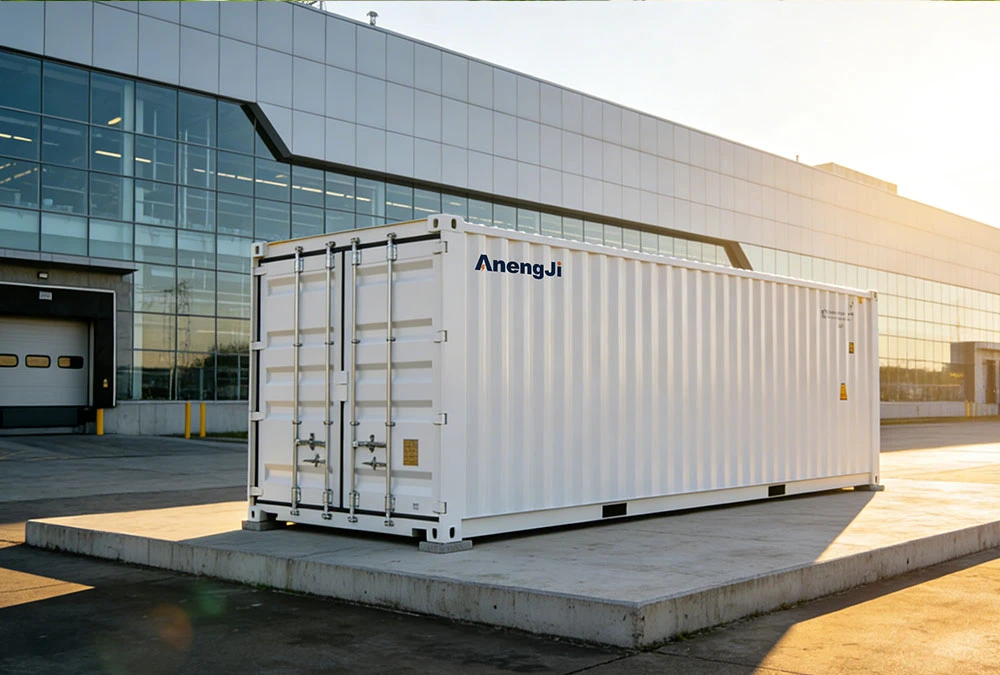
A Battery Energy Storage System (BESS) is a sophisticated, integrated solution designed to capture electricity—from the grid or on-site renewables—and discharge it precisely when needed. In an industrial setting, this isn’t just a battery; it’s an automated power plant located “behind-the-meter.” BESS for Industrial Manufacturing serves as a buffer that decouples the timing of energy purchase from the timing of energy consumption.
The Four Pillars of Industrial BESS Architecture
From an engineering perspective, the reliability of a BESS is determined by its sub-systems:
- High-Density Battery String: Utilizing 2026-standard LFP (Lithium Iron Phosphate) cells, often featuring 10,000+ cycle lives.
- Power Conversion System (PCS): The bi-directional “engine” that handles AC/DC conversion. High-efficiency PCS units in 2026 now achieve over 98.5% efficiency.
- Battery Management System (BMS): A multi-tiered safety protocol that monitors every cell’s temperature and voltage to prevent “thermal runaway.”
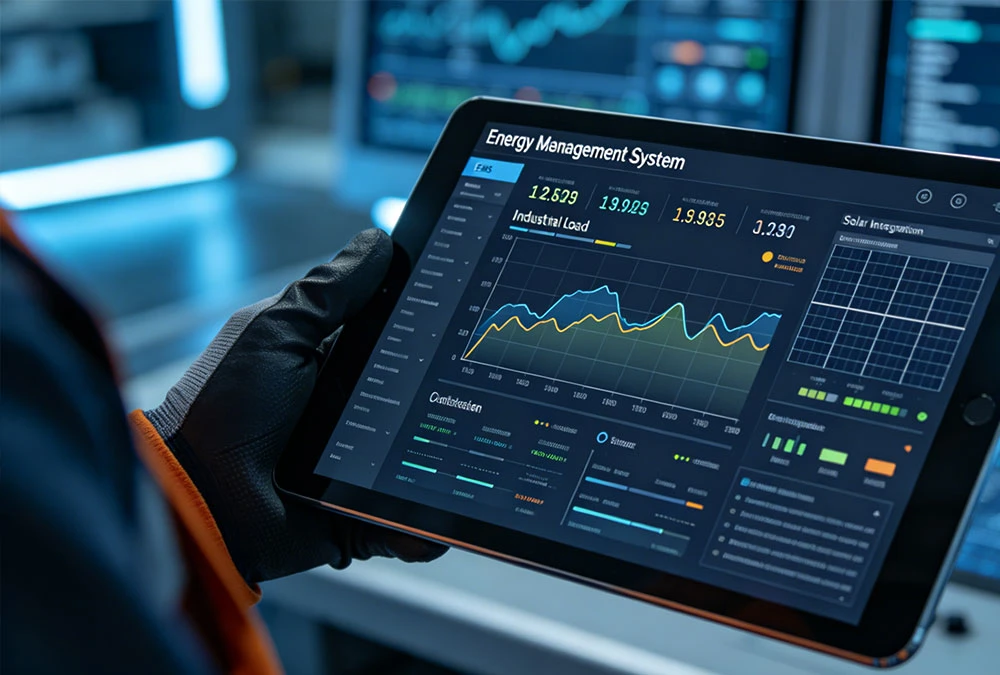
- Energy Management System (EMS): The AI-driven “brain” that tracks real-time utility rates and factory load patterns to optimize discharge.
Engineer’s Insight: Why do manufacturers choose BESS over traditional UPS? Standard UPS systems are designed for minutes of backup; BESS for Industrial Manufacturing is designed for hours of economic optimization and grid support.
Industrial Energy Challenges: The Cost of Doing Nothing
The “Silent Profit Killer”: Demand Charges
In 2026, most utilities in North America and Europe have increased their “Demand Charges”—the fee based on the single highest 15-minute window of power use. For heavy manufacturing, these charges can account for 35% to 55% of the total monthly utility bill.
Grid Instability and “Dirty” Power
As the global grid integrates more intermittent solar and wind, “Power Quality” has declined. For electronics and precision manufacturing, harmonic distortion and voltage sags lead to:
- Micro-stoppages that scrap work-in-progress.
- Accelerated wear on sensitive CNC motors and PLC controllers.
- Increased “Hidden OpEx” in maintenance and recalibration.
The Intermittency of On-Site Solar
Many factories have invested in rooftop PV, but solar energy is often produced when it is least needed. Without commercial battery storage for factories with solar integration, that free energy is often fed back to the grid at wholesale rates, while the factory pays retail rates just a few hours later.
How BESS for Industrial Manufacturing Works in Real Environments
Peak Shaving: The Primary ROI Driver
“Peak Shaving” is the process of using the BESS to supply power during a factory’s highest load periods. This keeps the grid-drawn power below a specific “threshold,” effectively erasing the most expensive parts of the utility bill.
Load Shifting: Arbitrage in the Power Market
Using industrial energy storage systems, a factory can “buy low and use high.” By charging the system during off-peak hours (e.g., 2:00 AM) when rates are at their lowest, and discharging during peak production windows, the factory achieves an immediate reduction in the “Average Cost per kWh.”
Seamless Backup (UPS Mode)
When the grid fails, a 2026-grade BESS provides a “Seamless Transition” (typically under 20ms). This is critical for food and beverage plants, chemical processing, and semiconductor fabs where even a momentary loss of power results in mass spoilage or equipment damage.
⚡ STOP OVERPAYING FOR ENERGY
Are Demand Charges eating 40% of your production profit?
[Get a Free BESS ROI Simulation & Technical Load Audit →]
Key Benefits of BESS for Industrial Manufacturing Operations
1. Drastic Reduction in Electricity Costs
By combining peak shaving and load shifting, factories typically see an instant 20% to 40% reduction in their monthly electricity expenditures. This is particularly effective for facilities with “spiky” load profiles, such as those using heavy arc welders or large hydraulic presses.
2. Improved Power Reliability and Reliability
Industrial power backup systems serve as the ultimate insurance policy. In 2025, the estimated cost of an industrial power outage in the US was approximately $12,000 per hour for mid-sized plants. A BESS mitigates this risk entirely.
3. Sustainability and Carbon Credits
As “Scope 2” emissions reporting becomes mandatory for global supply chains, BESS for Industrial Manufacturing allows factories to prove they are using 100% renewable energy by storing on-site solar for use during the night shift.
4. Enhancing Energy Independence
A BESS allows a facility to operate as an industrial microgrid. In the event of a grid-wide emergency or “brownout,” the factory can continue operating critical lines independently of the utility.
Industrial Energy Storage Applications (Use Cases & Industry Scenarios)
Scenario A: Heavy Manufacturing (Steel, Cement, Chemicals)
In heavy industry, the goal is load leveling. Huge motors creating massive inrush currents can be buffered by the BESS, preventing voltage drops across the entire facility.
Scenario B: Electronics and Precision Manufacturing
For cleanrooms and PCB assembly, the BESS acts as a massive, high-reliability filter, ensuring the electricity feeding the machines is “clean” and free of harmonics.
Scenario C: Food, Beverage, and Cold Storage
Temperature-controlled warehouses use lithium battery storage for factories to ensure that if the grid goes down, the compressors stay running, protecting millions of dollars in perishable inventory.
Case Study Insights: Real-World ROI Data
Case 1: Automotive Parts Factory (Peak Shaving)
- The Problem: Monthly demand charges exceeding $18,000 due to robotic welding stations.
- The Solution: Installed a 1.2MW/2.4MWh BESS.
- The Result: Demand charges dropped by 65%.
- Payback Period: 3.8 years.
Case 2: Logistics Hub with Solar Integration
- The Problem: 800kW of solar PV, but 40% of energy was wasted as the hub operated mainly at night.
- The Solution: Integrated a 2.5MWh C&I energy storage solution.
- The Result: 85% solar self-consumption achieved. Annual utility savings of $145,000.
Types of Energy Storage Technologies: 2026 Comparison
| Technology | Efficiency | Lifespan (Years) | 2026 Cost/kWh | Primary Use Case |
| Lithium-Ion (LFP) | 92% – 95% | 15+ | $260 – $350 | Peak Shaving / Fast Charge |
| Flow Batteries | 70% – 75% | 20+ | $500 – $750 | Long-Duration (8h+) |
| Sodium-Ion | 80% – 85% | 8 – 10 | $180 – $240 | Extreme Cold Environments |
Note: Data based on BloombergNEF 2026 Energy Storage Cost Survey Projections.
How to Choose the Right BESS for Your Facility
Choosing a BESS for Industrial Manufacturing is an engineering decision, not just a procurement one.
- Capacity Sizing: Don’t just buy “more.” Size your kWh based on your 15-minute load peak data.
- Safety Standards: Only accept systems that have passed UL 9540A (system-level fire testing).
- Thermal Management: In 2026, liquid cooling is superior to air cooling for maintaining cell health and ROI.
- Vendor Experience: Look for providers who understand demand charge management and can provide a pre-simulation of your savings.
Smart and Safe BESS Solutions: The AnengJi Approach
At AnengJi Power, we specialize in integrated energy ecosystems. We are more than just a supplier; we are a solutions architect. Unlike generalist battery manufacturers like CATL or Tesla, who often focus on “big-box” delivery, AnengJi focuses on the Landing Scenario.
Why AnengJi is the Industrial Choice:
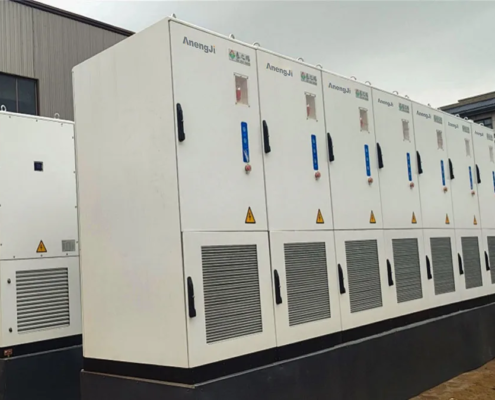
- Faster Deployment: Our modular “All-in-One” cabinets are factory-tested and pre-commissioned, reducing on-site installation time by 60%.
- Application Specificity: We are experts in EV charging + storage integration. If your factory is transitioning to an electric fleet, our systems handle the charging load without triggering grid penalties.
- Superior Safety: Our systems utilize a 3-tier BMS and liquid cooling to ensure that industrial energy storage costs are lowered not just through savings, but through the extreme longevity of the asset.
📈 OPTIMIZE YOUR FACTORY TODAY
Stop letting the grid dictate your OpEx. Build your energy independence.
[View our 215kWh to 5MWh Industrial BESS Product Line →]
Future Trends: What’s Next for Industrial Storage?
AI-Driven Virtual Power Plants (VPP)
By 2027, factories won’t just save money—they will make it. Through VPP participation, your BESS for Industrial Manufacturing can automatically sell “Frequency Regulation” services to the grid during idle hours.
Long-Duration Energy Storage (LDES)
As factories aim for 24/7 carbon-free operation, we are seeing a shift toward 4-to-8 hour discharge windows, allowing plants to run entirely on stored wind and solar through the night.
Conclusion: Why BESS is the Essential Industrial Utility
The conclusion is clear: the most profitable factories of the next decade will be the ones that control their energy. By implementing BESS for Industrial Manufacturing, you solve the dual problem of rising electricity costs and grid instability. It is a strategic investment that delivers a 4-year payback and a 15-year competitive advantage.
FAQs About BESS for Industrial Manufacturing
What is the ROI of an industrial energy storage system?
In 2026, the typical factory battery storage ROI ranges from 3 to 5 years. This is achieved through demand charge reduction, ToU arbitrage, and potential government tax incentives (like the 30% ITC in the US).
How much does an industrial battery storage system cost?
The industrial energy storage cost typically ranges from $300,000 to $450,000 per MWh for a fully integrated, liquid-cooled system. However, the price is often offset by immediate operational savings.
Is BESS safe for indoor factory installation?
While most systems are outdoor-rated containers, indoor installation is possible if the system meets strict NFPA 855 and UL 9540A fire safety standards. Liquid-cooled LFP systems are the safest option for industrial environments.
Can BESS help with EV charging at the factory?
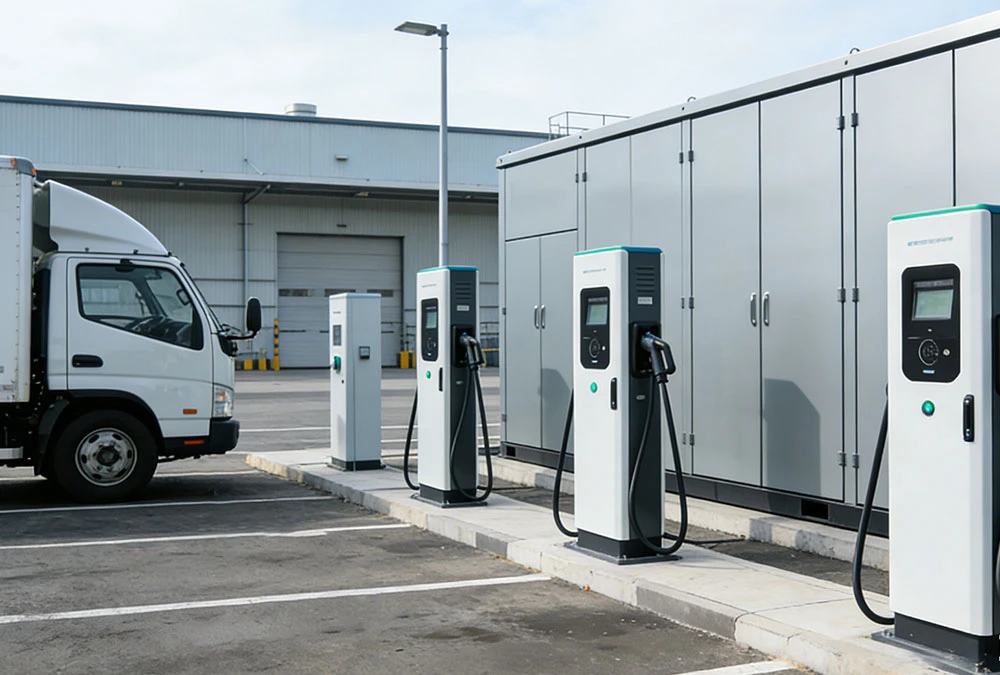
Yes. An integrated EV charging hub allows a factory to provide ultra-fast charging (up to 480kW) for logistics fleets without upgrading the site’s main transformer, using the BESS as a power buffer.
What is the lifespan of an industrial BESS?
Modern BESS for manufacturing cost reduction systems are designed for 10 to 15 years of daily operation, typically reaching 6,000 to 10,000 cycles before the battery capacity drops to 80%.
 https://anengjipower.com/wp-content/uploads/2026/03/romania-3-5mw-industrial-bess-pcs-array.webp
675
1000
Charging Station Engineer
https://anengjipower.com/wp-content/uploads/2025/09/anengji-dc-fast-charging-station-manufacturer-and-supplier-logo-white-1.png
Charging Station Engineer2026-03-06 17:30:032026-03-06 09:27:24Romania 3.5MW/7.3MWh Industrial Energy Storage: High-Capacity Grid Integration
https://anengjipower.com/wp-content/uploads/2026/03/romania-3-5mw-industrial-bess-pcs-array.webp
675
1000
Charging Station Engineer
https://anengjipower.com/wp-content/uploads/2025/09/anengji-dc-fast-charging-station-manufacturer-and-supplier-logo-white-1.png
Charging Station Engineer2026-03-06 17:30:032026-03-06 09:27:24Romania 3.5MW/7.3MWh Industrial Energy Storage: High-Capacity Grid Integration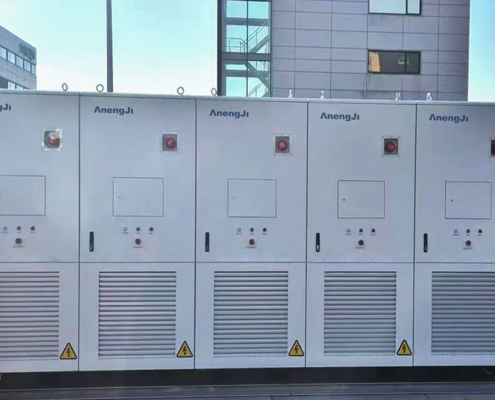 https://anengjipower.com/wp-content/uploads/2026/03/new-zealand-500kw-industrial-bess-outdoor-installation.webp
675
1000
Charging Station Engineer
https://anengjipower.com/wp-content/uploads/2025/09/anengji-dc-fast-charging-station-manufacturer-and-supplier-logo-white-1.png
Charging Station Engineer2026-03-06 07:28:092026-03-06 07:28:31New Zealand BESS: 500kW/1165kWh Frequency Regulation Solution
https://anengjipower.com/wp-content/uploads/2026/03/new-zealand-500kw-industrial-bess-outdoor-installation.webp
675
1000
Charging Station Engineer
https://anengjipower.com/wp-content/uploads/2025/09/anengji-dc-fast-charging-station-manufacturer-and-supplier-logo-white-1.png
Charging Station Engineer2026-03-06 07:28:092026-03-06 07:28:31New Zealand BESS: 500kW/1165kWh Frequency Regulation Solution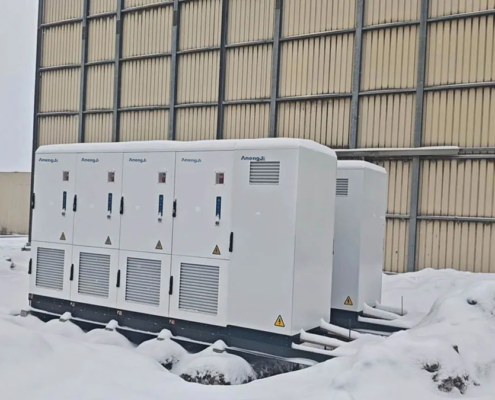 https://anengjipower.com/wp-content/uploads/2026/03/Ukraine-1MW2MWh-battery-energy-storage-system-installation.webp
675
1000
Charging Station Engineer
https://anengjipower.com/wp-content/uploads/2025/09/anengji-dc-fast-charging-station-manufacturer-and-supplier-logo-white-1.png
Charging Station Engineer2026-03-06 07:05:042026-03-06 07:21:46Ukraine 1MW/2MWh Energy Storage: 20ms Seamless Backup for Industrial Resilience
https://anengjipower.com/wp-content/uploads/2026/03/Ukraine-1MW2MWh-battery-energy-storage-system-installation.webp
675
1000
Charging Station Engineer
https://anengjipower.com/wp-content/uploads/2025/09/anengji-dc-fast-charging-station-manufacturer-and-supplier-logo-white-1.png
Charging Station Engineer2026-03-06 07:05:042026-03-06 07:21:46Ukraine 1MW/2MWh Energy Storage: 20ms Seamless Backup for Industrial Resilience

Leave a Reply
Want to join the discussion?Feel free to contribute!