
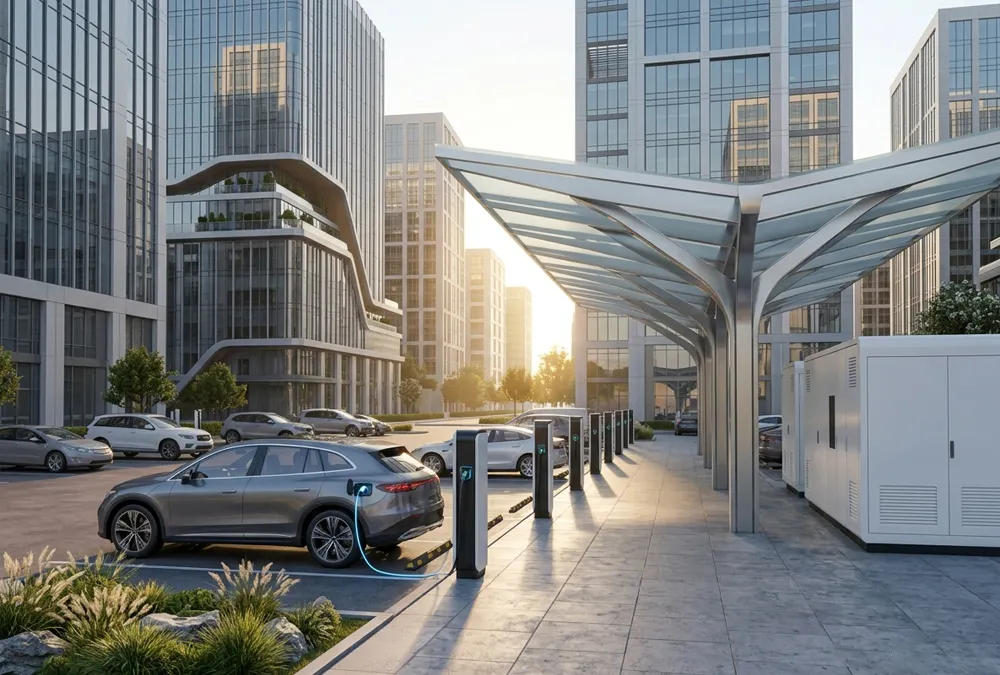
Introduction
Planning a real-world commercial site is tough. Grid capacity limits are rarely ready for high-current demands. To build a system that actually lasts, you need a deep dive into electric vehicle supply equipment. It is not just about mounting plastic boxes on a wall. It is about matching actual grid safety with your real-world parking dynamics. If you buy the wrong system today, you will face massive retrofitting costs tomorrow. Let us talk about real hardware and how to design a reliable commercial setup.
What Is Electric Vehicle Supply Equipment (EVSE)?
Let us clarify a basic point first. Many people use the term “charger” incorrectly. The real charger is actually built inside your electric vehicle for AC power. The external box on your wall is the safety and control link.
EVSE Definition
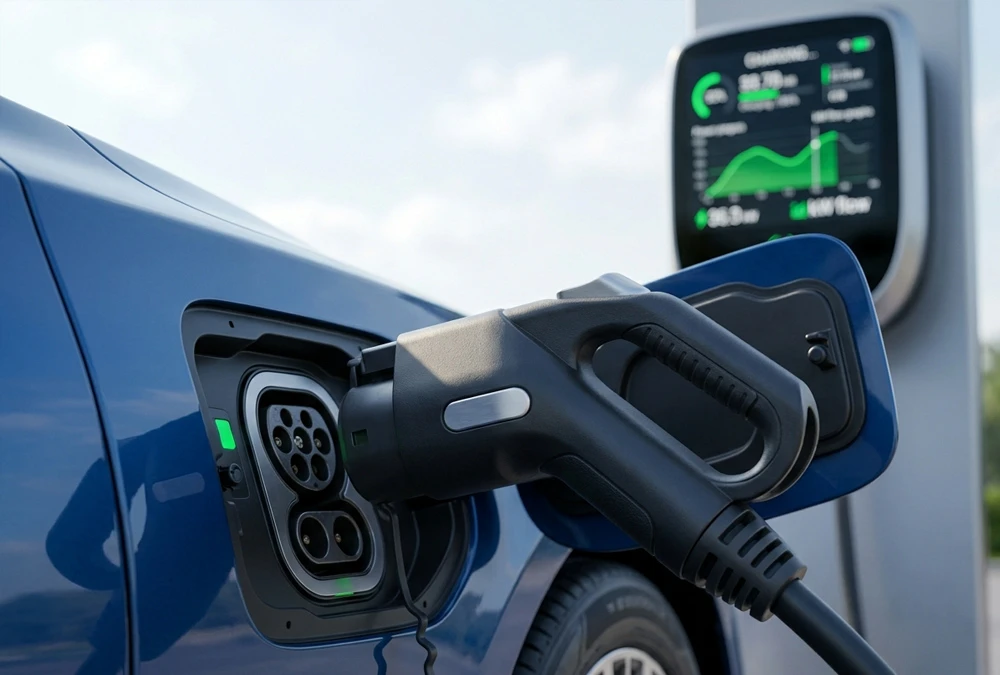
In industry terms, evse electric vehicle supply equipment refers to the entire system. What is electric vehicle supply equipment in practice? It is the specific components, protocols, and safety mechanisms that deliver power directly to an EV. It prevents shocks and handles electrical safety before power flows. Without this dedicated safety gateway, plugging an EV into a high-amperage grid would be incredibly dangerous.
What Does EVSE Include?
A true commercial installation is a highly integrated assembly. It goes far beyond the visible outer casing to include:
- Charging Station: The main structural housing with user interfaces and payment terminals.
- Power Supply: The connection point to the local grid, including sub-panels and custom breakers.
- Protection Devices: Industrial surge arrestors and ground-fault interrupters.
- Charging Cable: Heavy-duty, high-copper-content lines built to resist physical wear.
- Connector: The specific plug that locks into the vehicle’s inlet.
- Communication System: Smart hardware that links the station to vehicles and payment networks.
Why EVSE Is Essential for the Future of Electric Mobility
Public charging demand is growing fast. Fleets are switching to electric vans, and cities are mandating clean transport. Robust electric vehicle supply equipment is the foundation of this transition. It ensures businesses can charge their fleets quickly without overloading local utility grids.
EV Charging Equipment Components: What Makes Up an EVSE System?
To invest wisely, you must understand the internal components. Top-tier manufacturers use industrial-grade parts.
Enclosure & Housing
Outdoor stations must withstand harsh weather. Look for an IP54 or IP65 enclosure rating. It needs to handle freezing winter ice, hot summer sun, and salt air. Rust-proof aluminum or heavy polycarbonate keeps internal electronics clean and dry.
Internal Electronic Components
Inside the unit, you will find contactors, relays, and main control boards. High-quality systems use certified heavy-duty contactors. These switches handle thousands of connect cycles under load. Cheap internal relays wear out quickly under heavy commercial use.
Firmware & Embedded Control System
The control boards run proprietary firmware. This software monitors internal temperatures in real time. It detects any ground fault instantly. It can shut down power in milliseconds if an anomaly occurs.
Network Connectivity
Modern commercial installations require constant internet access. Stations connect via 4G, 5G, Wi-Fi, or Ethernet. This allows operators to collect payments and manage access remotely.
Power Supply Connection
A Level 2 charger uses 208V or 240V AC power. High-power DC fast charging systems require 480V three-phase input. This requires heavy-duty distribution panels and robust surge protection devices.
DC Power Module
For DC stations, the power module is the heart of the system. These modules convert AC grid power to DC power. They usually come in 20kW, 30kW, or 40kW steps. A modular design allows for easy maintenance if one module fails.
Charging Ports & Flexible Cables
Cables must remain flexible in extreme cold. For high-amperage charging above 200A, the cables require active liquid cooling. This keeps the copper lines thin, light, and safe during high-output sessions.
Charging Connectors & Plugs
Different regions use different physical plugs. Understanding these standards is critical for international project planning.
| Connector Type | Region | Max Power Level | Direct Advantage to Owner |
|---|---|---|---|
| NACS (SAE J3400) | North America | Up to 1MW (DC) | Future-proof. Most new North American vehicles plug in without adapters. |
| CCS2 | Europe & Asia | Up to 350kW (DC) | Universal EU standard. Guarantees compatibility for all local vehicle fleets. |
| Type 2 | Europe & Global | Up to 22kW (AC) | Highly reliable for overnight or long-stay workplace parking setups. |
How Does Electric Vehicle Supply Equipment Work?
Safety is the primary focus of the entire process. Here is how the system safely transfers energy:
Charging Process Steps
The system follows a strict step-by-step handshake procedure:
- The driver plugs the connector into the vehicle port.
- The system detects the connection via control pilot lines.
- The station verifies the vehicle’s identity and account.
- The system checks for any electrical ground faults.
- The contactor closes, and safe power flow begins.
- The system monitors the session variables in real time.
- The current stops immediately when the battery is full.
Communication Between EVSE and Electric Vehicles
The station and the car talk constantly. They use pulse-width modulation (PWM) signals. For fast charging, they use ISO 15118 protocols. This allows features like “Plug and Charge” where no credit card is needed.
Safety Protection During Charging
Safety systems must operate perfectly. Built-in protection covers short circuits, over-voltage, and overheating. If a cable is pulled during charging, the system cuts power instantly. This prevents dangerous electrical arcing.
AC vs DC EV Charging Equipment: What’s the Difference?
This is where many buyers make costly mistakes. Do not buy expensive DC fast chargers if your customers stay for hours.
AC Charging Equipment
AC units are compact and highly cost-effective. They deliver power directly to the vehicle’s onboard converter. This conversion takes time. Therefore, Level 2 AC chargers are best for hotels, offices, and residential apartments.
DC Fast Charging Equipment
DC fast chargers convert grid power to DC inside the station. They feed this energy directly to the battery pack. This bypasses the car’s slow onboard converter. This allows for incredibly fast charging times under 30 minutes.
AC vs DC Comparison Table
| Feature | AC Charging | DC Fast Charging | Business Benefit of Selection |
|---|---|---|---|
| Typical Power | 7kW – 22kW | 30kW – 360kW+ | Match power to customer stay times to maximize your equipment utilization. |
| Hardware Cost | Low ($500 – $2,500) | High ($12,000 – $80,000+) | Level 2 allows you to install many more ports within a tight budget. |
| Grid Requirements | Standard single/three phase | High-voltage three-phase | AC avoids expensive utility grid upgrades and complex permitting steps. |
EVSE Standards, Ratings & Certifications
Safety certifications are not optional in commercial environments. Uncertified equipment can void your property insurance coverage.
International Standards
Look for hardware that complies with IEC 61851 and SAE J1772. These standards govern electrical safety and communications. For network control, ensure the system is OCPP 1.6J or OCPP 2.0.1 compliant. This allows you to switch software providers easily without buying new hardware.
Safety Certifications
Never install uncertified hardware on your property. Look for trusted global certifications like UL, CE, and TÜV. These marks prove the equipment has passed rigorous electrical safety testing.
Charging Protection Ratings
Check the physical impact rating. An IK10 rating means the housing can withstand physical vandalism. This is critical for unmanned public parking lots.
Why the EV Charging Industry Must Continue to Innovate
The industry is moving quickly. Charging speeds are increasing. To prevent obsolete installations, you must consider smart integration.
Solar + Battery Storage + EV Charging Integration
Running high-power DC stations can overload your local grid connection. This leads to expensive peak demand charges. By pairing solar panels with a battery energy storage system (BESS), you can solve this problem. The battery acts as a clean energy buffer. It stores solar energy or cheap off-peak power during the night. It then discharges this power when an EV plugs in. This saves you from paying massive grid upgrade fees.
We provide specialized industrial battery storage systems designed to integrate directly with your commercial charging infrastructure:
| Storage System | Battery Chemistry | Key Selling Point | Advantage to Buyer |
|---|---|---|---|
| AnengJI 100kWh Cabinet | Lithium Iron Phosphate (LFP) | Compact, outdoor-rated, easy modular installation. | Best for light commercial sites to shave minor peak power demand spikes. |
| AnengJI 261kWh Cabinet | Lithium Iron Phosphate (LFP) | Active liquid cooling for maximum safety and long cycle life. | Supports multiple fast chargers. Prevents thermal degradation in hot climates. |
| AnengJI 1MWh Container | Lithium Iron Phosphate (LFP) | All-in-one container with HVAC and built-in fire suppression. | Perfect for highway supercharging hubs. Can support heavy fleet truck charging without grid stress. |
Technology Note: We use Lithium Iron Phosphate (LFP) technology. LFP chemistry offers high thermal stability. It is much safer than standard nickel-cobalt-based batteries. It also supports over 6,000 charge cycles. This provides a much lower total cost of ownership over its long lifespan.
BESS Alternative Solutions: Traditional lead-acid batteries are too slow and degrade within 500 cycles. Standard lithium-ion (NMC) options carry higher fire hazard risks. Active-liquid-cooled LFP remains the best commercial-grade standard for grid buffer security.
Commercial EV Charging Solutions for Different Applications
Every commercial space has different needs. Here is how to plan your hardware configuration based on your specific industry:
| Application | Recommended EVSE | Optional BESS | Business Benefit to Operator |
|---|---|---|---|
| Office Buildings | Dual-port Level 2 AC chargers (22kW). | 100kWh BESS Cabinet. | Attracts premium tenants. Lowers overall installation costs through smart building load management. |
| Highway Rest Stops | 180kW to 360kW DC Fast Chargers. | 1MWh Container BESS. | Captures high-margin charging fees. Fast charging turnover keeps traffic moving quickly. |
| Fleet Depots | 120kW DC split chargers with dual cables. | 261kWh Liquid-Cooled BESS. | Minimizes logistics vehicle downtime. Ensures reliable operations even during unexpected power cuts. |
How to Choose the Right Electric Vehicle Supply Equipment
Choosing the right hardware requires careful planning. Do not buy equipment based on the lowest price alone. Consider these critical factors:
- Analyze Vehicle Dwell Times: Understand how long your typical drivers park. If they stay overnight, choose Level 2 AC. If they are in a hurry, choose DC fast chargers.
- Assess Available Power Capacity: Check your building’s electrical service. Upgrading utility connections is slow and expensive. Use dynamic load balancing to maximize your current capacity.
- Ensure OCPP Compatibility: Do not buy locked systems. Always choose open hardware. This lets you change payment and management software whenever you want.
- Evaluate Hardware Support: Look for manufacturers with strong warranties. A broken charger is a major liability. Insist on reliable customer service.
Why Choose AnengJI as Your EVSE Supplier?
When you work with us, you partner with a direct factory manufacturer. We specialize in robust, high-efficiency electric vehicle supply equipment. We offer several clear business advantages:
Factory-Direct EVSE Manufacturing
We design and manufacture our hardware in our own facilities. There are no middleman markups. This lowers your total project cost significantly. It also allows us to customize hardware for your specific requirements.
Complete Product Portfolio
We provide a comprehensive range of hardware. Our lineup includes everything from 7kW AC wallbox chargers to ultra-fast 360kW DC liquid-cooled systems. We also offer integrated energy storage systems and modular power modules.
Advanced Smart Charging Technologies
Our smart charging features are built directly into our firmware. This includes dynamic load balancing (DLB) to protect your local grid. Our hardware integrates smoothly with popular software backends via OCPP 1.6J and OCPP 2.0.1.
Global Certifications & Compliance
We manufacture all products to meet strict international standards. Our systems are certified under UL, CE, TÜV, and RoHS. This ensures easy local permitting and safe operation in any market.
Integrated PV + BESS + EV Charging Solutions
We are a complete energy solutions provider. We design integrated systems that combine solar power, advanced battery storage, and smart EV charging. This allows businesses to maximize local solar usage and reduce monthly operating costs.
Frequently Asked Questions About Electric Vehicle Supply Equipment
- Q: What is electric vehicle supply equipment (EVSE)?
- A: It is the complete hardware system that safely delivers electrical power to an electric car. This includes safety systems, conductors, communication chips, and physical plugs.
- Q: What is the difference between EVSE and an EV charger?
- A: The physical charger is often inside the car for AC charging. The external box on the wall is the EVSE. It acts as a smart safety gatekeeper to protect drivers and the grid.
- Q: What certifications should commercial EV charging equipment have?
- A: It should carry recognized global certifications such as UL, CE, or TÜV. It must also comply with OCPP standards for secure network communication.
- Q: Can EVSE integrate with solar panels and battery storage?
- A: Yes. You can pair charging hardware with solar PV and a battery energy storage system (BESS). This prevents high demand fees and provides backup power during blackouts.
- Q: Which connector standard should I choose for North America?
- A: For North American markets, the industry is transitioning rapidly to the NACS (SAE J3400) standard. This connector ensures native compatibility for most modern vehicles without adapters.
Build Smarter EV Charging Infrastructure with AnengJI EVSE Solutions
Whether you are planning a commercial parking lot, fleet depot, highway fast charging hub, or integrated Solar + BESS + EV Charging project, AnengJI provides complete EVSE solutions from design and manufacturing to installation support and long-term operation.
Realted Article
- Level 2 Charging vs DC Fast Charging: Which One Is Right for You?
- EV Charging Levels Explained: Level 1 vs Level 2 vs Level 3 Charging Guide
- Level 3 EV Charger Cost Breakdown: Installation, Price Factors & ROI for Businesses
- Commercial EV Charging Station Cost: A Complete Guide to Installation
- The 2025 Business Guide to Commercial EV Charging Stations
- Top EV Charging Station Companies 2025 | Global Leaders in Fast Charging
- DC Fast Charging Station: Commercial EV Solutions & Cost Analysis
 https://anengjipower.com/wp-content/uploads/2026/06/epc-vs-turnkey-solar-project-bess.webp
675
1000
Charging Station Engineer
https://anengjipower.com/wp-content/uploads/2025/09/anengji-dc-fast-charging-station-manufacturer-and-supplier-logo-white-1.png
Charging Station Engineer2026-06-22 07:16:042026-06-24 07:13:17What Is the Difference Between EPC and Turnkey Contract Models in Energy Projects?
https://anengjipower.com/wp-content/uploads/2026/06/epc-vs-turnkey-solar-project-bess.webp
675
1000
Charging Station Engineer
https://anengjipower.com/wp-content/uploads/2025/09/anengji-dc-fast-charging-station-manufacturer-and-supplier-logo-white-1.png
Charging Station Engineer2026-06-22 07:16:042026-06-24 07:13:17What Is the Difference Between EPC and Turnkey Contract Models in Energy Projects? https://anengjipower.com/wp-content/uploads/2026/06/anengji-commercial-solar-plus-storage-benefits-site.webp
675
1000
Charging Station Engineer
https://anengjipower.com/wp-content/uploads/2025/09/anengji-dc-fast-charging-station-manufacturer-and-supplier-logo-white-1.png
Charging Station Engineer2026-06-20 14:34:102026-06-20 14:37:43What Are the Top Benefits of Solar Battery Storage in Factories?
https://anengjipower.com/wp-content/uploads/2026/06/anengji-commercial-solar-plus-storage-benefits-site.webp
675
1000
Charging Station Engineer
https://anengjipower.com/wp-content/uploads/2025/09/anengji-dc-fast-charging-station-manufacturer-and-supplier-logo-white-1.png
Charging Station Engineer2026-06-20 14:34:102026-06-20 14:37:43What Are the Top Benefits of Solar Battery Storage in Factories?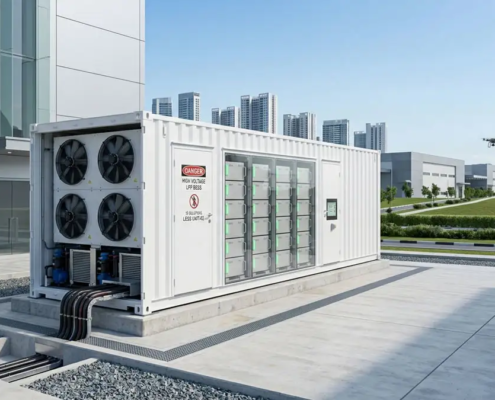 https://anengjipower.com/wp-content/uploads/2026/06/modular-commercial-solar-battery-storage-cabinet.webp
675
1000
Charging Station Engineer
https://anengjipower.com/wp-content/uploads/2025/09/anengji-dc-fast-charging-station-manufacturer-and-supplier-logo-white-1.png
Charging Station Engineer2026-06-18 09:16:522026-07-03 03:05:13What Is Solar Battery Storage? Complete C&I Engineering Guide
https://anengjipower.com/wp-content/uploads/2026/06/modular-commercial-solar-battery-storage-cabinet.webp
675
1000
Charging Station Engineer
https://anengjipower.com/wp-content/uploads/2025/09/anengji-dc-fast-charging-station-manufacturer-and-supplier-logo-white-1.png
Charging Station Engineer2026-06-18 09:16:522026-07-03 03:05:13What Is Solar Battery Storage? Complete C&I Engineering Guide


Leave a Reply
Want to join the discussion?Feel free to contribute!