
Introduction
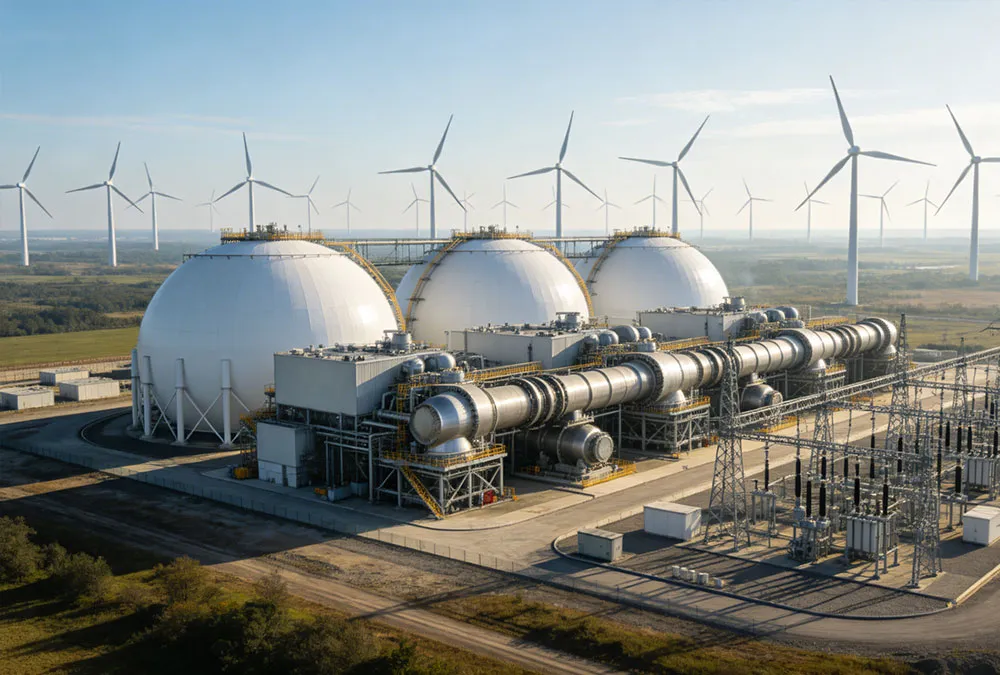
The transition toward a decarbonized power grid in 2026 has exposed a fundamental vulnerability in our current energy infrastructure: the “duration gap.” While renewable energy generation has scaled exponentially, our ability to store that energy for extended periods remains the primary bottleneck. As utilities move away from fossil-fuel-based peaking plants, liquid air energy storage for grid scale applications has emerged as the definitive solution for multi-day energy resilience. Unlike traditional chemical batteries designed for short-term bursts, liquid air systems leverage the physics of cryogenics to provide a mechanical, long-duration alternative that stabilizes the transmission network without the resource constraints of rare-earth minerals.
Why Utility-Scale Energy Storage Is Now Essential for Modern Power Grids
Renewable Energy Intermittency and Grid Instability
Modern power grids are facing unprecedented volatility. As solar and wind become the primary generation sources, the grid loses “spinning inertia”—the mechanical stability once provided by the heavy turbines of coal and gas plants. Without adequate grid scale energy storage systems, the fluctuations in weather lead to frequency deviations that can trigger cascading blackouts. We are no longer just solving for “nighttime solar”; we are solving for “calm, cloudy weeks.”
The Growing Need for Long Duration Energy Storage (LDES)
Long duration energy storage (LDES) is defined by its ability to discharge power for 8 to 100+ hours. In 2026, the utility sector has realized that short-duration solutions cannot provide the “firming” capacity required for a 100% renewable grid. LDES acts as a strategic reserve, ensuring that energy harvested on a windy Tuesday can power an industrial park during a stagnant Friday.
Why Short-Duration Batteries Are Not Enough for Grid-Scale Stability
While Lithium-ion BESS is the “sprinter” of the energy world—reacting in milliseconds to frequency changes—it is not an economical “marathon runner.” Increasing the capacity of a lithium system requires adding more expensive battery cells, which scales costs linearly. For the grid to remain stable over days of low renewable output, a system with decoupled power and energy components is required.
read:What is Liquid Air Energy Storage? 2026 Costs & BESS Comparison
What Is Liquid Air Energy Storage in Utility-Scale Applications?
Cryogenic Energy Storage Explained
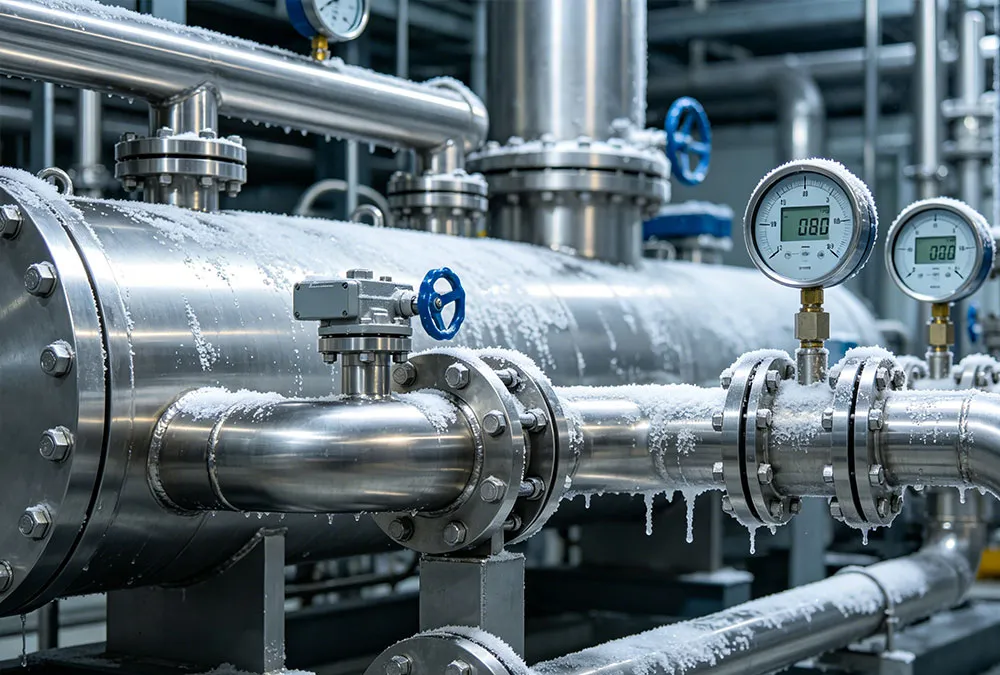
Often referred to as cryogenic energy storage, this technology stores electricity by turning ambient air into a liquid. At temperatures as low as -196°C (-321°F), air occupies only 1/700th of its gaseous volume. This allows for massive amounts of energy to be stored in relatively compact, low-pressure insulated tanks.
How LAES Differs from Traditional Battery Energy Storage Systems
A liquid air battery storage facility functions more like a traditional thermal power plant than a chemical battery. It uses mechanical components—compressors, heat exchangers, and turbines—which have operational lifespans of 30 to 40 years. This mechanical nature eliminates the “degradation” issues seen in chemical batteries, where capacity fades after a few thousand cycles.
Why LAES Is Classified as Long Duration Energy Storage
The classification of LAES as an LDES technology stems from its marginal cost of energy. To double the storage duration of an LAES plant, you simply add more storage tanks (CAPEX for steel and insulation), rather than more expensive power conversion electronics. This makes it the most viable alternative to lithium ion storage for 10-hour to 24-hour discharge windows.
How Liquid Air Energy Storage Works in Grid-Scale Power Plants
Large-Scale Air Liquefaction and Storage Infrastructure
The process begins with an industrial-scale air liquefier. Using excess renewable electricity, the system draws in ambient air, cleans it, and compresses it. Through a series of cooling stages—utilizing the Joule-Thomson effect—the air is turned into a cryogenic liquid. This liquid is then stored in large, vacuum-insulated tanks at near-atmospheric pressure.
Thermal Integration and Efficiency Optimization
Efficiency is the hallmark of modern LAES engineering. By capturing the heat generated during the compression phase and the “cold” released during the evaporation phase, the system can achieve a significantly higher Round-Trip Efficiency (RTE). As noted in recent ScienceDirect 2025 research, advanced thermal integration can boost performance by utilizing waste heat from nearby industrial processes.
Power Generation Through Expansion Turbines
When the grid signals a need for power, the liquid air is pumped to high pressure and heated. This causes a rapid phase change back into a gas, expanding 700-fold. This high-pressure air drives a cryogenic turbine, which is coupled to a generator to produce electricity.
System Integration with Transmission Networks
Because LAES uses synchronized generators, it provides the “mechanical inertia” that modern grids desperately lack. This allows utility companies to replace retiring gas turbines with a clean air energy storage system that fits seamlessly into existing substation infrastructure.
Key Advantages of Liquid Air Energy Storage for Grid-Scale Energy Projects
Multi-Hour to Multi-Day Storage Capability
The scalability of bulk energy storage technologies like LAES is unmatched. While lithium is king for 2 hours, LAES is designed for 8 to 20 hours of continuous discharge, making it ideal for managing the “duck curve” and multi-day weather events.
Geographic Flexibility Compared to Pumped Hydro
Pumped Hydro remains the world’s largest storage medium, but it requires mountains and water. LAES has no such restrictions. It can be built in flat plains, urban outskirts, or desert environments, making it a truly universal utility scale storage solutions provider.
Low Dependency on Critical Minerals
Unlike batteries that require cobalt, nickel, and lithium—minerals fraught with supply chain volatility—LAES is built from steel, copper, and air. This makes liquid air energy storage project economics far more predictable and sustainable over a 40-year horizon.
Scalability to Hundreds of MW
A single LAES facility can be scaled to provide hundreds of megawatts of power. This is not just a “unit” but a “plant,” capable of supporting entire metropolitan areas during grid stress.
Liquid Air Energy Storage vs Lithium-Ion BESS for Utility-Scale Deployment
When conducting a long duration energy storage technologies comparison, it is vital to understand that LAES and BESS are often complementary rather than competitive.
| Feature | Liquid-Cooled BESS (Lithium) | Liquid Air Energy Storage (LAES) |
| Response Time | Milliseconds | Minutes (Mechanical Ramp) |
| Optimal Duration | 0.5 – 4 Hours | 8 – 24+ Hours |
| Cycle Life | 3,000 – 10,000 Cycles | 30+ Years (Unlimited Cycles) |
| Resource Risk | High (Lithium, Cobalt) | Very Low (Steel, Air) |
| Fire Safety | Thermal Runaway Risk | Non-flammable / Cryogenic |
| Footprint | High Density (Modular) | Medium Density (Plant-scale) |
Storage Duration Comparison (4h vs 8h–100h)
In the context of liquid air energy storage vs lithium ion battery, the choice depends on the “Value of Energy Shifting.” For daily solar smoothing, lithium is efficient. For “Resource Adequacy”—ensuring the lights stay on during a three-day wind lull—LAES is the superior choice.
LCOS in Long-Duration Applications
The levelized cost of storage (LCOS) for LAES drops significantly as duration increases. While lithium LCOS stays relatively flat due to cell costs, the LCOS of LAES becomes more attractive the longer you need the power to flow.
Safety and Fire Risk Considerations
For industrial and grid-scale deployments, safety is paramount. LAES involves high pressure and cryogenics, which are well-understood industrial risks. There is zero risk of the “thermal runaway” fires associated with lithium-ion chemistries.
Hybrid Grid Architectures (LAES + BESS)
The most resilient grids of 2026 are adopting hybrid models. They use AnengJi’s high-power DC fast charging BESS for immediate frequency response and LAES for bulk energy shifting. This “Two-Layer Storage” strategy optimizes both speed and duration.
Economic Viability of Liquid Air Energy Storage in Large-Scale Energy Projects
CAPEX and Infrastructure Costs
The upfront capital expenditure (CAPEX) for LAES is higher than BESS for small systems but lower for large-scale, long-duration projects. Most of the cost is in “hard” infrastructure like turbines and compressors.
Levelized Cost of Storage (LCOS) in Long-Duration Use Cases
To calculate the true value, utilities use the LCOS formula:
LCOS = (Total CAPEX + Lifetime OPEX) / Total Lifetime Energy Discharged
For durations over 10 hours, the liquid air energy storage cost per kwh often falls below $150/MWh, whereas lithium-ion can remain significantly higher for those same durations.
Government Incentives for Long Duration Energy Storage
Under the 2025-2026 global green infrastructure acts, LDES technologies now qualify for significant tax credits and “Capacity Market” payments, which reward systems for simply being available to discharge during emergencies.
Real-World Utility-Scale Liquid Air Energy Storage Projects
Existing Grid-Scale LAES Demonstration Plants
Projects in the UK and Northern Europe have already demonstrated the viability of 50MW/250MWh facilities. These plants have proven that large scale energy storage systems can be integrated into existing grid frameworks without disrupting local stability.
Deployment Capacity and Expansion Plans
In 2025, several GWh-scale projects were greenlit across North America and Asia. As highlighted by MIT 2025, the use of liquid air as a grid-scale medium is moving from “pilot” to “mainstream” due to the falling costs of cryogenic machinery.
Challenges of Scaling Liquid Air Energy Storage to Gigawatt-Level
Round-Trip Efficiency Limitations
The primary technical hurdle for liquid air energy storage for grid scale is the Round-Trip Efficiency (RTE), which typically sits between 50% and 60%. While lower than lithium’s 90%, the value of LAES lies in its ability to store energy that would otherwise be “curtailed” (wasted) for free.
Engineering Complexity
Managing cryogenic fluids at the gigawatt scale requires sophisticated plumbing, thermal insulation, and control systems. It is an “infrastructure play” that requires significant engineering expertise.
Policy and Market Barriers
Current market designs often reward short-term “Power” (MW) rather than long-term “Energy” (MWh). For LAES to achieve its full potential, regulators must modernize “Capacity Markets” to value 24-hour resilience.
The Future of Utility-Scale Long Duration Energy Storage (2026–2035 Outlook)
Global Decarbonization Targets and Grid Modernization
By 2030, the global grid will require an estimated 100GW of LDES capacity. LAES is poised to capture a significant portion of this market as the most geographically flexible industrial energy storage solutions provider.
Integration with Solar and Wind Farms
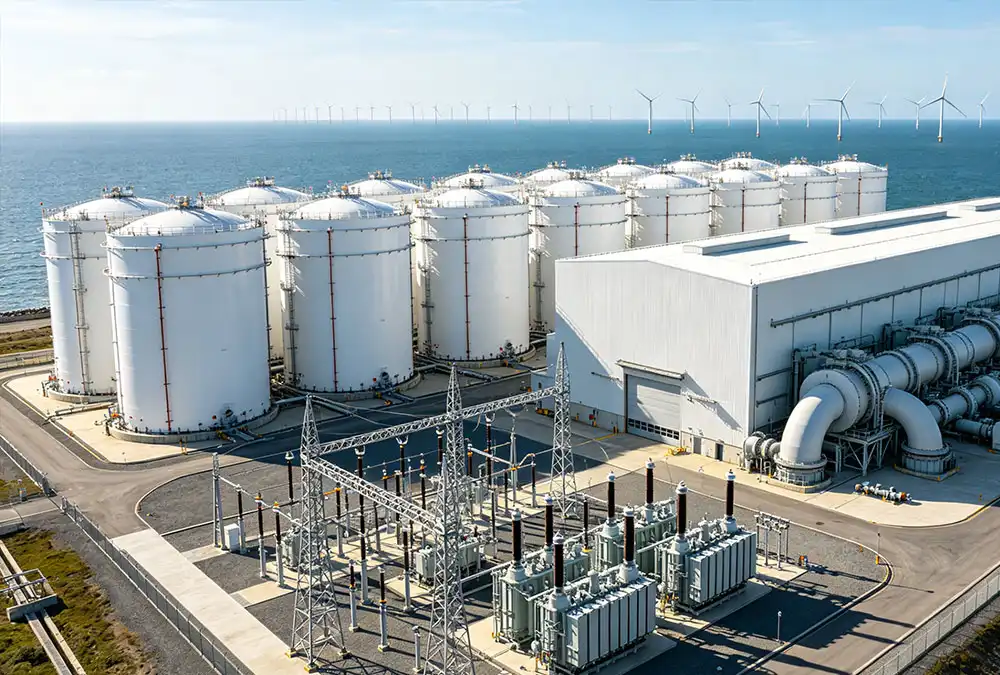
We are seeing a trend where LAES facilities are built directly adjacent to offshore wind landing points. This allows for renewable energy integration at a scale previously thought impossible.
Role of LAES in 100% Renewable Power Systems
In a 100% renewable future, LAES will provide the “base load” stability once provided by nuclear or coal, using the air itself as a clean, infinite battery.
When Should Utilities Choose Liquid Air Energy Storage?
Best Scenarios for LAES Deployment
- Grid Resilience: Areas prone to extreme weather where multi-day backup is required.
- Renewable Heavy Regions: Where solar/wind curtailment is high.
- Space-Constrained Urban Grids: Where pumped hydro is impossible but bulk energy is needed.
When Lithium-Ion Remains the Better Option
- Ancillary Services: Fast frequency response and voltage regulation (milliseconds).
- EV Charging Hubs: Where high power bursts are needed throughout the day.
- Small-Scale C&I: For individual factories or office parks.
Engineering Recommendation: For commercial facilities and rapid-response needs, we recommend AnengJi’s Modular Liquid-Cooled BESS. For utility-scale grid firming and durations exceeding 8 hours, liquid air energy storage for grid scale is the most sustainable and cost-effective path forward.
Featured Snippets – Quick Answers About Liquid Air Energy Storage
What is liquid air energy storage used for?
Liquid air energy storage is used for utility-scale, long-duration energy storage to stabilize power grids and integrate renewable energy by shifting bulk energy over multi-hour or multi-day periods.
Is liquid air energy storage better than lithium-ion batteries?
LAES is superior for long-duration grid storage (8–100 hours) and has a longer lifespan (30+ years). Lithium-ion is better for short-duration, high-efficiency tasks like frequency regulation.
How efficient is liquid air energy storage?
Typical round-trip efficiency (RTE) ranges from 50% to 60%. However, this can reach 70% if integrated with nearby industrial waste heat or cold recovery systems.
Can liquid air energy storage replace pumped hydro?
Yes. In regions without the specific geography (mountains/water) required for pumped hydro, LAES serves as a geographically independent, large-scale alternative.
Summary – Why Liquid Air Energy Storage Matters for Utility-Scale Energy Systems
In the landscape of 2026, liquid air energy storage for grid scale projects represents the “missing link” in our energy transition. By decoupling power from energy, utilizing abundant materials, and providing much-needed mechanical inertia, LAES ensures that our push toward renewables does not come at the cost of grid reliability. While Lithium-ion batteries like those provided by AnengJi will continue to dominate the “Power” side of the equation for EV charging and short-term smoothing, Liquid Air stands as the “Energy” backbone of the modern power grid.
References & Authoritative Sources:
- MIT News (2025): Using liquid air for grid-scale energy storage
- ScienceDirect (2025): Efficiency Analysis of Cryogenic Energy Storage Systems
- NREL (2025): Long Duration Energy Storage Technology Baseline
- Ember Energy: Global Insights on Levelized Cost of Storage (LCOS)
 https://anengjipower.com/wp-content/uploads/2026/09/AnengJipower-European-BESS-Project-Design-Environment-1.webp
675
1000
Charging Station Engineer
https://anengjipower.com/wp-content/uploads/2025/09/anengji-dc-fast-charging-station-manufacturer-and-supplier-logo-white-1.png
Charging Station Engineer2026-09-24 09:05:462026-09-24 09:08:39Battery Energy Storage System Design Guide for Europe
https://anengjipower.com/wp-content/uploads/2026/09/AnengJipower-European-BESS-Project-Design-Environment-1.webp
675
1000
Charging Station Engineer
https://anengjipower.com/wp-content/uploads/2025/09/anengji-dc-fast-charging-station-manufacturer-and-supplier-logo-white-1.png
Charging Station Engineer2026-09-24 09:05:462026-09-24 09:08:39Battery Energy Storage System Design Guide for Europe https://anengjipower.com/wp-content/uploads/2026/09/anengjipower-How-BESS-Power-and-Energy-Shape-Storage-Duration.webp
675
1000
Charging Station Engineer
https://anengjipower.com/wp-content/uploads/2025/09/anengji-dc-fast-charging-station-manufacturer-and-supplier-logo-white-1.png
Charging Station Engineer2026-09-23 09:06:532026-09-23 09:08:02BESS Duration Guide: How to Choose 1, 2 or 4 Hours
https://anengjipower.com/wp-content/uploads/2026/09/anengjipower-How-BESS-Power-and-Energy-Shape-Storage-Duration.webp
675
1000
Charging Station Engineer
https://anengjipower.com/wp-content/uploads/2025/09/anengji-dc-fast-charging-station-manufacturer-and-supplier-logo-white-1.png
Charging Station Engineer2026-09-23 09:06:532026-09-23 09:08:02BESS Duration Guide: How to Choose 1, 2 or 4 Hours https://anengjipower.com/wp-content/uploads/2026/09/AnengJIPower-Cabinet-vs-Containerized-BESS-3D-Isometric-Structural-Cutaway.webp
675
1000
Charging Station Engineer
https://anengjipower.com/wp-content/uploads/2025/09/anengji-dc-fast-charging-station-manufacturer-and-supplier-logo-white-1.png
Charging Station Engineer2026-09-18 07:19:042026-09-18 07:19:38Cabinet vs Containerized BESS: How to Choose for Large C&I
https://anengjipower.com/wp-content/uploads/2026/09/AnengJIPower-Cabinet-vs-Containerized-BESS-3D-Isometric-Structural-Cutaway.webp
675
1000
Charging Station Engineer
https://anengjipower.com/wp-content/uploads/2025/09/anengji-dc-fast-charging-station-manufacturer-and-supplier-logo-white-1.png
Charging Station Engineer2026-09-18 07:19:042026-09-18 07:19:38Cabinet vs Containerized BESS: How to Choose for Large C&I


Leave a Reply
Want to join the discussion?Feel free to contribute!