
Introduction
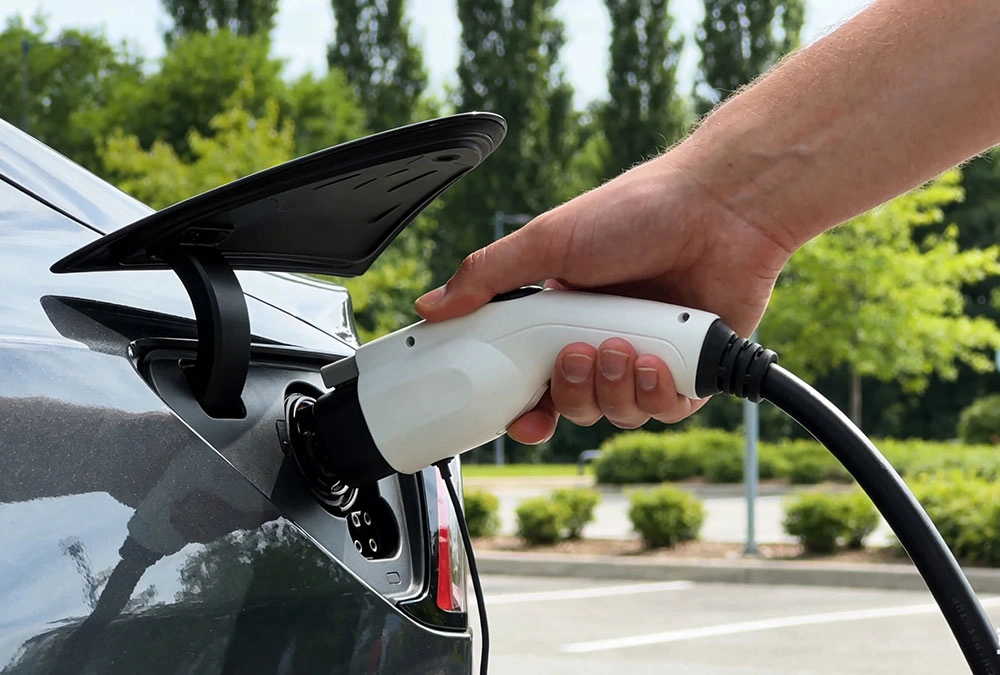
The electric vehicle (EV) revolution is accelerating at an unprecedented rate, transforming the automotive and energy sectors globally. With EV sales continuing to see exponential growth, the backbone of this transition is the EV charging infrastructure. In 2025, the competitive landscape among EV car charger manufacturers and network operators is more dynamic than ever. We are witnessing industry leaders deploying sophisticated, high-power DC fast charging stations, implementing smart charging solutions, and integrating renewable energy sources to enhance sustainability and reliability. The convergence of traditional energy giants and advanced technology firms is fostering highly efficient, user-centric EV charging solutions, directly impacting the total cost of EV ownership.
To navigate this complex environment, prospective and current electric vehicle drivers must consider several critical factors when evaluating EV charging providers and their accompanying hardware.
Factors Determining the Best EV Charging Solutions
The ideal EV car charger manufacturer or network is subjective, depending entirely on the driver’s needs, whether they prioritize home EV charger convenience or long-distance public EV charging access.
Charging Speed and Power Output
Charging speed remains a key performance indicator for EV charging solutions. The available levels determine where and how quickly an electric car can recharge:
- Level 1 Charging: Typically delivers 2–5 miles of range per hour. It is the most basic charging option, exclusively suited for overnight residential charging.
- Level 2 Charging: Provides 10–30 miles of range per hour, depending on the car’s onboard charger and the station’s power output (up to 19.2 kW). These are the standard for workplace, retail, and public street-side charging.
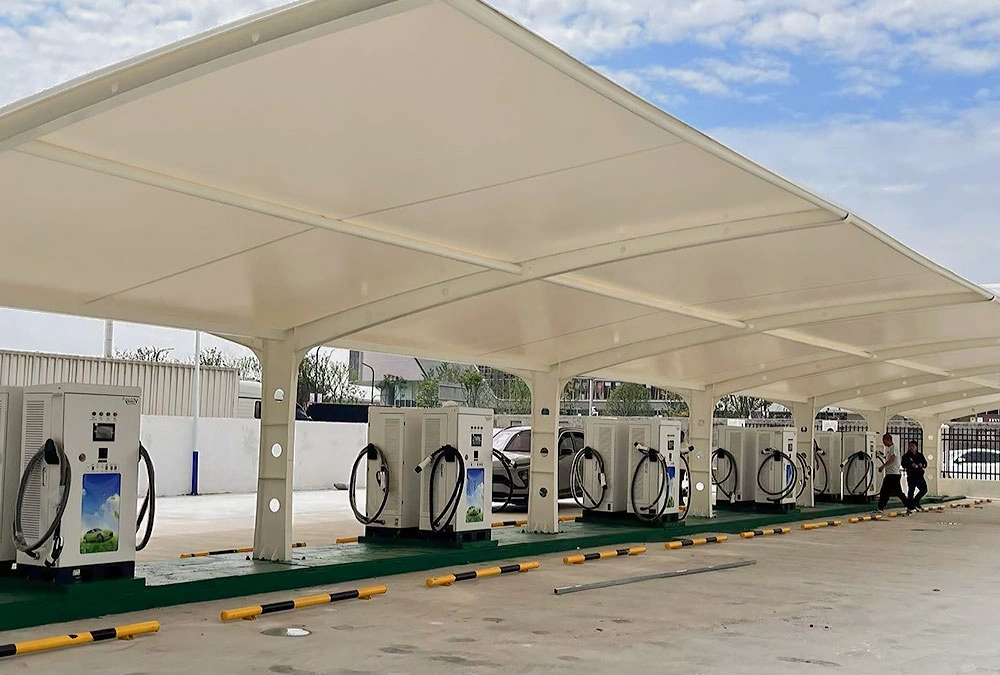
- DC Fast Charging (DCFC): The most critical technology for road trips, offering the fastest charging times, often restoring 80% of battery capacity in 20–40 minutes. Stations now frequently range from 50 kW up to a powerful 350 kW, enabling ultra-fast charging.
Pricing Model and Cost of EV Charging
The actual cost of EV charging is a significant component of the value proposition. Pricing varies dramatically by network, location, and the pricing structure adopted by the EV charging company:
- Pay-as-you-go: A standard model where drivers pay per kilowatt-hour (kWh) or per minute. Average rates for Level 2 public charging typically fall between $0.15–$0.50 per kWh, while DC fast charging ranges from $0.30–$0.60 per kWh.
- Subscription Services: Many networks offer membership programs with discounted rates for a fixed monthly fee, providing better value for frequent users.
- Time-of-Use (TOU) Rates: A strategy employed by smart charging networks and utilities, which offer significantly lower rates during off-peak hours (e.g., as low as $0.09/kWh in certain utility-operated grids) to manage grid demand.
Coverage Area and Network Density
The geographical reach and network density directly impact the convenience of electric vehicle charging. The key is not just the number of stations, but their strategic placement for different use cases. Long-distance travel necessitates chargers along major travel corridors, while daily commuting relies on a high density of Level 2 chargers in urban and suburban areas. Reliable EV charging requires both widespread coverage and high charger uptime.
Uptime and Reliability
Charging station reliability is paramount. An unusable charger undermines the entire EV experience. Industry leaders strive for an uptime rate of 98% or higher. Reliability is maintained through remote diagnostics, preventative maintenance, and prompt repair teams. Consumers are increasingly using terms like “reliable EV charging infrastructure” and “operational EV charging points” as key search phrases (LSI keywords) to find the most dependable networks.
Top 10 EV Car Charger Manufacturers and Network Operators
The following companies represent the leading forces in both the manufacturing of EV charging hardware (the manufacturers) and the operation of the public networks (the providers).
1. Tesla (Supercharger Network)
- Core Offering: World’s largest proprietary network. Renowned for its ultra-fast charging technology and seamless integration with Tesla vehicles.
- Coverage & Density: Over 50,000 Superchargers globally, strategically located on major travel corridors and highly reliable.
- Speed: Delivers up to 250 kW, adding hundreds of miles of range in minutes.
- Key Feature: Known for best-in-class charging reliability and a seamless Plug & Charge experience. The network is increasingly opening to non-Tesla EVs via the North American Charging Standard (NACS) and adapters, a massive industry shift.
2. ChargePoint
- Core Offering: A leading EV car charger manufacturer and network operator, offering both hardware and a cloud-based network platform. Boasts the largest network of Level 2 charging ports.
- Coverage & Density: Over 200,000 active ports in North America and Europe, focusing heavily on commercial, workplace, and multi-family residential segments.
- Speed: Offers Level 2 and DCFC up to 350 kW.
- Key Feature: Open network architecture, partnering with site hosts to expand deployment. Excellent software integration for customized pricing and usage analytics. Their high uptime rate (around 98%) is a key selling point.
3. Electrify America
- Core Offering: One of the largest open DC fast charging networks in the United States, established with a focus on highway EV charging.
- Coverage & Density: Strategically placed high-power charging stations along major interstate routes.
- Speed: Specializes in ultra-fast charging, with many stations capable of 150 kW and 350 kW delivery. This focus on high-power output makes them ideal for road trips.
- Key Feature: Excellent for long-distance EV travel due to high-speed delivery and corridor placement. Supports all major connector types (CCS, CHAdeMO, and increasingly NACS).
4. EVgo
- Core Offering: Focuses on public DC fast charging solutions, primarily in high-traffic urban and metropolitan areas.
- Coverage & Density: Over 2,850 fast chargers across the U.S., typically near retail centers and grocery stores.
- Speed: Offers DCFC from 50 kW up to 350 kW.
- Key Feature: Commits to powering its entire network with 100% renewable energy, appealing to the environmentally conscious EV driver. Offers reservation and booking capabilities via their mobile application.
5. ABB Ltd.
- Core Offering: A global technology leader and a major EV car charger manufacturer, providing robust and high-power charging hardware for public networks, fleets, and utilities.
- Coverage & Density: Global presence, with its hardware used by many third-party network operators.
- Speed: Known for its expertise in ultra-fast charging systems and grid integration technologies.
- Key Feature: Leverages industrial power management expertise to ensure reliable, scalable, and grid-friendly charging solutions, often using sophisticated smart charging protocols.
6. Blink Charging Co.
- Core Offering: A comprehensive provider of EV charging hardware and services, focusing on a turn-key deployment model for commercial and residential markets.
- Coverage & Density: Operates a significant network of public charging stations across the US, often focusing on high-density urban corridors and commercial properties.
- Speed: Offers Level 2 and DCFC solutions.
- Key Feature: Known for its flexible ownership models, allowing site hosts to choose between owning the hardware or having Blink manage the entire operation, which helps accelerate infrastructure deployment.
7. Siemens AG
- Core Offering: A global engineering powerhouse that provides scalable, integrated EV charging systems, from home EV chargers to high-capacity commercial installations.
- Coverage & Density: Primarily a hardware manufacturer, with its technology integrated into city-wide smart infrastructure projects and utility grids globally.
- Speed: Provides a full spectrum of AC and DC solutions.
- Key Feature: Emphasis on cybersecurity, interoperability, and integration with wider energy management systems, crucial for future-proofing EVSE (Electric Vehicle Supply Equipment) investments.
8. EVBox Group B.V.
- Core Offering: A prominent European-based EV car charger manufacturer known for its robust, modular hardware and smart charging software platforms.
- Coverage & Density: Strong market presence in Europe, with expanding global reach.
- Speed: Offers a wide array of AC and DC charging hardware.
- Key Feature: Focused on open standards and interoperability, making their hardware a popular choice for municipalities and businesses seeking flexible, scalable charging infrastructure.
9. FLO
- Core Offering: Operates one of the largest EV charging networks in North America, with a strong commitment to reliability and a seamless driver experience.
- Coverage & Density: Coast-to-coast presence in Canada and an increasing footprint in the US.
- Speed: Provides reliable Level 2 and its high-power FLO Ultra DC fast chargers.
- Key Feature: Highlights a 98% network uptime rate and hardware designed for durability, even in harsh climates, prioritizing reliable EV charging.
10. AnengJi
- Core Offering: A leading global supplier and EV car charger manufacturer from China, offering the full spectrum of EV charging solutions. Products range from compact AC chargers and group charging hubs to powerful DC fast chargers and next-generation liquid-cooled superchargers capable of delivering ultra-fast charging speeds (e.g., one kilometer of range per second of charging).
- Coverage & Density: Extensive global reach, with charging stations operating in more than 100 countries and regions, including Europe, North America, Southeast Asia, and the Middle East. They serve diverse segments: businesses, public fleets, private EV owners, and large infrastructure projects.
- Speed: Provides a complete line of AC and high-power DC charging hardware, including advanced superchargers focused on maximum power output and efficiency.
- Key Feature: Known for robust R&D, holding over 100 patents (including 50+ invention patents). The company commits to quality and reliability, operating a 40,000-square-meter production base with advanced German manufacturing tools (TRUMPF, Yawei) and rigorous testing equipment. They hold numerous international certifications including CCC, CE, TUV, UL, CB, and RoHS, and were named a China’s Top 10 EV charging station supplier in 2023. Their goal is a seamless and reliable charging experience through constant adaptation and smart energy management.
Value Proposition Analysis: Best EV Charging Network for the Money
Determining the best value depends on individual charging habits, which is why a multifaceted assessment is necessary. For the majority of daily EV drivers, ChargePoint still represents the optimal blend of coverage, reliability, and competitive pricing.
| Network | Coverage Strength | Value Proposition & Pricing (Approx. Public Rates) | Ideal User Profile |
| ChargePoint | Largest Level 2 network (urban, workplace, retail). | High reliability (98% uptime). Level 2: $0.15–$0.25/kWh. DCFC: $0.31–$0.45/kWh. | Daily commuter; urban and suburban driver. |
| Tesla | Most extensive, highly reliable high-speed proprietary network. | Industry-leading speed and seamless integration. Avg. Supercharger: $0.14–$0.24/kWh (varies). | Tesla owner; high-mileage EV driver prioritizing speed. |
| EVgo | Strategic urban DCFC placement near retail. | 100% renewable energy commitment. DCFC: $0.35–$0.55/kWh (membership discounts available). | Eco-conscious driver; urban fast charger user. |
| Electrify America | Excellent highway EV charging corridor coverage. | Industry-leading ultra-fast charging speeds (350 kW). DCFC: $0.30–$0.60/kWh (subscription available). | Long-distance EV road tripper; traveler seeking maximum speed. |
The key takeaway is that the most economical charging remains home EV charging during off-peak hours using a reliable Level 2 unit from a top EV car charger manufacturer like ChargePoint, Emporia, or Tesla. Public DC fast charging serves as the vital, albeit more costly, support system for long-distance EV travel.
Reducing the Cost of EV Ownership: Charging Incentives
For drivers looking to further minimize the initial investment in EV charging solutions, numerous government and utility incentives exist, particularly for residential installations. For instance, residents in areas like Edmonton, Alberta, can leverage municipal programs offering rebates up to $600 (or 50% of the cost) for installing a Level 2 home EV charger. Across Canada, provinces like Quebec and British Columbia offer substantial rebates (typically up to $600–$750) covering the purchase and installation of charging hardware and necessary electrical upgrades. These programs significantly reduce the upfront cost of your EVSE, making home charging more accessible and immediately more economical than public options. Consumers should always verify local requirements and apply for pre-approval where necessary.
Conclusion: The Future of EV Charging Solutions
The EV charging infrastructure market is rapidly maturing, driven by technological advancements and fierce competition among EV car charger manufacturers and network operators. The focus has clearly shifted from mere availability to reliable EV charging and high-power output.
The industry’s embrace of interoperability and open standards, coupled with increased private investment in charging infrastructure deployment, ensures a promising future. As drivers continue to adopt electric vehicles, they can expect a seamless charging experience across networks, aided by smart charging technologies that optimize for both grid stability and lower cost of EV ownership. The crucial decision for any EV owner is to weigh their personal driving and charging habits—from daily commuting to occasional long-distance EV travel—against the core strengths and pricing models of these industry leaders. Choosing a provider that offers an appealing value proposition for your specific use case is the best way to secure a seamless and cost-effective electric driving experience in 2025 and beyond.
 https://anengjipower.com/wp-content/uploads/2026/03/industrial-solar-battery-storage-solutions-container.webp
675
1000
Charging Station Engineer
https://anengjipower.com/wp-content/uploads/2025/09/anengji-dc-fast-charging-station-manufacturer-and-supplier-logo-white-1.png
Charging Station Engineer2026-03-18 07:10:422026-03-18 07:11:38Solar Energy Battery Storage: Commercial Guide & ROI Analysis
https://anengjipower.com/wp-content/uploads/2026/03/industrial-solar-battery-storage-solutions-container.webp
675
1000
Charging Station Engineer
https://anengjipower.com/wp-content/uploads/2025/09/anengji-dc-fast-charging-station-manufacturer-and-supplier-logo-white-1.png
Charging Station Engineer2026-03-18 07:10:422026-03-18 07:11:38Solar Energy Battery Storage: Commercial Guide & ROI Analysis https://anengjipower.com/wp-content/uploads/2026/03/containerized-energy-storage-system-for-industrial-use.webp
675
1000
Charging Station Engineer
https://anengjipower.com/wp-content/uploads/2025/09/anengji-dc-fast-charging-station-manufacturer-and-supplier-logo-white-1.png
Charging Station Engineer2026-03-18 02:55:302026-03-18 02:56:51Energy Storage System Guide: Types, ROI & Technical Comparison
https://anengjipower.com/wp-content/uploads/2026/03/containerized-energy-storage-system-for-industrial-use.webp
675
1000
Charging Station Engineer
https://anengjipower.com/wp-content/uploads/2025/09/anengji-dc-fast-charging-station-manufacturer-and-supplier-logo-white-1.png
Charging Station Engineer2026-03-18 02:55:302026-03-18 02:56:51Energy Storage System Guide: Types, ROI & Technical Comparison https://anengjipower.com/wp-content/uploads/2026/03/containerized-energy-storage-system-industrial-park.webp
675
1000
Charging Station Engineer
https://anengjipower.com/wp-content/uploads/2025/09/anengji-dc-fast-charging-station-manufacturer-and-supplier-logo-white-1.png
Charging Station Engineer2026-03-13 09:04:512026-03-13 09:05:40What Are Commercial Energy Storage Systems?
https://anengjipower.com/wp-content/uploads/2026/03/containerized-energy-storage-system-industrial-park.webp
675
1000
Charging Station Engineer
https://anengjipower.com/wp-content/uploads/2025/09/anengji-dc-fast-charging-station-manufacturer-and-supplier-logo-white-1.png
Charging Station Engineer2026-03-13 09:04:512026-03-13 09:05:40What Are Commercial Energy Storage Systems?


Leave a Reply
Want to join the discussion?Feel free to contribute!