
Planning long-haul freight routes with heavy electric trucks usually hits one massive technical brick wall: charge times. That is where the Megawatt Charging System comes into play. While the Megawatt Charging System promises game-changing megawatt-level throughput for heavy haulers, genuine market confusion still holds many fleet operators back. Rumors about destroyed battery packs, massive local grid meltdowns, and insane capital costs float around logistics forums daily. Let us break down the real-world engineering behind these myths so your commercial fleet stays miles ahead of the competition.

What Is a Megawatt Charging System and Why Does Long-Haul Electric Transportation Need It?
Heavy freight transport moves on tight schedules where every single minute counts. When fleet managers replace traditional diesel tractors with heavy-duty electric trucks, standard charging hardware suddenly turns into the weakest link in the operational supply chain.
Understanding the Purpose of Megawatt Charging Systems
The Megawatt Charging System, widely recognized as MCS, is an ultra-high-power charging standard developed specifically for heavy commercial transport. We are talking about Class 8 electric rigs, port drayage tractors, mining haulers, and long-distance intercity buses. When a fully loaded semi hauls 40 tons, its battery pack typically spans anywhere from 500 kWh to well over 1,000 kWh. Recharging a battery that massive within a practical timeframe requires moving far beyond conventional passenger vehicle chargers.
Why Traditional DC Fast Charging Is Not Enough for Electric Trucks
Standard DC fast chargers top out around 350 kW using traditional CCS plugs. That power level works great for passenger cars or light-duty delivery vans. But if you plug a Class 8 electric semi into a 150 kW or even a 350 kW charger, your driver sits idle for three to five hours. Long dwell times destroy vehicle turnover rates, ruin delivery schedules, and eat away at profit margins. Commercial drivers operate under strict legal limits—such as mandatory 30-minute to 45-minute rest breaks after four hours of driving. For heavy electric trucks, recharging must happen during these mandated breaks, something legacy CCS hardware simply cannot deliver.
How MCS Supports the Future of Zero-Emission Freight
Deploying a dedicated MCS charging system for long haul trucks changes the operational equation completely. By supplying up to 3.75 Megawatts (3,750 kW) of direct current, these high-power stations replenish 80% battery capacity in under 30 minutes. This aligns green logistics routes with legal driver rest breaks, letting fleets run multi-shift schedules without compromise.
Myth 1: Megawatt Charging System Is Just an Oversized CCS Charger
A common misconception across logistics forums like Reddit is that MCS is just a CCS cable with thicker copper wires. That assumption overlooks serious thermal physics and electrical engineering.
The Reality: MCS Is Designed for a Different Transportation Scenario
Pushing thousands of amps across metal contact pins creates intense resistive heat ($I^2R$ losses). You cannot simply scale up a CCS plug without making the cable so heavy that human operators cannot lift it. The MCS charging standard was engineered from the ground up with specialized contact pin geometry, automated coupler latches, and active liquid cooling channels built directly into the connector head, delivering massive power safely without ergonomic strain.
Key Differences Between MCS and CCS Charging Systems
Understanding how MCS differs from conventional CCS helps fleet directors make informed capital equipment investments:
| Technical Feature | CCS Standard (Combo 1 / Combo 2) | MCS Standard (Megawatt Charging) | Practical Benefit for Fleet Operators |
|---|---|---|---|
| Max Voltage | 1,000 V DC | 1,250 V DC | Higher voltage enables maximum power delivery while keeping cable thickness manageable. |
| Max Current | 500 A Continuous | 3,000 A Continuous | Six times the current capacity cuts Class 8 charge times down to 20-30 minutes. |
| Peak Power | 350 kW to 500 kW | Up to 3,750 kW (3.75 MW) | Easily handles massive 800+ kWh battery packs during routine driver rest breaks. |
| Cooling Mechanism | Optional Air or Liquid Cable | Mandatory Active Liquid-Cooled Plug & Pin | Prevents connector overheating, extending cable lifespan under rugged daily yard use. |
Why Both CCS and MCS Will Coexist
Installing an MCS charging system for long haul trucks does not mean getting rid of your CCS plugs. Fleets will continue using CCS for overnight yard charging when trucks dwell for six to eight hours. MCS will dominate high-speed highway plazas, loading docks, and port terminals where rapid turnaround is vital.
Buyer Insight: “Will investing in MCS today render my existing CCS electric trucks obsolete?”
Not at all. Modern electric truck megawatt charging infrastructure uses modular power architecture. Central power cabinets route electricity dynamically to both MCS and CCS dispensers on the same site. You can charge legacy CCS delivery vans and new MCS long-haul tractors from the exact same power grid connection.
Myth 2: Megawatt Charging Systems Damage Electric Truck Batteries Faster
Fleet owners often ask: “Won’t pumping megawatts of raw power into a truck degrade my expensive battery pack in two years?” The engineering reality is reassuring—if thermal control is designed properly.
The Reality: Intelligent Battery Management Protects Battery Health
Lithium cell degradation is driven mainly by excessive heat buildup and lithium plating during high-voltage states. Fast power transfer alone does not ruin a cell; unmanaged thermal spikes do. Heavy electric trucks utilize robust Lithium Iron Phosphate (LFP) or advanced nickel-rich chemistry packs equipped with dedicated chiller plates, keeping internal cell temperatures stable during high-power sessions.
How BMS Controls High-Power Charging Safety
During an MCS session, the vehicle’s Battery Management System (BMS) remains in total control. The BMS constantly monitors individual cell voltages, temperatures, and state-of-charge (SoC). If internal temperatures creep toward safety thresholds, the vehicle commands the charger to throttle back current instantly. The MCS station only supplies what the battery can safely absorb.
Why MCS Can Support Efficient Commercial EV Operations
By using stepped charging curves—delivering peak power between 10% and 50% SoC before tapering down—fleets achieve fast top-offs without shortening battery lifespan. Real-world testing demonstrates that liquid-cooled commercial packs maintain 80%+ capacity over 4,000 deep charge cycles, supporting years of reliable service.
Myth 3: Megawatt Charging Systems Are Unstable and Unproven Technology
It is easy to assume megawatt charging is unproven tech. But beneath the rugged exterior, MCS relies directly on established industrial electrical systems.
The Reality: MCS Is Built on Proven EV Charging Technologies
High-power DC rectifiers, liquid cooling loops, and isolated communication controls have powered electric locomotives, heavy manufacturing plants, and marine equipment for decades. MCS takes these proven industrial technologies and packages them into a standardized plug format for commercial vehicles.
Key Technologies Behind Reliable MCS Charging
Four key technological pillars ensure safe megawatt-level energy transfer:
- Silicon Carbide (SiC) Power Semiconductors: High-efficiency power modules achieve 97%+ energy conversion efficiency, reducing thermal loss.
- Active Closed-Loop Liquid Cooling: Circulates dielectric coolant through cable jackets and pin housings, keeping temperatures below 60°C during 3,000A continuous flow.
- High-Speed Communication Protocols: Advanced Power Line Communication (PLC) based on ISO 15118-20 handles real-time safety monitoring and automated authentication.
- Automated Ground Fault & Arc Detection: Isolates high-voltage DC output within milliseconds if insulation degradation is detected.
Why Reliability Matters for Commercial Fleet Charging
A broken passenger car charger is an inconvenience; a broken commercial truck charger strands valuable freight and hurts revenue. Modern electric truck megawatt charging infrastructure utilizes modular power designs inside central cabinets. If a single 60 kW module fails, the station bypasses it and continues charging at slightly lower power. Your fleet stays on the move.
Myth 4: Megawatt Charging Systems Are Too Expensive and Impractical
Looking purely at the upfront price tag of a 1.2 MW charging cabinet can cause initial hesitation. However, evaluating commercial hardware through a retail consumer lens leads to miscalculated financial projections.
The Reality: Total Cost Depends on System Design
Initial hardware accounts for only a portion of total project deployment costs. Site trenching, grid connection fees, transformer upgrades, and utility demand charges make up the rest. Partnering with an experienced MCS charging solution provider ensures your site design matches actual vehicle energy needs without expensive over-engineering.
How Smart Energy Management Reduces MCS Investment
You do not need to draw full megawatt power from utility lines 24 hours a day. Combining dynamic load balancing software with on-site storage batteries buffers demand spikes. This reduces transformer installation costs while protecting your depot from expensive peak demand fees.
Why Fleet Operators Should Evaluate ROI Instead of Initial Cost
Industry data shows that heavy electric trucks deliver up to 40% savings in per-mile fuel and maintenance costs compared to diesel models. Cutting charge times from three hours to 30 minutes lets fleet owners run multi-shift schedules with fewer trucks, speeding up project payback.
Myth 5: Megawatt Charging Systems Will Overload the Power Grid
Grid capacity is a top concern among fleet directors. “Where will we get megawatts of local grid power for ten trucks charging at once?” That is a valid concern, but microgrid engineering offers a clear solution.
The Reality: Smart Energy Management Enables Grid-Friendly Charging
High-power charging hubs do not need to pull full peak power directly from utility lines. Integrating local solar generation, battery energy storage, and smart software buffers site power draw, keeping grid impacts manageable.
Why Battery Energy Storage Supports High-Power EV Charging
Battery Energy Storage Systems (BESS) are essential partners for megawatt charging hubs. The BESS charges slowly during off-peak hours when electricity rates are lowest. When an electric truck connects for a rapid megawatt top-off, the BESS discharges alongside grid power, absorbing demand spikes completely.
Industrial Battery Energy Storage (BESS) Selection Guide
Selecting the right storage capacity balances peak demand shaving with site physical constraints:
| BESS Capacity | Battery Technology | Target Fleet Deployment | Core Engineering Specs | Concrete User Value & ROI Benefit |
|---|---|---|---|---|
| 100 kWh System | LFP (Smart Air-Cooled) | Last-mile delivery depots (2-4 vans) | Compact footprint, outdoor IP65 enclosure | Eliminates peak utility demand charges without taking up extra yard space. |
| 261 kWh System | LFP (Liquid-Cooled Loop) | Medium regional logistics yards | 6,000+ deep cycles, 1C rate discharge capability | Delivers a 250 kW discharge boost, cutting grid expansion costs by up to 50%. |
| 418 kWh System | LFP (Liquid-Cooled Cabinet) | High-turnover distribution centers | Modular parallel scalability up to 2.5 MWh | Enables simultaneous fast charging during peak tariff hours, saving thousands monthly. |
| 1 MWh – 5 MWh Container | LFP (Containerized Liquid Cooling) | Highway charging plazas & seaport hubs | Integrated HVAC, BMS & aerosol fire suppression | Buffers multi-megawatt charging bursts while running smoothly on limited transformer connections. |
Technology Terms Decoded:
LFP (Lithium Iron Phosphate): An exceptionally stable battery cell chemistry resistant to thermal runaway, providing long service life.
Liquid Cooling Loop: Circulates coolant directly across battery module cold plates, keeping cell temperatures uniform (25°C ± 2°C) during heavy discharges.
Required Electrical Infrastructure for MCS Deployment
A complete high-power installation pairs medium-voltage step-down transformers, switchgear protection, liquid-cooling units, and cloud-connected Energy Management Systems (EMS) to ensure safe, stable operation.
Myth 6: MCS Charging Stations Are Only Needed for Large Truck Manufacturers
Some fleet operators assume MCS is strictly for vehicle OEMs or government test tracks. In reality, private logistics operators are deploying megawatt charging to gain a real competitive edge.
The Reality: Multiple Commercial Applications Need MCS
Any enterprise operating heavy vehicles on tight turnaround schedules benefits from high-power charging:
- Port Drayage Logistics: Drayage trucks moving containers between shipping docks and rail yards need fast top-offs between runs.
- Highway Freight Corridors: Travel plazas along interstate corridors require high-speed chargers to keep long-haul electric trucks moving.
- Mining & Material Transport: Heavy off-highway haul trucks with massive batteries depend on fast charging to maintain daily production goals.
- Regional Transit Hubs: Intercity e-buses use fast pantograph or MCS charging at central terminals to stay on schedule.
How MCS Creates Business Opportunities
Early adopters are positioning their logistics operations to win green shipping contracts from global corporations requiring zero-emission freight transport. Charging infrastructure transforms from an operational expense into a strategic growth driver.
Myth 7: MCS Requires Completely New Charging Infrastructure
Transitioning to megawatt charging does not mean tearing down existing depot facilities and starting over.
The Reality: MCS Can Integrate With Existing Energy Systems
Modular power engineering allows existing DC fast charging sites to expand seamlessly. You can install new MCS power cabinets directly alongside current CCS dispensers, on-site solar PV arrays, and battery storage units.
Building Scalable Charging Infrastructure Step by Step
Successful site expansions follow a practical phased roadmap:
Phased Infrastructure Expansion Roadmap
Phase 1: Deploy 180 kW – 360 kW DC Fast Chargers + Basic Grid Connection
▽
Phase 2: Integrate Liquid-Cooled BESS Storage + On-Site Solar PV Microgrid
▽
Phase 3: Install Ultra-High Power MCS Dispensers on the Shared Central Power Matrix
Myth 8: MCS Charging Is Too Complex to Manage
Managing high-voltage power might sound intimidating for fleet dispatchers used to standard diesel pumps. But automated cloud software simplifies daily operations behind the scenes.
Smart Charging Software Simplifies Fleet Operations
A central fleet charging management system handles routine charging tasks automatically. Drivers simply plug in, and automated software handles authentication, thermal checks, and power adjustments without manual effort.
Role of CPMS and EMS in MCS Operations
Charge Point Management Systems (CPMS) monitor charger health, track state of charge, and log user billing in real time. Simultaneously, Energy Management Systems (EMS) balance power draw across storage batteries, solar panels, and grid feeds, keeping total energy costs optimized automatically.
Myth 9: MCS Has Limited Real-World Applications
Skeptics claim megawatt charging is locked in lab testing. The reality in the field is very different.
Real Applications of Megawatt Charging Systems
High-power MCS stations are operating across major industrial corridors globally:
- European Highway Corridors: Cross-border charging hubs support heavy electric freight haulers along primary transit corridors.
- North American Port Logistics: Major ports are deploying high-power chargers to meet clean air regulations for drayage trucks.
- Heavy Industrial Operations: Remote mining sites use ruggedized high-power systems to keep electric haulers running continuously across shifts.
Why Commercial Transportation Is Leading MCS Adoption
Commercial transport relies on fixed schedules and clear ROI calculations. Because electric trucks deliver substantially lower operating costs per mile, commercial logistics operators are adopting ultra-fast charging technology rapidly.
Myth 10: MCS Is Too Early for Businesses to Consider
Waiting until your competitors complete their electrification projects puts your fleet at a major disadvantage. Utility approvals and infrastructure planning take time.
The Reality: Early Planning Creates Competitive Advantages
Securing utility grid capacity and finishing civil engineering design takes 12 to 24 months. Starting your infrastructure planning today ensures your facility is ready when new electric trucks arrive, avoiding costly operational delays.
How MCS Will Shape the Future of Electric Freight
High-power charging stations form the backbone of sustainable transport corridors. As heavy electric truck adoption grows, connected charging networks will serve as essential energy hubs for zero-emission logistics.
How Businesses Can Successfully Deploy Megawatt Charging Systems
Executing a seamless high-power site installation requires a structured step-by-step engineering plan.
Step 1: Analyze Fleet Charging Requirements
Evaluate daily mileage, duty cycles, battery sizes, and vehicle dwell times. This data determines exact power capacity requirements and dispenser counts for your site.
Step 2: Evaluate Site Power Capacity
Work with local utilities early to check available transformer capacity. Identify whether local power lines need upgrades or if energy storage buffers can fill power gaps.
Step 3: Integrate MCS With BESS and EMS
Pair high-power chargers with on-site storage batteries and energy software to create a cost-effective, grid-friendly charging microgrid.
Step 4: Select a Reliable MCS Technology Partner
Select an engineering partner with proven expertise in power conversion, liquid cooling systems, and integrated battery energy storage solutions.
AnengJI: Leading the Deployment of Future Megawatt Charging Systems
Building reliable high-power charging infrastructure requires an experienced partner who understands complex industrial energy systems inside out.
Advanced High-Power EV Charging Technology
AnengJI manufactures heavy-duty DC fast chargers and modular MCS hardware engineered specifically for tough commercial environments. Our solid-state power cabinets deliver 97%+ energy conversion efficiency with continuous liquid-cooled thermal safety monitoring.
Integrated EV Charging and Energy Storage Solutions
We provide complete turnkey microgrid solutions combining high-power chargers, liquid-cooled LFP storage containers, and smart EMS software. Our integrated designs bypass grid upgrade delays while eliminating expensive utility demand charges.
Supporting Commercial Fleet Electrification Projects
From early route feasibility and civil engineering design through final utility commissioning, AnengJI delivers reliable infrastructure that keeps commercial fleets running efficiently.
Frequently Asked Questions About Megawatt Charging Systems
What is a Megawatt Charging System?
It is an ultra-high-power DC charging standard engineered for heavy commercial vehicles, capable of delivering up to 3,750 kW (3.75 MW) of power at currents up to 3,000 Amps.
Will MCS replace CCS charging?
No. Both standards will serve distinct roles. CCS handles passenger cars, light delivery vans, and overnight depot charging, while MCS supports rapid mid-route charging for heavy long-haul trucks.
Does MCS damage electric truck batteries?
No. Active liquid cooling integrated into battery packs and chargers keeps cell temperatures stable, preventing thermal degradation during high-speed charge sessions.
How much power does an MCS charger provide?
Commercial MCS dispensers deliver between 1.0 MW and 3.75 MW of continuous direct current, depending on site grid allocation and vehicle BMS commands.
Does MCS require battery storage?
While not strictly mandatory, pairing a Battery Energy Storage System (BESS) with MCS chargers is strongly recommended to buffer power spikes and avoid expensive utility demand penalties.
Where will MCS charging stations be installed?
Deployments focus on highway travel plazas, logistics distribution centers, seaport intermodal terminals, and industrial mining routes.
Prepare Your Fleet for the Future of Megawatt Charging
AnengJI helps commercial enterprises design scalable, high-power charging microgrid infrastructure for electric trucks and heavy transport fleets.
✓ Engineering & Site Planning for Megawatt Charging Systems
✓ Modular DC Fast Charging Systems (180 kW – 1.2 MW+)
✓ Integrated Liquid-Cooled BESS & Solar Microgrid Architecture
✓ End-to-End Fleet Electrification Project Support
 https://anengjipower.com/wp-content/uploads/2026/06/epc-vs-turnkey-solar-project-bess.webp
675
1000
Charging Station Engineer
https://anengjipower.com/wp-content/uploads/2025/09/anengji-dc-fast-charging-station-manufacturer-and-supplier-logo-white-1.png
Charging Station Engineer2026-06-22 07:16:042026-06-24 07:13:17What Is the Difference Between EPC and Turnkey Contract Models in Energy Projects?
https://anengjipower.com/wp-content/uploads/2026/06/epc-vs-turnkey-solar-project-bess.webp
675
1000
Charging Station Engineer
https://anengjipower.com/wp-content/uploads/2025/09/anengji-dc-fast-charging-station-manufacturer-and-supplier-logo-white-1.png
Charging Station Engineer2026-06-22 07:16:042026-06-24 07:13:17What Is the Difference Between EPC and Turnkey Contract Models in Energy Projects? https://anengjipower.com/wp-content/uploads/2026/06/anengji-commercial-solar-plus-storage-benefits-site.webp
675
1000
Charging Station Engineer
https://anengjipower.com/wp-content/uploads/2025/09/anengji-dc-fast-charging-station-manufacturer-and-supplier-logo-white-1.png
Charging Station Engineer2026-06-20 14:34:102026-06-20 14:37:43What Are the Top Benefits of Solar Battery Storage in Factories?
https://anengjipower.com/wp-content/uploads/2026/06/anengji-commercial-solar-plus-storage-benefits-site.webp
675
1000
Charging Station Engineer
https://anengjipower.com/wp-content/uploads/2025/09/anengji-dc-fast-charging-station-manufacturer-and-supplier-logo-white-1.png
Charging Station Engineer2026-06-20 14:34:102026-06-20 14:37:43What Are the Top Benefits of Solar Battery Storage in Factories?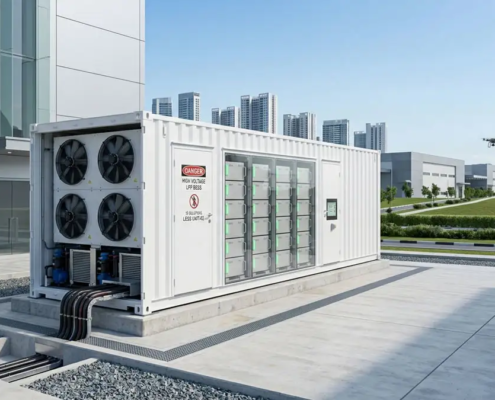 https://anengjipower.com/wp-content/uploads/2026/06/modular-commercial-solar-battery-storage-cabinet.webp
675
1000
Charging Station Engineer
https://anengjipower.com/wp-content/uploads/2025/09/anengji-dc-fast-charging-station-manufacturer-and-supplier-logo-white-1.png
Charging Station Engineer2026-06-18 09:16:522026-07-03 03:05:13What Is Solar Battery Storage? Complete C&I Engineering Guide
https://anengjipower.com/wp-content/uploads/2026/06/modular-commercial-solar-battery-storage-cabinet.webp
675
1000
Charging Station Engineer
https://anengjipower.com/wp-content/uploads/2025/09/anengji-dc-fast-charging-station-manufacturer-and-supplier-logo-white-1.png
Charging Station Engineer2026-06-18 09:16:522026-07-03 03:05:13What Is Solar Battery Storage? Complete C&I Engineering Guide


Leave a Reply
Want to join the discussion?Feel free to contribute!