
Introduction
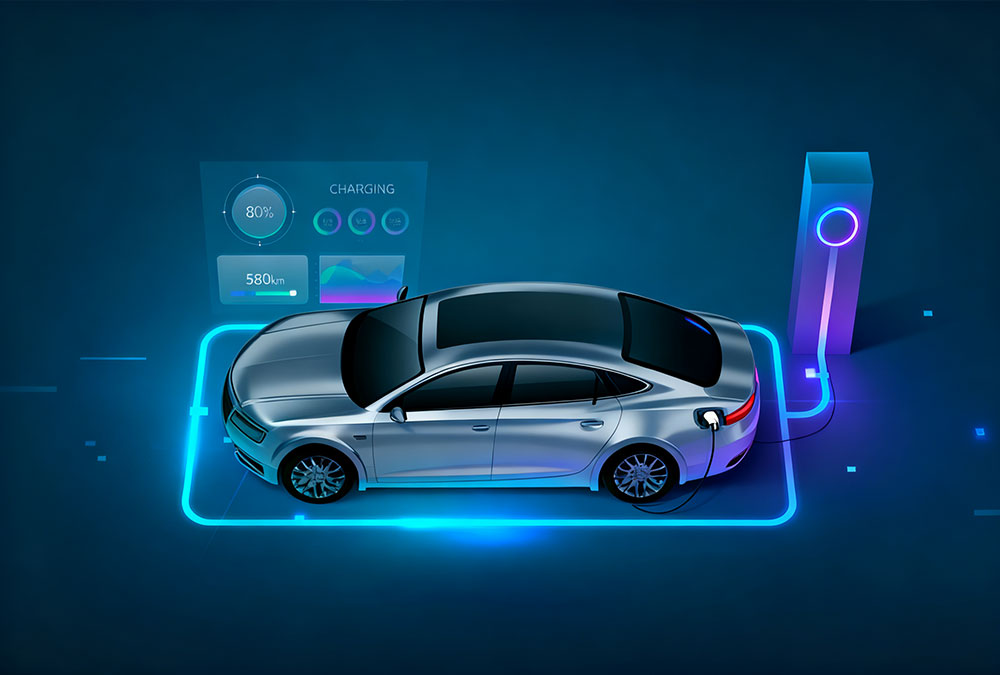
When you’re choosing an electric car, one question always comes up first: how long does it take to charge an electric car? Charging time matters more than most new EV drivers expect. Different charging methods, charging levels, and equipment can make the time vary a lot. In this guide, we’ll walk through what actually affects EV charging time and what you can expect in the real world.
Overview of EV Charging
How Long It Takes to Fully Charge an Electric Car
The electric car charging time can range from about 30 minutes to more than 12 hours. It depends on the battery size and the EV charging speed of the station you’re using.
Take a typical EV with a 60 kWh battery. A 7 kW home charger needs around 8 hours to go from empty to full. Most drivers don’t wait for a full charge, though—they top up along the way. With a 50 kW DC fast charger, many EVs can add around 100 miles of range in roughly 35 minutes.
Bigger batteries take longer to charge. Slower charging stations take longer too. That’s why real-world charging time varies so much.
Different models perform differently as well. A Tesla Model Y with a 75 kWh battery can reach 80% in about 40 minutes on a 150 kW fast charger.
A BYD Atto 3 with a 50 kWh pack needs only about 35 minutes.
But plug the same cars into a basic 1.9 kW portable Level 1 outlet, and a full charge may take over 17 hours.
Below is a simplified comparison showing estimated 0–100% charging time at different power levels (based on Pod Point, EVSE Australia, and manufacturer data):
| Model | Battery | Range* | 1.9 kW | 7 kW | 22 kW | 50 kW | 150 kW+ |
|---|---|---|---|---|---|---|---|
| Tesla Model Y | 75 kWh | 480 km | 24 hrs | 11 hrs | 8 hrs | 1 hr 15 min | 40 min |
| BYD Atto 3 | 50 kWh | 420 km | 17 hrs | 8.5 hrs | 8.5 hrs | 50 min | 35 min |
| MG4 | 72 kWh | 440 km | 12 hrs | 11 hrs | 7 hrs | 1 hr 12 min | 38 min |
| VW ID.5 | 82 kWh | 266 miles | 22 hrs | 12 hrs | 8 hrs | 1 hr 30 min | — |
| Mitsubishi Outlander PHEV | 13.8 kWh | 24 miles | 4 hrs | 4 hrs | 4 hrs | 40 min | Not supported |
* WLTP or “confidence range.” Real-world results vary with weather, driving habits, terrain, HVAC use, and more.
What Is Fast Charging?
Fast charging—better known as DC fast charging—is the quickest way to add miles back to an EV. DC chargers bypass the car’s onboard AC charger and feed high-voltage DC power straight into the battery. That’s why charging can be so much faster.
Most public DC fast chargers today range from 50 kW to 350 kW. High-power stations like Electrify America or Tesla V3 Superchargers can reach the upper end. Under good conditions, many EVs can go from 10% to 80% in about 30 minutes.
Not every EV can use full power, though. A Porsche Taycan can peak at around 270 kW. A Nissan Ariya tops out around 130 kW. And many plug-in hybrids don’t support DC charging at all—they rely on AC charging only.
Connector compatibility matters too. Standards include CCS, CHAdeMO, Tesla NACS, and GB/T.
Some higher-end EVs also support battery preconditioning. When you set a fast-charger as your destination in the car’s navigation, the battery warms up to the ideal charging temperature—usually between 25°C and 35°C—so you get peak charge rate the moment you plug in.
How Many Miles of Range You Get Per Hour of Charging
For daily driving, most people care more about range added per hour than charging from 0% to 100%. Two things affect this number: charging power and EV efficiency.
Here’s a quick look at how much range you typically gain at different power levels:
| Charging Type | Power | Range per hour (miles) | Range per hour (km) |
|---|---|---|---|
| Level 1 (home outlet) | 1.9 kW | ≤ 15 miles | ≤ 24 km |
| Level 2 home charger | 7 kW | 20–30 miles | 32–48 km |
| Level 2 three-phase | 22 kW | 70–90 miles | 110–145 km |
| DC fast charging | 50 kW | ~90 miles per 30 min | ~145 km / 30 min |
| Ultra-fast charging | 150 kW+ | ~200 miles per 30 min | ~320 km / 30 min |
Small EVs (like a Renault Zoe) are more efficient and add more miles per hour. Larger EVs (like an Audi e-tron) add fewer miles per hour at the same power because they consume more energy.
Weather affects efficiency too. EVs usually get more miles per hour in the summer and fewer in winter because cold-weather charging is slower and battery efficiency drops.
Factors That Affect How Long It Takes to Charge an Electric Car
How long does it take to charge an electric car depends on more than just the car itself. Charging time can shift based on the environment, the charging setup, and the type of station you plug into. Here are the key factors that shape real-world EV charging time and overall charging performance.
1. Charging Levels
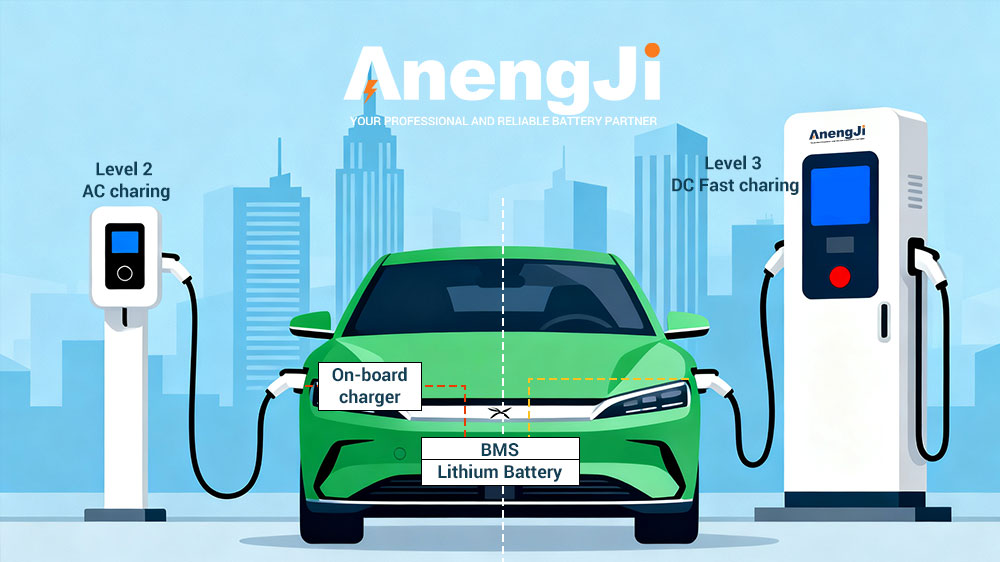
Level 1 – Slow Charging
A Level 1 charger uses a standard 120V household outlet in North America (or 220V in many other regions). Output is usually around 1.3–1.9 kW. That means a 60-kWh EV battery can take 30–48 hours to reach a full charge.
The upside? No installation cost.
The downside? It’s slow—very slow. Best for emergencies or occasional top-ups, not daily charging.
Level 2 – Home and Workplace Charging
Level 2 runs at 240V with power ratings from 3.6 kW to 22 kW.
A 7 kW Level 2 charger can fill most EV batteries in about 8 hours, which is why home EV charging is so popular.
A 22 kW unit requires three-phase power, so it’s usually found in commercial locations.
Level 3 – DC Fast Charging
DC fast chargers deliver anywhere from 50 kW to 350 kW and can take a battery from near empty to 80% in about 30 minutes.
These stations sit along highways and in major city hubs. They cost more per session, but they dramatically reduce charging time during long-distance travel.
One thing to remember: your car’s maximum charging power sets the limit. Even if a station can deliver 350 kW, a vehicle capped at 150 kW will never charge faster than its own limit.
2. EV Battery Capacity
The larger the battery, the longer it takes to charge. Not all EV batteries are built the same, either. Some lower-priced EVs offer enough range for everyday commuting, while premium models can match or exceed the range of traditional gas vehicles.
But the rule holds: bigger battery = longer charging time, no matter where you plug in.
3. On-Board Charger Power (AC Charging Limit)
A public station may supply the power, but your EV’s on-board charger is what converts that electricity into usable battery energy.
If a large battery is paired with a small on-board charger, charging will be slow—no matter how powerful the station is.
Many drivers assume “higher-powered station means faster charging,” but that isn’t always true.
If your EV only supports 7 kW AC charging, you won’t charge any faster—even when plugged into a 22 kW AC station.
Real-World Examples
| Model | Battery Capacity | On-Board Charger | 7 kW Charging Time | 22 kW Actual Charging Time |
|---|---|---|---|---|
| Tesla Model 3 RWD | 60 kWh | 7.6 kW | ~8.5 hours | ~8.5 hours |
| Hyundai Ioniq 5 | 77.4 kWh | 11 kW | ~11 hours | ~7 hours |
| Renault Zoe (older model) | 52 kWh | 3.7 kW | ~14 hours | ~14 hours |
Tip: Always check both AC and DC maximum charging power before buying an EV.
4. Maximum Charging Efficiency and Range Needs
Charging time also shifts throughout the day. Heavy grid load, peak traffic hours, and local power conditions can all impact charging efficiency.
Most EV makers also recommend keeping the battery within an optimal state of charge for long-term health. That means you don’t always need—or want—to charge to 100%.
If you don’t need the full range, stopping early often saves time and helps protect the battery.
5. Using DC Fast Chargers
When battery charge drops below about 10% or rises above 80%, DC fast charging naturally slows down. This protects the battery and reduces the risk of degradation.
That’s why manufacturers often advertise “30 minutes to 80%” instead of “0–100%.”
Some EVs support battery preconditioning, which warms or cools the battery so it reaches peak charging power when you arrive at a fast-charging station. This only works if you navigate to the charger through the car’s built-in navigation system.
6. Charging Stations and Nearby Amenities
Choosing the right charging station can make everyday EV ownership easier. The station’s location, the type of chargers available, and general service quality all influence the convenience of each charging session. Good planning—especially on longer trips—helps you avoid delays and makes the entire EV charging experience smoother.
Estimating Electric Car Charging Time: Real-World Examples and Charging Scenarios
Understanding how long it takes to charge an electric car becomes easier once you break it down by battery size and charger power. Below are practical estimates based on common EV setups and real charging situations.
EV Charging Time Estimates
Here are typical charging time estimates for several popular EV configurations. For example, a standard 60-kWh battery takes roughly eight hours to charge from empty to full when using a 7 kW Level 2 home charger.
Plug into a 50 kW DC fast charger, and most EVs can add about 100 miles of range in around 35 minutes. Real-world charging time varies, but these numbers offer a solid reference point.
Level 1, Level 2, and Level 3 Charging Comparison
Below is a direct comparison of charging levels using a 60-kWh battery as the baseline:
| Charging Level | Power Output | 0–100% Charging Time | Best Use Case |
|---|---|---|---|
| Level 1 | 1.9 kW | ~35 hours | Emergencies, no installation options |
| Level 2 | 7 kW | ~9.5 hours | Overnight home charging |
| Level 2 | 22 kW | ~3 hours | Shopping centers, workplaces |
| Level 3 DC Fast Charging | 150 kW | 30–40 minutes (to 80%) | Highway trips, long-distance travel |
This comparison makes one thing clear: charging level dramatically affects electric car charging time, and choosing the right charger can cut hours off your charging routine.
Learn More:EV Charging Levels Explained: Level 1 vs Level 2 vs Level 3 Charging Guide
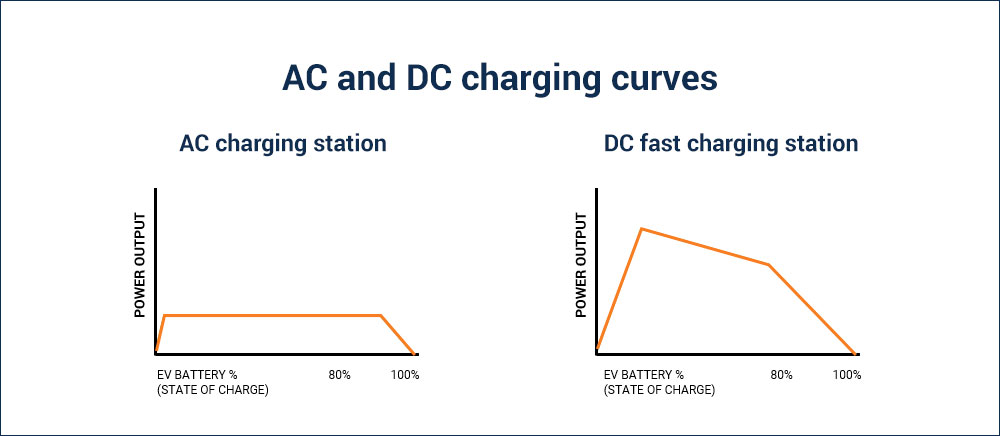
Charging Tapering and Why the Last 20% Takes Longer
EV batteries don’t charge at a constant speed.
Once the battery reaches about 80%, the Battery Management System (BMS) intentionally slows the charge rate to protect long-term battery health. This slowdown is known as charging taper or tapering.
In practice, this means the final 20% can take as long as the first 80%.
It’s one reason most EV drivers don’t charge to 100% unless they need the extra range.
Simple EV Charging Time Calculation Formula
You can estimate your EV’s theoretical charging time using this simplified formula:
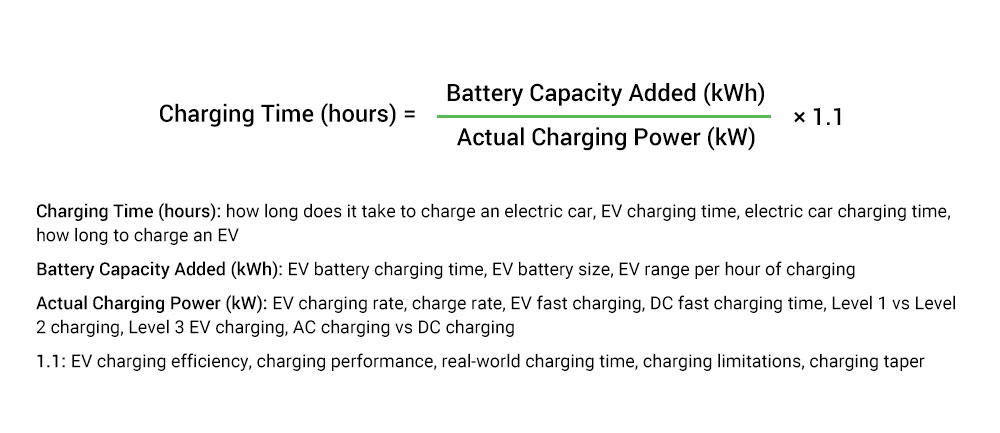
Charging Time (hours) = Battery Capacity Added (kWh) / Actual Charging Power (kW) × 1.1
The 1.1 factor accounts for energy losses such as heat, cable resistance, and conversion efficiency.
While real-world conditions affect results, this formula gives a good ballpark estimate that aligns with most EV charging calculators.
How to Charge an EV Based on Your Driving Needs
Pick the Charging Method That Matches Your Lifestyle
For most city drivers who cover 12–90 miles (20–150 km) a day, a simple 7 kW Level 2 home charger is more than enough. Plug in when you get home, and you’ll wake up to a full battery every morning. If you have errands or unexpected trips during the day, a quick 1–2 hour top-up easily covers the extra miles.
Home Charging vs. Public Charging
Home charging remains the top choice for EV owners thanks to low cost and unmatched convenience. A 7 kW Level 2 charger works on a standard residential circuit, and overnight rates are usually one-third to one-half of public DC fast charging prices.
Public stations—especially DC fast charging (Level 3)—are ideal for road trips or emergency energy needs. They cost more, but they can add hundreds of miles in under 30 minutes, which does wonders for range confidence.
| Comparison | Home Charging | Public Charging |
|---|---|---|
| Cost | Low (about $0.10–$0.20/kWh) | High ($0.30–$0.80/kWh) |
| Convenience | Excellent — always available | Depends on station availability |
| Speed | Medium (typically 7 kW Level 2) | Fast (50–350 kW DC fast charging) |
| How Often to Use | 95% of daily charging | 5% for long trips or emergencies |
Can You Charge an EV With a Generator or Backup Battery?
Using a Generator to Charge an EV
Technically, yes—an EV can be charged with a generator. But it has limitations.
You’ll need a pure sine-wave inverter generator to keep your vehicle electronics safe. Even then, charging is slow, inefficient, noisy, and expensive. For most drivers, this option is strictly for unexpected emergencies, not regular use.
Backup Battery Packs for Emergency Charging
Portable power stations and backup batteries can help, but output is usually 2 kW or less. That means very slow Level 1–type charging. They’re great for camping or adding 12–18 miles (20–30 km) of extra range in a pinch, but they cannot replace a real home charger or a public Level 2/Level 3 charging station.
Why EVs Are the Future of Transportation
The Market Outlook
The global EV industry is accelerating faster than any other automotive segment. Worldwide EV sales have been growing at over 30% annually (IEA 2024). Regions like the EU, China and California have already committed to phasing out new gas-powered vehicles by 2035.
Battery pack prices have dropped 89% in the last decade (BloombergNEF), making EVs more affordable each year—while long-term savings on fuel and maintenance continue to widen the gap.
The Future of EV Charging Infrastructure
Exciting changes are coming to the EV charging landscape.
- 800V platforms (e.g., XPENG G9, Porsche Taycan) can add up to 200 km (120 miles) in five minutes.
- Plug & Charge lets drivers simply plug in, authenticate automatically, and start charging—no app, no QR code.
- V2G (Vehicle-to-Grid) technology will eventually enable EVs to feed energy back into the grid, turning your car into a home-energy asset.
Together, these innovations will make charging faster, simpler and more connected.
References
For readers who want to dive deeper into EV charging levels, EV battery life, and technical charging standards, here are reliable sources:
- U.S. Department of Energy — Alternative Fuels Data Center (AFDC)
- Geotab: Electric Vehicle Battery Degradation Report
- Pod Point: EV Charging Time Calculator
- EVSE Australia: Charging Speed Guide
- BloombergNEF: Battery Price Survey 2024
- IEA: Global EV Outlook 2024
 https://anengjipower.com/wp-content/uploads/2026/09/AnengJipower-European-BESS-Project-Design-Environment-1.webp
675
1000
Charging Station Engineer
https://anengjipower.com/wp-content/uploads/2025/09/anengji-dc-fast-charging-station-manufacturer-and-supplier-logo-white-1.png
Charging Station Engineer2026-09-24 09:05:462026-09-24 09:08:39Battery Energy Storage System Design Guide for Europe
https://anengjipower.com/wp-content/uploads/2026/09/AnengJipower-European-BESS-Project-Design-Environment-1.webp
675
1000
Charging Station Engineer
https://anengjipower.com/wp-content/uploads/2025/09/anengji-dc-fast-charging-station-manufacturer-and-supplier-logo-white-1.png
Charging Station Engineer2026-09-24 09:05:462026-09-24 09:08:39Battery Energy Storage System Design Guide for Europe https://anengjipower.com/wp-content/uploads/2026/09/anengjipower-How-BESS-Power-and-Energy-Shape-Storage-Duration.webp
675
1000
Charging Station Engineer
https://anengjipower.com/wp-content/uploads/2025/09/anengji-dc-fast-charging-station-manufacturer-and-supplier-logo-white-1.png
Charging Station Engineer2026-09-23 09:06:532026-09-23 09:08:02BESS Duration Guide: How to Choose 1, 2 or 4 Hours
https://anengjipower.com/wp-content/uploads/2026/09/anengjipower-How-BESS-Power-and-Energy-Shape-Storage-Duration.webp
675
1000
Charging Station Engineer
https://anengjipower.com/wp-content/uploads/2025/09/anengji-dc-fast-charging-station-manufacturer-and-supplier-logo-white-1.png
Charging Station Engineer2026-09-23 09:06:532026-09-23 09:08:02BESS Duration Guide: How to Choose 1, 2 or 4 Hours https://anengjipower.com/wp-content/uploads/2026/09/AnengJIPower-Cabinet-vs-Containerized-BESS-3D-Isometric-Structural-Cutaway.webp
675
1000
Charging Station Engineer
https://anengjipower.com/wp-content/uploads/2025/09/anengji-dc-fast-charging-station-manufacturer-and-supplier-logo-white-1.png
Charging Station Engineer2026-09-18 07:19:042026-09-18 07:19:38Cabinet vs Containerized BESS: How to Choose for Large C&I
https://anengjipower.com/wp-content/uploads/2026/09/AnengJIPower-Cabinet-vs-Containerized-BESS-3D-Isometric-Structural-Cutaway.webp
675
1000
Charging Station Engineer
https://anengjipower.com/wp-content/uploads/2025/09/anengji-dc-fast-charging-station-manufacturer-and-supplier-logo-white-1.png
Charging Station Engineer2026-09-18 07:19:042026-09-18 07:19:38Cabinet vs Containerized BESS: How to Choose for Large C&I


Leave a Reply
Want to join the discussion?Feel free to contribute!