
Introduction
The global transition toward decentralized power has made understanding the nuances of ESS vs BESS a critical requirement for facility managers, utility operators, and renewable energy investors. As the demand for grid stability and peak shaving increases, the terminology can often become blurred. While many use these terms interchangeably, there is a fundamental structural and technological hierarchy between a general Energy Storage System (ESS) and a specific Battery Energy Storage System (BESS). From an engineering perspective, selecting the right architecture is not just about storing electrons; it is about matching discharge characteristics, thermal management requirements, and long-term degradation curves to the specific needs of the local power environment.
What Is ESS vs BESS? (Energy Storage System vs Battery Energy Storage System Explained)
To navigate the current market, one must first define the scope of these technologies. The primary distinction lies in the method of storage.
Definition of ESS (Energy Storage System)
An Energy Storage System (ESS) is a broad, “umbrella” term that encompasses any technology capable of capturing energy produced at one time for use at a later time. ESS is not limited to electricity or batteries. It includes:
- Mechanical Storage: Pumped hydro, compressed air energy storage (CAES), and flywheels.
- Thermal Storage: Molten salt or ice storage.
- Chemical Storage: Hydrogen production and storage.
- Electrochemical Storage: This is where batteries enter the picture.
Definition of BESS (Battery Energy Storage System)
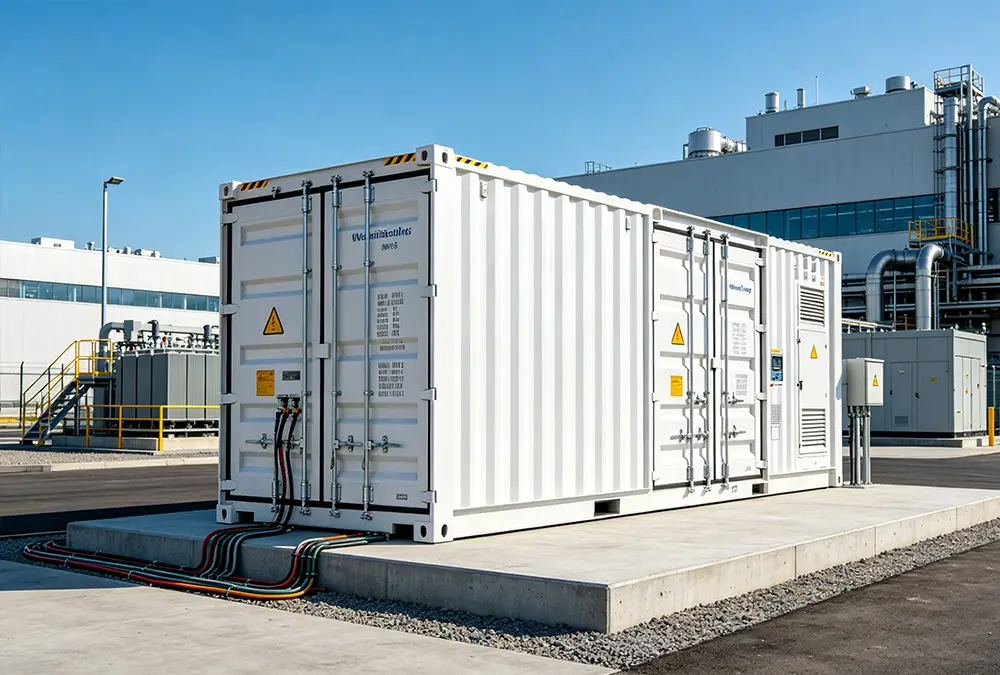
A Battery Energy Storage System (BESS) is a specific subset of ESS. It utilizes electrochemical cells—predominantly lithium-ion, sodium-ion, or flow batteries—to store and discharge electricity. A BESS is a modular, high-response system that includes not just the battery cells, but the sophisticated Power Conversion System (PCS) and Energy Management System (EMS) required to interface with the grid or a commercial load.
ESS vs BESS Quick Comparison (Featured Snippet)
ESS is a broad term for all energy storage technologies, including mechanical, thermal, and chemical methods, while BESS specifically refers to systems that use electrochemical batteries to store energy. In modern commercial contexts, BESS is the most common form of ESS due to its modularity and efficiency.
ESS vs BESS: Key Differences in Technology, Cost, and Applications
Understanding the battery energy storage system vs energy storage system cost requires a look at the physical scale and deployment speed of each technology.
Technology Scope (ESS vs BESS Technologies)
While ESS includes massive civil engineering projects like Pumped Hydro (which currently accounts for the largest share of global energy storage capacity), BESS is characterized by its “solid-state” nature.
- Pumped Hydro (ESS): Uses two water reservoirs at different elevations to store potential energy.
- Flywheels (ESS): Stores kinetic energy in a rotating mass.
- Lithium-ion BESS: The gold standard for industrial ESS solution with lithium battery applications due to its high energy density.
Cost and Deployment Differences
The primary advantage of a containerized BESS system supplier is the speed of deployment. A 10MWh BESS can be commissioned in months, whereas a 10MWh pumped hydro or compressed air facility (ESS) requires years of geological surveys, environmental permitting, and heavy construction.
Application Differences
BESS is optimized for commercial energy storage solution needs—such as peak shaving for a factory or providing backup power for a data center. Larger, non-battery ESS technologies are typically reserved for national-level grid balancing where the storage duration needs to span days or weeks rather than hours.
| Feature | Non-Battery ESS (e.g., Pumped Hydro) | BESS (Battery Energy Storage) |
| Response Time | Seconds to Minutes | Milliseconds |
| Energy Density | Low | High |
| Lifespan | 40-60+ Years | 10-20 Years |
| Modularity | Fixed / Site-specific | Highly Modular (Containerized) |
| LCOE Trend | Stable | Rapidly Decreasing |
How ESS and BESS Work Together in Energy Storage Systems
In high-complexity environments, a BESS is rarely a standalone unit; it functions as the “heart” of a broader ESS architecture.
Role of BESS Inside ESS Architecture
A BESS architecture typically serves as the primary interface between intermittent renewable generation (like solar) and the consumer. While the ESS defines the total energy strategy, the BESS provides the physical hardware to execute fast-frequency response and voltage regulation.
Integration with PCS, BMS, and EMS
To function effectively, a grid-scale energy storage system relies on three critical layers of control:
- PCS (Power Conversion System): Converts DC from the batteries to AC for the grid.
- BMS (Battery Management System): Monitors cell voltage, temperature, and State of Charge (SoC).
- EMS (Energy Management System): The “brain” that decides when to charge or discharge based on electricity prices and load demand.
Hybrid Energy Storage Systems (HESS)
Engineers are increasingly designing Hybrid Energy Storage Systems (HESS). These combine the high power density of flywheels or supercapacitors (ESS) with the high energy density of lithium batteries (BESS). This hybrid approach protects the batteries from high-frequency “stress” cycles, extending the overall lifecycle of the energy storage battery system.
Advantages and Challenges of ESS vs BESS Systems
Advantages of BESS
- Rapid Response: BESS can go from zero to full power in milliseconds, making it the BESS vs ESS which is better for grid storage winner for frequency regulation.
- Scalability: You can start with a 100kW system and scale to 100MW by simply adding more containers.
- Footprint: A BESS container system provides megawatts of power in the space of a few parking spots.
Advantages of ESS (Non-Battery)
- Long-Duration Storage: If you need to store energy for a month, hydrogen or pumped hydro (ESS) is more cost-effective than a massive battery bank.
- No Degradation: Mechanical systems like flywheels do not suffer from the chemical “aging” found in lithium cells.
Key Challenges
The main challenge for industrial battery storage remains Thermal Runaway. Unlike mechanical ESS, batteries require sophisticated liquid cooling or HVAC systems to remain safe. Furthermore, the initial investment for a BESS system for commercial solar projects can be high, though the Levelized Cost of Storage (LCOS) is falling.
Role of ESS and BESS in Grid Stability and Energy Management
As an engineer, I see the grid not as a static wire, but as a living organism that needs to stay at 50/60Hz.
Frequency Regulation and Peak Shaving
BESS systems are the frontline soldiers for peak shaving. By discharging during peak hours, they reduce the “demand charges” on utility bills.
Peak Shaving Formula:
Savings = (Peak Power without BESS - Peak Power with BESS) * Demand Charge Rate ($/kW)
Renewable Energy Integration (Solar + Storage)
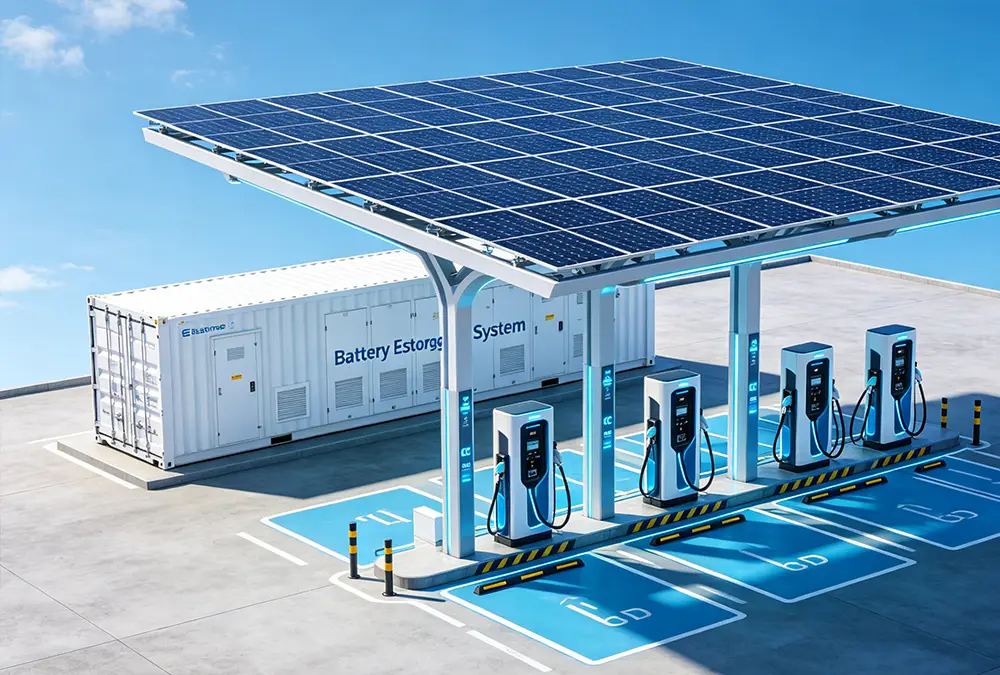
A solar battery storage system solves the “duck curve” problem. It stores excess solar energy during midday and releases it during the evening peak. This is the cornerstone of any renewable energy storage solution.
Virtual Power Plants (VPP)
By networking multiple commercial energy storage solution units together via AI-driven EMS, a supplier can create a Virtual Power Plant. This allows small businesses to sell their stored energy back to the grid, transforming a cost center into a profit center.
Why BESS Dominates Modern Energy Storage Systems
If you are looking for an industrial ESS solution with lithium battery, you are part of a massive market trend. According to BloombergNEF 2026 projections, BESS capacity is expected to grow at a CAGR of over 25% through 2030.
Cost Reduction of Lithium Batteries
The scale of EV manufacturing has driven down the cost of stationary lithium-ion energy storage. We are seeing a 15-20% reduction in battery rack prices every two years.
Faster Deployment and Scalability
For an industrial battery storage project, time is money. A containerized BESS system supplier can deliver a “plug-and-play” unit that minimizes on-site electrical work.
Real-World Applications of ESS vs BESS Systems
Industrial Energy Storage Solutions
In heavy manufacturing, a BESS architecture provides “uninterruptible power.” If the grid dips for even 100ms, a BESS ensures the robotic assembly line doesn’t reset.
Microgrid and Off-Grid Systems
For remote mines or islands, energy storage for microgrid applications is essential. Here, a BESS acts as the primary grid former, maintaining voltage when the diesel generator is off.
Recommended Product: AnengJi Power-Core Series
For industrial applications, we recommend the AnengJi Power-Core 500kW/1.2MWh Liquid-Cooled Container. This system utilizes advanced LFP (Lithium Iron Phosphate) technology, which is significantly safer than traditional NCM chemistries for industrial ESS solution with lithium battery needs. It features a built-in EMS optimized for 2026 grid standards and supports VPP integration.
How to Choose Between ESS vs BESS for Your Project
When deciding BESS vs ESS which is better for grid storage or commercial use, follow this engineering logic:
What is the duration?
- If < 8 hours: Choose BESS.
- If > 24 hours: Look at other ESS options like Hydrogen.
Is space limited?
If yes: BESS is the only viable option.
What is the required response time?
- Milliseconds: BESS.
- Minutes: ESS (Pumped hydro/CAES).
Selection Factors Table
| Factor | Choose BESS | Choose Non-Battery ESS |
| Primary Goal | Peak Shaving / UPS | Seasonal Storage |
| Investment Style | Modular / Scalable | Infrastructure / Civil Work |
| Environment | Urban / Industrial | Geographic Specific (Mountains/Caves) |
Future Trends in ESS vs BESS Technologies
Next-Gen Battery Technologies
By 2026, Sodium-ion batteries will begin to challenge lithium for stationary storage. While they have lower energy density, their cost is significantly lower, making them ideal for large-scale energy storage battery system projects where weight isn’t a factor.
Long-Duration Energy Storage (LDES)
The industry is currently obsessed with LDES. While lithium BESS is great for 4-hour shifts, we are seeing the rise of Iron-Flow batteries, which can provide 12+ hours of discharge without the degradation issues of lithium.
AI-Driven Energy Management Systems
The software is becoming as important as the hardware. Predictive EMS now uses weather forecasting and real-time market pricing to maximize the ROI of a BESS system for commercial solar projects.
Levelized Cost of Storage (LCOS) Calculation
To truly compare battery energy storage system vs energy storage system cost, you must use the LCOS formula:
LCOS = (Initial Investment + Sum of Annual O&M Costs) / (Total Discharged Energy over Lifetime)
- Initial Investment: Hardware, EPC (Engineering, Procurement, Construction), and Permitting.
- O&M: Cooling, insurance, and battery augmentation (replacing cells).
- Total Discharged Energy: Capacity * Cycles/Year * Depth of Discharge (DoD) * Round-Trip Efficiency.
FAQs About ESS vs BESS
What is the difference between ESS and BESS?
ESS (Energy Storage System) is the general category of energy storage. BESS (Battery Energy Storage System) is a specific type of ESS that uses batteries.
Is BESS a type of ESS?
Yes. Every BESS is an ESS, but not every ESS is a BESS. For example, a pumped hydro plant is an ESS but not a BESS.
Why is BESS more popular than other ESS technologies?
Because it is modular, can be installed almost anywhere, and the costs are dropping rapidly due to the electric vehicle supply chain.
Can ESS exist without batteries?
Absolutely. Pumped hydro, flywheels, and compressed air are all battery-free ESS technologies used for decades.
Conclusion: ESS vs BESS — Which One Should You Choose?
In the current landscape, BESS is the default industry standard for 90% of commercial and industrial applications. Its ability to provide millisecond response times makes it the superior choice for peak shaving, backup power, and renewable integration. However, for massive utility-scale projects requiring long-duration seasonal storage, traditional ESS technologies still hold value.
If you are planning a project today, focusing on a BESS architecture with high-quality LFP cells and a robust EMS is the safest path toward energy independence.
Final Insight:
If you want to lower your facility’s demand charges and ensure 24/7 power quality, a containerized BESS system supplier is your most important partner in the 2026 energy market.
Ready to optimize your facility’s energy footprint? Contact our engineering team for a site-specific BESS feasibility study and discover the ROI of a custom industrial ESS solution with lithium battery.
 https://anengjipower.com/wp-content/uploads/2026/09/AnengJipower-European-BESS-Project-Design-Environment-1.webp
675
1000
Charging Station Engineer
https://anengjipower.com/wp-content/uploads/2025/09/anengji-dc-fast-charging-station-manufacturer-and-supplier-logo-white-1.png
Charging Station Engineer2026-09-24 09:05:462026-09-24 09:08:39Battery Energy Storage System Design Guide for Europe
https://anengjipower.com/wp-content/uploads/2026/09/AnengJipower-European-BESS-Project-Design-Environment-1.webp
675
1000
Charging Station Engineer
https://anengjipower.com/wp-content/uploads/2025/09/anengji-dc-fast-charging-station-manufacturer-and-supplier-logo-white-1.png
Charging Station Engineer2026-09-24 09:05:462026-09-24 09:08:39Battery Energy Storage System Design Guide for Europe https://anengjipower.com/wp-content/uploads/2026/09/anengjipower-How-BESS-Power-and-Energy-Shape-Storage-Duration.webp
675
1000
Charging Station Engineer
https://anengjipower.com/wp-content/uploads/2025/09/anengji-dc-fast-charging-station-manufacturer-and-supplier-logo-white-1.png
Charging Station Engineer2026-09-23 09:06:532026-09-23 09:08:02BESS Duration Guide: How to Choose 1, 2 or 4 Hours
https://anengjipower.com/wp-content/uploads/2026/09/anengjipower-How-BESS-Power-and-Energy-Shape-Storage-Duration.webp
675
1000
Charging Station Engineer
https://anengjipower.com/wp-content/uploads/2025/09/anengji-dc-fast-charging-station-manufacturer-and-supplier-logo-white-1.png
Charging Station Engineer2026-09-23 09:06:532026-09-23 09:08:02BESS Duration Guide: How to Choose 1, 2 or 4 Hours https://anengjipower.com/wp-content/uploads/2026/09/AnengJIPower-Cabinet-vs-Containerized-BESS-3D-Isometric-Structural-Cutaway.webp
675
1000
Charging Station Engineer
https://anengjipower.com/wp-content/uploads/2025/09/anengji-dc-fast-charging-station-manufacturer-and-supplier-logo-white-1.png
Charging Station Engineer2026-09-18 07:19:042026-09-18 07:19:38Cabinet vs Containerized BESS: How to Choose for Large C&I
https://anengjipower.com/wp-content/uploads/2026/09/AnengJIPower-Cabinet-vs-Containerized-BESS-3D-Isometric-Structural-Cutaway.webp
675
1000
Charging Station Engineer
https://anengjipower.com/wp-content/uploads/2025/09/anengji-dc-fast-charging-station-manufacturer-and-supplier-logo-white-1.png
Charging Station Engineer2026-09-18 07:19:042026-09-18 07:19:38Cabinet vs Containerized BESS: How to Choose for Large C&I


Leave a Reply
Want to join the discussion?Feel free to contribute!