
Introduction
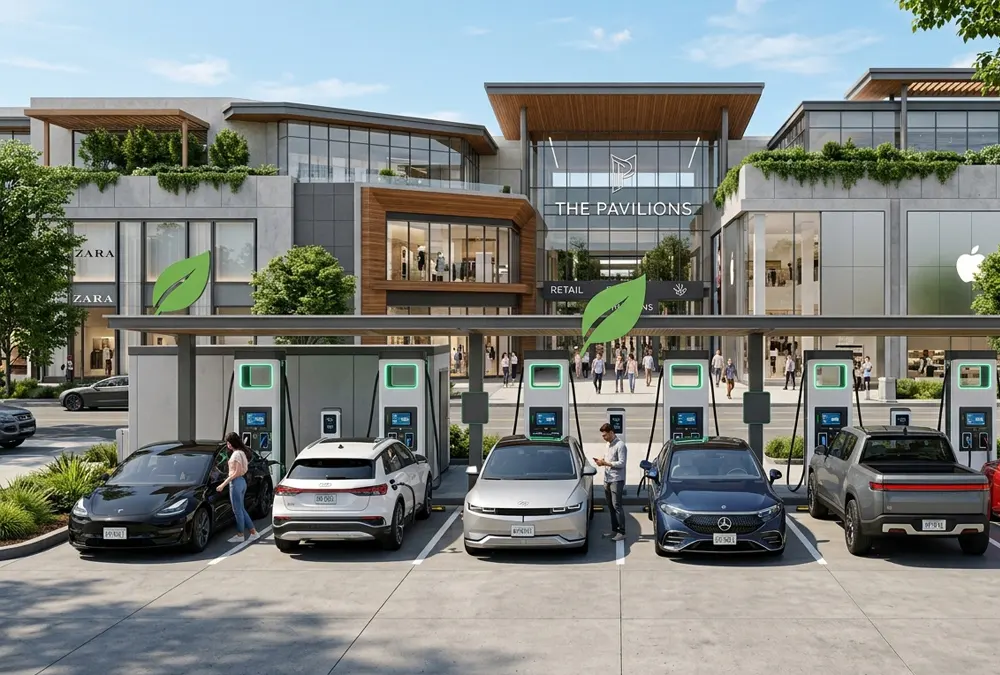
Let’s cut through the noise: if you are mapping out your capital expenditure for the coming quarters, calculating the Commercial EV Charging Station Cost is likely giving your finance team a headache. Every site is unique, and a simple copy-paste budget doesn’t work. Hardware costs are only a piece of the puzzle. You also have to consider local electrical capacity, concrete cutting, permitting, and grid integration. In 2026, as fleets and consumer demand scale up, calculating this investment accurately is critical to protecting your bottom line and capturing early-mover advantages.
What Is the Average Commercial EV Charging Station Cost?
For a quick estimate: a dual-port Level 2 commercial AC smart charger averages $3,500 to $7,500 for hardware, with installation adding another $2,500 to $6,000. When upgrading to commercial DC fast charging, costs rise. A compact 30kW DC charger starts around $12,000 to $18,000, while high-power 180kW to 360kW systems range from $45,000 to over $120,000 per unit, excluding civil works. A comprehensive study supported by the National Renewable Energy Laboratory (NREL) indicates that total site deployment for multi-charger projects routinely ranges from $75,000 to $150,000 once grid integration and high-voltage gear are factored in.
To help you compare, here is a detailed pricing breakdown across power capacities:
| Charging Type & Power | Equipment Cost (Est. USD) | Installed Cost (Est. USD) | Recommended Scenario | Business & ROI Advantage |
|---|---|---|---|---|
| Level 2 AC (7kW – 22kW) | $1,500 – $4,500 | $3,500 – $10,000 | Hotels, offices, multi-family housing, long-stay parking. | Low upfront cost, keeps cars parked longer, increasing customer dwell time. |
| Compact DC Fast (30kW – 60kW) | $10,000 – $22,000 | $18,000 – $45,000 | Urban supermarkets, auto dealerships, quick-service dining. | Faster vehicle turnover (1-2 hours) without requiring massive high-voltage grid upgrades. |
| High-Power DC Fast (120kW – 240kW) | $35,000 – $75,000 | $65,000 – $130,000 | Highway rest stops, commercial fleet hubs, busy fuel stations. | Charges vehicles in 15-30 minutes. Drives high-margin transaction revenue and supports rapid fleet cycles. |
| Ultra-Fast DC (Liquid-Cooled) (360kW – 480kW+) | $85,000 – $140,000+ | $140,000 – $250,000+ | Logistics hubs, heavy-duty truck depots, public supercharging hubs. | Future-proofed for heavy electric trucks (MW-scale ready), minimizing fleet downtime. |
Commercial EV Charging Station Types and Charging Solutions
Choosing the right hardware is about matching charging speed with driver dwell time. If drivers stay for hours, high-power DC charging is unnecessary and inefficient.
Level 2 Commercial EV Chargers
Operating on 208V or 240V AC power, Level 2 commercial charging stations are the workhorses of semi-public spaces. They typically add 25 to 40 miles of range per hour. Since equipment costs are lower, they are ideal for locations where vehicles park for three or more hours. Key advantages include simple wall or pedestal mounting and minimal disruption to your existing electrical panel.
DC Fast Charging Stations
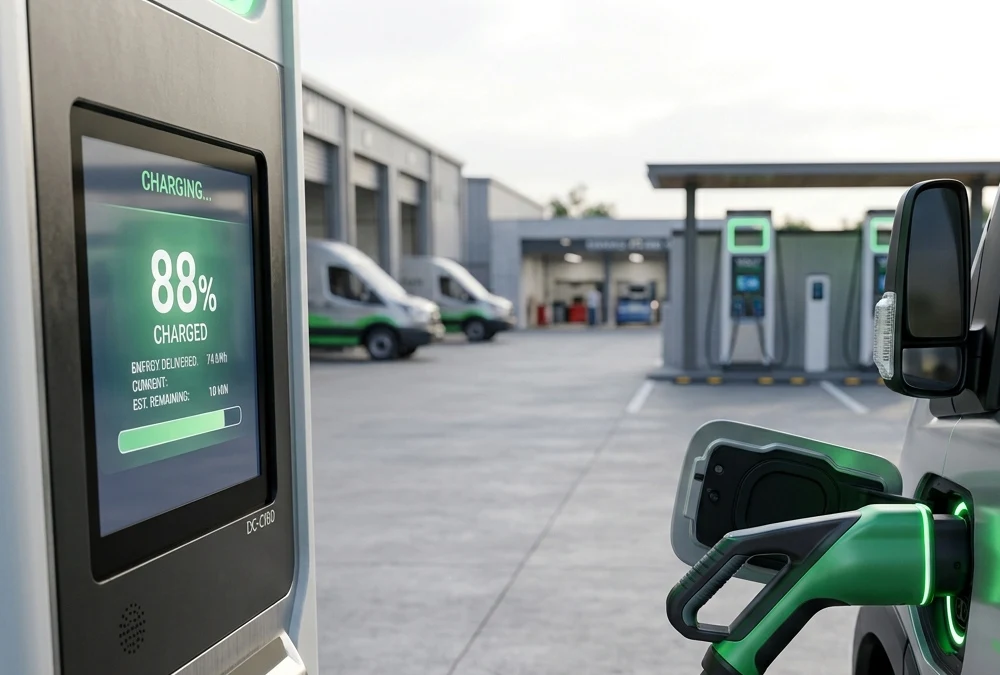
If you want to attract drivers who are on the go, you need Level 3 DC fast charging. These bypass the vehicle’s onboard converter to deliver high-voltage DC directly to the battery pack. Our modular DC systems scale across multiple configurations:
- 30kW to 60kW: Excellent for retail plazas where customers spend 45 to 90 minutes shopping.
- 120kW to 180kW: The sweet spot for fleet depots and commercial transit operators looking to recharge medium-duty vans between shifts.
- 240kW to 480kW: Ultra-fast highway corridors designed to charge premium EVs from 10% to 80% in under 20 minutes.
Ultra-Fast EV Charging Stations
As battery technology advances, megawatt-level capabilities are becoming standard. Utilizing liquid-cooled charging cables and advanced power modules, 720kW to 900kW liquid-cooled architectures prevent overheating at high currents. These systems are designed for heavy transit buses, mining fleets, and next-generation logistics hubs.
Smart Charging + Battery Storage Solutions
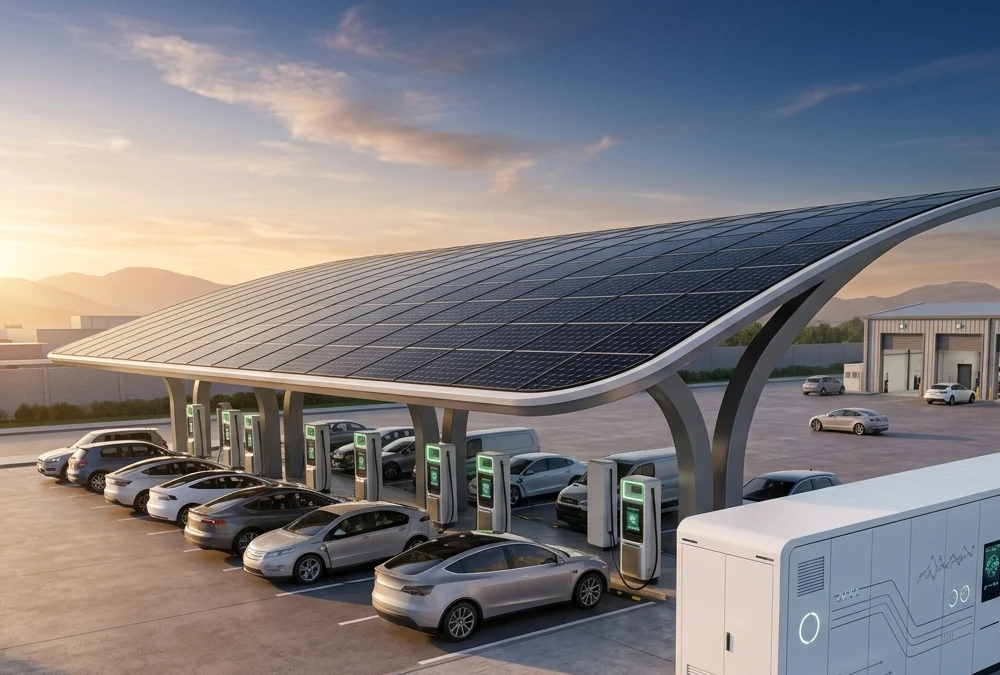
To avoid high electricity demand charges, businesses are pairing chargers with a local Battery Energy Storage System (BESS). This is known as the “Solar + Storage + EV Charging” microgrid approach. By saving solar power during the day and discharging the batteries during peak charging sessions, businesses can avoid expensive grid upgrades. This reduces overall operating costs and ensures your site keeps running even during a grid outage.
Need to optimize your site’s peak power demands?
Who Needs Commercial EV Charging Stations?
Integrating EV infrastructure is no longer just an environmental initiative—it is a core business strategy. Here is how different industries are deploying these solutions to capture value:
| Business Segment | Market Trend (2026) | Recommended Solution | Direct Business Benefit |
|---|---|---|---|
| Hotels & Resorts | 72% of EV drivers prioritize booking properties with reliable overnight charging. | 3 to 6 Level 2 dual-port smart chargers. | Captures high-spending guest bookings; allows for premium overnight charging rates. |
| Offices & Industrial Parks | Corporate tenants demand charging to meet Scope 3 emissions reduction targets. | Load-balanced Level 2 chargers + 100kWh BESS. | Attracts top-tier tenants, increases employee retention, and lowers corporate fleet charging costs. |
| Retail & Shopping Malls | Drivers spend up to 45% more money in-store while waiting for their vehicles to charge. | Mixed layout: 60kW DC Fast + several Level 2 units. | Increases foot traffic and customer spend; creates a secondary advertising revenue stream on charger screens. |
| Logistics & Fleet Depots | Rapid transition to electric commercial delivery vans and medium-duty distribution trucks. | 120kW to 240kW DC Fast Stations with OCPP integration. | Minimizes fleet downtime, lowers cost-per-mile compared to diesel, and automates fleet energy tracking. |
| Gas Stations & C-Stores | Traditional fuel retailers are replacing pumps with high-speed charging hubs. | 180kW to 360kW Liquid-Cooled DC Fast Chargers. | Protects fuel retail margins by shifting sales to convenience store food, beverages, and digital ad views. |
What Factors Affect Commercial EV Charging Station Cost?
To budget accurately for a commercial EV charging station installation cost, it helps to understand the main drivers of these expenses. The total project cost is divided into four main categories:
1. Hardware & Equipment Costs
The price of the charging equipment itself depends on its power rating, build quality, and connector standard (such as CCS, NACS, or Type 2). Standard Level 2 chargers are relatively inexpensive. High-power DC chargers require expensive power electronic modules, advanced cooling systems, and durable weatherproofing, which increases their cost.
2. Civil Works & Installation Costs
This covers trenching through concrete, laying conduit, pulling wire, and restoring the pavement. If your electrical room is right next to the parking spaces, installation costs will be low. If you have to trench 150 feet across a busy parking lot, civil engineering costs can easily exceed the cost of the charger hardware.
3. Electrical Infrastructure Upgrades
Many older commercial buildings do not have the spare capacity to power multiple 120kW chargers. You may need to install a new step-down transformer, dedicated switchgear, or subpanels. This can add $15,000 to $50,000+ to your project budget, depending on your utility company’s requirements.
4. Software, Networking, & OCPP Integration
Commercial chargers require smart software to process credit card payments, manage user access, and balance electrical loads. These platforms use the Open Charge Point Protocol (OCPP) to communicate. Software subscriptions usually cost between $15 and $50 per port per month.
5 Hidden Costs You Must Budget For
Unexpected expenses can quickly strain a project budget. Here are five common hidden costs to watch out for during your planning:
- Utility Grid Upgrade Fees: If your local utility grid cannot support your new charging station, they may charge you to upgrade their transformers or lines.
- Peak Demand Charges: Many commercial electric tariffs include “demand charges” based on your highest 15-minute peak of the month. A single DC fast charging session can trigger thousands of dollars in demand charges if not managed properly.
- Permitting and Environmental Reviews: Local zoning, structural reviews, electrical permits, and ADA compliance inspections can take months and cost several thousand dollars.
- Ongoing Maintenance Agreements: To keep your stations running reliably, you will need to budget for annual maintenance, preventative filter changes on DC systems, and software updates.
- Future Expansion Costs: Installing only enough conduit for today’s needs means you will have to pay for expensive trenching again when you want to expand. Laying extra conduit now is a cost-effective way to prepare for future growth.
How to Reduce Commercial EV Charging Station Installation Costs
With careful planning, you can significantly reduce your upfront installation costs. Here are three effective strategies:
Leverage Dynamic Load Balancing (DLB)
Instead of upgrading your main panel to match the maximum capacity of all chargers combined, Smart DLB software automatically adjusts charger output based on real-time building loads. If the building is using less power, the chargers speed up. If building demand spikes, the chargers temporarily slow down. This prevents overloaded panels without requiring expensive utility upgrades.
Integrate Industrial Battery Energy Storage (BESS)
By pairing your charging station with an industrial battery storage system, you can reduce peak demand charges and avoid grid upgrades. The battery charges slowly from the grid during low-demand periods and discharges rapidly when an EV plugs in. This is especially useful for high-power DC fast chargers.
We recommend selecting an industrial-grade battery storage system that matches your charging infrastructure’s scale:
- AnengJI 100kWh / 50kW BESS: Ideal for supporting 2 to 4 Level 2 smart chargers, eliminating minor peak demand spikes in retail or office settings.
- AnengJI 261kWh / 125kW Liquid-Cooled BESS: Optimized for mid-size fleet depots or commercial complexes utilizing 60kW to 120kW DC fast chargers. Liquid cooling ensures long battery life and stable operation under continuous charging cycles.
- AnengJI 1MWh Utility-Scale Containerized BESS: The ultimate solution for high-volume highway charging hubs or heavy-duty bus depots utilizing multi-megawatt configurations.
Utilize Federal and State Incentives
Government incentives can cover a significant portion of your project costs. In the United States, the Section 30C Alternative Fuel Vehicle Refueling Property Tax Credit covers up to 30% of eligible commercial installation costs (capped at $100,000 per port) for businesses in qualified low-income or non-urban areas. In Europe, programs like the Alternative Fuels Infrastructure Regulation (AFIR) provide direct subsidies for public charging networks. Be sure to check your local utility company’s website, as many offer “make-ready” programs that cover the cost of electrical upgrades up to the charger connection point.
The Step-by-Step Installation Process
A successful commercial charging project requires a structured approach from initial design to final commissioning:
Our Commercial Deployment Workflow:
- Site Survey & Utility Coordination: We assess your existing electrical infrastructure, physical layout, and parking accessibility.
- Load Assessment & Engineering Design: Our engineers calculate peak demand profiles and design a system that works with your building’s electrical capacity.
- Permitting & Compliance: We handle all local building permits, environmental reviews, and utility interconnection filings.
- Civil and Electrical Construction: Our teams excavate trenches, install concrete pedestals, pull high-voltage lines, and mount the charging stations.
- Commissioning & Testing: We run end-to-end tests, verify OCPP network connectivity, configure payment processing, and train your team.
Why Choose AnengJI for Your Commercial EV Infrastructure Project?
At AnengJI, we manufacture high-performance EV charging equipment and integrated energy storage solutions. We help businesses deploy cost-effective, scalable charging infrastructure worldwide.
Factory-Direct Manufacturing
Because we design and build our own hardware, we eliminate distributor markups. This allows us to provide competitive project pricing and custom configurations tailored to your site’s needs.
A Comprehensive Product Portfolio
We offer a full range of charging solutions, including wall-mounted 7kW AC chargers, heavy-duty 360kW liquid-cooled highway chargers, pantograph charging systems for transit buses, and integrated battery storage systems.
Certified Quality & Global Compliance
Our manufacturing facilities operate under strict ISO 9001 quality management standards. All AnengJI chargers are certified to meet international safety and performance standards, including UL, CE, TÜV, and OCPP 1.6J/2.0.1 compliance.
Ready to Estimate Your Commercial EV Charging Station Project Cost?
Contact us today for a free, comprehensive project estimate. Our team of engineering specialists will help you design an optimized layout, select the right hardware, and calculate your projected return on investment.
Frequently Asked Questions
- Q: How much does a commercial EV charging station cost?
- A: A commercial Level 2 charging station typically costs $3,500 to $10,000 fully installed. A commercial DC fast charger usually costs between $25,000 and $150,000+ depending on power output and the extent of required electrical upgrades.
- Q: How can I avoid expensive utility grid upgrade costs?
- A: You can use dynamic load balancing (DLB) software to manage charging output in real time, or integrate a local battery energy storage system (BESS) to buffer high peak loads.
- Q: Are commercial EV charging installations eligible for tax credits in 2026?
- A: Yes. In the U.S., businesses in qualified low-income or non-urban census tracts can claim the Section 30C tax credit for up to 30% of project costs (capped at $100,000 per port).
- Q: How long does it take to recover the upfront investment?
- A: Most commercial operators achieve payback within 3 to 5 years. This timeline can be accelerated by utilizing public grants, optimizing charging fees, and generating secondary revenue from retail sales during charging sessions.
Related Article
- The 2025 Business Guide to Commercial EV Charging Stations
- How to Choose the Right DC Fast Charger for Electric Vehicles
- EV Charger Installation Cost: Home & Commercial EV Charging Guide 2025
- EV Charging Station Business: A Practical Step-by-Step Guide
- Top EV Charging Station Companies 2025 | Global Leaders in Fast Charging
 https://anengjipower.com/wp-content/uploads/2026/06/epc-vs-turnkey-solar-project-bess.webp
675
1000
Charging Station Engineer
https://anengjipower.com/wp-content/uploads/2025/09/anengji-dc-fast-charging-station-manufacturer-and-supplier-logo-white-1.png
Charging Station Engineer2026-06-22 07:16:042026-06-24 07:13:17What Is the Difference Between EPC and Turnkey Contract Models in Energy Projects?
https://anengjipower.com/wp-content/uploads/2026/06/epc-vs-turnkey-solar-project-bess.webp
675
1000
Charging Station Engineer
https://anengjipower.com/wp-content/uploads/2025/09/anengji-dc-fast-charging-station-manufacturer-and-supplier-logo-white-1.png
Charging Station Engineer2026-06-22 07:16:042026-06-24 07:13:17What Is the Difference Between EPC and Turnkey Contract Models in Energy Projects? https://anengjipower.com/wp-content/uploads/2026/06/anengji-commercial-solar-plus-storage-benefits-site.webp
675
1000
Charging Station Engineer
https://anengjipower.com/wp-content/uploads/2025/09/anengji-dc-fast-charging-station-manufacturer-and-supplier-logo-white-1.png
Charging Station Engineer2026-06-20 14:34:102026-06-20 14:37:43What Are the Top Benefits of Solar Battery Storage in Factories?
https://anengjipower.com/wp-content/uploads/2026/06/anengji-commercial-solar-plus-storage-benefits-site.webp
675
1000
Charging Station Engineer
https://anengjipower.com/wp-content/uploads/2025/09/anengji-dc-fast-charging-station-manufacturer-and-supplier-logo-white-1.png
Charging Station Engineer2026-06-20 14:34:102026-06-20 14:37:43What Are the Top Benefits of Solar Battery Storage in Factories? https://anengjipower.com/wp-content/uploads/2026/06/modular-commercial-solar-battery-storage-cabinet.webp
675
1000
Charging Station Engineer
https://anengjipower.com/wp-content/uploads/2025/09/anengji-dc-fast-charging-station-manufacturer-and-supplier-logo-white-1.png
Charging Station Engineer2026-06-18 09:16:522026-07-03 03:05:13What Is Solar Battery Storage? Complete C&I Engineering Guide
https://anengjipower.com/wp-content/uploads/2026/06/modular-commercial-solar-battery-storage-cabinet.webp
675
1000
Charging Station Engineer
https://anengjipower.com/wp-content/uploads/2025/09/anengji-dc-fast-charging-station-manufacturer-and-supplier-logo-white-1.png
Charging Station Engineer2026-06-18 09:16:522026-07-03 03:05:13What Is Solar Battery Storage? Complete C&I Engineering Guide


Leave a Reply
Want to join the discussion?Feel free to contribute!