
Introduction
Let’s be completely honest about modern asset development. Deploying a Containerized BESS for Solar Farms is no longer an optional strategy for progressive developers; it is a fundamental baseline for project survival. The recent market data is staggering. The US Energy Information Administration (EIA) confirms that developers plan to add a record-breaking 24.3 GW of utility-scale battery capacity in 2026 alone, running alongside 43.4 GW of new solar additions.
When you flood regional grids with this much unbuffered power, severe transmission friction is inevitable. If your project relies purely on raw generation without an energy storage buffer, you are leaving your asset exposed to punishing curtailments. Integrating factory-assembled modular architectures protects your infrastructure investments while allowing you to lock in high-value capacity contracts before regional grid constraints shut you out.
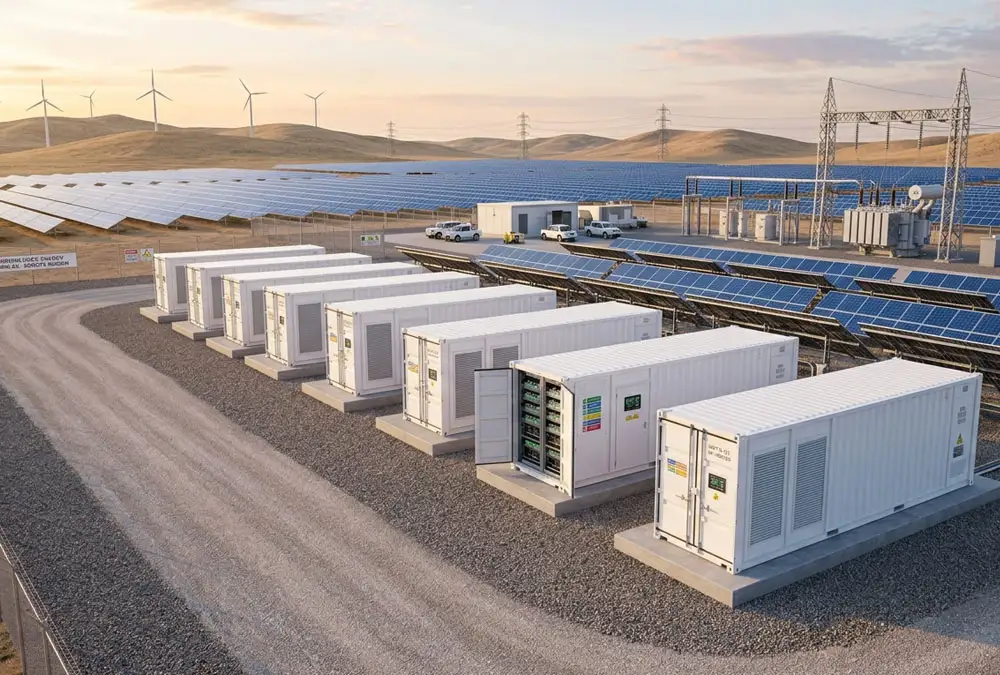
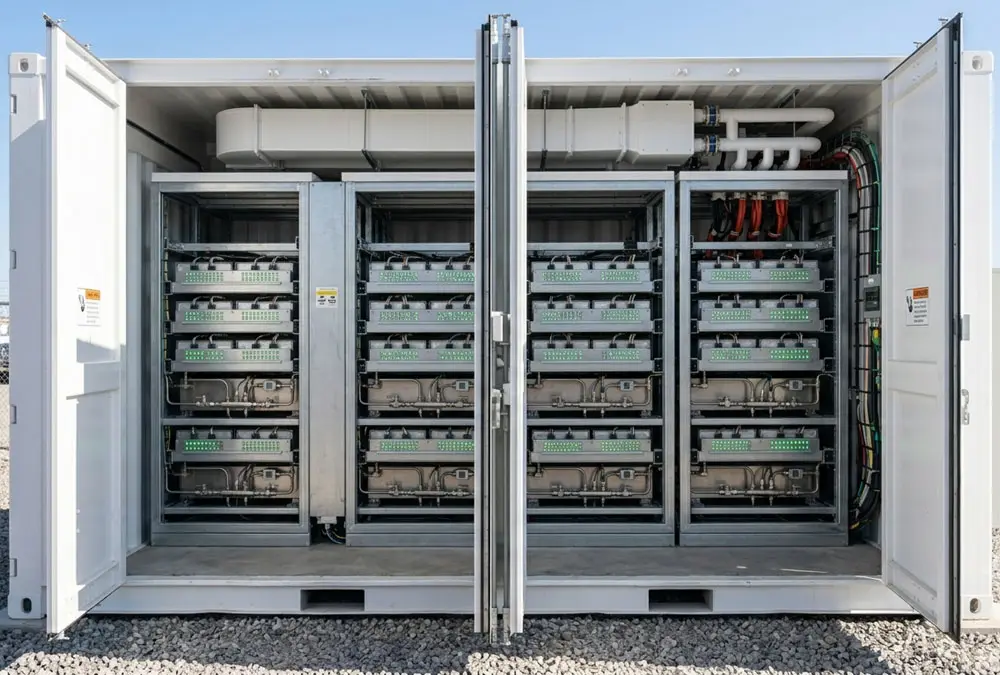
A Containerized BESS for solar farms is a fully integrated battery energy storage system housed inside a standardized shipping container. It combines battery packs, PCS, BMS, EMS, HVAC, and fire suppression into one modular unit, allowing utility-scale solar projects to store excess daytime generation, stabilize grid output, reduce curtailment, and improve project profitability.
What Is a Containerized BESS for Solar Farms?
A containerized battery energy storage system is an advanced thermal-regulated enclosure that protects thousands of lithium-ion cells while managing high-voltage electrical grid interaction. Instead of building massive permanent structures on site, developers rely on these plug-and-play platforms. They integrate power electronics directly with chemical energy storage arrays to turn unpredictable generation into a highly flexible asset.
The 6-Step EPC Modular Execution Blueprint
| Step | Phase | Action Plan & Technical Requirements |
|---|---|---|
| 1 | Data Analysis | Analyze localized 15-minute interval solar generation profiles alongside regional utility substation curtailment histories. |
| 2 | System Sizing | Calculate exact maximum power and duration variables to select a matching containerized energy storage system scale. |
| 3 | Civil Preparation | Pour simplified perimeter concrete strip foundations on site while preparing local medium-voltage cable trench paths. |
| 4 | Logistics & Delivery | Deliver fully enclosed, pre-tested containerized energy storage system blocks directly to the construction site via heavy transport. |
| 5 | Interconnection | Terminate pre-routed DC busway configurations and link the system directly into the central step-up transformer bay. |
| 6 | Commissioning | Execute final automated field SCADA integration loops to initialize instant energy arbitrage and capacity market bidding programs. |
A Buyer’s Capital Warning: Hardware brokers love pitching loose rack components by highlighting low upfront cell pricing. Do not take the bait. The hidden trap lies in skyrocketing field assembly costs, field wiring errors, and lengthy local commissioning delays. Sourcing fully integrated, pre-tested enclosures is the only reliable way to keep your soft engineering costs from spiraling out of control.
Why Are More Solar Farms Choosing Containerized BESS?
Fierce competition in utility-scale development leaves zero room for lengthy site civil schedules or unpredictable field integration risk.
| Core Driver | Traditional Building ESS Challenges | Containerized BESS Advantage | Real-World Strategic Benefit to the Buyer |
|---|---|---|---|
| Deployment Speed | Demands deep concrete foundations, masonry, and lengthy on-site HVAC duct assembly. Takes months. | Fully pre-wired and factory-tested configurations drop directly onto basic strip foundations. | Slashes project timelines from months to days, protecting developers from costly site labor budget overruns. |
| Land Use Efficiency | Sprawling brick-and-mortar architectural layouts consume huge swathes of land. | High-density vertical cell stacking inside standard 20ft/40ft maritime shipping enclosures. | Minimizes substation footprint, leaving more premium acreage open for solar PV module racking to generate revenue. |
| Future Scalability | Fixed walls and rigid structural enclosures make structural expansion cost-prohibitive. | Modular “plug-and-play” expandable container architectures. | Allows developers to expand storage capacity in seamless, multi-phase budgets as local transmission demands grow. |
| Total Project Cost | High unexpected field expenses stemming from custom structural engineering and site civil works. | Integrated turnkey design minimizes excavation, raw material handling, and custom engineering. | Directly lowers total capital expenditure per megawatt installed, significantly shortening the payback timeline. |
| System Reliability | On-site assembly exposes delicate internal busbars and components to dust, wind, and rain. | Assembled under clean-room factory standards with automated precision torque and loop testing. | Eliminates field wiring defects and human errors, ensuring immediate compliance and full performance on day one. |
Why Solar Farms Need Battery Energy Storage Systems (BESS)
Unrestricted clean energy expansion is pushing aging regional transmission grids to their absolute breaking points.
| Grid & Asset Pain Point | Real-World Financial Impact | BESS Automated Solution |
|---|---|---|
| Solar Curtailment | Midday generation overloads force operators to cap plant output, leading to permanent revenue loss. | Captures stranded excess generation instead of letting it go to waste, storing it safely for later deployment. |
| Transmission Bottlenecks | Remote solar fields face harsh distribution lines, risking severe utility interconnection violations. | Creates an invaluable power buffer that smooths out unpredictable generation spikes. |
| Price Cannibalization | Abundant daytime solar production drops wholesale energy market pricing down toward zero. | Enables strategic peak shifting storage to target lucrative evening market pricing windows. |
| Single-Revenue Risks | Relying purely on power purchase agreements (PPAs) leaves assets exposed to long-term market shifts. | Unlocks high-speed ancillary market capabilities, letting systems participate in premium frequency regulation programs. |
What’s Inside a Containerized Battery Energy Storage System?
A reliable, high-power utility scale bess relies on several integrated sub-systems working together flawlessly.
| Subsystem Component | Technical Role & Description | Why It Matters for Your Investment |
|---|---|---|
| Battery Packs | Heavy, rack-mounted electro-chemical cell structures wired in complex series/parallel configurations. | Forms the energy storage foundation, built to handle rapid high-current throughput. |
| Battery Management System (BMS) | Multi-tiered digital safety controller that monitors cell-level voltages, currents, and temperatures. | Acts as the primary safety barrier, balancing cells and preventing localized thermal runaway risks. |
| Power Conversion System (PCS) | Advanced bi-directional inverter network managing rapid AC/DC and DC/AC transformation. | Serves as the grid gateway, providing grid-forming capabilities to stabilize local networks. |
| Energy Management System (EMS) | Central software controller that processes utility dispatch signals, market pricing, and weather data. | Acts as the economic brain, automating charge/discharge cycles to ensure maximum operational profitability. |
| Fire Suppression System | Multi-layered safety setup combining off-gas sensors with automated clean-agent gas suppression. | Suppresses localized electrical faults early, ensuring smooth local fire marshal and insurance approvals. |
| SCADA Monitoring | Comprehensive telemetry loop logging and streaming thousands of operational system metrics. | Provides complete data visibility, allowing remote teams to address minor issues before downtime occurs. |
Deep Dive: Thermal Management System Comparison
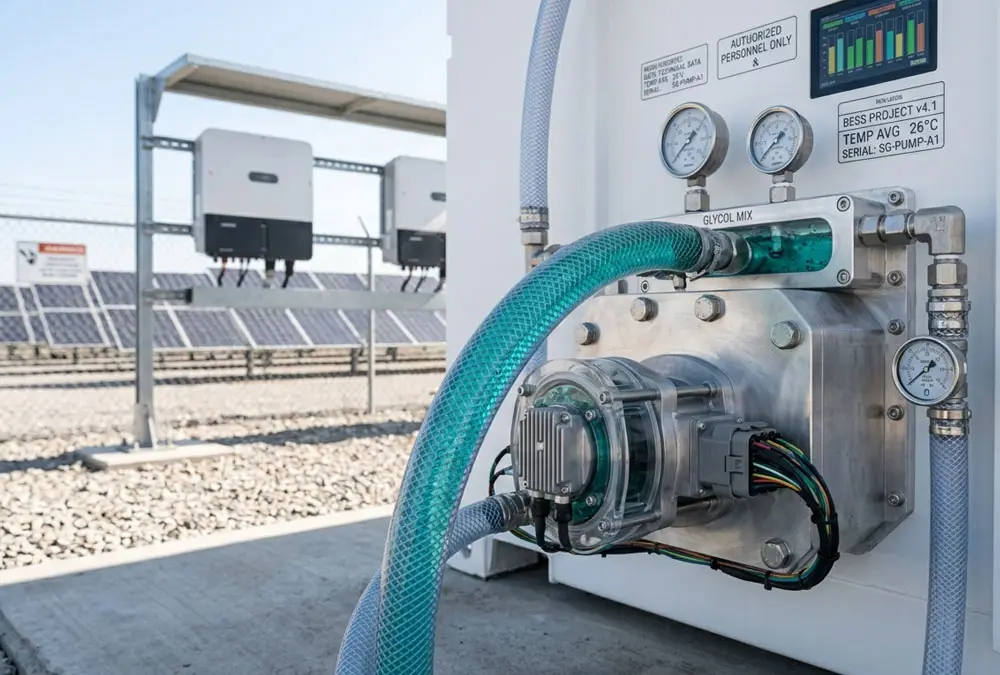
Maintaining stable internal operational temperatures is critical for protecting your system’s lifespan. Developers must choose the appropriate cooling method based on their cycling demands:
| Thermal Technology | Operational Mechanism | Pros & Cons | Real-World Strategic Benefit to the Buyer |
|---|---|---|---|
| Air Cooling | Uses industrial-grade HVAC units to push conditioned air through container racks. | ➕ Simple maintenance, lower initial capital cost. ❌ Prone to creating internal hot spots during aggressive cycling. | Best for mild climates and standby application profiles where budget restraint is paramount. |
| Liquid Cooling | Circulates a glycol-water cooling fluid through custom cold plates within each battery module. | ➕ Exceptional thermal uniformity, extends cycle life, lowers internal energy consumption. ❌ Higher initial investment. | Delivers maximal cell longevity and performance stability for heavy, multi-cycle utility energy arbitrage. |
| Immersion Cooling | Submerges cells directly inside a non-conductive, dielectric thermal fluid. | ➕ Peerless temperature control and absolute protection against thermal runaway. ❌ Premium initial cost, complex servicing. | Provides maximum safety margins for high-risk regions with extreme weather and restrictive fire safety codes. |
Benefits of Containerized BESS for Utility-Scale Solar Projects
Integrating storage directly with generation assets yields clear operational advantages.
| Revenue Vector | Operational Stream Description | Financial Impact & ROI Benefit |
|---|---|---|
| Energy Arbitrage | Charges during midday zero/negative price windows and discharges during high-priced evening hours. | Turns low-value generation into high-ticket sales, significantly lifting net asset margins. |
| Frequency Regulation | Responds within milliseconds to grid deviations to provide stabilizing active power injections. | Unlocks high-value grid incentive payments, creating a reliable revenue source. |
| Capacity Market | Promises to remain available to discharge power during extreme local utility system emergencies. | Secures steady, predictable capacity payments to stabilize annual cash flow profiles. |
| Hybrid Flexibility | Integrates solar generation with wind, backup diesel generators, or high-speed EV charging networks. | Enables the development of complex, future-proof microgrids that capture multiple market segments. |
Applications of Containerized BESS for Solar Farms
Modular container storage delivers reliable performance across several distinct utility and industrial applications:
| Application Environment | Target Sizing & Setup Configuration | Primary Operational Objective |
|---|---|---|
| Utility-Scale Solar Farms | 40ft high-capacity container blocks linked in multi-megawatt configurations. | Bulk power time-shifting, curtailment elimination, and primary transmission grid support. |
| Commercial Solar Parks | 20ft self-contained modular container or indoor-cabinet clusters. | Peak demand charge reduction, maximized solar self-consumption, and critical backup power. |
| Agricultural Solar (Agrivoltaics) | Compact, high-density 10ft or 20ft outdoor modular containers. | Provides decentralized storage while preserving maximum ground area for crops or livestock. |
| Remote Mining & Microgrids | Ruggedized container arrays paired with integrated hybrid control software. | Replaces expensive diesel fuel reliance with stable, self-sustaining 24/7 solar microgrids. |
| Island Energy Systems | Grid-forming container enclosures with high-speed response capabilities. | Maintains grid voltage and frequency stability, enabling higher local renewable penetration. |
How to Choose the Right Containerized BESS for a Solar Farm
Selecting the best containerized battery storage for solar farms requires evaluating several technical specifications.
Technical Evaluation Matrix: Battery Chemistries
| Chemistry Type | Technical Characteristics | Safety & Lifespan Profile | Real-World Strategic Benefit to the Buyer |
|---|---|---|---|
| Lithium Iron Phosphate (LFP) | Moderate energy density, highly stable chemical structure, excellent structural safety. | Extremely long lifecycle (6,000–8,000 full cycles), exceptional thermal stability. | The global benchmark for stationary storage, ensuring dependable daily cycling over a 15-to-20-year project lifespan. |
| Nickel Manganese Cobalt (NMC) | High energy density, compact physical layout, sensitive to operational heat spikes. | Shorter cycle profile (3,000–4,000 cycles), demands rigorous, multi-tiered liquid cooling controls. | Best suited for projects with severe physical footprint constraints where space optimization is critical. |
| Flow Batteries (e.g., Vanadium) | Low energy density, requires external storage tanks and circulation pumps. | Virtually infinite cycle life without chemical degradation, zero thermal runaway risks. | An alternative technology built for long discharge runtimes (8+ hours), though it requires a much larger physical footprint. |
Sourcing Checklist for EPCs and Project Developers
- Storage Duration matching: Select 2-hour configurations for rapid ancillary service capture; scale up to 4-hour or 6-hour platforms for long-duration bulk energy shifting.
- Safety Standards Validation: Verify that the entire enclosure holds certified compliance with UL 9540, UL 9540A, and NFPA 855 parameters to ensure smooth municipal approval.
- EMS System Interconnection: Ensure the internal software layers support open Modbus/DNP3 protocols to interface seamlessly with existing solar SCADA networks.
- Vendor Track Record: Prioritize suppliers with a proven utility-scale portfolio, deep EPC implementation experience, and responsive regional field support engineering.
European Market Trends for Containerized Solar BESS
The European renewable energy sector is experiencing unprecedented grid congestion challenges. According to SolarPower Europe’s 2026 market outlook, annual battery storage installations are projected to exceed 50 GWh. This rapid growth is driven by the reality of aging transmission lines struggling to handle rising solar generation.
| Target Market | Core Grid Congestion Catalyst | Dominant Procurement Strategy |
|---|---|---|
| Germany | Severe solar price cannibalization during summer afternoons; rapid proliferation of negative pricing windows. | Co-located solar plus storage systems and commercial-scale configurations tailored for corporate self-consumption. |
| United Kingdom | Traditional调频 (FFR) market saturation; transmission system operator (National Grid) network capacity blocks. | Transitioning rapidly to larger 2-to-4 hour container layouts focused on the wholesale balancing mechanism. |
| Italy & Spain | Abundant solar generation coupled with severe interconnection and grid approval delays. | Mandatory storage pairing requirements to reduce congestion and protect regional grid stability. |
| Central & Eastern Europe | Aging distribution infrastructure combined with aggressive new renewable targets. | Front-of-the-meter standalone storage assets optimized for grid backup and emergency capacity markets. |
AnengJi Industrial & Solar BESS Product Recommendations
Matching the correct hardware block to your specific project scale protects long-term investment returns. Here are four factory-integrated solutions designed for industrial and utility applications:
| Product Variant | Core Technical Specifications | Primary Hardware Target Market | Unique Product Value Proposition |
|---|---|---|---|
| 100 kWh Industrial Cabinet | Built-in LFP cell rack, integrated air cooling, modular PCS integration. | Small-scale commercial solar fields, farm agrivoltaics, behind-the-meter load trimming. | Compact, self-contained footprint that bypasses complex field integration needs. |
| 261 kWh Liquid-Cooled Enclosure | High-density cell configuration, smart glycol cooling circuits, multi-stage BMS. | Mid-sized commercial solar parks, EV fast-charging network buffers, light industrial microgrids. | Superior thermal uniformity that delivers an exceptionally long cycle life under aggressive use. |
| 418 kWh High-Density Block | Heavy-duty rugged cabinet layout, advanced liquid cooling, dual fire suppression. | Heavy industrial facilities, remote mining systems, high-stress island microgrids. | Outstanding structural and thermal durability built to survive extreme ambient climates. |
| 1 MWh+ Utility Container Series | Turnkey 20ft/40ft maritime containers, megawatt-scale PCS, advanced EMS integration. | Large utility-scale solar farms, front-of-the-meter independent power producer (IPP) sites. | A fully integrated megawatt building block that minimizes field engineering and installation timelines. |
Frequently Asked Questions
What size container is used for solar BESS?
Most commercial and utility projects use standard 20ft and 40ft steel shipping containers. Smaller commercial installations often utilize compact 10ft outdoor enclosures to save space.
How long does a containerized BESS last?
High-quality LFP battery containers typically deliver a 15-to-20-year operational life. This longevity depends heavily on maintaining steady cell temperatures via integrated liquid cooling systems.
Is liquid cooling better than air cooling?
Yes, liquid cooling systems provide much more uniform internal cell temperatures. This superior thermal management effectively reduces cell degradation and extends the system’s operational lifespan.
How much land does a BESS require?
A standard 40ft container requires roughly 30 square meters of physical space. However, you must factor in mandatory safety clear zones to comply with local NFPA 855 fire regulations.
Can a solar farm operate without battery storage?
Yes, but unbuffered solar farms face significant financial exposure to daytime energy curtailment. They also miss out on lucrative evening peak pricing windows.
What is the typical ROI for a solar BESS project?
Most commercial and utility installations achieve a full return on investment within 5 to 8 years. This timeline depends on local demand charges and available frequency regulation market revenue.
How much maintenance is required?
Modern container systems require very little manual intervention. Maintenance tasks are generally limited to bi-annual HVAC filter inspections, cooling fluid top-offs, and routine safety switch testing.
Can containerized BESS be expanded later?
Yes, provided your initial engineering design includes parallel-ready inverters, modular EMS software, and adequate physical space on your concrete foundation pads.
Why Choose AnengJi Containerized BESS Solutions
At AnengJi, we build rugged, factory-integrated energy storage systems designed to maximize utility asset profitability. Our systems eliminate complex on-site engineering challenges, helping you get your project online faster.
We combine advanced LFP cell chemistry, smart liquid cooling loops, and intelligent EMS software into high-performance, plug-and-play enclosures. Whether you are upgrading a mid-sized commercial solar array or developing a large grid-scale solar farm, our modular platforms deliver reliable, long-term performance.
Conclusion
Transitioning to smart, dispatchable generation is essential for long-term commercial success in the modern renewable energy market. Integrating a modular Containerized BESS for Solar Farms protects your asset from grid constraints and turns energy curtailment risks into reliable revenue. By matching your capacity configurations to local tariff structures and utilizing pre-wired, factory-tested hardware, you ensure stable operational returns. Partnering with an experienced manufacturer allows you to deploy high-density infrastructure smoothly, securing strong financial performance from day one.
Realted Article
- Solar Energy Battery Storage: Commercial Guide & ROI Analysis
- How Much Does Solar Battery Storage Cost in 2026?
- How to Select Utility Scale Battery Storage Contractors for Large BESS Projects?
- What Are the Best Solar Storage Batteries for Sale? 2026 BESS Guide
- What Are the Benefits of Solar Battery Storage for Commercial Buildings?
 https://anengjipower.com/wp-content/uploads/2026/06/epc-vs-turnkey-solar-project-bess.webp
675
1000
Charging Station Engineer
https://anengjipower.com/wp-content/uploads/2025/09/anengji-dc-fast-charging-station-manufacturer-and-supplier-logo-white-1.png
Charging Station Engineer2026-06-22 07:16:042026-06-24 07:13:17What Is the Difference Between EPC and Turnkey Contract Models in Energy Projects?
https://anengjipower.com/wp-content/uploads/2026/06/epc-vs-turnkey-solar-project-bess.webp
675
1000
Charging Station Engineer
https://anengjipower.com/wp-content/uploads/2025/09/anengji-dc-fast-charging-station-manufacturer-and-supplier-logo-white-1.png
Charging Station Engineer2026-06-22 07:16:042026-06-24 07:13:17What Is the Difference Between EPC and Turnkey Contract Models in Energy Projects? https://anengjipower.com/wp-content/uploads/2026/06/anengji-commercial-solar-plus-storage-benefits-site.webp
675
1000
Charging Station Engineer
https://anengjipower.com/wp-content/uploads/2025/09/anengji-dc-fast-charging-station-manufacturer-and-supplier-logo-white-1.png
Charging Station Engineer2026-06-20 14:34:102026-06-20 14:37:43What Are the Top Benefits of Solar Battery Storage in Factories?
https://anengjipower.com/wp-content/uploads/2026/06/anengji-commercial-solar-plus-storage-benefits-site.webp
675
1000
Charging Station Engineer
https://anengjipower.com/wp-content/uploads/2025/09/anengji-dc-fast-charging-station-manufacturer-and-supplier-logo-white-1.png
Charging Station Engineer2026-06-20 14:34:102026-06-20 14:37:43What Are the Top Benefits of Solar Battery Storage in Factories? https://anengjipower.com/wp-content/uploads/2026/06/modular-commercial-solar-battery-storage-cabinet.webp
675
1000
Charging Station Engineer
https://anengjipower.com/wp-content/uploads/2025/09/anengji-dc-fast-charging-station-manufacturer-and-supplier-logo-white-1.png
Charging Station Engineer2026-06-18 09:16:522026-07-03 03:05:13What Is Solar Battery Storage? Complete C&I Engineering Guide
https://anengjipower.com/wp-content/uploads/2026/06/modular-commercial-solar-battery-storage-cabinet.webp
675
1000
Charging Station Engineer
https://anengjipower.com/wp-content/uploads/2025/09/anengji-dc-fast-charging-station-manufacturer-and-supplier-logo-white-1.png
Charging Station Engineer2026-06-18 09:16:522026-07-03 03:05:13What Is Solar Battery Storage? Complete C&I Engineering Guide


Leave a Reply
Want to join the discussion?Feel free to contribute!