
Introduction
Choosing the wrong storage battery can destroy project returns overnight. Frankly, evaluating different battery chemistries dictates your ultimate operational success. Cell physics controls thermal safety, cycle degradation, and lifetime yields. Upfront capital costs vary wildly across cell formulations. Thermal management rules differ completely between chemistries. What works in an electric vehicle pack often fails inside a utility grid container. This guide cuts through corporate marketing noise. We analyze cathode electrochemistry, degradation mechanisms, and real balance-sheet returns.
Buyer Reality Check: “Will rapid capacity loss destroy my 15-year financial model?”
Developers often dread premature battery degradation under daily heavy cycling. Early storage projects lost over 20% capacity within four years. That ruined early investor yield models completely.
Industrial electrochemistry has advanced significantly. According to the BloombergNEF Levelized Cost of Electricity 2026 Report, four-hour benchmark storage costs fell 27% to $78/MWh. Tier-1 LiFePO4 cells operating with active liquid cooling maintain over 70% state of health after 8,000 full charge cycles. That easily yields 15 to 20 years of continuous commercial operation.
What Are Battery Chemistries and Why Do They Matter in Energy Storage Systems?
Every battery cell stores energy through internal electrochemical reactions. Active cathode materials, anode structures, and liquid electrolytes determine electron transfer efficiency.
Understanding Battery Chemistry in Energy Storage Applications
Inside any modern energy storage battery technology, cell formulation dictates six fundamental physical properties:
- Energy Density: Physical energy packed into a specific cabinet footprint.
- Cycle Life: Total charge-discharge repetitions before capacity drops to 70%.
- Thermal Stability: The exact temperature triggering catastrophic chemical breakdown.
- C-Rate Capability: Maximum continuous charge and discharge speed without lithium plating.
- Round-Trip Efficiency (RTE): Net energy retention ratio during complete AC-to-AC cycles.
- Levelized Cost of Storage (LCOS): Lifetime operational cost per delivered kilowatt-hour.
Why Battery Chemistry Selection Is Critical for BESS Projects
Selecting an inappropriate cell chemistry cripples commercial project returns. High energy density means nothing if cells overheat during hot summer afternoons. Cheaper upfront options become expensive when full re-coring is required every five years.
Matching cell electrochemistry to project operational goals protects your capital investment:
| Deployment Application | Key Performance Priority | Typical Duty Cycle Profile | Direct User Advantage & Financial Impact |
|---|---|---|---|
| Residential Storage | Thermal safety, zero noise, compact size | 1 cycle daily, slow discharge rate | Provides safe backup power during outages without fossil fuel emissions. |
| Commercial & Industrial (C&I) | Peak shaving ROI, rapid payback, durability | 1 to 2 cycles daily during peak utility rates | Clips monthly facility demand spikes, cutting utility bills by 20% to 40%. |
| Utility Scale Energy Storage | Extreme cycle life, lowest LCOS, safety compliance | Continuous high C-rate frequency response | Unlocks energy arbitrage revenues while firming regional power lines. |
Main Types of Energy Storage Batteries Used in BESS Facilities
When evaluating commercial types of energy storage batteries, engineers choose from several technical platforms. Each option carries unique electrochemical characteristics.
Lithium-ion Battery Chemistry
Dominating over 90% of global installations, lithium ion battery technology leads stationary storage installations. Three primary formulations are available today:
Technical Analysis: Lithium Cell Cathode Structures Compared
Lithium Iron Phosphate (LiFePO4): Features strong covalent phosphorus-oxygen ($\text{P-O}$) bonds arranged in an olivine crystal lattice. This structure resists thermal breakdown up to 500°C. LFP eliminates cobalt dependency, achieves 6,000–10,000 cycles, and guarantees extreme safety.
Nickel Manganese Cobalt (NMC): Utilizes a layered oxide cathode structure. NMC offers high gravimetric energy density (~240 Wh/kg). However, oxygen releases from its lattice at 210°C, increasing thermal runaway risk in stationary containers.
Lithium Titanate (LTO): Replaces conventional graphite anodes with nanocrystalline lithium titanate. LTO avoids dendrite formation and operates down to -30°C. It yields over 20,000 cycles but suffers from very high capital cost.
Lead-Acid Battery Chemistry
Lead-acid represents a traditional technology baseline. Valve-Regulated Lead-Acid (VRLA) units require low initial investment. However, shallow depth-of-discharge limits (50% DoD) and short lifespans (500–1,000 cycles) make them obsolete for main grid storage.
Flow Battery Chemistry
Vanadium Redox Flow Batteries (VRFB) store liquid electrolyte inside external tanks. Power capacity and discharge duration scale independently. They serve as valuable long duration energy storage solutions for 8 to 24-hour backup applications. Low round-trip efficiency (70–75%) and large footprints restrict wider deployment.
Nickel-Based Battery Chemistry
Nickel-Cadmium (NiCd) and Nickel-Metal Hydride (NiMH) batteries tolerate ambient temperature extremes. Remote telecom sites deploy them in hot desert zones. High toxic metal content and heavy memory effects hinder large-scale adoption.
Hydrogen Fuel Cell and Solid-State Battery Technology
Solid-state designs replace flammable liquid electrolytes with solid ceramic separators. They offer high energy density and enhanced safety. However, complex manufacturing delays commercial availability. Hydrogen fuel cells provide multi-day seasonal storage, but AC-to-AC efficiency remains under 45%.
Battery Chemistry Comparison for Energy Storage Systems
Direct battery cell chemistry comparison clarifies technical performance metrics across major formulations. Choosing appropriate candidate battery chemistries requires balancing initial capital costs against long-term project longevity.
Battery Chemistry Comparison Table: Safety, Cost, Performance and Lifecycle
Here is how major commercial choices perform across key engineering criteria:
| Technology | Safety Rating | Energy Density | Cycle Life (80% DoD) | Round-Trip Efficiency | Capital Cost ($/kWh) | Direct Commercial Benefit & Buyer Impact |
|---|---|---|---|---|---|---|
| LiFePO4 (LFP) | High (500°C breakdown) | Moderate (160-180 Wh/kg) | 6,000 – 10,000+ | 92% – 95% | Low – Moderate | Yields the lowest overall LCOS while minimizing thermal fire risks. |
| NMC | Moderate (210°C breakdown) | High (230-260 Wh/kg) | 2,500 – 4,000 | 88% – 92% | Moderate – High | Fits restricted urban indoor spaces where land footprint is limited. |
| Lead-Acid (VRLA) | Good | Low (30-50 Wh/kg) | 500 – 1,000 | 70% – 75% | Lowest upfront | Provides low entry cost for basic short-term emergency backup systems. |
| Vanadium Flow | Exceptional (Non-flammable) | Very Low (15-25 Wh/kg) | 15,000 – 20,000 | 68% – 74% | High upfront | Supplies long duration discharge without cell degradation over 20 years. |
Advantages and Disadvantages of Different Battery Chemistries
Every battery chemistry involves technical compromises. Understanding these design trade-offs prevents field failures.
Advantages of Lithium Iron Phosphate (LiFePO4) Battery Chemistry
Analyzing LiFePO4 vs lithium ion battery for BESS variants reveals clear operational benefits:
- Superior Safety Profile: Covalent oxygen bonds prevent self-sustaining flames during thermal stress.
- Extended Lifecycle: Delivers over 8,000 continuous cycles down to 80% Depth of Discharge.
- High Round-Trip Efficiency: Achieves 95% DC efficiency, reducing cooling system power draws.
- Low Lifecycle Cost: Reduces total cost of ownership by eliminating mid-project cell replacements.
Limitations of LiFePO4 Battery Chemistry
LFP features lower gravimetric energy density than NMC. Enclosures require slightly larger physical footprints. Sub-zero charging requires automated internal heating pads.
Challenges of Other Battery Chemistries
Examining alternative battery options reveals major operational hurdles:
NMC Thermal Risk: Lower thermal degradation thresholds demand aggressive liquid HVAC setups. Fraunhofer ISE BESS Safety Reports show NMC containers require double the fire suppression agent volume compared to LFP cabinets.
Lead-Acid Degradation: Deep cycling damages lead plates rapidly. Short lifespans force expensive system replacements every three years.
Flow Battery Parasitic Losses: Continuous mechanical pump operation consumes parasitic power, lowering net efficiency.
Battery Safety Challenges in Lithium Battery Energy Storage Systems
Deploying safe battery technology serves as your primary defense against thermal runaway events.
Why Lithium Battery Safety Is a Key Concern for BESS Projects
Insurance providers demand strict compliance with UL 9540A fire test standards. Uncertified containers cannot secure property insurance. Without insurance coverage, commercial project debt financing fails.
How Modern BESS Improves Lithium Battery Safety
Modern commercial battery storage systems deploy three protective layers:
Buyer Reality Check: “How do I ensure one faulty cell doesn’t destroy the entire site?”
Thermal propagation remains a top concern for asset owners. Modern BESS units isolate cell racks using physical aerogel insulation panels.
A multi-tier battery management system (BMS) monitors cell voltages microsecond by microsecond. Off-gas sensors detect internal cell venting minutes before smoke appears. Automated aerosol suppression stops thermal propagation before heat damages adjacent modules.
Immersion Cooling: A Safer Cooling Solution for Lithium Battery Energy Storage Systems
Conventional HVAC forced-air cooling struggles to eliminate internal cell temperature gradients during heavy discharge cycles.
What Is Immersion Cooling Technology for Battery Storage?
Immersion cooling submerges lithium cells directly in non-conductive dielectric fluid. This fluid removes internal heat 1,000 times faster than air.
Benefits of Immersion Cooling for Lithium Battery Safety
Direct liquid submersion maintains cell-to-cell temperature variations under 1.5°C. Eliminating thermal hot spots increases overall battery life by 30%. It allows continuous high C-rate charging while preventing thermal runaway propagation.
How to Choose the Right Battery Chemistry for Your Energy Storage Project?
Understanding how to choose battery chemistry for battery storage systems requires evaluating site duty cycles against physical equipment specs.
Select Battery Chemistry Based on Application Requirements
Match your operational demands to turnkey hardware configurations:
Commercial & Utility BESS Product Selection Matrix
- 100kWh Industrial Storage Cabinet: Integrated 50kW PCS inverter with LFP cells. Ideal for small factories, EV charging buffers, and demand charge reduction.
- 261kWh Liquid-Cooled BESS Cabinet: High-density outdoor cabinet built for heavy C-rate industrial motor loads and solar battery storage system setups.
- 418kWh Extended Duty Storage Unit: High-capacity LFP cabinet supplying 4 full hours of power to shift loads during long peak tariff windows.
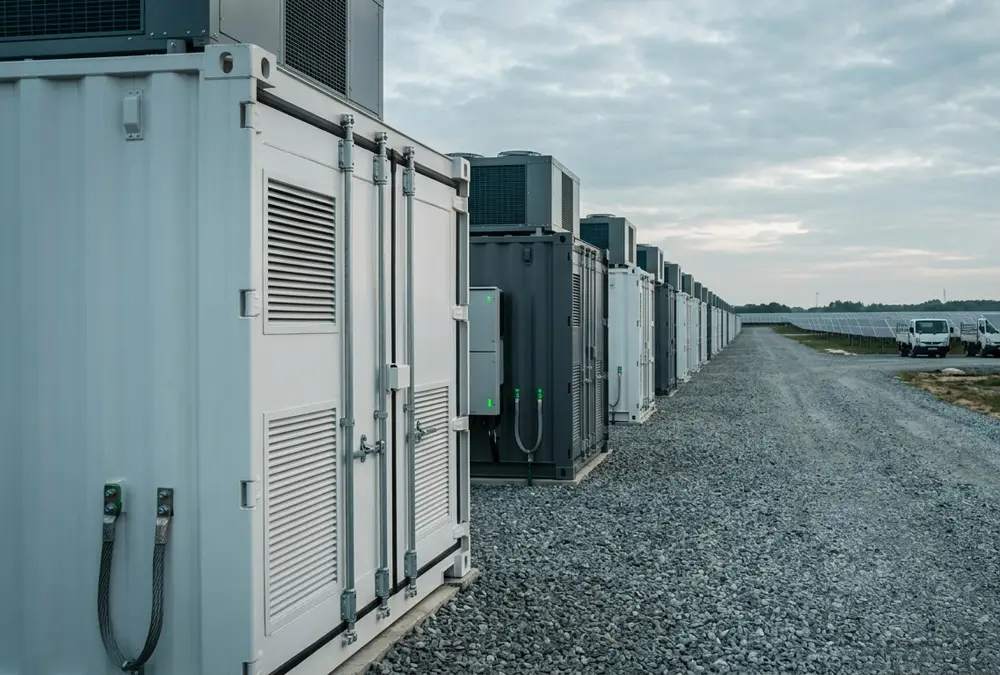
- 1MWh – 5MWh Containerized BESS Block: Modular ISO container built for substations, solar farms, and utility scale battery storage installations.
Why LiFePO4 Is the Preferred Battery Chemistry for Modern BESS Projects?
Reviewing global deployment metrics demonstrates why LFP is the best battery technology for utility scale energy storage. It provides unmatched economic performance.
LiFePO4 Provides the Best Balance Between Safety, Cost and Performance
LFP serves as the best battery chemistry for energy storage systems. It yields the lowest levelized cost of storage across commercial markets. According to Wood Mackenzie BESS Market Reports, LFP powers 88% of newly announced grid projects worldwide. Conducting a battery chemistry comparison for solar energy storage confirms LFP delivers maximum financial return.
Why Choose AnengJi Battery Energy Storage Systems?
AnengJi manufactures Tier-1 commercial and utility BESS hardware designed for global energy projects.
Advanced LiFePO4 Battery Technology
Our storage enclosures incorporate 314Ah LFP prismatic cells, liquid-cooling cold plates, and smart multi-tier BMS software. This architecture ensures uniform temperature distribution and long lifespan.
Safe and Reliable BESS System Design
AnengJi BESS units feature multi-stage off-gas detection, automated fire suppression, thermal insulation barriers, and full UL 9540 certification.
Flexible Energy Storage Solutions From kWh to MWh Scale
From 100kWh industrial cabinets to 5MWh containerized utility blocks, our technical team provides complete turnkey project engineering.
Key Takeaways: Choosing the Right Battery Chemistry for Energy Storage
Quick Summary: Key insights on storage battery chemistry selection
Evaluating candidate battery chemistries proves that LiFePO4 (LFP) is the superior technology for modern BESS deployments. LFP delivers optimal thermal safety, 8,000+ cycle life, 95% efficiency, and the lowest levelized cost of storage.
Frequently Asked Questions About Battery Chemistries
FAQ 1: What are the main battery chemistries used in energy storage systems?
The primary chemistries include Lithium Iron Phosphate (LiFePO4), Nickel Manganese Cobalt (NMC), Lead-Acid (VRLA), and Vanadium Redox Flow batteries.
FAQ 2: Which battery chemistry is safest for energy storage?
LiFePO4 is considered the safest lithium formulation due to its high thermal runaway threshold (500°C) and stable crystal lattice.
FAQ 3: Why is LiFePO4 preferred for BESS projects?
LiFePO4 offers twice the cycle life of NMC, superior thermal safety, minimal degradation, and significant levelized cost savings.
FAQ 4: How does battery chemistry affect energy storage costs?
Chemistry dictates round-trip efficiency, replacement frequency, HVAC cooling loads, and insurance premiums, directly controlling project ROI.
Request Your Custom BESS Technical Proposal & ROI Analysis
Contact AnengJi Power engineers today to analyze your site load profile, evaluate candidate battery chemistries, and calculate project payback horizons.
 https://anengjipower.com/wp-content/uploads/2026/06/epc-vs-turnkey-solar-project-bess.webp
675
1000
Charging Station Engineer
https://anengjipower.com/wp-content/uploads/2025/09/anengji-dc-fast-charging-station-manufacturer-and-supplier-logo-white-1.png
Charging Station Engineer2026-06-22 07:16:042026-06-24 07:13:17What Is the Difference Between EPC and Turnkey Contract Models in Energy Projects?
https://anengjipower.com/wp-content/uploads/2026/06/epc-vs-turnkey-solar-project-bess.webp
675
1000
Charging Station Engineer
https://anengjipower.com/wp-content/uploads/2025/09/anengji-dc-fast-charging-station-manufacturer-and-supplier-logo-white-1.png
Charging Station Engineer2026-06-22 07:16:042026-06-24 07:13:17What Is the Difference Between EPC and Turnkey Contract Models in Energy Projects? https://anengjipower.com/wp-content/uploads/2026/06/anengji-commercial-solar-plus-storage-benefits-site.webp
675
1000
Charging Station Engineer
https://anengjipower.com/wp-content/uploads/2025/09/anengji-dc-fast-charging-station-manufacturer-and-supplier-logo-white-1.png
Charging Station Engineer2026-06-20 14:34:102026-06-20 14:37:43What Are the Top Benefits of Solar Battery Storage in Factories?
https://anengjipower.com/wp-content/uploads/2026/06/anengji-commercial-solar-plus-storage-benefits-site.webp
675
1000
Charging Station Engineer
https://anengjipower.com/wp-content/uploads/2025/09/anengji-dc-fast-charging-station-manufacturer-and-supplier-logo-white-1.png
Charging Station Engineer2026-06-20 14:34:102026-06-20 14:37:43What Are the Top Benefits of Solar Battery Storage in Factories?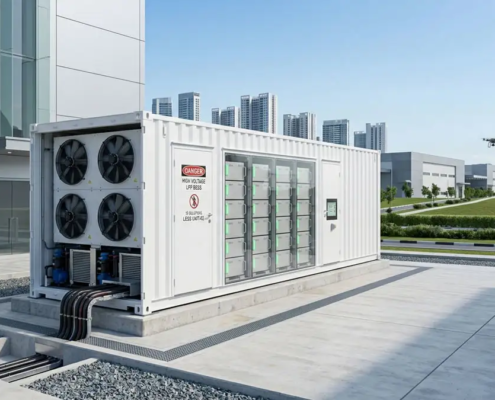 https://anengjipower.com/wp-content/uploads/2026/06/modular-commercial-solar-battery-storage-cabinet.webp
675
1000
Charging Station Engineer
https://anengjipower.com/wp-content/uploads/2025/09/anengji-dc-fast-charging-station-manufacturer-and-supplier-logo-white-1.png
Charging Station Engineer2026-06-18 09:16:522026-07-03 03:05:13What Is Solar Battery Storage? Complete C&I Engineering Guide
https://anengjipower.com/wp-content/uploads/2026/06/modular-commercial-solar-battery-storage-cabinet.webp
675
1000
Charging Station Engineer
https://anengjipower.com/wp-content/uploads/2025/09/anengji-dc-fast-charging-station-manufacturer-and-supplier-logo-white-1.png
Charging Station Engineer2026-06-18 09:16:522026-07-03 03:05:13What Is Solar Battery Storage? Complete C&I Engineering Guide


Leave a Reply
Want to join the discussion?Feel free to contribute!