
Introduction
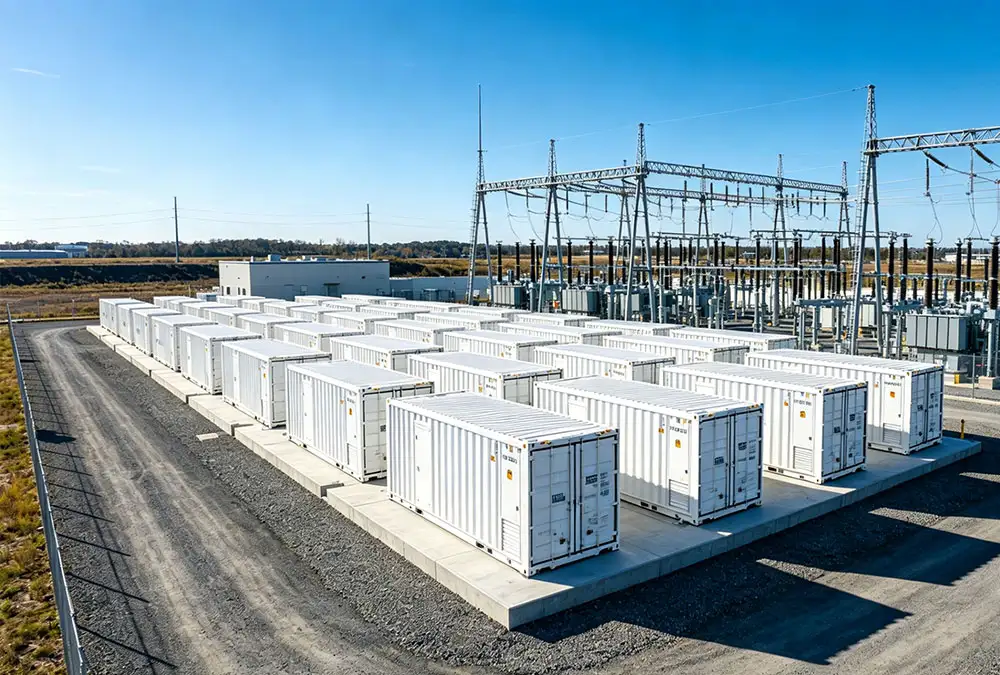
As we navigate the complexities of the 2026 energy landscape, the transition toward a decentralized and decarbonized grid has accelerated beyond initial projections. Central to this evolution is the deployment of standalone battery energy storage systems, which provide the essential flexibility required to balance intermittent renewable generation with fluctuating demand. Unlike co-located systems tied directly to a specific solar or wind farm, a standalone battery energy storage system functions as an independent asset on the grid, capable of performing high-value services such as frequency regulation and energy arbitrage. For industrial stakeholders and utility providers, understanding the technical nuances and economic drivers of these systems is the first step toward securing energy resilience and optimizing operational expenditures in an increasingly volatile power market.
What Is Standalone Battery Energy Storage (BESS) and How Does It Work?
Definition of Standalone Battery Energy Storage System
A standalone battery energy storage system (BESS) is a self-contained electrochemical facility that is connected directly to the electrical grid without being physically paired with a specific power generation plant. It acts as a “buffer” for the grid. In 2026, these systems are categorized as “Front-of-the-Meter” (FTM) assets when serving utilities or large-scale “Behind-the-Meter” (BTM) assets for industrial sites that prioritize independent power management.
How Standalone BESS Works (Charge–Store–Discharge Cycle)
The operational logic follows a three-stage cycle:
- Charging: During periods of low demand or high renewable supply (e.g., midnight wind peaks or midday solar surges), the system draws AC power from the grid.
- Storage: The Power Conversion System (PCS) converts AC to DC, which is stored within high-density battery racks (typically LFP).
- Discharging: When the grid signals a deficit or price spikes occur, the DC energy is inverted back to AC and injected into the distribution or transmission network.
AC-Coupled vs DC-Coupled Standalone Energy Storage
In the context of a standalone BESS with EMS and PCS integration solution, the architecture is almost exclusively AC-coupled. This means the battery system has its own dedicated connection to the AC grid via its own transformer.
- AC-Coupled: Superior for standalone assets as it allows for independent charging from the grid regardless of local generation status.
- DC-Coupled: Generally reserved for “Hybrid” systems where batteries share a DC bus with solar panels.
Core Components of a Standalone Battery Energy Storage System (BESS Architecture)
A robust utility scale standalone BESS solution provider must integrate several critical subsystems to ensure a 15-year operational life.
Battery System (Lithium-ion, LFP vs NMC)
- LFP (Lithium Iron Phosphate): The 2026 industry standard for stationary storage. It offers superior thermal stability and a cycle life often exceeding 6,000–8,000 cycles at 80% Depth of Discharge (DoD).
- NMC (Nickel Manganese Cobalt): While higher in energy density, its higher cost and thermal risks have relegated it primarily to mobile applications (EVs) rather than grid-scale plants.
Power Conversion System (PCS Inverter)
The energy storage PCS inverter is the bidirectional bridge. It doesn’t just convert electricity; it manages grid-forming functions, allowing the BESS to “black start” a grid or provide instantaneous reactive power support.
Battery Management System (BMS)
The battery management system (BMS) operates at the cell, module, and rack levels. It monitors voltage, current, and temperature, ensuring that no single cell enters a state of thermal runaway—a critical safety requirement for lithium ion battery storage system deployments.
Energy Management System (EMS)
The energy management system (EMS) is the “brain.” It communicates with the utility’s SCADA system and market pricing feeds to decide when to bid capacity into the market.
Thermal Management & Safety System
Modern containerized energy storage system units utilize liquid cooling. Liquid-cooled plates maintain cell temperature variance within ±2°C, which significantly slows down chemical degradation compared to older air-cooled designs.
Key Advantages of Standalone Battery Energy Storage for Grid and C&I Applications
Grid Stability and Frequency Regulation
Grids operate at a specific frequency (50Hz or 60Hz). When demand exceeds supply, frequency drops. A standalone battery energy storage system can respond in under 100 milliseconds to inject power, providing “synthetic inertia” that traditional gas peaker plants simply cannot match.
Peak Shaving and Energy Arbitrage
For a standalone battery storage for peak shaving industrial application, the goal is “Demand Charge Management.”
- Peak Shaving: Reducing the highest point of power consumption to lower utility capacity fees.
- Arbitrage: Buying energy at $0.04/kWh at night and using it (or selling it) at $0.18/kWh during evening peaks.
Renewable Energy Integration (Solar/Wind)
By absorbing excess “curtailed” energy from nearby wind farms, standalone BESS prevents clean energy waste and smooths out the “Duck Curve” seen in highly solar-penetrated regions.
Fast Deployment with Containerized Systems
Unlike pumped hydro projects that take a decade to build, a containerized energy storage system can be deployed and commissioned in 6–9 months.
Top 5 Commercial Benefits of Standalone BESS Projects
The 2026 financial model for grid scale battery energy storage project cost per MWh has become increasingly attractive due to “Value Stacking.”
- Revenue Streams (Arbitrage + Ancillary Services): Operating in multiple markets simultaneously—selling frequency response while also performing arbitrage.
- Reduced Electricity Costs for Industrial Users: Direct reduction in “time-of-use” (TOU) billing.
- Energy Independence and Backup Power: Serving as a massive Uninterruptible Power Supply (UPS) for mission-critical manufacturing.
- Scalability for Future Expansion: Modular “Lego-like” blocks allow an initial 5MWh site to grow to 20MWh as budget permits.
- Improved ROI and Lower LCOS: With the Levelized Cost of Storage (LCOS) dropping, many projects now see a 5–7 year payback period.
Standalone Battery Storage vs Other Energy Storage Technologies
To understand the dominance of BESS, we must compare it to alternative energy storage technologies.
| Technology | Response Time | Energy Density | Typical Duration | Best Use Case |
| BESS (Lithium-ion) | Milliseconds | High | 1–4 Hours | Grid Stability / C&I |
| Pumped Hydro | Minutes | Low | 8–24 Hours | Seasonal Storage |
| CAES | Minutes | Medium | 4–12 Hours | Bulk Grid Storage |
| Flow Batteries | Seconds | Medium | 6–10 Hours | Long Duration (LDES) |
BESS vs Compressed Air Energy Storage (CAES)
CAES works by using excess electricity to compress air into underground caverns. When power is needed, the air is heated and expanded through a turbine. While CAES is great for long duration energy storage (LDES), it suffers from lower round-trip efficiency (~60%) compared to BESS (~85–90%).
Why Standalone Battery Storage Is More Flexible
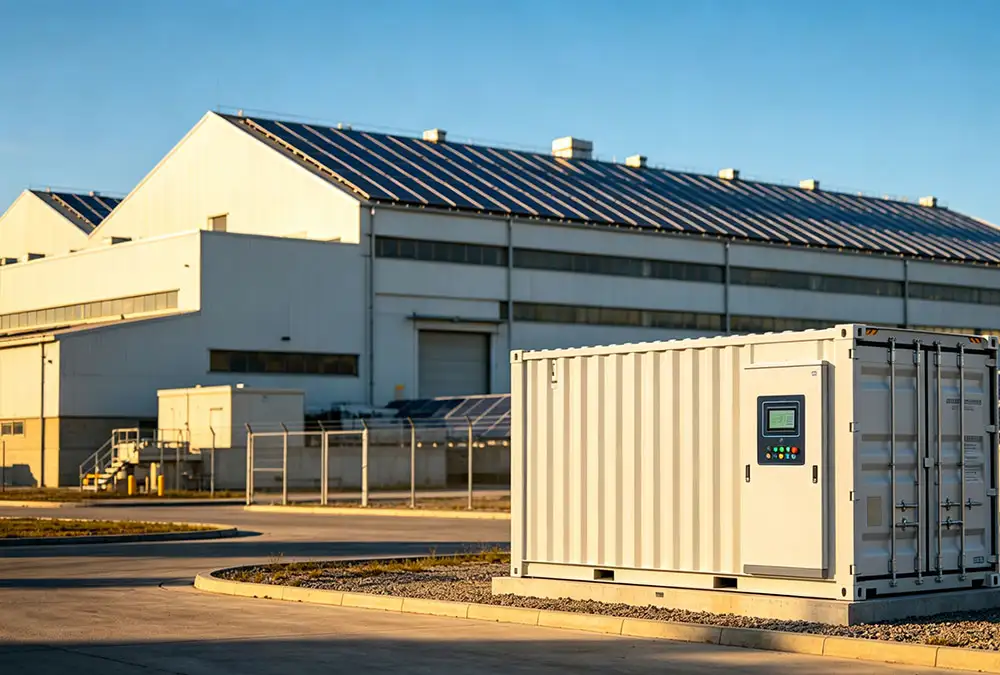
Standalone BESS is geography-independent. While pumped hydro requires mountains and CAES requires salt caverns, a BESS can be placed in a city center or an industrial park.
Standalone vs Hybrid Energy Storage Systems: Which One Is Right for You?
What Is Hybrid Energy Storage (Solar + Storage)?
Hybrid systems are “DC-coupled” or “co-located.” The battery and the solar array share the same point of interconnection (POI).
Key Differences
- Standalone: Can charge from the grid at any time. It is a pure market-play asset.
- Hybrid: Often restricted by tax credits or regulations to only charge from the paired renewable source.
Decision Framework for Businesses
Choose standalone battery energy storage if:
- Your primary goal is grid service revenue.
- You have limited space for solar panels but high peak demand.
- You want to leverage fluctuating grid prices (arbitrage).
How to Size a Standalone Battery Energy Storage System (Capacity & Power Calculation)
Properly sizing a system is the difference between a high ROI and a stranded asset.
Power Rating vs Energy Capacity Explained (MW vs MWh)
- MW (Power): How much energy can be delivered instantly. (Think of the diameter of a water pipe).
- MWh (Energy): The total volume of energy stored. (Think of the size of the water tank).
Sizing Formula
To calculate the required capacity for a peak-shaving project:
Required MWh = (Peak Load in kW - Threshold Limit in kW) * Duration of Peak in Hours / 1000
For example, if an industrial site wants to shave 1,000kW (1MW) off its peak for 2 hours:
Required MWh = 1,000 * 2 / 1000 = 2MWh
Key Considerations for Grid-Scale Standalone BESS Deployment
As an energy storage EPC solution provider, we look at several non-negotiable factors during the pre-construction phase.
Site Selection and Installation Requirements
The site must be level, have a high soil-bearing capacity for the heavy containers, and be located as close to the substation as possible to minimize “line losses.”
Grid Connection and Compliance Standards
Interconnection studies can take months. Compliance with IEEE 1547 and local utility codes is mandatory to ensure the BESS doesn’t destabilize the local transformer during high-speed switching.
Safety and Fire Protection Standards
NFPA 855 is the “gold standard” for 2026. Standalone BESS must feature automated fire suppression (Aerosol or Novec 1230) and explosion venting.
Lifespan and Maintenance of Standalone Battery Energy Storage Systems
Typical Battery Lifespan (10–15 Years)
While cells are rated for 20 years, the “useful life” ends when capacity drops below 70% of the original rating. This is known as the State of Health (SoH).
Cycle Life and Degradation Factors
Degradation is driven by:
- C-Rate: Rapid charging/discharging creates heat.
- Temperature: Every 10°C rise above 25°C can halve the battery life.
- DoD: Constant 100% discharging is more stressful than 80% cycles.
Maintenance Strategy
We recommend a “Predictive Maintenance” approach using the EMS to monitor cell impedance. If one rack shows a voltage sag, it can be balanced or replaced before it affects the whole string.
Challenges and Limitations of Standalone Battery Energy Storage
High Initial Investment Cost
Despite falling prices, a standalone battery energy storage system for grid use requires significant CAPEX. According to 2025–2026 market reports, utility-scale LFP systems average around $220,000–$280,000 per MWh for a fully installed turnkey solution.
Battery Degradation and Replacement
Budgeting for “augmentation” (adding new batteries in year 7 or 8) is a standard practice to maintain the rated capacity over the contract life.
Strategic Advantages: Why Standalone BESS Is a Key Energy Solution in 2026
The global drive toward “Net Zero” has made the renewable energy storage integration market the most active sector in power engineering.
- Decarbonization: BESS allows us to retire old coal and gas peakers.
- Grid Stability: With the rise of microgrid battery storage solution designs, BESS provides “islanding” capabilities, keeping the lights on during regional blackouts.
Where Should You Install a Standalone Battery Energy Storage System? (Use Cases)
Industrial Parks and Manufacturing
Ideal for high-load facilities like steel mills or data centers where a 1-second power glitch costs millions.
EV Charging Infrastructure Integration
In 2026, ultra-fast DC chargers (350kW+) are common. A standalone BESS at the charging site acts as a “buffer,” charging from the grid at a steady 50kW and discharging at 350kW when a vehicle arrives, preventing massive grid spikes.
Future Trends of Standalone Battery Energy Storage Systems
AI-Driven EMS Optimization
Machine learning algorithms now predict weather patterns and spot prices with 98% accuracy, maximizing the energy storage EPC solution‘s profitability.
New Battery Technologies (Sodium-ion)
Sodium-ion batteries are entering the standalone market in 2026. While lower in density than LFP, they are significantly cheaper and perform better in freezing climates, making them ideal for high-latitude grid stabilization energy storage.
Featured Snippet: Quick Answers About Standalone Battery Energy Storage
What is standalone battery energy storage?
A standalone battery energy storage system (BESS) stores electricity independently from generation sources and releases it when needed to support grid stability, reduce energy costs, and enable renewable integration.
What is the difference between MW and MWh in BESS?
MW (megawatt) measures power capacity (the “speed” of delivery), while MWh (megawatt-hour) measures stored energy (the “amount” available). A 1MW/2MWh system can deliver 1MW of power for 2 hours.
How long does a standalone BESS last?
Most lithium-ion standalone BESS systems last 10–15 years, depending on usage cycles, operating temperature, and maintenance quality.
Conclusion: Is Standalone Battery Energy Storage the Right Investment for You?
The data is clear: standalone battery energy storage is no longer a fringe technology; it is the backbone of the 2026 modern grid. For utility providers, it offers a way to defer expensive substation upgrades. For industrial users, it is a tool to slash demand charges and ensure 24/7 reliability. When choosing a utility scale standalone BESS solution provider, focus on integrated “turnkey” solutions that combine Tier-1 LFP cells with advanced liquid cooling and AI-driven EMS. As LCOS continues to decline, the window for early-mover advantage is closing—now is the time to secure your energy future.
 https://anengjipower.com/wp-content/uploads/2026/09/AnengJipower-European-BESS-Project-Design-Environment-1.webp
675
1000
Charging Station Engineer
https://anengjipower.com/wp-content/uploads/2025/09/anengji-dc-fast-charging-station-manufacturer-and-supplier-logo-white-1.png
Charging Station Engineer2026-09-24 09:05:462026-09-24 09:08:39Battery Energy Storage System Design Guide for Europe
https://anengjipower.com/wp-content/uploads/2026/09/AnengJipower-European-BESS-Project-Design-Environment-1.webp
675
1000
Charging Station Engineer
https://anengjipower.com/wp-content/uploads/2025/09/anengji-dc-fast-charging-station-manufacturer-and-supplier-logo-white-1.png
Charging Station Engineer2026-09-24 09:05:462026-09-24 09:08:39Battery Energy Storage System Design Guide for Europe https://anengjipower.com/wp-content/uploads/2026/09/anengjipower-How-BESS-Power-and-Energy-Shape-Storage-Duration.webp
675
1000
Charging Station Engineer
https://anengjipower.com/wp-content/uploads/2025/09/anengji-dc-fast-charging-station-manufacturer-and-supplier-logo-white-1.png
Charging Station Engineer2026-09-23 09:06:532026-09-23 09:08:02BESS Duration Guide: How to Choose 1, 2 or 4 Hours
https://anengjipower.com/wp-content/uploads/2026/09/anengjipower-How-BESS-Power-and-Energy-Shape-Storage-Duration.webp
675
1000
Charging Station Engineer
https://anengjipower.com/wp-content/uploads/2025/09/anengji-dc-fast-charging-station-manufacturer-and-supplier-logo-white-1.png
Charging Station Engineer2026-09-23 09:06:532026-09-23 09:08:02BESS Duration Guide: How to Choose 1, 2 or 4 Hours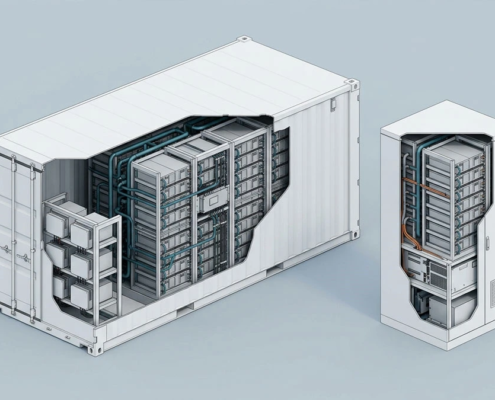 https://anengjipower.com/wp-content/uploads/2026/09/AnengJIPower-Cabinet-vs-Containerized-BESS-3D-Isometric-Structural-Cutaway.webp
675
1000
Charging Station Engineer
https://anengjipower.com/wp-content/uploads/2025/09/anengji-dc-fast-charging-station-manufacturer-and-supplier-logo-white-1.png
Charging Station Engineer2026-09-18 07:19:042026-09-18 07:19:38Cabinet vs Containerized BESS: How to Choose for Large C&I
https://anengjipower.com/wp-content/uploads/2026/09/AnengJIPower-Cabinet-vs-Containerized-BESS-3D-Isometric-Structural-Cutaway.webp
675
1000
Charging Station Engineer
https://anengjipower.com/wp-content/uploads/2025/09/anengji-dc-fast-charging-station-manufacturer-and-supplier-logo-white-1.png
Charging Station Engineer2026-09-18 07:19:042026-09-18 07:19:38Cabinet vs Containerized BESS: How to Choose for Large C&I


Leave a Reply
Want to join the discussion?Feel free to contribute!