
Introduction
The global shift toward decentralized power in 2026 has made behind-the-meter energy storage the cornerstone of modern industrial and commercial infrastructure. As grid volatility increases and electricity demand charges skyrocket due to the mass adoption of electric vehicles, businesses are no longer looking at energy as a fixed utility cost, but as a manageable strategic asset. A behind-the-meter energy storage system allows a facility to store electricity on-site, providing a critical buffer between the utility grid and high-demand equipment like CNC machines, HVAC systems, and DC fast chargers. By leveraging behind-the-meter battery energy storage system technology, enterprises can effectively “decouple” their operations from peak utility rates, ensuring both financial resilience and operational continuity in an increasingly electrified economy.
What Is Behind-the-Meter Energy Storage (BTM BESS)?
Behind-the-Meter Definition (Customer-Side Energy Storage)
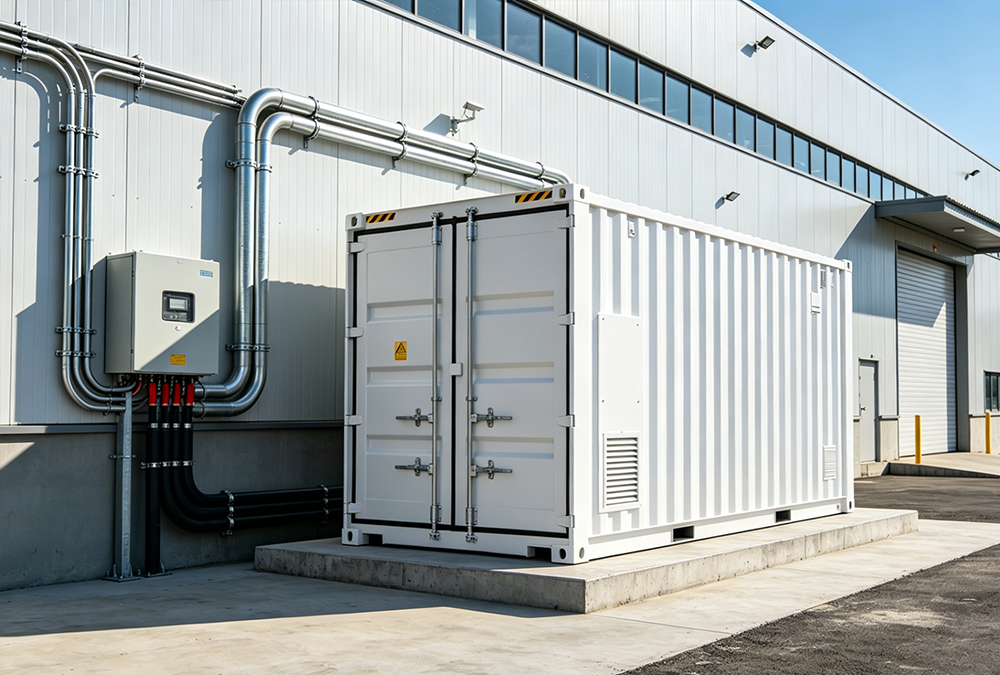
In the simplest terms, “behind-the-meter” (BTM) refers to any energy system located physically on the customer’s side of the utility electric meter. This includes residential, commercial, or industrial properties. When you install a behind-the-meter BESS, the energy generated or stored is used directly on-site to power your loads before any excess is potentially exported back to the grid. It acts as a private energy reservoir that the utility company does not control, giving the owner total sovereignty over their power usage.
Behind-the-Meter vs Front-of-the-Meter Energy Storage
To understand what is behind the meter, one must compare it to front-of-the-meter (FTM) systems:
- BTM (Behind-the-Meter): Systems are located at the point of consumption (factories, malls, EV stations). The primary goal is reducing the owner’s utility bill and providing backup power.
- FTM (Front-of-the-Meter): Systems are utility-scale, located at power plants or substations. Their goal is to stabilize the distribution network and provide bulk energy services to the entire grid.
How BTM Fits into Distributed Energy Resources (DER)
Behind-the-meter solutions are a critical subset of distributed energy resources (DER). In 2026, the “Smart Grid” is essentially a web of these DERs—solar arrays, wind turbines, and BESS units—working in tandem. A BTM system turns a passive consumer into an “active node,” capable of supporting the grid during emergencies while prioritizing local financial optimization.
How Behind-the-Meter Battery Energy Storage Systems Work
Core Components: Battery, PCS, BMS, EMS Explained
A professional-grade commercial energy storage system is far more than just a box of batteries. It is an integrated electrical ecosystem:
- Battery Racks: Typically utilizing Lithium Iron Phosphate (LFP) or Sodium-ion cells. These store the raw DC energy.
- Power Conversion System (PCS): The bidirectional inverter that converts DC from the batteries to AC for the building, and AC from the grid back to DC for charging.
- Battery Management System (BMS): The safety layer that monitors voltage, temperature, and State of Health (SoH) at the cell level.
- Energy Management System (EMS): The “brain” of the behind-the-meter power setup. It uses AI to decide when to charge (when prices are low) and when to discharge (during peak spikes).
Energy Flow Logic: Charge, Store, Dispatch
The logic follows a sophisticated tri-phase cycle:
- Charge: During low-demand periods (nighttime) or high solar production.
- Store: Maintaining the energy with minimal “parasitic loss.“
- Dispatch: Releasing energy the moment the building’s load exceeds a pre-set threshold, preventing a “Peak Demand” event on the utility meter.
Role of EMS in Behind-the-Meter Optimization
An advanced energy management system (EMS) is what makes behind-the-meter energy storage profitable. It doesn’t just react; it predicts. By analyzing historical load data and weather forecasts, the EMS ensures the battery has enough “headroom” to absorb a sudden spike from an EV charger or a heavy motor start-up.
Key Advantages of Behind-the-Meter Energy Storage Systems
Demand Charge Reduction and Energy Cost Savings
For most C&I (Commercial & Industrial) users, the electricity bill is divided into energy usage (kWh) and demand charges (the highest kW draw in a 15-minute window). Demand charges can account for up to 50% of a commercial bill. Behind-the-meter energy storage effectively “shaves” these peaks, leading to immediate energy cost optimization.
Peak Shaving and Load Shifting Capabilities
These are the twin engines of ROI:
- Peak Shaving: Cutting off the top of your power spikes.
- Load Shifting: Moving your entire energy consumption profile from expensive daytime hours to cheaper nighttime hours (time-of-use optimization).
Backup Power and Energy Resilience
Unlike FTM systems, a behind-the-meter BESS can enter “Island Mode.” If the grid goes down, the system disconnects from the utility and powers critical site loads (servers, security, cold storage) using on-site energy storage.
Grid Independence and Energy Flexibility
With grid independence solutions, businesses are less vulnerable to the rising costs of utility infrastructure upgrades. If a factory wants to add a new production line but the local transformer is at capacity, a BTM system provides the extra “boost” needed, avoiding millions in utility upgrade fees.
Peak Shaving vs Load Shifting in Behind-the-Meter Systems
While often used interchangeably, they serve different financial purposes.
| Feature | Peak Shaving | Load Shifting |
| Primary Goal | Reduce Demand Charges (kW) | Arbitrage Energy Prices (kWh) |
| Trigger | Instantaneous power spikes | Specific time-of-use (TOU) schedules |
| Battery Discharge | Short, high-power bursts | Long, steady discharge |
| Best For | Factories, EV Charging Stations | Warehouses, Office Buildings |
When to Use Peak Shaving Instead of Load Shifting
If your facility has “spiky” loads—such as a data center with cooling fans that kick in or a 180kW DC fast charger—Peak Shaving is your priority. It protects you from the massive penalties utility companies charge for sudden grid strain.
Behind-the-Meter Energy Storage for EV Charging Infrastructure
As an engineer in the field, I’ve seen the “Grid Wall” stop projects in their tracks. High-power DC charging (120kW–350kW) creates massive power spikes. Behind-the-meter EV charging infrastructure solutions are the only way to deploy fast charging in areas with limited grid capacity.
Why EV Fast Charging Requires BTM Storage
When a Porsche Taycan or a heavy-duty electric truck plugs into a 350kW charger, the local grid sees a massive “jolt.” Without a behind-the-meter battery energy storage system, the utility might charge a $2,000 “demand penalty” for that single 20-minute session. The BTM battery acts as a buffer, discharging at 350kW while only pulling a steady 50kW from the grid.
Improving Charging Station ROI
By using EV charging energy management, operators can store cheap solar power during the day and sell it at a premium to EV drivers in the evening, significantly shortening the payback period of the charging equipment.
Applications of Behind-the-Meter BESS in Commercial & Industrial Sectors
Manufacturing and Industrial Facilities
Heavy machinery often creates “inrush currents.” Industrial energy storage solutions smooth these currents, protecting sensitive equipment and reducing the heat-related wear on facility transformers.
Data Centers and Critical Infrastructure
A behind-the-meter data center installation ensures that even a 50ms voltage dip doesn’t cause a reboot. In 2026, BESS has largely replaced lead-acid UPS systems due to its higher energy density and 15-year lifespan.
Solar + Storage (On-site Renewable Integration)
The behind-the-meter solar plus storage system cost has dropped significantly. In 2026, “Net Metering” policies have become less favorable, making it more profitable to store your own solar energy than to sell it back to the grid at wholesale prices.
Behind-the-Meter Battery Storage Cost and ROI Analysis
System Cost Breakdown (2026 Estimates)
A typical turnkey commercial energy storage system includes:
- Battery Module (LFP): 45% of cost.
- PCS & Switchgear: 25% of cost.
- EMS & Software: 10% of cost.
- Installation & Engineering: 20% of cost.
How to Calculate ROI and Payback Period
To estimate your savings, use this formula for Demand Charge Reduction:Annual Savings = (Monthly Peak kW Reduction * Demand Charge Rate) * 12
For a typical 500kWh system in an industrial setting, the ROI is currently trending between 3.5 to 5.5 years, depending on local utility tariffs and available subsidies.
Designing a Behind-the-Meter Energy Storage System
System Sizing Based on Load Profile
Sizing is not about “maximum capacity” but “optimum capacity.” We use behind-the-meter data from utility interval meters (Green Button data) to map exactly when your peaks occur. A system that is too large wastes CAPEX; a system too small fails to shave the highest peaks.
Safety, Compliance, and Installation Considerations
In 2026, NFPA 855 and UL 9540A are the gold standards for BESS safety. When installing behind-the-meter solutions, ensure the system features:
- Aerosol Fire Suppression.
- Liquid Cooling: Essential for maintaining cell longevity in high-power C&I applications.
Future Trends of Behind-the-Meter Energy Storage Systems
AI-driven Energy Management Systems (EMS)
The next generation of behind-the-meter energy storage will use “Predictive Maintenance” to swap out battery modules before they fail, using machine learning to maximize the SoH (State of Health).
Virtual Power Plants (VPP) Integration
Businesses are now joining Virtual Power Plants. During a grid emergency, the utility pays the business to discharge their BTM battery, turning a cost-saving tool into a direct revenue-generating asset.
Why Businesses Are Shifting to Behind-the-Meter Energy Storage
The move toward behind-the-meter power is driven by three pillars:
- Economic Survival: Utility rates are rising at 6-8% annually.
- Decarbonization: Achieving ESG (Environmental, Social, and Governance) goals requires on-site renewable storage.
- Reliability: The aging grid is seeing more frequent brownouts. Behind-the-meter energy storage is the ultimate insurance policy.
Behind-the-Meter Energy Storage Summary (Featured Snippet)
What Is Behind-the-Meter Energy Storage?
Behind-the-meter energy storage refers to battery systems (BESS) installed on the customer’s side of the electric meter. It allows businesses to store and manage power on-site for cost savings, backup power, and grid independence.
What Are the Main Benefits of BTM BESS?
The primary benefits include demand charge reduction, peak shaving, load shifting, and enabling high-power EV charging infrastructure without expensive grid upgrades.
How Does BTM Storage Reduce Costs?
It reduces costs by storing energy when it is cheap (off-peak) and discharging it when utility prices or demand penalties are at their highest (peak), providing energy cost optimization.
Recommended Industrial BESS Product:
For high-demand industrial applications, we recommend the AnengJi ECO-E Series Liquid-Cooled BESS. It features a 215kWh modular design, integrated AI-EMS for peak shaving, and a liquid-cooling system that extends battery life by 25% compared to traditional air-cooled units. Perfect for behind-the-meter EV charging infrastructure solutions.
 https://anengjipower.com/wp-content/uploads/2026/09/AnengJipower-European-BESS-Project-Design-Environment-1.webp
675
1000
Charging Station Engineer
https://anengjipower.com/wp-content/uploads/2025/09/anengji-dc-fast-charging-station-manufacturer-and-supplier-logo-white-1.png
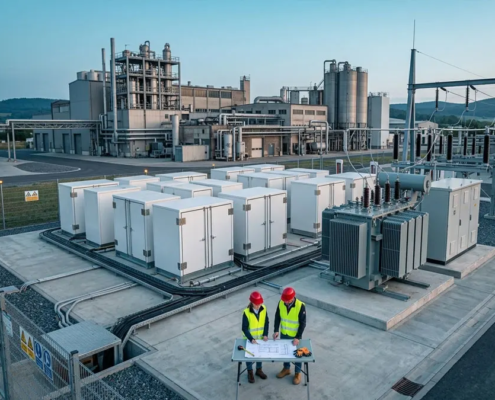
Charging Station Engineer2026-09-24 09:05:462026-09-24 09:08:39Battery Energy Storage System Design Guide for Europe
https://anengjipower.com/wp-content/uploads/2026/09/AnengJipower-European-BESS-Project-Design-Environment-1.webp
675
1000
Charging Station Engineer
https://anengjipower.com/wp-content/uploads/2025/09/anengji-dc-fast-charging-station-manufacturer-and-supplier-logo-white-1.png
Charging Station Engineer2026-09-24 09:05:462026-09-24 09:08:39Battery Energy Storage System Design Guide for Europe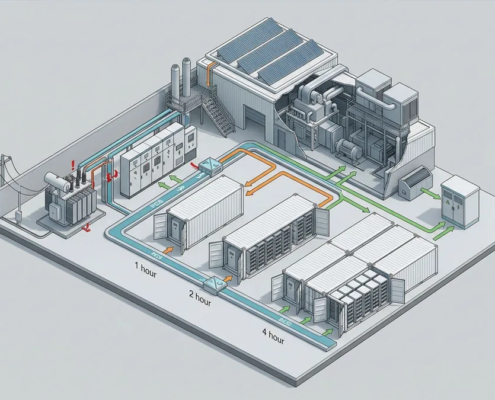 https://anengjipower.com/wp-content/uploads/2026/09/anengjipower-How-BESS-Power-and-Energy-Shape-Storage-Duration.webp
675
1000
Charging Station Engineer
https://anengjipower.com/wp-content/uploads/2025/09/anengji-dc-fast-charging-station-manufacturer-and-supplier-logo-white-1.png
Charging Station Engineer2026-09-23 09:06:532026-09-23 09:08:02BESS Duration Guide: How to Choose 1, 2 or 4 Hours
https://anengjipower.com/wp-content/uploads/2026/09/anengjipower-How-BESS-Power-and-Energy-Shape-Storage-Duration.webp
675
1000
Charging Station Engineer
https://anengjipower.com/wp-content/uploads/2025/09/anengji-dc-fast-charging-station-manufacturer-and-supplier-logo-white-1.png
Charging Station Engineer2026-09-23 09:06:532026-09-23 09:08:02BESS Duration Guide: How to Choose 1, 2 or 4 Hours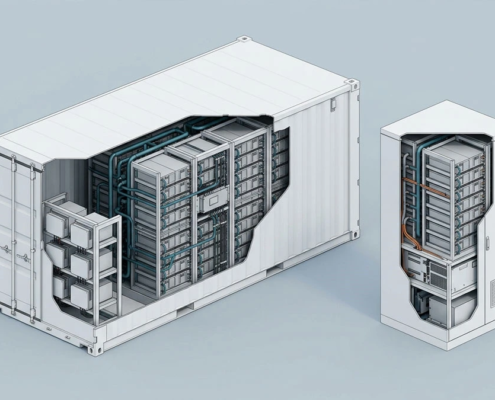 https://anengjipower.com/wp-content/uploads/2026/09/AnengJIPower-Cabinet-vs-Containerized-BESS-3D-Isometric-Structural-Cutaway.webp
675
1000
Charging Station Engineer
https://anengjipower.com/wp-content/uploads/2025/09/anengji-dc-fast-charging-station-manufacturer-and-supplier-logo-white-1.png
Charging Station Engineer2026-09-18 07:19:042026-09-18 07:19:38Cabinet vs Containerized BESS: How to Choose for Large C&I
https://anengjipower.com/wp-content/uploads/2026/09/AnengJIPower-Cabinet-vs-Containerized-BESS-3D-Isometric-Structural-Cutaway.webp
675
1000
Charging Station Engineer
https://anengjipower.com/wp-content/uploads/2025/09/anengji-dc-fast-charging-station-manufacturer-and-supplier-logo-white-1.png
Charging Station Engineer2026-09-18 07:19:042026-09-18 07:19:38Cabinet vs Containerized BESS: How to Choose for Large C&I


Leave a Reply
Want to join the discussion?Feel free to contribute!