
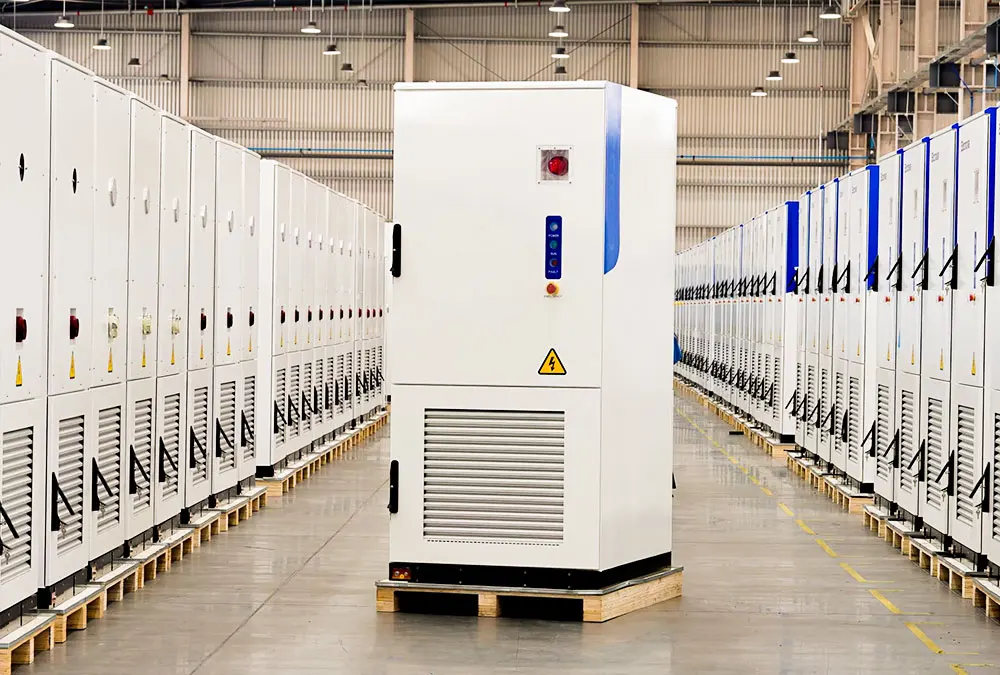
Introduction
A 15-minute spike of 120 kW at $25/kW costs $3,000 in a single month. Multiply that by twelve months, and lazy load peaks burn $36,000 a year. Morning presses start up, chillers roar, EV chargers plug in—and your meter locks in the highest draw. According to the IEA Global Energy Review 2026, utility and behind-the-meter battery storage keeps expanding rapidly as grids strain. A 261kWh battery storage cabinet steps in right there. It charges cheap off-peak power, then pushes power back during spikes.
Roof solar helps at noon, sure. Yet cloud cover or late shifts still hit your transformer hard. Research on commercial battery energy storage economics (ScienceDirect) shows peak shaving plus tariff shifting drives real savings. When timed right, a 261kWh commercial battery energy storage system cuts grid draw without slowing production.
Still, hardware numbers alone do not guarantee savings. PCS power limits, usable kWh, load shape, and utility rules decide everything. Below, we cover how 261kWh peak shaving works, how much power it delivers, and whether payback makes sense.
What You Will Learn in This Engineering Breakdown:
- The Mechanics: How an EMS caps grid import power fast.
- The Math: Turning 261kWh nominal capacity into real AC runtime and kW cuts.
- The ROI Reality: Checking tariffs, formulas, and limits before buying.
Why Peak Demand Matters for Commercial and Industrial Battery Energy Storage
Total kWh used matters less than when you pull it. On many commercial bills, demand charges make up 30% to 50% of monthly costs. Grids size lines and transformers for worst-case spikes, not quiet nights.
What Causes Peak Demand?
Spikes usually happen when ordinary machines overlap for 15 to 60 minutes:
- Production Startups: Presses, mills, and heaters energizing at shift change.
- Motors & Compressors: Air compressors and pumps pulling heavy starting current.
- Commercial HVAC: Chillers and rooftop units working hardest on hot afternoons.
- Cold Storage & Logistics: Refrigeration racks and conveyors running together.
- EV Fast Chargers: Multiple DC chargers firing while plant loads stay high.
~150 kW
~290 kW
~485 kW (Peak)
~180 kW
Illustrative Profile: A brief 485 kW overlap can set monthly demand billing if unshaved.
How Peak Demand Affects Electricity Bills
Utility bills group charges into distinct buckets, and rules differ sharply by region:
- Energy Charges: Paid per kWh consumed across the billing period.
- Demand Charges: Billed per kW on your highest 15- or 30-minute average draw. Many US utilities charge $15 to $35/kW monthly.
- Contracted Capacity & Network Charges (Europe): Across Europe, users often face contracted capacity limits and grid network fees. Review rules under EU Electricity Market Design and European Commission grid studies to verify local capacity charges.
- Time-of-Use (TOU) Tariffs: Higher prices during peak hours and lower rates off-peak. The ACER 2025 demand response monitoring report notes flexibility barriers and evolving price signals across Europe, while the IEA Electricity 2026 flexibility report highlights growing demand for flexible grid assets.
Buyer Reality Check: “Our rate is flat per kWh—should we still buy storage?”
Be careful here. In Reddit energy and solar discussions, operators often warn against storage when demand fees are zero and off-peak/peak spreads stay tiny. Without demand charges, wide TOU spreads, or transformer limits, payback can drag out.
When Does Peak Shaving Make Financial Sense?
Bigger batteries are not always smarter. Check five questions first: Do sharp peaks happen? How long do they last? Are they predictable? Does your tariff penalize peak kW or high TOU hours? Do charging costs and savings leave real margin?
| Facility Load Profile | Peak Shaving Suitability | Buyer Advantage & Selection Value |
|---|---|---|
| Daily predictable peaks (1–2 hrs) | Strong Fit to Evaluate | Repeatable monthly peak cuts help recover capex faster when demand rates are high. |
| Occasional short spikes (15–30 mins) | Check Peak Duration | Short duration fits easily inside 261kWh energy, provided fast response catches every spike. |
| All-day load near max power | May Need Larger System | Avoids running empty early; stepping up or adding solar keeps power steady longer. |
| No demand fee & weak TOU spread | Re-evaluate Economics | Prevents overspending unless grid capacity limits or backup needs justify the cost. |
How a 261kWh BESS Reduces Peak Demand: Behind-the-Meter Energy Storage
A 261kWh battery storage peak shaving solution connects on your side of the meter—known as behind the meter energy storage. Your utility meter only sees net grid flow after the battery adds or absorbs power.
Charging During Off-Peak Hours
During low-load hours or excess solar windows, the battery charges up. The Energy Management System (EMS) schedules charging around tariffs and load forecasts. It also respects State of Charge (SOC) limits and PCS power caps so charging never creates a new spike.
Discharging at Peak Demand
When plant draw crosses your set Grid Import Limit, the PCS discharges power into the local busbar. Grid import stays capped while factory machines keep running normally.
Note: Example assumes 100 kW discharge and steady 500 kW load to explain the principle, not a performance guarantee.
How the EMS Maintains a Power Limit
Holding a steady grid cap takes tight teamwork across three controls:
- Grid Monitoring: Sensors track incoming grid power continuously.
- Threshold Dispatch: When load passes the limit, the EMS tells the PCS to discharge.
- Load Drop & SOC Control: As load falls, discharge tapers down while SOC limits protect battery health.
- Subsystem Coordination: EMS sets dispatch targets, PCS converts DC/AC power, and BMS guards cell safety.
What Happens When Battery Energy Runs Low?
Battery energy is finite. Discharge can stop early if SOC hits its low limit, load exceeds PCS power, a peak lasts longer than planned, or heat triggers derating. When energy runs out, grid draw rises back toward full load unless non-critical loads are shed.
How Much Can a 261kWh System Deliver? Power, Capacity, and Peak Demand Reduction
Many buyers mix up kWh and kW. Capacity (kWh) is total stored energy; power (kW) is how fast energy flows at one moment.
Understanding kWh and kW
A 125kW 261kWh battery energy storage system has 261kWh nominal battery energy and a 125kW PCS rating. Usable AC energy is lower than nominal kWh, and discharge duration depends on both usable energy and output power.
Estimating Usable Energy and Runtime
Here is a clean baseline calculation using standard assumptions:
| Parameter | Assumed Value |
|---|---|
| Battery Nominal Capacity | 261 kWh |
| Depth of Discharge (DoD) | 90% |
| DC-to-AC Conversion Efficiency | 95% |
| PCS Rated Power | 125 kW |
Simplified Estimate: Actual runtime shifts with auxiliary loads, part-load efficiency, ambient temperature, cell aging, and EMS reserves.
Matching Battery Capacity to Peak Duration
| Peak Shaving Power | Duration | Required AC Energy | Fit & Practical Benefit for Users |
|---|---|---|---|
| 80 kW | 1 hour | 80 kWh | Energy margin remains: Leaves buffer for a second spike or backup reserve. |
| 100 kW | 2 hours | 200 kWh | Near usable limit (223.16 kWh): High daily utilization when peaks stay within two hours. |
| 125 kW | 2 hours | 250 kWh | Above baseline usable AC energy: Risk of late-window rebound; consider larger capacity. |
Also check charging power limits, continuous PCS ratings, and SOC buffers before locking in a design.
When Do You Need More Battery Capacity?
You may need more capacity when peaks run longer, multiple peaks hit daily with short recharge gaps, backup reserve is needed, or solar self-consumption shares the same battery. See our 261kWh system sizing guide below to compare capacity tiers.
How Much Can Peak Shaving Save? Calculating 261kWh Battery Storage ROI for Commercial Buildings
Studies on energy storage and grid flexibility (ScienceDirect) show value depends heavily on tariff structure and dispatch control. Always separate power savings from energy savings.
Reducing Demand-Related Costs
Shaving peak draw lowers billed maximum demand in months where peaks are cut. Lower kW demand reduces demand charges or capacity penalties.
Lowering Energy Costs with Load Shifting
Battery load shifting charges at low TOU rates and discharges at high TOU rates. It is not the same as peak shaving; they can overlap, but their savings come from different bill lines.
Estimating Annual Savings
ΔP = reduced billing demand (kW); Cd = demand charge rate per kW; N = billing months.
η = full round-trip efficiency; keep energy units consistent across all terms.
Important: Never double-count savings if peak shaving and TOU discharge happen during the same window.
What Affects the Payback Period?
Payback depends on battery and PCS price, installation and grid costs, local tariffs, battery aging, O&M, utilization, and financing cost.
Suppose a plant cuts 80 kW of billing demand for 12 months at $20/kW-month:
Plug in your actual 261kWh battery storage system price, EPC quote, and tariff rates rather than assuming a fixed payback year.
Where Can a 261kWh BESS Be Used? Industrial Battery Storage Applications
Compact cabinets fit tight sites where larger containers are impractical:
- Manufacturing Facilities: Supports 261kWh BESS for factory energy management during press, motor, and compressor peaks.
- Commercial Buildings: Smooths HVAC, elevator, and office peak loads without hurting comfort.
- Warehouses & Cold Storage: Handles refrigeration cycling and material-handling peaks.
- EV Charging Stations: Buffers simultaneous fast-charging demand on tight grid connections.
- Solar-Integrated Facilities: Stores surplus PV power and discharges during expensive peak periods.
| Capacity Option | Key Advantage | Benefit for Your Operation |
|---|---|---|
| 100kWh | Small footprint and light load profile | Fits tight spaces and small commercial sites with modest peak shaving needs. |
| 261kWh | Balanced capacity and power for C&I sites | Delivers longer runtime and stronger peak support than 100kWh in one cabinet. |
| 418kWh / 1MWh | Higher energy reserve and scalability | Handles longer peak windows, bigger loads, or heavy solar integration. |
What to Check Before Installing a BESS
Good engineering upfront prevents costly delays during commissioning.
Load Profile and Grid Capacity
Review 15- or 30-minute load data, max demand, peak duration, transformer rating, and grid export/import limits.
PCS, BMS and EMS Configuration
| System | Main Responsibility | Value to Buyer |
|---|---|---|
| PCS | Bidirectional AC/DC power conversion | Fast charge/discharge response to track load shifts. |
| BMS | Cell monitoring, protection, and safety | Protects battery life and prevents unsafe operating states. |
| EMS | Dispatch control, peak limits, and scheduling | Automates savings without manual daily switching. |
Battery Safety and Thermal Management
Most commercial systems use lithium iron phosphate battery storage (LFP). A 261kWh liquid cooled battery energy storage system helps keep cell temperatures even. Check temp sensors, electrical protection, thermal runaway controls, and fire safety design.
Grid Connection and Site Requirements
Plan grid connection rules, protection relays, cables, switchgear, pad space, service clearance, and local permits.
Future Expansion and Maintenance
Check multi-cabinet parallel support, unified EMS control, remote monitoring, and long-term service access.
Is a 261kWh System Right for Your Project?
When 261kWh Is a Good Fit
It fits well when peak power and duration match the cabinet, peaks repeat reliably, demand or TOU savings exist, and charging time and grid rules line up.
When You May Need a Larger System
Look bigger when peaks run long, recharge windows are too short between spikes, large backup loads are required, or power needs exceed one unit.
What Information Is Needed for a BESS Assessment?
Share these details so AnengJi can prepare an initial configuration review:
- Last 12 months of electricity bills
- 15-minute or 30-minute load profile data
- Transformer rated capacity
- Maximum demand
- Target peak-shaving power
- Planned operating mode
Frequently Asked Questions
1. How long can a 261kWh battery last?
At 90% DoD and 95% efficiency, usable AC energy is about 223.16 kWh—roughly 1.79 hours at 125 kW.
2. How much peak demand can a 261kWh BESS reduce?
It is bounded by PCS power output and available energy during the peak window.
3. Is 261kWh enough for a manufacturing facility?
Yes for smaller or moderate peaks; larger or continuous plants often need more capacity.
4. Can a 261kWh BESS work with solar panels?
Yes, it can store excess solar energy and discharge later during peak hours.
5. Can multiple 261kWh battery cabinets be connected together?
Yes, parallel setups under coordinated EMS control can expand capacity when supported by site design.
6. Does battery storage reduce demand charges?
It can if your tariff bills demand charges and the system shaves peak draw during metered intervals.
Making Peak Shaving Work with the Right BESS
Whether a 261kWh battery storage system cuts peak costs depends on PCS power, usable capacity, load curves, EMS control, and local tariffs.
Planning a commercial or industrial peak-shaving project? Contact AnengJi to discuss your load profile, power requirements, and 261kWh BESS configuration.

 https://anengjipower.com/wp-content/uploads/2026/06/epc-vs-turnkey-solar-project-bess.webp
675
1000
Charging Station Engineer
https://anengjipower.com/wp-content/uploads/2025/09/anengji-dc-fast-charging-station-manufacturer-and-supplier-logo-white-1.png
Charging Station Engineer2026-06-22 07:16:042026-06-24 07:13:17What Is the Difference Between EPC and Turnkey Contract Models in Energy Projects?
 https://anengjipower.com/wp-content/uploads/2026/06/anengji-commercial-solar-plus-storage-benefits-site.webp
675
1000
Charging Station Engineer
https://anengjipower.com/wp-content/uploads/2025/09/anengji-dc-fast-charging-station-manufacturer-and-supplier-logo-white-1.png
Charging Station Engineer2026-06-20 14:34:102026-06-20 14:37:43What Are the Top Benefits of Solar Battery Storage in Factories?
 https://anengjipower.com/wp-content/uploads/2026/06/modular-commercial-solar-battery-storage-cabinet.webp
675
1000
Charging Station Engineer
https://anengjipower.com/wp-content/uploads/2025/09/anengji-dc-fast-charging-station-manufacturer-and-supplier-logo-white-1.png
Charging Station Engineer2026-06-18 09:16:522026-07-03 03:05:13What Is Solar Battery Storage? Complete C&I Engineering Guide


Leave a Reply
Want to join the discussion?Feel free to contribute!