
Introduction
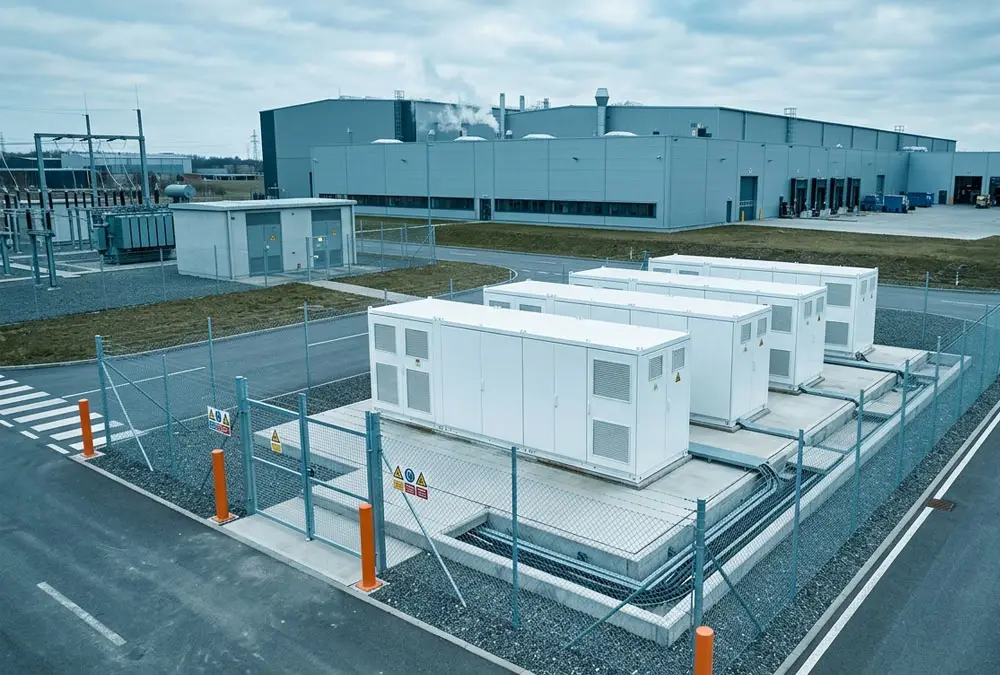
What is peak shaving? It is the deliberate reduction of the highest power a site draws from the grid during the interval that matters to its tariff or connection limit. A factory, shopping centre or EV-charging site can keep operating while a battery, controllable load or on-site generator supplies part of the demand above a defined threshold.
The definition is simple; the business decision is not. A project can discharge a battery every day and still fail to reduce the bill if the controller targets the wrong interval, the tariff does not reward a lower peak, or the battery runs out before the event ends. For a C&I buyer or EPC, the correct starting point is therefore the tariff and interval load profile—not a standard battery size.
Peak shaving in one sentence
Hold measured grid demand below an agreed limit by reducing, rescheduling or locally supplying the part of the site load that would otherwise create the peak.
This guide explains how peak shaving energy storage works, how to distinguish power from energy requirements, what changes between Europe and the United States, when a site is a good candidate and which data should be checked before requesting a BESS quotation.
What Is Peak Shaving in Practical Energy Management?
Peak shaving reshapes the top of a load curve. Assume a facility normally imports 700–800 kW but briefly rises to 1,050 kW when refrigeration, production equipment and vehicle charging overlap. If the site sets a 900 kW grid-import target, a local resource must cover the portion above 900 kW while the event lasts. The facility can continue drawing 1,050 kW internally, but the meter at the point of common coupling records no more than the controlled target.
The US Department of Energy Federal Energy Management Program distinguishes peak shaving from broader energy shifting in its “Battery Energy Storage Systems: Considerations for Implementation”. Pages 13–14 describe energy shifting as storing electricity for later use, while peak shaving is directed specifically at reducing peak demand, power fees and the capacity needed to serve highly variable loads.
Peak shaving is not the same as energy efficiency
Energy efficiency reduces the amount of energy needed to perform a task. Peak shaving reduces the maximum rate at which the site imports power. A high-efficiency motor may lower both kWh and kW, while a battery usually changes the grid-facing load shape and incurs charging, conversion and auxiliary losses. Buyers should evaluate the two measures separately, then combine them where the data supports both.
Why Electrical Peaks Matter to C&I Sites
Power and energy describe different problems
Power is the rate of energy transfer and is measured in kilowatts or megawatts. Energy is power accumulated over time and is measured in kilowatt-hours or megawatt-hours. The US Energy Information Administration’s “Energy Storage for Electricity Generation” makes the same distinction: power capacity describes the maximum output an ESS can supply, while energy capacity describes how much electricity it can store or discharge.
| Question | Power view | Energy view | Buyer consequence |
|---|---|---|---|
| What is measured? | kW or, under some tariffs, kVA | kWh or MWh | A monthly kWh total cannot reveal the peak power gap. |
| What does it determine? | How much of the peak can be covered at once | How long the system can sustain that coverage | Both PCS power and usable battery energy must match the event. |
| Typical error | Selecting inadequate discharge power | Selecting enough kW but too little usable kWh | The meter still records an unshaved maximum. |
The tariff decides whether the peak has monetary value
Some tariffs charge for maximum demand, contracted capacity, available capacity, a coincident system peak or an exceedance above an agreed limit. Others are dominated by volumetric energy charges. The DOE FEMP Utility Rate Glossary shows how US structures can include time-of-use demand charges, non-coincident monthly demand, demand ratchets and system-peak charges. Each responds to a different dispatch rule.
This is where many feasibility studies go wrong. If the expensive line item is a time-dependent kWh charge, load shifting may be the primary strategy. If the bill or connection agreement is driven by maximum kW or kVA, peak shaving may be relevant. A controller should never be configured from a generic tariff assumption.
A transient spike may not be a billable peak
A motor inrush lasting seconds can be important for protection, voltage drop and PCS overload capability, yet it may have little effect on a demand value averaged across a longer billing interval. Conversely, a lower but sustained process overlap can establish the maximum. Match the load data resolution and aggregation logic to the actual meter rule before deciding what the battery must control.
How Does Peak Shaving Work?
A peak can be reduced from either side of the meter equation: lower the site load, or supply part of that load locally so the grid does not see it. The best method depends on process flexibility, emissions rules, connection conditions, response time and the duration of the peak.
| Method | How it reduces the peak | Best fit | Buyer limitation |
|---|---|---|---|
| Load sequencing or curtailment | Delays or reduces non-critical loads | Flexible processes, HVAC, managed charging | Production, comfort or service constraints can exceed the energy saving. |
| Battery energy storage | Discharges behind the meter to cover demand above a target | Non-shiftable loads and repeatable peaks | Needs correct kW, usable kWh, forecast and recharge control. |
| On-site solar | Offsets grid import when generation overlaps the peak | Predictable daytime peaks | Cloud, season and timing can leave the maximum uncovered. |
| Dispatchable generation | Supplies local power during a peak | Sites with permitted generation and fuel strategy | Fuel, emissions, maintenance, noise and permitting must be evaluated. |
| Hybrid control | Coordinates flexible loads, PV and storage | Complex C&I sites with several controllable resources | Integration and acceptance testing become more demanding. |
For an inflexible factory, forcing production to move may create more cost than it saves. Peak shaving battery storage can cover the residual peak without stopping the process, but only after operationally flexible loads have been identified. Storage should not replace low-cost controls that already solve part of the problem.
How a Peak Shaving Battery Storage System Operates
A BESS for peak shaving is a closed-loop control system. The meter at the point of common coupling reports grid import. The energy management system compares measured and forecast demand with a target. The power conversion system then charges or discharges the battery within limits communicated by the battery management system.
- Prepare: charge from the permitted grid window or available on-site generation while preserving network and battery limits.
- Monitor: measure grid import, site load, PV output, SoC and equipment availability.
- Predict: evaluate whether the developing load will exceed the tariff or connection threshold for the relevant interval.
- Discharge: cover only the part of demand needed to hold grid import below the target.
- Recover: recharge at a controlled rate without creating another peak or compromising the next event.
Fraunhofer IISB’s “Load Shifting and Peak Shaving” describes this control logic using AC-grid power measurements, battery power and SoC, with forecasting functions producing the charge/discharge setpoint. It also states that storage power and capacity should be dimensioned from the grid load profile.
Behind-the-meter placement is common because the system acts directly on the facility’s metered import. For a broader explanation of the electrical boundary and ownership model, see the verified guide to behind-the-meter energy storage.
Peak Shaving vs Load Shifting: A Short Clarification
Peak shaving lowers the height of the measured power peak. Load shifting moves energy use or supply from one time period to another. The first usually targets a demand, capacity or connection constraint; the second usually targets time-dependent kWh prices or an operating schedule. Load shifting may reduce a peak, but it can also move the peak into a different interval.
A battery can perform both services, but they compete for the same power, usable energy and SoC. The EMS must decide which service has priority. If price-based dispatch empties the battery before an uncertain site peak, the lower-value action can prevent the higher-value one.
How to Calculate Peak Shaving Power and Energy
Peak-shaving sizing starts with a target grid-import level. Required PCS power is the largest difference between actual site demand and that target. Required delivered energy is the area above the threshold across the entire event.
Screening formulas
Required PCS power = maximum (site load − grid target)
Required AC discharge energy = Σ [(site load − grid target) × interval duration]
Illustrative factory example
Assumption, not a customer case: a factory sets a 900 kW grid-import target. During one event, demand reaches 950 kW for 15 minutes, 1,100 kW for 30 minutes and 1,000 kW for 45 minutes.
- Maximum power gap: 1,100 − 900 = 200 kW.
- Energy above target: (50 × 0.25) + (200 × 0.5) + (100 × 0.75).
- Required AC energy delivered during the event: 187.5 kWh.
- Illustrative nameplate screening at 90% usable fraction and 92% discharge-path efficiency: 187.5 ÷ (0.90 × 0.92) ≈ 226 kWh, before project-specific margins.
The final design still needs auxiliary load, temperature, degradation, minimum reserve SoC, availability, PCS overload capability, battery warranty and the required end-of-life performance. Dirty interval data can distort every result: duplicated timestamps create false peaks, while missing records can hide the longest event. Normalize time zones and daylight-saving transitions, document estimated values and test several representative peak days before selecting equipment.
For a complete methodology, continue to the industrial BESS sizing calculation guide. The present page explains the operating objective; it should not replace detailed electrical and financial design.
Europe vs the United States: Tariff Qualification Comes First
Europe is not one tariff market. ACER’s Network Tariffs overview explains that national regulatory authorities approve transmission and distribution tariff methodologies and that national specificities remain relevant. Its 2025 report, “Electricity Network Tariff Methodologies in Europe,” documents differing national structures and ongoing reforms. A German, French, Dutch or British C&I project therefore needs its own current tariff and connection terms.
| Qualification question | Europe-first check | United States check | Why it matters |
|---|---|---|---|
| What creates the cost? | Supply contract, network tariff, contracted power or capacity exposure | Utility demand charge, ratchet, TOU demand or coincident peak | The dispatch must change the billed determinant. |
| Which interval applies? | Verify supplier, DSO and metering rules | Verify utility rate schedule and meter interval | The interval defines which load event is a peak. |
| Is the maximum monthly, annual or ratcheted? | Check the applicable national/network method and contract period | Check monthly, seasonal, look-back and coincident rules | One failed event can have different financial consequences. |
| Can storage charge or export freely? | Verify connection, metering and network-charge treatment | Verify interconnection and tariff restrictions | An assumed recharge/export route can invalidate the model. |
Do not write “European peak shaving saves X%” or apply a US demand-charge example to an EU site. Record the jurisdiction, network area, tariff name, customer class, effective date and applicable interval for every commercial model.
Use the T-A-P-E Test Before Requesting a BESS Quote
The following screening framework prevents a catalogue-led decision:
| Step | Evidence required | Go signal | Stop or revise signal |
|---|---|---|---|
| T — Tariff | Bills, tariff, contract, connection limit | A measurable demand/capacity exposure can be changed | No material avoidable peak signal |
| A — Actual load | Representative interval data and operating calendar | Peaks are identifiable, repeatable or forecastable | Flat profile, unreliable data or one-off anomaly |
| P — Power & energy | Peak gap, energy envelope, recharge window | A technically realistic dispatch window exists | Peak is too long, too frequent or exceeds site/equipment limits |
| E — Execution | EMS logic, SoC reserve, warranty, acceptance test | Control and verification responsibilities are defined | Savings depend on undefined software behaviour or unavailable data |
EMS Control Errors That Can Erase Peak Reduction
Discharging too early
A simple threshold controller may react to the first high-load period and exhaust usable energy before the true maximum arrives. Forecasting, production schedules and a minimum peak-shaving reserve can reduce that risk. The reserve should be an explicit EMS requirement, not an assumption hidden in a financial spreadsheet.
Responding after the billing interval is already established
The controller needs the same interval logic as the tariff meter. Communication delay, time drift or a mismatched rolling/fixed-window calculation can make a dashboard appear successful while the revenue meter records a higher maximum. Commissioning should compare EMS data with the official metering basis.
Creating a recharge peak
After the event, uncontrolled charging adds to the underlying site load and can establish another peak. Cap recharge power, forecast the remaining operating day and preserve enough time for the next expected event. The simulation must cover the complete charge-discharge-recovery cycle.
Assigning the same battery to competing services
Solar self-consumption, energy arbitrage, backup reserve and peak shaving can all request the same SoC. Define a hierarchy, permitted operating window and annual throughput before procurement. A value stack is credible only when services are co-optimized rather than added together as if each had exclusive use of the battery.
How to Evaluate Peak Shaving Economics Without Generic ROI Claims
The basic avoided-demand calculation is straightforward. The full business case is not.
Gross avoided peak charge = verified peak reduction × applicable demand/capacity rate
Net value = gross avoided charges + other verified value streams − charging energy − losses − degradation/throughput cost − O&M − financing − taxes and fees
A tariff may include ratchets, minimum demand, multiple time bands or charges that distributed energy cannot offset. The load can also grow, shift seasonally or change after new equipment is installed. Use a project-specific dispatch model rather than a universal saving percentage.
Measurement and verification should be agreed before the system is ordered. Define the baseline, qualifying intervals, exclusions for production changes, meter source and reporting period. Record the grid-import maximum with and without the simulated or measured BESS dispatch. If the tariff uses a ratchet or coincident peak, reflect that rule directly.
Peak shaving may also share the asset with other revenue or saving mechanisms. The article how a BESS can create value in Europe provides the broader value-stream context; each additional service still needs its own eligibility, market-access and dispatch assumptions.
Where C&I Peak Shaving Is Commonly Evaluated
- Manufacturing: overlapping production lines, compressors, furnaces, welders or batch starts can create a sustained demand step. Production constraints decide whether load control or BESS is more practical.
- Shopping centres and commercial buildings: HVAC, refrigeration, lifts and EV charging can coincide. Occupant comfort and opening hours limit curtailment.
- Cold storage and food processing: thermal inertia can offer flexibility, but temperature and food-safety limits must govern dispatch.
- Fleet and public EV charging: several chargers can exceed a site import limit. Managed charging should be evaluated before storage covers the remaining coincident demand.
- Solar-plus-storage sites: solar may offset daytime demand, while the battery manages cloud events or peaks outside the solar window. PV production must be modelled at the same timestamps as site load.
Peak shaving is a poor fit when the relevant tariff has no avoidable demand/capacity component, the load is already flat, the peak is longer than the economically available storage duration, or operational and connection rules prevent the proposed charging strategy. A “no-go” conclusion is a useful engineering result—it prevents an unsuitable battery purchase.
What Data Should You Send an EPC or BESS Supplier?
A quote based only on annual kWh, transformer size or one electricity bill is not a defensible peak-shaving design. Provide:
- 12–24 months of electricity bills where available;
- at least 12 representative months of interval meter data;
- the current tariff, supply contract and connection agreement;
- the billing interval and definitions of demand, capacity and ratchets;
- single-line diagram, transformer rating, protection and import/export limits;
- production schedule and flexible-load restrictions;
- PV, generator, EV-charging and planned load-growth profiles;
- backup/resilience reserve requirements;
- candidate BESS usable-energy, efficiency, auxiliary-load and warranty documents; and
- the proposed performance baseline and acceptance-test method.
When comparing system duration, do not assume that every C&I peak needs a two-hour or four-hour battery. Use the load envelope and recharge window, then consult the BESS duration decision guide for the trade-offs between power-led and energy-led applications.
Frequently Asked Questions
What is peak shaving in simple terms?
It means keeping grid demand below a chosen limit during the intervals that would otherwise create a costly or constrained peak. The site can reduce loads or supply part of them locally with a battery or generator.
Does peak shaving reduce total electricity consumption?
Not necessarily. It primarily changes maximum grid power. Battery charging and conversion also introduce losses, so peak shaving should not be reported as energy efficiency unless total energy use is independently reduced.
Why are both kW and kWh needed?
kW determines how much of the peak the PCS can cover at once. Usable kWh determines how long it can maintain that reduction. Either constraint can cause the meter to record a higher peak.
Can solar PV perform peak shaving without a battery?
Yes, when PV output reliably overlaps the site peak. It cannot guarantee coverage during clouds, seasonal production changes or peaks outside daylight hours. Model time-aligned PV and load data before assigning a firm reduction.
Can a battery create a new peak while charging?
Yes. Grid charging adds to facility demand. The EMS should limit charging power, account for the underlying load forecast and preserve enough time and SoC for the next event.
How much can peak shaving save?
There is no reliable universal percentage. Savings depend on the applicable tariff, verified peak reduction, peak frequency, battery losses, degradation/throughput, operating constraints, financing and other value streams. Use the actual bill and interval data.
Is peak shaving suitable for every factory or commercial building?
No. It is most relevant where a controllable peak affects cost or grid capacity and the site has a feasible way to reduce or locally supply that peak. Flat loads and weak tariff signals may not justify storage.

Turn the Definition into a Site-Specific Decision
Peak shaving is valuable when it changes a real billing determinant or connection constraint. The correct design follows the sequence used throughout this guide: verify the tariff, clean the actual load data, calculate both the power gap and energy envelope, then specify EMS execution and measurement requirements.
That process may lead to battery storage, flexible-load control, solar coordination or a hybrid solution. It may also show that peak shaving is not the right investment. Either conclusion is more useful than selecting equipment from annual consumption alone.
Have a tariff and interval load file?
Request a preliminary review of the billable peak, control objective and data needed for BESS sizing.
Related Articles
 https://anengjipower.com/wp-content/uploads/2026/06/epc-vs-turnkey-solar-project-bess.webp
675
1000
Charging Station Engineer
https://anengjipower.com/wp-content/uploads/2025/09/anengji-dc-fast-charging-station-manufacturer-and-supplier-logo-white-1.png
Charging Station Engineer2026-06-22 07:16:042026-06-24 07:13:17What Is the Difference Between EPC and Turnkey Contract Models in Energy Projects?
https://anengjipower.com/wp-content/uploads/2026/06/epc-vs-turnkey-solar-project-bess.webp
675
1000
Charging Station Engineer
https://anengjipower.com/wp-content/uploads/2025/09/anengji-dc-fast-charging-station-manufacturer-and-supplier-logo-white-1.png
Charging Station Engineer2026-06-22 07:16:042026-06-24 07:13:17What Is the Difference Between EPC and Turnkey Contract Models in Energy Projects? https://anengjipower.com/wp-content/uploads/2026/06/anengji-commercial-solar-plus-storage-benefits-site.webp
675
1000
Charging Station Engineer
https://anengjipower.com/wp-content/uploads/2025/09/anengji-dc-fast-charging-station-manufacturer-and-supplier-logo-white-1.png
Charging Station Engineer2026-06-20 14:34:102026-06-20 14:37:43What Are the Top Benefits of Solar Battery Storage in Factories?
https://anengjipower.com/wp-content/uploads/2026/06/anengji-commercial-solar-plus-storage-benefits-site.webp
675
1000
Charging Station Engineer
https://anengjipower.com/wp-content/uploads/2025/09/anengji-dc-fast-charging-station-manufacturer-and-supplier-logo-white-1.png
Charging Station Engineer2026-06-20 14:34:102026-06-20 14:37:43What Are the Top Benefits of Solar Battery Storage in Factories? https://anengjipower.com/wp-content/uploads/2026/06/modular-commercial-solar-battery-storage-cabinet.webp
675
1000
Charging Station Engineer
https://anengjipower.com/wp-content/uploads/2025/09/anengji-dc-fast-charging-station-manufacturer-and-supplier-logo-white-1.png
Charging Station Engineer2026-06-18 09:16:522026-07-03 03:05:13What Is Solar Battery Storage? Complete C&I Engineering Guide
https://anengjipower.com/wp-content/uploads/2026/06/modular-commercial-solar-battery-storage-cabinet.webp
675
1000
Charging Station Engineer
https://anengjipower.com/wp-content/uploads/2025/09/anengji-dc-fast-charging-station-manufacturer-and-supplier-logo-white-1.png
Charging Station Engineer2026-06-18 09:16:522026-07-03 03:05:13What Is Solar Battery Storage? Complete C&I Engineering Guide

Leave a Reply
Want to join the discussion?Feel free to contribute!