
Introduction
A 1 MWh label is not enough to approve an energy storage container. Two quotations can show the same nameplate energy while offering different continuous power, usable state-of-charge windows, auxiliary consumption, end-of-life capacity, grid functions and site scope. If these differences remain hidden until detailed design, the apparent low-cost bid can create a transformer mismatch, insufficient backup runtime, a rejected grid application or an expensive change order.
The compliance burden also reaches beyond a battery datasheet. Article 12 of the EU Batteries Regulation requires technical documentation for stationary battery energy storage systems to include evidence addressing the applicable safety parameters in Annex V and an assessment of hazards not covered there. The requirement is stated in the consolidated text of Regulation (EU) 2023/1542, Article 12. For a European owner or EPC, the practical question is therefore not simply “Is the container compliant?” It is “Which document proves each requirement for the exact model and configuration we intend to install?”
Decision outcome: this guide shows how to translate a 1 MWh offer into deliverable AC energy, verify the electrical and safety boundary, compare bids on the same basis and prepare a defensible FAT/SAT plan. It uses a 500 kW/1044 kWh, 10 ft all-in-one system as a configuration example—not as a universal design or performance guarantee.
What a 1 MWh Energy Storage Container Can Actually Deliver
Separate energy, power and duration before comparing bids
Energy capacity, expressed in kilowatt-hours or megawatt-hours, describes how much energy the battery can hold under a defined test condition. Power, expressed in kilowatts or megawatts, describes how quickly the PCS can charge or discharge. Duration is the ratio between the two, but it is only a first-pass value.
Nominal duration = nominal battery energy ÷ rated discharge power
For the reference configuration: 1,044 kWh ÷ 500 kW = 2.088 hours.
That result means the battery-to-PCS nameplate ratio is approximately 2.09 hours. It does not mean the site will receive 500 kW for exactly 2.09 hours. A buyer still needs the usable SoC window, discharge cut-off, PCS efficiency curve, auxiliary consumption, ambient-temperature limits, degradation state and overload restrictions. This distinction matters when a factory expects the BESS to carry a critical production line rather than merely shave a short demand peak.
| Load level | Nameplate-only calculation | What the buyer must still verify |
|---|---|---|
| 500 kW | 1044 ÷ 500 = 2.09 h | Whether 500 kW is continuous at site temperature and SoC limits |
| 350 kW | 1044 ÷ 350 = 2.98 h | Motor starts, power factor, load steps and backup-port limit |
| 250 kW | 1044 ÷ 250 = 4.18 h | Auxiliary load and whether the PCS remains efficient at partial load |
Calculate usable AC energy, not only nameplate energy
A more useful planning relationship is:
Deliverable AC energy ≈ nominal DC energy × usable SoC fraction × retained capacity × one-way conversion efficiency − discharge-period auxiliary energy
Consider an illustrative planning case—not a product claim—in which the usable SoC fraction is 95%, retained capacity at the selected planning point is 90%, and one-way conversion efficiency is 96%. The calculated AC energy before subtracting cooling, controls and other auxiliaries would be approximately 857 kWh: 1044 × 0.95 × 0.90 × 0.96. That represents about 1.71 hours at 500 kW, 2.45 hours at 350 kW or 3.43 hours at 250 kW before auxiliary energy is deducted.
The value of this example is not the assumed percentages; those must come from the supplier’s guaranteed performance schedule. The value is the method. It exposes which inputs are missing and prevents an owner from converting gross DC nameplate capacity directly into a contractual backup promise.
Inside the 10 ft 500 kW/1044 kWh Reference Configuration
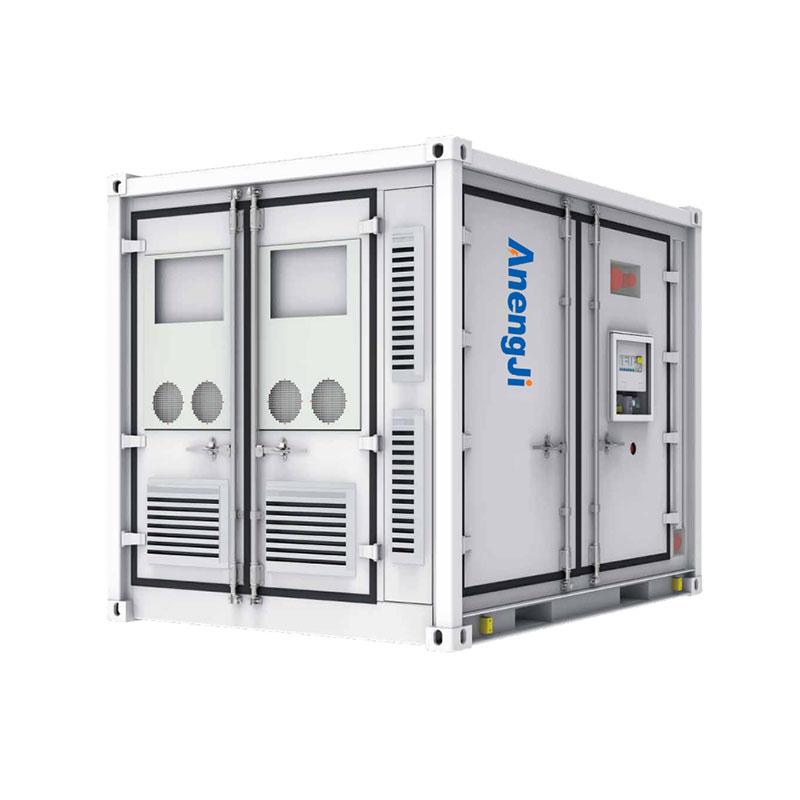
Reference 1 MWh-class all-in-one container. Project-specific drawings and issued-for-construction documents take precedence over marketing images.
The published 1MWh containerized energy storage system presents a 10 ft configuration with 1044 kWh of LFP battery energy, 500 kW rated output, a 400 V AC interface and integrated provisions for grid-connected, off-grid, photovoltaic and diesel-generator operation. Its listed internal functions include battery packs, high-voltage control, PCS, thermal management, monitoring, gas/smoke/temperature detection and fire-protection elements.
This compact integration can reduce field wiring and interface risk, but it does not make the container a complete power plant. A project may still require a transformer, medium-voltage switchgear, protection relays, revenue metering, AC and communication cables, earthing, concrete foundations, drainage, bollards, site lighting, fire-service access, network studies and plant-level control. The EPC should create a responsibility matrix that assigns every interface to the supplier, EPC, owner, utility or specialist contractor.
| Datasheet item | Reference value | Procurement question |
|---|---|---|
| Battery energy | 1044 kWh | Gross DC, usable DC or guaranteed AC energy? |
| Rated output | 500 kW | Continuous over which temperature, voltage and SoC range? |
| AC interface | 400 V, 50/60 Hz | Who supplies the transformer and grid protection? |
| Transfer time | Less than 20 ms, supplier-stated | Is the complete critical-load path tested, not only the STS device? |
| Environmental envelope | IP54, C4 with C5 option, temperature and altitude derating stated | Are test reports and coating systems valid for the delivered enclosure? |
Check the Electrical Interface Before Comparing Container Prices
A 400 V output does not eliminate site engineering
At 500 kW and unity power factor, the approximate three-phase current at 400 V is 722 A, calculated as P ÷ (√3 × V). Real equipment selection must use apparent power, power factor, overload duty, harmonic current, ambient correction and the manufacturer’s terminal ratings. A quotation that includes an 800 A port is not automatically proof that every cable, breaker and busbar in the site path is correctly coordinated.
The EPC should request the single-line diagram, protection philosophy, short-circuit contribution, earthing arrangement, harmonic limits, reactive-power capability, anti-islanding method and communication point list. For a medium-voltage connection, the 400 V container normally feeds a step-up transformer and MV switchgear. Transformer impedance affects fault current and voltage performance; it is a design input, not a procurement afterthought.
Verify the off-grid and backup boundary
A factory asking for seamless backup usually has mixed loads. PLCs and controls may tolerate a short transfer interval, while large motors, compressors or transformer inrush can exceed the PCS transient capability. The reference datasheet recommends a maximum backup load of 350 kW under a stated power-factor assumption and calls for soft starting or supplier consultation for motors and impact loads. That is exactly the kind of limitation that belongs in the design basis and acceptance test.
The solution is to classify loads by criticality, kW, kVA, starting current, restart sequence and allowable interruption. The EMS can then shed non-essential loads and sequence restarts rather than attempting to energise the entire facility at once. For PV–battery–diesel microgrids, document which controller owns voltage and frequency, how the generator is synchronised, its minimum loading limit, and what happens when PV output changes while islanded.
Match the 1 MWh Container to the Operating Duty
| Application | Typical buyer pain point | Engineering response |
|---|---|---|
| Factory peak shaving | A short production peak sets the monthly capacity charge. | Use interval-meter data to size PCS power and energy separately; confirm recharge time before the next peak. |
| Shopping centre or commercial park | Space, public access, noise and fire review constrain placement. | Complete acoustic, access, separation, drainage and emergency-response reviews before freezing the layout. |
| Solar self-consumption | Surplus PV is curtailed or exported at low value. | Model timestamped PV and load data, export limits and seasonal state-of-charge requirements. |
| Critical-load backup | Nameplate energy is mistaken for guaranteed runtime. | Specify AC energy at the delivery point, reserve SoC, load steps, EOL condition and transfer test. |
| PV–diesel microgrid | Uncoordinated controls cause generator hunting or unstable island operation. | Define the grid-forming source, dispatch hierarchy, generator limits and staged load restoration. |
| EPC or power-station package | Interfaces are discovered after award and become variations. | Issue an interface register, compliance matrix, data schedule and FAT/SAT protocol with the RFQ. |
If container footprint is still open, review the separate 10 ft, 20 ft and 40 ft BESS comparison. A compact enclosure can help on constrained C&I sites, but transport mass, service clearance, replacement access and heat rejection must be checked against the actual location.
European Compliance: Ask for Evidence, Not a Logo List
Start with the exact model and intended use
The certificate holder, model number, hardware revision, cell type, PCS type and software version should match the offered configuration. If a container is modified for a different PCS, fire system, rack arrangement or market, ask the supplier to explain whether the existing report still applies. “Designed to” or “compliant with” is not the same as a third-party certificate, and neither automatically proves acceptance by the local authority.
At system level, IEC 62933-5-2:2025 addresses safety aspects of grid-integrated electrochemical energy storage systems across the BESS life cycle and focuses on hazards arising from interactions between subsystems. Component-oriented standards can still be relevant, but a list containing IEC 62619, IEC 63056 or IEC 62477-1 does not by itself answer whether the assembled system, its installation and its intended operating modes satisfy the project requirements.
Grid connection remains country- and DSO-specific
Europe is not one connection regime. Voltage level, export capability, maximum apparent power and operating mode influence the applicable technical rules and evidence. In Germany, VDE FNN states that its application rules define requirements for connecting and operating energy storage, including the relevant low-voltage and medium-voltage frameworks; see the official VDE FNN energy-storage connection overview. VDE-AR-N 4105 was updated in 2026 for low-voltage generating facilities and storage-related functions, while medium-voltage projects follow a different technical route.
Do not write “EN 50549 compliant” in the procurement schedule and assume the grid work is finished. Ask the responsible DSO which application form, equipment certificate, simulation model, protection settings, export-control evidence and commissioning witness are required. The UK should be treated separately from EU-27; its connection process and engineering recommendations are not interchangeable with German or other EU member-state rules.
Buyer safeguard: include a compliance matrix in the contract with five columns:
- Requirement or claimed standard;
- Required certificate, report or calculation;
- Exact model and revision covered;
- Party responsible for approval;
- Open deviation and closure date.
UL 9540A Is a Test Method, Not a Universal BESS Certificate
A quotation may list UL 9540A alongside product certifications. That wording needs correction. UL Solutions describes UL 9540A as the test method for evaluating thermal-runaway fire propagation in battery energy storage systems. Testing can occur at cell, module, unit and installation levels, depending on the edition and project need. The useful procurement question is therefore: which level was tested, using which representative configuration, and is the delivered design within that report’s scope?
For the United States, installation decisions also interact with UL 9540 system requirements, the adopted fire and electrical codes, and the authority having jurisdiction. NFPA 855 is the standard for installation of stationary energy storage systems and addresses hazard mitigation. A UL 9540A report can inform separation and fire-protection decisions, but it should not be presented as a substitute for complete installation approval. For a European project, it may provide valuable fire-behaviour evidence while local product, building, environmental and fire-service requirements still govern acceptance.
Turn Every Datasheet Claim into a Verifiable Evidence Item
The most productive supplier meeting is not a tour through marketing slides. It is a line-by-line review of claims, evidence and project consequences. Use the following structure during technical clarification:
| Supplier claim | Evidence to request | Why it changes the project |
|---|---|---|
| 1044 kWh capacity | Energy definition, test temperature, SoC limits and AC guarantee | Determines runtime and contracted performance |
| At least 8,000 cycles | DoD, C-rate, temperature, EOL threshold and test method | Controls lifecycle model and augmentation reserve |
| Liquid cooling | Thermal design, coolant specification, alarms and service procedure | Affects availability, maintenance and cold-weather operation |
| IP54 and C4/C5 option | Test report and coating system linked to the enclosure revision | Influences siting, corrosion risk and maintenance intervals |
| Less than 20 ms transfer | STS data, control sequence and integrated-load test protocol | Determines whether sensitive loads ride through an outage |
| Fire suppression provided | Detection logic, cause-and-effect matrix, test scope and local approval path | Affects layout, emergency response and permit acceptance |
The same principle applies to warranty language. Separate product warranty, capacity-retention guarantee, availability guarantee and service response. Identify exclusions for temperature, cycling, communications, third-party control, storage before commissioning and missed preventive maintenance. A headline cycle count is not a substitute for a warranted energy-throughput schedule.
Compare 1 MWh Container Quotations on the Same Basis
Before ranking price, classify each offer as a DC battery block, an AC-integrated container or an installed project. A low €/kWh value can exclude the PCS, transformer, controls, freight, site work and commissioning. The comparison sheet should normalize at least the following:
- Energy basis: initial nominal DC, initial usable DC, guaranteed AC and end-of-life AC energy.
- Power basis: continuous kW/kVA, overload duration, power factor and temperature derating.
- Efficiency basis: PCS efficiency, system round-trip efficiency, auxiliary treatment and test conditions.
- Equipment boundary: battery, PCS, BMS, EMS, HVAC, fire system, transformer, switchgear and plant controller.
- Delivery boundary: Incoterm, dangerous-goods documentation, unloading, crane, installation and storage conditions.
- Services: design review, grid models, FAT, SAT, commissioning, operator training, remote monitoring and spare parts.
- Commercial protection: schedule, performance liquidated damages, defect correction, warranty security and exclusions.
If the project needs a broader engineering package, the battery energy storage EPC solution explains how container selection connects to site design, installation and commissioning. The product quote and EPC quote should use the same responsibility matrix so that neither party assumes the other is supplying a critical interface.
Build FAT and SAT Around the Contractual Duty
Factory Acceptance Testing should demonstrate more than power-on status. The agreed scope may include document review, component traceability, insulation and protective-circuit checks, control power failure response, alarms, emergency stop, communication mapping, charge/discharge operation, thermal-management logic and fire-system cause-and-effect simulation. Capacity or efficiency testing needs a defined boundary, meter class, initial SoC, temperature window, stabilisation period and correction method.
Site Acceptance Testing confirms the installed system and its interfaces. That can include phase rotation, earthing, protection injection, utility/plant-controller communications, charge/discharge commands, export limitation, meter reconciliation, load shedding, transfer behaviour, diesel coordination and recovery after a trip. A factory demonstration of an isolated STS does not prove that a real production line will transfer successfully; the site test must reflect the approved critical-load sequence and safety constraints.
Minimum project inputs for a preliminary review
- 15-minute or finer load data and tariff structure;
- PV profile, export limit and connection voltage;
- Critical-load kW/kVA, motor list and required runtime;
- Existing single-line diagram and protection concept;
- Site temperature, altitude, corrosion category and space constraints;
- Target operating modes and applicable DSO requirements.
When a 500 kW/1044 kWh Container Is a Credible Candidate
The reference configuration can be a credible starting point where a project needs approximately two hours of nominal battery-to-PCS duration, a compact 10 ft footprint, a 400 V interface and coordinated grid, PV, diesel or backup functions. It may suit a factory with a measurable two-hour demand window, a commercial microgrid with prioritised loads, or a site that needs a modular alternative to a purpose-built battery room.
It should not be selected from energy capacity alone. A site needing four hours at full 500 kW output requires more than 1 MWh of nameplate energy. A plant with high motor inrush may need a different PCS or restart strategy. A medium-voltage project needs transformer and protection engineering. A noise-sensitive site may find an 80 dB datasheet limit unsuitable without acoustic treatment. A hot or high-altitude location must account for the supplier’s derating envelope. These are not minor accessories; they decide whether the system performs its intended duty.
The strongest procurement sequence is therefore: define the operating duty, calculate deliverable AC energy, confirm the grid and load interfaces, close the compliance evidence matrix, normalize the commercial scope, and make FAT/SAT acceptance criteria contractual. Only then should the buyer compare the final price.
Frequently Asked Questions
Is a 1 MWh energy storage container the same as a 1 MW BESS?
No. MWh measures stored energy; MW measures charge or discharge power. A 500 kW/1 MWh system has about a two-hour nominal ratio, while a 1 MW/1 MWh system has about a one-hour nominal ratio. Actual runtime depends on usable energy, efficiency, auxiliaries and operating conditions.
How long can a 500 kW/1 MWh BESS support a factory?
The simple nameplate result is approximately two hours at 500 kW. Contractual runtime must instead use guaranteed AC energy at the relevant life stage and temperature, then account for the real load profile, power factor, motor starts and auxiliary consumption.
What is normally excluded from a container quotation?
Potential exclusions include transformer, MV switchgear, protection, revenue metering, external cabling, civil works, earthing, communications infrastructure, crane services, grid studies, permits and site testing. The only reliable answer is the project-specific scope and responsibility matrix.
Which documents should a European EPC request?
Request model-specific declarations, certificates and test reports; technical documentation relevant to the EU Batteries Regulation; safety and risk assessments; grid-connection evidence; single-line diagrams; protection data; fire-system documentation; transport documentation; manuals; warranty schedules; and FAT/SAT procedures. The exact package depends on the destination country, DSO, voltage level, permitting authority and insurer.
Does UL 9540A mean the complete system is certified?
No. UL 9540A is a thermal-runaway fire-propagation test method. Buyers must confirm the test level, edition, sample configuration and report scope. Complete product listing and installation approval are separate questions.
Can a 1 MWh container work with PV and a diesel generator?
Yes, if the hardware and control architecture support the required interfaces. The design must define grid-forming responsibility, generator start/stop logic, minimum generator loading, PV curtailment, state-of-charge reserves, load shedding and transition behaviour.
What should be tested during FAT and SAT?
Testing should reflect the contracted duty and risk. Typical items include documentation, traceability, electrical safety, protection, communications, charging/discharging, thermal controls, alarm and emergency logic, fire-system interfaces, grid controls, backup transfer, load sequencing and performance at an agreed measurement boundary.
Convert the Datasheet into a Project Specification
Share the load profile, single-line diagram, grid voltage, operating modes and site conditions for a preliminary configuration discussion.
Related Articles
 https://anengjipower.com/wp-content/uploads/2026/06/epc-vs-turnkey-solar-project-bess.webp
675
1000
Charging Station Engineer
https://anengjipower.com/wp-content/uploads/2025/09/anengji-dc-fast-charging-station-manufacturer-and-supplier-logo-white-1.png
Charging Station Engineer2026-06-22 07:16:042026-06-24 07:13:17What Is the Difference Between EPC and Turnkey Contract Models in Energy Projects?
https://anengjipower.com/wp-content/uploads/2026/06/epc-vs-turnkey-solar-project-bess.webp
675
1000
Charging Station Engineer
https://anengjipower.com/wp-content/uploads/2025/09/anengji-dc-fast-charging-station-manufacturer-and-supplier-logo-white-1.png
Charging Station Engineer2026-06-22 07:16:042026-06-24 07:13:17What Is the Difference Between EPC and Turnkey Contract Models in Energy Projects? https://anengjipower.com/wp-content/uploads/2026/06/anengji-commercial-solar-plus-storage-benefits-site.webp
675
1000
Charging Station Engineer
https://anengjipower.com/wp-content/uploads/2025/09/anengji-dc-fast-charging-station-manufacturer-and-supplier-logo-white-1.png
Charging Station Engineer2026-06-20 14:34:102026-06-20 14:37:43What Are the Top Benefits of Solar Battery Storage in Factories?
https://anengjipower.com/wp-content/uploads/2026/06/anengji-commercial-solar-plus-storage-benefits-site.webp
675
1000
Charging Station Engineer
https://anengjipower.com/wp-content/uploads/2025/09/anengji-dc-fast-charging-station-manufacturer-and-supplier-logo-white-1.png
Charging Station Engineer2026-06-20 14:34:102026-06-20 14:37:43What Are the Top Benefits of Solar Battery Storage in Factories?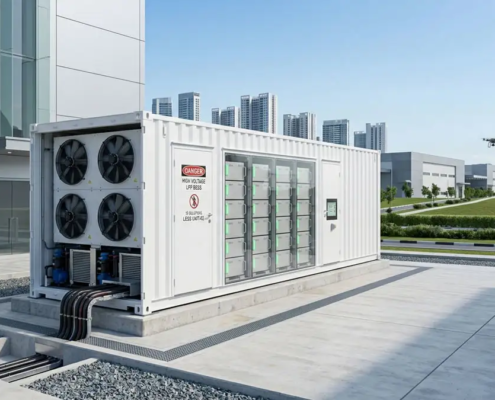 https://anengjipower.com/wp-content/uploads/2026/06/modular-commercial-solar-battery-storage-cabinet.webp
675
1000
Charging Station Engineer
https://anengjipower.com/wp-content/uploads/2025/09/anengji-dc-fast-charging-station-manufacturer-and-supplier-logo-white-1.png
Charging Station Engineer2026-06-18 09:16:522026-07-03 03:05:13What Is Solar Battery Storage? Complete C&I Engineering Guide
https://anengjipower.com/wp-content/uploads/2026/06/modular-commercial-solar-battery-storage-cabinet.webp
675
1000
Charging Station Engineer
https://anengjipower.com/wp-content/uploads/2025/09/anengji-dc-fast-charging-station-manufacturer-and-supplier-logo-white-1.png
Charging Station Engineer2026-06-18 09:16:522026-07-03 03:05:13What Is Solar Battery Storage? Complete C&I Engineering Guide

Leave a Reply
Want to join the discussion?Feel free to contribute!