
Introduction
The global energy landscape is undergoing a structural transformation. Driven by rapid electrification, expanding data networks, and intermittent renewable sources, industrial and commercial facilities face unprecedented grid volatility. According to the BloombergNEF Energy Storage Market Outlook, global non-pumped hydro installations crossed a staggering 112 GW / 307 GWh threshold in 2025, with expectations to surge an additional 41%. Amid this massive shift, the deployment of a robust container energy storage system has transitioned from an alternative green incentive to an absolute operational necessity for modern commercial and industrial (C&I) electrical infrastructures.
Why Are Businesses Investing in Container Energy Storage Systems?
Managing a commercial power footprint requires high-level engineering precision. As grid distribution networks strain under shifting regional loads, commercial operators are forced to re-evaluate their reliance on traditional utility models. Implementing an integrated containerized BESS solution for solar farm projects or individual factory grids addresses core systematic risks while protecting localized electrical equipment from upstream disturbances.
Rising Electricity Costs and Demand Charges
Modern utility tariff structures rely heavily on peak demand charges—billing metrics calculated from the single highest interval of power draw during a billing cycle. For manufacturing facilities with heavy inductive machinery, these demand spikes can represent over 50% of the total monthly utility bill. A container battery energy storage system for commercial use offsets these spikes by injecting stored power locally during peak intervals, permanently lowering the site’s billing baseline.
Renewable Energy Integration Challenges
While multi-megawatt onsite solar PV arrays lower daytime carbon indices, their output is inherently volatile. Cloud cover creates rapid voltage drops, and mid-day generation often exceeds the facility’s instantaneous load. Without an intelligent energy storage container, this excess power is either wasted via curtailment or exported back to the grid at unfavorable feed-in tariffs. Containerized BESS installations capture this green generation, smoothing out distribution fluctuations and ensuring maximum local utilization.
EV Charging Infrastructure Expansion
Integrating high-power DC fast-charging plazas into existing corporate parking or logistical hubs introduces immense electrical strain. When multiple electric vehicles initiate a charging cycle simultaneously, the sudden draw can easily exceed local transformer capabilities. Utilizing an advanced lithium battery container as a dynamic buffer mitigates grid impacts, supplying instantaneous power to the vehicles while drawing a slow, steady current from the main utility line.
Grid Reliability and Backup Power Requirements
For sensitive industrial processes, data hubs, and pharmaceutical production lines, even a sub-second voltage sag can trigger catastrophic system shutdowns and tool damage. Modern modular storage setups provide rapid uninterruptible power supply (UPS) capabilities. If the primary utility connection drops, solid-state switchgear transfers critical loads to the battery storage container in milliseconds, preventing costly operational downtime.
Common Pain Points Solved by Containerized BESS
- High peak demand charges: Automatically mitigated by deploying high-efficiency peak shaving system software.
- Limited grid connection capacity: Allows facilities to expand production capacity without paying for major utility service upgrades.
- Renewable energy curtailment: Converts wasted green electrons into dispatchable assets via automated charging buffers.
- Expensive transformer upgrades: Acts as a localized capacity reserve, eliminating the need to install costly physical utility infrastructure.
- Unstable power supply and outages: Delivers instant power conditioning and microgrid capabilities during grid failures.
What Is a Container Energy Storage System?
Definition of a Containerized Battery Energy Storage System (BESS)
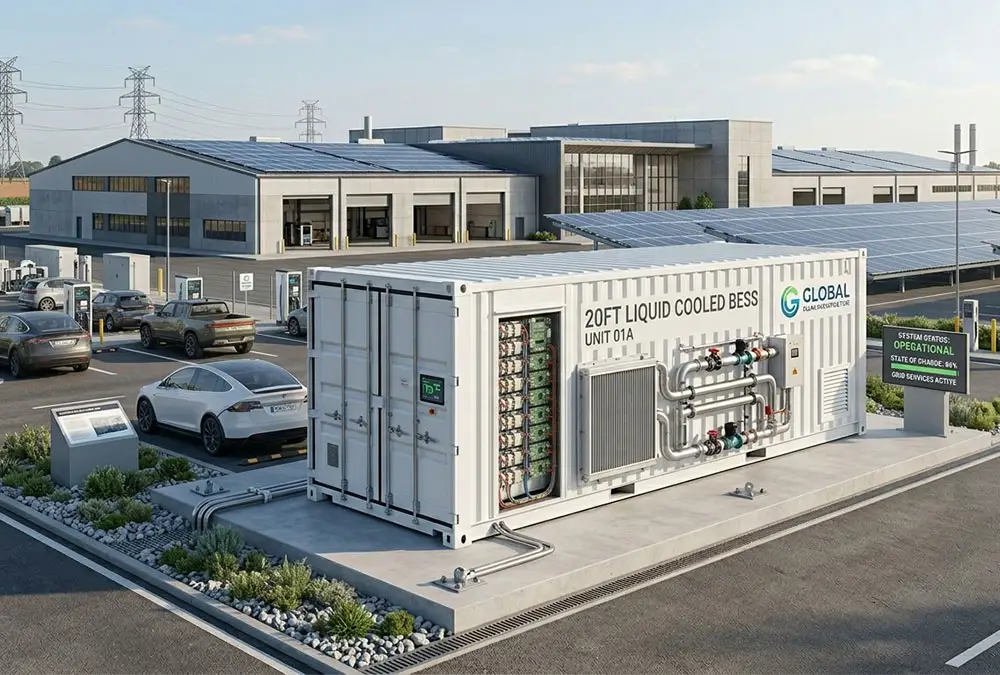
A container energy storage system is a fully self-contained, modular, medium-to-high voltage energy management solution housed inside an ISO-standard shipping container. It consolidates electrochemical cell stacks, precision thermal regulation infrastructure, multi-level protection boundaries, and power conversion electronics into a unified, weatherproof, and secure outdoor enclosure. These configurations are designed for direct drop-in integration with utility substations, renewable generation fields, and industrial building distribution frameworks.
Why Container Energy Storage Is Becoming the Industry Standard
Pre-engineered containerized configurations have largely replaced site-built architectures due to their exceptional mobility, high structural safety, and minimal on-site civil engineering footprint. Every system undergoes extensive factory-acceptance testing (FAT) before shipment. This eliminates complex field integration steps, reduces project construction timelines from months to weeks, and ensures that critical safety boundaries conform precisely to rigid factory specifications.
Typical Sizes and Configurations of Container Energy Storage Systems
To accommodate diverse power profiles and space constraints, these specialized systems are engineered into standard industrial form factors:
20ft Energy Storage Container
The standard 20ft frame represents the industry workhorse for commercial and light industrial installations. Utilizing advanced LFP chemistry, a modern 20ft liquid cooled container energy storage system can achieve standard packing densities ranging from 1MWh up to 3.4MWh of nominal energy capacity, making it perfect for space-constrained factory yards.
30ft Energy Storage Container
A specialized intermediate option optimized for specific regional transport weights and tailored utility-scale installations, providing custom volume dimensions for specialized dual-inverter setups or complex liquid cooling heat exchangers.
40ft Energy Storage Container
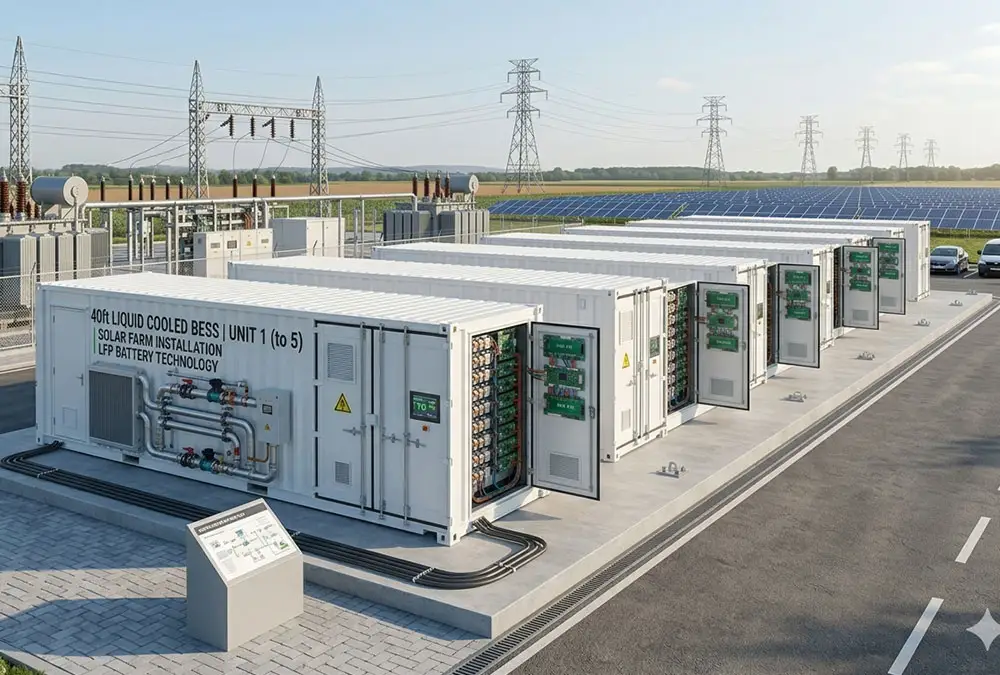
The standard choice for large utility scale energy storage applications and multi-megawatt solar plus storage developments. A single 40ft containerized platform can house up to 5MWh+ of energy capacity, reducing overall balance-of-plant (BOP) footprints across large deployment fields.
Container Energy Storage System vs Traditional Battery Rooms
Traditional indoor battery rooms require complex architectural modifications, dedicated blast-resistant zoning, custom HVAC ducting, and localized fire-sprinkler arrays that permanently consume valuable indoor facility real estate. Moving this infrastructure to an outdoor container energy storage system eliminates indoor safety hazards, isolates thermal risks from corporate buildings, and dramatically simplifies subsequent physical system expansions or technology augmentations.
How Does a Container Energy Storage System Work?
The operational framework of a containerized BESS relies on real-time balance-of-plant coordination, converting raw electrochemical potential into synchronized, grid-quality alternating current (AC).
Energy Charging Process
During intervals of low energy tariff pricing or peak onsite solar generation, the external site management layer commands the system to draw power. Alternating current from the grid or solar inverter passes into the system’s bidirectional power conversion sub-system, where it is rectified into stable direct current (DC) and routed into the individual battery cells through high-amperage busbars.
Energy Storage Process
Once charged, the system transitions into a standby monitoring state. The internal cell modules are continuously managed by a hierarchical battery management framework. This framework monitors state-of-charge (SoC), individual cell voltages, and thermal trends, while an active cooling system maintains identical temperature boundaries across the internal cell layers to prevent premature degradation.
Energy Discharge Process
When peak demand thresholds are breached or a primary utility failure occurs, the system initiates an instantaneous discharge sequence. The internal DC contactors engage, routing energy back through the bidirectional power conversion circuits. The system converts the DC power into precisely synchronized AC electricity that matches the phase, frequency, and voltage requirements of the local facility grid.
Intelligent EMS Scheduling and Optimization
The brain of the entire container platform is the Energy Management System (EMS). The EMS runs advanced scheduling algorithms that monitor external grid pricing feeds, forecast onsite load profiles, and track historical solar generation trends. This data allows the system to autonomously determine the most profitable times to charge, hold, or discharge power.
Typical Daily Operating Cycle of a Containerized BESS
In a standard C&I deployment, the system follows a precise daily sequence: it charges deeply at night during low-cost off-peak utility pricing window; maintains standby status during morning startup; discharges strategically during mid-day peak demand intervals; recharges via excess solar during early afternoon; and discharges again during early evening peak grid pricing hours to maximize utility bill savings.
Container Energy Storage System Components and Operational Workflow
A reliable industrial storage platform integrates multiple engineering disciplines into a cohesive, automated system architecture.
Battery System (Lithium Battery Racks and Modules)
The core energy generation layer consists of multiple structurally reinforced metal battery racks, with each rack holding a series-parallel combination of individual slide-in battery modules.
LFP Battery Technology
Lithium Iron Phosphate (LiFePO4 / LFP) has become the undisputed choice for stationary energy deployment. Unlike consumer-grade cobalt chemistries, LFP exhibits exceptional thermal stability, resists high-temperature degradation, avoids oxygen release during internal structural failures, and delivers an extensive operational life exceeding 6,000 to 8,000 cycles at deep discharge profiles.
Battery Module and Rack Architecture
Individual LFP pouch or prismatic cells are laser-welded into rugged, vibration-resistant battery modules. These modules integrate internal voltage sensing pins, surface temperature thermistors, and local cell-balancing circuits. The modules are stacked securely into structural steel racks engineered to handle heavy seismic loads.
Battery Management System (BMS)
The BMS acts as the vital electronic guardian of the system, operating across a three-tier hierarchical architecture (Slave, Master, and System-level controllers).
Cell Monitoring
The BMS samples individual cell voltages and module temperatures at millisecond intervals. If a single cell displays anomalous voltage drop or accelerated resistance trends, the BMS flags the event to prevent operational imbalances across the broader electrical string.
Thermal Runaway Prevention
If cell temperatures cross safe operational boundaries, the BMS initiates multi-stage protection steps: it flags warning alerts, throttles back charging currents, activates maximum cooling output, and, if necessary, trips mechanical circuit breakers to isolate the affected rack before thermal cascading can occur.
Power Conversion System (PCS)
The PCS serves as the bidirectional heavy-power interface between the DC battery strings and the AC distribution grid.
AC/DC Conversion
Utilizing high-speed insulated-gate bipolar transistors (IGBTs) or silicon carbide (SiC) switching arrays, the PCS executes highly efficient, low-harmonic conversion between variable DC battery voltages and fixed-frequency AC grid voltages.
Grid Connection Control
The PCS can operate in grid-following mode (synchronizing perfectly with an active utility signal) or grid-forming mode (acting as a voltage source to establish an independent microgrid energy storage network during primary utility blackouts).
Energy Management System (EMS)
The EMS serves as the top-level software system, translating external asset economics into direct hardware control commands.
Peak Shaving Control
The EMS monitors incoming facility utility meters. The moment site power draw crosses a predetermined threshold, the EMS commands the PCS to instantly discharge the batteries, keeping total utility grid draw below the target limit.
Time-of-Use Optimization
For regions with complex multi-tier time-of-use (ToU) utility pricing, the EMS shifts consumption profiles to capitalize on pricing differentials, charging exclusively during cheap off-peak windows and discharging during high-cost peak periods.
Demand Response Participation
When the regional grid operator faces extreme capacity constraints, the EMS can receive external digital automated demand response signals, dispatching stored container energy to support the grid and generating lucrative revenue for the asset owner.
Thermal Management System
Maintaining tight internal temperature boundaries is vital to extending the lifespan of industrial lithium battery investments.
Air Cooling vs Liquid Cooling
Traditional air-cooling uses heavy HVAC fans to push forced air through battery racks, which can create localized hot spots and internal temperature differentials of 5°C to 8°C. Modern designs utilize an advanced liquid cooling energy storage system approach. By circulating an industrial glycol-water mixture through dedicated cooling plates embedded directly within the battery modules, heat is dissipated much more efficiently.
Temperature Uniformity Control
Liquid cooling keeps individual cell temperature deltas within a tight ±2°C window. This uniform temperature profile prevents uneven cell degradation, maximizes usable energy capacity, and lowers parasitic HVAC energy consumption by up to 30% compared to air-cooled models.
Fire Protection and Safety System
Industrial container structures incorporate automated, multi-tiered safety arrays designed to identify and isolate hazards early.
Smoke Detection
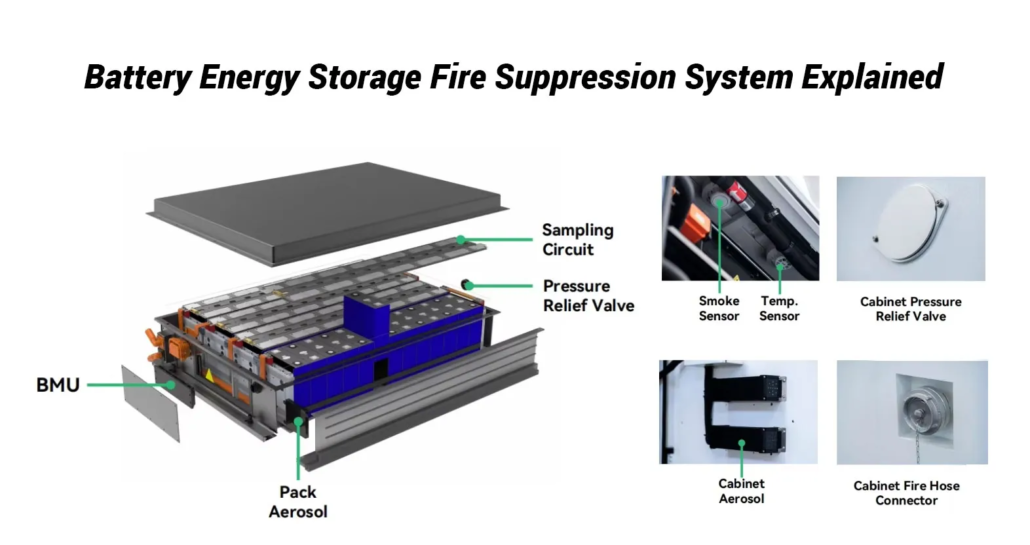
Highly sensitive optical smoke detectors provide the earliest warning of electrical overheating or insulation breakdown within the container envelope.
Gas Detection
Specialized electrochemical sensors continuously sample the internal air for trace amounts of off-gas compounds, such as carbon monoxide (CO) and hydrogen ($H_2$), which can indicate early cell venting before any visible smoke or heat develops.
Aerosol Fire Suppression
If gas or smoke thresholds are breached, the system activates advanced aerosol or clean-agent gas suppression systems (such as Stat-X or Novec 1230), rapidly flooding the sealed container to extinguish localized thermal events without damaging surrounding electrical circuits.
Multi-Level Safety Protection
The complete safety design links mechanical venting panels, structural blast reliefs, emergency stop loops, and automatic water-deluge connections, providing comprehensive, code-compliant protection for the facility asset.
Key Benefits of Container Energy Storage Systems
- Reduce Peak Demand Charges: Enables facilities to flatten their electricity demand profile, saving thousands in monthly utility costs.
- Avoid Costly Grid Upgrades: Act as a localized power buffer, allowing infrastructure expansion without paying for expensive substation or transformer upgrades.
- Increase Renewable Energy Self-Consumption: Stores excess daytime solar production for use during peak evening production shifts.
- Improve Energy Independence: Insulates critical factory operations from volatile regional electricity markets and rolling grid brownouts.
- Enhance Backup Power Reliability: Delivers instantaneous power transition to sustain critical operational loads during major utility failures.
- Support EV Fast Charging Infrastructure: Buffers the high power demands of fast-charging hubs, avoiding steep grid capacity penalties.
- Generate Additional Revenue Through Grid Services: Enables automated participation in frequency regulation and capacity markets to improve project ROI.
Containerized BESS Applications in Modern Power Systems
The versatility of container platforms enables deployment across a wide variety of commercial and industrial applications.
Commercial and Industrial Energy Storage
Industrial operations deploy container systems directly behind-the-meter (BTM) to optimize operational energy costs.
Manufacturing Plants
Protects heavy automated assembly lines, injection molding systems, and precision CNC equipment from production interruptions caused by power quality sags.
Industrial Parks
Aggregates the power requirements of multiple commercial facilities, providing shared peak shaving system support and microgrid resiliency.
Logistics Warehouses
Pairs with extensive rooftop solar arrays to power large automated sorting systems and fulfill evening fleet charging requirements.
Solar Plus Storage Projects
Co-locating energy storage systems with solar generation fields turns variable clean energy into a dispatchable resource.
Self-Consumption Optimization
Captures excess mid-day solar generation and shifts it to late afternoon or evening shifts, maximizing the value of the generation asset.
Peak Shaving and Energy Arbitrage
Allows project developers to store power when wholesale electricity prices are low or negative, and export it back to the grid when prices peak.
EV Charging Station Energy Storage
Acts as an essential power buffer for modern vehicle charging networks.
Fast Charging Power Buffer
Supplies high-amperage current to multi-vehicle fast charging hubs while drawing a stable power feed from the grid, preventing local voltage drops.
Transformer Capacity Expansion
Allows site hosts to install ultra-fast chargers in areas with constrained utility capacity, bypassing multi-year grid upgrade wait times.
Microgrid Energy Storage Solutions
Establishes stable, independent power networks when isolated from the main utility grid.
Remote Sites
Displaces expensive diesel generation by integrating solar arrays with storage containers to power remote telecom towers and eco-resorts.
Island and Mining Projects
Maintains voltage and frequency stability for isolated heavy industrial networks, reducing reliance on fuel supply chains.
Utility-Scale Energy Storage Projects
Deployed front-of-the-meter (FTM) to provide essential stability services to grid operators.
Frequency Regulation
Responds within milliseconds to grid deviations, absorbing or injecting power to maintain nominal grid frequency (50Hz/60Hz).
Grid Stability Support
Provides critical capacity reserves and voltage support during peak demand events, helping prevent grid-wide blackouts.
Data Centers and Critical Infrastructure
Replaces traditional lead-acid UPS rooms with high-density, low-maintenance outdoor container storage, ensuring continuous uptime for digital infrastructure.
Container Energy Storage System vs Traditional Energy Storage Solutions
Selecting the right energy storage asset requires a thorough understanding of the technical differences between competing technologies.
Containerized BESS vs Dedicated Battery Rooms
Containerized options eliminate indoor spatial constraints, minimize complex on-site permitting, and provide integrated safety systems that outperform indoor battery configurations.
Containerized BESS vs Diesel Generators
While diesel units provide long-duration runtime, they require constant fueling, produce significant local emissions, entail high maintenance costs, and suffer from slow startup times (typically 10 to 15 seconds). A battery storage container provides sub-millisecond response times, zero local emissions, and silent operation.
Containerized BESS vs Pumped Hydro Storage
Pumped hydro offers massive long-duration capacity but requires specific geographic topography, billions in capital expenditure, and years of environmental permitting. BESS container solutions can be deployed almost anywhere within weeks.
Containerized BESS vs Flow Battery Systems
Flow batteries are well-suited for ultra-long duration applications (8+ hours) but have lower round-trip efficiency (typically 65-75%) and require complex chemical pumps. Lithium-based container platforms deliver high round-trip efficiencies exceeding 85-90% and offer excellent energy density for compact sites.
Comparison Table of Energy Storage Technologies
| Technology | Response Speed | Scalability | Installation Time | Maintenance | Typical Application |
|---|---|---|---|---|---|
| Containerized BESS | Milliseconds | Excellent (Modular) | Weeks | Low | C&I, Grid, EV Charging Buffer |
| Flow Battery | Seconds | High | Months | Medium | Long Duration Storage (>8 hours) |
| Pumped Hydro | Minutes | Very High | Years | Medium | Utility Scale Grid Arbitrage |
| Diesel Generator | 10–15 Seconds | Medium | Weeks | High | Emergency Standby Backup Only |
How to Implement a Containerized Battery Energy Storage System
A successful containerized BESS deployment follows a structured engineering roadmap from initial site assessment to final commissioning.
Site Assessment and Load Analysis
Engineering teams install high-resolution power quality meters at the facility’s main service entrance to analyze historical electrical demand profiles.
Energy Consumption Profile Evaluation
The collected load profiles are analyzed to identify daily peak intervals, average base loads, and seasonal consumption variations, helping determine the ideal power-to-energy ratio for the system.
Grid Capacity Assessment
Engineers consult with the local utility operator to assess short-circuit current capacities, verify interconnection availability, and complete required grid-impact studies.
System Design and Engineering
The system design phase determines final layout plans, sets up electrical single-line diagrams, coordinates grounding protection, and integrates auxiliary safety systems.
Equipment Manufacturing and Factory Testing
The container platform is assembled under controlled factory conditions. The system undergoes rigorous multi-point testing, including full insulation testing and complete thermal management verification, before leaving the plant.
Transportation, Installation, and Commissioning
The pre-tested container is delivered to the site, positioned onto its concrete foundation pad, and connected to the main electrical system. Field engineers run final commissioning checks to clear the system for commercial operation.
Monitoring and Long-Term Operations
Once operational, the system connects to secure cloud-based monitoring networks, enabling remote diagnostic tracking and proactive maintenance management.
How to Choose the Right Container Energy Storage System Capacity
Understanding Power (kW/MW) vs Energy Capacity (kWh/MWh)
When selecting a system configuration, developers must distinguish between two key metrics: Power (expressed in kW or MW), which defines the maximum instantaneous rate at which energy can be discharged, and Energy Capacity (expressed in kWh or MWh), which determines the total duration over which that power can be sustained.
Recommended BESS Capacities for Different Applications
215kWh–261kWh Energy Storage Cabinets
Suitable for: Commercial office buildings, light manufacturing plants, and localized EV charging station configurations requiring compact footprints.
These modular cabinets offer an ideal entry point for small-to-medium enterprises looking to implement targeted peak shaving and localized power conditioning without dedicating large outdoor spaces to grid equipment.
500kWh–1MWh Container Energy Storage Systems
Suitable for: Mid-sized industrial facilities, commercial solar self-consumption projects, and targeted peak shaving applications.
This configuration provides a practical balance of capacity and footprint for standard industrial operations, allowing facilities to absorb mid-day solar generation and mitigate high demand charges during peak production windows.
2MWh–5MWh Containerized BESS Platforms
Suitable for: Utility-scale energy storage projects, large industrial manufacturing parks, and high-capacity EV charging hubs.
Designed for heavy-duty industrial and utility applications, these high-density container configurations deliver the robust energy reserves necessary for long-duration discharge profiles, grid stability support, and large-scale renewable integration.
Factors Affecting Capacity Selection
- Daily Energy Consumption: The total energy volume used during standard operations sets the baseline for required system storage capacity.
- Peak Load Demand: The magnitude of the site’s highest power spikes determines the maximum power output rating needed from the inverter system.
- Backup Duration Requirements: The length of time critical facility loads must run independently during utility outages dictates the size of the required energy reserve.
- Solar PV Capacity: The size of onsite solar arrays determines the available daytime charging energy, helping size the battery container appropriately.
- Utility Tariff Structure: The specific structure of local demand fees and time-of-use pricing models guides how the system’s capacity is optimized for maximum financial return.
Modular Expansion for Future Growth
Industrial projects are often updated over time as facility demands change. Specifying a system with a scalable design architecture allows operators to easily integrate additional battery containers or augment system capacity as site loads expand, safeguarding the initial capital investment.
Why Choose AnengJi Power Container Energy Storage Systems?
AnengJi Power delivers high-performance, containerized energy storage infrastructure engineered to meet the reliability requirements of modern global projects.
Advanced Lithium Iron Phosphate (LFP) Battery Technology
AnengJi Power systems are built exclusively on high-density Lithium Iron Phosphate cells, providing high thermal stability, reliable cycling performance, and an operational lifespan engineered for demanding commercial applications.
Industry-Leading Safety Design
Safety is a foundational element of the system architecture. Containers feature integrated multi-point monitoring arrays, including sensitive smoke detectors, electrochemical gas sensors, and automated aerosol fire suppression systems, all coordinated by an advanced, multi-level BMS protection framework.
High-Efficiency Liquid Cooling Technology
AnengJi Power incorporates advanced liquid cooling systems across its product lines. This configuration maintains cell-to-cell temperature variations within a narrow ±2°C window, optimizing system efficiency and extending the long-term lifecycle of the asset.
Optimized Space Utilization
By leveraging high-density cell packing arrangements, AnengJi Power platforms maximize internal energy capacity while maintaining a compact physical footprint, simplifying site placement in space-constrained industrial environments.
Modular and Customizable Design
AnengJi Power provides scalable configurations ranging from 1MWh up to 5MWh+ utility systems, allowing engineering teams to tailor the system’s power and energy ratings to specific project requirements.
Global Certifications and Compliance
Every system is designed to meet rigorous international standards, including CE certification, relevant IEC standards compliance, and available UL9540A testing data, ensuring smooth regulatory approvals with local building authorities and utility operators.
End-to-End Project Support
AnengJi Power provides comprehensive assistance throughout the project lifecycle, offering professional engineering consultation, factory-direct equipment supply, and long-term maintenance support to ensure reliable system operation.
Future Trends of Container Energy Storage Systems
Driven by ongoing material science advancements and changing utility rules, container systems continue to evolve quickly.
Larger Capacity Containerized BESS
The industry is moving toward higher-capacity configurations, leveraging updated cell designs to pack up to 5MWh or more into standard 20ft container frames, lowering overall balance-of-plant costs for large developments.
AI-Based Energy Management Systems
Modern EMS platforms are incorporating advanced software analytics. These systems utilize machine learning models to analyze local weather forecasts, historical load trends, and real-time grid pricing data to optimize asset profitability.
Liquid Cooling Becoming the Industry Standard
As cell densities rise, liquid cooling systems are rapidly replacing air-cooled designs across the industry, becoming the standard choice for projects focused on long-term thermal safety and maximum efficiency.
Integration with Solar and EV Charging Infrastructure
The deployment of integrated solar-plus-storage and managed EV charging hubs is expanding, creating microgrid configurations that reduce reliance on traditional central utilities.
Growing Demand for Grid-Scale Battery Storage
As intermittent renewable generation increases globally, grid operators are deploying larger capacities of dedicated grid-scale battery storage assets to maintain overall electrical network stability.
FAQ About Container Energy Storage Systems
What is a container energy storage system?
It is a modular, self-contained energy storage solution that integrates battery cell packs, thermal management components, safety structures, and power conversion electronics within a standard, weatherproof shipping container enclosure.
How does a containerized BESS work?
The platform draws power from the grid or solar arrays during low-demand periods, stores it as electrochemical energy in lithium cell banks, and discharges it back through an inverter as grid-synchronized AC power during peak periods or utility outages.
What are the advantages of container energy storage systems?
They provide rapid on-site installation, a compact physical footprint, and simplified scalability, while delivering critical operational support like peak demand reduction, solar self-consumption optimization, and reliable facility backup power.
How much does a 1MWh container energy storage system cost?
System costs vary based on specific engineering requirements, including chosen thermal management technology (air vs liquid cooling), integrated fire safety options, and localized compliance configurations. For detailed project pricing tailored to your technical requirements, contact the AnengJi Power engineering team directly.
What industries use containerized battery energy storage systems?
They are widely deployed across heavy industrial manufacturing facilities, commercial office parks, agricultural operations, large solar and wind farms, utility substations, data centers, and multi-vehicle EV charging hubs.
How long does a container energy storage system last?
Utilizing high-quality LFP cells managed by advanced thermal systems, a modern industrial container storage platform typically delivers an operational lifespan of 15 to 20 years, supporting thousands of complete charge and discharge cycles.
Is liquid cooling better than air cooling for BESS?
Yes. Liquid cooling provides significantly higher heat transfer capabilities, maintaining cell temperature variations within a tight ±2°C window. This improved uniformity helps prevent premature cell degradation and improves overall system round-trip efficiency.
Can container energy storage systems support EV fast charging?
Yes. They act as an efficient power buffer, supplying the immediate high-current draw required by ultra-fast vehicle chargers while drawing a stable power feed from the primary grid, preventing high capacity penalties.
How do I choose the right BESS capacity for my project?
Determining the ideal system size requires a thorough review of your facility’s daily energy consumption profiles, peak demand intervals, on-site renewable generation capacities, and required backup runtimes. AnengJi Power engineers work with clients to complete these load analyses and specify the correct configuration.
Are container energy storage systems safe?
Yes. Modern industrial container systems feature robust, multi-layered safety protection arrays, including sensitive internal smoke and gas sensors, automated clean-agent fire suppression systems, structural pressure relief venting, and multi-tiered BMS monitoring frameworks designed to isolate electrical and thermal faults early.
 https://anengjipower.com/wp-content/uploads/2026/10/AnengjiPowr-AC-Coupled-Battery-Storage-at-a-CI-Solar-Site.webp
675
1000
Charging Station Engineer
https://anengjipower.com/wp-content/uploads/2025/09/anengji-dc-fast-charging-station-manufacturer-and-supplier-logo-white-1.png
Charging Station Engineer2026-10-16 03:03:192026-10-16 03:03:49What Is AC-Coupled Battery Storage? C&I BESS Guide
https://anengjipower.com/wp-content/uploads/2026/10/AnengjiPowr-AC-Coupled-Battery-Storage-at-a-CI-Solar-Site.webp
675
1000
Charging Station Engineer
https://anengjipower.com/wp-content/uploads/2025/09/anengji-dc-fast-charging-station-manufacturer-and-supplier-logo-white-1.png
Charging Station Engineer2026-10-16 03:03:192026-10-16 03:03:49What Is AC-Coupled Battery Storage? C&I BESS Guide https://anengjipower.com/wp-content/uploads/2026/10/AnengjiPower-What-Is-Peak-Shaving-at-an-Industrial-Site.webp
675
1000
Charging Station Engineer
https://anengjipower.com/wp-content/uploads/2025/09/anengji-dc-fast-charging-station-manufacturer-and-supplier-logo-white-1.png
Charging Station Engineer2026-10-15 06:49:012026-10-15 06:50:23What Is Peak Shaving? How Battery Energy Storage Reduces C&I Peaks
https://anengjipower.com/wp-content/uploads/2026/10/AnengjiPower-What-Is-Peak-Shaving-at-an-Industrial-Site.webp
675
1000
Charging Station Engineer
https://anengjipower.com/wp-content/uploads/2025/09/anengji-dc-fast-charging-station-manufacturer-and-supplier-logo-white-1.png
Charging Station Engineer2026-10-15 06:49:012026-10-15 06:50:23What Is Peak Shaving? How Battery Energy Storage Reduces C&I Peaks https://anengjipower.com/wp-content/uploads/2026/10/anengjipower-Peak-Shaving-vs-Load-Shifting-at-an-Industrial-Site.webp
675
1000
Charging Station Engineer
https://anengjipower.com/wp-content/uploads/2025/09/anengji-dc-fast-charging-station-manufacturer-and-supplier-logo-white-1.png
Charging Station Engineer2026-10-14 07:47:372026-10-14 07:48:01Peak Shaving vs Load Shifting: C&I Energy Storage Decision Guide
https://anengjipower.com/wp-content/uploads/2026/10/anengjipower-Peak-Shaving-vs-Load-Shifting-at-an-Industrial-Site.webp
675
1000
Charging Station Engineer
https://anengjipower.com/wp-content/uploads/2025/09/anengji-dc-fast-charging-station-manufacturer-and-supplier-logo-white-1.png
Charging Station Engineer2026-10-14 07:47:372026-10-14 07:48:01Peak Shaving vs Load Shifting: C&I Energy Storage Decision Guide


Leave a Reply
Want to join the discussion?Feel free to contribute!