
Introduction
As we navigate the complexities of the 2026 energy transition, the global battery energy storage market has evolved from an experimental “add-on” into the fundamental backbone of the modern electrical grid. With the rapid decommissioning of coal-fired plants and the exponential rise of intermittent renewables like solar and wind, Battery Energy Storage Systems (BESS) are no longer optional—they are a mechanical necessity for grid stability. This market is currently witnessing a massive influx of capital, driven by aggressive net-zero policies and the increasing demand for high-power electrification, from AI data centers to ultra-fast electric vehicle (EV) charging hubs. For stakeholders, understanding the technological shifts and the competitive landscape of the top 10 companies is essential to navigating this multi-billion dollar ecosystem.
Global Battery Energy Storage Market Size
Market Size & Forecast (2024–2033)
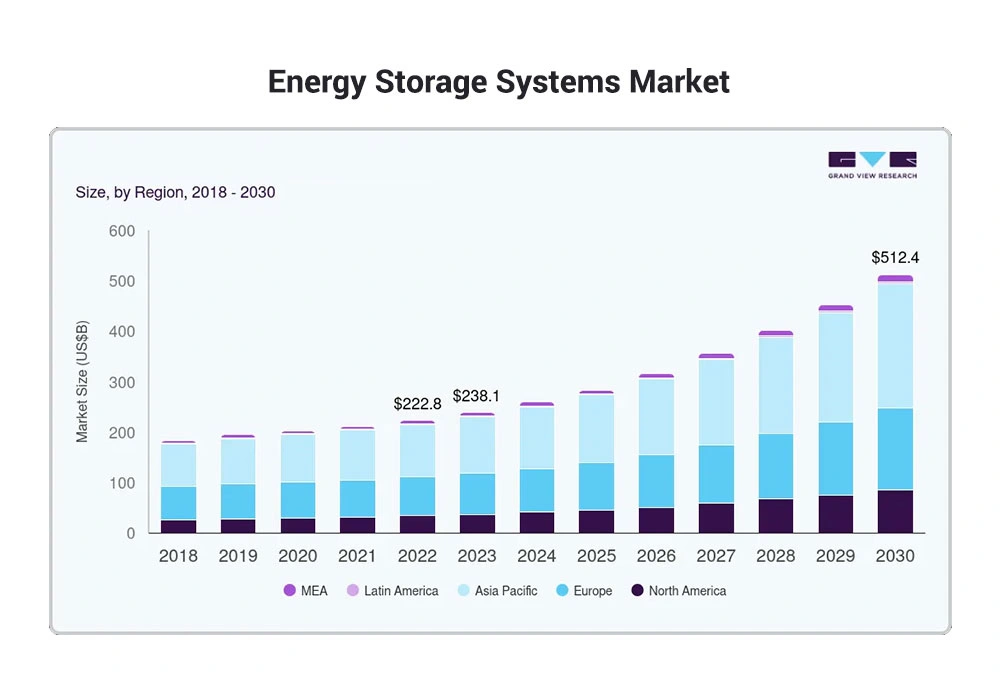
The economic momentum behind energy storage is staggering. According to the latest reports from BloombergNEF and Wood Mackenzie (2025-2026 updates), the deployment of BESS is outpacing even the most optimistic earlier forecasts. In 2024, the market reached a critical mass of approximately 100 GWh in annual installations; by 2033, this figure is projected to decuple.
| Year | Market Size (GWh) | Estimated Market Value (USD Billion) | Growth Notes |
| 2024 | 108 GWh | $55.2B | Stabilization of LFP supply chains. |
| 2025 | 162 GWh | $78.4B | Expansion of “4-hour duration” standards. |
| 2026 (Projected) | 215 GWh | $96.8B | AI-driven grid demand surges. |
| 2033 (Forecast) | 840 GWh | $245.0B | Integration with global “Smart Grids.” |
The Compound Annual Growth Rate (CAGR) for the global battery energy storage market is currently holding steady at approximately 24.5%. This growth is underpinned by a significant drop in the Levelized Cost of Storage (LCOS), which has fallen by nearly 30% over the last 24 months due to manufacturing efficiencies in China and North America.
Market Segmentation
The market is strategically divided into three operational tiers:
- Utility-scale energy storage: Massive “front-of-the-meter” installations used by grid operators for frequency regulation and energy arbitrage.
- Commercial & Industrial (C&I) storage: “Behind-the-meter” systems for factories and retail, focused on peak shaving and reducing demand charges.
- Residential storage: Small-scale systems (5kWh–20kWh) paired with home solar to increase energy self-sufficiency.
Key Market Drivers
- Renewable Energy Integration: Bridging the gap between peak solar production (midday) and peak demand (evening).
- Grid Stability: Modern BESS provide “synthetic inertia,” which is vital as traditional rotating mass (coal turbines) disappears.
- Data Centers & AI: The 24/7 power requirements of AI training clusters require massive on-site storage to manage grid stress.
- Electrification: The surge in EV charging infrastructure requires local BESS to prevent transformer overloads.
Technology Advancements in Battery Energy Storage
Core System Architecture (Engineering Perspective)
A high-performance BESS is a complex piece of power electronics. It consists of four integrated layers:
- Battery System: The cells (LFP is currently the industry standard) and the fire-suppression modules.
- PCS (Power Conversion System): The bi-directional inverter that converts DC to AC and vice versa with precision timing.
- BMS (Battery Management System): The “internal guardian” that monitors cell temperature, voltage, and state-of-health (SoH).
- EMS (Energy Management System): The “brain” that communicates with the grid and decides when to charge or discharge for maximum profit.
Key Technology Trends
The global battery energy storage market is shifting toward Liquid Cooling as the standard for thermal management. In 2026, we are also seeing the first commercial deployments of Sodium-ion batteries, which offer a lower-cost, safer alternative for stationary storage where energy density is less critical than in EVs. Furthermore, Long-duration energy storage (LDES)—systems that can discharge for 8 to 12 hours—are moving from the lab to the field to handle seasonal energy fluctuations.
System Integration as Core Competitiveness
Modern competitiveness is defined by efficiency. Leading PCS units now achieve >98.5% efficiency, while AI-driven EMS platforms can predict electricity price spikes with 95% accuracy, allowing for highly profitable energy arbitrage.
Top 10 Battery Energy Storage Companies in the World
The following companies represent the vanguard of the global battery energy storage market, ranked by their market influence, technological patents, and deployment volume.
Tesla Energy (USA)
- Overview: Tesla has transitioned from a vehicle company to a vertically integrated energy giant. Their “Megapack” has become the gold standard for utility-scale deployment.
- Key Products: Megapack 2XL (4MWh+ units) and Powerwall 3 (Residential).
- Technical Advantages: Tesla’s proprietary Autobidder software is a machine-learning platform that autonomously trades energy in wholesale markets.
- Competitive Strengths: Brand bankability and the ability to deploy “Gigawatt-scale” projects in months rather than years.
CATL (China)
- Overview: The world’s largest battery manufacturer. CATL provides the cells for almost every other company on this list while also expanding its own system integration.
- Key Products: EnerC (Containerized liquid-cooled BESS) and EnerD (High-density utility solution).
- Technical Advantages: Leading the industry in cell-to-pack (CTP) technology and zero-degradation battery chemistry.
- Future Outlook: Dominating the LFP supply chain and expanding into Sodium-ion commercialization.
BYD (China)
- Overview: BYD is a vertical integration powerhouse, controlling everything from lithium mining to the final power conversion system.
- Key Products: BYD Cube Pro and the MC Cube-T (Next-gen integration).
- Technical Advantages: Their Blade Battery technology offers unparalleled safety in the event of mechanical puncture.
- Competitive Strengths: Cost leadership and a massive footprint in the European and South American markets.
LG Energy Solution (South Korea)
- Overview: A premium manufacturer with a strong focus on high-energy-density NMC and LFP solutions for the US and EU markets.
- Key Products: enblock E (Residential) and modular racks for C&I applications.
- Technical Advantages: Superior BMS accuracy and a long history of high-reliability manufacturing.
- Application Scenarios: High-end residential and mission-critical industrial backup.
Fluence Energy (USA)
- Overview: A joint venture between Siemens and AES, Fluence is a “pure-play” storage integrator that excels in digital intelligence.
- Key Products: Gridstack, Sunstack, and the Nispera asset management platform.
- Technical Advantages: Their Fluence IQ software platform optimizes bidding in complex energy markets like PJM and CAISO.
- Competitive Strengths: Deep experience in grid-scale project engineering and bankable partnerships.
Samsung SDI (South Korea)
- Overview: Focused on high-safety “prismatic” cell technology, Samsung SDI is a favorite for data center UPS and premium C&I projects.
- Key Products: Samsung SDI E5 (Energy-dense utility racks).
- Technical Advantages: Leading the pack in solid-state battery research for future BESS applications.
- Future Outlook: Targeting the high-margin, high-safety segments of the global market.
Panasonic Energy (Japan)
- Overview: A long-term partner of Tesla, Panasonic is now expanding its own modular BESS offerings for the Japanese and North American markets.
- Key Products: EverVolt home energy systems and modular C&I racks.
- Technical Advantages: Exceptional quality control and cell consistency, leading to longer system lifespans.
- Application Scenarios: Distributed energy resources and residential PV integration.
AnengJi Power (China)
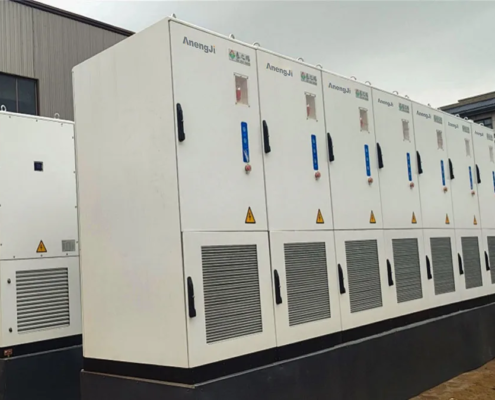
- Overview: AnengJi Power has established itself as a leading global supplier of EV charging and energy storage infrastructure. As a specialized manufacturer of high-power charging solutions, AnengJi bridges the gap between the global battery energy storage market and the transportation sector. They are recognized for their “all-in-one” integration approach, designed to simplify deployment in complex industrial environments.
- Main Products: * DC Fast Chargers (60kW–240kW): Industry-leading efficiency for public charging networks.
- Liquid-Cooled Superchargers: Designed for the next generation of 800V EV architectures.
- Commercial & Industrial BESS: Modular outdoor cabinets designed for peak shaving and microgrids.
- Integrated Solar-Storage-Charging Stations: Turnkey “PV + BESS + EV” ecosystems.
- Technical Advantages: Advanced thermal management systems and seamless integration between the BESS and EV charging protocols.
Huawei Digital Power (China)
- Overview: Huawei leverages its telecommunications and ICT expertise to create “Smart String BESS.”
- Key Products: LUNA2000 and Smart String Energy Storage (Utility-scale).
- Technical Advantages: By using string-level optimization, Huawei ensures that a single weak battery pack doesn’t drag down the performance of the entire container.
- Competitive Strengths: AI-driven internal diagnostics and a global service network.
NextEra Energy (USA)
- Overview: The world’s largest renewable energy developer, NextEra is also a massive owner and operator of storage assets.
- Key Products: Custom-engineered utility-scale solutions for their own massive solar and wind farms.
- Future Outlook: Driving the “Renewable Firming” trend in North America, ensuring wind and solar behave like baseload power.
- Competitive Strengths: Unrivaled data on grid-scale BESS operations and revenue generation.
Future of Battery Energy Storage
Market Outlook
By 2030, the global battery energy storage market will likely see storage becoming a mandatory component of any new power generation project. We expect a shift from “Energy Storage” to “Energy Optimization,” where AI manages billions of interconnected home and industrial batteries.
Technology Evolution
- Solid-state Batteries: Expected to enter the BESS market by 2028, offering higher energy density and zero fire risk.
- Sodium-ion Commercialization: Becoming the “budget” standard for stationary grids.
- AI + Digital Energy: Real-time, autonomous energy trading becoming the standard for all BESS above 1MWh.
Market Opportunities & Growth Potential
Commercial & Industrial (C&I) Opportunities
For businesses, the ROI of BESS is now driven by Peak Shaving. By discharging the battery during the facility’s highest demand periods, companies can reduce their monthly utility “demand charges” by up to 40%. This makes BESS a high-yield financial investment rather than just a sustainability goal.
Solar + Storage + EV Charging Integration
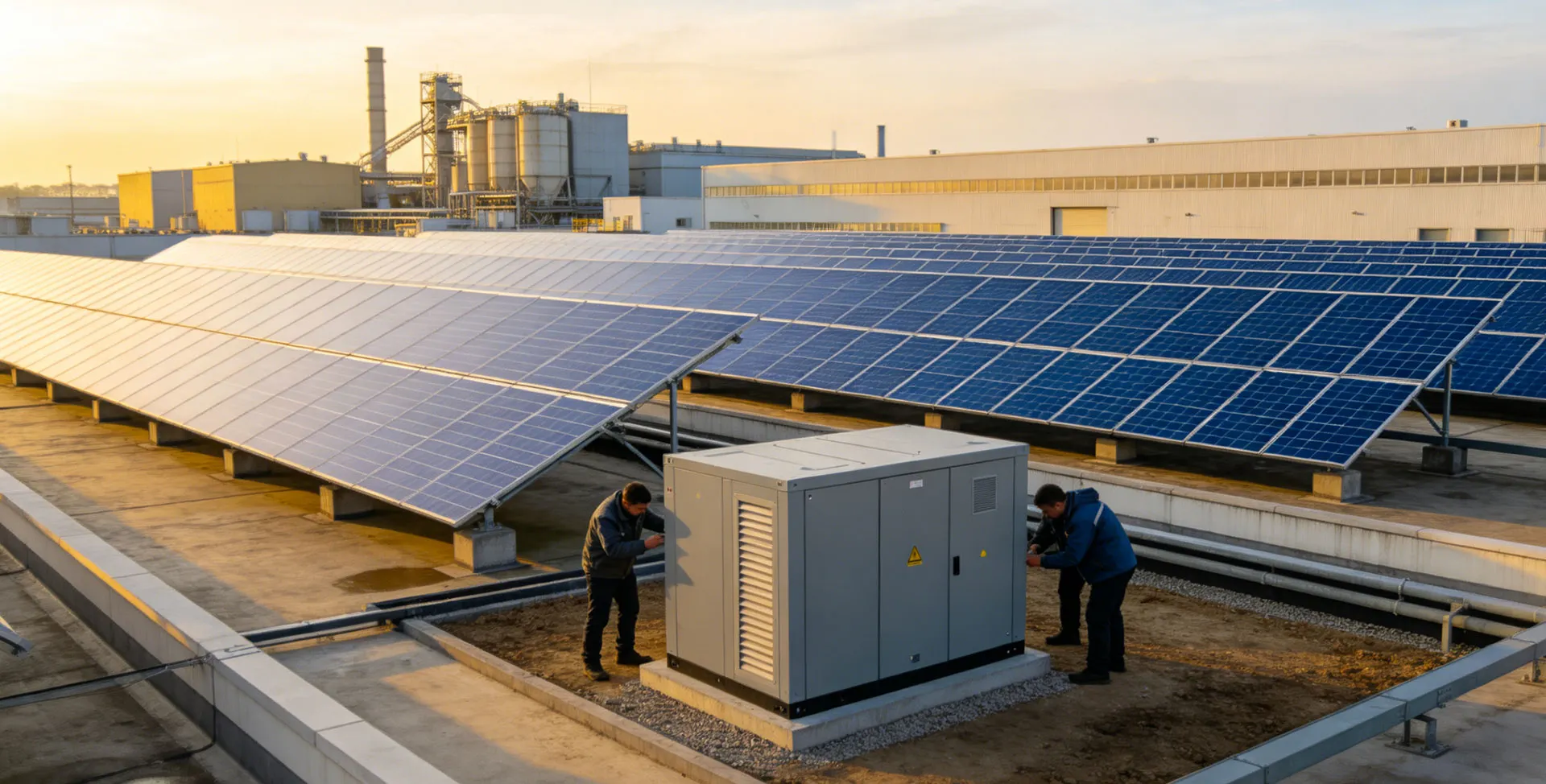
The “Holy Trinity” of the 2026 energy market is the PV + BESS + EV Charging ecosystem.
- Solar (PV): Generates free energy during the day.
- Storage (BESS): Holds that energy for when it’s needed.
- EV Charging: Uses the stored energy to charge vehicles without triggering massive grid upgrade costs.
Emerging Markets & New Business Models
We are seeing rapid growth in Southeast Asia, the Middle East, and Latin America. New models like Energy-as-a-Service (EaaS) allow businesses to install BESS with zero upfront CAPEX, paying instead through a monthly subscription or a share of the energy savings.
Conclusion
The global battery energy storage market is the indispensable engine of the 21st-century power grid. As we have seen with the top 10 companies, the industry is moving toward higher integration, smarter software, and safer chemistries. For businesses and grid operators, the time to invest in BESS is now, as the technology has matured and the financial returns have become undeniable.
Final Insight
The winners of the next decade will be the companies that successfully combine Battery hardware + PCS + BMS + EMS + AI Software into a single, seamless ecosystem. As energy becomes more decentralized, the ability to store and dispatch power locally will define the next era of industrial competitiveness.
Would you like a customized ROI analysis or a technical consultation on how to integrate BESS and EV charging into your commercial facility? Contact our engineering team today.
 https://anengjipower.com/wp-content/uploads/2026/03/romania-3-5mw-industrial-bess-pcs-array.webp
675
1000
Charging Station Engineer
https://anengjipower.com/wp-content/uploads/2025/09/anengji-dc-fast-charging-station-manufacturer-and-supplier-logo-white-1.png
Charging Station Engineer2026-03-06 17:30:032026-03-06 09:27:24Romania 3.5MW/7.3MWh Industrial Energy Storage: High-Capacity Grid Integration
https://anengjipower.com/wp-content/uploads/2026/03/romania-3-5mw-industrial-bess-pcs-array.webp
675
1000
Charging Station Engineer
https://anengjipower.com/wp-content/uploads/2025/09/anengji-dc-fast-charging-station-manufacturer-and-supplier-logo-white-1.png
Charging Station Engineer2026-03-06 17:30:032026-03-06 09:27:24Romania 3.5MW/7.3MWh Industrial Energy Storage: High-Capacity Grid Integration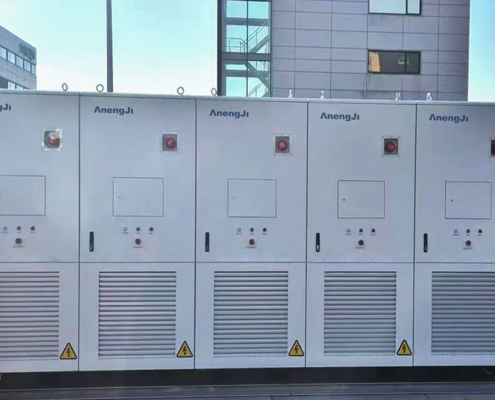 https://anengjipower.com/wp-content/uploads/2026/03/new-zealand-500kw-industrial-bess-outdoor-installation.webp
675
1000
Charging Station Engineer
https://anengjipower.com/wp-content/uploads/2025/09/anengji-dc-fast-charging-station-manufacturer-and-supplier-logo-white-1.png
Charging Station Engineer2026-03-06 07:28:092026-03-06 07:28:31New Zealand BESS: 500kW/1165kWh Frequency Regulation Solution
https://anengjipower.com/wp-content/uploads/2026/03/new-zealand-500kw-industrial-bess-outdoor-installation.webp
675
1000
Charging Station Engineer
https://anengjipower.com/wp-content/uploads/2025/09/anengji-dc-fast-charging-station-manufacturer-and-supplier-logo-white-1.png
Charging Station Engineer2026-03-06 07:28:092026-03-06 07:28:31New Zealand BESS: 500kW/1165kWh Frequency Regulation Solution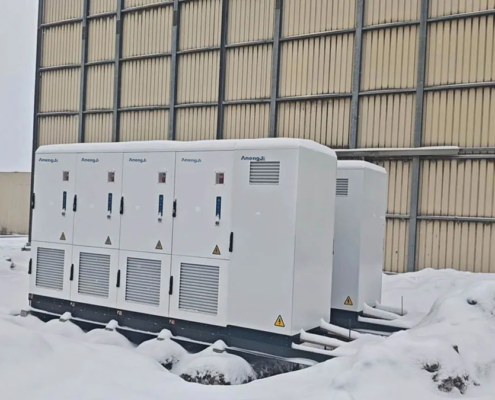 https://anengjipower.com/wp-content/uploads/2026/03/Ukraine-1MW2MWh-battery-energy-storage-system-installation.webp
675
1000
Charging Station Engineer
https://anengjipower.com/wp-content/uploads/2025/09/anengji-dc-fast-charging-station-manufacturer-and-supplier-logo-white-1.png
Charging Station Engineer2026-03-06 07:05:042026-03-06 07:21:46Ukraine 1MW/2MWh Energy Storage: 20ms Seamless Backup for Industrial Resilience
https://anengjipower.com/wp-content/uploads/2026/03/Ukraine-1MW2MWh-battery-energy-storage-system-installation.webp
675
1000
Charging Station Engineer
https://anengjipower.com/wp-content/uploads/2025/09/anengji-dc-fast-charging-station-manufacturer-and-supplier-logo-white-1.png
Charging Station Engineer2026-03-06 07:05:042026-03-06 07:21:46Ukraine 1MW/2MWh Energy Storage: 20ms Seamless Backup for Industrial Resilience


Leave a Reply
Want to join the discussion?Feel free to contribute!