
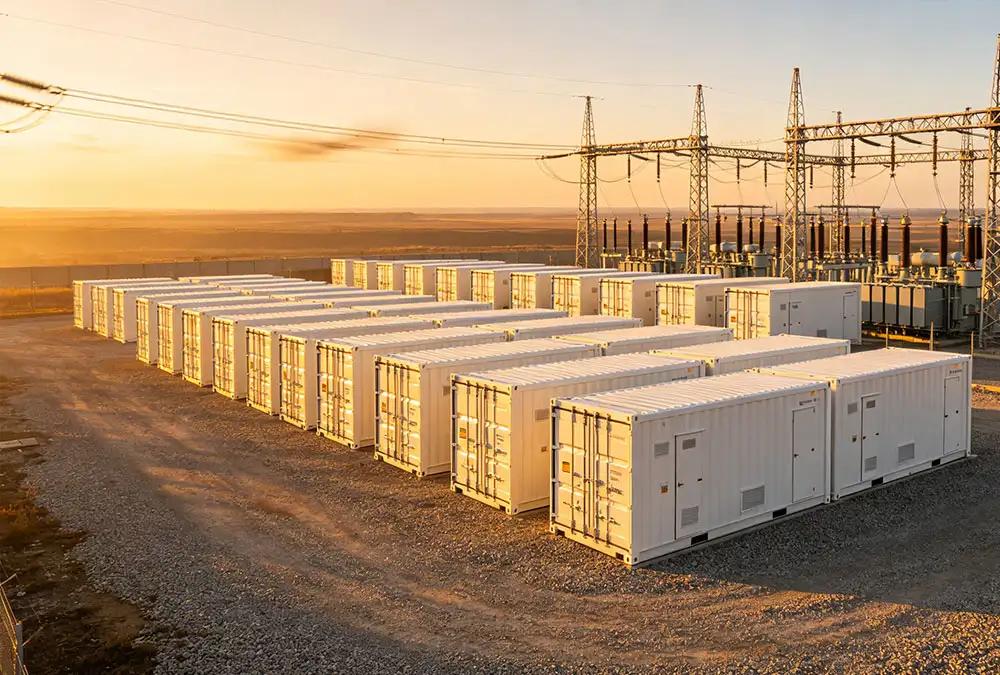
Introduction
The global transition toward a decentralized and decarbonized power grid has placed stationary battery storage at the very heart of modern electrical engineering and infrastructure development. As we move through 2026, the reliance on intermittent renewable energy sources like solar and wind has necessitated a robust buffer capable of balancing supply and demand in real-time. Unlike the mobile batteries found in electric vehicles, which prioritize energy density and weight, stationary systems are designed for high-cycle longevity and massive power throughput. This guide explores the technical architecture, commercial viability, and grid-integration strategies of the modern battery energy storage system (BESS), providing a roadmap for stakeholders navigating the shift toward a more resilient energy future.
What Is Stationary Battery Storage? (Definition & Core Concepts)
Stationary Battery Storage Definition
A stationary battery storage system is a fixed electrochemical energy reservoir connected to the electrical grid or a local load. Its primary function is to store electricity during periods of low demand or high production and discharge it when the grid is stressed or energy prices peak.
While EV batteries are designed for mobility and spatial constraints, a stationary energy storage system is optimized for stationary performance, safety, and long-term cost-efficiency. These systems range from small “behind-the-meter” units for residential use to massive large scale battery storage plants that support entire regional grids. According to industry insights, the market for these systems is expected to see a compound annual growth rate exceeding 20% through 2030.
Why Stationary Battery Storage Is Critical for Modern Power Systems
Modern power grids face unprecedented challenges due to renewable energy intermittency. Solar arrays do not produce power at night, and wind generation fluctuates unpredictably. Energy storage for power grid stability acts as a “virtual shock absorber,” smoothing out these fluctuations.
Beyond simple balancing, these systems provide energy storage systems for renewable integration, ensuring that surplus green energy isn’t “curtailed” or wasted. They are also essential for grid-scale energy storage applications such as frequency regulation—maintaining the grid at a steady 50Hz or 60Hz by responding to imbalances within milliseconds, a feat traditional gas turbines cannot match.
Types of Stationary Battery Storage Systems (From Commercial to Grid-Scale)
Commercial & Industrial (C&I) Battery Storage Systems
A stationary battery storage system for commercial use typically serves factories, data centers, and large-scale commercial buildings. These units usually fall within the 100kWh to 10MWh capacity range. Their primary value proposition is industrial stationary battery storage for peak shaving, which helps businesses avoid the high “demand charges” that utilities levy during peak consumption hours.
Utility-Scale / Grid-Scale Battery Storage Systems
Utility scale stationary battery storage solutions are front-of-the-meter assets that support the broader transmission and distribution network. These massive installations, often referred to as a battery storage plant, can reach several GWh in capacity. They are critical for wholesale energy arbitrage and providing “black start” capabilities, which allow the grid to reboot after a total blackout without external power.
Behind-the-Meter vs Front-of-the-Meter Storage
- Behind-the-Meter (BTM): Installed on the customer’s side of the utility meter. The owner uses the stored energy to reduce their own bills or provide backup power.
- Front-of-the-Meter (FTM): Installed on the utility side. These systems are used by grid operators to manage the overall health of the network and are often part of utility scale stationary battery storage solutions.
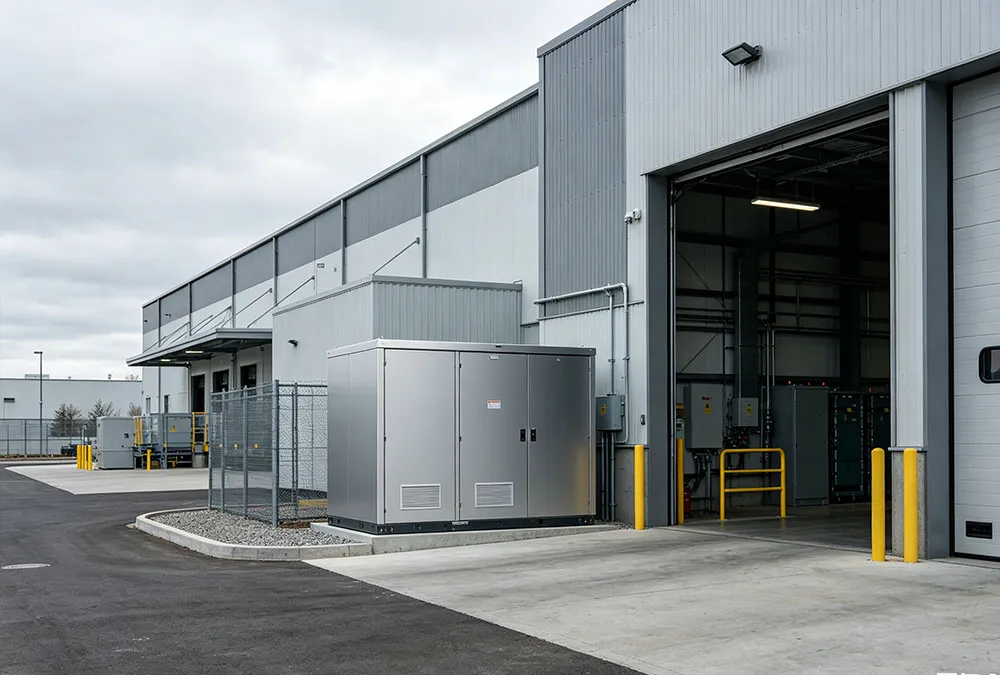
Key Components of a Stationary Battery Storage System (BESS Architecture)
Battery System (Lithium-ion & LFP Technologies)
In 2026, stationary lithium-ion battery systems remain the dominant choice, but there has been a definitive shift toward Lithium Iron Phosphate (LFP) chemistry over Nickel Manganese Cobalt (NMC).
- Safety: LFP has a higher thermal runaway threshold, making it safer for dense urban installations.
- Longevity: LFP cells can typically handle 4,000 to 8,000 cycles, significantly outperforming mobile-grade batteries.
- Cost: The lack of expensive cobalt makes stationary lithium ion battery storage for grid applications more economically viable for long-term deployment.
Power Conversion System (PCS)
The PCS is the “heart” of the system, consisting of a bidirectional inverter that manages the flow of electricity between the DC battery bank and the AC grid. High-efficiency PCS units are vital for minimizing energy loss during the charge/discharge cycle.
Battery Management System (BMS)
The BMS is the digital guardian of the cells, monitoring voltage, temperature, and State of Charge (SoC). It ensures that every cell in the on-grid battery storage system operates within its safe window, preventing degradation and thermal issues.
Energy Management System (EMS)
The EMS is the high-level brain that manages dispatch. Modern EMS software utilizes AI to predict load patterns and electricity prices, optimizing for maximum profit through behind-the-meter battery storage strategies or grid-service participation.
How Grid-Scale Stationary Battery Storage Works in Real Applications
Peak Shaving & Load Shifting
This is the most common commercial application. A stationary battery storage system charges when electricity is cheap (e.g., at night or midday when solar is abundant) and discharges when prices are high.
Net Savings = (Peak Demand Charge - Lowered Demand Charge) + (Energy Arbitrage Profit)
Frequency Regulation & Grid Stability
Grid-scale assets participate in ancillary service markets. When the grid frequency deviates from its target, the battery storage plant can inject or absorb power instantly to stabilize the network. This millisecond response time is a key advantage of stationary lithium-ion battery systems over traditional mechanical generators.
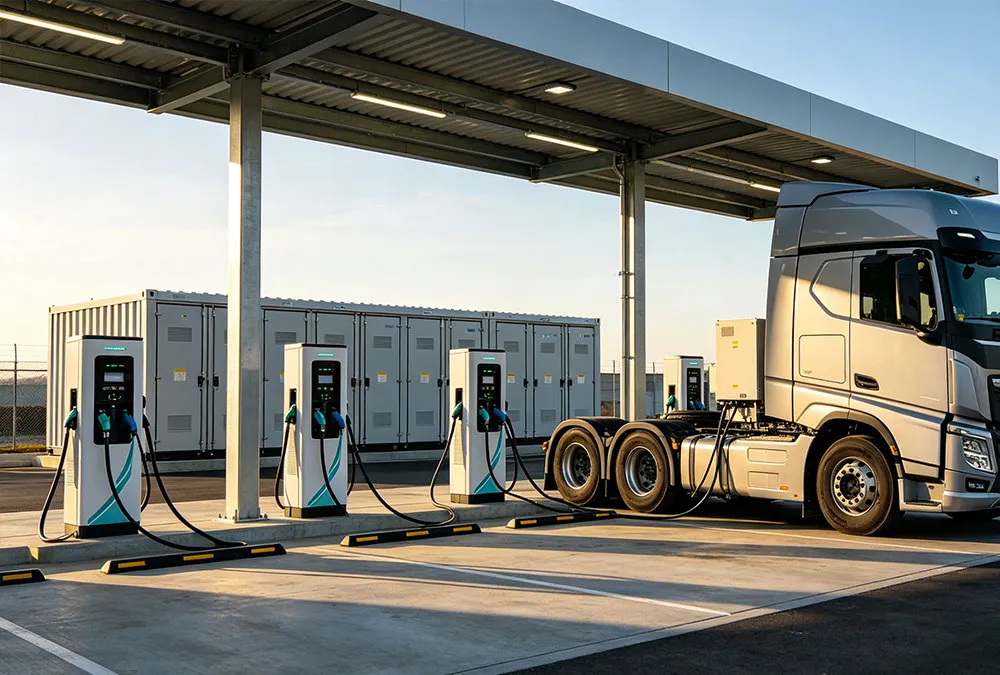
EV Charging + Storage Integration
Integrating battery storage for EV charging stations is a growing trend for 2026. High-power DC fast chargers can put immense strain on local transformers. A stationary battery acts as a “buffer,” charging slowly from the grid and discharging rapidly into vehicles to prevent grid collapse and reduce infrastructure upgrade costs.
Benefits of Stationary Battery Storage for Utilities and Large-Scale Projects
Economic Benefits (ROI & Energy Arbitrage)
The Return on Investment (ROI) for large scale battery storage has improved dramatically as hardware costs fall and energy price volatility increases. By utilizing on-grid battery storage system assets for arbitrage, owners can capture the spread between peak and off-peak wholesale prices.
Grid Reliability and Resilience
Stationary battery storage provides a layer of resilience during extreme weather events. In microgrid configurations, these systems can sustain critical loads—such as hospitals or water treatment plants—independently of the main grid for several hours or even days when paired with battery storage for solar energy.
Carbon Reduction and ESG Compliance
For many enterprises, deploying industrial battery storage solutions is the most effective way to meet ESG (Environmental, Social, and Governance) targets. It enables a higher percentage of renewable consumption and reduces reliance on “peaker” plants, which are usually high-emission gas turbines.
Challenges of Utility-Scale Battery Storage Systems
High Initial Investment Costs
While the stationary battery energy storage system cost per kWh has decreased, the CAPEX for a multi-megawatt project remains high. Detailed financial modeling is required to ensure that the revenue streams from grid services and arbitrage outweigh the initial outlay.
Safety and Thermal Management
Thermal runaway remains a concern for energy storage containers. In 2026, the industry has shifted toward advanced liquid cooling systems, which offer more uniform temperature control than older air-cooled models. This is especially important for industrial stationary battery storage for peak shaving where systems may cycle multiple times per day.
Lifecycle and Degradation
All batteries degrade over time. Maintaining a profitable stationary battery storage operation requires sophisticated BMS algorithms to balance performance with cell health, ensuring the system lasts its intended 10–15 year lifespan.
Stationary Battery Storage Cost Breakdown (2026 Market Insights)
Cost per kWh for Grid-Scale Systems
As of 2026, industry reports indicate that the average turnkey cost for utility scale stationary battery storage solutions has stabilized.
| Component / System Type | 2024 Cost (Estimated) | 2026 Projected Cost | Trend Analysis |
| LFP Battery Modules | $130 – $150 / kWh | $105 – $125 / kWh | Economies of scale and improved manufacturing |
| Full Turnkey BESS (Grid-Scale) | $300 – $450 / kWh | $250 – $380 / kWh | Lowered soft costs and standardized containers |
| Commercial (C&I) System | $400 – $600 / kWh | $350 – $500 / kWh | Increased competition in modular solutions |
Key Cost Drivers
The stationary battery energy storage system cost per kWh is influenced by three main factors:
- Raw Materials: Lithium carbonate and phosphate prices directly impact cell costs.
- Balance of System (BoS): The cost of the PCS, energy storage containers, and thermal management.
- Installation & Interconnection: The “soft costs” of permitting and connecting to the high-voltage grid.
ROI Timeline for Utility-Scale Projects
For a typical stationary battery storage project in 2026, the payback period has narrowed to 5–8 years, depending on the available market mechanisms (e.g., capacity payments or frequency regulation credits).
Payback Period = Total Project Cost / (Annual Revenue - Annual OpEx)
Future Trends in Stationary Battery Storage (2026–2030 Outlook)
Long-Duration Energy Storage (LDES)
While lithium-ion is king for 2–4 hour discharge, the future grid needs 8–12+ hour storage. We are seeing the rise of alternative technologies like Vanadium Redox Flow Batteries and Iron-Air systems that provide large scale battery storage without the degradation issues of lithium.
AI-Driven Energy Management Systems
AI is now mandatory for managing a battery storage plant. Algorithms can now perform “stacking,” where a single battery provides multiple services (e.g., arbitrage + frequency regulation) simultaneously to maximize revenue.
Integration with Smart Grids and Virtual Power Plants (VPP)
Distributed stationary battery storage system for commercial use units are being aggregated into Virtual Power Plants. This allows thousands of small batteries to act as a single utility-scale asset, providing support to the grid while earning revenue for individual owners.
Featured Snippet: Quick Answers About Stationary Battery Storage
What is stationary battery storage?
Stationary battery storage is a fixed energy storage system used to store electricity and release it when needed, commonly applied in commercial, industrial, and grid-scale power systems. Unlike mobile batteries, these are optimized for grid integration and long-term stability.
What is grid-scale battery storage used for?
Grid-scale energy storage is used for peak shaving, frequency regulation, energy storage systems for renewable integration, and improving overall power grid stability. It allows utilities to manage load spikes and prevent blackouts.
How much does stationary battery storage cost?
As of 2026, utility scale stationary battery storage solutions typically cost between $250–$380 per kWh on a turnkey basis, depending on the system size, technology (such as LFP), and site-specific configuration.
How long do stationary battery systems last?
Most modern stationary lithium-ion battery systems last 10–15 years or between 4,000 to 8,000 cycles, provided they are managed by a high-quality BMS and effective liquid cooling thermal management systems.
Recommendation: Choosing the Right Industrial Storage Solution
For industrial users looking to implement industrial stationary battery storage for peak shaving, I recommend a liquid-cooled LFP containerized solution. These energy storage containers offer the best balance of safety, footprint, and lifecycle.
- Modular Design: Allows for easy expansion as your facility’s energy needs grow.
- Integrated PCS: Simplifies the installation and grid-connection process.
- Smart EMS: Ensure your provider offers software capable of automatic market participation to improve your ROI.
By investing in stationary battery storage today, businesses and utilities are not just saving on costs—they are securing their place in the 2026 energy economy.
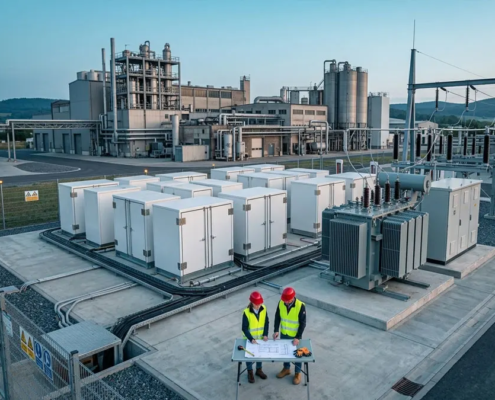 https://anengjipower.com/wp-content/uploads/2026/09/AnengJipower-European-BESS-Project-Design-Environment-1.webp
675
1000
Charging Station Engineer
https://anengjipower.com/wp-content/uploads/2025/09/anengji-dc-fast-charging-station-manufacturer-and-supplier-logo-white-1.png
Charging Station Engineer2026-09-24 09:05:462026-09-24 09:08:39Battery Energy Storage System Design Guide for Europe
https://anengjipower.com/wp-content/uploads/2026/09/AnengJipower-European-BESS-Project-Design-Environment-1.webp
675
1000
Charging Station Engineer
https://anengjipower.com/wp-content/uploads/2025/09/anengji-dc-fast-charging-station-manufacturer-and-supplier-logo-white-1.png
Charging Station Engineer2026-09-24 09:05:462026-09-24 09:08:39Battery Energy Storage System Design Guide for Europe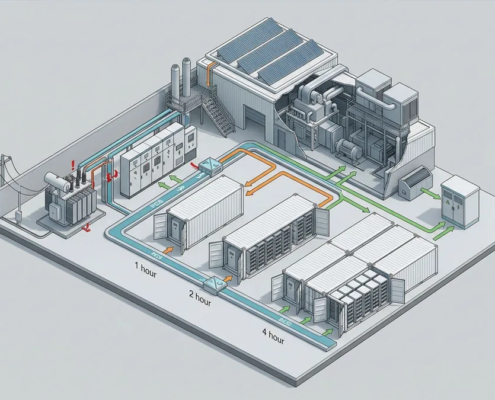 https://anengjipower.com/wp-content/uploads/2026/09/anengjipower-How-BESS-Power-and-Energy-Shape-Storage-Duration.webp
675
1000
Charging Station Engineer
https://anengjipower.com/wp-content/uploads/2025/09/anengji-dc-fast-charging-station-manufacturer-and-supplier-logo-white-1.png
Charging Station Engineer2026-09-23 09:06:532026-09-23 09:08:02BESS Duration Guide: How to Choose 1, 2 or 4 Hours
https://anengjipower.com/wp-content/uploads/2026/09/anengjipower-How-BESS-Power-and-Energy-Shape-Storage-Duration.webp
675
1000
Charging Station Engineer
https://anengjipower.com/wp-content/uploads/2025/09/anengji-dc-fast-charging-station-manufacturer-and-supplier-logo-white-1.png
Charging Station Engineer2026-09-23 09:06:532026-09-23 09:08:02BESS Duration Guide: How to Choose 1, 2 or 4 Hours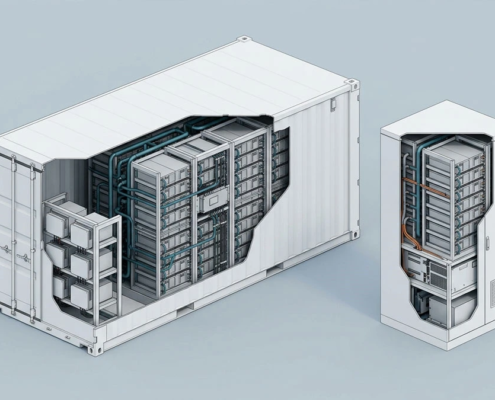 https://anengjipower.com/wp-content/uploads/2026/09/AnengJIPower-Cabinet-vs-Containerized-BESS-3D-Isometric-Structural-Cutaway.webp
675
1000
Charging Station Engineer
https://anengjipower.com/wp-content/uploads/2025/09/anengji-dc-fast-charging-station-manufacturer-and-supplier-logo-white-1.png
Charging Station Engineer2026-09-18 07:19:042026-09-18 07:19:38Cabinet vs Containerized BESS: How to Choose for Large C&I
https://anengjipower.com/wp-content/uploads/2026/09/AnengJIPower-Cabinet-vs-Containerized-BESS-3D-Isometric-Structural-Cutaway.webp
675
1000
Charging Station Engineer
https://anengjipower.com/wp-content/uploads/2025/09/anengji-dc-fast-charging-station-manufacturer-and-supplier-logo-white-1.png
Charging Station Engineer2026-09-18 07:19:042026-09-18 07:19:38Cabinet vs Containerized BESS: How to Choose for Large C&I


Leave a Reply
Want to join the discussion?Feel free to contribute!