
Introduction
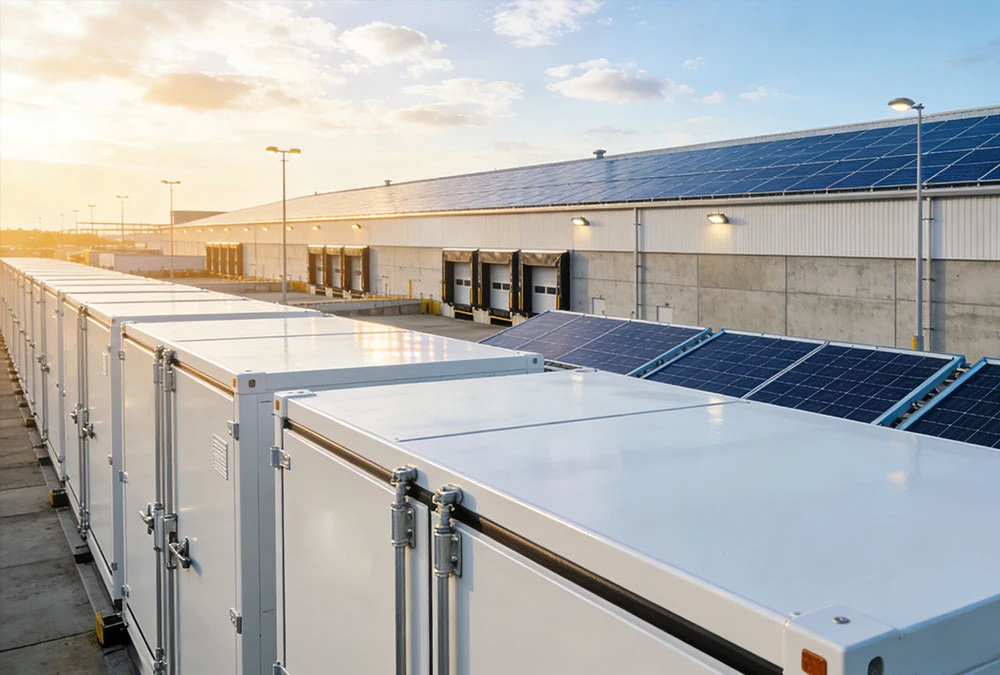
As we navigate the complexities of the 2026 global energy landscape, businesses are facing a double-edged sword: the urgent need for decarbonization and the volatile surge in traditional energy costs. For large-scale facilities, the adoption of a C&I Solar Battery Storage System has transitioned from a visionary sustainability goal to a mechanical and financial necessity. According to recent insights from McKinsey’s Powering the Future report, the battery energy storage market is projected to grow significantly as developers and industrial players realize that energy is no longer just an overhead cost—it is a strategic asset. By integrating a high-performance C&I Solar Battery Storage System, manufacturing plants and commercial hubs can insulate themselves from grid instability while locking in energy prices for the next decade.
What is a C&I Solar Battery Storage System?
Definition of Commercial & Industrial Solar Battery Storage
A C&I Solar Battery Storage System is an integrated energy infrastructure designed specifically for the high-capacity needs of the commercial and industrial sectors. Unlike residential units, these systems are engineered to handle massive electrical loads, typically ranging from 100kWh to several MWh. They combine photovoltaic (PV) generation with advanced battery chemistry to create a resilient, self-sustaining power ecosystem.
How Solar + Battery Energy Storage System (BESS) Works
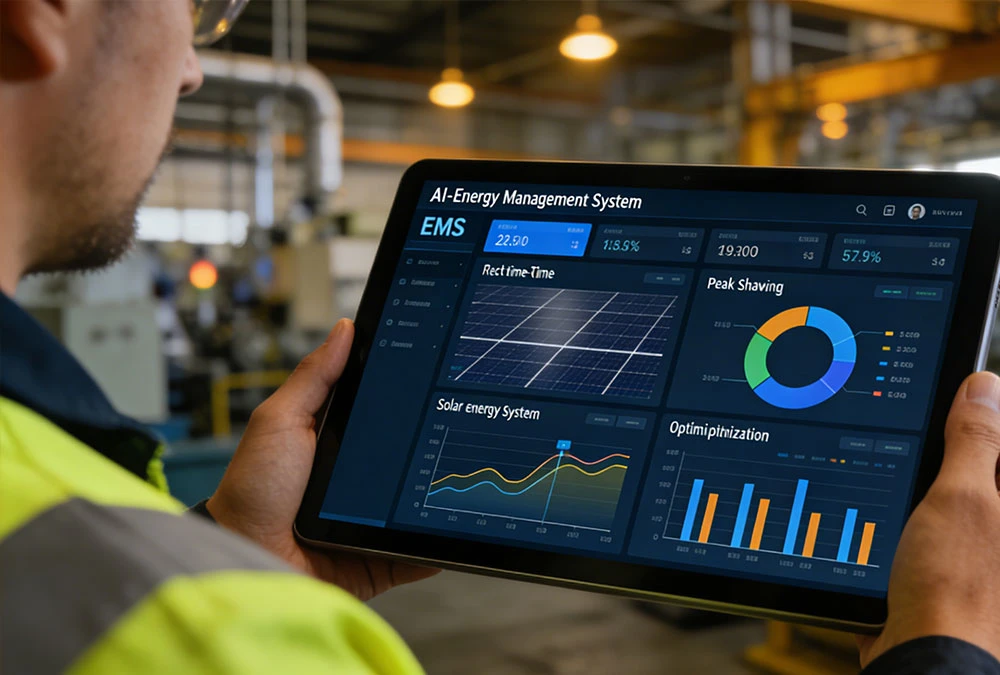
The technical synergy of a battery energy storage system (BESS) revolves around four key stages: generation, storage, inversion, and management. Solar panels capture DC energy; the Power Conversion System (PCS) manages the bi-directional flow between DC and AC; and the Energy Management System (EMS) acts as the “brain,” deciding in real-time whether to store energy, power the factory, or discharge to the grid based on current electricity tariffs.
Key Difference Between Solar-Only vs Solar + Storage Systems
A solar-only system is a “passive” asset; it reduces bills only when the sun is shining. However, in an industrial environment where production often continues through the second or third shift, solar-only systems result in “curtailment” or wasted energy. A commercial solar energy storage solution transforms that waste into a “dispatchable” resource, allowing a facility to use 12:00 PM sunshine at 8:00 PM when demand charges are highest.
Why Businesses Need C&I Solar Battery Storage Systems
Rising Electricity Prices and Demand Charges
In 2025 and 2026, utility companies have increasingly relied on “demand charges”—fees based on the single highest 15-minute peak of energy usage in a month. For a factory, a sudden startup of heavy machinery can trigger a demand charge that accounts for 30% to 50% of the total monthly bill. An industrial battery storage system flattens this peak, preventing these expensive “spike fees.”
Low Solar Self-Consumption and Energy Waste Issues
Without a storage buffer, many C&I facilities export excess solar energy back to the grid at wholesale prices, only to buy it back a few hours later at retail rates. This “buy high, sell low” cycle kills the ROI of solar investments. A solar + battery storage solution for manufacturing plants ensures that every kilowatt-produced stays within the facility’s “fence,” maximizing self-consumption.
Grid Instability and Power Reliability Risks
Aging grid infrastructure is increasingly prone to voltage sags and frequency fluctuations. For a precision CNC shop or a data center, a 100ms power dip can result in thousands of dollars in ruined workpieces or hardware damage. Solar battery backup for factories provides a seamless “ride-through” capability, acting as a massive, industrial-grade UPS.
Key Applications of C&I Solar Battery Storage Systems
Peak Shaving to Reduce Demand Charges
This is the “killer app” for industrial users. By using peak shaving with solar battery technology, the system monitors the facility’s load. When the load hits a pre-set threshold, the battery discharges instantaneously to cover the excess, keeping the grid-drawn power below the expensive tariff “ceiling.”
Load Shifting with Time-of-Use (TOU) Optimization
Many regions now use TOU pricing, where electricity costs $0.40/kWh in the afternoon but only $0.08/kWh at night. A grid-tied solar battery system allows a business to “arbitrage” this difference—charging during low-cost periods (or via free solar) and discharging during peak-cost windows.
Solar Self-Consumption Maximization
For businesses with large roof areas, the goal is to reach “net-zero” during operational hours. A BESS allows the facility to store the noon-time solar surplus and deploy it during the morning or evening ramps, significantly reducing the “LCOE” (Levelized Cost of Energy).
| Metric | Solar Only | Solar + BESS (AnengJi Solution) |
| Self-Consumption Rate | 30% – 40% | 80% – 95% |
| Demand Charge Reduction | Minimal | Up to 40% |
| Power Reliability | No Backup | Full UPS/Islanding Capability |
| Average ROI | 6 – 8 Years | 3 – 5 Years |
Common C&I Solar Battery Storage System Solutions
Grid-Tied Solar + Battery Storage System
This is the most common configuration for urban commercial buildings. It remains connected to the utility but uses the battery to optimize costs. It can also participate in “demand response” programs, where the utility pays the business to discharge energy during grid emergencies.
Off-Grid and Microgrid Solar Battery Systems
For remote mining operations or agricultural facilities, a microgrid solar battery system is the only way to achieve energy independence. These systems often integrate with diesel generators, using the BESS to ensure the generator always runs at its most efficient load point.
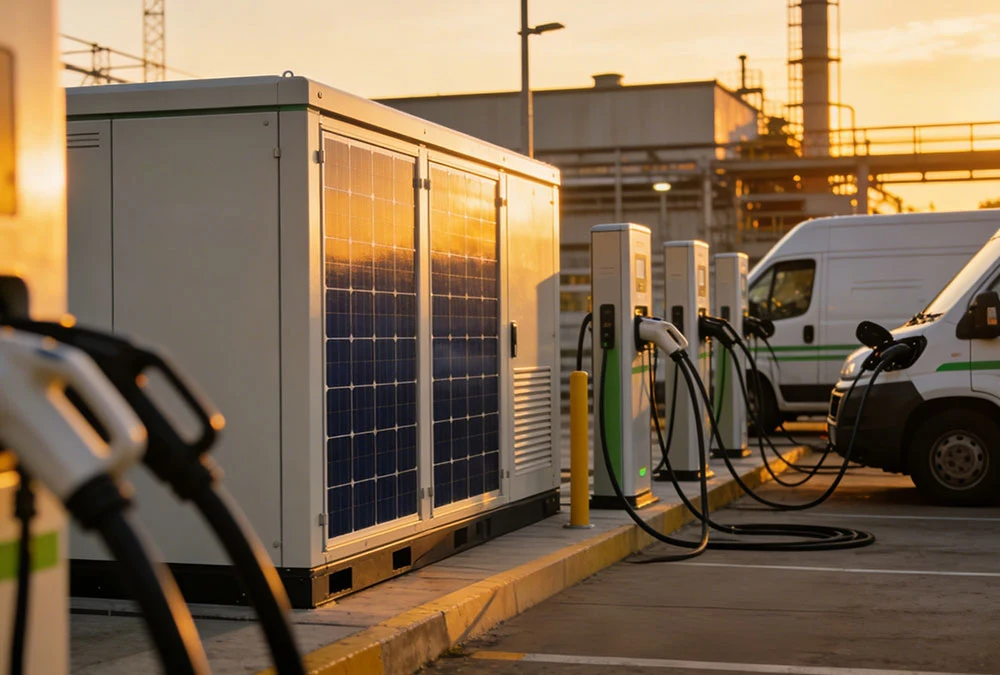
Solar + Storage + EV Charging (Integrated Energy Solution)
With the explosion of electric logistics, factories now need to support 180kW to 240kW DC fast chargers. Integrating renewable energy storage solutions with EV chargers prevents the chargers from overloading the site’s main transformer, using the battery to “buffer” the high-power charging sessions.
Containerized C&I Battery Storage Systems
For rapid deployment, a containerized solar battery storage system for business is ideal. These pre-engineered “all-in-one” units (often in 20ft or 40ft containers) include the batteries, PCS, HVAC, and fire suppression, requiring minimal on-site civil work.
Commercial and Industrial Applications
Manufacturing Plants and Industrial Facilities
High-power motors and thermal processes create erratic load profiles. A C&I solar battery storage system for factories stabilizes these loads, improving the power factor and reducing “harmonic distortion” in the facility’s electrical system.
Warehouses and Logistics Centers
With massive roof spaces and growing fleets of electric forklifts and delivery vans, logistics centers are the perfect candidates for commercial solar energy storage solutions. They turn a dormant roof into a high-yield power plant.
EV Charging Stations with Solar + Storage
Public and private charging hubs use storage to manage the “spiky” nature of EV charging. By using a lithium ion solar battery storage setup, charging operators can provide ultra-fast charging even in areas with limited grid capacity.
Core Components of a C&I Solar Battery Storage System
Battery System (LFP Lithium-ion Battery Packs)
We recommend Lithium Iron Phosphate (LFP) for all C&I applications. As McKinsey’s Battery 2035 report highlights, LFP has become the dominant chemistry due to its safety profile—it is significantly less prone to “thermal runaway” than NMC batteries and offers a cycle life of over 6,000 to 10,000 cycles.
Battery Management System (BMS) for Safety
The BMS is the “first responder.” It monitors cell-level voltage and temperature. In an industrial setting, a 3-tier BMS architecture (cell, rack, and system level) is essential to ensure that a single cell failure doesn’t escalate.
Power Conversion System (PCS) for Energy Conversion
The PCS is a bi-directional inverter that must be capable of “four-quadrant” operation. This allows it to manage both real power (Watts) and reactive power (VARs), which is crucial for maintaining power quality in factories with large inductive loads.
Energy Management System (EMS) for Intelligent Control
The EMS is the software layer that executes the solar energy optimization system. High-end EMS platforms now use AI to predict tomorrow’s weather and factory production schedule to calculate the most profitable charge/discharge cycle.
How to Choose the Right C&I Solar Battery Storage System
Capacity Sizing (kWh vs kW)
Engineers must distinguish between:
- kW (Power): The maximum “burst” the battery can provide (needed for peak shaving).
- kWh (Energy): How much total energy is stored (needed for load shifting).
A facility with high but short peaks needs a high kW/kWh ratio (e.g., 1:1), while a facility seeking backup needs more kWh (e.g., 1:4).
ROI Calculation and Total Cost of Ownership (TCO)
When calculating the industrial solar battery storage system cost and ROI, businesses must look beyond the initial CAPEX. Consider the “degradation rate” and the “round-trip efficiency.” A cheaper system with 80% efficiency will cost significantly more over 10 years than a 92% efficient system due to energy losses.
AnengJi C&I Solar Battery Storage System Solutions
At AnengJi, we specialize in engineering high-safety, scalable energy assets. Our C&I solar battery storage system suppliers network provides “turnkey” solutions that integrate:
- Advanced LFP Technology: High-density cells with liquid cooling for extended 15-year lifespans.
- Smart EMS: Cloud-based monitoring that allows managers to track savings in real-time.
- Modular Scalability: Start with a 100kW/215kWh unit and expand as your factory grows.
Our systems are specifically designed for the “Solar + Storage + EV Charging” nexus, supporting the high-current demands of modern industrial electrification.
Future Trends: AI and Grid Integration
By 2027, the role of BESS will expand into Virtual Power Plants (VPP). Instead of just saving money, your C&I solar battery storage system will make money by selling “frequency regulation” services to the grid. AI-driven EMS will automatically bid your battery’s spare capacity into the energy market, turning your utility room into a profit center.
FAQ – C&I Solar Battery Storage System
What is a C&I solar battery storage system?
A C&I solar battery storage system combines solar panels with battery storage to store excess energy and use it when needed, helping businesses reduce costs and improve energy reliability.
How does solar battery storage reduce electricity costs?
It stores energy during low-cost or solar generation periods and discharges during peak pricing hours, reducing demand charges and electricity bills through peak shaving and load shifting.
What is the typical ROI for a commercial solar battery storage system?
Most systems achieve a payback period of 3–5 years, driven by demand charge savings and government tax incentives like the ITC (Investment Tax Credit).
Which battery type is best for C&I solar storage?
Lithium iron phosphate (LFP) batteries are the gold standard for industrial use due to their high safety, non-toxic components, and superior cycle life compared to lead-acid or NMC.
Can solar battery storage work with EV charging stations?
Yes. It is the most effective way to deploy high-speed EV charging without expensive grid upgrades, as the battery provides the high-current “boost” required during charging sessions.
 https://anengjipower.com/wp-content/uploads/2026/03/romania-3-5mw-industrial-bess-pcs-array.webp
675
1000
Charging Station Engineer
https://anengjipower.com/wp-content/uploads/2025/09/anengji-dc-fast-charging-station-manufacturer-and-supplier-logo-white-1.png
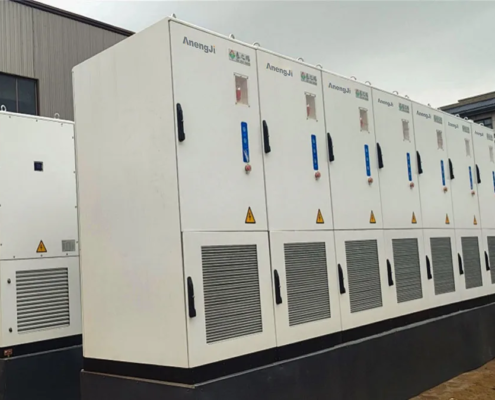
Charging Station Engineer2026-03-06 17:30:032026-03-06 09:27:24Romania 3.5MW/7.3MWh Industrial Energy Storage: High-Capacity Grid Integration
https://anengjipower.com/wp-content/uploads/2026/03/romania-3-5mw-industrial-bess-pcs-array.webp
675
1000
Charging Station Engineer
https://anengjipower.com/wp-content/uploads/2025/09/anengji-dc-fast-charging-station-manufacturer-and-supplier-logo-white-1.png
Charging Station Engineer2026-03-06 17:30:032026-03-06 09:27:24Romania 3.5MW/7.3MWh Industrial Energy Storage: High-Capacity Grid Integration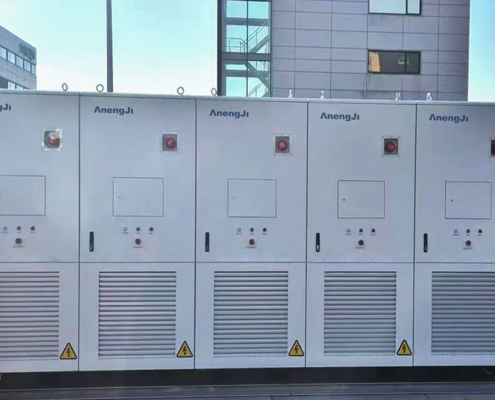 https://anengjipower.com/wp-content/uploads/2026/03/new-zealand-500kw-industrial-bess-outdoor-installation.webp
675
1000
Charging Station Engineer
https://anengjipower.com/wp-content/uploads/2025/09/anengji-dc-fast-charging-station-manufacturer-and-supplier-logo-white-1.png
Charging Station Engineer2026-03-06 07:28:092026-03-06 07:28:31New Zealand BESS: 500kW/1165kWh Frequency Regulation Solution
https://anengjipower.com/wp-content/uploads/2026/03/new-zealand-500kw-industrial-bess-outdoor-installation.webp
675
1000
Charging Station Engineer
https://anengjipower.com/wp-content/uploads/2025/09/anengji-dc-fast-charging-station-manufacturer-and-supplier-logo-white-1.png
Charging Station Engineer2026-03-06 07:28:092026-03-06 07:28:31New Zealand BESS: 500kW/1165kWh Frequency Regulation Solution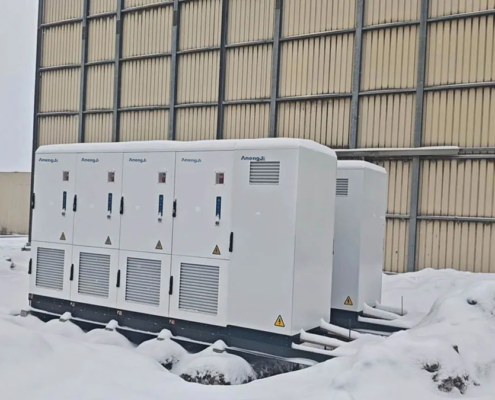 https://anengjipower.com/wp-content/uploads/2026/03/Ukraine-1MW2MWh-battery-energy-storage-system-installation.webp
675
1000
Charging Station Engineer
https://anengjipower.com/wp-content/uploads/2025/09/anengji-dc-fast-charging-station-manufacturer-and-supplier-logo-white-1.png
Charging Station Engineer2026-03-06 07:05:042026-03-06 07:21:46Ukraine 1MW/2MWh Energy Storage: 20ms Seamless Backup for Industrial Resilience
https://anengjipower.com/wp-content/uploads/2026/03/Ukraine-1MW2MWh-battery-energy-storage-system-installation.webp
675
1000
Charging Station Engineer
https://anengjipower.com/wp-content/uploads/2025/09/anengji-dc-fast-charging-station-manufacturer-and-supplier-logo-white-1.png
Charging Station Engineer2026-03-06 07:05:042026-03-06 07:21:46Ukraine 1MW/2MWh Energy Storage: 20ms Seamless Backup for Industrial Resilience


Leave a Reply
Want to join the discussion?Feel free to contribute!