
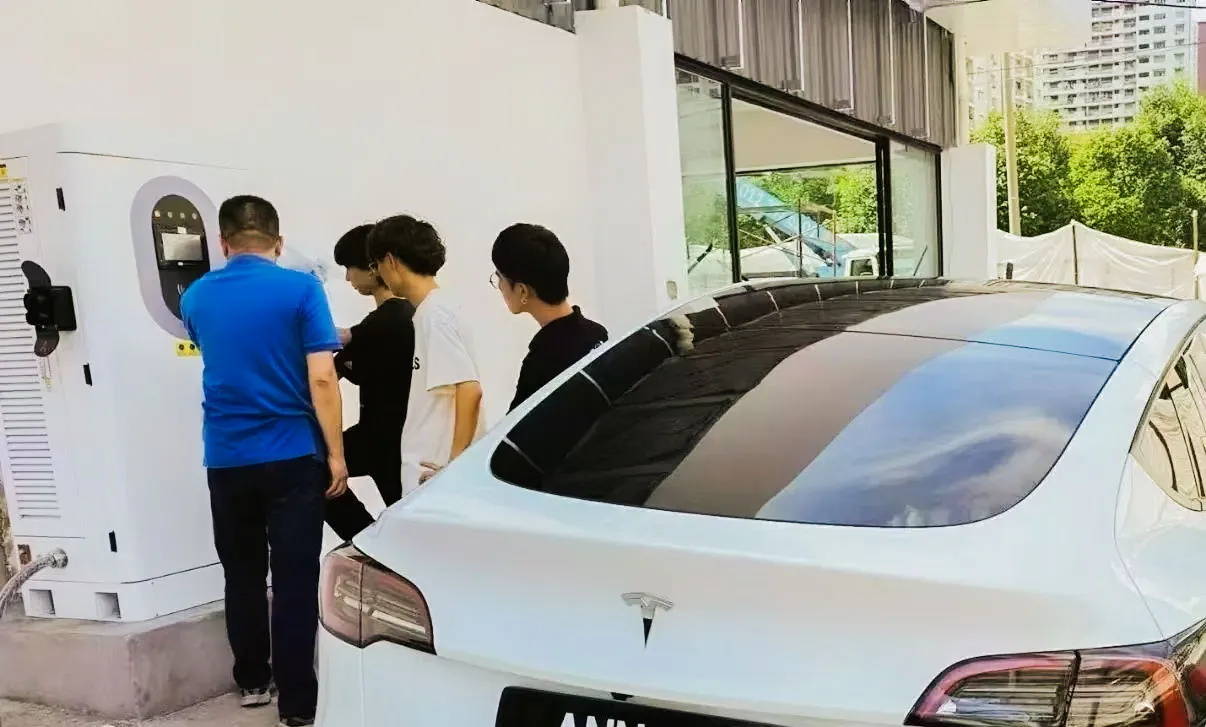
As Malaysia accelerates toward its 2030 Electric Mobility goals, commercial property owners in regions like Selangor and Kuala Lumpur are facing a critical infrastructure challenge. How do you implement a DC fast-charging station that balances high power delivery, strict regulatory compliance, and maximum return on investment (ROI)?
In this technical overview, we analyze a successful deployment of a 120kW DC Fast Charging Project in a high-traffic Malaysian commercial parking lot. This case study explores the technical specifications, SIRIM certification requirements, and the strategic advantages of dual-gun CCS2/CHAdeMO systems.
Project Overview: Selangor/KL Commercial Hub
The project involved the deployment of two high-capacity 120kW DC Fast Chargers. These units were specifically engineered to meet the Suruhanjaya Tenaga (Energy Commission) standards, ensuring they provide a safe and reliable power source for the growing fleet of EVs in the Klang Valley.
- Location: Selangor / Kuala Lumpur Commercial Public Parking.
- Infrastructure: 2 units of 120kW DC Fast Chargers.
- Standards: GP/ST/No.54/2025 Guidelines for EV Charging Systems (EVCB).
Core Technical Specifications & Local Compliance
From an engineering perspective, a charging station is only as good as its compliance with local grid and safety regulations. In Malaysia, the SIRIM certification and MS IEC 61851 standards are non-negotiable for commercial operators.
1. Dual-Gun Dynamic Power Allocation
The 120kW units utilize a dual-gun design (CCS2 + CHAdeMO). A key technical feature is Dynamic Load Balancing (DLB). If one vehicle is charging, it receives the full 120kW. If two vehicles are plugged in, the system intelligently splits the power (e.g., 60kW + 60kW), optimizing the parking lot’s turnover rate and reducing “charging anxiety” for patrons.
2. High-Efficiency Interfaces
While Tesla uses CCS2 (often via adapters) and brands like BYD or BMW are native CCS2, some older or specialized models still utilize CHAdeMO. By offering both, this project ensures 95% market compatibility, including local CKD (Completely Knocked Down) models like the Proton e.MAS and smart series.
3. Tropical Climate Adaptation (IP54 Rating)
Malaysia’s high humidity and ambient temperatures (often exceeding 35°C) require robust thermal management.
- Protection: IP54-rated dust and waterproof enclosures.
- Cooling: Forced air-cooling systems designed to operate stably up to +50°C.
- Durability: Armored cabling compliant with the Electricity Regulations 1994.
Technical Comparison: 120kW DC vs. Standard AC Charging
To help commercial investors understand the value proposition, the following table compares the 120kW DC solution against standard commercial AC chargers.
| Feature | 120kW DC Fast Charger | 22kW AC Pillar |
| Charging Speed (20%-80%) | ~20 – 30 Minutes | 4 – 6 Hours |
| Primary Use Case | Public Parking / Short Stay | Office / Residential / Long Stay |
| Revenue Potential | High (High turnover) | Moderate |
| Grid Interaction | Smart DLB & OCPP 2.0 | Basic |
| Compliance | SIRIM / ST Mode 4 | MS IEC 61851 |
Meeting Google E-E-A-T Standards: Why Safety Matters
Google prioritizes content that demonstrates Trustworthiness. In the EVSE (Electric Vehicle Supply Equipment) industry, this means adhering to the “Letter of No Objection” (LNO) from the Energy Commission.
This project strictly follows the MS IEC 62196 and MS IEC 61851-1:2021 standards. For a Charge Point Operator (CPO), this compliance isn’t just about safety—it’s about legal protection. Operating without an ST COA (Certificate of Approval) risks heavy fines or license revocation.
Investment Benefits and ROI Analysis
Commercial parking operators in Malaysia can leverage several financial advantages by installing 120kW systems:
- Government Incentives: Opportunities to apply for local municipal subsidies covering up to 30% of installation costs.
- Scalability: The modular design of these 120kW units allows for future upgrades to 180kW without replacing the entire housing.
- Low Maintenance: With OCPP 2.0 integration, operators can perform remote diagnostics. Most software glitches are resolved in under 2 hours without a site visit.
- User Experience: Integration with local apps (like e.MAS App) and RFID/Credit Card payment gateways ensures a frictionless user journey.
Conclusion: Future-Proofing Malaysian Parking Hubs
The deployment of 120kW DC fast-charging infrastructure is no longer a luxury—it is a necessity for commercial competitiveness in Malaysia. By combining international IEC standards with local SIRIM certifications and tropical-grade hardware, this project serves as a blueprint for safe, efficient, and profitable EV infrastructure.
Are you planning an EV charging deployment for your commercial property? Ensuring your equipment meets the latest Suruhanjaya Tenaga guidelines is the first step toward a sustainable investment.
 https://anengjipower.com/wp-content/uploads/2026/03/romania-3-5mw-industrial-bess-pcs-array.webp
675
1000
Charging Station Engineer
https://anengjipower.com/wp-content/uploads/2025/09/anengji-dc-fast-charging-station-manufacturer-and-supplier-logo-white-1.png
Charging Station Engineer2026-03-06 17:30:032026-03-06 09:27:24Romania 3.5MW/7.3MWh Industrial Energy Storage: High-Capacity Grid Integration
https://anengjipower.com/wp-content/uploads/2026/03/romania-3-5mw-industrial-bess-pcs-array.webp
675
1000
Charging Station Engineer
https://anengjipower.com/wp-content/uploads/2025/09/anengji-dc-fast-charging-station-manufacturer-and-supplier-logo-white-1.png
Charging Station Engineer2026-03-06 17:30:032026-03-06 09:27:24Romania 3.5MW/7.3MWh Industrial Energy Storage: High-Capacity Grid Integration https://anengjipower.com/wp-content/uploads/2026/03/new-zealand-500kw-industrial-bess-outdoor-installation.webp
675
1000
Charging Station Engineer
https://anengjipower.com/wp-content/uploads/2025/09/anengji-dc-fast-charging-station-manufacturer-and-supplier-logo-white-1.png
Charging Station Engineer2026-03-06 07:28:092026-03-06 07:28:31New Zealand BESS: 500kW/1165kWh Frequency Regulation Solution
https://anengjipower.com/wp-content/uploads/2026/03/new-zealand-500kw-industrial-bess-outdoor-installation.webp
675
1000
Charging Station Engineer
https://anengjipower.com/wp-content/uploads/2025/09/anengji-dc-fast-charging-station-manufacturer-and-supplier-logo-white-1.png
Charging Station Engineer2026-03-06 07:28:092026-03-06 07:28:31New Zealand BESS: 500kW/1165kWh Frequency Regulation Solution https://anengjipower.com/wp-content/uploads/2026/03/Ukraine-1MW2MWh-battery-energy-storage-system-installation.webp
675
1000
Charging Station Engineer
https://anengjipower.com/wp-content/uploads/2025/09/anengji-dc-fast-charging-station-manufacturer-and-supplier-logo-white-1.png
Charging Station Engineer2026-03-06 07:05:042026-03-06 07:21:46Ukraine 1MW/2MWh Energy Storage: 20ms Seamless Backup for Industrial Resilience
https://anengjipower.com/wp-content/uploads/2026/03/Ukraine-1MW2MWh-battery-energy-storage-system-installation.webp
675
1000
Charging Station Engineer
https://anengjipower.com/wp-content/uploads/2025/09/anengji-dc-fast-charging-station-manufacturer-and-supplier-logo-white-1.png
Charging Station Engineer2026-03-06 07:05:042026-03-06 07:21:46Ukraine 1MW/2MWh Energy Storage: 20ms Seamless Backup for Industrial Resilience


Leave a Reply
Want to join the discussion?Feel free to contribute!