
Introduction
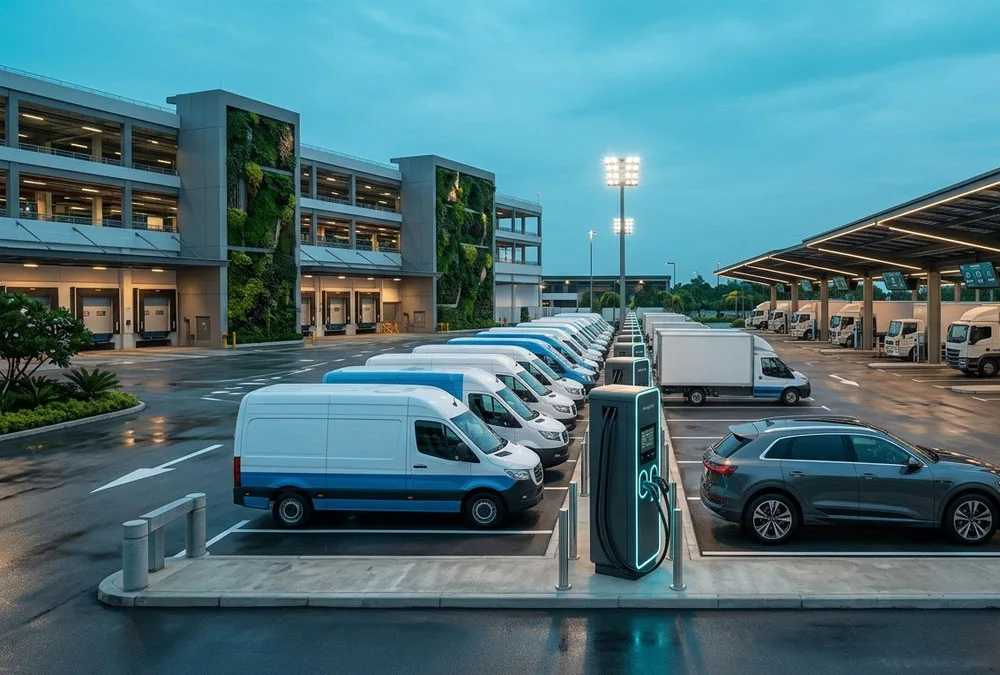
The best ev fleet charging solutions are not necessarily the fastest or cheapest chargers on the market. It is the integrated charging system that can reliably prepare the right vehicles for their next duty cycle while balancing charging time, energy demand, grid capacity, operating cost, and future fleet growth. Deploying scalable commercial ev charging stations requires a clear alignment between hardware power and real-world route logistics.
| Fleet Requirement | Recommended Approach | Strategic Advantage for Buyer |
|---|---|---|
| Overnight fleet dwell (>8 hours) | Level 2 AC Fleet Charging | Minimizes initial capital expenditure and avoids costly grid transformer upgrades. |
| Short charging window (<2 hours) | DC Fast Charging for Fleets | Ensures rapid vehicle turnaround during mid-shift driver breaks. |
| High daily mileage & heavy payload | High-Power DC (180kW – 360kW) | Maintains continuous battery SOC for heavy commercial routes without delay. |
| Mixed fleet (Vans + Heavy Trucks) | Hybrid AC + DC Architecture | Optimizes power distribution across light and heavy duty vehicle profiles. |
| Limited grid interconnect capacity | Smart Load Balancing & Management | Prevents utility circuit tripping without paying for physical grid expansions. |
| Severe peak utility demand charges | Smart Charging + BESS Integration | Shaves expensive peak power tariffs and acts as a buffer against grid limits. |
| Class 8 Heavy Electric Trucks | High-Power DC / MCS (Megawatt Charging) | Delivers ultra-fast energy transfer to massive battery packs above 500 kWh. |
Why EV Fleet Charging Requires More Than Choosing a Charger
When fleet directors start transitioning to electric vehicles, the immediate reflex is to look at hardware catalogs and pick a unit based on kilowatt rating. But electrification isn’t just buying hardware. I’ve seen depot operators buy dozens of 180kW fast cabinets only to discover their local utility transformer can barely support three of them running simultaneously. Selecting effective ev fleet charging solutions for businesses is fundamentally an engineering balancing act.
Fleet Charging Is About Vehicle Readiness, Not Just Charging Speed
Your depot doesn’t get paid for how fast a vehicle charges; it generates value when vehicles complete their assigned routes. The goal is vehicle readiness. If a delivery van sits parked for 10 hours overnight, pushing 150kW of raw power into it in 45 minutes makes zero financial sense. It only spikes your utility peak demand charges.
Duty Cycles and Charging Windows Determine the Right Solution
Your route schedules dictate your charging architecture. A municipal bus running fixed morning and evening shifts has entirely different power needs than a long-haul transport rig. According to the NREL Fleet Electrification Technology Assessment 2025, over 62% of depot downtime is inefficiently utilized due to unmanaged charging schedules. Mapping your exact duty cycle prevents over-specifying hardware.
The Lowest Charger Price Does Not Always Mean the Lowest Fleet Cost
Bargain-basement hardware often ends up being the most expensive choice over a five-year horizon. Low-grade chargers lack robust fleet charging software integration, suffer higher field failure rates, and lack modular component designs. Buying cheap units without OCPP support locks you into dead-end ecosystems.
Grid Capacity and Future Fleet Growth Must Be Considered
Installing five chargers today might work on your existing service panel. But what happens when you scale to fifty vehicles next year? According to BloombergNEF’s Electric Vehicle Outlook 2025, utility interconnection lead times for commercial sites have stretched to 18–36 months in major industrial corridors. If your initial site design doesn’t account for expansion, you will hit a massive operational brick wall. Remember: You are building an integrated power platform, not buying standalone plugs.
How to Choose an EV Fleet Charging Solution: The Fleet Charging Fit Framework
To avoid costly engineering oversights, we utilize the Fleet Charging Fit Framework. This six-step evaluation method aligns operational logistics with site electrical limits.
Step 1 — Analyze Your Vehicle Duty Cycle
Document daily mileage, route terrain, payload weights, and climate conditions. A cold-weather delivery van carrying full cargo consumes up to 35% more kWh per mile than an empty van in mild weather.
Step 2 — Define the Charging Window
Calculate the exact stationary dwell time for every vehicle. Is the vehicle parked at the depot for an 8-hour overnight block, or does it have a 30-minute window between regional delivery runs?
Step 3 — Calculate Daily Energy Requirements
Multiply daily mileage by vehicle efficiency (kWh/mile). A fleet of 20 electric vans traveling 100 miles daily at 0.8 kWh/mile requires a minimum net energy delivery of 1,600 kWh per day.
Step 4 — Determine Required Charging Power
Divide required energy (kWh) by dwell time (hours), then factor in a 15% thermal efficiency loss. This reveals whether you need standard AC fleet charging or high-output DC platforms.
Step 5 — Assess Available Grid Capacity
Inspect existing switchgear capacity and transformer capacity. Determine if your facility has spare amps or if you will need a utility upgrade or energy storage buffer.
Step 6 — Plan for Future Fleet Growth
Size your underground conduit, concrete pads, and primary switchboards for Phase 3 electrification even if you are only deploying Phase 1 hardware today.
Vehicle Profile + Dwell Window + Energy Demand + Power Rate + Grid Capacity + Scalability = Ideal Charging Architecture
Which EV Charging Level Is Best for Your Fleet?
Selecting the wrong charging hardware level leads directly to capital misallocation or operational downtime.
Level 1 Charging for EV Fleets
Level 1 (120V AC, 1.4kW to 1.9kW) is entirely unsuitable for commercial operations. Delivering only 3 to 5 miles of range per hour, it cannot meet basic duty cycle demands for active commercial vehicles.
Level 2 AC Charging for Overnight Fleet Operations
Operating at 208V–240V (7kW to 21kW), Level 2 units are the backbone of overnight ev fleet charging solutions for depots. If light-to-medium duty vans park for 8–12 hours, high-power Level 2 wallboxes offer the lowest total cost of ownership.
DC Fast Charging for Time-Sensitive Fleet Operations
When vehicles operate on multi-shift schedules or travel over 150 miles daily, DC fast charging for fleets becomes mandatory. Ranging from 60kW to 180kW, these platforms bypass internal vehicle AC rectifiers, pumping direct current straight to the battery pack to complete recharges in under 60 minutes.
High-Power DC Charging for High-Utilization Fleets
For heavy commercial transport hubs, 240kW to 480kW liquid-cooled DC fast chargers provide ultra-rapid energy replenishment. These platforms feature dynamic power-sharing modules, distributing energy dynamically between multiple vehicle dispensers based on real-time vehicle battery state of charge (SOC).
Megawatt Charging System for Electric Truck Fleets
The emerging Megawatt Charging System (MCS) standard, engineered for ev fleet charging solutions for electric trucks, operates at up to 1,250V and 3,000A. Delivering up to 3.75 MW of power, MCS allows Class 8 long-haul electric trucks to replenish a 600 kWh battery pack during a driver’s mandatory 30-minute break.
AC vs DC Fleet Charging: Which Is Better for Your Operation?
A common procurement debate is whether to standardize on AC chargers or invest in fast DC infrastructure.
When Level 2 AC Charging Makes More Sense
AC hardware wins on capital cost and electrical simplicity. Installing a 19.2kW Level 2 charger costs roughly 10% to 15% of a full DC fast charging cabinet. If your vehicles return to base every evening and stay parked until morning, high-power AC wallboxes combined with smart dynamic load balancing provide maximum ROI.
When DC Fast Charging Justifies the Higher Investment
If your fleet operates 18 to 24 hours a day, AC charging creates massive operational bottlenecks. DC fast chargers justify their higher hardware and installation costs by maximizing vehicle uptime and enabling intra-shift opportunity charging.
Why a Hybrid AC + DC Fleet Charging Strategy Can Be More Cost-Effective
The most efficient depots utilize a Hybrid Fleet Charging Strategy. By installing Level 2 AC stations for 80% of vehicles that park overnight, and adding a dual-port 120kW or 180kW DC fast charger for emergency top-offs or fast vehicle turnaround, you balance capital costs while maintaining operational flexibility.
How Many EV Chargers Does Your Fleet Need?
One of the biggest mistakes depot managers make is assuming that 50 electric vehicles automatically require 50 individual fast chargers.
Start With Vehicle Numbers and Charging Windows
If 30 delivery vans park for 10 hours overnight, you do not need 30 standalone charger connections if you utilize dual-port chargers managed by dynamic power-sharing software.
Account for Multiple Shifts and Vehicle Turnover
A 24-hour utility fleet can share a smaller pool of high-power DC chargers across three staggered shifts. Ten 120kW DC ports can comfortably service 30 to 40 vehicles per day if arrivals are cleanly scheduled.
Consider Simultaneous Charging Demand
Calculate your coincidental peak load. If all vehicles plug in simultaneously at 6:00 PM, your peak demand spikes dramatically. Managed EV charging software smooths this peak out over the entire night.
Avoid Oversizing Chargers for Every Vehicle
Deploying 180kW chargers for light delivery vans with a maximum vehicle acceptance rate of 80kW wastes equipment capacity. Match charger output strictly to vehicle onboard acceptance limits.
Plan Charger Capacity for Future Fleet Growth
A simple mathematical guideline for fleet hardware planning:
Required Ports = (Total Fleet Energy Demand in kWh) / (Charger Output Power in kW × Available Dwell Hours × 0.85 Efficiency)
How to Plan Electrical Infrastructure for an EV Fleet Charging Depot
Deploying commercial ev fleet charging solutions requires substantial site electrical engineering. The chargers are simply the end terminals of a complex power network.
Assess Existing Utility and Site Capacity
Request historical load data from your local utility provider. You need to know your site’s peak kVA usage and total available headroom on the service transformer.
Determine Transformer and Switchgear Requirements
Adding 1MW of fast charging capacity generally requires a dedicated step-down transformer (e.g., 11kV/13.8kV to 480V/400V) alongside commercial motor control centers and custom distribution switchboards.
Plan Power Distribution for Multiple Chargers
Underground trenching, heavy copper feeder cabling, concrete transformer pads, and cable management gantries represent up to 50% of total site civil engineering costs.
Manage Peak Demand and Utility Charges
Utility demand charges can represent over 60% of an unmanaged depot’s monthly electric bill. A single unmanaged 30-minute peak spike can set high utility capacity charges for the entire billing cycle.
Coordinate EV Charging With Utility Capacity
Engage your local utility interconnect engineers early. According to the Edison Electric Institute Fleet Infrastructure Guide 2025, substation upgrades take anywhere from 12 to 24 months depending on grid equipment lead times.
Design Electrical Infrastructure for Future Expansion
Always install oversized master busbars, underground spare conduits, and extra breaker slots during your initial site civil works. Laying plastic conduit today costs pennies on the dollar compared to re-trenching asphalt two years later.
How Smart Charging Improves EV Fleet Charging Efficiency
Smart software is what transforms dumb hardware into an intelligent, scalable depot system.
The Vehicle-Readiness Priority Principle:
“The goal is not to charge every vehicle equally. The goal is to make the right vehicles ready at the right time.”
What Is Smart EV Fleet Charging?
Smart charging establishes real-time cloud data links between vehicles, chargers, site building loads, and power utility pricing signals.
How Dynamic Load Balancing Prevents Grid Overload
Dynamic load balancing monitors total site electrical draw in real time. If facility air conditioning or industrial machinery spikes, charging management software automatically dials down charger output to prevent main circuit breakers from tripping.
How Departure-Based Charging Prioritizes Vehicles
By integrating with fleet telematics systems, software reads vehicle state of charge (SOC) and next morning departure times. A van departing at 5:00 AM gets charging priority over a vehicle staying parked until 9:00 AM.
Why Vehicles Should Not Be Charged Equally
Equal power distribution leads to wasted capacity. Splitting 100kW equally across 10 plugged-in vehicles gives each only 10kW. Prioritizing vehicles ensures that critical delivery routes are fully charged even during power constraints.
How OCPP Supports Fleet Charging Management
Demanding open OCPP 2.0.1 fleet charging compliance ensures your hardware communicates seamlessly with third-party software platforms, protecting your fleet against proprietary vendor lock-in.
How Smart Charging Can Reduce Peak Demand
Automated departure-based charging shifts energy consumption to off-peak utility hours (typically 11:00 PM to 5:00 AM), dramatically cutting electricity costs without impacting driver readiness.
How to Improve EV Fleet Battery Efficiency and Charging Performance
How you manage daily charging profiles directly impacts battery thermal health and long-term asset value.
Avoid Unnecessary High-Power Charging
Continuous high-current DC fast charging generates internal cell heat, accelerating chemical degradation. Use high-power DC chargers strictly when short turnaround windows require it.
Use Scheduled and Off-Peak Charging
Automated charging schedule rules ensure vehicles charge during cooler nighttime hours, reducing thermal stress on battery chemistry while lowering utility bills.
Maintain an Appropriate State of Charge
For daily operations, set software charge limits to 80% or 85% SOC. Only top off to 100% SOC immediately prior to long-distance highway runs.
Reduce Excessive Battery Heat
Utilize pre-conditioning features via vehicle telematics while connected to grid power. Cooling or warming the battery pack prior to fast charging protects long-term cell capacity.
Monitor Charging and Battery Performance
Track State of Health (SOH) metrics continuously across your fleet software dashboard to identify degrading battery modules before they cause on-route vehicle breakdowns.
Can Battery Energy Storage Improve EV Fleet Charging?
When local electrical utilities quote multi-million dollar transformer upgrades and two-year construction delays, an industrial Battery Energy Storage System (BESS) becomes an indispensable site buffer.
Why Fleet Depot Charging Can Create High Peak Demand
Plugging in four 180kW DC fast chargers simultaneously places an instant 720kW demand spike on your electrical service. Doing this during peak utility hours triggers severe financial penalties.
How BESS Can Reduce Peak Charging Demand
An energy storage system charges quietly from the grid at a low rate (e.g., 50kW) during off-peak hours. When vehicles plug in, the BESS discharges instantly alongside the grid connection, delivering 300kW+ of high-power charging without triggering utility demand penalties.
When BESS Makes Sense for Fleet Charging
Integrating commercial energy storage is ideal when utility upgrades exceed $200,000, grid capacity requests face long delays, or site demand charges exceed $20 per kW month.
| BESS Capacity | Target Fleet Scale | Core Engineering Feature | Buyer Value & Advantage |
|---|---|---|---|
| 100kWh BESS | Small delivery depots (2–5 vans) | Compact cabinet, liquid-cooled, integrated PCS | Eliminates small site grid transformer upgrades completely. |
| 261kWh BESS | Medium depots (10–20 mixed fleet) | High energy density, outdoor NEMA 4X rated | Provides extended discharge duration to buffer back-to-back fast charging sessions. |
| 418kWh BESS | Large commercial transit / truck depots | Modular liquid-cooled system with fast EMS response | Maximizes peak shaving value while enabling microgrid islanding capability. |
| 1MWh Containerized BESS | Heavy industrial & electric truck fleets | 20ft ISO container design, high C-rate capability | Enables megawatt-scale fast charging in locations with severely limited grid capacity. |
Solar + BESS + EV Fleet Charging
Combining rooftop or carport solar PV with on-site battery storage and chargers creates an independent microgrid. Generating clean energy on-site isolates your depot operating costs from rising utility tariffs.
How PCS, BMS and EMS Integrate With Fleet Chargers
An effective storage architecture relies on seamless hardware coordination:
- PCS (Power Conversion System): Bi-directional inverter handling AC-DC power conversion with sub-20ms response time.
- BMS (Battery Management System): Monitored cell-level temperature, balancing, and state of health (SOH).
- EMS (Energy Management System): The master software orchestrating grid input, solar output, battery dispatch, and EV charger power allocations.
BESS vs Utility Upgrade for High-Power Fleet Charging
According to a 2025 study by the Smart Electric Power Alliance (SEPA), deploying an integrated BESS buffer speeds up commercial EV depot commissioning by an average of 14 months compared to waiting for utility grid extensions.
How Much Does an EV Fleet Charging Solution Cost?
Evaluating total cost requires looking beyond initial hardware sticker prices.
EV Charger Hardware Costs
Commercial Dual-Port Level 2 AC chargers range from $2,500 to $6,500 per unit. High-power 120kW to 180kW DC fast charging cabinets cost between $30,000 and $65,000, while 360kW+ ultra-fast units exceed $90,000.
Electrical Infrastructure and Installation Costs
Civil works, underground trenching, conduits, switchgear panels, and labor generally equal or exceed the cost of the charging hardware itself (often $30,000 to $150,000+ per depot).
Software and Network Costs
Enterprise fleet charging software subscriptions typically range from $200 to $600 per charger charger annually, covering cellular data connections, load management algorithms, and telematics integration.
Maintenance and Service Costs
Budget 3% to 5% of initial hardware expenditure annually for preventive maintenance, spare parts, and SLA support extensions.
Utility Upgrade and Demand Charge Costs
If required, utility transformer upgrades can cost between $50,000 and $300,000+. Unmanaged peak demand charges can add thousands of dollars to monthly utility bills.
BESS Costs for Fleet Charging
Turnkey industrial battery energy storage systems range from $350 to $550 per kWh installed, depending on C-rate, chemistry, and liquid-cooling specifications.
Why Total Cost of Ownership Matters More Than Charger Price
A comprehensive Total Cost of Ownership (TCO) calculation reflects true lifetime project expense:
How to Plan and Deploy Commercial EV Fleet Charging Stations
To execute a seamless project, we implement the 7-Phase Fleet Charging Deployment Model.
How to Compare EV Fleet Charging Solution Providers
Use this quantitative vendor evaluation matrix during your RFP process to compare equipment suppliers objectively.
| Evaluation Factor | Weight | What to Evaluate |
|---|---|---|
| Hardware Reliability & Uptime | 20% | Proven field uptime rates (>98%), modular power module design, IP65 cabinet weather sealing. |
| Charging Technology | 15% | Broad portfolio spanning Level 2 AC to 360kW+ liquid-cooled DC fast chargers. |
| Fleet Software & OCPP | 15% | Native OCPP 2.0.1 support, telematics API integration, departure-based scheduling. |
| Load Management | 15% | Real-time dynamic power sharing, site limit monitoring, automated peak shaving algorithms. |
| Infrastructure Support | 10% | Engineering design support, single-line diagrams, factory commissioning assistance. |
| Total Cost of Ownership | 10% | Competitive factory-direct hardware pricing, clear spare parts cost structure. |
| Warranty & After-Sales Service | 10% | Standard 2–5 year factory warranties, guaranteed spare parts inventory response time. |
| OEM/ODM Scalability | 5% | Custom enclosure branding, hardware tailoring, flexible manufacturing options. |
Charger Reliability and Uptime
In commercial fleet operations, a broken charger means an uncharged delivery truck and missed customer deliveries. Demand equipment built with redundant, hot-swappable power modules.
Fleet Charging Software and OCPP Compatibility
Avoid vendor lock-in. Choosing open OCPP-certified chargers allows you to swap management software providers down the road without replacing your physical hardware.
Load Management and Smart Charging Capabilities
Verify that the supplier’s system supports local dynamic load management, allowing chargers to share power even if cloud network connections drop momentarily.
Installation and Commissioning Support
Ensure your hardware manufacturer provides dedicated field engineering support to assist your EPC contractor during transformer energization and testing.
Warranty, Spare Parts and After-Sales Service
Verify local warehouse spare parts availability for critical wear components such as liquid-cooled cable assemblies, contactors, and touchscreen displays.
OEM, ODM and Product Scalability
Work with agile manufacturers capable of delivering custom cabinet branding, flexible payment terminal integrations, and tailored hardware configurations.
Common EV Fleet Charging Mistakes to Avoid
- Installing Too Many High-Power Chargers: Over-specifying fast chargers without sufficient vehicle dwell time burns unnecessary budget.
- Designing Based Only on Vehicle Count: Ignoring vehicle dwell hours and route schedules leads to severely oversized electrical infrastructure.
- Ignoring the Fleet Charging Window: Assuming all vehicles can plug in at the same exact power level leads to artificial utility capacity bottlenecks.
- Overlooking Utility Interconnect Capacity: Purchasing hardware before receiving formal utility load approval can result in idle, unpowered cabinets.
- Choosing Chargers Based Only on Purchase Price: Low-cost chargers lacking robust OCPP software support lead to high long-term maintenance costs.
- Treating Charging Software as an Optional Feature: Running a commercial fleet without automated load control exposes you to massive utility demand penalties.
- Failing to Plan for Fleet Growth: Under-sizing underground conduit and electrical switchboards complicates future fleet electrification phases.
- Ignoring BESS When Grid Capacity Is Limited: Waiting years for utility transformer extensions instead of deploying a battery buffer stalls electrification timelines.
EV Fleet Charging Solutions FAQ
What is an EV fleet charging solution?
It is an integrated infrastructure system comprising charging hardware, power distribution panels, cloud software, and utility load management engineered specifically to support commercial electric vehicle fleets.
What is the best charging solution for an EV fleet?
The best solution matches your specific vehicle dwell window. High-power Level 2 AC chargers work best for overnight depots, while high-output DC fast chargers suit multi-shift, high-mileage fleets.
Is AC or DC charging better for fleets?
Neither is universally better. AC charging offers lower capital cost for long overnight dwell times, while DC fast charging provides necessary quick turnaround for time-sensitive routes.
How many EV chargers does a fleet need?
It depends on vehicle dwell time and daily energy demand. Utilizing dual-port chargers and dynamic load sharing software allows fewer ports to service larger vehicle fleets.
How much does fleet EV charging cost?
Hardware ranges from $2,500 for commercial AC units to over $60,000 for high-power DC cabinets. Infrastructure, civil works, and utility interconnect costs vary significantly by depot site condition.
What is depot charging?
Depot charging refers to centralized infrastructure installed at a fleet’s off-duty parking hub, allowing vehicles to recharge systematically during overnight or off-shift periods.
What is smart charging for EV fleets?
Smart charging uses cloud software to automatically adjust charger power outputs based on utility tariffs, vehicle arrival/departure times, and real-time building electrical loads.
What is dynamic load balancing?
It is an automated power management capability that dynamically redistributes available electrical power among plugged-in chargers to prevent exceeding site grid limits.
Can BESS reduce EV fleet charging costs?
Yes. An industrial battery storage system shaves expensive peak utility demand charges by discharging stored energy during high-power fast charging events.
What is the best EV charger for electric trucks?
Class 8 heavy electric trucks require high-power DC fast chargers (240kW to 360kW+) with liquid-cooled cables or next-generation Megawatt Charging System (MCS) platforms.
Commercial EV Fleet Charging Solutions from AnengJi
AnengJi is a global manufacturer of robust, flexible fleet electric vehicle charging solutions designed for commercial fleet operators, distributors, and EPC contractors.
DC Fast Charging Solutions for Commercial Fleets
We deliver dual-port commercial DC fast chargers ranging from 60kW to 180kW, engineered for high reliability, rapid thermal dissipation, and simple field serviceability.
Scalable Fleet Depot Charging Infrastructure
Our 320kW to 480kW high-power liquid-cooled DC charging platforms feature dynamic power-sharing matrix cabinets, providing scalable fast charging for heavy-duty commercial vehicles.
Smart Charging and Load Management
All AnengJi hardware features native OCPP 2.0.1 compliance, enabling seamless dynamic load balancing, departure-based vehicle prioritization, and remote diagnostics.
EV Charging + BESS Integration
We manufacture fully integrated liquid-cooled battery energy storage systems (100kWh, 261kWh, 418kWh, and 1MWh) designed to buffer peak charging loads and eliminate costly utility upgrades.
OEM and ODM Fleet Charging Solutions
As a specialized electric bus charger manufacturers partner and custom OEM provider, we offer custom enclosure branding, tailored cable management systems, and specialized firmware options.
Project Engineering, Commissioning and Technical Support
From initial single-line diagram reviews to on-site commissioning assistance, AnengJi engineers ensure your depot project is delivered on schedule and within budget.
Related Article
- Top 10 Electric Car Charging Station Manufacturers in China (2026 Guide)
- The 10 Biggest EV Charging Companies in the World
- Commercial Electric Car Charging Station Cost: 2026 Installation Guide
- High Power EV Charging Guide: 350kW, 500kW & Megawatt Systems
- 10 Megawatt Charging System Myths Fleet Managers Must Know
 https://anengjipower.com/wp-content/uploads/2026/06/epc-vs-turnkey-solar-project-bess.webp
675
1000
Charging Station Engineer
https://anengjipower.com/wp-content/uploads/2025/09/anengji-dc-fast-charging-station-manufacturer-and-supplier-logo-white-1.png
Charging Station Engineer2026-06-22 07:16:042026-06-24 07:13:17What Is the Difference Between EPC and Turnkey Contract Models in Energy Projects?
https://anengjipower.com/wp-content/uploads/2026/06/epc-vs-turnkey-solar-project-bess.webp
675
1000
Charging Station Engineer
https://anengjipower.com/wp-content/uploads/2025/09/anengji-dc-fast-charging-station-manufacturer-and-supplier-logo-white-1.png
Charging Station Engineer2026-06-22 07:16:042026-06-24 07:13:17What Is the Difference Between EPC and Turnkey Contract Models in Energy Projects? https://anengjipower.com/wp-content/uploads/2026/06/anengji-commercial-solar-plus-storage-benefits-site.webp
675
1000
Charging Station Engineer
https://anengjipower.com/wp-content/uploads/2025/09/anengji-dc-fast-charging-station-manufacturer-and-supplier-logo-white-1.png
Charging Station Engineer2026-06-20 14:34:102026-06-20 14:37:43What Are the Top Benefits of Solar Battery Storage in Factories?
https://anengjipower.com/wp-content/uploads/2026/06/anengji-commercial-solar-plus-storage-benefits-site.webp
675
1000
Charging Station Engineer
https://anengjipower.com/wp-content/uploads/2025/09/anengji-dc-fast-charging-station-manufacturer-and-supplier-logo-white-1.png
Charging Station Engineer2026-06-20 14:34:102026-06-20 14:37:43What Are the Top Benefits of Solar Battery Storage in Factories? https://anengjipower.com/wp-content/uploads/2026/06/modular-commercial-solar-battery-storage-cabinet.webp
675
1000
Charging Station Engineer
https://anengjipower.com/wp-content/uploads/2025/09/anengji-dc-fast-charging-station-manufacturer-and-supplier-logo-white-1.png
Charging Station Engineer2026-06-18 09:16:522026-07-03 03:05:13What Is Solar Battery Storage? Complete C&I Engineering Guide
https://anengjipower.com/wp-content/uploads/2026/06/modular-commercial-solar-battery-storage-cabinet.webp
675
1000
Charging Station Engineer
https://anengjipower.com/wp-content/uploads/2025/09/anengji-dc-fast-charging-station-manufacturer-and-supplier-logo-white-1.png
Charging Station Engineer2026-06-18 09:16:522026-07-03 03:05:13What Is Solar Battery Storage? Complete C&I Engineering Guide


Leave a Reply
Want to join the discussion?Feel free to contribute!