
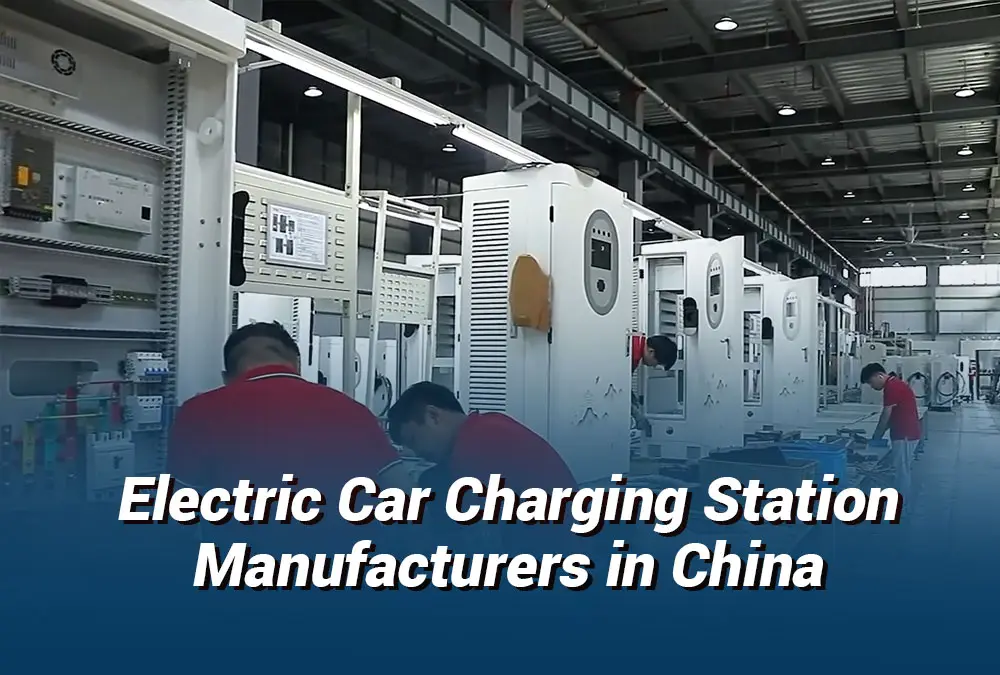
Selecting reliable Electric Car Charging Station Manufacturers is no longer just about comparing unit prices on a spreadsheet; it’s a critical infrastructure decision that directly impacts operational uptime, grid compliance, and your long-term return on investment. China has solidified its position as the world’s dominant hub for global EV charger manufacturers in China, backed by an unmatched supply chain that delivers over 65% of global charging hardware. However, navigating this market requires looking far past marketing claims. B2B buyers must evaluate actual factory R&D, power electronics stability, and local grid compliance. As global EV deployment accelerates, picking the right partner determines whether your site thrives or suffers from constant offline errors. This guide breaks down the top 10 China EV charging station manufacturers, evaluating their real-world manufacturing capacity, certification depth, and suitability for commercial, fleet, and EPC projects.
Top 10 Electric Car Charging Station Manufacturers in China
1. ANENGJI (Anengji Energy)
Company Overview: ANENGJI is a premier high-tech EV charging equipment manufacturer specializing in comprehensive EVSE R&D, digital manufacturing, and integrated energy solutions. Operating advanced automated digital workshops equipped with German precision machinery and robotic assembly lines, ANENGJI ensures strict quality control and high-volume scalability. The company has invested over 10 million RMB into EV charging and power electronics R&D, backed by an expert engineering team. ANENGJI stands out as a leading China EV charger manufacturers for export partner, supporting global CPOs, distributors, and EPC contractors with robust hardware and customized energy systems.
Main EV Charging Products: Smart AC wallboxes, commercial DC fast charging stations, ultra-fast liquid-cooled charging stacks, and portable EV chargers.
AC and DC Charging Capability: Full-spectrum coverage including Level 2 single-phase/three-phase AC chargers and high-power DC fast charging systems.
Power Range: 3.5 kW to 44 kW for AC charging; 30 kW up to 1440 kW for DC super-fast and flexible charging stacks.
Certifications and Market Coverage: ISO 9001, CE, TÜV, CB, IEC 61851, IEC 62196, and IEC 62752. Exports to Europe, North America, Southeast Asia, South America, and the Middle East.
OCPP and Smart Charging: Full compliance with OCPP 1.6J and OCPP 2.0.1, featuring dynamic load balancing, app-based control, and billing platform integration.
OEM/ODM Capability: Extensive EV charger OEM and ODM services, including custom enclosure designs, private labeling, tailored PCB layouts, and custom power module integration.
Global Project Experience: Deployed in heavy-duty mining projects in Russia, commercial hubs in Thailand, and public charging networks across Germany, Romania, Georgia, and Brazil.
Best Suited For: Commercial CPOs, fleet operators, and global brand distributors looking for reliable commercial EV charging station manufacturers in China offering turnkey BESS and EVSE integration.
Potential Consideration: High customization options may require slightly longer lead times for custom tooling validation.
2. TELD (TGOOD New Energy)
Company Overview: TELD, a subsidiary of Qingdao TGOOD Electric, is a massive EV charging station manufacturer and operator in China. Pionering the “Charging Network” ecosystem, TELD integrates outdoor substation technology with intelligent DC charging systems. Their infrastructure manages millions of daily charging sessions, leveraging big data to optimize distribution grid loads and virtual power plant (VPP) interactions across mainland markets.
Main EV Charging Products: Integrated box-transformer charging systems, bus depot chargers, and split-type DC charging stacks.
AC and DC Charging Capability: Primary focus on medium to ultra-high-power DC fast charging infrastructure.
Power Range: 7 kW AC up to 600 kW liquid-cooled DC fast charging stacks.
Certifications and Market Coverage: GB/T, IEC standards, CE certified. Dominant market share in domestic China with growing exports to Central Asia and Europe.
OCPP and Smart Charging: Proprietary cloud platform with full OCPP 1.6J integration for international deployments.
OEM/ODM Capability: Focuses primarily on large-scale enterprise custom hardware and grid-tied substation modules.
Global Project Experience: Nationwide municipal transit charging networks, highway fast-charging corridors, and industrial logistics parks.
Best Suited For: Municipal transport authorities, heavy-duty logistics hubs, and large public infrastructure projects.
Potential Consideration: Standard off-the-shelf products are heavily optimized for Chinese GB/T standards, requiring custom export modifications.
3. Star Charge (WANBANG Digital Energy)
Company Overview: Star Charge is a global powerhouse among China EV charging station manufacturers, known for its extensive hardware portfolio and advanced energy management software. The company operates massive manufacturing plants with rigorous automated testing. Star Charge supplies hardware directly to major global automotive OEMs and international energy utilities, driving innovation in high-power charging and vehicle-to-grid (V2G) applications.
Main EV Charging Products: AC wallboxes, standalone DC fast chargers, liquid-cooled superchargers, and bi-directional V2G chargers.
AC and DC Charging Capability: Full portfolio of AC residential/commercial units and high-capacity DC charging terminals.
Power Range: 3.7 kW to 22 kW AC; 30 kW to 480 kW DC fast chargers.
Certifications and Market Coverage: UL, CE, TÜV, RCM, and Eichrecht (German calibration law compliance). Global presence across Europe, Americas, and APAC.
OCPP and Smart Charging: Advanced OCPP 2.0.1 compliance, ISO 15118 (Plug & Charge), and EMS integration.
OEM/ODM Capability: Highly established private-label manufacturing programs for global automakers and oil & gas majors.
Global Project Experience: European highway supercharging hubs, automaker dealership networks, and utility-scale energy projects.
Best Suited For: Automotive brands, global energy suppliers, and large-scale CPOs seeking premium certified hardware.
Potential Consideration: Minimum order quantities (MOQs) for fully customized ODM projects can be relatively high.
4. Sinexcel (Shenzhen Sinexcel Electric)
Company Overview: Sinexcel is a publicly listed power electronics giant, recognized as one of the leading DC fast charger manufacturers in China. Their core expertise lies in manufacturing ultra-reliable charging power modules, active power filters, and energy storage inverters. Because Sinexcel produces its own internal power modules, their finished EV chargers exhibit exceptional electrical conversion efficiency and system stability under thermal stress.
Main EV Charging Products: Modular DC fast chargers, split-type matrix charging systems, and energy storage integrated charging stations.
AC and DC Charging Capability: Specializes primarily in commercial and industrial DC fast charging applications.
Power Range: 60 kW to 480 kW modular DC charging systems.
Certifications and Market Coverage: CE, UL listed components, IEC standards. Exported extensively across Western Europe, North America, and East Asia.
OCPP and Smart Charging: OCPP 1.6J compliant with intelligent power matrix allocation software.
OEM/ODM Capability: Supplies both complete EVSE units and core power modules to global EV charger ODM manufacturers China partners.
Global Project Experience: Public transit charging depots in Europe, highway fast-charging stations, and microgrid charging sites.
Best Suited For: System integrators, charging station assemblers, and commercial fleet operators requiring top-tier power electronics.
Potential Consideration: Product lineup is heavily skewed toward DC fast charging, with fewer options for basic AC residential units.
5. NARI Technology (State Grid Corporation)
Company Overview: NARI Technology is the industrial manufacturing arm of the State Grid Corporation of China. As an authoritative EV charging infrastructure manufacturer, NARI plays a pivotal role in establishing China’s national electrical standards. Their equipment is engineered for maximum utility-grade durability, designed to withstand intense grid fluctuations and harsh environmental conditions with virtually zero system failure.
Main EV Charging Products: Utility-grade DC fast chargers, automated pantograph chargers for buses, and high-voltage grid interface substations.
AC and DC Charging Capability: Focused almost exclusively on high-voltage, high-capacity DC fast charging systems.
Power Range: 120 kW to 960 kW ultra-high-power charging stacks.
Certifications and Market Coverage: GB/T, IEC, State Grid utility certification. Primarily serves national grid infrastructure and state-backed international energy projects.
OCPP and Smart Charging: Fully integrated with national grid dispatch systems and international OCPP protocols.
OEM/ODM Capability: Limited commercial OEM service; focuses on large government-to-government (G2G) and utility-scale projects.
Global Project Experience: China’s intercity expressway charging grid, international utility pilot projects along Belt and Road partner nations.
Best Suited For: Government infrastructure projects, public transit agencies, and utility companies requiring industrial-grade reliability.
Potential Consideration: Less agile for small-to-medium commercial buyers seeking fast turnarounds or custom branding.
6. Inovance (Shenzhen Inovance Technology)
Company Overview: Inovance is a renowned leader in industrial automation and electric vehicle powertrain systems. Leveraging their deep knowledge of motor drives and inverter technology, Inovance entered the charging sector as a top-tier EV charging equipment supplier. Their DC charging stations are praised for high energy efficiency ratings, compact physical footprints, and intelligent thermal management systems that prevent power derating during peak summer operation.
Main EV Charging Products: Compact DC fast chargers, liquid-cooled charging stacks, and integrated solar-storage-charging power conversion units.
AC and DC Charging Capability: Specialized in medium to high-power DC fast charging solutions.
Power Range: 30 kW to 360 kW DC charging systems.
Certifications and Market Coverage: CE, IEC standards, ISO 9001. Active in European, South American, and Asian industrial markets.
OCPP and Smart Charging: Supports OCPP 1.6J, remote cloud analytics, and automated fault recovery features.
OEM/ODM Capability: Provides technical OEM collaboration for industrial clients and commercial brand owners.
Global Project Experience: Commercial charging networks in South America, industrial logistics fleet chargers across Asia.
Best Suited For: Fleet operators and commercial real estate developers seeking energy-efficient DC fast chargers.
Potential Consideration: Brand focus is split across broader industrial automation, meaning EVSE is one of several business units.
7. Grasen Power (Luoyang Grasen Power Technology)
Company Overview: Grasen Power is a dedicated EV charging station factory with over 15 years of specialized experience in electric vehicle charging hardware. Known for cost-effective manufacturing without sacrificing component quality, Grasen has established a strong global footprint. Their facilities utilize rigorous burn-in testing protocols, ensuring that every charger leaving the line operates reliably across extreme temperature ranges.
Main EV Charging Products: Dual-port AC chargers, single/dual-port DC fast chargers, and commercial charging management software.
AC and DC Charging Capability: Balanced offering of commercial AC units and fast DC terminals.
Power Range: 7 kW to 22 kW AC; 30 kW to 360 kW DC fast chargers.
Certifications and Market Coverage: CE, ISO 9001, IEC certified. Exported to over 30 countries across Eastern Europe, Middle East, and Southeast Asia.
OCPP and Smart Charging: Full OCPP 1.6J capability, supporting third-party payment gateway integration.
OEM/ODM Capability: Excellent EV charger OEM flexibility with customized exterior casing colors, brand logos, and UI screens.
Global Project Experience: Highway refueling stations in the Middle East, municipal parking networks in Eastern Europe.
Best Suited For: Independent CPOs and regional importers searching for cost-competitive, reliable commercial EV charger suppliers.
Potential Consideration: Advanced software feature customization requires clear initial technical scoping.
8. EN+ Technology (Shenzhen EN PLUS)
Company Overview: EN+ Technology is a specialized EVSE manufacturer focused heavily on sleek product aesthetics, user-friendly software interfaces, and smart home/commercial charging systems. EN+ has built a solid reputation in the European and North American markets by delivering highly reliable AC chargers and compact DC fast terminals that meet strict Western design and safety standards.
Main EV Charging Products: Smart residential wallboxes, commercial AC chargers, and compact destination DC fast chargers.
AC and DC Charging Capability: Robust Level 2 AC chargers and low-to-medium power DC chargers.
Power Range: 7 kW to 22 kW AC; 30 kW to 180 kW DC chargers.
Certifications and Market Coverage: CE, UKCA, RoHS, REACH, and ETL/UL pending models. Strong commercial focus on Europe and North America.
OCPP and Smart Charging: Native OCPP 1.6J compliance, dynamic load balancing, and dedicated mobile app controls.
OEM/ODM Capability: Excellent ODM capabilities for private-label brand creation, featuring award-winning industrial design aesthetics.
Global Project Experience: Workplace charging stations across the UK and Germany, hotel destination charging networks in North America.
Best Suited For: Distributors, real estate developers, and brand owners seeking modern, visually appealing AC and destination DC chargers.
Potential Consideration: Limited options for ultra-high-power megawatt-level heavy fleet chargers.
9. Growatt (Growatt New Energy)
Company Overview: As a global leader in solar inverters and battery energy storage, Growatt has expanded aggressively into the EVSE sector as an integrated commercial EV charging station manufacturers in China provider. Growatt’s key differentiator is its ability to seamlessly combine solar PV, battery storage, and EV charging hardware into a single software dashboard, making them a top choice for clean energy installers.
Main EV Charging Products: THOR series smart AC chargers, commercial DC chargers, and integrated PV-Storage-EV chargers.
AC and DC Charging Capability: Full portfolio of AC wallboxes and commercial DC chargers designed for solar integration.
Power Range: 3.5 kW to 22 kW AC; 30 kW to 240 kW DC fast chargers.
Certifications and Market Coverage: CE, UKCA, RCM, ISO 9001. Distributed across more than 150 countries worldwide.
OCPP and Smart Charging: Fully compliant with OCPP 1.6J, featuring solar surplus charging mode and smart grid management.
OEM/ODM Capability: Provides co-branded equipment options for established solar distributors and EPCs.
Global Project Experience: Residential solar-plus-storage EV setups across Australia, commercial PV-charging sites in Europe.
Best Suited For: Solar EPC contractors, green energy installers, and commercial clients building zero-emission charging stations.
Potential Consideration: Standalone EV charger pricing can be higher if not bundling with their solar/storage ecosystem.
10. Tonhe Technology (Shijiazhuang Tonhe Electronics)
Company Overview: Tonhe Technology is a pioneer in high-frequency switching power supplies and a core DC EV charger factory powerhouse. With decades of research into high-efficiency power modules, Tonhe supplies the underlying power conversion engines that drive many global charging stations. Their chargers are known for high dust and moisture resistance, extremely wide output voltage windows, and exceptional conversion efficiency.
Main EV Charging Products: High-efficiency DC power charging modules, standalone fast chargers, and split-type charging stacks.
AC and DC Charging Capability: Specialized exclusively in high-efficiency DC power conversion systems.
Power Range: 30 kW to 360 kW DC charging systems (utilizing 20kW/30kW/40kW modules).
Certifications and Market Coverage: CE, ISO 9001, IEC standards. Widespread adoption across Asia, Russia, and Southern Europe.
OCPP and Smart Charging: Standard OCPP 1.6J backend integration with hardware-level module protection software.
OEM/ODM Capability: Key OEM partner for charger manufacturers seeking reliable internal power module systems.
Global Project Experience: Heavy-duty highway charging corridors, city bus electrification hubs, and extreme-climate charging sites.
Best Suited For: CPOs and engineering firms needing heavy-duty DC chargers capable of operating in hot or dusty environments.
Potential Consideration: User interface and enclosure aesthetics are functional rather than consumer-oriented.
How We Ranked the Top EV Charging Station Manufacturers
Evaluating a global EV charging station supplier requires a structured approach. Rather than relying on simple factory headcount or marketing revenue figures, our assessment utilizes the engineering-focused EV Charger Manufacturer Qualification Matrix. According to the BloombergNEF (BNEF) Electric Vehicle Outlook 2025 Report, over 22% of installed commercial chargers worldwide experience operational downtime due to poor component thermal design and unverified software protocols. Therefore, our evaluation strictly scores manufacturers across seven core technical and operational pillars:
| Evaluation Factor | What We Examine | Buyer Benefit & Advantage |
|---|---|---|
| Manufacturing & Capacity | Digital factory automation, SMT lines, burn-in test bays | Ensures consistent quality, minimal batch defects, and fast lead times during mass delivery. |
| Product Topology | AC/DC range, liquid cooling, power module efficiency (>96%) | Lower heat dissipation reduces electricity losses and cuts long-term station operating costs. |
| Certification Depth | UL, CE, TÜV, CB, Eichrecht, Energy Star compliance | Eliminates customs import blockages and guarantees hassle-free local grid tie approvals. |
| Software Interoperability | OCPP 1.6J/2.0.1, ISO 15118 (Plug & Charge), dynamic load management | Prevents vendor lock-in, allowing you to connect hardware to any cloud software platform. |
| OEM/ODM Flexibility | Custom tooling, UI skinning, firmware modification, SKD kits | Allows brands to build local market equity with unique enclosures without heavy R&D costs. |
| Export Track Record | Global project references, logistics packaging, multi-language support | Reduces international shipping damage risks and ensures reliable remote technical support. |
| Service & Warranty | Spare parts availability, SLA turnaround times, remote diagnostic OTA | Maximizes station uptime, protecting revenue streams and brand reputation. |
The ranking is based on a combination of manufacturing capability, product coverage, technology, certifications, international market experience, customization capability, and project support—not simply company size.
How to Compare and Choose a Chinese EV Charging Station Manufacturer
Selecting among top electric car charging station manufacturers in China requires systematically aligning factory capabilities with your project’s specific operational requirements. Buyers often fall into the trap of over-specifying hardware kW ratings while ignoring critical site transformer limits or regional grid codes.
Match the Manufacturer to Your Target Market
Every target market imposes strict electrical, safety, and regulatory boundaries. If you are importing into North America, your EV charger factory in China must comply with UL 2202 / UL 2594 safety standards and supply CCS1 or NACS (SAE J3400) connectors. For European destinations, CE, IEC 61851, IEC 62196, and mandatory MID meter compliance for public billing are non-negotiable. Asia-Pacific and Middle Eastern markets often require tropicalized IP65 enclosures to handle intense heat and ambient dust. Matching target market certifications early prevents costly shipment rejections at customs.
Choose the Right Charging Type for Your Application
AC EV Chargers for Long-Dwell Charging
Level 2 AC EV charger units (7 kW to 22 kW) are optimal for locations where vehicles park for three hours or longer. Ideal deployment sites include corporate workplaces, residential apartments, hotels, and long-stay public garages. AC chargers feature lower hardware costs and simple grid connections, making them highly scalable for large parking arrays.
DC Fast Chargers for Commercial and Fleet Charging
When dwell time drops under one hour, commercial sites must install DC fast charger manufacturers in China solutions rated from 60 kW to 240 kW. Direct Current bypasses the vehicle’s onboard charger, feeding power directly to the battery pack. These units are critical for commercial highway plazas, retail hubs, transit depots, and logistics fleets where rapid turnaround directly dictates daily revenue.
High-Power Charging for Heavy-Duty and High-Utilization Applications
Heavy-duty electric trucks, mining haulers, and high-frequency bus corridors require liquid-cooled charging stacks delivering 360 kW to 1440 kW. These systems utilize specialized liquid-cooled cables to maintain manageable gun handling weights while transferring continuous high currents without thermal derating.
Evaluate Power, Charging Window and Site Capacity Together
A frequent mistake made by project developers is assuming that “higher kW is always better.” As electrical engineers, we emphasize that required charging power depends strictly on vehicle energy demand, dwell time, site capacity, and operating schedules. If your facility grid feeder is capped at 200 kVA, installing a 360 kW standalone DC charger without battery buffering will trip your main circuit breaker. Always evaluate site transformer head-room alongside charger power specs.
💡 Buyer FAQ: What if our site transformer capacity is insufficient for DC fast charging?
Engineer Advice: You do not necessarily need to pay hundreds of thousands of dollars to the local utility for grid transformer upgrades. Incorporating an industrial Battery Energy Storage System (BESS)—such as a 100 kWh or 261 kWh cabinet solution—allows for “peak shaving.” The battery charges slowly from the grid during low-demand periods and discharges alongside the grid to deliver peak fast-charging current when an EV plugs in.
Recommended Commercial BESS Products for EV Charging Integration
To overcome grid distribution bottlenecks and avoid steep utility demand charges, integrated commercial EV charger suppliers recommend combining EVSE with pre-engineered industrial battery storage:
- 100 kWh BESS Cabinet: Compact outdoor footprint, ideal for small commercial sites, retail plazas, and workplace charging expansion without grid upgrades.
- 261 kWh / 418 kWh Industrial BESS: Liquid-cooled battery system tailored for medium-to-large fleet depots and public DC fast-charging plazas needing dynamic peak-shaving and arbitrage.
- 1 MWh Utility-Scale Container: High-density modular BESS designed for heavy-duty electric truck stations, highway supercharging hubs, and microgrid integrated solar-storage-charging terminals.
Verify That the Supplier Is a Real Manufacturer
The proliferation of sourcing platforms makes trading companies look identical to genuine factories. To verify real manufacturing capabilities, demand live video factory walkthroughs of SMT production lines, review official ISO 9001 certificates linked to the factory name, and inspect raw component sourcing logs (e.g., Schneider contactors, Mean Well power supplies, internal power modules). Real manufacturers own their IP, operate internal burn-in testing bays, and maintain dedicated technical engineering teams.
Check OCPP and Charging Management Compatibility
Open Charge Point Protocol compliance ensures your hardware remains future-proof. Verify that the supplier’s firmware fully supports OCPP 1.6J and OCPP 2.0.1. This open standard allows you to seamlessly connect your hardware to any third-party EV charging management system for billing, user access control, remote diagnostic monitoring, and Over-The-Air (OTA) firmware updates.
Evaluate OEM and ODM Capabilities
For distributors, regional energy suppliers, and private-label brands, working with a factory possessing strong EV charger ODM manufacturers China experience is essential. Ensure they can customize enclosure sheet metal, develop custom UI software skins, modify LCD touchscreen software, and provide complete SKD (Semi-Knocked Down) kits if local assembly is required for tax optimization.
Evaluate Warranty, Spare Parts and Technical Support
A charger installed thousands of miles away is only as good as its after-sales support. Always clarify what happens when a power module fails. Premium manufacturers provide 24-to-36-month standard warranties, maintain dedicated spare-parts inventory packages (power modules, main control boards, RFID readers), and offer guaranteed remote diagnostic response SLAs.
What Certifications Do EV Chargers Need in Different Markets?
North America
North American deployments demand UL listing (UL 2594 for AC wallboxes; UL 2202 for DC fast chargers) along with FCC Part 15 Class A/B electromagnetic compliance. Energy Star certification is also increasingly required for municipal grant rebates.
Europe
European markets require comprehensive CE marking backed by official LVD (Low Voltage Directive) and EMC (Electromagnetic Compatibility) test reports under IEC 61851 standards. Public billing chargers in countries like Germany must also meet strict Eichrecht calibration laws.
Other International Markets
Australia and New Zealand mandate RCM compliance and local grid safety registration. Asian and Middle Eastern markets often adopt CE/IEC standards but require additional local grid code compliance certificates.
Connector Standards
Ensure your supplier matches regional vehicle inlets: CCS1 for North America, CCS2 for Europe/ROW, NACS (Tesla standard) for North American expansion, and GB/T for China and specific regional trade partners.
Why Certification Must Match the Target Market
Installing non-compliant hardware risks immediate site shutdown by electrical inspectors, voids commercial insurance policies, and forfeits eligibility for government infrastructure subsidies.
How Much Do EV Charging Stations From China Cost?
What Determines China EV Charger Pricing?
Factory pricing varies significantly based on internal power module brand, total kW rating, enclosure IP protection, touchscreen UI size, POS credit card reader integration, and certified safety testing depth.
AC EV Charger Pricing Tier
Commercial AC chargers generally fall into three price brackets:
- Entry-Level (Basic 7 kW – 11 kW AC): Highly economical, simplified plug-and-play home or private office units.
- Commercial Smart AC (7 kW – 22 kW Dual Port): Includes RFID, OCPP 1.6J software capability, smart load balancing, and MID-certified metering.
- Customized OEM AC Charging Stations: Features customized enclosure metalwork, corporate branding, custom LCD screens, and POS integration.
DC Fast Charger Pricing Tier
DC fast charger cost structures are directly scaled by total output power and cooling technology. As total power increases, internal power module count grows, thermal management requirements transition from forced-air to liquid cooling, and total cabinet manufacturing costs scale accordingly.
Why Factory Price Is Not the Same as Total Project Cost
The hardware FOB factory price represents only a portion of your total project capital expenditure (CapEx). Overall site installation requires accounting for international ocean freight, customs import tariffs, civil trenching work, concrete pad installation, main electrical panel switchgear upgrades, grid transformer expansion, site commissioning, and annual cloud software SaaS licensing fees.
How to Verify a China EV Charger Manufacturer Before Ordering
Before transferring deposit funds or placing large volume orders with China EV charger manufacturers, execute this essential engineering verification process:
Verify Factory and Production Capability
Request a real-time video audit showing active assembly lines, automated SMT PCB placement, internal power module testing, and environmental aging burn-in chambers.
Check Product Datasheets and Test Reports
Examine complete product specification sheets. Verify electrical efficiency ratings (>95-96%), power factor (>0.99), operating temperature range (-30°C to +55°C), and THD (Total Harmonic Distortion <5%).
Verify Certifications and Certification Scope
Cross-reference provided CE, UL, or TÜV certificate numbers directly on the official issuing lab’s online verification database. Ensure the certificate applies to the exact model number you are purchasing.
Review Warranty and Spare Parts Policy
Confirm exact warranty length, replacement part dispatch timelines, and whether technical support includes live remote debugging via OCPP logs.
Confirm Lead Time and MOQ
Establish clear production lead times for sample units versus bulk orders, and negotiate clear Minimum Order Quantities (MOQs) for custom branding.
Request Project References When Appropriate
Ask for verifiable case studies or photos of active commercial installations operating in your geographic region or target climate.
What Should You Ask an EV Charging Station Manufacturer Before Buying?
Use this comprehensive engineering procurement checklist when issuing RFQs to potential reliable EV charging station suppliers in China:
| RFQ Item | What to Confirm | Why This Matters to Buyers |
|---|---|---|
| Charger Type & Power | AC / DC / Power kW / Dual-gun distribution | Matches exact vehicle charging speeds to your site parking dwell times. |
| Connector Standard | CCS1 / CCS2 / NACS / GB/T cable length | Guarantees compatibility with target market electric vehicles without plug adapters. |
| Certifications Scope | UL, CE, TÜV, CB, FCC test report availability | Ensures fast customs clearance and immediate local utility grid connection authorization. |
| OCPP Integration | OCPP 1.6J / 2.0.1 compliance & backend logs | Gives freedom to choose or switch billing software platforms at any time. |
| OEM / Customization | Logo screen print, custom metal housing, custom UI | Establishes strong brand recognition and market ownership in your local market. |
| MOQ & Production Lead Time | Sample batch MOQ, bulk lead times (days) | Protects project construction timelines and manages upfront inventory cash flow. |
| Warranty & Spare Parts | Warranty period, spare power modules package | Minimizes station downtime by keeping critical replacement parts ready on site. |
Common Mistakes When Buying EV Chargers From China
- Choosing Based Only on Price: Selecting the cheapest quotation usually results in uncertified power modules that overheat and derate output power under commercial load.
- Confusing a Trading Company With a Manufacturer: Trading brokers lack engineering staff to resolve complex OCPP firmware bugs or assist with grid interconnection audits.
- Ignoring Target-Market Certification: Attempting to import non-UL certified chargers into North America leads to customs rejection or severe municipal fines.
- Overlooking OCPP and Backend Compatibility: Hardware locking you into a supplier’s proprietary, closed software platform blocks future cloud management choices.
- Choosing the Wrong Connector: Mismatched cable plugs require expensive field replacement or external adapters that degrade charging speeds.
- Underestimating Electrical Infrastructure: Purchasing high-capacity DC chargers without analyzing site switchgear, cabling, or transformer limits causes costly installation delays.
- Ignoring After-Sales Support: Failing to secure spare modules and guaranteed technical support SLAs leads to extended station outages.
Which Chinese EV Charging Station Manufacturer Is Right for Your Project?
Different charging applications require specific manufacturing strengths. Use this scenario-based engineering matrix to select the ideal manufacturer type for your deployment:
| Project Type | What to Prioritize | Strategic Advantage for Project Owners |
|---|---|---|
| Workplace & Multi-Family | Level 2 AC charging + dynamic load management | Maximizes vehicle plugs per site without exceeding building grid transformer limits. |
| Retail Plazas & Parking | AC + DC fast charger mix + credit card payment | Attracts high-value EV customers and generates direct public charging revenue. |
| Fleet Logistics Depots | High-power DC fast charging + schedule optimization | Guarantees full fleet vehicle battery charge overnight while minimizing peak utility charges. |
| Highway Charging Hubs | Ultra-high-power liquid-cooled DC + 99% uptime | Delivers ultra-fast 15-minute battery top-ups for high vehicle throughput. |
| Independent CPO Networks | OCPP 1.6J/2.0.1 compliance + robust cloud backend | Protects complete platform ownership and allows seamless operational scaling. |
| Regional Brand Distributors | OEM/ODM flexibility + full target market certifications | Enables rapid market entry with exclusive branded hardware portfolios. |
| Solar + Charging Integration | Charger + BESS (100kWh-1MWh) + EMS software | Unlocks zero-emission solar charging, eliminates grid upgrade costs, and enables VPP revenue. |
EV Charging Station Manufacturers FAQ
Who are the top electric car charging station manufacturers in China?
The leading manufacturers include ANENGJI, Star Charge, TELD, Sinexcel, NARI Technology, Inovance, Grasen Power, EN+ Technology, Growatt, and Tonhe Technology. These companies lead the industry in R&D innovation, production capacity, and export certifications.
What are the best EV charger manufacturers in China for export?
For international export, manufacturers like ANENGJI, Star Charge, and Sinexcel are widely recognized due to their robust CE, UL, and TÜV certifications, OCPP software compatibility, and experience with global grid codes.
Which Chinese companies manufacture DC fast chargers?
Top DC fast charger specialists include ANENGJI (offering 30 kW to 1440 kW systems), Sinexcel, TELD, Tonhe Technology, and Grasen Power, providing both air-cooled and liquid-cooled fast chargers.
Can Chinese EV charger manufacturers provide OEM and ODM services?
Yes, leading suppliers offer extensive OEM and ODM customization services, including custom metal enclosure tooling, brand logo printing, UI software skinning, customized cabling, and SKD manufacturing.
What certifications do Chinese EV chargers need for global markets?
European markets require CE (LVD/EMC) and IEC 61851/62196 certification; North America mandates UL listing (UL 2202/2594) and FCC compliance; Australia requires RCM safety registration.
How much do commercial EV charging stations from China cost?
Pricing varies depending on power and specs. Commercial AC chargers range from entry-level single units to multi-port smart chargers. DC fast chargers scale in price based on kW output, module selection, and cooling topology.
Are Chinese EV charging stations reliable for long-term commercial use?
Yes, top-tier manufacturers utilize power modules with conversion efficiencies exceeding 96% and IP65-rated weather protection, achieving over 99% operational uptime when properly maintained.
How do I verify an EV charger manufacturer in China before ordering?
Verify their physical manufacturing capability via live video audits, check official ISO 9001 certifications, cross-reference CE/UL test reports directly on lab databases, and inspect real project references.
What should I ask an EV charger manufacturer before submitting an order?
Key questions must cover connector standards (CCS1/CCS2/NACS), OCPP firmware version compliance, spare power module availability, lead times, MOQ, and specific warranty response SLAs.
Get a China EV Charging Station Manufacturer Quote
Download the Free EV Charger RFQ Checklist
Streamline your procurement process and avoid costly engineering mistakes with our standardized technical RFQ checklist template.
Get a Product & Power Recommendation
Tell us your target market, site transformer capacity, required kW power, and quantity. Our application engineers will prepare a tailored hardware package within 24 hours.
Request a Custom Commercial EV Charging Project Solution
Planning a large-scale fleet depot, commercial plaza, or integrated Solar + BESS + EV Charging station? Consult directly with our senior system engineers.
Commercial EV Charging Solutions From ANENGJI
As a trusted pioneer among global Electric Car Charging Station Manufacturers, ANENGJI delivers end-to-end hardware and software solutions engineered for peak commercial performance. Our digital manufacturing facilities produce high-grade equipment designed to lower total cost of ownership while maximizing operational uptime.
Commercial AC and DC Charging Equipment
From smart 7 kW – 22 kW AC wallboxes for long-dwell commercial sites to robust standalone 30 kW – 240 kW DC fast chargers, ANENGJI supplies certified, weather-proof hardware engineered to withstand severe outdoor conditions.
DC Fast Charging Solutions
Our heavy-duty DC charging stacks leverage high-efficiency power modules (>96.5% efficiency) and intelligent dynamic power matrix allocation, ensuring fast, safe, and continuous charging for public hubs and fleet depots.
EV Charger Modules and Power Systems
We design and manufacture industrial-grade AC-to-DC charging modules and power distribution systems, providing core components for global EVSE assemblers and SKD partners.
OEM and ODM EV Charging Solutions
ANENGJI offers turnkey EV charger OEM and ODM services. We support distributors and CPOs with custom exterior metalwork, distinctive brand colors, tailored UI interfaces, custom packing, and dedicated firmware development.
EV Charging + Battery Energy Storage Integration
Overcome grid capacity limitations by pairing ANENGJI fast chargers with our commercial 100 kWh, 261 kWh, 418 kWh, or 1 MWh BESS units. Our integrated Microgrid EMS optimizes solar utilization, reduces peak demand charges, and provides emergency back-up power.
Global Project and Technical Support
Supported by extensive international deployment experience, ANENGJI provides free technical product training, remote OCPP cloud commissioning support, and guaranteed spare-parts availability worldwide.
Ready to Build or Expand Your EV Charging Network?
Connect directly with an experienced ANENGJI application engineer to evaluate your site capacity, select certified hardware, and receive a competitive factory quote.
Related Article
- The 10 Biggest EV Charging Companies in the World
- How to Choose the Best EV Fleet Charging Solution | Fleet Depot Guide
- Best EV Charging Companies in The World 2026: Top 10 Suppliers Compared
- Commercial Electric Car Charging Station Cost: 2026 Installation Guide
- EV Charging Solutions for Hotels: Build Smart Infrastructure
 https://anengjipower.com/wp-content/uploads/2026/06/epc-vs-turnkey-solar-project-bess.webp
675
1000
Charging Station Engineer
https://anengjipower.com/wp-content/uploads/2025/09/anengji-dc-fast-charging-station-manufacturer-and-supplier-logo-white-1.png
Charging Station Engineer2026-06-22 07:16:042026-06-24 07:13:17What Is the Difference Between EPC and Turnkey Contract Models in Energy Projects?
https://anengjipower.com/wp-content/uploads/2026/06/epc-vs-turnkey-solar-project-bess.webp
675
1000
Charging Station Engineer
https://anengjipower.com/wp-content/uploads/2025/09/anengji-dc-fast-charging-station-manufacturer-and-supplier-logo-white-1.png
Charging Station Engineer2026-06-22 07:16:042026-06-24 07:13:17What Is the Difference Between EPC and Turnkey Contract Models in Energy Projects? https://anengjipower.com/wp-content/uploads/2026/06/anengji-commercial-solar-plus-storage-benefits-site.webp
675
1000
Charging Station Engineer
https://anengjipower.com/wp-content/uploads/2025/09/anengji-dc-fast-charging-station-manufacturer-and-supplier-logo-white-1.png
Charging Station Engineer2026-06-20 14:34:102026-06-20 14:37:43What Are the Top Benefits of Solar Battery Storage in Factories?
https://anengjipower.com/wp-content/uploads/2026/06/anengji-commercial-solar-plus-storage-benefits-site.webp
675
1000
Charging Station Engineer
https://anengjipower.com/wp-content/uploads/2025/09/anengji-dc-fast-charging-station-manufacturer-and-supplier-logo-white-1.png
Charging Station Engineer2026-06-20 14:34:102026-06-20 14:37:43What Are the Top Benefits of Solar Battery Storage in Factories? https://anengjipower.com/wp-content/uploads/2026/06/modular-commercial-solar-battery-storage-cabinet.webp
675
1000
Charging Station Engineer
https://anengjipower.com/wp-content/uploads/2025/09/anengji-dc-fast-charging-station-manufacturer-and-supplier-logo-white-1.png
Charging Station Engineer2026-06-18 09:16:522026-07-03 03:05:13What Is Solar Battery Storage? Complete C&I Engineering Guide
https://anengjipower.com/wp-content/uploads/2026/06/modular-commercial-solar-battery-storage-cabinet.webp
675
1000
Charging Station Engineer
https://anengjipower.com/wp-content/uploads/2025/09/anengji-dc-fast-charging-station-manufacturer-and-supplier-logo-white-1.png
Charging Station Engineer2026-06-18 09:16:522026-07-03 03:05:13What Is Solar Battery Storage? Complete C&I Engineering Guide


Leave a Reply
Want to join the discussion?Feel free to contribute!