
Introduction
In the rapidly shifting landscape of 2026, the global push toward electrification has moved from a trend to a structural reality. However, as ultra-fast charging hubs expand across highway corridors and urban centers, the limitations of our legacy electrical grids are becoming painfully evident. Implementing energy storage for ev charging is no longer just a luxury for “green” marketing; it is a critical engineering necessity. By acting as a high-speed power buffer, a Battery Energy Storage System (BESS) allows operators to deliver the high-kilowatt surges required by modern EVs without triggering massive grid upgrades or exorbitant peak demand charges. This guide explores the technical architecture, financial benefits, and practical sizing of storage-integrated charging infrastructure.
What Is Battery Energy Storage for EV Charging (BESS for EV Charging Infrastructure)
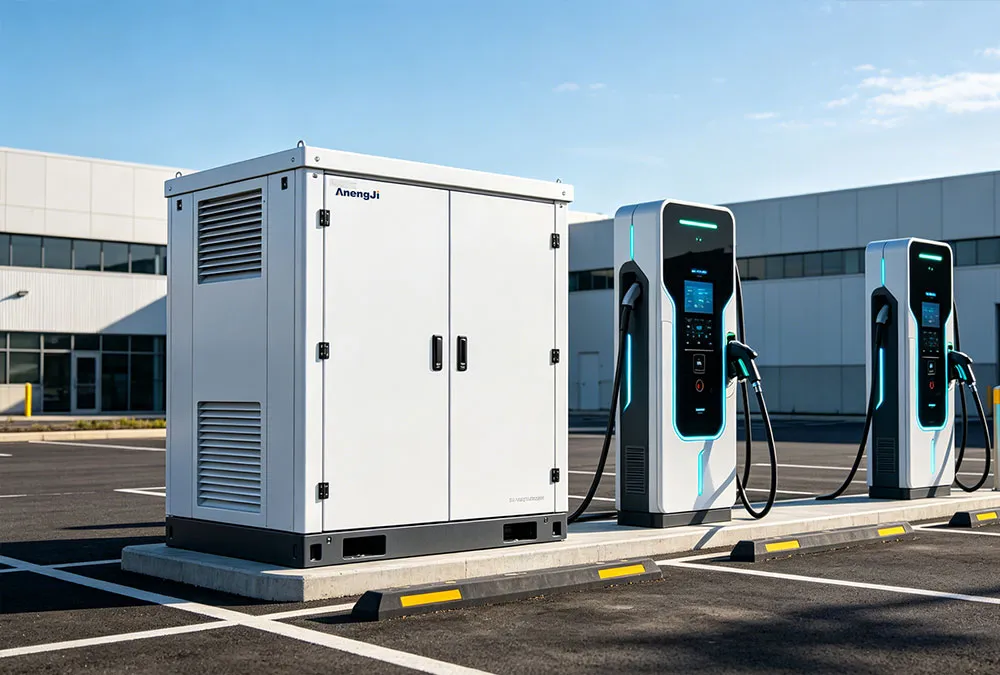
To understand the role of BESS for ev charging infrastructure, one must view the charging station not just as a consumer of electricity, but as a dynamic energy ecosystem. Stationary storage allows a facility to decouple the power drawn from the utility grid from the power delivered to the vehicle’s battery.
How Battery Storage Supports EV Charging Stations
In a traditional setup, the grid must provide 100% of the power demanded by a vehicle at any given second. If a 350kW charger is activated, the grid feels that 350kW “spike” instantly.
- As a “Power Buffer”: The battery storage system acts as a buffer. It draws a steady, low-power charge from the grid over several hours and stores it. When an EV plugs in, the battery releases that energy in a high-power burst. This is the essence of DC fast charging with energy storage.
- The BESS + PCS + EMS Synergetic Operation: The system consists of the battery cells (storage), the Power Conversion System (PCS – the bidirectional inverter), and the Energy Management System (EMS). The EMS is the “brain” that monitors real-time grid prices and vehicle demand, deciding when to pull power from the grid and when to discharge the battery.
Why EV Charging Stations Need Energy Storage Systems
The demand for ev charger battery storage is driven by three primary pain points in 2026:
- Grid Capacity Constraints: Many commercial locations are limited to 100kW or 200kW of utility service. Installing four 150kW chargers would immediately exceed this limit.
- Load Volatility: EV charging is “peaky.” A station might sit empty for an hour and then suddenly have three trucks demanding 500kW simultaneously.
- High Operational Costs: Without energy storage for ev charging, the high peak demand can lead to “Demand Charges” that make up more than 50% of the monthly utility bill.
Key Benefits of Battery Energy Storage for EV Charging Stations
Integrating a battery storage system for EV charging stations provides a multifaceted return on investment (ROI) by solving both technical and financial hurdles.
Reduce EV Charging Costs with Energy Storage
Electricity prices fluctuate throughout the day. By using energy storage for ev charging, operators can engage inEnergy Arbitrage:
- Charging: Pull power from the grid at 2:00 AM when rates are lowest.
- Discharging: Supply that power to EVs at 2:00 PM when grid rates are at their peak.
This reduces the “Levelized Cost of Charging” (LCOC) and increases the profit margin for station owners.
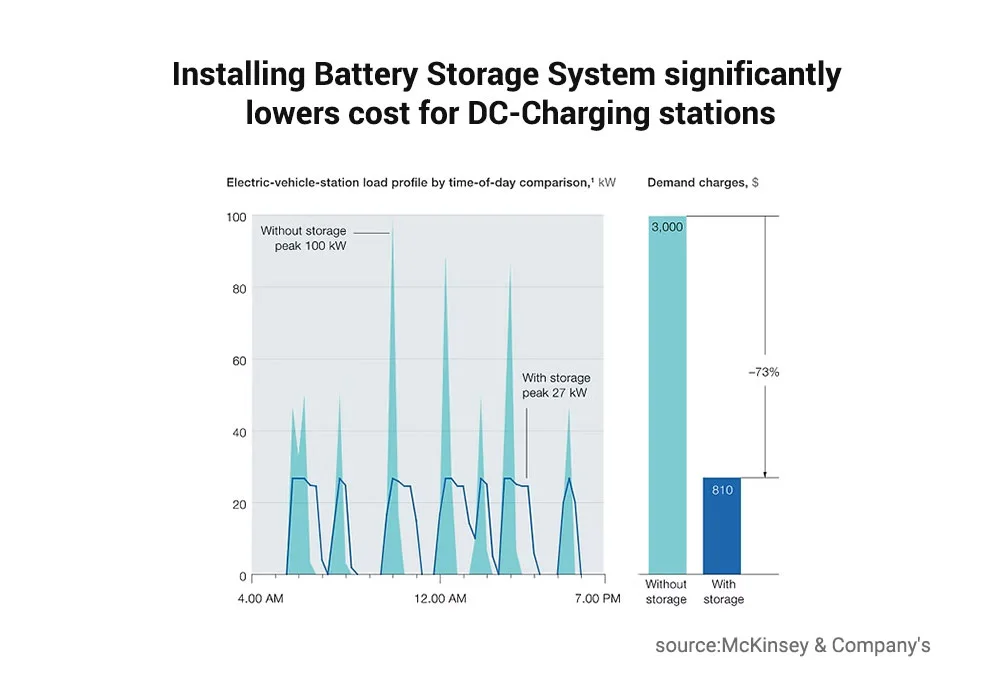
Graphs by McKinsey & Company’s: “How battery storage can help charge the electric-vehicle market”
Lower Demand Charges for Commercial EV Charging
Commercial utility bills are often based on the single highest 15-minute peak of the month. Peak Shaving allows the BESS to cover those peaks.
Calculation Example: If your facility peaks at 500kW but you use a BESS to cap the grid draw at 200kW, you avoid paying demand charges on that 300kW difference. In some jurisdictions, this can save $3,000–$6,000 per month.
Improve Reliability and Resilience of EV Charging Infrastructure
Grid outages are becoming more frequent. A BESS for fast EV charging infrastructure can provide “Backup Power” or “Island Mode” capabilities. If the main grid goes down, the station can continue to charge vehicles, ensuring that critical fleets remain mobile.
Increase EV Charging Capacity Without Grid Upgrade
Instead of waiting 18 months for a utility to install a new transformer, a modular BESS can be deployed in weeks, allowing a “weak” grid connection to support “strong” ultra-fast charging speeds.
Enable Renewable Energy Integration (Solar + Storage + Charging)
Solar battery storage for EV charging stations allows for true “Zero-Emission” driving. Solar energy is often produced when charging demand is low (mid-morning). The battery captures this “green” energy and holds it for the evening rush hour, maximizing the self-consumption of renewable power.
Battery Energy Storage System Solutions for EV Charging
To build a reliable microgrid EV charging system, the hardware must be industrial-grade and modular.
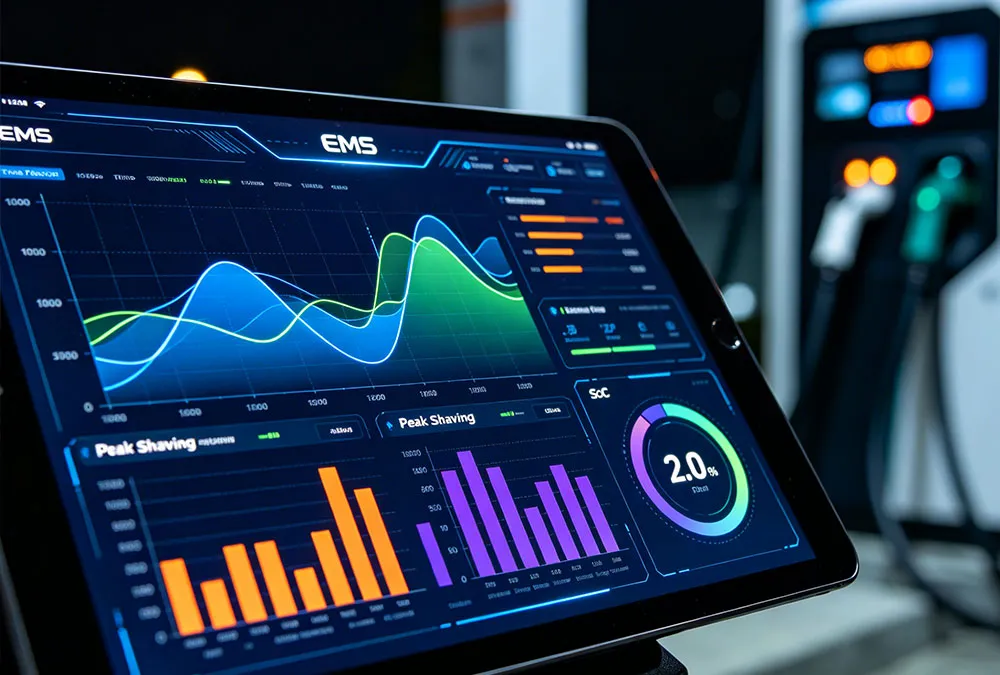
Typical System Architecture (Battery + PCS + BMS + EMS)
- Battery System: Modern systems primarily use LiFePO4 (Lithium Iron Phosphate). Compared to standard NMC batteries, LFP offers superior thermal stability and a much longer cycle life (over 6,000 cycles).
- PCS (Power Conversion System): This bidirectional inverter manages the energy flow. It must be “fast-acting” to respond to the sudden load of an EV charger.
- BMS (Battery Management System): This ensures the safety of the cells, monitoring temperature and voltage to prevent “Thermal Runaway.”
- EMS (Energy Management System): The software layer that integrates with the EV chargers via the OCPP (Open Charge Point Protocol).
How Much Battery Storage Is Needed for EV Charging Stations
Sizing is the most critical part of the design process. Below is a comparison table for common commercial EV charging solutions:
| Project Scale | Charger Type | Recommended BESS Capacity | Vehicle Support Capacity |
| Small Commercial | 1x 120kW DC Fast | 1MWh BESS | 8–10 EVs (Full charge) / day |
| Logistics Fleet | 4x 150kW Chargers | 2MWh BESS | 30–50 Delivery Vans / day |
| Highway Hub | 2x 350kW Ultra-Fast | 5MWh BESS | Continuous high-turnover support |
Sizing Formula: >
Required Capacity (kWh) = (Peak Load (kW) - Grid Limit (kW)) * Duration of Peak (hours)Example: If you have a 400kW peak, a 100kW grid limit, and the peak lasts 2 hours, you need
(400 - 100) * 2 = 600 kWhof usable storage.
Avoid Grid Upgrades with Battery Storage for EV Charging
Expanding the grid is a slow, expensive process. A grid constraint EV charging solution utilizing a BESS allows you to “bypass” the utility’s timeline.
Challenges of Grid Expansion
- High CAPEX: Substation upgrades can cost between $250,000 and $1M.
- Bureaucracy: Permitting for new underground high-voltage lines can take over a year.
How Battery Storage Solves Grid Constraints
The EV charger power management system limits the grid draw to a safe level (e.g., 50kW) while the chargers output 300kW. The “missing” 250kW comes directly from the battery. This “peak shaving” approach makes the station invisible to the utility grid’s stress points.
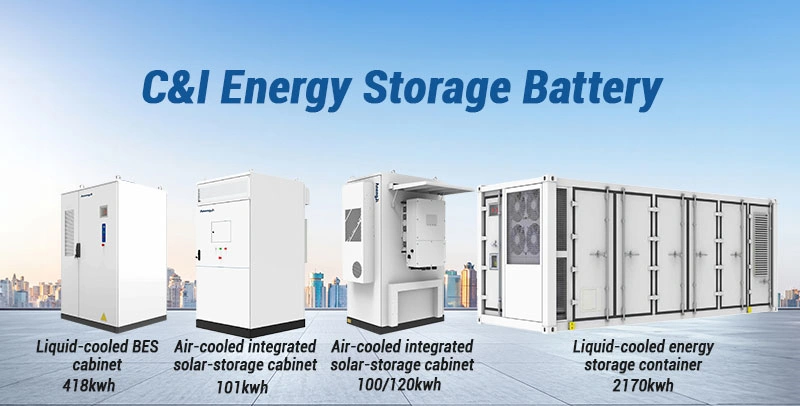
Why Choose Our Integrated Energy Storage & Charging Solutions
As a specialized manufacturer, we provide a unique one-stop procurement model that significantly reduces complexity and cost for our global partners.
Factory-Direct Integrated Supply (BESS + Chargers)
Unlike traditional integrators who source batteries and chargers from different vendors, we manufacture both the energy storage for electric vehicle charging equipment and the high-power DC charging piles.
- Reduced Procurement Costs: Buying an integrated system from a single source eliminates middleman markups and ensures 100% hardware compatibility.
- Streamlined Integration: Our BESS and chargers are designed to work together natively, supporting all mainstream charging protocols and OCPP standards for easy third-party software integration.
Global Presence and Certification Excellence
We operate multiple overseas service points to support our clients across Europe, North America, and the Asia-Pacific.
- Full Certification: All our products have passed the rigorous CE certification required for the European market.
- Premium Safety Standards: Select flagship models, including the E261LP, have successfully passed the UL9540A thermal runaway fire test, making them eligible for high-stakes commercial installations globally.
First-Tier After-Sales Support: 8-Hour On-site Response
We understand that downtime in the charging industry equals lost revenue and damaged reputation. Our service commitment is a market leader:
- 8-Hour On-site Response: In our primary service zones, our technical engineers will be on-site within 8 hours of a reported issue.
- 2-Hour Fastest Response: For critical infrastructure, we offer emergency dispatching that can arrive in as little as 2 hours.
- Global Support Network: Our multiple overseas offices ensure that localized technical expertise is always within reach.
Extensive Experience and Certified Quality
With a vast portfolio of successful projects—ranging from high-speed highway hubs to complex commercial battery storage for EV fleet charging—our engineering team ensures that every system is optimized for local grid codes and weather conditions.
Technical Definitions: Battery Technologies and Alternatives
For stakeholders evaluating electric vehicle battery storage, it is important to understand the terminology:
- LiFePO4 (LFP): Lithium Iron Phosphate. The gold standard for stationary storage. It does not contain cobalt, is fire-resistant, and lasts for over 15 years in typical charging station cycles.
- State of Charge (SoC): The percentage of energy currently in the battery.
- Depth of Discharge (DoD): How much of the battery is used. For BESS, we typically recommend an 80-90% DoD to maximize longevity.
- Alternative: Hydrogen Fuel Cells: While an alternative for off-grid power, hydrogen currently lacks the “round-trip efficiency” of battery storage for ev charging, which remains the most cost-effective “buffer” solution in 2026.
Conclusion: The Strategic Value of Energy Storage in 2026
To thrive in the next phase of the electric mobility revolution, infrastructure must be both powerful and intelligent. Integrating a battery storage system for EV charging stations is no longer a peripheral choice but a core strategy for achieving commercial viability. By decoupling your charging power from the immediate constraints of the grid, you secure lower operational costs, faster deployment timelines, and a future-proof charging hub.
Executive Summary for Project Managers
- Infrastructure Efficiency: Use energy storage for ev charging to bypass expensive transformer upgrades and substation delays.
- Financial Optimization: Dramatically reduce monthly OPEX by shaving peak demand charges and utilizing off-peak energy arbitrage.
- Operational Resilience: Ensure 100% uptime with backup power capabilities and intelligent EMS load balancing.
- One-Stop Procurement: Our factory-direct BESS and charger bundles reduce CAPEX by 15-20% compared to fragmented sourcing.
FAQ – Technical & Operational Deep-Dive
How does the 8-hour on-site service work for international projects?
We maintain a network of overseas service points and spare parts warehouses (notably in the Netherlands and Belgium). When a critical fault is reported, our localized technical team is dispatched to ensure an 8-hour on-site arrival (and as fast as 2 hours in primary zones) to minimize downtime for your DC fast charging with energy storage system.
Can your BESS work with any existing DC fast charger?
Yes. Our systems are designed with high compatibility. While we recommend our integrated factory-direct charger bundles for maximum cost efficiency and native communication, our EMS supports standard industrial protocols and OCPP 1.6/2.0.1, allowing seamless integration with third-party charging hardware.
What is the expected lifespan of the LiFePO4 battery cells?
The lithium battery for EV charging stations we use is rated for over 6,000 cycles at 80% Depth of Discharge (DoD). In a typical commercial charging environment, this translates to a service life of approximately 12–15 years, depending on the intensity of the daily cycling.
Does the system require a specific fire suppression certification?
Safety is paramount in commercial areas. Our BESS cabinets are CE certified, and critical models have passed the UL9540A test. This certification provides verified data on thermal runaway behavior, which is often a mandatory requirement for insurance and local fire department permits in 2026.
How long does it take to install a containerized BESS?
Compared to a grid upgrade that can take over 12 months, our modular BESS for fast EV charging infrastructure can be commissioned in 4–8 weeks. Since the systems are pre-assembled and tested in our factory, on-site work is limited to foundation preparation and final cable termination.
 https://anengjipower.com/wp-content/uploads/2026/10/AnengjiPower-Load-Shifting-Energy-Storage-at-a-CI-Site.webp
675
1000
Charging Station Engineer
https://anengjipower.com/wp-content/uploads/2025/09/anengji-dc-fast-charging-station-manufacturer-and-supplier-logo-white-1.png
Charging Station Engineer2026-10-19 03:47:032026-10-19 03:47:31Load Shifting Energy Storage: C&I Sizing & Cost Guide
https://anengjipower.com/wp-content/uploads/2026/10/AnengjiPower-Load-Shifting-Energy-Storage-at-a-CI-Site.webp
675
1000
Charging Station Engineer
https://anengjipower.com/wp-content/uploads/2025/09/anengji-dc-fast-charging-station-manufacturer-and-supplier-logo-white-1.png
Charging Station Engineer2026-10-19 03:47:032026-10-19 03:47:31Load Shifting Energy Storage: C&I Sizing & Cost Guide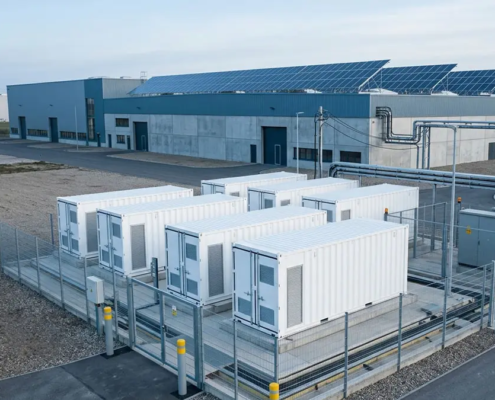 https://anengjipower.com/wp-content/uploads/2026/10/AnengjiPowr-AC-Coupled-Battery-Storage-at-a-CI-Solar-Site.webp
675
1000
Charging Station Engineer
https://anengjipower.com/wp-content/uploads/2025/09/anengji-dc-fast-charging-station-manufacturer-and-supplier-logo-white-1.png
Charging Station Engineer2026-10-16 03:03:192026-10-16 03:03:49What Is AC-Coupled Battery Storage? C&I BESS Guide
https://anengjipower.com/wp-content/uploads/2026/10/AnengjiPowr-AC-Coupled-Battery-Storage-at-a-CI-Solar-Site.webp
675
1000
Charging Station Engineer
https://anengjipower.com/wp-content/uploads/2025/09/anengji-dc-fast-charging-station-manufacturer-and-supplier-logo-white-1.png
Charging Station Engineer2026-10-16 03:03:192026-10-16 03:03:49What Is AC-Coupled Battery Storage? C&I BESS Guide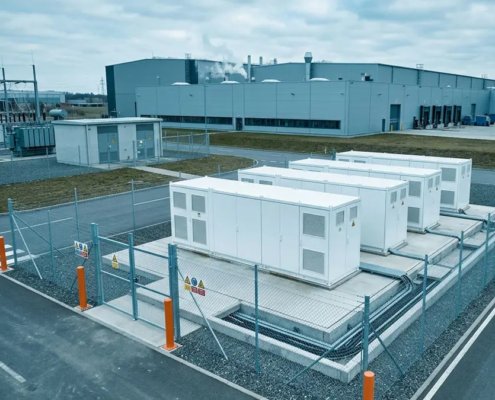 https://anengjipower.com/wp-content/uploads/2026/10/AnengjiPower-What-Is-Peak-Shaving-at-an-Industrial-Site.webp
675
1000
Charging Station Engineer
https://anengjipower.com/wp-content/uploads/2025/09/anengji-dc-fast-charging-station-manufacturer-and-supplier-logo-white-1.png
Charging Station Engineer2026-10-15 06:49:012026-10-15 06:50:23What Is Peak Shaving? How Battery Energy Storage Reduces C&I Peaks
https://anengjipower.com/wp-content/uploads/2026/10/AnengjiPower-What-Is-Peak-Shaving-at-an-Industrial-Site.webp
675
1000
Charging Station Engineer
https://anengjipower.com/wp-content/uploads/2025/09/anengji-dc-fast-charging-station-manufacturer-and-supplier-logo-white-1.png
Charging Station Engineer2026-10-15 06:49:012026-10-15 06:50:23What Is Peak Shaving? How Battery Energy Storage Reduces C&I Peaks


Leave a Reply
Want to join the discussion?Feel free to contribute!