
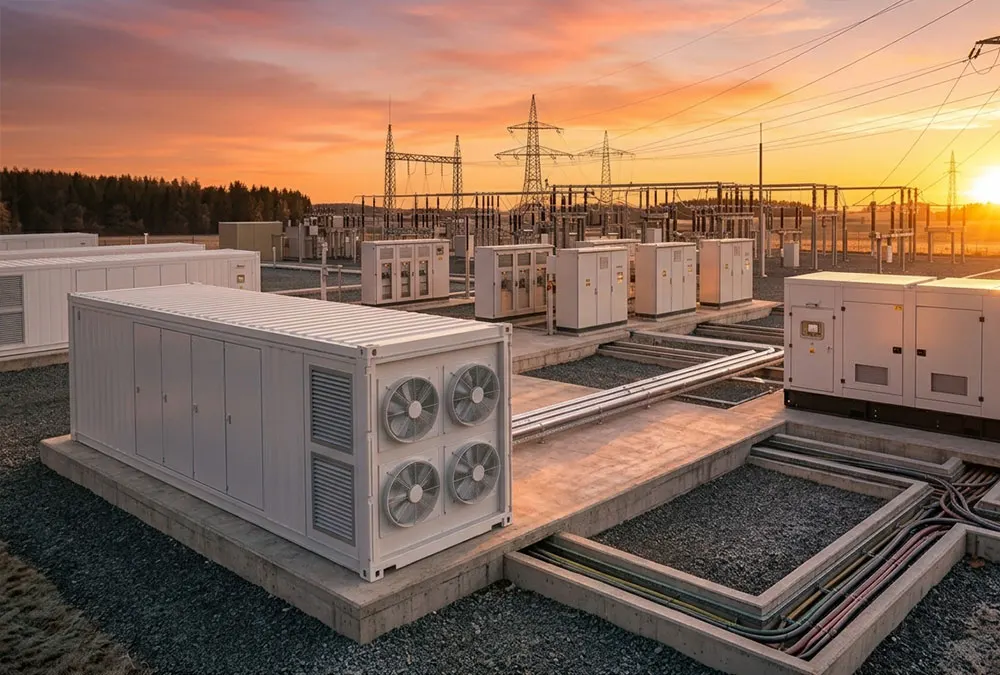
Introduction
Let’s cut through the market hype: buyers often worry about battery thermal risks, high initial capital costs, and performance degradation. These concerns are valid. However, sticking with diesel engines carries hidden expenses, including volatile fuel logistics, strict local emission permits, routine dry-rot testing, and engine wear. To make an informed decision, let’s look at what true industrial resilience requires.
What Makes an Industrial Backup Power System Reliable?
Reliable industrial backup power goes beyond simply placing a generator or a containerized battery on a concrete pad. In an automated factory or a chemical process plant, reliability means maintaining precise voltage stability, continuous frequency regulation, and immediate power transfer when the utility grid fails.
Response Time: How Quickly Can Backup Power Respond?
A standard standby diesel generator requires 10 to 30 seconds to crank, achieve rated RPM, stabilize output voltage, and close its Automatic Transfer Switch (ATS). For sensitive programmable logic controllers (PLCs), variable frequency drives (VFDs), and robotic cells, a 10-second outage causes a full process shut down that can take hours to clear.
By contrast, a modern battery energy storage system (BESS) using grid-forming Power Conversion System (PCS) inverters switches modes in under 20 milliseconds. That sub-cycle transition keeps digital control circuits energized without needing a separate Uninterruptible Power Supply (UPS) room.
Backup Duration: How Long Must the System Run?
Power output (MW) dictates how heavy a load you can start, while energy capacity (MWh) dictates how long you can sustain that load. According to the Mordor Intelligence 2026 Backup Power Systems Market Report, over 53% of global backup power demand centers on short-term emergency continuity (under 4 hours).
- 15–60 Minutes: Designed for orderly machine shutdown, data saving, and safely parking production equipment.
- 2–4 Hours: Covers over 85% of standard industrial distribution grid interruptions.
- 24+ Hours: Requires sustained fuel deliveries or a hybrid solar-plus-storage system.
Availability and System Readiness
A diesel generator’s readiness depends on mechanical factors: starter battery health, oil heater operation, fuel quality, and mechanical wear. Industry field audits show that diesel generators suffer a 10–15% failure-to-start rate during sudden grid collapse due to fuel gelation, clogged filters, or battery failure. A BESS provides continuous digital telemetry via its Battery Management System (BMS), ensuring the exact State of Charge (SOC) and State of Health (SOH) are visible 24/7.
Power Quality for Industrial Loads
Large motor starts induce massive inductive inrush currents. When a 200 HP motor starts across-the-line on a diesel generator, the resulting voltage dip can trip adjacent sensitive electronics. BESS power conversion systems use fast digital signal processors to regulate voltage and inject reactive power instantaneously, suppressing harmonic distortion and stabilizing local frequency.
Recharge or Refueling Capability
Refueling a diesel generator during extreme weather relies on active supply chains and clear roads. A BESS recharges automatically once utility power returns, or continuously charges during an outage when paired with onsite commercial rooftop solar arrays.
Why Do Factories Need Reliable Backup Power?
What Happens When a Manufacturing Facility Loses Power?
For a plastic injection molding plant, a 30-second voltage sags causes polymer to solidify inside barrels, requiring manual teardowns and leading to lost production shifts. In food processing, temperature excursions compromise cold-chain compliance. Unplanned interruptions destroy work-in-progress, damage mechanical tooling, create safety risks, and incur high restart costs.
Should You Back Up the Entire Factory or Only Critical Loads?
A common engineering mistake is sizing emergency backup for 100% of a facility’s nameplate load. Separating electrical buses into critical and non-critical loads significantly reduces project costs:
Critical Loads (Backed Up)
SCADA control systems, server racks, safety ventilation, process pumps, refrigeration compressors, and essential production lines.
Non-Critical Loads (Sheddable)
Administrative HVAC, general perimeter lighting, non-essential air compressors, and warehouse charging stations.
Isolating critical loads lets you size a battery energy storage system to cover core operations efficiently, lowering initial capital expenditure while providing total process protection.
BESS vs Diesel Generator vs UPS: What Is the Difference?
Engineers often blur the boundaries between an Uninterruptible Power Supply (UPS), a BESS, and a diesel generator. Each asset serves a distinct operational role:
| System Type | Primary Operational Role | Main Strength | Value to Buyer |
|---|---|---|---|
| Traditional UPS | Instantaneous power bridging (5–15 mins) | Zero transfer time | Prevents sensitive server and control crashes during sub-second sags. |
| BESS | Daily energy optimization + fast backup power | Millisecond response + peak shaving revenue | Lowers utility demand charges daily while offering hours of clean backup. |
| Diesel Generator | Long-duration emergency power generation | Indefinite run time via refueling | Provides extended operational security during multi-day grid failures. |
Is a BESS the Same as a UPS?
A standard BESS is not automatically a direct substitute for a Double-Conversion online UPS in semiconductor facilities or tier-4 data centers. While a BESS responds in milliseconds, online UPS topologies offer zero-break isolation. However, modern bess vs diesel generator for backup power designs integrate microsecond-response PCS inverters, allowing a single industrial BESS asset to handle both UPS power conditioning and long-duration backup.
How Does a BESS Provide Industrial Backup Power?
Understanding the technical flow of an industrial battery energy storage backup system clarifies how it transitions during an outage:
How PCS, BMS, and EMS Work Together
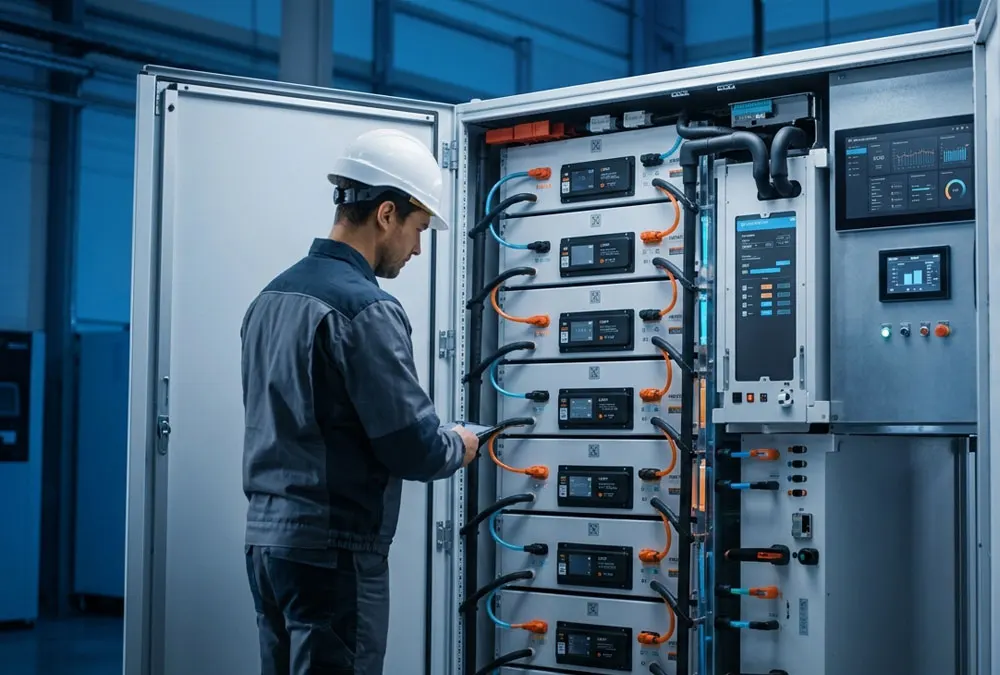
An industrial storage asset relies on a three-tier control architecture:
- Battery Management System (BMS): Monitors cell-level voltages, module temperatures, balance currents, and thermal safety parameters.
- Power Conversion System (PCS): Handles bidirectional AC/DC power conversion, controlling frequency, phase synchronization, and voltage output.
- Energy Management System (EMS): The overarching software brain that runs economic algorithms (peak shaving, arbitrage) during normal grid conditions and commands instant islanding when utility sensors detect an outage.
How Much BESS Do You Need for Industrial Backup Power?
Sizing a commercial battery requires evaluating peak kilowatt demands, operational duty cycles, and environmental factors.
Step 1: Calculate Required Energy Capacity
Use this standard engineering formula to estimate storage capacity:
Example Project Calculation: A facility has a 300 kW critical load requiring 4 hours of emergency power. Assuming a 90% round-trip system efficiency and an 85% recommended Depth of Discharge (DoD) to extend battery cycle life:
(300 kW × 4 Hours) ÷ (0.90 × 0.85) = 1,200 kWh ÷ 0.765 = 1,568 kWh Nominal Capacity needed.
MW vs MWh: Why Both Numbers Matter
When assessing a battery energy storage vs diesel generator setup, kW/MW represents continuous power delivery capacity (how many machines you can run concurrently). kWh/MWh represents total energy storage volume (how long those machines run). A 500 kW / 1,000 kWh system delivers 500 kW of power for roughly 2 hours, whereas a 500 kW / 2,000 kWh system delivers that same power for 4 hours.
Diesel Generator: Advantages and Limitations
Why Diesel Generators Remain Popular
Diesel gensets provide high power density at a relatively low initial capital cost. They offer long-duration backup during severe weather outages, provided the onsite fuel tanks remain filled.
Key Limitations of Diesel Generation
- Volatile Operational Costs: Diesel fuel expenses, bulk fuel polishing, and routine oil changes add up over time.
- Logistical Vulnerabilities: Emergency diesel deliveries often experience delays during regional blackouts.
- Permitting and Carbon Penalties: Strict EPA and local air quality rules restrict routine diesel run-time testing due to NOx and particulate emissions.
- Single Utility Value: A diesel generator generates zero revenue while sitting idle during normal grid conditions.
BESS vs Diesel Generator: Technical Comparison
This side-by-side technical evaluation highlights key operational differences between storage systems and engine-based generators:
| Evaluation Parameter | Battery Energy Storage (BESS) | Diesel Generator | User Benefit / Impact |
|---|---|---|---|
| Response Speed | Sub-20 milliseconds | 10 to 30 seconds | BESS prevents sensitive automation tools from resetting during voltage sags. |
| Operational Noise | Quiet (<65 dB HVAC sound) | Loud (95–110 dB) | BESS allows placement in urban locations without needing expensive acoustic enclosures. |
| Site Emissions | Zero local exhaust | High CO2, NOx, PM2.5 emissions | BESS simplifies air quality permitting and supports corporate sustainability goals. |
| Daily Value Streams | Peak shaving, TOU, PV self-consumption | None (Standby only) | BESS generates daily utility savings that lower its net payback period. |
| Routine Maintenance | Low (HVAC filter, visual checks) | High (Oil, filters, fuel checks) | BESS reduces recurring facility maintenance demands and lowers long-term OpEx. |
What Can BESS Do When the Grid Is Working?
Comparing a bess vs diesel generator cost based purely on standby operation ignores the primary financial advantage of battery storage: multi-use flexibility. While a generator sits unused 99% of the year, a BESS actively lowers utility bills daily:
- Peak Shaving: Discharge battery power during peak industrial demand windows to trim monthly kW demand charges.
- Time-of-Use (TOU) Arbitrage: Charge the battery during low-cost overnight off-peak tariff periods and power your facility during expensive afternoon peak hours.
- Solar Self-Consumption: Store excess daytime rooftop solar generation for use during high-tariff evening hours.
BESS vs Diesel Generator TCO: Which Is More Economical?
A standard evaluation comparing upfront CapEx makes a diesel engine look cheaper. However, evaluating the 10-year Total Cost of Ownership (TCO) changes the picture. A BloombergNEF Energy Storage Outlook Report notes turnkey stationary battery pack prices dropped to approximately $117/kWh in 2025, drastically altering bess vs diesel generator total cost of ownership calculations for commercial sites.
Let’s evaluate a 500 kW power requirement for a commercial facility over a 10-year operating horizon:
| Cost Factor (500 kW Scale) | Diesel Generator (500 kVA) | Commercial BESS (500 kW / 1 MWh) | Buyer Advantage / Value Delivered |
|---|---|---|---|
| Initial CapEx & Installation | $60,000 – $95,000 | $180,000 – $240,000 | Diesel requires lower upfront investment. |
| 10-Year Fuel / Charging Costs | $120,000 – $180,000 (Fuel volatility) | $35,000 – $50,000 (Grid/PV charge) | BESS reduces fuel expenses by utilizing low-cost charging. |
| 10-Year Maintenance & Service | $40,000 – $65,000 (Fluid, overhauls) | $12,000 – $20,000 (BMS telemetry) | BESS lowers maintenance needs and eliminates mechanical teardowns. |
| 10-Yr Utility Bill Reductions | $0 (No peak shaving capability) | -$120,000 to -$180,000 (Peak shaving) | BESS generates daily bill savings, accelerating payback. |
| Net 10-Year Total TCO | $220,000 – $340,000 | $107,000 – $130,000 | BESS delivers 40–50% overall lifecycle savings. |
Although a bess vs diesel generator for commercial buildings analysis shows higher initial CapEx for batteries, utility demand charge savings and lower fuel consumption allow BESS to achieve net cost parity in roughly 4 to 6 years.
Is Industrial BESS Safe for Backup Power?
Industrial buyers often ask: “Is thermal runaway a major risk with commercial batteries?”
Battery chemistry alone does not dictate system safety. Comprehensive safety relies on multi-layer engineering protection:
- LiFePO4 Chemistry: Lithium Iron Phosphate (LFP) offers high thermal stability, resisting thermal runaway up to 270°C compared to nickel-based chemistries.
- Liquid Thermal Management: Modern liquid cooling keeps cell temperature deltas within 3°C, extending battery lifespan and reducing degradation risks.
- Fire Suppression Safety: Modern enclosures include aerosol fire protection, off-gas detection sensors, deflagration panels, and automated pack isolation compliant with NFPA 855 and UL 9540A standards.
When Should You Choose BESS, Diesel, or a Hybrid System?
Evaluating a bess vs diesel generator for industrial backup power setup doesn’t have to be an all-or-nothing decision. Selecting the right architecture depends on your operational profile:
Choose Standalone BESS When:
- Your facility faces frequent short power outages (under 4 hours).
- You face high monthly peak electricity demand charges.
- You have onsite solar generation and want to maximize self-consumption.
- Urban noise ordinance or air emissions rules restrict generator use.
Choose Standalone Diesel Generator When:
- Your location experiences multi-day power outages due to severe weather.
- You require continuous backup power for remote off-grid operations without solar access.
Choose a BESS + Diesel Hybrid System When:
Integrating a bess diesel generator hybrid backup power configuration provides a resilient operational setup. The battery delivers immediate power bridging during an outage while handling local peak shaving daily. If an outage exceeds 3 hours, the diesel generator starts and runs at its optimal efficiency point to recharge the battery array, reducing overall generator run-time by up to 70%.
Targeted Commercial & Industrial Storage Solutions
Selecting the right commercial battery configuration depends on your facility’s operational load profile. Here are standard modular BESS options engineered for industrial use:
- Compact footprints simplify indoor or outdoor installation.
- Provides instantaneous backup for critical IT and control systems.
- All-in-one cabinet integrating LFP batteries, PCS, and liquid cooling.
- Smart EMS integration supporting peak shaving and solar self-consumption.
- High power density with advanced thermal management.
- Handles heavy motor starting currents without voltage sags.
- Modular ISO containerized design for scalable MW-scale installations.
- Includes integrated HVAC, automatic fire protection, and cloud monitoring.
Industrial Backup Power Decision Matrix
Use this operational checklist to determine the best backup power solution for commercial facilities based on your site requirements:
| Facility Operational Requirement | Recommended Configuration | Primary Strategic Value |
|---|---|---|
| Frequent short outages (<2 hours) + High demand charges | Standalone Industrial BESS | Delivers immediate ROI via demand charge reduction while securing critical loads. |
| Onsite commercial solar + Sustainability goals | Solar-Plus-Storage BESS | Maximizes free solar self-consumption and lowers Scope 2 emissions. |
| Sensitive precision equipment + High process restart costs | Fast-Response BESS / Hybrid | Sub-20ms transition speeds prevent line trips and equipment damage. |
| Unstable grid + Extended multi-day power outages | BESS + Diesel Hybrid System | Combines millisecond response times with extended fuel-backed runtime. |
Frequently Asked Questions
Optimize Your Industrial Power Resilience Today
Evaluating a BESS vs diesel generator upgrade for your facility? Get a free load evaluation, custom TCO calculation, and tailored microgrid design from our engineering team.
Related Article
 https://anengjipower.com/wp-content/uploads/2026/06/epc-vs-turnkey-solar-project-bess.webp
675
1000
Charging Station Engineer
https://anengjipower.com/wp-content/uploads/2025/09/anengji-dc-fast-charging-station-manufacturer-and-supplier-logo-white-1.png
Charging Station Engineer2026-06-22 07:16:042026-06-24 07:13:17What Is the Difference Between EPC and Turnkey Contract Models in Energy Projects?
https://anengjipower.com/wp-content/uploads/2026/06/epc-vs-turnkey-solar-project-bess.webp
675
1000
Charging Station Engineer
https://anengjipower.com/wp-content/uploads/2025/09/anengji-dc-fast-charging-station-manufacturer-and-supplier-logo-white-1.png
Charging Station Engineer2026-06-22 07:16:042026-06-24 07:13:17What Is the Difference Between EPC and Turnkey Contract Models in Energy Projects? https://anengjipower.com/wp-content/uploads/2026/06/anengji-commercial-solar-plus-storage-benefits-site.webp
675
1000
Charging Station Engineer
https://anengjipower.com/wp-content/uploads/2025/09/anengji-dc-fast-charging-station-manufacturer-and-supplier-logo-white-1.png
Charging Station Engineer2026-06-20 14:34:102026-06-20 14:37:43What Are the Top Benefits of Solar Battery Storage in Factories?
https://anengjipower.com/wp-content/uploads/2026/06/anengji-commercial-solar-plus-storage-benefits-site.webp
675
1000
Charging Station Engineer
https://anengjipower.com/wp-content/uploads/2025/09/anengji-dc-fast-charging-station-manufacturer-and-supplier-logo-white-1.png
Charging Station Engineer2026-06-20 14:34:102026-06-20 14:37:43What Are the Top Benefits of Solar Battery Storage in Factories?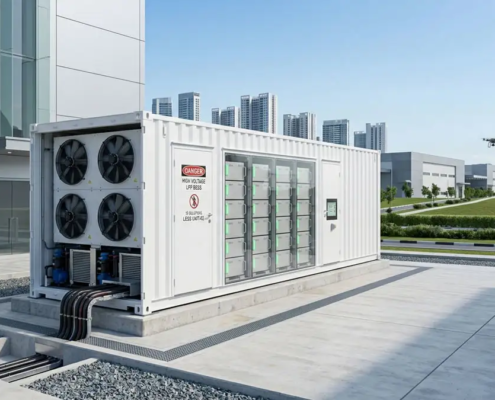 https://anengjipower.com/wp-content/uploads/2026/06/modular-commercial-solar-battery-storage-cabinet.webp
675
1000
Charging Station Engineer
https://anengjipower.com/wp-content/uploads/2025/09/anengji-dc-fast-charging-station-manufacturer-and-supplier-logo-white-1.png
Charging Station Engineer2026-06-18 09:16:522026-07-03 03:05:13What Is Solar Battery Storage? Complete C&I Engineering Guide
https://anengjipower.com/wp-content/uploads/2026/06/modular-commercial-solar-battery-storage-cabinet.webp
675
1000
Charging Station Engineer
https://anengjipower.com/wp-content/uploads/2025/09/anengji-dc-fast-charging-station-manufacturer-and-supplier-logo-white-1.png
Charging Station Engineer2026-06-18 09:16:522026-07-03 03:05:13What Is Solar Battery Storage? Complete C&I Engineering Guide


Leave a Reply
Want to join the discussion?Feel free to contribute!