
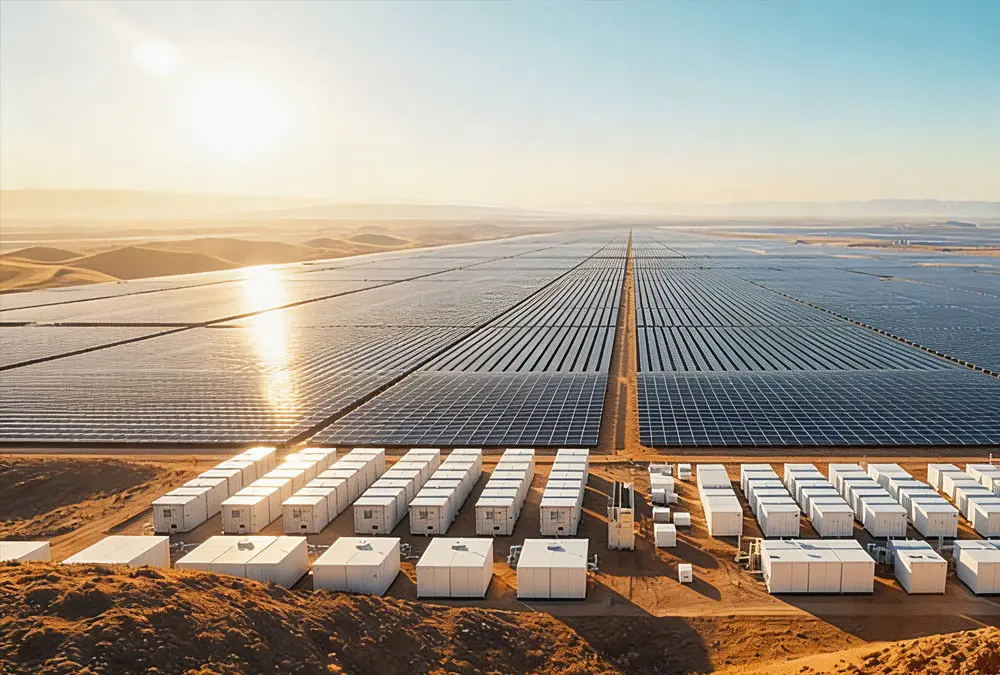
Evaluating the top epc companies for utility-scale solar PV and complex battery storage requires looking way beyond surface sales pitches. Navigating a massive renewable energy EPC initiative in China means balancing raw engineering capability against actual local grid realities. Every developer wants a seamless build, but grid bottlenecks, shifting local regulations, and component mismatch can crush financial margins overnight. Working directly with an experienced epc contractor in china or choosing among established epc companies in china can easily make or break project delivery, whether you’re deploying a 50MW utility PV array, a high-voltage battery system, or an integrated solar-plus-storage asset.
What Does an EPC Contractor Do?
A turnkey EPC contractor assumes single-source accountability for total project delivery. Instead of managing dozens of isolated vendors, developers hire an EPC firm to execute engineering procurement and construction under one integrated framework. This single point of responsibility mitigates engineering handoff errors, secures strict warranty coverage, and streamlines compliance with regional system operators.
Engineering: From Feasibility to Detailed Project Design
Engineering forms the structural spine of any successful project. Before breaking ground, engineering teams undertake intensive site studies, geotechnical profiling, environmental evaluations, and grid stability studies. Engineers map structural layouts, calculate cable sizing, specify switchgear tolerances, and design custom civil foundations tailored to regional wind loads and soil conditions.
Procurement: Equipment Sourcing, Quality Control and Delivery
Real-world project execution living on real job sites isn’t just about placing factory purchase orders. Developers on Reddit regularly voice frustration over logistics, factory inspection failures, missing paperwork, and mismatched delivery timelines that grind field crews to a halt. True procurement management coordinates technical specifications, factory witness testing, bill-of-materials tracking, customs clearing, expediting, and specialized equipment transport right to the pad.
Construction: Civil, Electrical and Mechanical Installation
The physical installation stage translates designs into real hardware. Civil teams manage site grading, drainage systems, access roads, and foundation pours. Mechanical installers set tracking systems, solar modules, and heavy enclosure skids. Electrical crews handle high-voltage cabling, inverter block connections, transformer alignments, and underground trenching under strict safety codes.
Commissioning, Grid Connection and Project Handover
Putting hardware on pads doesn’t mean power flows. Commissioning involves rigorous insulation tests, voltage checks, communication verification, and functional load runs. Crucially, the contractor executes utility interconnection protocols, harmonic testing, and grid compliance runs to secure final operating permissions before formal commercial operation date (COD) asset handover.
Project Management Throughout the EPC Lifecycle
Coordinating multi-megawatt assets requires relentless scheduling, risk mitigation, and clear duty division across project phases.
| Project Phase | EPC Contractor | Equipment Supplier | Owner / Developer | Buyer Advantage & Value Clearances |
|---|---|---|---|---|
| Engineering | Lead | Support | Approve | Eliminates design mismatches early, ensuring faster utility permits and reducing costly field rework. |
| Procurement | Lead | Supply | Approve | Offloads supply chain delays, tariff tracking, and factory quality audits onto the contractor. |
| Construction | Lead | Support | Monitor | Ensures civil and electrical build quality while transferring site safety liability away from owners. |
| Commissioning | Lead | Support | Witness | Guarantees full system performance tests pass before final payments are released. |
| Grid Connection | Lead | Support | Approve | Removes utility interconnection friction, guaranteeing the plant actually feeds power onto the grid. |
Why Are EPC Companies Still Important for Renewable Energy Projects in 2026?
Why not just buy direct factory hardware and hire sub-contractors yourself? Because multi-technology integration is brutally complex. Managing standalone solar installations was simpler years ago, but modern infrastructure demands unified control across generation, storage, and utility interconnects.
Renewable Energy Projects Are Becoming More Technically Integrated
Today’s energy sites integrate solar PV panels, Battery Energy Storage Systems (BESS), Power Conversion Systems (PCS), Energy Management Systems (EMS), high-voltage step-up transformers, switchgear, and SCADA monitoring. Without experienced engineering leadership, individual components fail to communicate, causing dynamic throttling, control signal latency, or auxiliary power loss.
Grid Connection Is Becoming a Major Project Constraint
A renewable energy project is not complete when equipment arrives. It is complete when the system is engineered, commissioned and successfully connected to the grid. Industry execution data highlights this reality: in 2026, China Energy Engineering Corporation’s Jiangsu Institute spearheaded a 300MW/1200MWh independent storage EPC, including a massive 330kV booster station expansion. High-voltage grid requirements demand specialized substation engineering that basic hardware vendors simply cannot deliver.
Procurement and Supply Chain Risk Can Affect Project Schedules
Global shipping bottlenecks, raw material fluctuations, and factory allocation shifts can delay project commercial operations by months. An experienced epc contractor in china leverages massive purchasing power, pre-negotiated supply slots, and direct factory expediting to hold baseline project schedules firm.
Solar + BESS Projects Require Cross-System Integration
Combining PV arrays with high-capacity battery enclosures requires fast millisecond response times for frequency regulation and solar smoothing. Dedicated energy storage epc companies in china design unified control architectures that prevent battery thermal stress while optimizing daily solar self-consumption.
How We Identify the Top EPC Companies in China
We avoid subjective rankings or paid marketing lists. Instead, our assessment relies on verifiable engineering execution, grid integration depth, track record, and commercial safety performance.
The E8 EPC Evaluation Model
Project Experience and Reference Projects
We evaluate past installed gigawatt (GW) and megawatt-hour (MWh) track records across diverse geographical zones, validating utility-scale, commercial, and industrial installation history.
Engineering and Grid Integration Capability
Evaluating in-house electrical design teams, high-voltage substation engineering capabilities, and custom SCADA integration depth.
Procurement and Quality Management
Inspecting factory audit standards, Tier-1 component access, warranty backing, and incoming material inspection protocols.
Construction and Commissioning Capability
Assessing localized civil management, labor safety records, equipment handling protocols, and standardized testing execution.
International Project Delivery Experience
Reviewing cross-border logistics capabilities, local labor coordination, and compliance with local municipal grid codes.
Certifications, Compliance and Safety
Verifying ISO 9001, ISO 14001, ISO 45001, IEC compliance, UL standards, and regional grid code certifications.
Warranty, O&M and After-Sales Support
Evaluating long-term asset management, spare parts availability, remote system monitoring, and rapid field service response times.
Top EPC Companies in China for 2026
The companies below are presented based on project capability, renewable energy experience, engineering depth, international reach and technology relevance rather than a single official industry ranking.
1. POWERCHINA
POWERCHINA is a dominant global infrastructure giant with comprehensive engineering and construction power. Ranked 104th on the Fortune Global 500 in 2026, it excels in hydro, solar PV, wind, and high-voltage transmission lines. POWERCHINA provides master planning, civil engineering, specialized power plant construction, and international project investment, making it a key force for national energy projects globally.
2. China Energy Engineering Corporation (ENERGY CHINA / CEEC)
CEEC stands at the forefront of power engineering and complex grid integrations. Operating through elite regional design institutes—such as its Jiangsu Institute—CEEC leads massive energy storage installations, floating PV arrays, and high-voltage substation builds. Their engineering depth ensures high reliability for gigawatt-level renewable energy initiatives.
3. China State Construction Engineering Corporation (CSCEC)
As one of the world’s largest construction and infrastructure corporations, CSCEC brings massive civil build capabilities to industrial energy projects. Their expertise spans heavy industrial facilities, commercial building integration, and large-scale renewable installations requiring robust civil engineering and strict project safety protocols.
4. China National Nuclear Corporation (CNNC)
CNNC applies nuclear-grade safety standards and precise engineering controls to utility-scale renewable energy projects. Their power engineering division leads major solar, wind, and energy storage developments, providing institutional reliability and rigorous quality assurance for critical utility infrastructure.
5. China Three Gorges Corporation (CTG)
World-renowned for developing the Three Gorges Dam, CTG has transformed into a global renewable energy powerhouse. CTG actively invests in and constructs large-scale offshore wind, utility solar farms, and pumped-storage hydropower assets, combining deep financial capability with long-term asset management.
6. Sungrow (PV + Energy Storage System Solution Provider)
Note: Classified as a Technology Solution Provider & System Integrator rather than a traditional civil EPC contractor. In 2026, Sungrow continues driving large-scale storage delivery, deploying its PowerTitan 3.0 platform on 200MW/400MWh projects featuring digitalized factory-to-field commissioning and lifetime O&M tools.
7. Sineng Electric (Energy Storage / Power Electronics Solution Provider)
Note: Classified as a Power Electronics / Inverter Specialist. Sineng showcases advanced grid-forming technology for large-scale energy storage, delivering high-capacity centralized PCS units engineered for unstable, weak grid environments.
8. Leading China Renewable Energy EPC / Engineering Firms
Specialized provincial design institutes—including East China Electric Power Design Institute and Central Southern China Electric Power Design Institute—provide granular detailed design and EPC execution for high-voltage substations and complex utility plants.
9. Specialized Solar & Energy Storage EPC Companies
Private-sector integrators and agile solar epc companies in china cater directly to middle-market commercial and industrial assets, delivering fast turnaround times without corporate state-owned overhead.
10. AnengJi — Integrated Renewable Energy, BESS & EV Charging Solution Partner
AnengJi stands out as a specialized, agile partner engineered specifically for Commercial, Industrial, and utility-scale energy projects. Unlike traditional civil-heavy contractors or single-product equipment vendors, AnengJi bridges the gap by manufacturing proprietary high-performance Energy Storage Systems (BESS) and commercial EV Charging Stations while delivering fully integrated, turnkey project engineering.
AnengJi’s core strength lies in its Solar-Storage-Charging (光储充) Integrated Solutions. By owning the technology stack across battery enclosures, PCS units, smart BMS, and high-power DC fast chargers, AnengJi removes cross-vendor integration conflicts. Their turnkey capabilities encompass custom site engineering, microgrid control architecture, utility grid connection compliance, and centralized cloud energy management (EMS). AnengJi empowers factory owners, commercial park developers, and fleet operators to deploy complex clean energy infrastructure rapidly with optimized capital expenditure and guaranteed system efficiency.
Top EPC Companies in China: Company Comparison
Choosing an EPC contractor requires matching your exact technical scope with the right partner profile.
| Company Type | Primary Focus | Solar PV | BESS | EV Chargers | Grid Build | Strategic Advantage for Project Buyers |
|---|---|---|---|---|---|---|
| State Infrastructure (e.g., POWERCHINA) | Utility Power Infrastructure | Yes | Yes | Limited | Yes | Ideal for massive 500MW+ national grid infrastructure requiring heavy civil engineering. |
| System Integrators (e.g., Sungrow) | Hardware & System Technology | Yes | Yes | Limited | Limited | Provides cutting-edge proprietary hardware integration and long-term tech support. |
| Integrated Solutions (AnengJi) | Turnkey Solar + BESS + EV Infrastructure | Yes | Yes | Yes | Medium | Delivers unified proprietary hardware, commercial flexibility, fast communication, and single-source liability. |
How to Choose the Right EPC Contractor for Your Project
To prevent project delays, developers should evaluate potential partners using our structured Project-Fit EPC Model™.
Match the EPC Contractor to Your Project Type
A developer constructing a 200MW remote utility plant needs massive state-backed substation resources. Conversely, a factory owner installing a commercial roof PV array with a 261kWh BESS enclosure needs a nimble turnkey energy project contractor in china that handles localized permitting and rapid installation without inflated overhead.
Check Experience at Your Project Scale
Never assume a contractor skilled in 100MW solar installations automatically excels at battery energy storage system EPC projects. Battery chemistry, HVAC cooling management, and thermal run-away fire suppression require entirely different engineering disciplines.
Verify Grid Connection Experience
Inquire about past grid connection approvals. Ask direct questions: Has the contractor successfully passed dynamic grid simulations with local utility operators under current 2026 grid standards?
Review Engineering and Technical Documentation
Demand detailed engineering drawings, single-line diagrams (SLDs), protection coordination studies, and short-circuit analysis prior to contract signing.
Check Whether Construction Is In-House or Subcontracted
A major issue raised on Reddit threads centers on accountability gaps when EPCs subcontract 100% of field labor. If an EPC hands off physical work to unvetted third parties, who guarantees workmanship and honors structural warranties when failures occur three years later? Demand clear subcontracting disclosures.
Evaluate Warranty and After-Sales Support
Ensure single-source liability. Your contractor must manage back-to-back component warranties with original equipment manufacturers so you aren’t left chasing inverter suppliers overseas.
Check International Compliance and Local Support
Verify local grid standards, safety certifications, and overseas technical support teams capable of arriving on-site swiftly during unplanned system outages.
Why the Lowest EPC Bid Is Not Always the Lowest Project Cost
An enticingly low upfront bid often hides systemic financial traps.
EPC Price vs Total Project Cost
Initial contract price represents only a fraction of lifetime expenditure. Poor engineering leads to operational curtailment, elevated auxiliary power consumption, and early component degradation that erodes project IRR.
Hidden Costs in Low-Cost EPC Proposals
Low-ball bids frequently exclude necessary scope elements:
- Unplanned local grid upgrade charges
- Inadequate site civil foundation depth and soil drainage
- Undersized isolation transformers and sub-standard cabling
- Omitted commissioning tests and utility witness fees
- Excluded shipping insurance and port handling expenses
Equipment Quality Can Affect Lifetime Project Economics
Using sub-standard balance-of-plant components reduces upfront expenditure by 5% but can increase lifetime maintenance costs by 30% while causing unexpected plant shutdowns.
Compare EPC Proposals Using a Total Cost of Ownership Approach
Total Cost = Base EPC Quote + Excluded Scope + Potential Grid Penalties + Lifecycle O&M + Estimated Outage Risk
What Should a Renewable Energy EPC Contractor Deliver?
A qualified solar and battery storage epc contractor provides end-to-end integration across every sub-system on site.
Solar PV Engineering and Construction
Optimized panel tilt angles, string inverter placement, solar tracker integration, DC health monitoring, and durable structural mounting engineered to withstand extreme environmental stress.
Battery Energy Storage System Integration
Integrating high-density LFP cell enclosures, intelligent Battery Management Systems (BMS), liquid cooling HVAC architectures, deflagration venting, and NFPA 855-compliant fire suppression systems.
Grid Connection and Power Conversion Systems
Deploying bi-directional PCS units, grid-forming inverters, medium-voltage switchgear, and step-up transformers designed to meet rigid utility interconnection limits.
EMS, SCADA and Energy Management
Configuring intelligent EMS platforms capable of automated peak shaving, dynamic load shifting, solar smoothing, and real-time SCADA telemetry for remote monitoring.
Commissioning, Performance Testing and O&M
Executing rigorous site acceptance testing (SAT), capacity degradation verification, thermal imaging scans, and delivering structured preventive O&M schedules.
Technical Deep-Dive: EV Infrastructure & Mobile Energy Storage
Modern C&I installations increasingly incorporate EV charging hubs. Understanding the technology behind these systems helps developers select the right architecture:
- LFP (Lithium Iron Phosphate): Preferred for stationary BESS and heavy-duty charging due to exceptional thermal safety, long cycle life (>6,000 cycles), and non-toxic chemistry.
- NMC (Nickel Manganese Cobalt): High energy density chemistry widely used in light EV fleets where physical footprint and weight are paramount.
- Bidirectional V2G (Vehicle-to-Grid): Technology allowing EV batteries to feed power back into facility switchboards or utility grids during peak pricing windows. According to the U.S. Department of Energy (FEMP), bidirectional charging transforms fleet EVs into mobile energy storage assets, drastically enhancing facility resilience.
- Buffer Battery Charging (Alternative Infrastructure): Incorporating localized BESS (e.g., 261kWh or 418kWh containers) directly behind EV chargers. Research from the National Renewable Energy Laboratory (NREL) confirms that site-integrated energy storage absorbs extreme peak demand spikes caused by ultra-fast DC charging, saving facility operators up to 40% in monthly demand utility charges without requiring expensive grid capacity upgrades.
Recommended Commercial & Industrial BESS Products
Matching the right storage capacity to your facility scale prevents capital over-investment while ensuring long-term operational resilience:
| System Capacity | Target Application | Core Technical Selling Points | Buyer Benefit & Operational Impact |
|---|---|---|---|
| 100kWh Cabinet | Small Commercial / Retail EV Hubs | Compact footprint, integrated liquid cooling, plug-and-play installation. | Fits limited urban spaces easily; delivers instant peak shaving for small facilities. |
| 261kWh Cabinet | Medium Industrial Factories / Logistics | Modular expansion, smart BMS balancing, aerosol fire protection. | Provides longer backup run-times and higher power dispatch to support industrial machinery shifts. |
| 418kWh Container | Heavy Manufacturing / Solar + BESS | High-density outdoor skid, active thermal management, IP55 enclosure. | Maximizes solar self-consumption for energy-intensive factories while slashing heavy demand charges. |
| 1MWh Container | Utility Substation / Microgrids | 20ft ISO container design, central switchgear, utility SCADA integration. | Delivers utility-scale power stability, arbitrage capabilities, and seamless grid-tied balance. |
What Is the Best Renewable Energy EPC Company in China?
There is no single “best” EPC contractor for every renewable energy project. The right choice depends on project scale, technology, grid requirements, geography, financing and delivery model.
| Project Requirement | Recommended Contractor Profile | Strategic Selection Rationale |
|---|---|---|
| 200MW+ Utility Solar Plant | State-Owned Infrastructure Giants (POWERCHINA / CEEC) | Requires immense capital backing, heavy earth-moving equipment, and direct power grid engineering institutes. |
| Grid-Scale Standalone BESS | Power Electronics & Specialized Storage Integrators | Demands complex BMS-PCS-EMS software integration and fast millisecond grid response. |
| Commercial Solar + BESS Asset | Specialized Renewable Project Partners (e.g., AnengJi) | Delivers agile execution, tailored system design, and competitive pricing without bureaucratic delays. |
| Solar + BESS + EV Charging Station | Integrated Microgrid & Infrastructure Contractors (AnengJi) | Requires unified dynamic load management between solar generation, battery buffer, and fast EV chargers. |
Why AnengJi Is a Trusted Renewable Energy Project Partner in 2026
AnengJi provides developer-focused flexibility, combining robust manufacturing partnerships with full engineering execution.
Solar + Energy Storage Engineering Capability
Our engineering team specializes in seamless integration between solar arrays, battery storage, PCS, and facility switchgear, guaranteeing optimized solar self-consumption and peak shaving efficiency.
From Equipment Supply to Project-Level Integration
Whether you require containerized BESS equipment or full turnkey construction, we adapt to your precise project delivery boundary.
Commercial and Industrial Energy Storage Expertise
Deploying modular 100kWh to 418kWh systems tailored specifically to factory loads, commercial buildings, and remote microgrids.
Global Project Delivery and OEM/ODM Capability
Backed by modern manufacturing bases, gigawatt-scale supply allocations, ISO/CE/UL certifications, and dedicated overseas technical teams supporting international project developers.
Solar + BESS + EV Charging Integration
AnengJi manufactures high-efficiency BESS cabinets and ultra-fast DC EV chargers, engineering unified “Solar-Storage-Charging” microgrid hubs that eliminate expensive grid updates and maximize clean power utilization.
How to Start an EPC Project With a China-Based Contractor
Moving from initial concept to physical construction requires a systematic initial evaluation.
Share Your Project Location and Capacity
Provide baseline parameters: country location, planned MW solar capacity, MWh storage requirement, grid interconnection voltage, and site land characteristics.
Define Your EPC Scope
Specify whether you require direct equipment supply, detailed engineering design, full EPC construction, or long-term O&M asset management.
Request a Preliminary Technical Assessment
Submit your project parameters to receive a technical feasibility review, preliminary SLDs, component bill-of-materials, and yield estimates.
Top EPC Companies FAQ
What Does EPC Mean in the Energy Industry?
EPC stands for Engineering, Procurement, and Construction. It describes a contract model where a single firm executes complete project delivery from initial technical design through equipment purchasing to physical site installation and commissioning.
What Does an EPC Contractor Do?
An EPC contractor manages site feasibility, system design, equipment procurement, civil build, electrical wiring, utility grid connection, and system testing under single-source contractual liability.
What Are the Top EPC Companies in China?
Major state-backed companies include POWERCHINA and China Energy Engineering Corporation (CEEC). Specialized technology solution providers include Sungrow and Sineng Electric, alongside flexible project partners like AnengJi.
How Do I Choose an EPC Contractor in China?
Evaluate contractors using the E8 EPC Evaluation Model: verify past project references at your exact scale, inspect grid integration capabilities, demand subcontracting disclosures, and review warranty structures.
What Is the Difference Between an EPC Contractor and an Equipment Supplier?
An equipment supplier manufactures and sells specific hardware (e.g., solar modules or battery cabinets). An EPC contractor designs the system, procures all balance-of-plant components, manages site civil works, connects the system to the grid, and guarantees total plant performance.
What Is the Difference Between an EPC Contractor and a System Integrator?
A system integrator focuses on assembling hardware and software subsystems (e.g., combining BMS, PCS, and EMS inside a BESS container). An EPC contractor executes the broader project delivery, including civil engineering, high-voltage substations, cabling, and utility permissions.
Are Chinese EPC Companies Suitable for Overseas Solar Projects?
Yes. Leading top epc contractors in china routinely manage gigawatt-scale projects across Europe, the Middle East, Southeast Asia, and the Americas, bringing unmatched supply chain scale and competitive delivery timelines.
Can an EPC Contractor Deliver Solar and Battery Storage Together?
Yes. Specialized solar and battery storage epc contractors engineer combined DC-coupled or AC-coupled PV+BESS assets, utilizing unified EMS software to optimize energy dispatch.
Should I Choose the Lowest EPC Bid?
Rarely. Low bids frequently omit critical scope items like grid upgrades, civil drainage, or transformer sizing, leading to expensive scope changes, project delays, and reduced plant operating yields.
What Should Be Included in an EPC Contract?
An EPC contract must include clear engineering scope drawings, guaranteed performance ratios (PR), COD milestones, liquidated damages clauses, detailed warranty boundaries, grid connection responsibilities, and explicit subcontracting limits.
Related Article
 https://anengjipower.com/wp-content/uploads/2026/06/epc-vs-turnkey-solar-project-bess.webp
675
1000
Charging Station Engineer
https://anengjipower.com/wp-content/uploads/2025/09/anengji-dc-fast-charging-station-manufacturer-and-supplier-logo-white-1.png
Charging Station Engineer2026-06-22 07:16:042026-06-24 07:13:17What Is the Difference Between EPC and Turnkey Contract Models in Energy Projects?
https://anengjipower.com/wp-content/uploads/2026/06/epc-vs-turnkey-solar-project-bess.webp
675
1000
Charging Station Engineer
https://anengjipower.com/wp-content/uploads/2025/09/anengji-dc-fast-charging-station-manufacturer-and-supplier-logo-white-1.png
Charging Station Engineer2026-06-22 07:16:042026-06-24 07:13:17What Is the Difference Between EPC and Turnkey Contract Models in Energy Projects? https://anengjipower.com/wp-content/uploads/2026/06/anengji-commercial-solar-plus-storage-benefits-site.webp
675
1000
Charging Station Engineer
https://anengjipower.com/wp-content/uploads/2025/09/anengji-dc-fast-charging-station-manufacturer-and-supplier-logo-white-1.png
Charging Station Engineer2026-06-20 14:34:102026-06-20 14:37:43What Are the Top Benefits of Solar Battery Storage in Factories?
https://anengjipower.com/wp-content/uploads/2026/06/anengji-commercial-solar-plus-storage-benefits-site.webp
675
1000
Charging Station Engineer
https://anengjipower.com/wp-content/uploads/2025/09/anengji-dc-fast-charging-station-manufacturer-and-supplier-logo-white-1.png
Charging Station Engineer2026-06-20 14:34:102026-06-20 14:37:43What Are the Top Benefits of Solar Battery Storage in Factories? https://anengjipower.com/wp-content/uploads/2026/06/modular-commercial-solar-battery-storage-cabinet.webp
675
1000
Charging Station Engineer
https://anengjipower.com/wp-content/uploads/2025/09/anengji-dc-fast-charging-station-manufacturer-and-supplier-logo-white-1.png
Charging Station Engineer2026-06-18 09:16:522026-07-03 03:05:13What Is Solar Battery Storage? Complete C&I Engineering Guide
https://anengjipower.com/wp-content/uploads/2026/06/modular-commercial-solar-battery-storage-cabinet.webp
675
1000
Charging Station Engineer
https://anengjipower.com/wp-content/uploads/2025/09/anengji-dc-fast-charging-station-manufacturer-and-supplier-logo-white-1.png
Charging Station Engineer2026-06-18 09:16:522026-07-03 03:05:13What Is Solar Battery Storage? Complete C&I Engineering Guide


Leave a Reply
Want to join the discussion?Feel free to contribute!