
Meta Description: Understand the latest Solar EPC Cost metrics in Europe. Explore utility-scale and commercial pricing dynamics, Solar + BESS economics, and strategic ROI optimization models.
Introduction
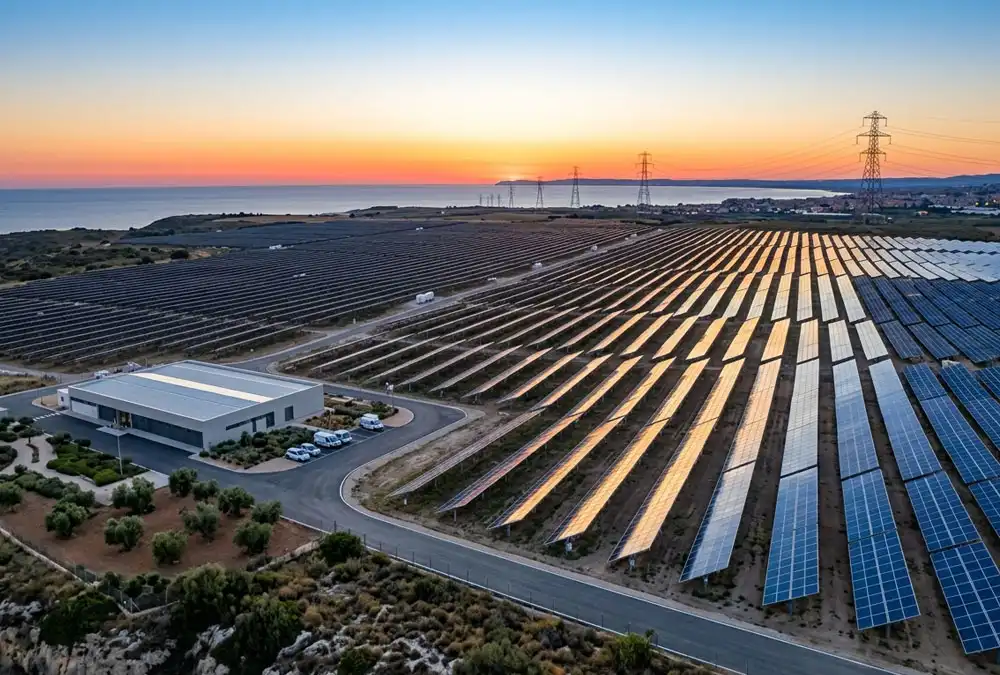
For institutional investors, infrastructure funds, and large industrial energy consumers entering the European renewable energy market, a precise understanding of the Solar EPC Cost has become the absolute prerequisite for successful capital allocation. As the European Union aggressively accelerates its decarbonization mandates under the updated European Green Deal frameworks, the deployment of multi-megawatt ground-mounted arrays, high-capacity commercial rooftops, and hybrid solar-plus-storage assets has surged. However, navigating the European market requires deep financial and technical diligence; total project expenditures are heavily influenced by fragmented regional labor markets, localized grid connection constraints, and varying supply chain compliance standards. EPC pricing variance between regions like Eastern Europe and Western Europe can easily swing by 20% to 40%.
For project financiers and corporate developers, driving a project from a conceptual pro forma to commercial operation requires answering several critical economic questions: What is the current average Solar EPC Cost per MW across specific EU member states? Which technical variables heavily drive up initial capital expenditures (CapEx)? How can engineering design and strategic procurement optimize the plant’s lifetime Levelized Cost of Energy (LCOE)? Is integrating battery storage financially viable under current European market arbitrage conditions? This comprehensive guide delivers a detailed, data-driven breakdown of European solar construction economics, helping energy directors maximize their investment yields.
Featured Snippet – What Is Solar EPC Cost?
What Is Solar EPC Cost?
Solar EPC Cost refers to the comprehensive lump-sum capital expenditure covering the Engineering, Procurement, and Construction phases required to deliver a fully operational, grid-synchronized solar power plant. It includes multi-disciplinary engineering design, global procurement of core tier-1 hardware and balance-of-system (BOS) components, civil earthworks, electrical installation, testing, commissioning, and regulatory utility compliance management.
What Is the Average Solar EPC Cost per MW in Europe?
In the 2025–2026 European market, the average Utility Scale Solar EPC Cost for large-scale, ground-mounted projects generally ranges from €0.55 million to €0.85 million per MW. For complex Commercial Solar EPC Project Cost structures, baseline pricing typically falls between €0.80 million and €1.25 million per MW, depending on structural roof enforcement requirements, system scale, and local labor rates.
What Factors Affect Solar EPC Pricing?
The core cost drivers within the European energy market include:
- Geotechnical and topographical land conditions.
- Photovoltaic module technology selection (e.g., N-type TOPCon vs. HJT).
- Inverter architecture choices (Centralized vs. Decentralized String Inverters).
- Mounting and tracking mechanisms (Fixed-Tilt vs. Single-Axis Trackers).
- Substation complexity and utility grid connection proximity.
- Regional labor rates and localized structural permitting timelines.
- The integration of utility-grade Battery Energy Storage Systems (BESS).
Solar EPC Cost per MW in the EU
Average Utility-Scale Solar EPC Cost per MW
According to benchmark studies tracking utility-scale solar asset deployment across the European Union, the baseline Solar EPC Cost in Europe has achieved structural stability following supply chain rebalancing. Large-scale utility ground mounts (10MW to 100MW+) benefit heavily from bulk purchasing economies of scale. However, geographical cost mapping reveals stark regional variations:
- Southern Europe (e.g., Spain, Italy, Portugal): Averaging €0.53M to €0.68M per MW. These regions feature ideal solar irradiance, extensive flat agricultural land tracts, and highly experienced civil construction crews.
- Western Europe (e.g., Germany, France, Netherlands): Averaging €0.70M to €0.88M per MW. Higher costs here are driven by strict environmental zoning regulations, complex civil permitting, and premium labor rates.
- Eastern Europe (e.g., Poland, Romania, Hungary): Averaging €0.58M to €0.75M per MW. This region represents a high-growth market, characterized by lower relative labor costs but offset by occasional grid infrastructure bottlenecks.
Commercial Solar EPC Cost Benchmarks
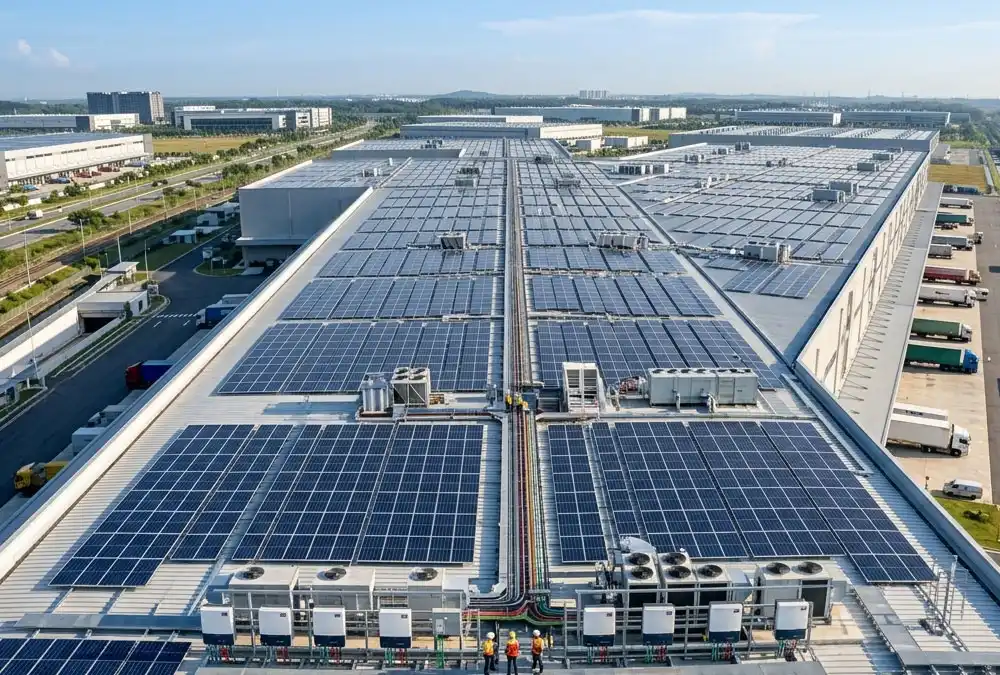
Commercial and Industrial (C&I) solar deployments exhibit higher per-megawatt costs due to reduced project scale, non-standardized engineering constraints, and complex rooftop installation workflows. For a typical 500kW to 2MW industrial rooftop asset, CapEx allocation ranges from €0.85M to €1.15M per MW. Key variables affecting this benchmark include structural roof reinforcement, specialized fall-protection safety systems, and complex building-integrated electrical routing.
Solar + Battery Storage EPC Cost per MW
Deploying a Solar EPC Cost with Battery Storage model introduces an additional layer of capital expenditure but unlocks substantial operational flexibility. When evaluating a hybrid solar-plus-storage asset (assuming a typical 1MW PV array paired with a 500kW/1MWh BESS configuration), the total integrated EPC cost scales to approximately €1.20 million to €1.65 million per MW. The storage component alone introduces specialized costs for chemical battery cells, high-performance bidirectional Power Conversion Systems (PCS), and advanced Energy Management Systems (EMS).
EU Solar EPC Cost Trends
Projections tracking solar economics reveal that while silicon raw material and PV module factory gates have bottomed out, the broader Renewable Energy Project Cost remains exposed to inflationary pressures within civil labor and high-voltage grid equipment markets. Long-lead components—specifically medium-to-high voltage step-up transformers and utility-grade switchgear—currently command extended lead times and premium pricing, making early-stage engineering and procurement planning essential.
Solar EPC Project Cost by Project Type
Utility-Scale Solar EPC Cost
For mega-scale projects exceeding 50MW, the primary Solar Power Plant Cost drivers shift from module acquisition to civil site preparation and grid connection infrastructure. Massive earthworks, long-distance high-voltage transmission line construction, and dedicated utility-scale substation development represent a major portion of the capital budget. Additionally, managing thousands of structural tracker piles requires extensive mechanized field deployment.
Rooftop Solar EPC Pricing
C&I rooftop applications operate under entirely different structural conditions. Engineers must run precise load-bearing calculations to determine whether a factory roof can support a standard penetrative or ballasted racking system. If the building envelope requires structural reinforcement to handle local wind-load and snow-load combinations, these civil upgrades can add €0.05M to €0.15M per MW to the initial Solar Installation Cost.
Hybrid Renewable Energy EPC Projects
Modern European energy networks are increasingly prioritizing hybrid systems, such as co-located Solar-Wind farms and islanded industrial microgrids. These advanced configurations require sophisticated control networks. The EPC contractor must deploy high-speed SCADA systems and dynamic power plant controllers capable of balancing intermittent wind and solar generation profiles in real time while maintaining strict utility grid code stability.
Key Factors Affecting Solar EPC Pricing in Europe
Land Acquisition Costs and Site Conditions
The geographical and geological profile of a project site heavily dictates civil engineering expenditures. Rolling topography requiring extensive cut-and-fill grading, or rocky subsoils requiring pre-drilling for structural mounting piles, will quickly drive up civil labor costs. Furthermore, clearing environmental zoning requirements and performing ecological field studies in strict EU jurisdictions can significantly extend pre-construction timelines.
Solar Panel Technology and System Size
The selection of core PV cell technology directly determines a plant’s lifetime power density. While standard P-type PERC modules are largely phased out, developers must weigh the trade-offs between N-type TOPCon (Tunnel Oxide Passivated Contact) and HJT (Heterojunction Technology) bifacial arrays. Choosing higher-efficiency modules carries a slight premium on initial procurement costs, but significantly lowers the project’s broader balance-of-system (BOS) footprint by reducing the required racking structures, cabling, and land area per megawatt.
Inverter Technology Selection
Electrical engineers must choose between decentralized string inverters and centralized inverter stations. Centralized inverter architectures offer a lower initial CapEx for large, flat utility-scale projects. Conversely, deploying smart string inverters introduces a minor equipment cost premium but offers superior multi-node Maximum Power Point Tracking (MPPT) optimization, higher system redundancy, and simplified long-term operations and maintenance (O&M) replacement workflows.
Installation Method and Project Complexity
The physical environment of a project dictates its baseline labor efficiency. Flat, accessible ground-mounted assets show the lowest installation cost per watt. Rooftop arrays require specialized crane logistics and strict safety scaffolding, while floating solar installations (Floating PV) require specialized marine-grade anchoring, mooring lines, and UV-resistant HDPE pontoon structures, introducing an engineering premium.
Mounting Structure Type
Investors must choose between fixed-tilt racking structures and single-axis tracking systems. Implementing automated single-axis trackers increases initial hardware and mechanical installation costs by roughly 10% to 15%. However, by dynamically rotating the PV modules to track the sun’s trajectory throughout the day, trackers can boost total annual energy yields by 15% to 25% across Southern and Central Europe, dramatically optimizing the asset’s long-term financial metrics.
Government Incentives and Subsidies
The economic landscape of European solar is deeply tied to regional regulatory policy. Projects can capitalize on direct capital grants funded by the EU Green Deal, corporate Power Purchase Agreement (PPA) tax credits, or national Contracts for Difference (CfD) auction schemes. These mechanisms provide long-term revenue certainty, helping developers de-risk high initial capital costs and secure lower borrowing rates from project finance banks.
Solar EPC Project ROI and Payback Analysis
How Solar EPC Cost Impacts ROI
When modeling project economics, focusing solely on minimizing initial CapEx can be a costly mistake. Cheap engineering or low-grade components frequently result in low Performance Ratios (PR), high operational expenditures, and accelerated system degradation. A professional EPC framework focuses on optimizing the Levelized Cost of Energy ($LCOE$), which calculates the total cost of building and operating an energy asset relative to its lifetime generation:
$$LCOE = \frac{\sum_{t=0}^{N} \frac{CapEx_t + OpEx_t}{(1+r)^t}}{\sum_{t=1}^{N} \frac{Energy_t}{(1+r)^t}}$$
Investing in high-grade engineering and premium tier-1 equipment maximizes lifetime energy production ($Energy_t$) and minimizes routine maintenance costs ($OpEx_t$). This directly drives down LCOE and secures a far higher **Solar System ROI** for investors.
Typical Solar Project Payback Periods
With current European wholesale electricity price baselines and carbon credit dynamics, typical financial payback periods have reached highly attractive levels:
- Commercial Rooftop Projects: 4 to 7 Years (driven by high retail electricity cost avoidance).
- Utility-Scale Solar Power Plants: 5 to 8 Years (leveraging wholesale market PPAs or CfD tariffs).
- Solar + BESS Storage Projects: 6 to 9 Years (optimized via active peak-shaving and frequency markets).
Solar EPC Cost vs ROI Across Different Industries
To assist energy asset managers with strategic planning, the table below provides a data-driven breakdown of typical project costs, system efficiency expectations, and financial returns across different industry sectors:
| Industry Sector | Avg EPC Cost per MW (€) | Target Performance Ratio (PR) | Average Payback Period | Primary Value Stream & Financial Driver |
|---|---|---|---|---|
| Manufacturing Facilities | €0.85M – €1.15M | 82% – 85% | 4 – 6 Years | High onsite self-consumption, mitigating expensive daytime industrial peak tariffs. |
| Logistics & Warehousing | €0.80M – €1.05M | 83% – 86% | 5 – 7 Years | Ample roof space maximizing total generation, enabling power export via corporate PPAs. |
| Hyperscale Data Centers | €1.20M – €1.65M (with BESS) | 84% – 87% | 6 – 8 Years | Securing continuous, zero-carbon backup power while eliminating expensive grid demand charges. |
| Utility Power Producers | €0.55M – €0.78M | 86% – 89% | 6 – 9 Years | Wholesale power generation optimized via single-axis tracking systems and utility-scale PPAs. |
Industrial Energy Storage Technology Integration
For modern European industrial operations, deploying solar panels alone is often insufficient due to grid intermittency and peak demand spikes. Integrating an industrial-grade EPC contractor who can seamlessly deploy advanced Battery Energy Storage Systems (BESS) is essential. Below, we break down the primary cell technologies and alternative energy storage solutions used today.
Battery Cell Technology Breakdown
- Lithium Iron Phosphate (LFP): This chemistry is the standard for modern industrial energy storage applications. LFP offers exceptional thermal stability and safety profiles compared to consumer-grade lithium chemistries. It supports extended operational lifespans—typically 6,000 to 8,000 complete cycles at 80% Depth of Discharge (DoD)—and contains no cobalt, eliminating ethical sourcing risks.
- Sodium-Ion (Na-Ion): An emerging chemical technology that replaces lithium with abundant sodium. Sodium-ion systems exhibit excellent performance in extreme cold environments and present a significantly lower risk of raw material supply bottlenecks. However, their lower volumetric energy density means they require a larger physical space to achieve the same capacity as LFP systems.
Alternative Industrial Energy Storage Solutions
- Flow Batteries (e.g., Vanadium Redox): These systems store energy in large external tanks containing liquid electrolyte solutions. Their main advantage is an almost unlimited cycle life with zero capacity degradation over 20+ years. They are ideal for long-duration energy storage (LDES) requiring 6 to 12+ hours of discharge, though they have a lower round-trip efficiency and require more space for pumps and tanks.
- Flywheel Energy Storage: A mechanical storage solution that stores kinetic energy in a high-speed rotating vacuum rotor supported by magnetic bearings. Flywheels don’t store long-term energy, but they can absorb and discharge massive amounts of power instantly. This makes them perfect for industrial power quality stabilization, voltage sag mitigation, and short-term frequency regulation rather than multi-hour load shifting.
Featured Industrial BESS Product Recommendation
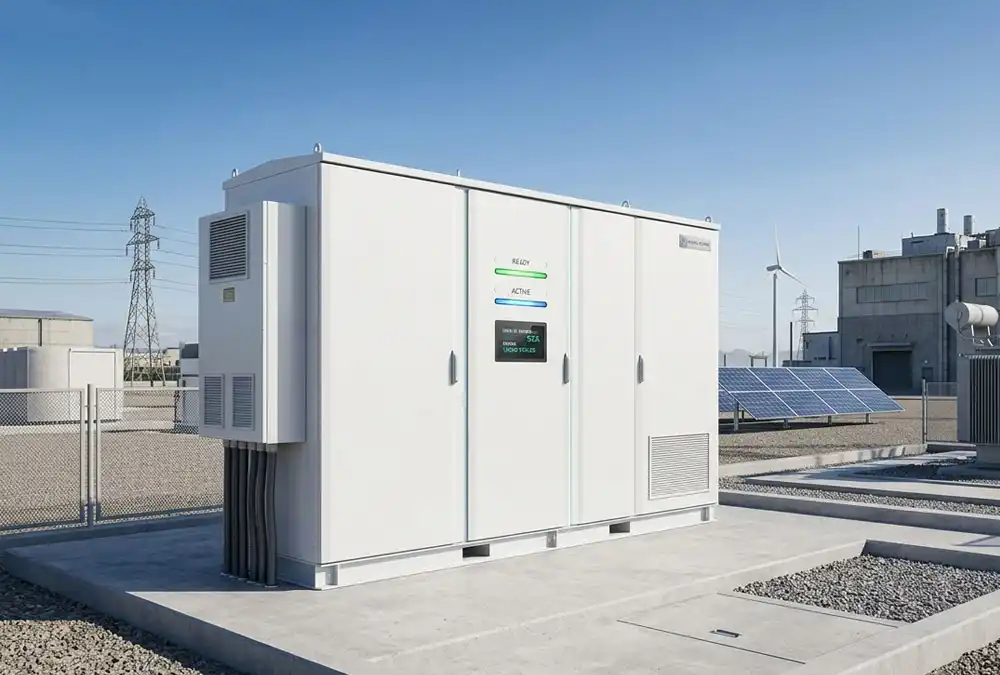
For European industrial enterprises seeking to maximize their Solar and Battery Storage Cost efficiency, we highly recommend deploying the Anengji ECO-E233LS Liquid-Cooled Commercial Energy Storage System (500kW / 1165kWh) or the larger Anengji ECO-E261LP Inverter-Integrated Outdoor BESS Cabinet. These systems feature advanced liquid-cooling systems that maximize cell longevity, integrated intelligent string Battery Management Systems (BMS), and exceptional power density. They are perfectly suited for factory peak-shaving, microgrid integration, and heavy-duty backup applications across the EU.
Turnkey EPC Cost vs Itemized EPC Pricing
When structuring engineering contracts, developers must choose between two primary commercial pricing models:
What Is Turnkey EPC Pricing?
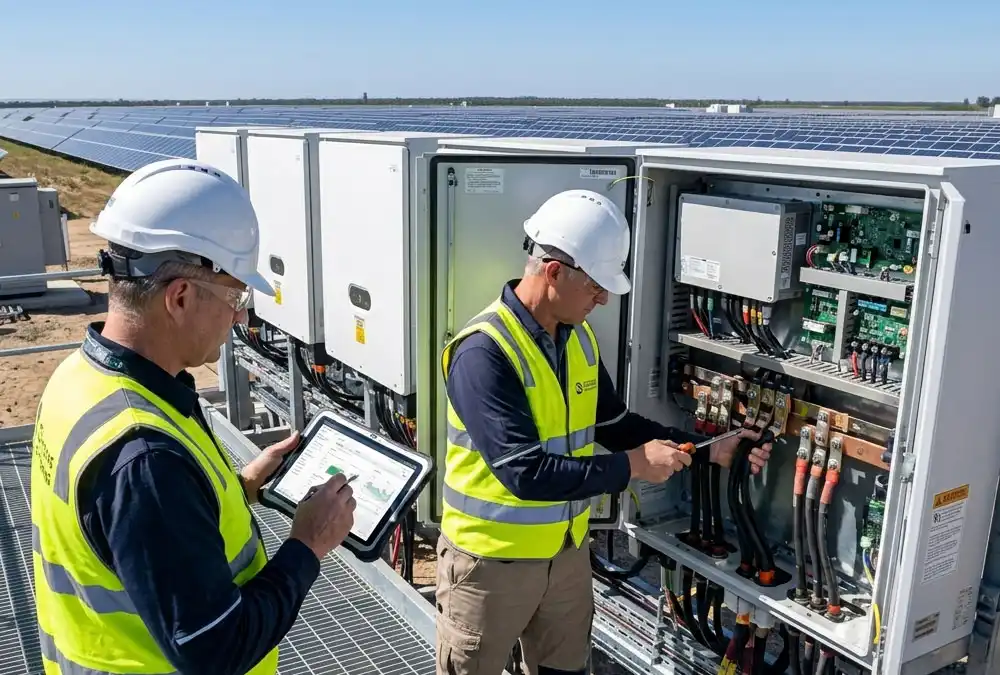
Under a turnkey contract, the EPC provider assumes comprehensive responsibility for project delivery under a fixed, lump-sum price. Every phase—from engineering and equipment sourcing to construction and final grid synchronization—is managed under a single contract. Any unexpected costs or engineering overruns are absorbed by the contractor, providing maximum price certainty for investors.
What Is Itemized EPC Pricing?
Itemized pricing unbundles the project into discrete, individual cost components. The asset owner acts as the primary developer, purchasing equipment directly from manufacturers and hiring separate contractors for engineering design and construction services. While this model eliminates the contractor’s risk premium, it leaves the owner fully exposed to unexpected project delays, component mismatches, and budget overruns.
Which EPC Pricing Model Is More Cost-Effective?
| Commercial Metric | Turnkey EPC Pricing Model | Itemized EPC Pricing Structure |
|---|---|---|
| Financial Risk Protection | Maximum (Contractor carries overrun risk) | Minimum (Owner bears all execution risk) |
| Procurement Leverages | High (Contractor utilizes global bulk volume discounts) | Variable (Depends entirely on owner’s portfolio size) |
| Management Complexity | Low (Single dedicated point of contact) | High (Owner coordinates multiple independent vendors) |
| Bankability Profile | Excellent (Highly preferred by project finance lenders) | Challenging (Requires extensive balance-sheet strength) |
Solar EPC Tender Cost and Bid Price Trends
Analysis of recent commercial clean energy tenders across the EU shows aggressive competition among tier-1 contractors. Winning bids are increasingly determined by a provider’s ability to demonstrate secure, vertically integrated component supply chains. Furthermore, as grid operators impose stricter injection limits, tender specifications are shifting away from pure solar capacity toward integrated Solar Plus Storage EPC Cost models. This ensures that new generation assets can actively support grid stability from day one.
Cost Optimization Strategies with Anengji Power
Optimizing capital expenditures while maintaining high engineering quality requires an experienced partner. Anengji Power delivers structural cost optimization through three core strategies:
- Customized System Design: Our engineering teams run detailed simulations to tailor the electrical and structural layout to your site’s specific conditions. This optimizes the balance-of-system (BOS) footprint and eliminates unnecessary upfront hardware costs.
- Customized Component Manufacturing: By integrating manufacturing and engineering pipelines, we provide tailored racking configurations and advanced storage solutions that match your project’s technical specifications, avoiding the markup of third-party distributors.
- Solar + BESS Integration Optimization: We specialize in aligning high-performance Power Conversion Systems (PCS) with intelligent Energy Management Systems (EMS). This hardware synchronization optimizes your **Solar and BESS ROI** by enabling seamless automated peak-shaving, load shifting, and lucrative grid frequency market participation.
FAQ About Solar EPC Cost
How Much Does Solar EPC Cost per MW?
In Europe, utility-scale projects range from €0.55M to €0.85M per MW, while commercial installations typically average €0.80M to €1.25M per MW, depending on regional labor rates, system size, and civil terrain complexity.
What Is Included in Solar EPC Pricing?
A full-wrap EPC price includes complete site geotech studies, electrical and structural design, component sourcing, civil earthworks, physical installation, high-voltage substation integration, and comprehensive performance testing for final utility handoff.
Does Adding Battery Storage Increase EPC Costs?
Yes, integrating a Solar and Battery Storage Cost framework increases initial CapEx. However, it significantly improves long-term project economics by eliminating expensive peak demand charges and unlocking new revenue streams through energy arbitrage and frequency regulation markets.
How Can Solar EPC Costs Be Reduced?
Project costs can be optimized by performing rigorous front-end site diligence, selecting high-efficiency N-type modules to reduce balance-of-system (BOS) requirements, and partnering with an experienced, vertically integrated EPC contractor with established supply chains.
Conclusion – Achieving Cost-Effective Solar EPC Project Execution
When evaluating a new solar deployment, the Solar EPC Cost should never be analyzed as an isolated upfront expense. Instead, it must be viewed as the foundation of the project’s financial performance over its 30-year lifecycle. Opting for the lowest-priced bid often introduces hidden costs in the form of poor component reliability, execution delays, and underperforming energy yields that undermine long-term profitability. True cost optimization is achieved by balancing smart capital expenditure with premium engineering design.
As the European energy market transitions toward smarter, decentralized networks, co-locating solar assets with battery storage is becoming essential to maximize project returns. Partnering with a financially stable, technologically advanced contractor who possesses proven solar and energy storage integration expertise allows developers and corporate energy consumers to de-risk construction, secure fast grid interconnection, and achieve exceptional long-term financial returns across their clean energy portfolios.
Related Articles
- How to Select Utility Scale Battery Storage Contractors for Large BESS Projects?
- How to Choose a Solar EPC Company: The Ultimate Commercial & Utility Guide
- What Is EPC vs EPCM vs PMC? Best Model for Solar Projects
- What Are the Top Benefits of Solar Battery Storage in Factories?
- What Are Turnkey Solar Solutions? The Complete Commercial & Utility Guide
 https://anengjipower.com/wp-content/uploads/2026/06/epc-vs-turnkey-solar-project-bess.webp
675
1000
Charging Station Engineer
https://anengjipower.com/wp-content/uploads/2025/09/anengji-dc-fast-charging-station-manufacturer-and-supplier-logo-white-1.png
Charging Station Engineer2026-06-22 07:16:042026-06-24 07:13:17What Is the Difference Between EPC and Turnkey Contract Models in Energy Projects?
https://anengjipower.com/wp-content/uploads/2026/06/epc-vs-turnkey-solar-project-bess.webp
675
1000
Charging Station Engineer
https://anengjipower.com/wp-content/uploads/2025/09/anengji-dc-fast-charging-station-manufacturer-and-supplier-logo-white-1.png
Charging Station Engineer2026-06-22 07:16:042026-06-24 07:13:17What Is the Difference Between EPC and Turnkey Contract Models in Energy Projects? https://anengjipower.com/wp-content/uploads/2026/06/anengji-commercial-solar-plus-storage-benefits-site.webp
675
1000
Charging Station Engineer
https://anengjipower.com/wp-content/uploads/2025/09/anengji-dc-fast-charging-station-manufacturer-and-supplier-logo-white-1.png
Charging Station Engineer2026-06-20 14:34:102026-06-20 14:37:43What Are the Top Benefits of Solar Battery Storage in Factories?
https://anengjipower.com/wp-content/uploads/2026/06/anengji-commercial-solar-plus-storage-benefits-site.webp
675
1000
Charging Station Engineer
https://anengjipower.com/wp-content/uploads/2025/09/anengji-dc-fast-charging-station-manufacturer-and-supplier-logo-white-1.png
Charging Station Engineer2026-06-20 14:34:102026-06-20 14:37:43What Are the Top Benefits of Solar Battery Storage in Factories? https://anengjipower.com/wp-content/uploads/2026/06/modular-commercial-solar-battery-storage-cabinet.webp
675
1000
Charging Station Engineer
https://anengjipower.com/wp-content/uploads/2025/09/anengji-dc-fast-charging-station-manufacturer-and-supplier-logo-white-1.png
Charging Station Engineer2026-06-18 09:16:522026-07-03 03:05:13What Is Solar Battery Storage? Complete C&I Engineering Guide
https://anengjipower.com/wp-content/uploads/2026/06/modular-commercial-solar-battery-storage-cabinet.webp
675
1000
Charging Station Engineer
https://anengjipower.com/wp-content/uploads/2025/09/anengji-dc-fast-charging-station-manufacturer-and-supplier-logo-white-1.png
Charging Station Engineer2026-06-18 09:16:522026-07-03 03:05:13What Is Solar Battery Storage? Complete C&I Engineering Guide


Leave a Reply
Want to join the discussion?Feel free to contribute!