
Deploy Scalable, High-Profit Commercial DC Fast Charging Infrastructure for Fleets & Commercial Hubs
Build future-proof charging stations backed by megawatt-level power cabinets, liquid-cooled dispensers, and smart peak-shaving energy storage. From initial grid load calculations to certified OCPP cloud integration, we provide end-to-end engineering excellence.
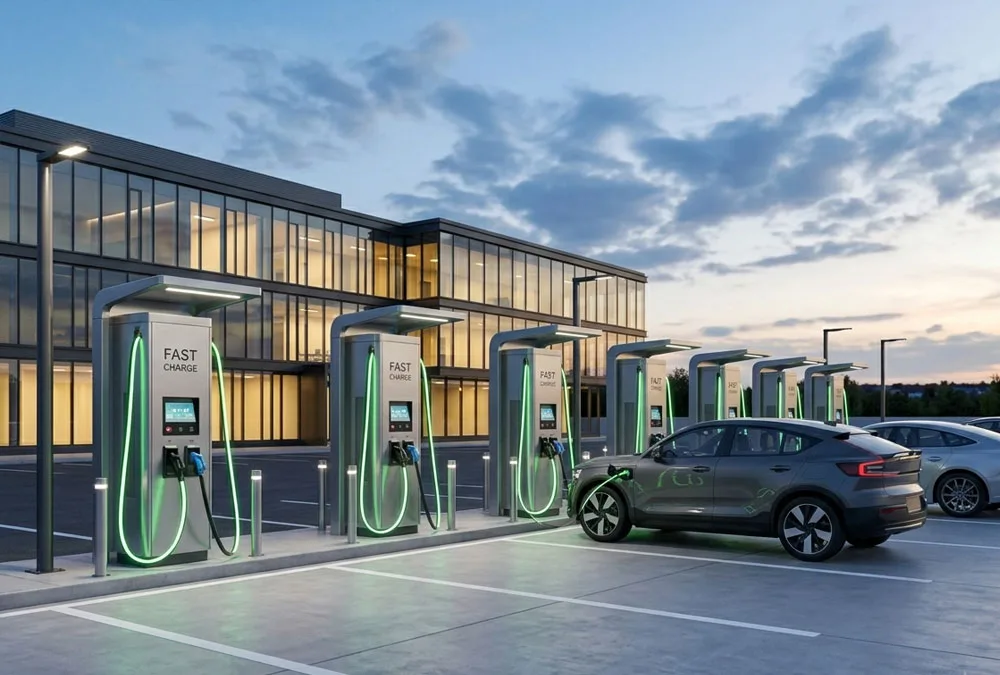
Introduction
Building a profitable EV charging site takes more than bolting fast chargers onto a concrete pad. When you deploy Commercial DC Fast Charging Solutions, the real battle happens behind the electrical meter. Site developers frequently hit hard limits with local utility grid capacity, unexpected peak demand charges, and complex transformer upgrades that eat up capital budgets. Balancing high-voltage direct current distribution, civil trenching, and grid compliance requires deep engineering expertise. Done right, your commercial station turns into a predictable, long-term revenue generator.
Real Buyer Friction: “Why are utility quotes for a 500kW grid upgrade costing more than my charging equipment?”
This cost hurdle stalls nearly 40% of commercial charging projects during site planning. Local utilities often charge premium fees for new medium-voltage step-down transformers and dedicated power feeders. The secret to skipping these high fees lies in decentralized dynamic load management and localized battery storage (BESS). By using energy storage to buffer high charging loads, you can run high-power fast charging on your site’s existing power grid supply—saving six figures in upfront infrastructure upgrades.
What Are Commercial DC Fast Charging Solutions?
Advanced commercial EV charging solutions are high-voltage, direct-current power conversion platforms built to convert 480V 3-phase AC power into stable DC output ranging from 200V to 1000V. By feeding high current directly into the vehicle’s traction battery pack, these platforms bypass slow onboard chargers and drastically cut dwell times.
Understanding Commercial DC Fast Charging Infrastructure
A commercial DC site is a unified electrical power network. High-voltage power flows from a utility transformer into a primary distribution panel, which feeds centralized power cabinets containing modular AC-to-DC rectification units. These cabinets dynamically route direct current to remote liquid-cooled charging pedestals equipped with metering systems, high-voltage contactors, and automated billing payment terminals.
Why Businesses Need DC Fast Charging Solutions (Industry Data & Regulations)
Commercial fleet managers and property developers face growing operational pressure as global electric vehicle adoption accelerates. Strategic benchmarks and international regulatory mandates dictate the commercial necessity of DC fast charging infrastructure:
| Authority / Standard | Key Metric / Mandate Requirement | Official Source / Reference | Strategic Impact for Station Owners |
|---|---|---|---|
| Global EV Infrastructure Growth | Public fast chargers surged by >30% YoY globally to support fleet expansion. | IEA Global EV Outlook | Fast charging accessibility directly dictates customer site choice and dwell revenue. |
| EU AFIR Regulation Mandate | Mandatory 150kW+ fast chargers every 60km along TEN-T transport corridors. | European Commission AFIR Policy | Ensures regulatory compliance and qualifies sites for state clean energy subsidies. |
| Open Network Standard | OCPP 1.6J / 2.0.1 compliance required for grid interoperability. | Open Charge Alliance Protocol | Prevents proprietary software vendor lock-in and enables remote billing control. |
Commercial DC Fast Charging vs AC Charging Solutions
Standard AC level-2 wallboxes rely on a vehicle’s small onboard rectifier, limiting charging speeds to 7kW–22kW and taking 4–8 hours for a full charge. Commercial fast charging rectifies power at the station level, supplying 60kW to 480kW directly to the battery and topping up vehicles in 15 to 30 minutes.
| Technical Metric | Commercial AC Charging | Commercial DC Fast Charger | Direct Buyer Advantage & Value |
|---|---|---|---|
| Power Output Range | 7kW to 22kW (AC) | 60kW to 480kW+ (DC) | Cuts charging time by 85%, serving more vehicles per stall daily. |
| Conversion Location | Onboard Vehicle Converter | Off-Board Station Rectifier | Unlocks maximum battery charge speed regardless of vehicle onboard AC limits. |
| Average Dwell Time | 4 to 8 Hours | 15 to 30 Minutes | Higher vehicle turnover boosts daily session revenues. |
| Revenue Model | Passive Amenity / Long-Term Parking | High-Margin Public/Fleet Power Dispensing | Generates strong direct profit through premium per-kWh retail markups. |
Commercial DC Fast Charging Solutions for Different Business Applications
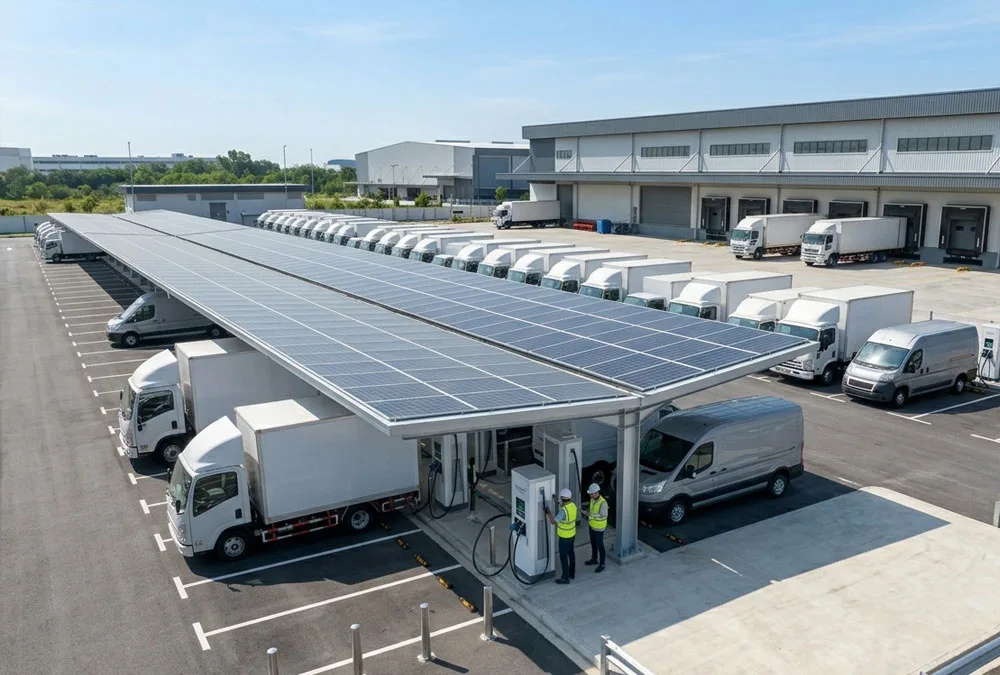
Deploying turnkey commercial DC fast charging solutions requires matching electrical infrastructure to site specific operational needs.
DC Fast Charging Solutions for EV Fleets
Logistics hubs need tailored commercial DC fast charging solutions for fleets to keep vehicles running on schedule. Deploying centralized split-system charging cabinets with automated power-routing software lets fleet managers charge multiple trucks sequentially overnight, preventing costly utility demand spikes while ensuring every vehicle is fully charged by morning.
DC Fast Charging Solutions for Highway Charging Stations
Highway corridors rely on ultra-fast liquid-cooled charging pedestals delivering 240kW to 480kW per port. High throughput is essential here. Stations need reliable 800V architecture, sturdy liquid-cooled cables, and credit card terminals to process fast driver transactions 24/7.
DC Fast Charging Solutions for Commercial Buildings and Retail
Shopping centers, hotels, and office plazas use 60kW to 120kW dual-port dispensers to draw premium EV drivers. Offering rapid 30-minute top-ups increases customer dwell time and drives higher store sales while generating steady parking fee revenue.
DC Fast Charging Solutions for Industrial Parks
Industrial facilities deploy fast dispensers to charge yard trucks, service vans, and worker vehicles on shared hardware, lowering total capital expenditures across site operations.
High Power DC Fast Charging Solutions: Choosing the Right Charging Capacity
Selecting the right power output balances your initial equipment budget against site power capacity and daily vehicle turnover requirements:
| Power Capacity | Replenishment Rate | Optimal Facility Type | Commercial Return Target |
|---|---|---|---|
| 30kW – 60kW DC | 30-60 Miles Range / Hr | Urban Parking & Delivery Depots | Fits low-headroom grid connections without major transformer costs. |
| 120kW – 180kW DC | 120-200 Miles Range / 30 Min | Retail Malls & Commercial Plazas | Dynamic power splitting maximizes dual-port charging efficiency. |
| 240kW – 480kW Ultra-Fast | Full Charge in 12-15 Mins | Highway Plazas & Heavy Truck Hubs | Captures maximum retail kWh margin per session on 800V vehicles. |
Components of Commercial DC Fast Charging Systems
A heavy-duty DC fast charger relies on modular power electronics to maintain high efficiency and steady uptime.
DC Charging Power Module
Modular 30kW or 40kW AC-to-DC converter modules form the core of modern power cabinets. Using high-efficiency Silicon Carbide (SiC) semiconductors ensures power conversion efficiency above 96%. Hot-swappable module designs allow technicians to service units without taking the entire station offline.
Power Cabinet and Distribution System
Heavy-duty steel enclosures house isolation transformers, AC/DC circuit breakers, surge protection devices (SPD), and high-voltage contactors, protecting equipment from severe weather and electrical faults.
Battery Management and Energy Management Integration
Real-time communication links the station load controller with localized battery storage. When vehicle power demand spikes, energy storage automatically supplements grid power to shave demand peaks.
Charging Software and OCPP Management Platform
Open protocol compliance ensures complete operational freedom. Adopting certified Open Charge Point Protocol (OCPP 1.6J / 2.0.1) standard allows station operators to switch management networks, update billing rates, and run remote diagnostics without being locked into proprietary software vendor lock-in.
Charging Connectors and Compatibility
Multi-standard charging dispensers feature CCS1, CCS2, NACS (SAE J3400), or CHAdeMO connectors, ensuring complete access for commercial fleets and public drivers.
Smart Commercial DC Fast Charging Solutions with Energy Management
Incorporating smart EV charging energy management keeps site operating costs low while protecting local power transformers from severe load overruns.
Dynamic Load Balancing for Lower Infrastructure Costs
Dynamic load management algorithms monitor total building power draw in real time, adjusting charger output automatically to match safe grid capacity and avoid expensive utility upgrades.
Battery Energy Storage System (BESS) for DC Fast Charging
Stationary battery cabinets store low-cost energy during off-peak hours and discharge during high-demand fast charging sessions. Lithium Iron Phosphate (LFP) chemistry offers strong thermal stability, zero risk of thermal runaway, and a 6,000+ deep cycle life (to 80% SOH), delivering dependable performance for daily peak shaving.
| BESS Capacity | Thermal Architecture | Cycle Life / Cell Tech | Direct Peak-Shaving Benefit |
|---|---|---|---|
| 100kWh Cabinet | Air-Cooled Smart HVAC | 6,000+ Cycles (LFP) | Eliminates minor utility demand charges on 60kW-120kW stations. |
| 261kWh Cabinet | Liquid-Cooled Industrial | 6,000+ Cycles (LFP) | Uniform cell thermal control extends battery operational lifespan by 20%. |
| 418kWh Cabinet | Liquid-Cooled High Density | 6,000+ Cycles (LFP) | Buffers back-to-back 180kW+ fast charges without triggering transformer upgrades. |
| 1MWh Container | Containerized Liquid-Cooled | 8,000+ Cycles (LFP) | Megawatt-scale energy storage for transit depots and highway charging plazas. |
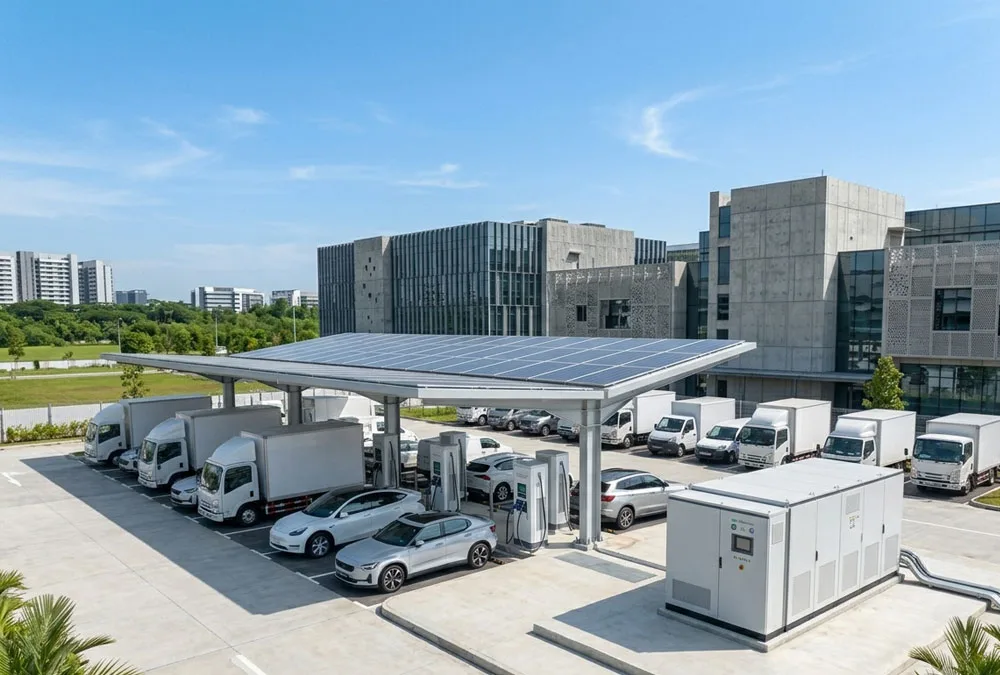
Solar + BESS + DC Fast Charging Solutions
Integrating solar panels, stationary battery storage, and fast chargers creates zero-emission charging microgrids that lower site energy costs while hitting corporate ESG sustainability goals.
Commercial DC Fast Charging Installation and Deployment Process
Executing a successful commercial DC fast charging stations project requires clear step-by-step engineering execution.
Step 1: Site Assessment and Electrical Evaluation
Engineers review local power feeder capacity, assess soil condition for underground trenching, measure transformer headroom, and analyze site traffic flow.
Step 2: Charging Solution Design
Engineering teams draft single-line electrical diagrams, select power conversion cabinets, map out conduit routes, and establish site safety distances.
Step 3: Electrical and Civil Construction
Civil crews cut asphalt, trench cable runs, pour concrete equipment pads, mount transformers, and run heavy copper wire to station pedestals.
Step 4: Installation, Testing and Commissioning
Technicians install charging cabinets, establish OCPP network links, complete insulation safety testing, and conduct full-power charge testing.
Step 5: Operation and Maintenance Support
Automated cloud platforms monitor charger health 24/7, tracking station temperature and power module status to dispatch field service teams before faults disrupt service.
Commercial DC Fast Charging Solutions Cost: Investment and ROI Analysis
Accurate capital allocation models evaluate total commercial EV charging cost metrics to establish realistic project payback timelines based on standard 120kW–180kW dual-dispenser site installations:
| Investment Category | Estimated Cost Range (USD) | Key Cost Drivers | Financial ROI Projection |
|---|---|---|---|
| DC Hardware CAPEX | $25,000 – $90,000 / stall | Power rating, SiC module efficiency, air vs liquid cooling. | 3.5 – 5 Years Payback period achieved at 18%-25% daily station utilization rate. |
| Civil & Grid Infrastructure | $15,000 – $60,000+ / site | Transformer upgrades, trenching length, concrete pad pouring. | |
| Software & Network OPEX | $250 – $500 / port / year | OCPP cloud platform hosting, payment gateway, cellular connectivity. | |
| Preventive Maintenance | $1,200 – $3,000 / year | Filter replacements, liquid coolant servicing, cable wear inspections. |
How to Reduce Commercial DC Fast Charging Infrastructure Costs
Strategic design choices keep upfront project costs down without sacrificing site charging performance.
Choose the Right Charging Configuration
Avoid over-specifying ultra-fast 360kW systems where reliable 120kW dual-port dispensers meet actual customer dwell times effectively.
Use Smart Load Management Technology
Dynamic power allocation cuts initial grid expansion costs by maximizing your existing utility connection capacity.
Integrate Battery Storage Solutions
Adding localized LFP storage cabinets lowers peak demand surcharges and provides backup power during temporary grid outages.
Work Directly with EV Charging Manufacturers
Sourcing hardware directly from equipment factories eliminates middleman distributor markups, grants direct access to technical support, and secures custom OEM options.
Future Trends of Commercial DC Fast Charging Solutions
Staying current on technology trends ensures your station equipment remains scalable and future-proof over time.
Fleet Electrification Driving Fast Charging Demand
Commercial logistics operators are replacing diesel vehicles with electric fleets, accelerating demand for high-capacity, heavy-duty charging depots.
Ultra-Fast Charging and Megawatt Charging System
The emerging Megawatt Charging System (MCS) standard delivers over 1MW of power to heavy commercial trucks, completing recharges in under 20 minutes.
AI-Based Smart Charging Management
Artificial intelligence software analyzes power grid prices and station utilization trends to balance charge speeds and minimize electricity costs automatically.
Integration of Renewable Energy and Storage
Combining solar panels, stationary battery storage, and fast chargers creates green charging microgrids that cut reliance on the public power grid.
Why Choose AnengJI for Commercial DC Fast Charging Solutions?
AnengJI provides complete end-to-end commercial charging solutions, combining equipment manufacturing, system engineering, and smart microgrid integration.
Complete Commercial EV Charging Product Portfolio
We manufacture durable 7kW–22kW AC chargers, 30kW–180kW DC fast chargers, and ultra-high-power 240kW–480kW liquid-cooled charging systems built for demanding commercial environments.
Customized Charging Solutions for Different Applications
Our engineering team delivers tailored hardware configurations for commercial fleets, retail sites, highway hubs, and solar microgrid installations.
Advanced Technology for Efficient Charging Operations
Supported by certified OCPP 1.6J/2.0.1 compliance, dynamic load management, and remote diagnostic platforms, our systems deliver 99%+ operational uptime.
Factory Direct Supply with Global Project Experience
Direct manufacturing guarantees competitive factory pricing, full OEM/ODM branding flexibility, international safety certifications (CE, UL, IEC), and dedicated technical support.
Frequently Asked Questions About Commercial DC Fast Charging Solutions
What is a commercial DC fast charging solution?
It is a complete charging infrastructure system combining high-voltage AC-to-DC converters, dynamic power cabinets, billing management software, and grid connections designed to deliver fast charging for commercial vehicles and public sites.
How much does a commercial DC fast charging station cost?
A complete dual-port 120kW fast charging site generally costs between $50,000 and $110,000, depending on civil trenching needs, cable runs, and transformer upgrade requirements.
What power level is best for commercial EV charging?
Retail plazas benefit most from 60kW–120kW chargers. Highway charging hubs and commercial delivery fleets require 180kW–360kW+ ultra-fast dispensers to ensure short dwell times.
Can DC fast chargers work with battery storage?
Yes. Integrating battery storage (BESS) allows stations to buffer high power draws locally, avoiding peak utility demand charges and supporting fast charging on constrained grid connections.
How long does it take to install a commercial DC fast charging station?
Turnkey installations typically take 8 to 16 weeks, accounting for utility connection reviews, local permitting, civil construction, equipment delivery, and site commissioning.
How profitable is a commercial EV charging station?
Well-located commercial stations maintaining 18–25% daily utilization rates routinely recover their capital investment within 3.5 to 5 years through per-kWh markup fees.
Build Your Commercial DC Fast Charging Solution with AnengJI
From initial grid load calculations and hardware selection to smart energy storage integration and long-term operating support, AnengJI helps businesses build high-profit, future-proof EV charging networks.
 https://anengjipower.com/wp-content/uploads/2026/06/epc-vs-turnkey-solar-project-bess.webp
675
1000
Charging Station Engineer
https://anengjipower.com/wp-content/uploads/2025/09/anengji-dc-fast-charging-station-manufacturer-and-supplier-logo-white-1.png
Charging Station Engineer2026-06-22 07:16:042026-06-24 07:13:17What Is the Difference Between EPC and Turnkey Contract Models in Energy Projects?
https://anengjipower.com/wp-content/uploads/2026/06/epc-vs-turnkey-solar-project-bess.webp
675
1000
Charging Station Engineer
https://anengjipower.com/wp-content/uploads/2025/09/anengji-dc-fast-charging-station-manufacturer-and-supplier-logo-white-1.png
Charging Station Engineer2026-06-22 07:16:042026-06-24 07:13:17What Is the Difference Between EPC and Turnkey Contract Models in Energy Projects?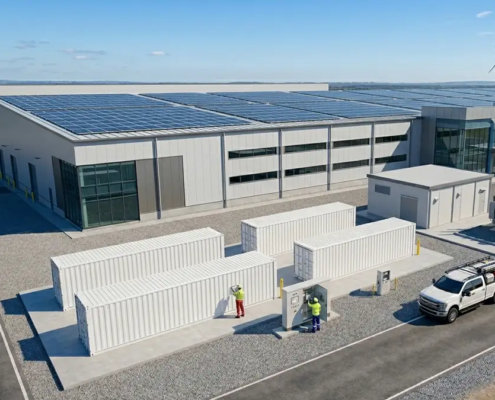 https://anengjipower.com/wp-content/uploads/2026/06/anengji-commercial-solar-plus-storage-benefits-site.webp
675
1000
Charging Station Engineer
https://anengjipower.com/wp-content/uploads/2025/09/anengji-dc-fast-charging-station-manufacturer-and-supplier-logo-white-1.png
Charging Station Engineer2026-06-20 14:34:102026-06-20 14:37:43What Are the Top Benefits of Solar Battery Storage in Factories?
https://anengjipower.com/wp-content/uploads/2026/06/anengji-commercial-solar-plus-storage-benefits-site.webp
675
1000
Charging Station Engineer
https://anengjipower.com/wp-content/uploads/2025/09/anengji-dc-fast-charging-station-manufacturer-and-supplier-logo-white-1.png
Charging Station Engineer2026-06-20 14:34:102026-06-20 14:37:43What Are the Top Benefits of Solar Battery Storage in Factories?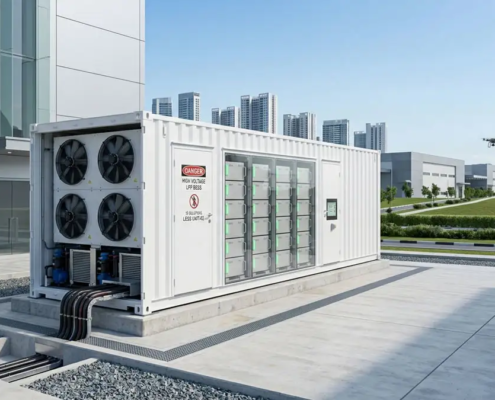 https://anengjipower.com/wp-content/uploads/2026/06/modular-commercial-solar-battery-storage-cabinet.webp
675
1000
Charging Station Engineer
https://anengjipower.com/wp-content/uploads/2025/09/anengji-dc-fast-charging-station-manufacturer-and-supplier-logo-white-1.png
Charging Station Engineer2026-06-18 09:16:522026-07-03 03:05:13What Is Solar Battery Storage? Complete C&I Engineering Guide
https://anengjipower.com/wp-content/uploads/2026/06/modular-commercial-solar-battery-storage-cabinet.webp
675
1000
Charging Station Engineer
https://anengjipower.com/wp-content/uploads/2025/09/anengji-dc-fast-charging-station-manufacturer-and-supplier-logo-white-1.png
Charging Station Engineer2026-06-18 09:16:522026-07-03 03:05:13What Is Solar Battery Storage? Complete C&I Engineering Guide


Leave a Reply
Want to join the discussion?Feel free to contribute!