
Introduction
Every single month, raw utility bills bite directly into your net operational margins. If you run a heavy industrial plant, grid instability can freeze your entire assembly line without warning, turning a productive shift into an expensive nightmare. Evaluating the true commercial benefits of solar battery storage is no longer just a trend for sustainability managers; it is a core financial shield against erratic spot market power prices and punishing peak surcharges. Smart factory operators are actively looking for concrete ways to lock in long-term energy predictability, but let’s be realistic before we look at hardware data sheets. Adding local storage to your factory is a major strategic capital investment decision. You cannot just buy a random battery container and hope your demand fees vanish overnight; you need a deeply integrated system tailored directly to your specific building electrical load profile.
What Are the Benefits of Solar Battery Storage?Solar battery storage enables users to store excess solar energy for later use, reducing electricity costs, improving energy independence, and increasing system reliability. By capturing cheap or zero-cost solar power and discharging it during expensive peak hours, industrial battery storage systems mitigate severe demand charges, secure critical backup power during grid blackouts, and significantly lower a company’s carbon footprint.
What Are the Benefits of Solar Battery Storage?
To truly grasp the advantages of solar battery storage systems, we must look beyond basic emergency backup. This technology fundamentally changes how your facility interacts with the local electrical grid, transforming a volatile, unpredictable variable expense into a controlled, strategic asset that you manage yourself.
How Solar Battery Storage Works in Real Applications
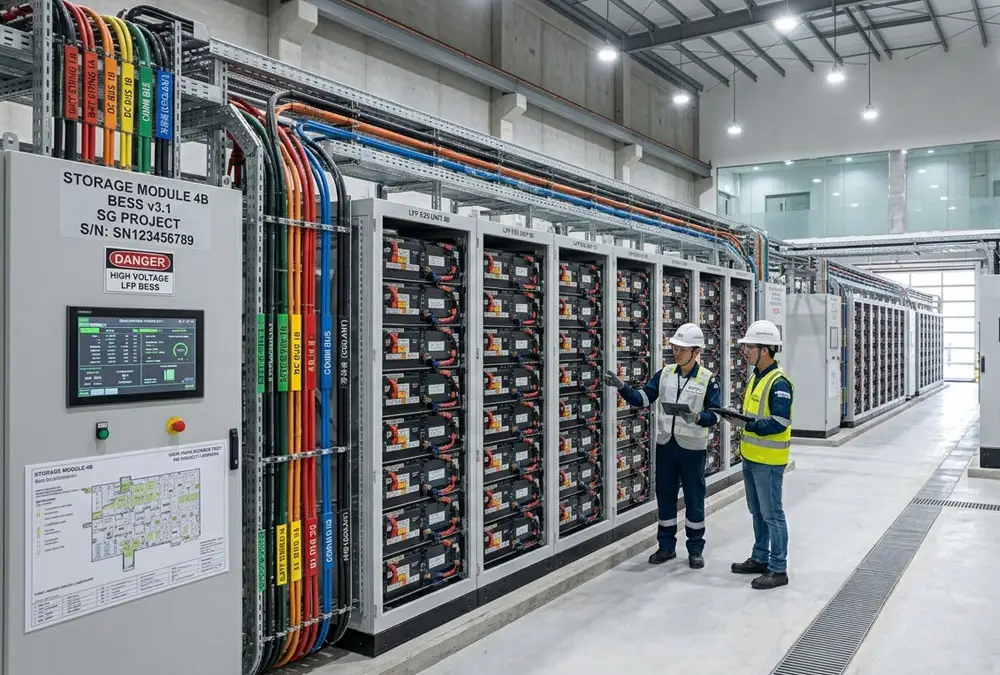
The entire system operates as a dynamic, automated balancing loop inside your property, following a clear architecture: PV Panels → PCS (Inverter) → Battery → EMS (Controller) → Load or Grid. First, your rooftop solar panels generate raw direct current (DC) power from daylight. This electricity routes immediately through a heavy-duty bi-directional Power Conversion System (PCS). When production exceeds your factory load, the excess energy pumps straight into the lithium packs. An intelligent Energy Management System (EMS) software platform monitors this process every single second. During evening peak tariff hours, the battery discharges back to feed your heavy machinery. This closed loop ensures your facility pulls minimal expensive power from the regional grid utility network.
Why Demand for Solar Battery Storage Is Increasing
Corporate energy buyers face intense structural challenges that traditional grid setups cannot fix. Wholesale electricity prices across major industrial hubs remain highly volatile and unpredictable. At the same time, regional utility networks struggle to handle the injection of intermittent renewable power. This lack of national grid capacity leads to frequent local voltage sags, phase imbalances, and brownouts. Furthermore, international supply chains now demand clear, verifiable ESG compliance from manufacturing vendors. Relying purely on coal-heavy grid baselines hurts your chances of securing high-value multinational supplier contracts, forcing a shift toward a localized solar plus storage framework.
Key Financial Benefits of Solar Battery Storage
Investing in a high-capacity system acts as a direct cost-control mechanism for your chief financial officer, maximizing your return on investment while stabilizing operational cash flow.
Reduce Electricity Bills Through Peak Shaving
Utility companies charge massive penalties based on your highest single 15-minute consumption spike each month. We can model this capacity cost mathematically to understand how it impacts your overhead. Let the total monthly utility bill be represented by the function:
Where $C(t)$ is the time-varying energy cost, $P(t)$ is your real-time consumption power, and $M_{max}$ is your peak measured power spike. When large industrial motors or heavy cooling systems start up, they drive $M_{max}$ sky-high. An optimized battery energy storage system detects these sudden spikes instantly. It flattens the peak by discharging stored battery energy locally, keeping your measured $M_{max}$ low. This automated response delivers massive monthly cash savings by lowering your contracted demand tier, making it the primary reason why invest in solar battery storage systems.
Improve ROI Through Energy Arbitrage
Commercial energy prices swing drastically between daytime manufacturing shifts and deep nighttime hours. With smart software, your infrastructure charges up from the grid or solar array when rates hit rock bottom. Then, the system discharges that stored power when utility pricing hits its highest peak rate. This strategy maximizes your long-term project payback model by exploiting the widest available tariff spreads, dramatically accelerating your battery storage ROI.
Increase Solar Self-Consumption and Reduce Waste
Without storage, over 40% of your rooftop solar generation gets exported back to the grid for pennies because production curves don’t match your consumption timeline. Worse, some regional grids force you to shut down your solar inverters during oversupply events. Capturing this power locally unlocks the true economic benefits of solar energy storage for your facility. You store every single excess kilowatt-hour on-site to run your evening production shifts for free, preventing wasted clean energy.
Energy Independence and Power Reliability Benefits
Moving away from complete utility dependence keeps your business running smoothly when the public infrastructure fails.
Reduce Dependence on the Utility Grid
Traditional corporate setups leave your business fully exposed to local utility political choices, infrastructure failures, and regulatory updates. Building an on-site commercial solar battery storage footprint lets you control your own power destiny by generating, storing, and consuming energy internally without constant external interference.
Ensure Backup Power During Outages
A sudden power interruption can ruin an entire batch of raw materials on a factory floor or damage sensitive assembly line electronics. Industrial storage units feature ultra-fast switching speeds (often under 20 milliseconds) to keep critical machinery moving during blackouts. Your automated assembly lines won’t experience a single microsecond of voltage dropout, avoiding catastrophic operational downtime.
Improve Energy Security for Critical Operations
Certain high-tech sectors cannot afford even minor utility grid power fluctuations. A robust lithium battery storage setup provides dedicated protection for specialized industries:
- Data Centers: Keeping servers active, protecting cooling loops, and preventing data corruption across local storage networks.
- Medical Systems: Securing life-critical climate controls, backup refrigeration, and highly sensitive laboratory hardware.
- Manufacturing: Maintaining clean, continuous power for highly sensitive silicon fabrication, CNC machining, or precision plastic molding machines.
Environmental and ESG Benefits of Solar Battery Storage Systems
Verifiable sustainability performance is now a mandatory requirement to win tier-one international corporate contracts and satisfy modern stakeholders.
Reduce Carbon Emissions and Fossil Fuel Dependence
Discharging stored clean solar power during dark evening hours replaces the need for local utilities to fire up dirty gas or coal-powered peaker plants. This direct substitution drops your facility’s Scope 2 market-based carbon accounting metrics significantly, moving you closer to true net-zero operations.
Support Corporate ESG and Sustainability Goals
Multinational buyers demand clean supply chain metrics before signing multi-year purchasing agreements. An on-site industrial solar energy storage system provides clear digital logs and telemetry, proving your goods are manufactured using clean, renewable power, which helps fulfill corporate solar battery storage benefits for commercial buildings.
Enable 100% Renewable Energy Integration
Batteries transform unpredictable, intermittent wind and solar generation into reliable, dispatchable power blocks. This technological upgrade makes true 24/7 renewable energy integration a practical reality for heavy industry, allowing you to run smoothly around the clock regardless of weather conditions.
Technical Benefits of Solar Battery Storage Systems
The true value of a commercial system relies on three integrated power electronics layers working together in perfect harmony.
Intelligent Energy Management System (EMS)
The EMS acts as the central brain of the entire microgrid setup. It reads real-time weather forecasts and tracks dynamic grid spot pricing structures simultaneously. The software automates your financial returns by constantly choosing the most profitable charge and discharge times without requiring human intervention.
Battery Safety and Lifecycle Management (BMS)
The integrated Battery Management System (BMS) tracks individual cell voltages, state-of-charge, and internal temperatures every single millisecond. It prevents localized cell overcharging risks and balances active cell capacities automatically. This deep control preserves your capital asset by slowing down normal chemical capacity degradation.
High Efficiency Power Conversion (PCS)
The bi-directional PCS controls the critical phase-matching process between direct current (DC) and alternating current (AC) lines. Top-tier modules achieve over 98% conversion efficiency, keeping thermal losses extremely low during intense charging and discharging operations.
Risks and Challenges of Solar Battery Storage
As an expert advisor, I must emphasize that every high-yield technology carries real operational risks. Let’s address the hard truths that basic sales brochures usually try to hide from buyers.
High Initial Investment Cost
Procuring a complete turnkey industrial energy asset requires a significant upfront capital deployment. While long-term operational savings are practically guaranteed, the initial budget hit can challenge company cash flows. Smart operators solve this by utilizing structural asset financing, Power Purchase Agreements (PPAs), or targeted regional government grants.
Battery Degradation and Lifecycle Uncertainty
Lithium cells lose a small percentage of their maximum energy capacity with every single cycle run. If your engineering team runs overly aggressive charge routines or fails to manage heat, the system can degrade twice as fast. You must ensure your vendor contract includes a performance warranty that protects against premature capacity loss over a 10-to-15-year horizon.
Technology Selection Risks (Wrong System Design)
If your supplier miscalculates your peak inductive startup currents, the system will trip constantly when heavy machinery boots up. Buying an undersized inverter array means you won’t shave your peak demand charges effectively, while an oversized battery container just leaves expensive capital sitting idle in your yard without generating returns.
Supplier and EPC Risk Factors
The storage market is flooded with unverified brokers who assemble generic components with poor software code. If your installer botches the utility grid interconnection application, your asset might sit offline for months. You need a single-source partner who handles engineering, permitting, and local civil construction under one contract.
Is Solar Battery Storage Right for Your Business?
Not every facility will generate identical financial returns from installing local storage hardware. Suitability depends heavily on operational patterns and local tariff models.
Best Fit Industries
The highest project returns happen at sites with consistent, multi-shift daily operations and sharp, unpredictable demand spikes.
- Manufacturing Plants: High recurring power loads from heavy automated machinery, stamping lines, and thermal ovens.
- Commercial Buildings: Sharp daytime air conditioning spikes that line up perfectly with solar generation hours, making commercial solar battery storage highly lucrative.
- EV Charging Stations: High peak-power draws from fast-charging delivery fleets or employee vehicles that need instant buffering.
- Industrial Parks: Shared microgrids where multiple commercial tenants can pool localized battery assets to share infrastructure costs.
When It May Not Be Suitable
If your business operates in a region with flat, subsidized electricity pricing and zero demand charges, your potential savings will be limited. Low-volume energy users with smooth, predictable consumption profiles will also struggle to justify the upfront engineering and hardware costs.
Solar Battery Storage vs Traditional Energy Use
Let’s look at the clear structural differences between running a modern facility with traditional infrastructure versus an integrated setup.
| Operational Metric | Traditional Grid + Solar Only | Integrated Solar + Storage System | The Real Value for the User |
|---|---|---|---|
| Peak Demand Control | Zero control. Sudden motor starts drive your utility bills sky-high due to unexpected spikes. | Automated Shaving. The system discharges instantly to flatten expensive capacity spikes. | Lowers monthly power bills dramatically and predictably by capping your demand tier. |
| Solar Utilization | Low. Over 40% of your generated green power is wasted or exported cheaply to the utility. | Maximum Efficiency. Saves every single extra kilowatt-hour on-site for peak night shifts. | Extracts maximum financial value from your solar panels instead of giving it away. |
| Outage Protection | None. Your solar arrays automatically shut down during a grid failure for safety reasons. | Full Backup. Switches to independent island mode instantly to keep assembly lines moving. | Avoids expensive operational downtime, lost labor hours, and spoiled materials. |
| Carbon Reduction | Limited. Your evening operations rely entirely on carbon-heavy utility grid baselines. | Verifiable ESG. Runs your late night shifts using clean energy stored during the day. | Provides clean digital logs proving your goods are made with renewable power to win top contracts. |
Moving to an integrated setup changes your power bill from an uncontrollable tax into a predictable asset. It gives your operational team real visibility over future cash flows for the next 15 to 20 years. A solar-only setup is a passive asset that stops generating power the moment the sun goes down or a cloud rolls in, whereas adding local storage transforms your clean energy setup into an active, controllable grid-scale power plant.
Industrial Storage Product Lineup & Key Technical Parameters
To help guide your engineering and procurement teams, let’s look at four optimized industrial system configurations designed for modern facility deployments based on latest industry standards.
| System Capacity | Thermal Management | Target Application Scope | Core Financial Value for Users | The Value Difference for Buyers |
|---|---|---|---|---|
| 100 kWh Cabinet | Smart Air HVAC | Small commercial properties, retail blocks, and boutique hotels. | Low Entry Barrier: Fits easily into standard parking spaces to shave retail demand spikes instantly. | Provides an affordable, non-intrusive entry point into demand-charge management for smaller square-footage properties. |
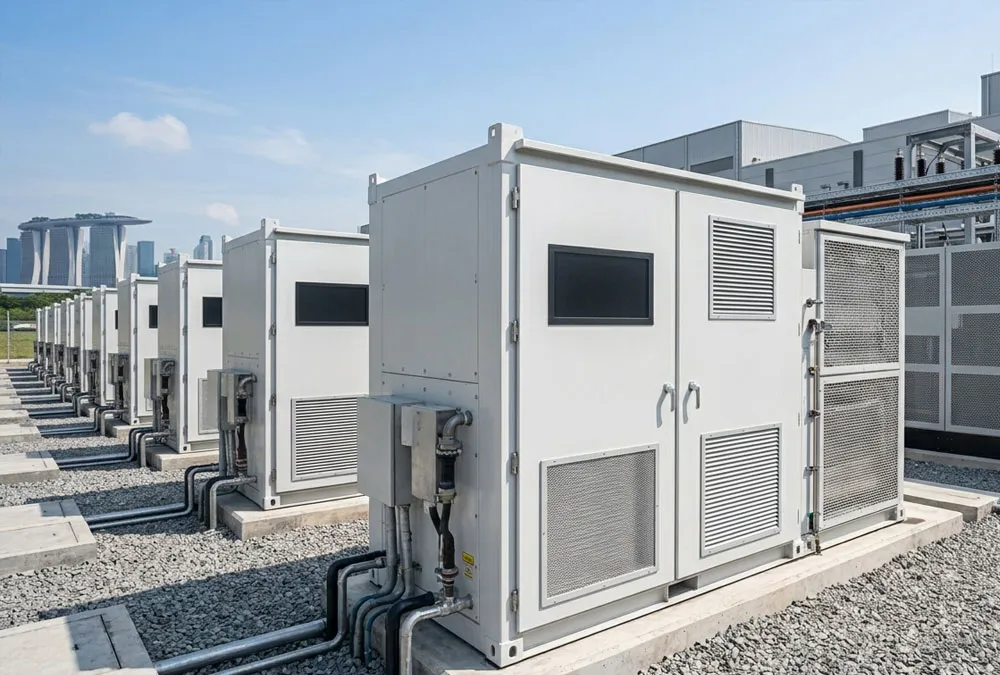
| 261 kWh liquid cooled bess | Liquid Cooling Plate | Medium factories, cold storage hubs, and fleet charging stations. | Extended Lifespan: Liquid cooling keeps internal cell temperatures balanced under 2°C, preventing degradation. | Upgrading to a 261 kWh liquid-cooled unit actively protects chemical cells, ensuring high efficiency even during intense summer heatwaves. |
| 418 kWh cabinet | Liquid Cooling Plate | Heavy manufacturing lines and intensive multi-shift plants. | Deep Load Support: Handles massive inductive motor starts without tripping your main factory breakers. | Delivers superior power density and robust fault tolerance for heavy industrial machinery with severe current draws. |
| 1 MWh+ Container | Industrial Liquid Loop | Large industrial parks, large mining sites, and localized microgrids. | Total Autonomy: Provides multi-hour backup protection to run full factory shifts completely off-grid. | Acts as a true independent power station, giving large operations complete insulation from macro-grid failures. |
How Solar Battery Storage Systems Are Implemented
Deploying an industrial energy asset requires a structured, multi-phase Turnkey Engineering, Procurement, and Construction (EPC) methodology to protect your budget.
EPC Turnkey Delivery Model
Working with an experienced turnkey EPC partner is the safest way to protect your initial capital budget. A single engineering team manages everything from initial civil foundation work, structural calculations, and permit clearance to final utility grid approval. This single-source model eliminates expensive communication mistakes between different hardware suppliers and local installers.
System Integration (PV + BESS + EMS + PCS)
True field integration requires tuning your storage software to match your existing factory automation systems perfectly. The local inverters and energy storage system components must talk smoothly with your plant’s existing SCADA networks, industrial PLCs, and main distribution boards via standard industrial protocols like Modbus or CAN bus.
Commissioning and Maintenance Lifecycle
Once installation finishes, engineers run comprehensive short-circuit, islanding, and thermal safety verification tests. Ongoing maintenance relies heavily on automated cloud monitoring and predictive analytics to catch cell voltage imbalances or thermal anomalies long before they cause any unexpected facility downtime.
Cost vs Value of Solar Battery Storage Systems
Let’s look past the initial hardware quote and evaluate the long-term financial returns and asset life dynamics.
Initial Investment Breakdown
The raw lithium battery cells and inverter hardware usually make up about 60% of your total project invoice. The remaining budget covers engineering design, local civil construction, fire suppression engineering, grid upgrades, and safety systems. In major industrial markets, government tax incentives can significantly offset this total invoice.
Hidden Installation Costs
Inexperienced buyers often overlook the cost of updating old main distribution panels to handle bi-directional power flow safely. You must also factor in regional fire compliance costs, safety blast walls, specialized insurance coverages, and local structural permitting fees required by municipal authorities.
Long-Term Savings vs Payback Period
A properly optimized industrial system typically pays for itself within 4 to 6 years of operation, depending on local tariff spreads. Once you cross that payback point, the asset continues to generate pure operational savings for the rest of its 15-year lifespan, freeing up immense capital for core business expansion.
Future Trends of Solar Battery Storage Benefits
The technology driving industrial energy networks is becoming smarter, denser, and more integrated every single day.
AI-Powered Energy Optimization
Modern control software uses advanced machine learning to track shifting weather patterns and dynamic grid spot prices simultaneously. The system adapts its charge and discharge times automatically in real-time, securing the highest possible financial returns based on localized forecast models.
Declining Battery Costs and Improved Efficiency
Ongoing manufacturing improvements continue to drive down the cost of raw lithium cells globally. This price drop allows industrial companies to deploy larger storage assets with shorter payback periods, making energy independence accessible to a wider tier of commercial buildings.
Integration with EV Charging and Smart Grids
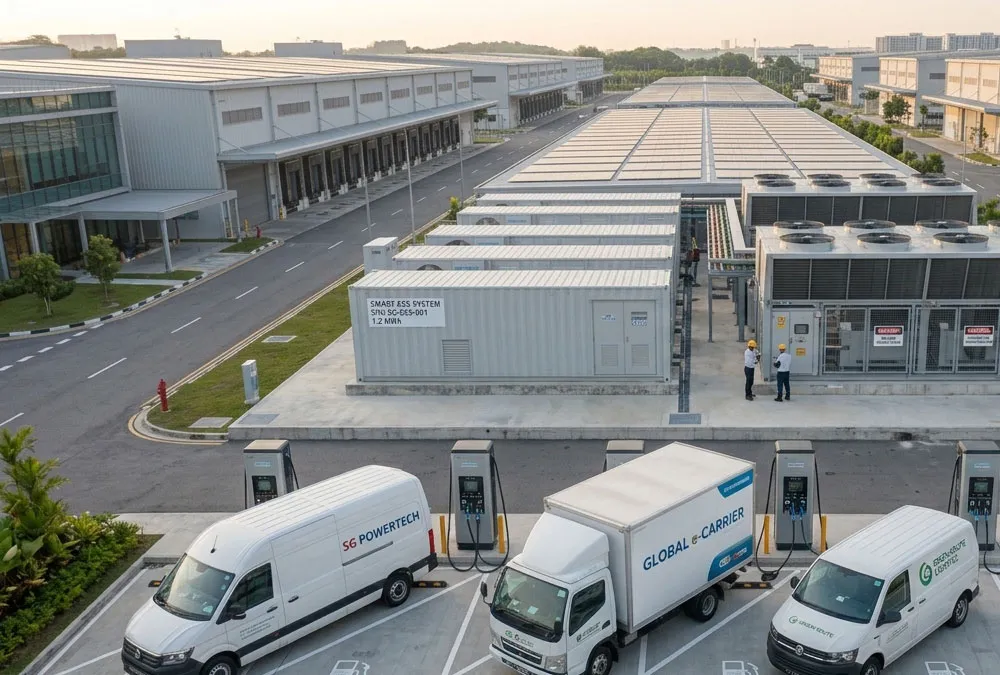
Batteries are becoming the central hubs of modern corporate microgrids, linking rooftop solar with local EV fast-charging fleets. This setup allows you to charge your delivery vans or employee vehicles with clean, stored power without overloading your local substation or triggering massive utility demand penalties.
Frequently Asked Questions
What are the main benefits of solar battery storage?
The primary advantages are massive cost savings via demand charge reductions, reliable backup power during blackouts, and optimized green energy consumption.
How much money can solar batteries save?
Total financial savings depend on your local peak tariff rates and factory load spikes. Many heavy manufacturing plants reduce their monthly demand charges by over 30% immediately after system activation.
Is solar battery storage worth it for businesses?
Yes, especially for companies facing high capacity fees, volatile electricity prices, or unreliable grid infrastructure. The project delivers clear, long-term operational savings and protects your production lines from expensive downtime.
How long do solar batteries last?
Top-tier industrial LFP storage systems deliver a reliable operational lifespan of 15 to 20 years. Standard performance agreements guarantee the cells preserve at least 70% of their initial capacity after a full decade of use.
Do solar batteries work during power outages?
Yes, provided your system is engineered with an automatic isolation switch to disconnect from the grid safely. The asset switches to independent island mode within milliseconds to keep your critical facility machinery moving.
Conclusion – Why Solar Battery Storage Is a Strategic Energy Investment
Deploying a modern storage asset is a proven way to protect your business margins from volatile energy markets. It stops your company from being a passive utility customer exposed to unpredictable tariff increases. The technology flattens your peak demand fees, secures your facility uptime, and meets tough ESG supply chain requirements. Don’t let unmanaged utility overhead eat into your corporate profitability for another fiscal year.
Ready to lock in predictable energy costs for your facility?
Don’t let utility demand charges eat into your corporate margins. Contact our expert engineering team today for a comprehensive, data-driven 15-minute interval load profile analysis and a custom turnkey EPC project proposal tailored for your industrial facility.
 https://anengjipower.com/wp-content/uploads/2026/06/epc-vs-turnkey-solar-project-bess.webp
675
1000
Charging Station Engineer
https://anengjipower.com/wp-content/uploads/2025/09/anengji-dc-fast-charging-station-manufacturer-and-supplier-logo-white-1.png
Charging Station Engineer2026-06-22 07:16:042026-06-24 07:13:17What Is the Difference Between EPC and Turnkey Contract Models in Energy Projects?
https://anengjipower.com/wp-content/uploads/2026/06/epc-vs-turnkey-solar-project-bess.webp
675
1000
Charging Station Engineer
https://anengjipower.com/wp-content/uploads/2025/09/anengji-dc-fast-charging-station-manufacturer-and-supplier-logo-white-1.png
Charging Station Engineer2026-06-22 07:16:042026-06-24 07:13:17What Is the Difference Between EPC and Turnkey Contract Models in Energy Projects? https://anengjipower.com/wp-content/uploads/2026/06/anengji-commercial-solar-plus-storage-benefits-site.webp
675
1000
Charging Station Engineer
https://anengjipower.com/wp-content/uploads/2025/09/anengji-dc-fast-charging-station-manufacturer-and-supplier-logo-white-1.png
Charging Station Engineer2026-06-20 14:34:102026-06-20 14:37:43What Are the Top Benefits of Solar Battery Storage in Factories?
https://anengjipower.com/wp-content/uploads/2026/06/anengji-commercial-solar-plus-storage-benefits-site.webp
675
1000
Charging Station Engineer
https://anengjipower.com/wp-content/uploads/2025/09/anengji-dc-fast-charging-station-manufacturer-and-supplier-logo-white-1.png
Charging Station Engineer2026-06-20 14:34:102026-06-20 14:37:43What Are the Top Benefits of Solar Battery Storage in Factories? https://anengjipower.com/wp-content/uploads/2026/06/modular-commercial-solar-battery-storage-cabinet.webp
675
1000
Charging Station Engineer
https://anengjipower.com/wp-content/uploads/2025/09/anengji-dc-fast-charging-station-manufacturer-and-supplier-logo-white-1.png
Charging Station Engineer2026-06-18 09:16:522026-07-03 03:05:13What Is Solar Battery Storage? Complete C&I Engineering Guide
https://anengjipower.com/wp-content/uploads/2026/06/modular-commercial-solar-battery-storage-cabinet.webp
675
1000
Charging Station Engineer
https://anengjipower.com/wp-content/uploads/2025/09/anengji-dc-fast-charging-station-manufacturer-and-supplier-logo-white-1.png
Charging Station Engineer2026-06-18 09:16:522026-07-03 03:05:13What Is Solar Battery Storage? Complete C&I Engineering Guide


Leave a Reply
Want to join the discussion?Feel free to contribute!