
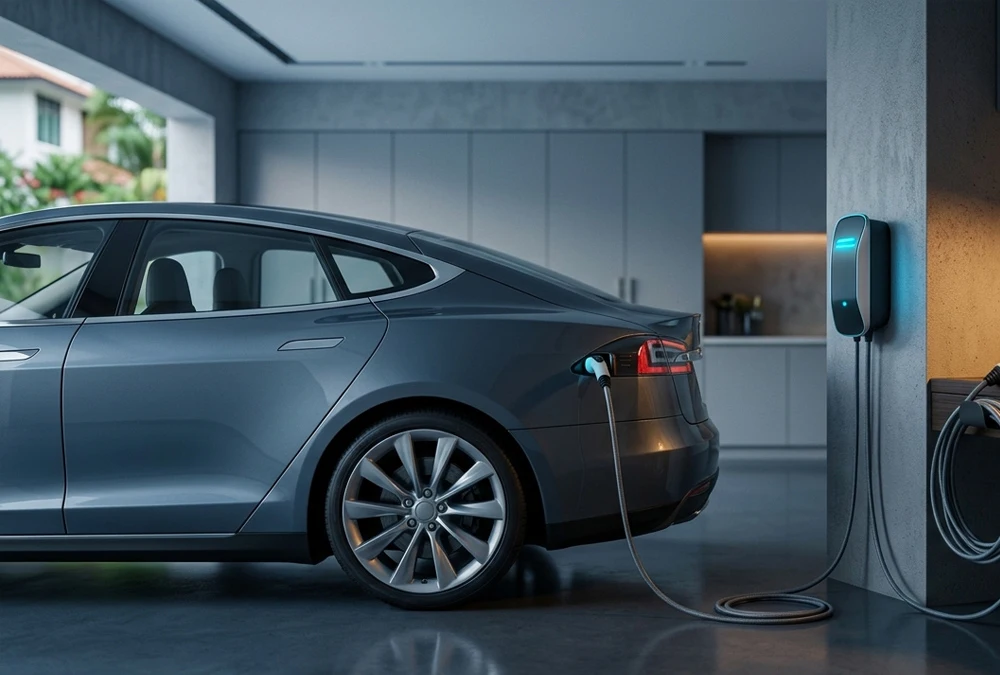
Introduction
Navigating the electrical infrastructure for electric mobility used to be simple, but evaluating level 1 vs level 2 vs level 3 charging systems today requires balancing voltage, operational downtime, grid capacity, and capital expenses. I often see site owners overspend on massive electrical service upgrades they do not need—or buy slow chargers that leave fleet vehicles undercharged. Level 1, Level 2, and Level 3 charging differ significantly in charging speed, power output, installation requirements, cost, and ideal use cases. Level 1 is the simplest and least expensive option, Level 2 offers a practical balance between charging speed and cost, while Level 3/DC fast charging is designed for rapid charging in commercial and public environments.
There is no absolute “best” charging tier across the board. The right choice hinges on your site’s parking dwell time, vehicle battery capacity, and grid infrastructure constraint. Choosing the right charger is about matching power delivery to real operational patterns.
What Is the Difference Between Level 1, Level 2, and Level 3 EV Charging?
Understanding EV charging levels explained starts with identifying how alternating current (AC) and direct current (DC) interact with electric vehicle battery packs. Below is a high-level technical overview of how these three tiers stack up against one another.
| Parameter | Level 1 | Level 2 | Level 3 (DC Fast) | User Selection Advantage |
|---|---|---|---|---|
| Power Type | Single-phase AC | Single/Three-phase AC | Direct Current (DC) | DC bypasses onboard chargers for rapid power transfer. |
| Voltage Range | 120V AC | 208V – 240V AC | 400V – 1000V DC | Higher voltage delivers more energy per minute without overheating cables. |
| Power Output | 1.0 kW – 1.9 kW | 3.3 kW – 19.2 kW | 50 kW – 350+ kW | Higher output drastically cuts fleet and public charging downtime. |
| Charging Speed | 3–5 miles per hour | 12–80 miles per hour | 100–300+ miles in 20 min | Level 3 supports rapid turnaround for high-turnover commercial sites. |
| Installation | Standard wall outlet | Dedicated 40A–100A circuit | 480V 3-phase + Substation | Level 1 needs zero electrical work; Level 2 needs basic electrician work. |
| Initial Cost | $0 – $300 | $500 – $2,500 | $30,000 – $150,000+ | Level 2 balances low capital outlay with fast overnight replenishment. |
| Dwell Time | 12–24+ hours | 4–8 hours | 15–45 minutes | Level 2 matches overnight stays; Level 3 suits highway stops and quick top-ups. |
Note: Actual charging power, charging duration, and voltage ranges vary based on vehicle onboard charger limits, local electrical codes, ambient temperatures, and the vehicle’s battery state of charge (SoC).
Level 1 EV Charging: How Does It Work, How Fast Is It, and Who Needs It?
Level 1 EV charging represents the base tier of electric vehicle replenishment. It plugs directly into standard household outlets without specialized equipment.
What Is a Level 1 EV Charger?
A Level 1 setup uses the portable cord set provided with most electric vehicles. It connects directly to a standard 120-volt AC wall outlet without requiring dedicated commercial infrastructure. For basic home use or emergency needs, understanding what is a Level 1 EV charger helps clarify why it requires zero electrical upgrades.
Level 1 Charging Power and Charging Speed
Operating on a standard 15-amp or 20-amp 120V circuit, a Level 1 unit draws roughly 12 amps continuously. This delivers between 1.3 kW and 1.9 kW of power. In real-world driving conditions, that equates to adding 3 to 5 miles of range per hour. Fully replenishing a modern 75 kWh EV battery pack from empty takes anywhere from 40 to 60 hours.
What Plug Does a Level 1 EV Charger Use?
In North America, Level 1 chargers plug into a standard NEMA 5-15 wall socket on the grid side. On the vehicle side, they utilize the standard SAE J1772 connector. NACS vehicles (such as Teslas) use a small J1772-to-NACS adapter to accept Level 1 AC power.
Where Is Level 1 Charging Commonly Used?
- Residential garages and private driveways
- Single-family homes with minimal daily driving demands
- Overnight parking areas for plug-in hybrid electric vehicles (PHEVs)
- Emergency backup charging kept in the vehicle trunk
Advantages of Level 1 EV Charging
- Zero equipment installation costs if an outlet is accessible
- No electrical panel upgrades or utility permitting required
- Minimal strain on building electrical distribution panels
- Gentle thermal profile preserves long-term battery health
Disadvantages of Level 1 EV Charging
- Extremely slow replenishment rates
- Unsuitable for medium-to-heavy daily driving profiles
- Incapable of supporting commercial fleets or quick vehicle turnarounds
- Higher percentage of energy lost as heat during long trickle-charging sessions
Who Should Choose Level 1 Charging?
Level 1 is adequate for drivers covering under 30 miles per day who can leave their car parked overnight for 12 or more consecutive hours. If your vehicle usage is low and unpredictable power needs are rare, Level 1 avoids unnecessary installation expenses.
Level 2 EV Charging: How Fast Is It and Why Is It the Most Versatile Option?
Level 2 EV charging is the workhorse of the EV industry. Operating on 208V to 240V AC power, it serves as the primary charging solution for homes, workplaces, and commercial destination locations.
What Is a Level 2 EV Charger?
A Level 2 EV charger is a dedicated AC charging station connected to a 208V (commercial 3-phase supply) or 240V (residential single-phase supply) electrical circuit. It delivers significantly higher current than standard wall outlets.
Level 2 Charging Power and Charging Speed
Level 2 stations range from 16 amps to 80 amps, delivering power outputs between 3.3 kW and 19.2 kW. The most common commercial and residential units run at 32 to 48 amps (7.7 kW to 11.5 kW), adding 25 to 40 miles of range per hour. A full charge for a typical passenger EV takes 4 to 8 hours. When deciding on the best EV charging level for home and business, Level 2 hits the sweet spot between installation cost and overnight charging speed.
For more information, we recommend reading:What is a Level 2 EV Charger? A Smart Home & Business Charging Solution
What Plug and Connector Does Level 2 Charging Use?
North American Level 2 stations feature the SAE J1772 plug for universal AC compatibility, alongside the North American Charging Standard (NACS) connector. European installations utilize Type 2 (Mennekes) connectors. Regional vehicle standards and charging equipment specs determine precise plug compatibility.
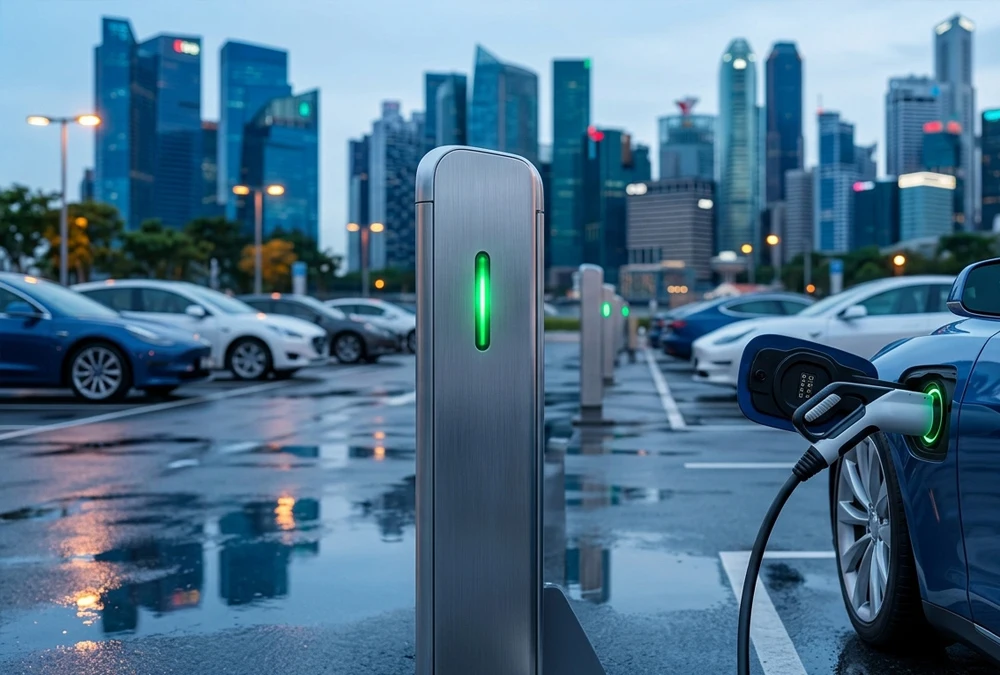
Where Is Level 2 Charging Commonly Used?
- Multi-family housing developments and apartment complexes
- Hotels, resorts, and hospitality destination parking garages
- Corporate offices and workplace employee parking hubs
- Retail shopping centers and public municipal parking structures
Advantages of Level 2 EV Charging
- Fast enough to fully recharge overnight or during a standard work shift
- Moderate installation costs compared to heavy DC infrastructure
- Supports smart load management and OCPP network connectivity
- Ideal for destination locations where cars park for 2 to 6 hours
Disadvantages of Level 2 EV Charging
- Requires a dedicated 240V circuit and professional electrician installation
- May require electrical panel upgrades in older facilities
- Too slow for highway travel plazas or rapid commercial fleet turnarounds
Who Should Choose Level 2 Charging?
Level 2 is the premier choice for daily EV drivers, workplace facility managers, and hotel operators. If vehicles remain parked for more than two hours, Level 2 delivers ample power replenishment without incurring massive utility demand charges.
Level 3 EV Charging: How Does DC Fast Charging Work?
Level 3 EV charging—universally referred to as DC fast charging—eliminates the bottleneck of onboard vehicle converters by supplying direct current straight to the battery pack.
What Is a Level 3 EV Charger?
Unlike Level 1 and Level 2 chargers that feed AC power to the car’s internal onboard charger, a Level 3 station performs high-power AC-to-DC conversion within the charger cabinet itself. It bypasses the vehicle’s onboard limitations and injects high-voltage DC current directly into the battery management system.
For more information, we recommend reading:What is a Level 3 EV Charger for electric vehicles?
Level 3 Charging Power and Charging Speed
Level 3 power outputs range from 50 kW to 350 kW and beyond. A 150 kW DC fast charger can take an EV battery from 10% to 80% State of Charge (SoC) in roughly 20 to 30 minutes. Evaluating Level 2 vs DC fast charging for commercial EVs involves weighing this speed against high utility demand costs.
According to the BloombergNEF Electric Vehicle Outlook 2025 report, high-power DC fast charging deployments in public hubs grew by over 45% year-over-year. This growth reflects strong commercial demand for rapid charging along major transport corridors.
What Connectors Are Used for Level 3 Charging?
DC fast charging requires robust connectors designed to handle high amperage safely:
- CCS1 (Combined Charging System Type 1): Primary standard in North America.
- CCS2 (Combined Charging System Type 2): Dominant standard in Europe and international markets.
- NACS (North American Charging Standard): Tesla’s proprietary design, now widely adopted across North America.
- CHAdeMO: Legacy standard primarily found on Japanese vehicles like the Nissan Leaf.
Where Is Level 3 Charging Commonly Used?
- Highway corridor charging hubs and travel plazas
- Commercial logistics centers and urban fleet depots
- Gas stations transitioning into multi-fuel energy hubs
- High-density urban public charging plazas with short dwell times
Advantages of Level 3 DC Fast Charging
- Delivers rapid power to get vehicles back on the road in minutes
- Essential for high-mileage commercial fleets and heavy delivery vans
- Unlocks long-distance intercity EV travel
- Maximizes revenue generation per parking space at high-traffic sites
Disadvantages of Level 3 DC Fast Charging
- Substantial equipment costs and complex civil construction requirements
- Requires 480V 3-phase utility grid connections and step-down transformers
- Triggers monthly utility demand charges if peak power consumption is unmanaged
Who Should Choose Level 3 Charging?
Level 3 is essential for highway travel plazas, logistics operations, municipal bus depots, and rideshare hubs where vehicle downtime directly cuts into revenue.
Level 1 vs Level 2 vs Level 3 Charging: Complete Comparison Table
Comparing various EV charger types requires examining operational metrics alongside site suitability. The detailed breakdown below offers a clear EV charging speed comparison across all three charging tiers.
| Feature / Parameter | Level 1 AC | Level 2 AC | Level 3 (DC Fast) | User Selection Advantage |
|---|---|---|---|---|
| Current Type | AC | AC | DC | DC bypasses vehicle onboard conversion limits. |
| Input Voltage | 120V (1-phase) | 208V–240V (1/3-phase) | 480V+ (3-phase AC input) | Higher input voltage reduces current resistance losses. |
| Power Range | 1.2 – 1.9 kW | 3.3 – 19.2 kW | 50 – 360+ kW | Tailor charger output to match target vehicle dwell times. |
| Miles Added / Hour | 3 – 5 miles | 12 – 80 miles | 150 – 300+ miles (in 20 min) | Level 3 supports rapid turnaround for commercial fleets. |
| Hardware Cost | $0 – $300 | $500 – $2,000 | $30,000 – $120,000+ | Level 2 provides low cost per charger for fleet overnight sites. |
| Installation Cost | $0 | $600 – $3,000 | $20,000 – $100,000+ | Level 1 avoids civil site construction entirely. |
| Home Suitability | ★★★★★ | ★★★★★ | ★☆☆☆☆ | Level 2 offers optimal home charging performance. |
| Hotel Suitability | ★☆☆☆☆ | ★★★★★ | ★★★☆☆ | Level 2 covers overnight hotel guest charging needs cost-effectively. |
| Workplace Use | ★★☆☆☆ | ★★★★★ | ★★☆☆☆ | Level 2 matches standard 8-hour employee shifts perfectly. |
| Highway Corridor | ★☆☆☆☆ | ★☆☆☆☆ | ★★★★★ | Level 3 minimizes long-distance driving delays. |
| Commercial Fleet | ★☆☆☆☆ | ★★★★☆ | ★★★★★ | Combine Level 2 overnight charging with Level 3 fast top-ups. |
How Much Does Level 1 vs Level 2 vs Level 3 Charging Cost?
A comprehensive cost assessment requires looking beyond equipment pricing to evaluate total installed deployment expenses. Here is how level 2 vs level 3 charging cost breakdowns compare in practical projects.
Level 1 Charging Cost
Equipment costs range from $0 to $300, typically bundled with the vehicle purchase. Because it uses standard household outlets, installation costs are usually $0 unless a dedicated 120V receptacle needs to be installed (which costs around $150–$300).
Level 2 Charging Cost
Commercial-grade Level 2 charger hardware ranges from $600 to $2,500 per port. EV charger installation cost varies between $700 and $3,500 depending on conduit distance, trenching, panel capacity upgrades, and smart networking fees. Total turnkey costs per port average $2,000 to $6,000.
Level 3 Charging Cost
Level 3 hardware costs range from $30,000 for a 50 kW unit up to $150,000+ for a 350 kW ultra-fast charging cabinet. Utility service upgrades, dedicated 480V step-down transformers, switchgear, concrete pads, and trenching bring total turnkey installed costs to $80,000 to $250,000+ per dual-port dispenser.
Why Level 3 Has a Higher Total Cost of Ownership
The total cost of ownership for DC fast charging extends beyond physical construction. High-power draws trigger utility peak demand charges that can account for up to 50% of monthly electric bills. Managing peak grid demand requires intelligent load management or battery storage integration.
Which EV Charging Level Is Right for You?
Determining which EV charging level is right for me comes down to evaluating vehicle dwell times, daily driving mileage, available electrical capacity, and capital budgets.
Choose Level 1 If You…
- Drive fewer than 30 miles per day
- Can leave your vehicle plugged in overnight for 12+ hours
- Want to avoid electrical upgrades and upfront costs
Choose Level 2 If You…
- Drive average to high daily distances and need reliable overnight replenishment
- Manage hotels, workplaces, multi-family housing, or retail parking facilities
- Want smart charging controls, access tracking, and billing integration
Choose Level 3 If You…
- Operate commercial delivery fleets requiring rapid midday turnarounds
- Run highway plazas, gas station conversions, or public charging hubs
- Need to minimize downtime for high-mileage drivers and rideshare vehicles
Choose a Combination of Level 2 and Level 3 If You Run a Commercial Site
Many commercial facilities benefit from a hybrid deployment. For example, a hotel might deploy eight Level 2 chargers for overnight guests alongside two Level 3 DC chargers for short-stay visitors needing a quick power boost.
Which EVs Use Which Charging Connectors?
Connector standards determine vehicle compatibility across different charging levels and geographic regions.
J1772 Connector
The universal standard for AC Level 1 and Level 2 charging across North America, compatible with nearly all non-Tesla EVs.
NACS Connector
Originally Tesla’s proprietary plug, the North American Charging Standard (NACS) has been adopted by major global automakers for both AC and DC fast charging in North America.
CCS1 Connector
The standard North American DC fast-charging plug, combining J1772 AC pins with two high-power DC fast-charging pins.
CCS2 Connector
The standard European connector for both AC Level 2 and DC fast charging, using a Type 2 inlet combined with heavy-duty DC pins.
CHAdeMO Connector
A legacy DC fast-charging standard primarily found on older Japanese vehicles such as the Nissan Leaf and Mitsubishi i-MiEV.
Type 2 Connector
The standard single-phase and three-phase AC charging plug across Europe and several international markets.
Are Level 1, Level 2, and Level 3 EV Chargers Interchangeable?
Are Charging Connectors Interchangeable?
Connectors are interchangeable using approved physical adapters. For example, J1772-to-NACS and Tesla-to-J1772 adapters allow smooth AC charging across standard stations.
Can a Vehicle Use Different Charging Levels?
Yes. Almost all modern passenger EVs are built to accept Level 1, Level 2, and Level 3 charging. The vehicle’s battery management system automatically regulates power intake to match the charger’s output capabilities.
Does a Higher-Power Charger Always Charge an EV Faster?
No. A vehicle’s maximum charging rate is limited by its internal onboard charger (for AC) or its battery management system (for DC). Plugging a car with a 50 kW max intake into a 350 kW charger will yield a maximum rate of only 50 kW.
What Factors Affect EV Charging Speed?
Understanding real-world EV charging time requires accounting for several key operational variables:
- Battery Capacity: Larger battery packs (e.g., 100 kWh vs. 40 kWh) take proportionally longer to charge at identical power levels.
- State of Charge (SoC): Charging speeds drop significantly after reaching 80% SoC to protect battery health.
- Battery Temperature: Extremely cold or hot battery chemistry throttles charge acceptance rates.
- Vehicle Maximum Power Acceptance: The vehicle’s BMS caps maximum voltage and amperage intake regardless of charger rating.
- Charger Output Limits: Station output caps out based on grid connection limits and continuous current ratings.
- Charging Curve: Vehicles follow dynamic charging curves, ramping down power intake as the battery fills up.
What Are the Electrical Requirements for Level 1, Level 2, and Level 3 Charging?
A solid home EV charging or commercial EV charging deployment starts with proper grid infrastructure planning.
Level 1 Electrical Requirements
Requires a standard 120V, 15A or 20A single-phase branch circuit connected to a grounded wall receptacle.
Level 2 Electrical Requirements
Requires a 208V–240V dedicated branch circuit with breaker ratings between 40A and 100A, depending on the charger output capacity.
Level 3 Electrical Requirements
Requires a dedicated 480V 3-phase AC commercial power supply, custom step-down transformers, switchgear, and safety disconnects capable of delivering hundreds of kilowatts continuously.
Why Commercial DC Fast Charging May Require Load Management
Simultaneous high-power DC fast charging can easily overload building electrical services. Dynamic load management balances power across multiple chargers in real time, staying within grid constraints without tripping breakers.
How Smart Charging and Battery Storage Can Improve Commercial EV Charging
Integrating intelligent management systems and battery energy storage (BESS) transforms high-power EV charging into an efficient, grid-friendly operation.
Dynamic Load Balancing
Dynamic load balancing allocates available electrical capacity across active chargers, maximizing charging speeds without exceeding local transformer limits.
Energy Management System (EMS)
An EMS monitors building power consumption, solar PV generation, and EV load profiles to optimize energy delivery and avoid high utility tariffs.
Battery Energy Storage Systems (BESS) for Commercial EV Infrastructure
Integrating battery storage allows commercial operators to deploy high-power DC fast chargers on constrained utility connections. BESS units store off-peak power (or onsite solar output) and discharge energy during peak charging demand spikes, avoiding costly grid upgrade delays.
Recommended Industrial BESS: AnengJI 100kWh & 261kWh Commercial Battery Storage Units
Core Selling Point: Modular design for peak-shaving and dynamic EV load buffering. The 100kWh unit fits commercial parking sites upgrading to dual 60kW DC chargers, while the 261kWh system delivers high energy density for fleet depots—avoiding massive grid service upgrades and lowering demand charges by up to 40%.
Recommended Utility-Scale BESS: AnengJI 418kWh & 1MWh Containerized BESS Solutions
Core Selling Point: High-capacity containerized energy storage for mega-charging hubs, logistics parks, and highway plazas. Featuring integrated liquid cooling and smart EMS control, these 418kWh and 1MWh BESS configurations support multiple 180kW to 360kW ultra-fast DC chargers, buffering high peak power demands effortlessly.
Level 1 vs Level 2 vs Level 3 Charging: Which One Should You Buy?
Best for Homeowners
A 40A or 48A Level 2 smart charger offers the ideal balance of speed, convenience, and reasonable installation cost for daily home charging.
Best for Hotels and Workplaces
A network of Level 2 chargers equipped with OCPP smart billing features provides cost-effective destination charging for guests and employees staying multiple hours.
Best for Commercial Fleets
A combination of Level 2 chargers for overnight yard parking and high-power Level 3 DC fast chargers for rapid midday fleet replenishment.
Best for Highway and Public Charging
High-power 150 kW to 360 kW Level 3 DC fast chargers paired with BESS storage to minimize charging stops along transit corridors.
Frequently Asked Questions About Level 1 vs Level 2 vs Level 3 Charging
Is Level 2 charging faster than Level 1?
Yes, Level 2 charging is 4 to 8 times faster than Level 1, adding 12 to 80 miles of range per hour compared to Level 1’s 3 to 5 miles.
Is Level 3 charging faster than Level 2?
Yes, Level 3 DC fast charging delivers direct current at rates 5 to 30 times faster than Level 2 AC units, supplying up to 80% charge in 20 to 30 minutes.
Is Level 3 charging bad for EV batteries?
Frequent, exclusive use of high-power DC fast charging can accelerate thermal degradation over time. However, modern EV thermal management systems effectively minimize battery wear during fast-charging sessions.
How long does Level 1 charging take?
Level 1 charging typically takes between 40 and 60 hours to fully replenish a depleted modern long-range EV battery pack.
How long does Level 2 charging take?
Level 2 charging fully charges a typical passenger electric vehicle in 4 to 8 hours, making it ideal for overnight or workplace charging.
How fast is Level 3 DC charging?
Level 3 DC fast chargers deliver 100 to 300+ miles of driving range in 15 to 30 minutes, depending on charger power output and vehicle intake limits.
Is Level 2 charging worth the installation cost?
Yes. For most EV owners and site operators, the daily convenience and reliable overnight replenishment of Level 2 make it well worth the moderate upfront installation expense.
Can every EV use Level 3 charging?
No. While most modern EVs support DC fast charging, some older models and plug-in hybrids lack DC fast-charging ports and support only Level 1 and Level 2 AC power.
Are NACS, J1772, CCS1 and CCS2 interchangeable?
They are cross-compatible using dedicated physical adapters, provided the vehicle’s onboard software and physical voltage ratings support the underlying charging protocol.
Which EV charging level is best for commercial applications?
It depends on dwell time. Workplace and hospitality destinations perform best with Level 2, while fleet logistics depots, highway hubs, and public parking plazas require Level 3 DC fast chargers.
Choose the Right EV Charging Solution for Your Application
Selecting the optimal EV charging infrastructure requires matching operational dwell times with site electrical capacity and capital budgets:
- For Home Charging: Deploy smart Level 2 units for fast, safe overnight charging.
- For Hotels & Hospitality: Install networked Level 2 stations to attract eco-conscious guests.
- For Commercial Properties: Integrate dual-port Level 2 and DC chargers with dynamic load balancing.
- For Fleet Operators: Pair high-power Level 3 DC chargers with localized BESS storage to eliminate peak demand costs.
- For Public Charging Hubs: Deploy high-capacity 180kW+ DC fast charging cabinets backed by containerized BESS units.
Need Help Choosing the Right EV Charging Level?
AnengJI helps facility managers, commercial fleet operators, and site owners design efficient, scalable EV charging infrastructure tailored to available grid capacity.
Our engineering team assists you in evaluating charging power requirements, vehicle fleet compatibility, AC vs DC selection, site electrical limitations, smart load management, and microgrid BESS integration.
Related Article
- Level 1 vs Level 2 EV Charger: How to Choose the Right Home Charging Solution
- Level 3 EV Charger Cost Breakdown: Installation, Price Factors & ROI for Businesses
- CCS vs CHAdeMO | EV Charging Standards 2025 | Fast Charging Guide
- Benefits of Commercial EV Charging Stations for Businesses | ROI & Strategy
 https://anengjipower.com/wp-content/uploads/2026/06/epc-vs-turnkey-solar-project-bess.webp
675
1000
Charging Station Engineer
https://anengjipower.com/wp-content/uploads/2025/09/anengji-dc-fast-charging-station-manufacturer-and-supplier-logo-white-1.png
Charging Station Engineer2026-06-22 07:16:042026-06-24 07:13:17What Is the Difference Between EPC and Turnkey Contract Models in Energy Projects?
https://anengjipower.com/wp-content/uploads/2026/06/epc-vs-turnkey-solar-project-bess.webp
675
1000
Charging Station Engineer
https://anengjipower.com/wp-content/uploads/2025/09/anengji-dc-fast-charging-station-manufacturer-and-supplier-logo-white-1.png
Charging Station Engineer2026-06-22 07:16:042026-06-24 07:13:17What Is the Difference Between EPC and Turnkey Contract Models in Energy Projects? https://anengjipower.com/wp-content/uploads/2026/06/anengji-commercial-solar-plus-storage-benefits-site.webp
675
1000
Charging Station Engineer
https://anengjipower.com/wp-content/uploads/2025/09/anengji-dc-fast-charging-station-manufacturer-and-supplier-logo-white-1.png
Charging Station Engineer2026-06-20 14:34:102026-06-20 14:37:43What Are the Top Benefits of Solar Battery Storage in Factories?
https://anengjipower.com/wp-content/uploads/2026/06/anengji-commercial-solar-plus-storage-benefits-site.webp
675
1000
Charging Station Engineer
https://anengjipower.com/wp-content/uploads/2025/09/anengji-dc-fast-charging-station-manufacturer-and-supplier-logo-white-1.png
Charging Station Engineer2026-06-20 14:34:102026-06-20 14:37:43What Are the Top Benefits of Solar Battery Storage in Factories? https://anengjipower.com/wp-content/uploads/2026/06/modular-commercial-solar-battery-storage-cabinet.webp
675
1000
Charging Station Engineer
https://anengjipower.com/wp-content/uploads/2025/09/anengji-dc-fast-charging-station-manufacturer-and-supplier-logo-white-1.png
Charging Station Engineer2026-06-18 09:16:522026-07-03 03:05:13What Is Solar Battery Storage? Complete C&I Engineering Guide
https://anengjipower.com/wp-content/uploads/2026/06/modular-commercial-solar-battery-storage-cabinet.webp
675
1000
Charging Station Engineer
https://anengjipower.com/wp-content/uploads/2025/09/anengji-dc-fast-charging-station-manufacturer-and-supplier-logo-white-1.png
Charging Station Engineer2026-06-18 09:16:522026-07-03 03:05:13What Is Solar Battery Storage? Complete C&I Engineering Guide


Leave a Reply
Want to join the discussion?Feel free to contribute!