
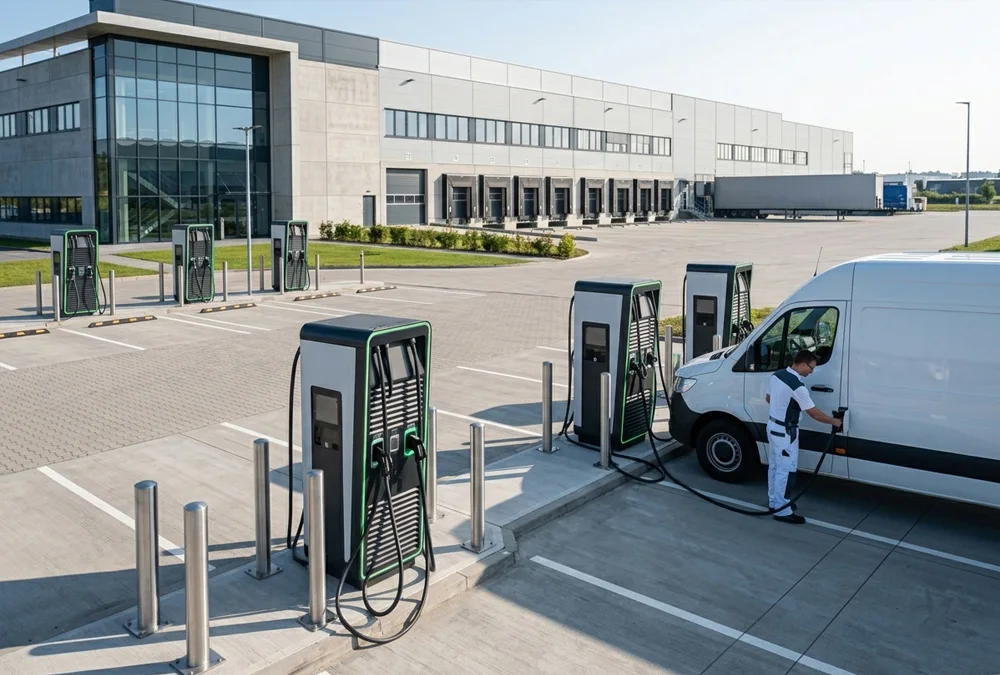
Introduction EV Charging Stations Cost
Calculating the total EV Charging Stations Cost can feel confusing for commercial site owners and fleet operators. You might see a $3,500 quote for a charger cabinet, only to realize the local utility transformer upgrade costs another $60,000. Equipment hardware is just one piece of the capital expenditure puzzle. Trenching, utility grid interconnection fees, panel retrofits, software licensing, and demand charge penalties alter your balance sheet significantly. Let us break down every real-world line item so you can accurately budget your commercial electrification project without surprises.
Buyer Insight
Common Executive Anxiety: “Will my project run over budget due to local grid constraints?”
Most site managers fear being blindsided by utility upgrade fees. Yes, adding high-power direct current hardware draws heavy electrical load. However, conducting an upfront feasibility study and integrating dynamic load balancing or battery buffer cabinets eliminates unnecessary transformer replacements in over 65% of commercial retrofits.
EV Charging Stations Cost Overview: How Much Does an EV Charging Station Cost?
Understanding overall EV charging infrastructure cost requires analyzing total project expenditure rather than isolating charger unit price tags. Capital outlay spans hardware, electrical engineering, civil site preparation, permitting, and operational network software.
Average EV Charging Station Cost Breakdown
A fully commissioned commercial charging station site combines six distinct financial categories:
- Charging Equipment Cost: The physical charger cabinet, power conversion modules, liquid-cooled cables, and digital displays.
- Installation Cost: Qualified electrician labor, wire pulling, conduit runs, and safety certifications.
- Electrical Infrastructure Cost: Step-down transformers, main service panel upgrades, switchgear, and utility connection fees.
- Software Cost: Central management system subscriptions, OCPP network licensing, and payment gateway integration.
- Maintenance Cost: Preventive inspections, cable replacement cycles, and field technician service contracts.
- Operation Cost: Monthly utility electricity usage fees and peak demand charges.
EV Charging Station Cost Depends on Project Scale and Application
Deployment expenditure scales non-linearly depending on your facility’s operational profile:
| Application Scope | Typical Hardware Range | Total Installed Cost | Direct Strategic Benefit for Buyer |
|---|---|---|---|
| Workplace & Commercial Office | $2,500 – $6,000 (Level 2) | $6,000 – $14,000 / stall | Attracts tenant employees during long 8-hour dwell times without heavy grid impact. |
| Commercial Retail & Shopping Malls | $12,000 – $35,000 (30–60kW) | $25,000 – $65,000 / station | Increases customer store dwell time by 45+ minutes, boosting retail foot-traffic sales. |
| Logistics & Fleet Depots | $35,000 – $85,000 (120–180kW) | $75,000 – $160,000 / port | Ensures rapid overnight or shift-change turnarounds for commercial electric delivery vans. |
| Highway Charging Hubs | $90,000 – $200,000+ (240–480kW) | $150,000 – $300,000+ / port | Unlocks high-margin public charging fees from long-distance highway EV drivers. |
Why EV Charging Station Cost Is More Than Just Charger Price
A frequent mistake among new commercial operators is assuming that purchasing a 120kW commercial EV charger cabinet completes 80% of project spending. In reality, hardware represents roughly 40% to 50% of total outlay. Heavy civil engineering, deep trenching through asphalt, municipal permitting delays, and high-voltage transformer installations make up the remainder. Buying hardware without reviewing local substation capacity leads to unexpected cost overruns.
Commercial EV Charging Stations Cost: Hardware vs Turnkey Installation
When assessing commercial EV charging solutions, site developers must compare hardware purchase models against turnkey EPC deployments. The total financial obligation shifts dramatically between alternating current (AC) and direct current (DC) architectures.
Level 2 EV Charger Hardware Cost
Level 2 alternating current units operate between 3.7kW and 22kW. Hardware prices average $1,200 to $4,500 per dual-connector commercial post. Because Level 2 stations route AC power to the vehicle’s onboard converter, internal hardware remains simple and inexpensive. They represent an ideal fit for hotels, apartment buildings, and workplace parking lots where cars park for multiple hours.
DC Fast Charging Station Hardware Cost
Direct current fast chargers bypass onboard converters to deliver high-voltage electricity directly to vehicle battery packs. According to recent industry benchmarks from the IEA Global EV Outlook and Grand View Research, DC fast charger price metrics align with continuous power output:
- 30kW – 60kW Compact DC Cabinets: $12,000 to $28,000.
- 120kW – 180kW Dual-Port Fast Chargers: $38,000 to $75,000.
- 240kW – 360kW Liquid-Cooled Ultra-Fast Stations: $85,000 to $160,000.
- 480kW+ Megawatt Fleet Dispensers: $180,000 to $260,000+.
Hardware Investment vs Turnkey EV Charging Deployment
A direct hardware-only procurement leaves project management responsibilities on your internal staff. A turnkey contract handles engineering, site layout, permitting, utility interconnection, civil labor, and post-commissioning maintenance.
| Project Delivery Scope | Equipment Only Purchase | Turnkey EPC Contract | Direct Strategic Benefit for Buyer |
|---|---|---|---|
| Initial Hardware Supply | ✓ Included | ✓ Included | Guarantees certified electric vehicle charging equipment arrives pre-tested. |
| Site Feasibility & Utility Interconnection | ✗ Buyer Risk | ✓ Included | Prevents buying hardware that your local grid connection cannot support. |
| Civil Engineering & Electrical Upgrades | ✗ Self-Managed | ✓ Included | Eliminates contractor miscommunication during concrete cutting and wiring. |
| Commissioning & Network Activation | ✗ Self-Managed | ✓ Included | Ensures OCPP backend software connects seamlessly before going live. |
EV Charging Station Equipment and Installation Costs
Estimating a realistic EV charger installation cost requires mapping four distinct cost layers before breaking ground.
EV Charging Equipment Cost
The EV charging station equipment bill includes internal power conversion modules, liquid-cooled or air-cooled cables, heavy-duty outdoor enclosures, user touchscreens, credit card readers, and wireless communication modems. High-power stations require industrial-grade Silicon Carbide (SiC) power modules that maintain 96%+ energy conversion efficiency under continuous high loads.
Electrical Infrastructure Upgrade Cost
High-power chargers put immediate stress on facility transformers. If your building service panel only supports 400 Amps at 208V, adding two 120kW fast chargers (drawing over 300 Amps at 480V three-phase) will trigger major grid expansion fees. Utility step-down transformers, heavy industrial switchgear, sub-panels, and long copper cable runs routinely add $25,000 to $85,000 to project budgets.
Civil Construction and Site Preparation Cost
Physical site work includes asphalt saw-cutting, deep conduit trenching, pouring concrete pad foundations, installing protective steel bollards, painting stall stripes, and erecting directional signage. Depending on the distance between your electrical room and the charging stalls, civil engineering ranges from $8,000 to $35,000 per site.
Software and Network Management Cost
Running a public or fleet charging facility requires cloud network software. Open Charge Point Protocol (OCPP) platforms handle billing, dynamic load allocation, user authentication, and remote maintenance diagnostics. Expect cloud software subscription fees of $120 to $300 per port annually.
Commercial EV Charging Station Cost Estimation Table
This reference matrix outlines hardware and turn-key deployment budgets for a commercial EV charger cost assessment across power tiers.
| Charging Type | Power Output | Hardware Cost | Installation Cost | Target Market | Direct Strategic Benefit for Buyer |
|---|---|---|---|---|---|
| Level 2 AC Charger | 7kW – 22kW | $1,200 – $4,500 | $2,500 – $6,000 | Workplace, Hotels, Multifamily | Lowest entry cost; utilizes standard building electrical panels. |
| DC Fast Charger (Compact) | 30kW – 60kW | $12,000 – $28,000 | $15,000 – $35,000 | Urban Retail, Auto Dealerships | Delivers 60-minute quick top-ups without forcing massive grid upgrades. |
| DC Fast Charger (Standard) | 120kW – 180kW | $38,000 – $75,000 | $35,000 – $70,000 | Public Hubs, Delivery Fleets | Sweet spot for 25-minute fast charging; maximizes daily stall turnover. |
| High Power DC Charger | 240kW – 360kW | $85,000 – $160,000 | $60,000 – $120,000+ | Highway Plazas, Bus Depots | Liquid-cooled cables handle passenger and commercial fleet EVs effortlessly. |
| Ultra Fast Charger | 480kW+ | $180,000 – $260,000+ | $100,000 – $200,000+ | Heavy Fleet Depots, Truck Hubs | Charges commercial class-8 electric trucks in under 45 minutes. |
Why EV Charging Installation Costs Are Often Higher Than Equipment Costs
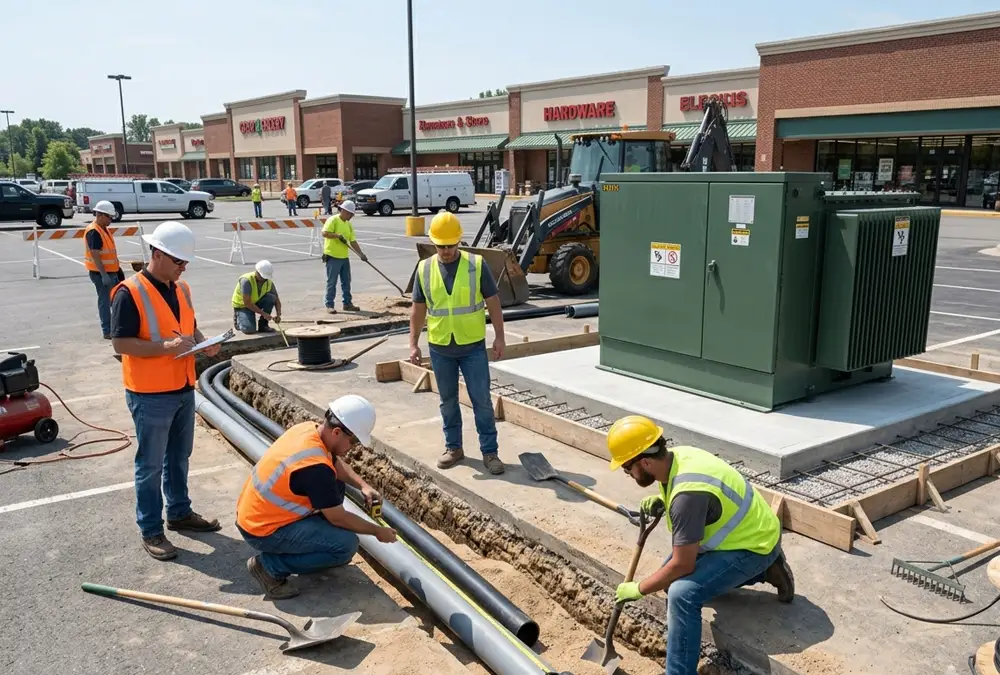
First-time buyers are often surprised when an EV charging infrastructure installation quote exceeds hardware equipment pricing. Four main physical factors drive these civil and electrical costs.
Electrical Upgrades and Power Capacity Expansion
Connecting a dual-port 180kW charger adds 200kW of instantaneous power demand to your site. If your local utility feeder circuit is constrained, you must pay for a dedicated step-down transformer, medium-voltage switchgear, and safety disconnects. Grid capacity expansion alone can represent 35% of total project expenditure.
Trenching, Excavation and Civil Engineering Work
Running heavy-gauge conduit across existing concrete parking lots requires specialized trenching crews. Excavating through asphalt, laying underground conduit at required depths, repaving, and restoring landscaping quickly accumulates labor hours. Placing charging stalls closer to main electrical rooms significantly reduces trenching costs.
Permits, Engineering Design and Professional Labor
Commercial installations require stamped electrical line diagrams (SLDs), structural engineering site plans, environmental clearances, and municipal building permits. Master electrician rates and specialized field certifications ensure compliance with National Electrical Code (NEC Article 625) safety standards.
Site Conditions Impact Installation Cost
Subsurface rock conditions, flood zone elevations, indoor parking structure limitations, and long cable runs drastically alter installation complexity. Building EV-ready infrastructure during original construction costs 40% to 60% less than retrofitting old facilities.
Hidden EV Charging Station Costs You Must Budget For
Ongoing operational expenses can erode project profitability if overlooked during early feasibility planning. Evaluating every potential EV charging project cost ensures long-term financial health.
ADA Compliance Requirements Can Add Significant Costs
In North America, public and workplace EV stations must comply with Americans with Disabilities Act (ADA) accessibility regulations. Designing accessible stalls requires wider parking clearance, concrete access aisles, barrier-free pathways, lowered display heights, and specialized directional signage. Non-compliant retrofits risk regulatory fines and costly rework.
Demand Charges and Electricity Costs
Commercial utility bills consist of energy usage charges (kWh) and peak demand charges ($/kW). Demand charges assess fees based on your highest 15-minute power spike during a billing cycle. Uncontrolled DC fast charging can cause utility demand penalties to make up 30% to 70% of monthly operational costs.
Engineering Solution: Peak Shaving with Battery Energy Storage Systems (BESS)
Integrating local stationary battery storage allows your site to absorb sudden power surges internally. BESS cabinets discharge stored energy during vehicle fast charging sessions, keeping your grid draw flat and eliminating peak demand penalties.
Maintenance and Repair Expenses
Commercial chargers operate in harsh outdoor environments. Spare liquid-cooled cables, connector holster replacements, screen repairs, and annual thermal imaging inspections cost $800 to $2,500 per stall annually. Establishing service level agreements (SLAs) with manufacturers guarantees maximum station uptime.
Future Expansion Costs
Installing extra underground conduit and oversized electrical panels during initial construction adds only 10% to upfront civil costs, but saves over 50% when adding more chargers two years later.
Mobile EV Charging Solutions: A Flexible Alternative to Traditional Charging Stations
Fixed charging infrastructure requires permanent civil foundation work and utility interconnections. Integrating a flexible mobile EV charging solution offers site operators a versatile alternative.
What Is Mobile EV Charging?
Mobile EV chargers combine integrated energy storage batteries and high-power DC fast charging modules into portable skid units or mobile trailers. They deliver high-power DC electricity anywhere on site without relying on a direct high-voltage grid connection.
Benefits of Mobile EV Charging
- Zero Civil Engineering: Eliminates trenching, concrete digging, and repaving costs entirely.
- Rapid Deployment: Ships ready to operate, bypassing multi-month municipal permitting delays.
- Seasonal Flexibility: Relocates easily between rental vehicle lots, fleet depots, and temporary corporate event venues.
- Emergency Backup: Provides rapid roadside or depot recovery for stranded fleet vehicles.
Mobile Charging vs Fixed Charging Station
| Evaluation Feature | Fixed Charging Station | Mobile Charging Solution | Direct Strategic Benefit for Buyer |
|---|---|---|---|
| Initial Civil Installation | High ($20,000 – $60,000+) | Near Zero | Avoids capital expenditure on leased property where civil work is restricted. |
| Time to Commission | 3 – 12 Months (Utility Dependent) | 1 – 2 Weeks | Generates immediate charging capability while awaiting permanent utility upgrades. |
| Asset Mobility | Permanent Real Estate Fixture | 100% Relocatable | Protects your capital investment if your commercial lease expires or site layouts change. |
How to Reduce EV Charging Stations Cost
Strategic design choices during early planning deliver substantial cost optimization for EV charging deployments.
Choose the Right Charging Power
Avoid over-specifying hardware capacity. Installing a 240kW ultra-fast charger at an office parking lot where employee vehicles stay parked for 8 hours wastes capital. Deploying dual-port 11kW or 22kW AC chargers satisfies employee charging demands at a fraction of the cost. Reserve 120kW to 180kW DC units for retail or highway locations where dwell times remain under 30 minutes.
Use Dynamic Load Balancing Technology
Dynamic Load Balancing (DLB) software actively measures real-time building electrical consumption. When facility power draw drops, DLB dynamically shifts available capacity to connected electric vehicles. This prevents electrical panel overloads and avoids costly utility transformer replacements.
Integrate Solar and Battery Energy Storage System
Combining rooftop Solar PV, Battery Energy Storage Systems (BESS), and DC fast chargers creates a self-sustaining microgrid. Industrial Lithium Iron Phosphate (LFP) storage cabinets charge during off-peak hours using cheap grid power or solar energy, then discharge during peak demand periods.
Selecting the appropriate LFP storage capacity depends on site power requirements:
- 100kWh Air-Cooled LFP Cabinet: Ideal for small commercial sites seeking minor peak shaving for 30kW–60kW DC chargers.
- 261kWh Liquid-Cooled LFP Cabinet: Designed for medium fleet depots running multiple 120kW chargers, delivering long cycle life and high thermal stability.
- 418kWh Heavy Commercial Cabinet: Optimized for busy retail charging hubs to mitigate severe utility demand spikes.
- 1MWh Containerized BESS System: Turnkey utility-scale solution for highway supercharging stations and heavy fleet electrification hubs.
Technical Battery Comparison: LFP vs. Alternatives
Lithium Iron Phosphate (LFP) chemistry provides superior thermal safety and delivers over 6,000 operational charge cycles. In comparison, Nickel Manganese Cobalt (NMC) batteries carry higher thermal risk, while legacy Lead-Acid options degrade rapidly and lack the energy density required for high-current peak shaving applications.
Smart Procurement from EV Charger Manufacturer
Purchasing directly from an original equipment manufacturer (OEM) eliminates middleman markups. Direct manufacturer procurement provides factory-backed warranties, customized brand branding, and technical engineering support during project installation.
Government Incentives and Tax Credits Reduce EV Charging Costs
Government funding programs can offset a large portion of upfront capital expenses. Utilizing available EV charging incentives speeds up project payback times.
United States EV Charging Incentives
- Alternative Fuel Vehicle Refueling Property Credit (Section 30C): Federal tax credits cover up to 30% of total commercial hardware and installation costs (up to $100,000 per unit in eligible census tracts).
- NEVI Formula Program: The National Electric Vehicle Infrastructure program provides $5 billion in federal funding to build high-power charging corridors across major highways.
- Utility Rebate Programs: Regional power companies offer rebate incentives covering up to 80% of electrical infrastructure upgrade expenses.
European EV Charging Infrastructure Support
- AFIR Regulation Compliance: Mandates high-power fast charging deployment every 60km along Trans-European Transport Network (TEN-T) highways.
- National Subsidies: Countries like Germany, France, and the Netherlands offer direct grants covering 40% to 70% of commercial fast-charging equipment purchases.
How Incentives Reduce Your Total Investment
Combining federal tax credits, state clean-energy grants, and local utility infrastructure rebates can reduce net capital expenditure by 30% to 60%, shortening project payback periods significantly.
EV Charging Market Growth: Why Now Is the Right Time to Invest
Expanding EV charging infrastructure represents a strategic commercial property upgrade as global transport electrification accelerates.
Growing EV Adoption Worldwide
According to global research reports, the global EV charging stations market is projected to expand rapidly, growing from $15.92 billion in 2026 to over $44.31 billion by 2030 (CAGR of 29.2%). Vehicle manufacturers are shifting production lines toward battery electric models, driving sustained demand for reliable charging access.
Increasing Demand for Commercial Charging Infrastructure
Drivers actively seek out retail centers, hotels, and dining plazas that offer fast charging options. Commercial real estate hosts leverage charging amenities to increase property values and generate recurring revenue streams.
Fleet Electrification Driving Fast Charging Demand
Logistics companies, municipal transit agencies, and ride-hailing services are electrifying vehicle fleets to meet corporate sustainability goals. Reliable fleet charging hubs ensure minimal vehicle downtime and lower total cost of ownership (TCO) compared to diesel vehicles.
Future Trends: Smart Charging, BESS and Renewable Integration
Next-generation charging stations integrate smart energy management software, solar PV arrays, and battery energy storage. This creates resilient microgrids that insulate site hosts from rising utility electricity tariffs.
EV Charging Cost Optimization: Smart Planning and ROI Analysis
Conducting thorough financial forecasting establishes clear revenue potential and accurately projects your EV charging station ROI.
Calculate EV Charging Station Return on Investment
Revenue modeling combines direct charging retail markups ($/kWh), session connection fees, parking space monetization, and secondary retail sales. Subtract electricity wholesale tariffs, maintenance contracts, and software subscriptions to calculate net operating margins.
Calculate Break-Even Period
A dual-port 120kW commercial fast charger with an average utilization rate of 20% (roughly 4.8 hours of active charging daily) typically recovers its capital investment within 2.5 to 4 years when leveraging government tax incentives. High-volume highway charging sites can achieve break-even even faster.
Reduce Costs Through Energy Management
Implementing automated Energy Management Systems (EMS) optimizes charging speeds during peak utility rate windows, reducing power bills without impacting customer charging satisfaction.
Next Steps: Plan Your EV Charging Site Assessment
Following a structured engineering approach streamlines EV charging site planning and eliminates costly project delays.
Step 1: Electrical Capacity Assessment
Review main electrical panel ratings, existing transformer capacity, and historical building electrical load logs with a certified electrician.
Step 2: Charging Demand Analysis
Analyze daily vehicle traffic, average dwell times, and expected driver charging speeds to select appropriate charger power outputs.
Step 3: Solution Design
Develop detailed single-line diagrams, site layouts, cable routing paths, and solar/BESS microgrid integration options.
Step 4: Cost Estimation and ROI Calculation
Calculate turn-key capital expenses, factor in local government subsidies, and project 5-year financial performance metrics.
Why Choose AnengJI for Your EV Charging Project?
AnengJI provides complete end-to-end commercial EV charging infrastructure, delivering reliable equipment design, manufacturing, and integrated energy solutions.
Factory Direct EV Charging Equipment Manufacturer
We manufacture our charging hardware in advanced, ISO-certified facilities. Eliminating intermediate distributor markups ensures competitive pricing while maintaining strict quality control standards over power modules and internal electronics.
Complete AC and DC Charging Solutions
Our portfolio spans compact 7kW–22kW Level 2 AC chargers, commercial 30kW–180kW DC fast chargers, ultra-fast 240kW–480kW liquid-cooled dispensers, and high-efficiency SiC power modules.
Integrated EV Charging + BESS Solutions
We design fully integrated Solar + Battery Storage + Fast Charging microgrids. Pairing our heavy-duty LFP storage cabinets with DC chargers reduces utility expansion costs and protects site owners from peak demand penalties.
Intelligent Charging Management
Our hardware fully supports open OCPP 1.6J and OCPP 2.0.1 protocols. Advanced software features include Dynamic Load Balancing, dynamic pricing management, automated billing, and 24/7 remote diagnostic monitoring.
Global Project Experience and Technical Support
We provide comprehensive engineering support across international markets, helping site operators with initial site planning, installation guidance, and ongoing technical support.
Frequently Asked Questions About EV Charging Stations Cost
How much does an EV charging station cost?
Level 2 commercial hardware ranges from $1,200 to $4,500 per port, with total installation running $6,000 to $14,000. Turn-key DC fast charging stations range from $50,000 to over $200,000 depending on output power and electrical grid upgrade requirements.
How much does it cost to install a commercial EV charger?
Commercial installation averages $2,500 to $6,000 per connector for Level 2 units, and $20,000 to $70,000+ per connector for DC fast chargers due to trenching, electrical sub-panel work, and step-down transformer upgrades.
What factors affect EV charging station installation cost?
Key cost drivers include electrical panel capacity, distance between the panel and stalls, trenching requirements, local utility interconnection fees, concrete foundation work, and ADA accessibility compliance.
Are DC fast chargers more expensive?
Yes. DC fast chargers require industrial power modules, advanced liquid cooling loops, and high-voltage grid connections, making them 5x to 15x more expensive than Level 2 AC chargers. However, they deliver rapid vehicle turnover and higher commercial charging fee revenues.
Can battery storage reduce EV charging costs?
Yes. Integrating local Battery Energy Storage Systems (BESS) provides peak shaving, allowing stations to discharge stored battery energy during fast charging sessions and avoiding expensive utility demand charges.
How long does it take to recover EV charging station investment?
Most commercial charging stations achieve capital break-even within 2.5 to 4.5 years, depending on station utilization rates, local electricity tariffs, retail pricing strategies, and government tax incentives.
Are there government incentives for EV charging stations?
Yes. In the United States, programs like Section 30C federal tax credits, the NEVI program, and local utility grants cover up to 30% to 80% of project costs. European markets offer similar national infrastructure subsidies.
Get Your Customized EV Charging Station Cost Estimate Today
AnengJI provides complete EV charging infrastructure solutions from equipment supply to turnkey project deployment.
✓ Cost estimation
✓ Charger selection
✓ Electrical planning
✓ PV+BESS integration
✓ ROI analysis
 https://anengjipower.com/wp-content/uploads/2026/06/epc-vs-turnkey-solar-project-bess.webp
675
1000
Charging Station Engineer
https://anengjipower.com/wp-content/uploads/2025/09/anengji-dc-fast-charging-station-manufacturer-and-supplier-logo-white-1.png
Charging Station Engineer2026-06-22 07:16:042026-06-24 07:13:17What Is the Difference Between EPC and Turnkey Contract Models in Energy Projects?
https://anengjipower.com/wp-content/uploads/2026/06/epc-vs-turnkey-solar-project-bess.webp
675
1000
Charging Station Engineer
https://anengjipower.com/wp-content/uploads/2025/09/anengji-dc-fast-charging-station-manufacturer-and-supplier-logo-white-1.png
Charging Station Engineer2026-06-22 07:16:042026-06-24 07:13:17What Is the Difference Between EPC and Turnkey Contract Models in Energy Projects? https://anengjipower.com/wp-content/uploads/2026/06/anengji-commercial-solar-plus-storage-benefits-site.webp
675
1000
Charging Station Engineer
https://anengjipower.com/wp-content/uploads/2025/09/anengji-dc-fast-charging-station-manufacturer-and-supplier-logo-white-1.png
Charging Station Engineer2026-06-20 14:34:102026-06-20 14:37:43What Are the Top Benefits of Solar Battery Storage in Factories?
https://anengjipower.com/wp-content/uploads/2026/06/anengji-commercial-solar-plus-storage-benefits-site.webp
675
1000
Charging Station Engineer
https://anengjipower.com/wp-content/uploads/2025/09/anengji-dc-fast-charging-station-manufacturer-and-supplier-logo-white-1.png
Charging Station Engineer2026-06-20 14:34:102026-06-20 14:37:43What Are the Top Benefits of Solar Battery Storage in Factories?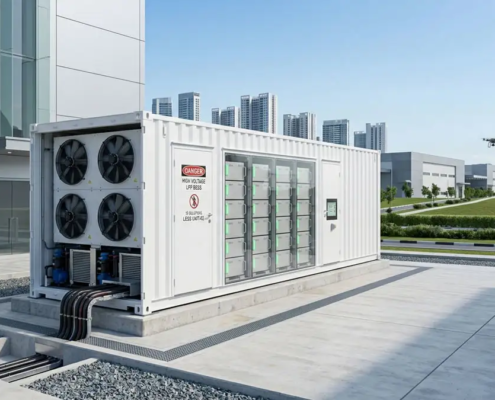 https://anengjipower.com/wp-content/uploads/2026/06/modular-commercial-solar-battery-storage-cabinet.webp
675
1000
Charging Station Engineer
https://anengjipower.com/wp-content/uploads/2025/09/anengji-dc-fast-charging-station-manufacturer-and-supplier-logo-white-1.png
Charging Station Engineer2026-06-18 09:16:522026-07-03 03:05:13What Is Solar Battery Storage? Complete C&I Engineering Guide
https://anengjipower.com/wp-content/uploads/2026/06/modular-commercial-solar-battery-storage-cabinet.webp
675
1000
Charging Station Engineer
https://anengjipower.com/wp-content/uploads/2025/09/anengji-dc-fast-charging-station-manufacturer-and-supplier-logo-white-1.png
Charging Station Engineer2026-06-18 09:16:522026-07-03 03:05:13What Is Solar Battery Storage? Complete C&I Engineering Guide


Leave a Reply
Want to join the discussion?Feel free to contribute!