
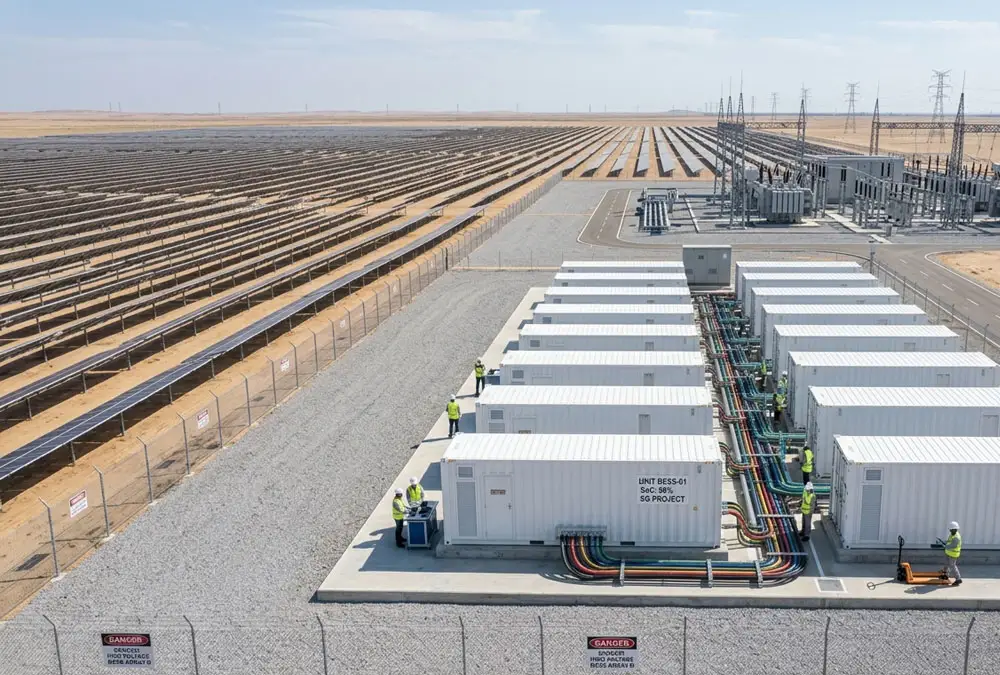
Introduction Large Scale Solar
Grid electricity prices are rising fast. Factory owners and investors feel the strain. Building a large scale solar facility is no longer just about green corporate public relations. It is a vital strategy for long-term power cost control. Multi-megawatt projects help major power users lock in fixed electricity rates for decades. However, developing these assets presents clear operational hurdles. You must navigate grid connection queues, secure land leases, and manage sudden weather shifts. Solar generation drops off when peak factory loads surge. That is why pairing large scale solar with energy storage is quickly becoming standard practice.
What Is Large Scale Solar and How Do Large Scale Solar Systems Work?
System capacity dictates every engineering choice, from transformer sizing to high-voltage protection schemes. Knowing your target operational scale helps prevent equipment mismatch.
Definition of Large Scale Solar Projects
Large-scale PV projects feature ground-mounted or roof-top solar arrays exceeding 1 megawatt in total capacity. Unlike small residential systems, these plants export power directly to distribution networks or supply heavy industrial loads.
| System Category | Capacity Range | Primary Application | Direct User Advantage |
|---|---|---|---|
| Residential Solar | 3 kW – 15 kW | Single-phase home connections. | Cuts home utility bills instantly. |
| Commercial Solar | 100 kW – 1 MW | Commercial buildings and factories. | Offsets daytime commercial power tariffs. |
| Large-Scale Solar Systems | 1 MW to 500+ MW | High-voltage grid connection networks. | Supplies bulk industrial power affordably. |
How Large Scale Solar Technology Works From Solar Panels to Grid Connection
Converting sunlight into AC electricity requires a controlled equipment sequence:
Power Generation Flow Sequence:
PV Modules (DC Generation) → DC Combiner Boxes → Central or String Inverters → Step-Up Transformer → Grid Connection Switchgear.
You might wonder how a large PV plant generates reliable income. It sells electricity via Power Purchase Agreements or offsets factory grid usage to cut peak demand costs.
Key Components of Large Scale Solar Systems
A reliable site relies on balanced hardware integration:
- PV Modules: High-efficiency bifacial panels that absorb direct and ground-reflected light.
- Solar Inverters: Utility-grade string or central inverters converting DC into clean AC power.
- Mounting Structures: Single-axis trackers that follow the sun to boost yield by up to 25%.
- Transformers & Switchgear: Step-up units raising inverter output to medium or high voltage levels.
- SCADA Monitoring: Real-time plant control systems managing grid response and fault detection.
- Energy Storage Infrastructure: High-capacity batteries storing excess energy for later dispatch.
Benefits of Large Scale Solar Systems for Businesses, Developers, and Utilities
Building on-site generation turns an ongoing utility bill into a predictable operational asset.
Lower Energy Costs and Long-Term Electricity Price Stability
Deploying utility scale solar power plant solutions protects businesses from volatile fossil fuel markets. It locks in low energy costs for up to 30 years.
| Metric | Fossil Fuel Power Grid | Large Scale Solar Generation | Direct Economic Advantage |
|---|---|---|---|
| Fuel Costs | Variable fuel surcharges apply. | Zero fuel costs forever. | Eliminates unexpected price hikes. |
| Cost Predictability | Subject to global market shifts. | Fixed cost per kilowatt-hour. | Ensures stable long-term energy budgeting. |
| Carbon Offset Fees | Rising emission penalty risks. | Zero operational emissions. | Avoids carbon regulatory taxes. |
Environmental Benefits and Carbon Reduction Advantages
Recent industry reports confirm that large scale solar projects lead global renewable expansion. These clean assets help manufacturers meet strict ESG mandates and corporate sustainability targets.
Improving Energy Security and Reducing Grid Dependence
Unstable grids threaten heavy manufacturing operations. Combining a grid connected solar system with battery storage forms a resilient microgrid. This setup keeps essential factory machinery running during local grid outages.
Job Creation and Economic Development Opportunities
Evaluating the full large scale solar farm development cost reveals broader community benefits. These installations create engineering jobs and deliver steady lease income to local property owners.
How Large Scale Solar Projects Overcome Major Development Challenges
Complex site development requires clear strategies to handle land limitations and grid capacity rules.
Land Requirements and Site Selection Challenges
Developers often ask how to verify land suitability. A viable parcel needs good solar irradiance, flat terrain, and close proximity to grid substations. Conducting early site surveys prevents costly permitting delays.
Solar Intermittency and Energy Storage Challenges
Solar generation peaks at midday, while industrial power demands often spike in the evening. Adding battery storage captures surplus noon power to dispatch when electricity prices peak.
High Initial Investment and Project Financing Challenges
Upfront capital covers equipment, land prep, and grid upgrades. Working with established large scale solar EPC companies ensures bankable hardware selection, helping developers secure competitive project financing.
Environmental Impact and Wildlife Protection Concerns
Responsible development involves thorough environmental reviews. Engineers design low-impact mounting setups that preserve local vegetation and protect resident wildlife.
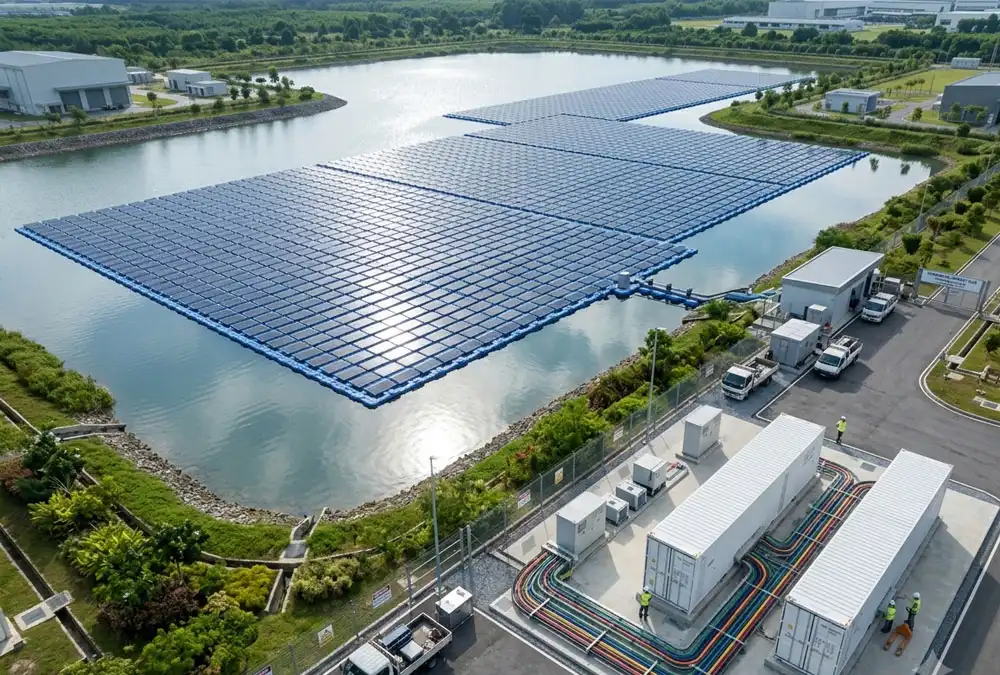
Different Types of Large Scale Solar Systems and Their Applications
Utility Scale Solar Farms
These large ground-mounted arrays supply power to utilities or regional grid operators. They focus on delivering the lowest generation costs over expansive land areas.
Floating Large Scale Solar Systems
Floating arrays are installed on reservoirs and industrial water treatment ponds. They conserve land, reduce water evaporation, and benefit from natural cooling that boosts solar panel efficiency.
Concentrated Solar Power (CSP) Systems
CSP uses mirrors to focus sunlight onto a central thermal receiver. While standard PV leads on cost, CSP remains useful where thermal energy storage is required.
Large Scale Solar With Battery Storage: The Future of Renewable Energy Projects
Unmanaged solar export risks power curtailment. Adding storage turns a standard PV array into a controllable energy asset.
Why Battery Storage Is Becoming Essential for Large Scale Solar
Installing large scale solar plus battery storage systems gives operators control over power dispatch schedules. It reduces grid curtailment and improves project returns.
How Solar Battery Storage Improves Project Revenue
A large scale solar farm with BESS generates income through multiple strategies:
- Peak Shaving: Discharges battery power to reduce peak industrial demand fees.
- Energy Arbitrage: Stores low-cost midday energy to sell during peak price periods.
- Grid Balancing: Provides fast frequency response services to local grid operators.
Choosing the Right Battery Energy Storage System for Solar Farms
Selecting the right storage technology protects project safety and extends system service life.
Key Storage Technology Definitions:
Lithium Iron Phosphate (LFP) Chemistry: The safest, most durable battery chemistry for industrial storage. LFP handles thermal stress exceptionally well (stable up to 500°C) and operates reliably without cobalt.
Alternative Storage Technologies: Vanadium Flow Batteries decouple power from energy capacity for long duration storage (8+ hours), though they require a larger physical site footprint.
Industrial Storage Enclosures for Solar Integration
Pairing an industrial large scale solar energy system with liquid-cooled storage cabinets simplifies site installation and improves safety:
| Product Capacity | Integrated Hardware | Target Installation | Buyer Operational Advantage |
|---|---|---|---|
| 100kWh Outdoor Cabinet | 50kW PCS + Liquid Cooling | Commercial roofs & EV hubs | Compact footprint simplifies tight outdoor setups. |
| 261kWh Industrial Cabinet | 100kW PCS + Smart BMS | Medium factories & microgrids | Higher discharge capacity supports heavy machinery start-ups. |
| 418kWh Modular System | Liquid Cooling + Fire Protection | Heavy manufacturing plants | Modular design scales easily with growing site loads. |
| 1MWh – 5MWh Containers | Containerized PCS + SCADA | Utility solar farms & IPPs | Maximum energy density cuts utility site preparation costs. |
Key Factors to Consider Before Developing a Large Scale Solar Project
Moving a solar project from design to grid connection takes systematic technical evaluation.
Solar Resource Assessment and Energy Yield Prediction
Accurate generation modeling is critical for securing project funding. Engineers use historical irradiance data and software tools like PVsyst to forecast energy production under various weather conditions.
Grid Connection Requirements and Regulatory Approval
Grid interconnection is often a major development bottleneck. Utilities perform detailed grid impact studies to verify system capacity, fault current limits, and voltage stability before issuing approvals.
Selecting the Right EPC Partner for Large Scale Solar Projects
Working with experienced large scale solar EPC companies keeps projects on schedule. Qualified contractors manage Tier-1 equipment procurement, civil works, and grid compliance testing.
Operation and Maintenance Requirements After Installation
Maintaining high system availability over 25 years requires proactive O&M. Maintenance crews perform drone thermal inspections, clean solar panels, and service high-voltage switchgear.
Cost Analysis of Large Scale Solar Projects
What Determines Large Scale Solar System Cost?
Total project expenditure depends on several core variables:
- Project Scale: Larger MW projects achieve economies of scale during equipment purchasing.
- Site Civil Conditions: Uneven or rocky terrain increases foundation piling expenses.
- Grid Connection Distance: Long transmission line extensions increase initial capital costs.
- Storage Integration: Adding battery enclosures raises upfront costs but increases long-term project revenue.
Large Scale Solar ROI and Payback Period
Most commercial installations achieve complete payback in 3 to 6 years. After recovering initial capital costs, the plant generates low-cost clean electricity for decades.
How We Support Large Scale Solar Projects With Complete EPC and Energy Storage Solutions
Managing complex power assets requires full-lifecycle engineering support from feasibility to operation.
Solar Project Engineering and Design Services
Engineering teams conduct site feasibility studies, design single-line diagrams, and build bankable energy yield models customized for your site location.
Large Scale Solar EPC Construction and Commissioning
Experienced solar EPC contractor teams manage procurement, oversee civil construction, and execute full grid synchronization testing for seamless project handover.
Integrated Solar + BESS Solutions for Future Energy Projects
Combining ground-mounted PV arrays with containerized liquid-cooled battery systems delivers an integrated, factory-tested energy solution ready for grid connection.
Why Choose AnengJi Power for Large Scale Solar Solutions?
Experienced Renewable Energy Engineering Team
Our engineering teams bring deep high-voltage expertise to every project, ensuring compliance with international grid connection standards.
Reliable Solar and Battery Storage Technology
We utilize durable LFP chemistry, active liquid cooling systems, and smart BMS controls to maximize plant safety and operational longevity.
Full Lifecycle Project Support From Design to Operation
We provide end-to-end support, from initial site feasibility assessments and grid permitting to long-term O&M performance optimization.
Frequently Asked Questions About Large Scale Solar
How Much Does a Large Scale Solar Project Cost?
Turnkey installation costs typically range from $0.75 to $1.35 per watt for ground-mounted systems, depending on terrain, mounting hardware, and required grid upgrades.
How Much Land Does a Large Scale Solar Farm Require?
Ground-mounted PV installations generally require 4 to 6 acres of land per megawatt of capacity when utilizing tracking systems and high-efficiency bifacial modules.
Is Battery Storage Necessary for Large Scale Solar?
Battery storage is not strictly mandatory for grid export, but it prevents power curtailment and unlocks peak shaving revenue, making projects significantly more profitable.
How Long Can a Large Scale Solar System Operate?
Modern solar power plants are engineered to operate for 25 to 30 years. Quality PV modules carry warranties guaranteeing 80%+ power output after 25 years.
Conclusion: Large Scale Solar + Energy Storage Will Shape the Future of Renewable Energy
Developing a large scale solar facility paired with advanced battery storage is a proven strategy for securing long-term energy independence. It cuts energy costs, protects operations from grid instability, and delivers reliable financial returns for decades.
Accelerate Your Renewable Energy Project Today
Contact our application engineering team today to receive a complete site load assessment, energy yield simulation, and integrated solar + BESS proposal.
 https://anengjipower.com/wp-content/uploads/2026/06/epc-vs-turnkey-solar-project-bess.webp
675
1000
Charging Station Engineer
https://anengjipower.com/wp-content/uploads/2025/09/anengji-dc-fast-charging-station-manufacturer-and-supplier-logo-white-1.png
Charging Station Engineer2026-06-22 07:16:042026-06-24 07:13:17What Is the Difference Between EPC and Turnkey Contract Models in Energy Projects?
https://anengjipower.com/wp-content/uploads/2026/06/epc-vs-turnkey-solar-project-bess.webp
675
1000
Charging Station Engineer
https://anengjipower.com/wp-content/uploads/2025/09/anengji-dc-fast-charging-station-manufacturer-and-supplier-logo-white-1.png
Charging Station Engineer2026-06-22 07:16:042026-06-24 07:13:17What Is the Difference Between EPC and Turnkey Contract Models in Energy Projects? https://anengjipower.com/wp-content/uploads/2026/06/anengji-commercial-solar-plus-storage-benefits-site.webp
675
1000
Charging Station Engineer
https://anengjipower.com/wp-content/uploads/2025/09/anengji-dc-fast-charging-station-manufacturer-and-supplier-logo-white-1.png
Charging Station Engineer2026-06-20 14:34:102026-06-20 14:37:43What Are the Top Benefits of Solar Battery Storage in Factories?
https://anengjipower.com/wp-content/uploads/2026/06/anengji-commercial-solar-plus-storage-benefits-site.webp
675
1000
Charging Station Engineer
https://anengjipower.com/wp-content/uploads/2025/09/anengji-dc-fast-charging-station-manufacturer-and-supplier-logo-white-1.png
Charging Station Engineer2026-06-20 14:34:102026-06-20 14:37:43What Are the Top Benefits of Solar Battery Storage in Factories?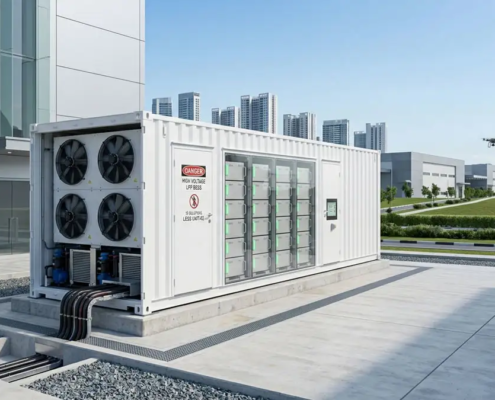 https://anengjipower.com/wp-content/uploads/2026/06/modular-commercial-solar-battery-storage-cabinet.webp
675
1000
Charging Station Engineer
https://anengjipower.com/wp-content/uploads/2025/09/anengji-dc-fast-charging-station-manufacturer-and-supplier-logo-white-1.png
Charging Station Engineer2026-06-18 09:16:522026-07-03 03:05:13What Is Solar Battery Storage? Complete C&I Engineering Guide
https://anengjipower.com/wp-content/uploads/2026/06/modular-commercial-solar-battery-storage-cabinet.webp
675
1000
Charging Station Engineer
https://anengjipower.com/wp-content/uploads/2025/09/anengji-dc-fast-charging-station-manufacturer-and-supplier-logo-white-1.png
Charging Station Engineer2026-06-18 09:16:522026-07-03 03:05:13What Is Solar Battery Storage? Complete C&I Engineering Guide


Leave a Reply
Want to join the discussion?Feel free to contribute!