
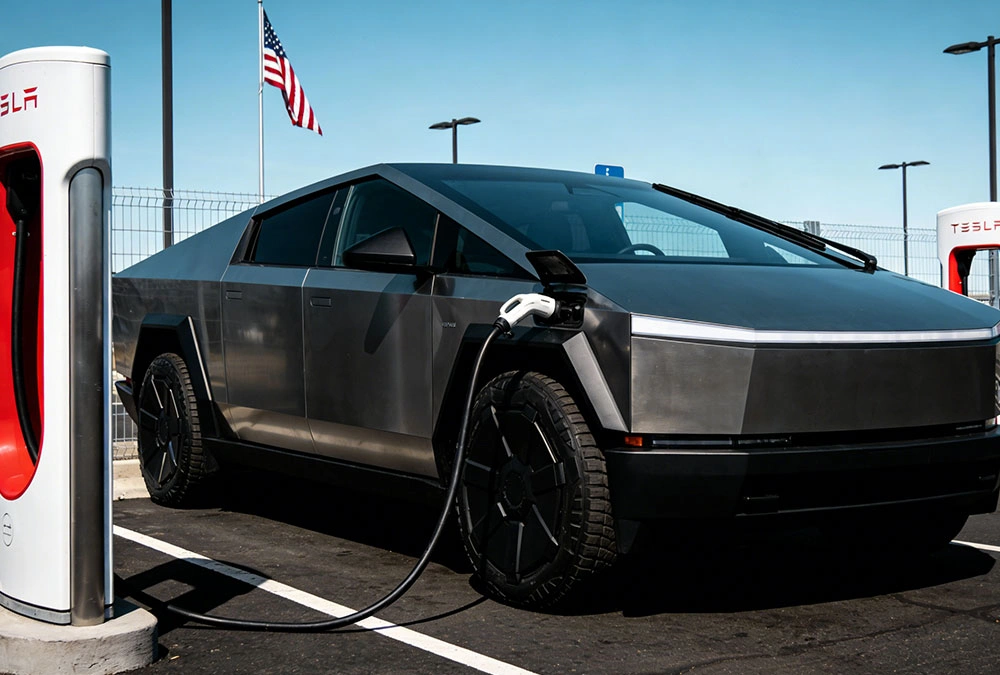
Introduction
For Tesla owners, the transition from a traditional internal combustion engine to an electric vehicle brings a new set of terminologies and habits. Among the most critical yet often misunderstood features is Tesla smart preconditioning. It is not merely a convenience feature for warming up your cabin; it is a sophisticated thermal management protocol designed to protect your vehicle’s most expensive component—the high-voltage battery—while ensuring peak performance.
Whether you are preparing for a frozen morning commute or navigating to a high-speed Supercharger, understanding Tesla smart preconditioning is the key to unlocking the full potential of your EV. This comprehensive guide will dive deep into the science, timing, and best practices of this essential system.
What is Tesla Smart Preconditioning?
At its core, Tesla smart preconditioning is an intelligent automated process managed by your vehicle’s Battery Management System (BMS). Unlike a simple heater that blows warm air into the cabin, smart preconditioning actively circulates coolant through the battery pack to bring the cells to their optimal operating temperature range.
The Science Behind the “Smart” Feature
Lithium-ion batteries are like Goldilocks—they dislike being too cold or too hot.
In Cold Weather: The electrolyte fluid inside the battery cells becomes viscous (thick), slowing down the flow of lithium ions. This increases internal resistance. If you try to charge a cold battery quickly, or demand high power from it, you risk “lithium plating“—a phenomenon that can permanently degrade battery capacity.
The Smart Solution: Tesla smart preconditioning detects the ambient temperature and the current battery temperature. It then decides exactly how much heat energy to generate (using the motor or heat pump) to safely warm the battery. This ensures that when you start driving, you have full access to power and regenerative braking.
This system is “smart” because it adapts. The Tesla smart preconditioning protocol for a daily commute is different from the protocol for Supercharging. For daily driving, it aims for a moderate temperature to ensure efficiency. For Supercharging, it aims for a much higher temperature (often above 100°F/40°C) to allow the battery to accept massive currents (up to 250kW) without damage.
How Long Does Tesla Smart Preconditioning Take?
One of the most common questions from new owners is: “How long do I need to wait?” The answer depends on your goal and the weather conditions. Because the system is dynamic, Tesla smart preconditioning times can vary significantly.
1. The Standard Winter Warm-Up: 30–45 Minutes
For most winter mornings where temperatures are near freezing (32°F / 0°C), the battery requires a substantial amount of thermal energy to wake up.
Optimal Time: 30 to 45 minutes.
Why: It takes time to heat a 1,000-pound battery pack. While the cabin might feel warm in 10 minutes, the battery mass has high thermal inertia. Allowing the full 30-45 minutes ensures that the Tesla smart preconditioning system has fully restored regenerative braking capabilities.
2. Extreme Cold Conditions: 60+ Minutes
In sub-zero environments (below 0°F / -18°C), the battery is in a state of “deep cold soak.”
Optimal Time: Up to 1 hour.
Why: In these conditions, the BMS works overtime not just to warm the battery for performance, but to protect it from physical stress. Shortchanging this process can result in severely limited acceleration and a complete lack of regenerative braking for the first 20-30 miles of your trip.
3. Supercharging Preparation: 15–25 Minutes (Automatic)
When you are on a road trip, speed is everything.
Optimal Time: 15 to 25 minutes (initiated automatically).
Why: When you set a Supercharger as your destination in the navigation, the Tesla smart preconditioning system kicks into high gear. It aggressively heats the battery to prepare for the high-amperage current of a V3 Supercharger. If you don’t allow this time, you might plug in and see a meager 30kW charge rate instead of 150kW+, doubling your charging stop time.
4. Mild & Hot Weather: 15–30 Minutes
Yes, preconditioning matters in summer too.
Optimal Time: 15 to 30 minutes.
Why: In hot weather, Tesla smart preconditioning focuses on cooling the battery and cabin to prevent overheating during driving or charging. A battery that is too hot is just as inefficient as one that is too cold.
How to Activate Tesla Smart Preconditioning: 3 Methods
Tesla offers multiple ways to engage this system, designed to fit different lifestyles and scenarios. Mastering these methods ensures you never waste time or range.
Method 1: The “Set It and Forget It” (Scheduled Departure)
This is the most efficient way to utilize Tesla smart preconditioning for your daily routine.
How to use: In the Tesla App or on the car’s touchscreen, navigate to the Schedule menu. Select “Depart at” and enter the time you leave for work (e.g., 7:30 AM).
The Benefit: This is true “smart” technology. The car calculates exactly when to start charging and when to start heating so that at the exact moment of 7:30 AM, the charging finishes and the battery is perfectly conditioned.
Power Source: Crucially, if your car is plugged in, this method uses wall power (grid energy) to heat the battery, leaving your battery pack 100% full for the drive.
Method 2: The “On-Demand” (Manual App Activation)
Perfect for unpredictable schedules or trips home from the office.
How to use: Open the Tesla Mobile App. Tap on the Climate section and simply toggle it to “On.”
The Benefit: Activating the cabin climate automatically triggers the Tesla smart preconditioning logic for the battery. You don’t need to find a special “battery heater” button; the car knows that if you want a warm cabin, you likely want a ready battery.
Tip: Do this 30-45 minutes before you plan to walk to the car.
Method 3: The “Road Warrior” (Navigation-Based)
This is exclusive to Supercharging and is non-negotiable for fast charging speeds.
How to use: Tap the navigation bar in your car and select a nearby Supercharger station.
The Benefit: The car displays a message: “Preconditioning battery for fast charging.” This tells the Tesla smart preconditioning system to prioritize battery heat over almost everything else, ensuring you arrive at the charger with a battery hot enough to accept maximum power immediately.
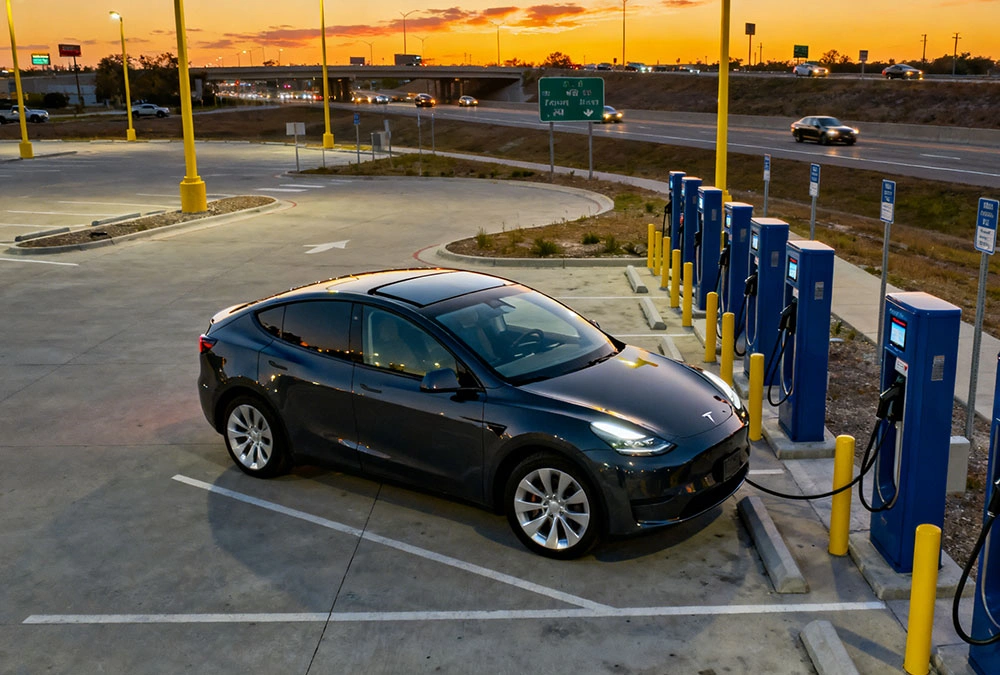
The Critical Benefits of Tesla Smart Preconditioning
Why should you bother waiting or planning ahead? The advantages of utilizing Tesla smart preconditioning extend far beyond a warm seat.
1. Explosive Charging Speeds
Without preconditioning, a cold battery will refuse high-speed charging to protect itself. You could be plugged into a 250kW Supercharger but only receiving 40kW. By using Tesla smart preconditioning, you ensure the internal resistance is low enough to accept the full speed of the charger, potentially cutting your stop time by 50%.
2. Full Regenerative Braking
One of the most jarring experiences for new Tesla owners in winter is lifting off the accelerator and… nothing happens. The car coasts. This is because a cold battery cannot accept the energy generated by the motors. Tesla smart preconditioning warms the battery enough to restore this feature, ensuring your “one-pedal driving” muscle memory remains safe and consistent.
3. Long-Term Battery Health (Degradation Protection)
This is the hidden value. Repeatedly driving hard or charging on a cold battery causes microscopic damage to the anode structure (plating). Over years, this reduces the total range of your car. Consistent use of Tesla smart preconditioning is essentially an insurance policy for your battery’s longevity, ensuring it degrades as slowly as possible.
4. Efficiency and Range
A cold battery is inefficient. The chemical reactions are sluggish. Furthermore, if you start driving cold, the car has to use battery power while driving to heat itself, which consumes massive amounts of energy (up to 6kW). If you precondition while plugged in at home, that energy comes from your house, not your tank. This means you leave the driveway with maximum efficiency available.
Common Tesla Smart Preconditioning Mistakes to Avoid
Even experienced owners fall into traps that can negate the benefits of the Tesla smart preconditioning system.
Mistake #1: The “Unplugged” Precondition
The Scenario: Your car is parked outside, not plugged in, and it’s 10°F. You turn on the climate for an hour. The Result: You enter a warm car, but your range has dropped by 10-15%. The Fix: Preconditioning consumes a lot of power. If you are not plugged into a charger, the energy comes directly from your battery pack. While Tesla smart preconditioning is efficient, physics is physics. Only precondition for long periods while unplugged if you have plenty of range to spare.
Mistake #2: Ignoring the 20% Rule
The Scenario: You park your car with 15% battery overnight. You try to turn on the climate in the morning app, but it fails. The Logic: To prevent you from stranding yourself, Tesla smart preconditioning will generally strictly limit or refuse to activate if the battery State of Charge (SoC) is below 20%. The Fix: Always aim to arrive home with enough charge, or plug in immediately. Keep your battery above 30% in winter to ensure the thermal management systems have the “fuel” they need to work.
Mistake #3: Over-Preconditioning
The Scenario: Running the heat for 2 hours “just to be safe.” The Result: Wasted energy. The Fix: Most data shows that even in deep cold, the benefits of Tesla smart preconditioning plateau after 45-60 minutes. Running it longer simply wastes electricity. Trust the app; once the cabin is at temp and the defrost is done, your battery is likely ready.
Conclusion: Making Tesla Smart Preconditioning a Habit
In the world of electric vehicles, preparation is performance. Tesla smart preconditioning is a marvel of engineering that solves the biggest historical weakness of EVs: their sensitivity to temperature.
By integrating this feature into your daily routine—whether through the effortless Scheduled Departure feature or the disciplined use of in-car navigation—you are doing more than just heating up a machine. You are actively optimizing your energy usage, protecting your investment, and ensuring that every time you press the accelerator, your Tesla responds with the instant torque and efficiency it was designed to deliver.
Don’t just drive your Tesla; partner with it. Use Tesla smart preconditioning wisely, and your battery will thank you with years of reliable, high-performance service.
 https://anengjipower.com/wp-content/uploads/2026/09/AnengJipower-European-BESS-Project-Design-Environment-1.webp
675
1000
Charging Station Engineer
https://anengjipower.com/wp-content/uploads/2025/09/anengji-dc-fast-charging-station-manufacturer-and-supplier-logo-white-1.png
Charging Station Engineer2026-09-24 09:05:462026-09-24 09:08:39Battery Energy Storage System Design Guide for Europe
https://anengjipower.com/wp-content/uploads/2026/09/AnengJipower-European-BESS-Project-Design-Environment-1.webp
675
1000
Charging Station Engineer
https://anengjipower.com/wp-content/uploads/2025/09/anengji-dc-fast-charging-station-manufacturer-and-supplier-logo-white-1.png
Charging Station Engineer2026-09-24 09:05:462026-09-24 09:08:39Battery Energy Storage System Design Guide for Europe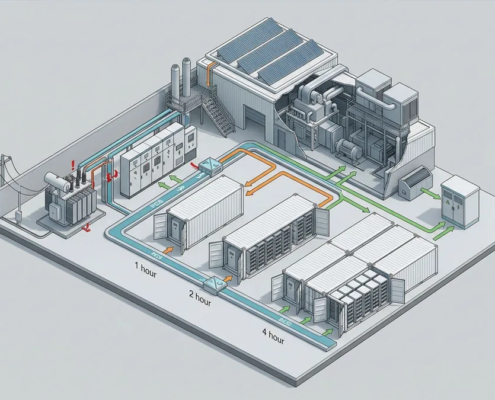 https://anengjipower.com/wp-content/uploads/2026/09/anengjipower-How-BESS-Power-and-Energy-Shape-Storage-Duration.webp
675
1000
Charging Station Engineer
https://anengjipower.com/wp-content/uploads/2025/09/anengji-dc-fast-charging-station-manufacturer-and-supplier-logo-white-1.png
Charging Station Engineer2026-09-23 09:06:532026-09-23 09:08:02BESS Duration Guide: How to Choose 1, 2 or 4 Hours
https://anengjipower.com/wp-content/uploads/2026/09/anengjipower-How-BESS-Power-and-Energy-Shape-Storage-Duration.webp
675
1000
Charging Station Engineer
https://anengjipower.com/wp-content/uploads/2025/09/anengji-dc-fast-charging-station-manufacturer-and-supplier-logo-white-1.png
Charging Station Engineer2026-09-23 09:06:532026-09-23 09:08:02BESS Duration Guide: How to Choose 1, 2 or 4 Hours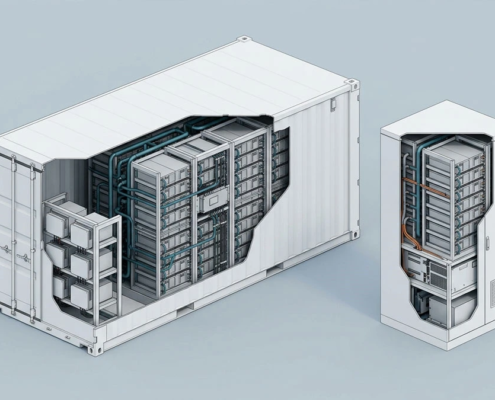 https://anengjipower.com/wp-content/uploads/2026/09/AnengJIPower-Cabinet-vs-Containerized-BESS-3D-Isometric-Structural-Cutaway.webp
675
1000
Charging Station Engineer
https://anengjipower.com/wp-content/uploads/2025/09/anengji-dc-fast-charging-station-manufacturer-and-supplier-logo-white-1.png
Charging Station Engineer2026-09-18 07:19:042026-09-18 07:19:38Cabinet vs Containerized BESS: How to Choose for Large C&I
https://anengjipower.com/wp-content/uploads/2026/09/AnengJIPower-Cabinet-vs-Containerized-BESS-3D-Isometric-Structural-Cutaway.webp
675
1000
Charging Station Engineer
https://anengjipower.com/wp-content/uploads/2025/09/anengji-dc-fast-charging-station-manufacturer-and-supplier-logo-white-1.png
Charging Station Engineer2026-09-18 07:19:042026-09-18 07:19:38Cabinet vs Containerized BESS: How to Choose for Large C&I


Leave a Reply
Want to join the discussion?Feel free to contribute!