
Introduction
The global transition toward a decentralized and electrified grid is no longer a future projection—it is the operational reality of 2026. As an engineer who has spent over 20 years designing high-voltage automotive charging infrastructure and managing power electronics deployments, I have seen the Energy Storage System (ESS) evolve from a secondary backup luxury into the mandatory technical heartbeat of industrial competitiveness. According to the BloombergNEF 2026 Energy Storage Outlook, global battery pack prices have stabilized at an average of $78/kWh, making “Solar + Storage” and “EV + Storage” integrated solutions the most bankable energy strategies in modern history. For Commercial and Industrial (C&I) players, the question is no longer “should we invest?” but rather “which electrochemical or mechanical architecture will best protect our bottom line?”
What Is an Energy Storage System (ESS) and Why It Matters in Modern Energy Systems
Definition of Energy Storage System (ESS)
An Energy Storage System (ESS) is a sophisticated, multi-layered infrastructure designed to capture electricity at the point of production and dispatch it during high-value intervals. In the 2026 industrial context, a professional-grade ESS is far more than a “big battery”; it is a bidirectional power plant that facilitates the decoupling of energy supply from immediate demand. It acts as the critical “shock absorber” for a facility, smoothing out the volatility of both the utility grid and onsite renewable generation.
Core Functions: Peak Shaving, Backup Power, Grid Stabilization
The most immediate financial driver for the adoption of commercial energy storage system solutions is peak shaving. Utility companies typically charge B2B clients “Demand Charges” based on their highest 15-minute power spike in a billing cycle. By discharging stored energy during these peaks, a facility can artificially lower its demand profile, potentially saving 30% to 50% on monthly utility bills.
Beyond cost, an ESS provides critical grid stabilization. Modern high-precision manufacturing equipment is extremely sensitive to harmonic distortion and voltage sags. A high-performance battery energy storage system (BESS) can inject reactive power in milliseconds, filtering grid noise and providing sub-cycle backup power that ensures production lines never experience a “machine trip” during a transient fault.
Why Energy Storage Systems Are Critical for Renewable Energy Integration
The intermittent nature of solar and wind creates the “Duck Curve” phenomenon—where peak generation occurs when industrial demand is often dipping, and vice versa. An ESS performs renewable energy smoothing, capturing midday solar peaks and shifting that energy to the evening production ramp. In 2026, this integration is the only viable path to achieving “Net Zero” mandates without sacrificing 24/7 operational uptime.
Main Types of Energy Storage Systems (ESS Technologies Overview)
Selecting the right technology requires a deep dive into the physics of energy displacement. In 2026, we categorize these systems by their response speed, discharge duration, and physical medium.
Mechanical Energy Storage Systems
Mechanical systems are the “heavy lifters” of the energy grid, optimized for massive capacity and 30+ year lifecycles.
- Pumped Hydro Storage (PHS): Utilizing gravitational potential energy, PHS remains the world’s largest storage medium. While highly efficient for grid-scale seasonal shifting, its geographic requirements make it unsuitable for individual solar plus energy storage system for factories applications.
- Compressed Air Energy Storage (CAES): 2026 has seen the rise of isothermal CAES, which captures the heat of compression in water, achieving a round-trip efficiency (RTE) of over 75% without the carbon emissions of legacy diabatic models.
Electrochemical Energy Storage Systems (Battery Energy Storage System – BESS)
BESS is the dominant sector for commercial battery storage solutions due to its rapid deployment and modularity.
- Lithium-ion Battery: Specifically, LFP (Lithium Iron Phosphate) has captured over 90% of the C&I market. It offers the best balance of safety, density, and cost.
- Sodium-ion Battery: The breakthrough of 2026. With costs nearly 30% lower than lithium and superior performance in cold climates, it is becoming the preferred choice for distributed energy storage systems in high-latitude regions.
- Lead-acid Battery: Largely relegated to legacy UPS systems, though still utilized in some low-cost, short-term backup scenarios.
- Flow Battery: Utilizing liquid electrolytes (like Vanadium), these are the premier long-duration energy storage system (LDES) options. Because power and energy are decoupled, you can increase capacity simply by adding larger tanks.
Thermal Energy Storage Systems
- Molten Salt Storage: Crucial for large solar-thermal plants to provide dispatchable heat.
- Ice Storage Air Conditioning Systems: Factories freeze water at night during low-tariff hours and use the ice for daytime cooling, effectively turning the building’s HVAC system into a thermal battery.
Electrical Energy Storage Systems
- Supercapacitors: Best for high-power, short-duration bursts. They are frequently used in hybrid energy storage systems to bridge the gap between millisecond power sags and the ramp-up time of a main BESS.
- Superconducting Magnetic Energy Storage (SMES): A niche technology for specialized lab-grade power quality where instantaneous power injection is vital.
Battery Energy Storage System (BESS): The Dominant Energy Storage Technology
In my 20 years of field experience, I’ve observed that for 95% of C&I applications, the battery energy storage system for industrial use is the only logical choice due to its “plug-and-play” installation.
Why Lithium-ion Battery Storage Leads the Market
The lithium ion vs flow battery storage debate is usually settled by the 4-hour rule: for any application requiring less than 4 hours of discharge, LFP is the undisputed king. LFP chemistry avoids the thermal runaway risks of older NMC cells, and the energy storage system cost per kWh for LFP has reached a point where payback periods are now consistently sub-5 years.
Key Components: BMS, PCS, EMS Explained
A professional BESS is a technical stack of three systems:
- BMS (Battery Management System): The “internal guardian.” It monitors cell-level voltage and temperature, utilizing AI to predict cell failure before it happens.
- PCS (Power Conversion System): The bi-directional heart. In 2026, grid-forming PCS is the standard, allowing a facility to “Black Start” its operations during a total grid collapse.
- EMS (Energy Management System): The software “brain” that interfaces with the cloud to execute complex financial strategies based on market pricing.
Advantages of BESS for Commercial and Industrial Use
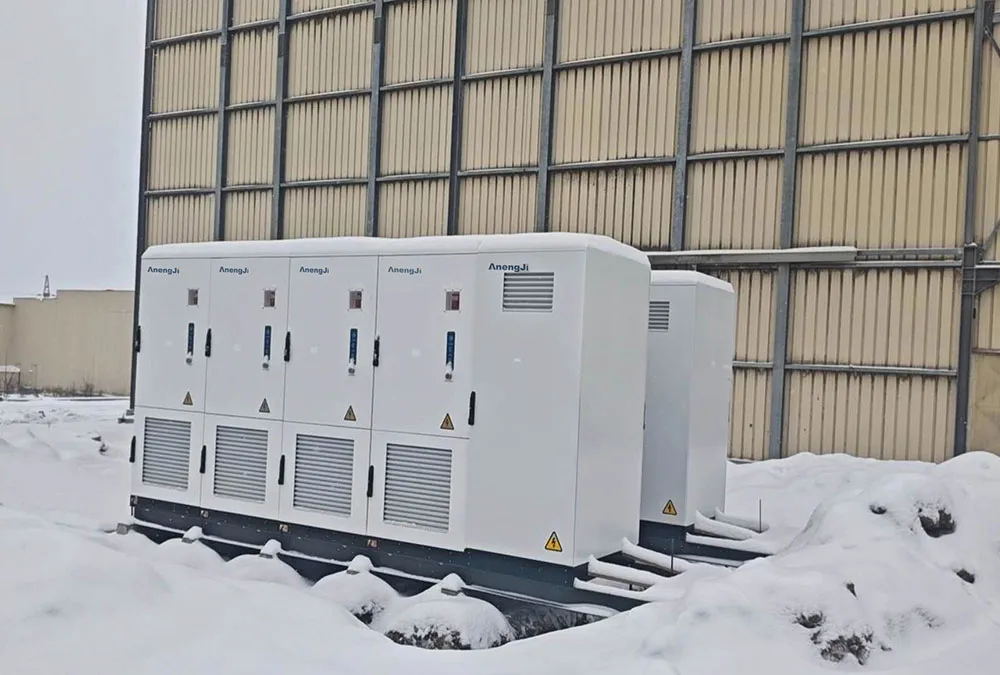
BESS units offer high energy density and a compact footprint, allowing for a containerized energy storage system to be placed in an existing parking lot. They facilitate distributed energy storage systems that allow individual factory wings to manage their own load profiles independently.
Limitations of Battery Energy Storage Systems
The primary limitation remains chemical degradation. While LFP can reach 10,000 cycles, heavy daily cycling for peak shaving will lead to capacity fade over 10–15 years. This necessitates a clear “Cell Augmentation” plan in your initial procurement contract.
Energy Storage Technologies Comparison: Advantages and Disadvantages
Comparison Table: Efficiency, Cost, Lifespan, Scalability (2026 Benchmark)
| Technology | Round-Trip Efficiency (RTE) | Cost (LCOS per kWh) | Lifespan (Years) | Scalability |
| Lithium-ion (LFP) | 92% – 95% | $0.05 – $0.08 | 10 – 15 | Excellent (Modular) |
| Sodium-ion | 86% – 90% | $0.04 – $0.07 | 5 – 8 | Good |
| Vanadium Flow | 70% – 78% | $0.09 – $0.12 | 25+ | Large (Tank-based) |
| Pumped Hydro | 75% – 82% | $0.15 – $0.25 | 50+ | Fixed (Geographic) |
| Supercapacitors | 95% – 98% | High (per kW) | 20+ | Pulse Power Only |
Lithium-ion vs Flow Battery: Which Is Better for Long Duration Storage?
For a long-duration energy storage system (8+ hours) required to run an entire overnight factory shift, Flow Batteries provide a lower Levelized Cost of Storage (LCOS) because the electrolytes do not degrade. However, for most commercial energy storage system solutions focused on 2-hour peak shaving, Lithium-ion remains more efficient.
Mechanical vs Battery Storage: Cost and Deployment Trade-offs
Mechanical systems like CAES require years of geological surveying. In contrast, a containerized energy storage system can be commissioned in under 6 months, providing immediate financial returns.
Energy Storage System Applications in Commercial, Industrial, and Grid Scenarios
Commercial & Industrial (C&I) Energy Storage Applications
The “Solar + Storage” synergy is the cornerstone of the modern factory.
- Peak Shaving: Automatically discharging when the factory’s heavy welding or stamping machines start.
- Demand Charge Reduction: Strategically capping the facility’s peak load to stay within a lower utility tariff bracket.
- Backup Power: Acting as a “Green UPS” to ensure data centers and precision machinery never lose power.
Grid-Scale Energy Storage System Applications
Grid scale energy storage system manufacturers are now pivoting toward “Ancillary Services.” BESS units provide frequency regulation and renewable energy smoothing, replacing the stabilizing mass of retiring coal plants.
Microgrid and Distributed Energy Storage Systems
In 2026, a microgrid energy storage system allows a campus to operate in “Island Mode.” This is vital for hospitals and semiconductor plants that cannot afford even a millisecond of interruption during a regional disaster.
How to Choose the Right Energy Storage System for Your Application
Choosing a system is a 15-year commitment. Focus on these engineering pillars:
Key Factors: Cost (CAPEX vs OPEX)
A low-cost Sodium-ion system might have a lower CAPEX, but if it requires cell replacement every 5 years, the OPEX will destroy your ROI. Always calculate the energy storage system cost per kWh over the total lifecycle.
Power vs Energy Requirements (kW vs kWh)
If you need to stop a motor-start sag, you need High Power (kW). If you need to shift solar energy to the night, you need High Energy (kWh). Sizing the ratio correctly is where most non-engineers fail.
Safety and Thermal Management Considerations
In 2026, NFPA 855 and UL 9540 compliance are non-negotiable. Insist on a liquid-cooled system, as it maintains cell temperature variance within ±2°C, which can extend battery life by 20% compared to air-cooling.
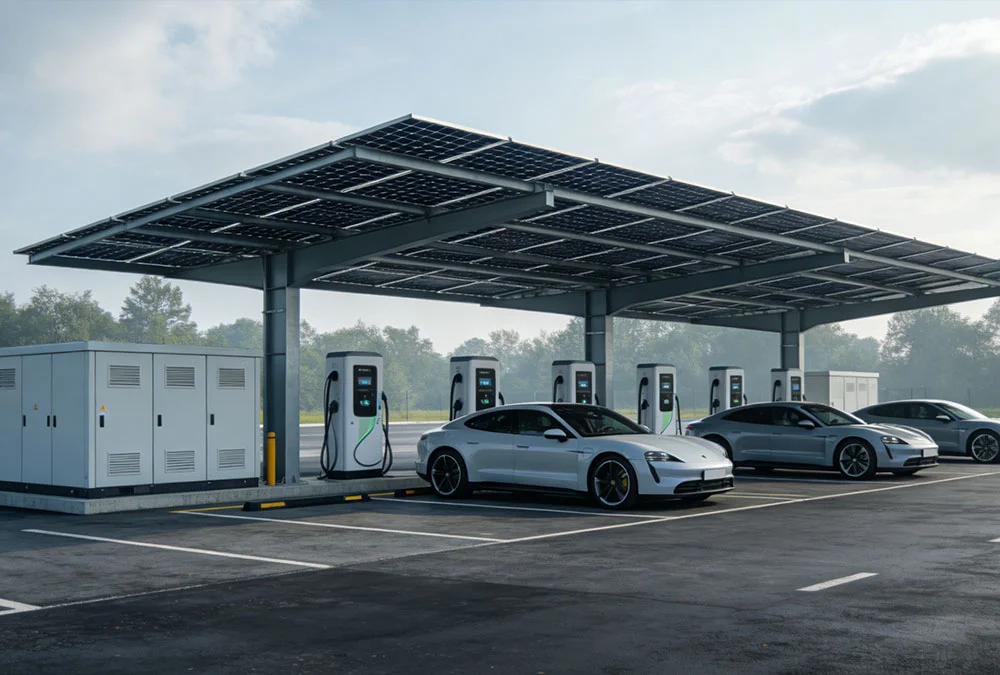
Integration with Solar PV and EV Charging Infrastructure
Ensure your ESS supports the OCPP 2.0.1 protocol for EV charging and has a bi-directional EMS capable of managing solar plus energy storage system for factories logic seamlessly.
Future Trends in Energy Storage Systems and Emerging Technologies
The next frontier for grid scale energy storage system manufacturers is AI integration.
- LDES Innovations: Iron-air batteries targeting 100-hour storage at 1/10th the cost of lithium.
- Solid-State Batteries: Entering the premium stationary market to offer near-zero fire risk for indoor deployments.
- AI-Driven EMS: Systems that automatically trade energy on the spot market, turning your ESS into a revenue-generating profit center.
FAQ: Energy Storage System (ESS) Explained for Buyers and Engineers
What are the main types of energy storage systems?
The main types include battery energy storage systems (BESS), mechanical storage (pumped hydro and compressed air), thermal storage, and electrical storage such as supercapacitors.
Which energy storage system is best for commercial and industrial use?
Battery energy storage systems (especially lithium-ion) are currently the best option for C&I use due to their high round-trip efficiency, fast deployment, and compact footprint.
What is the difference between BESS and other energy storage technologies?
BESS stores energy electrochemically, offering millisecond response times and flexible deployment, whereas systems like pumped hydro are grid-scale seasonal assets requiring decades of construction.
How long do energy storage systems last?
Lithium-ion systems typically last 10–15 years (approx. 10,000 cycles for LFP), while mechanical systems like pumped hydro can exceed 50 years with proper maintenance.
What factors affect energy storage system cost?
The energy storage system cost per kWh is influenced by battery chemistry (Lithium vs. Sodium), system size (kWh), power rating (kW), and fire suppression compliance requirements.
Conclusion: Taking Control of Your Energy Destiny
The right Energy Storage System is a strategic hedge against volatility. Whether you are looking for distributed energy storage systems or a massive containerized energy storage system, the objective is the same: energy independence.
Would you like me to conduct a technical load-profile audit to determine the exact ROI for your facility, or should we begin drafting a 2026 BESS procurement RFP?
 https://anengjipower.com/wp-content/uploads/2026/03/romania-3-5mw-industrial-bess-pcs-array.webp
675
1000
Charging Station Engineer
https://anengjipower.com/wp-content/uploads/2025/09/anengji-dc-fast-charging-station-manufacturer-and-supplier-logo-white-1.png
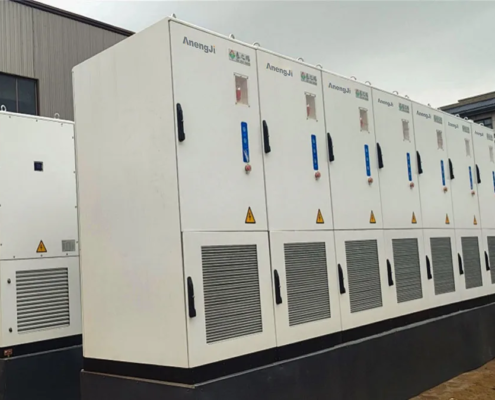
Charging Station Engineer2026-03-06 17:30:032026-03-06 09:27:24Romania 3.5MW/7.3MWh Industrial Energy Storage: High-Capacity Grid Integration
https://anengjipower.com/wp-content/uploads/2026/03/romania-3-5mw-industrial-bess-pcs-array.webp
675
1000
Charging Station Engineer
https://anengjipower.com/wp-content/uploads/2025/09/anengji-dc-fast-charging-station-manufacturer-and-supplier-logo-white-1.png
Charging Station Engineer2026-03-06 17:30:032026-03-06 09:27:24Romania 3.5MW/7.3MWh Industrial Energy Storage: High-Capacity Grid Integration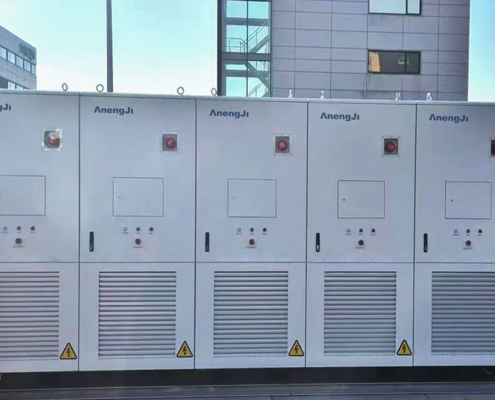 https://anengjipower.com/wp-content/uploads/2026/03/new-zealand-500kw-industrial-bess-outdoor-installation.webp
675
1000
Charging Station Engineer
https://anengjipower.com/wp-content/uploads/2025/09/anengji-dc-fast-charging-station-manufacturer-and-supplier-logo-white-1.png
Charging Station Engineer2026-03-06 07:28:092026-03-06 07:28:31New Zealand BESS: 500kW/1165kWh Frequency Regulation Solution
https://anengjipower.com/wp-content/uploads/2026/03/new-zealand-500kw-industrial-bess-outdoor-installation.webp
675
1000
Charging Station Engineer
https://anengjipower.com/wp-content/uploads/2025/09/anengji-dc-fast-charging-station-manufacturer-and-supplier-logo-white-1.png
Charging Station Engineer2026-03-06 07:28:092026-03-06 07:28:31New Zealand BESS: 500kW/1165kWh Frequency Regulation Solution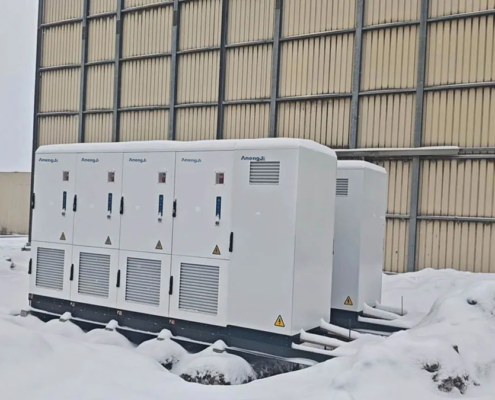 https://anengjipower.com/wp-content/uploads/2026/03/Ukraine-1MW2MWh-battery-energy-storage-system-installation.webp
675
1000
Charging Station Engineer
https://anengjipower.com/wp-content/uploads/2025/09/anengji-dc-fast-charging-station-manufacturer-and-supplier-logo-white-1.png
Charging Station Engineer2026-03-06 07:05:042026-03-06 07:21:46Ukraine 1MW/2MWh Energy Storage: 20ms Seamless Backup for Industrial Resilience
https://anengjipower.com/wp-content/uploads/2026/03/Ukraine-1MW2MWh-battery-energy-storage-system-installation.webp
675
1000
Charging Station Engineer
https://anengjipower.com/wp-content/uploads/2025/09/anengji-dc-fast-charging-station-manufacturer-and-supplier-logo-white-1.png
Charging Station Engineer2026-03-06 07:05:042026-03-06 07:21:46Ukraine 1MW/2MWh Energy Storage: 20ms Seamless Backup for Industrial Resilience


Leave a Reply
Want to join the discussion?Feel free to contribute!