
Introduction
As we navigate the complexities of 2026, the Polish energy landscape is undergoing a radical transformation. Driven by the urgent need to decarbonize and the increasing volatility of the European power market, the deployment of energy storage batteries in Poland has shifted from a niche technological trial to a fundamental pillar of national energy security. For grid operators, industrial manufacturers, and renewable energy developers, these systems represent the “missing link” that balances a high-penetration renewable grid with the rigid demands of a modern economy. Whether it is stabilizing the local distribution network or providing high-power buffers for ultra-fast EV charging hubs, battery energy storage systems (BESS) are now the primary tool for navigating Poland’s complex energy transition.
Energy Storage Batteries in Poland: Market Drivers and 2026 Growth Trends
The surge in demand for energy storage batteries in Poland is not accidental; it is a response to a “perfect storm” of economic and regulatory factors that have converged over the last 24 months.
Rising Electricity Prices Driving Demand for Battery Storage
Poland has historically relied on coal-fired baseload power, but carbon pricing (ETS) and the aging infrastructure of traditional power plants have caused industrial electricity rates to spike. In 2026, businesses are no longer willing to be price-takers. By implementing commercial energy storage batteries in Poland, companies are insulating themselves against the extreme “peak pricing” that occurs when the grid is under stress. Storing cheap energy during low-demand periods and discharging it when prices peak has become a standard survival strategy for the Polish manufacturing sector.
Renewable Energy Expansion and Grid Pressure in Poland
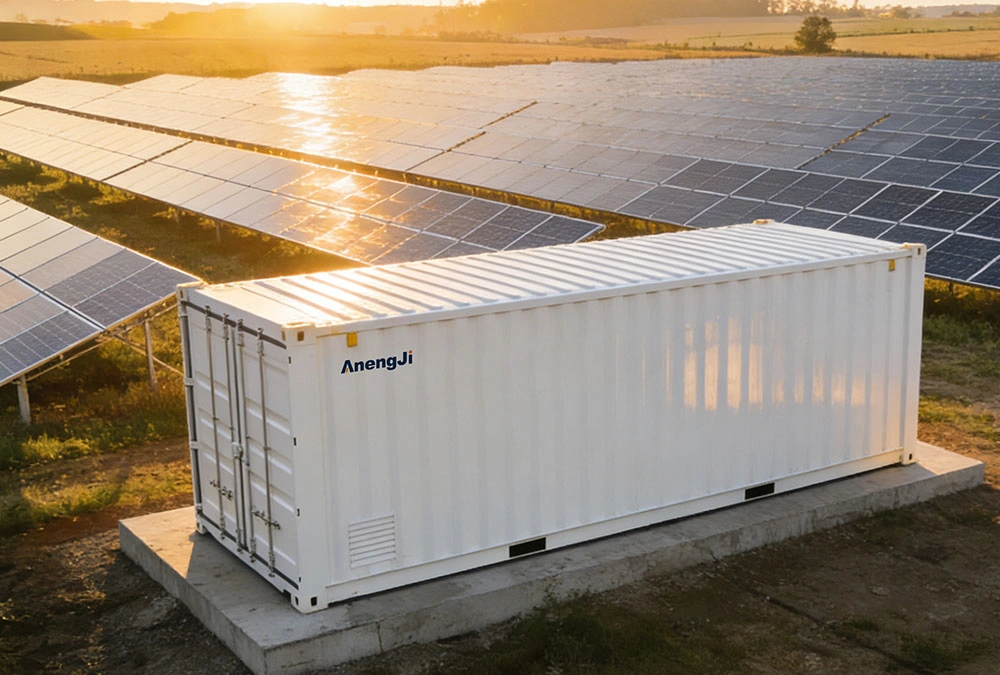
Poland’s solar PV capacity exceeded expectations in 2024 and 2025, but this success created a new problem: grid congestion. The Polish national grid operator (PSE) has increasingly resorted to “curtailment”—forced shutdowns of solar and wind farms—to prevent grid overloads. To solve this, developers are now prioritizing battery energy storage systems for solar farms Poland to capture “lost” energy that would otherwise be rejected by the grid. This ensures that the generated green electrons are sold at the highest value rather than being wasted.
EU Energy Transition Policies Accelerating Energy Storage Adoption
Under the “REPowerEU” and “Fit for 55” frameworks, Poland is under significant pressure to modernize its energy mix. The 2026 regulatory environment includes enhanced subsidies for large scale battery storage and the integration of storage into the “Capacity Market” (Rynek Mocy). This legislative support provides a clear long-term signal to investors that lithium ion battery storage is a bankable asset class.
How Energy Storage Batteries Support Renewable Energy Integration
The primary technical challenge of renewable energy is its intermittency. The wind doesn’t always blow, and the sun certainly doesn’t always shine in the Polish winter.
Solving Solar and Wind Intermittency with BESS
A BESS acts as a massive “shock absorber” for the grid. When there is a sudden drop in wind output, the lithium ion battery storage units can discharge within milliseconds to fill the gap. This sub-second response time is critical for maintaining grid stability and frequency regulation—a task traditional gas or coal plants struggle to perform with the same efficiency.
Increasing Self-Consumption for Solar Projects in Poland
For many industrial sites in Poland, the goal is “Energy Independence.” By pairing onsite solar with industrial energy storage battery solutions Europe, factories can increase their self-consumption rate from a standard 30% to over 80%. This directly translates to lower utility bills and a smaller carbon footprint, which is essential for meeting international supply chain ESG requirements.
Curtailment Reduction and Grid Flexibility Improvements
In 2025, Poland saw record levels of renewable curtailment. In 2026, the focus has shifted to “Grid-Scale” flexibility. Grid-scale energy storage batteries for renewable integration allow the grid to store excess midday solar power and release it during the evening peak (the “Duck Curve” effect). This improves the overall efficiency of the Polish energy system and reduces the need for expensive, carbon-intensive “peaker” plants.
Commercial Benefits of Energy Storage Batteries in Poland
From an engineering and marketing perspective, the most lucrative applications for energy storage batteries in Poland are found in the C&I (Commercial & Industrial) sectors.
Peak Shaving and Load Shifting for Industrial Facilities
For a factory in Katowice or Poznań, peak shaving and load shifting is the most effective way to reduce costs. Utility companies charge heavy fees based on the highest 15-minute power spike of the month. By using a commercial battery storage solution, a facility can discharge the battery during those 15 minutes to “shave” the peak, potentially saving thousands of Euros in monthly demand charges.
Backup Power Solutions for Manufacturing and Data Centers
In 2026, “downtime” is the most expensive word in the industrial vocabulary. Industrial energy storage solutions provide a seamless transition during grid outages, acting as a high-capacity Uninterruptible Power Supply (UPS). Unlike diesel generators, which take seconds to start and require constant maintenance, a BESS provides instantaneous power with zero emissions.
Energy Storage for EV Charging Infrastructure Expansion
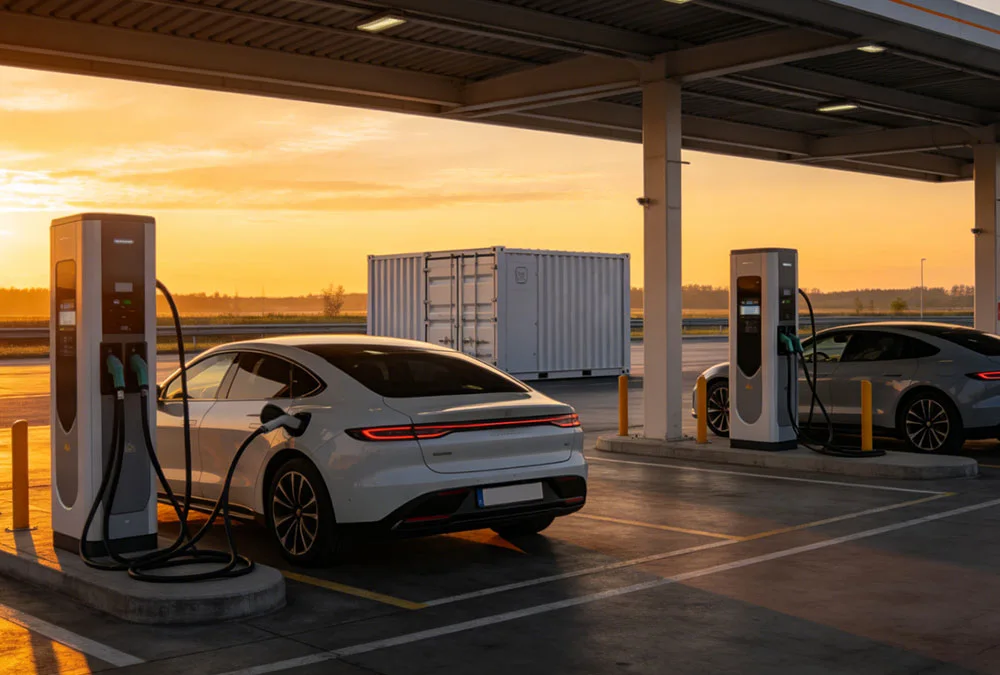
This is where the expertise in charging equipment becomes vital. High-power DC fast chargers (350kW+) place immense strain on the local grid. In many parts of Poland, the existing transformer capacity is insufficient to support multiple chargers. Lithium ion energy storage batteries for EV charging stations act as a power buffer—charging slowly from the grid and discharging rapidly into the vehicle. This avoids the $500,000+ cost of a utility transformer upgrade.
Technical Specifications: Containerized BESS and Liquid-Cooled Solutions
In 2026, the market has moved beyond simple battery cabinets. Professional-grade energy storage batteries in Poland now require sophisticated thermal management and modularity.
The Rise of Containerized BESS Units
For large industrial projects, a containerized BESS (Battery Energy Storage System) is the preferred form factor. These are pre-integrated, 20-foot or 40-foot units that include the battery packs, PCS, and fire suppression systems.
- 1MWh Battery System: Ideal for medium-sized factories and large commercial buildings.
- 5MWh Energy Storage: Designed for heavy industrial sites, solar farms, and regional EV charging hubs.
Liquid-Cooled BESS vs. Air-Cooled Systems
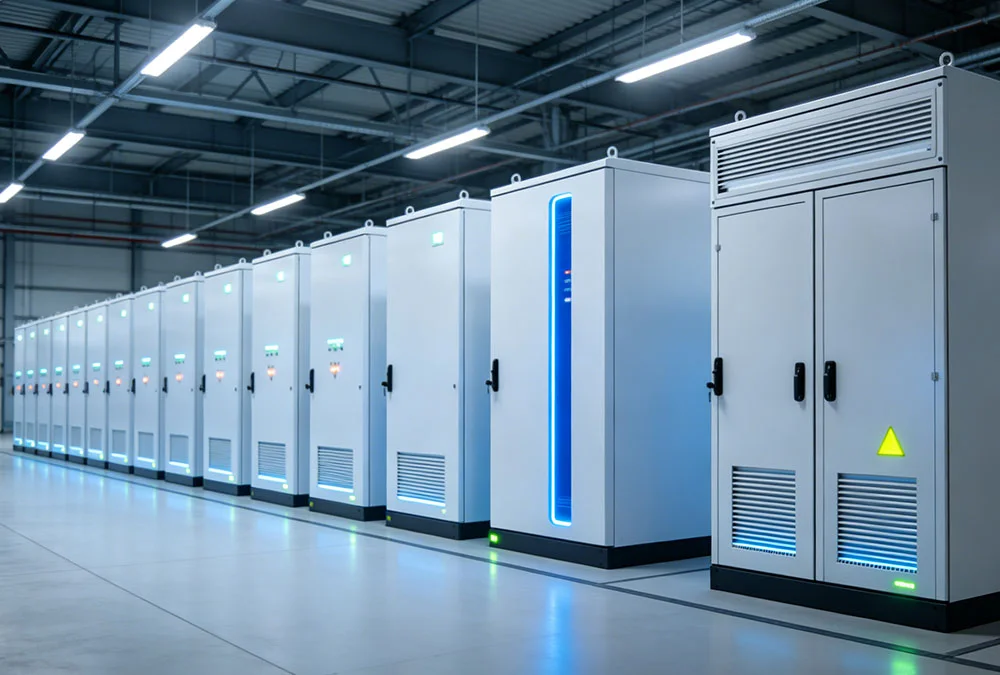
As an engineer, I can confirm that the shift toward liquid-cooled BESS is the most significant technical advancement in 2026. Liquid cooling provides superior temperature uniformity across the cells, which is critical for the Polish climate (hot summers and freezing winters).
- Longevity: Liquid cooling can extend cell life by 20% compared to air-cooled systems.
- Density: It allows for a 5MWh energy storage capacity in the same footprint previously occupied by a 3.5MWh air-cooled unit.
Key Components of Energy Storage Battery Systems (BESS)
Understanding the internal anatomy of a BESS is crucial for evaluating energy storage system manufacturers.
1. Battery System (Lithium-ion Batteries)
The core is the battery cells, typically Lithium Iron Phosphate (LFP). LFP is the preferred chemistry for large scale battery storage because it is significantly less prone to thermal runaway compared to older NMC chemistries.
2. Power Conversion System (PCS) for Grid Interaction
The PCS is the bi-directional inverter. A high-quality PCS is essential for grid stability and frequency regulation, as it must manage complex reactive power requirements of the Polish grid (PSE).
3. Battery Management System (BMS) and EMS
- BMS: Monitors every cell’s voltage and temperature.
- Energy Management System (EMS): The AI-driven software that optimizes solar + storage integration. It decides when to trade energy on the Towarowa Giełda Energii (TGE) to maximize ROI.
Economic Benefits of Energy Storage Batteries in Poland
The decision to install energy storage batteries in Poland is ultimately a financial one.
ROI and Payback Period for Commercial Projects
In the current 2026 Polish market, the energy storage system cost has stabilized.
| Project Scale | Typical Configuration | Estimated Payback (Poland) |
| Medium Factory | 500kWh / 250kW | 5 – 6 Years |
| Heavy Industrial | 1MWh Battery System | 4 – 5 Years |
| EV Charging Hub | Liquid-cooled BESS | 3 – 4 Years |
| Utility-Scale Solar | 5MWh Energy Storage | 6 – 8 Years (via Capacity Market) |
How to Choose a Commercial Energy Storage System in Poland
Selecting the right system requires more than just looking at the energy storage system cost.
1. System Sizing Based on Load and Application
A common engineering mistake is over-sizing. For peak shaving and load shifting, you need a high “C-rate” (power), but for solar time-shifting, you need more kWh (duration).
2. Integration with Solar PV and EV Charging Systems
“AC-Coupled” systems are generally easier to retrofit to existing Polish factories, while “DC-Coupled” systems offer higher efficiency for new-build solar + storage integration projects.
3. Selecting Reliable Energy Storage System Manufacturers
Look for manufacturers that provide:
- Local Support in Poland: Critical for O&M (Operations & Maintenance).
- Tier 1 Cell Quality: Essential for long-term bankability.
- Advanced EMS Software: Capable of handling Polish Day-Ahead market pricing.
FAQ – Energy Storage Batteries in Poland
What are energy storage batteries and how do they work?
Energy storage batteries, or battery energy storage systems (BESS), are large-scale units that store electrical energy (typically in LFP cells) and release it when needed. They consist of a battery pack, a PCS for grid interaction, and a BMS/EMS software layer for safety and control.
Why are energy storage batteries important in Poland?
They are vital because Poland’s grid faces rising electricity prices and intermittency from new solar/wind farms. They provide grid stability and protect businesses from high demand charges.
How much do commercial energy storage batteries cost in Poland?
In 2026, the cost for an installed commercial battery storage system ranges from €250 to €450 per kWh, depending on whether it is a modular cabinet or a liquid-cooled BESS container.
Can energy storage batteries reduce electricity bills?
Yes. They reduce bills through peak shaving (lowering demand charges) and load shifting (using cheap overnight energy during peak hours).
Are battery energy storage systems suitable for EV charging stations?
Absolutely. They are the most effective energy storage for EV charging infrastructure, allowing ultra-fast charging without expensive utility transformer upgrades.
Take Control of Your Energy Future in Poland
The transition to a decentralized, resilient, and carbon-neutral economy is no longer a future goal—it is a current reality. Whether you are an industrial site manager looking to slash demand charges or a renewable energy developer aiming to eliminate curtailment, the strategic deployment of energy storage batteries in Poland is the most effective investment you can make in 2026.
Ready to secure your energy future with professional-grade hardware?
- [Request a 1MWh BESS Technical Proposal] – Get a complete engineering and ROI analysis for your facility.
- [Inquire About Our 5MWh Containerized BESS] – Scale your solar farm or industrial site with liquid-cooled technology.
- [Explore Our Liquid-Cooled BESS Solutions] – View our range of high-performance industrial energy storage battery solutions Europe.
Build your energy resilience today. The grid of tomorrow is already here.
 https://anengjipower.com/wp-content/uploads/2026/03/romania-3-5mw-industrial-bess-pcs-array.webp
675
1000
Charging Station Engineer
https://anengjipower.com/wp-content/uploads/2025/09/anengji-dc-fast-charging-station-manufacturer-and-supplier-logo-white-1.png
Charging Station Engineer2026-03-06 17:30:032026-03-06 09:27:24Romania 3.5MW/7.3MWh Industrial Energy Storage: High-Capacity Grid Integration
https://anengjipower.com/wp-content/uploads/2026/03/romania-3-5mw-industrial-bess-pcs-array.webp
675
1000
Charging Station Engineer
https://anengjipower.com/wp-content/uploads/2025/09/anengji-dc-fast-charging-station-manufacturer-and-supplier-logo-white-1.png
Charging Station Engineer2026-03-06 17:30:032026-03-06 09:27:24Romania 3.5MW/7.3MWh Industrial Energy Storage: High-Capacity Grid Integration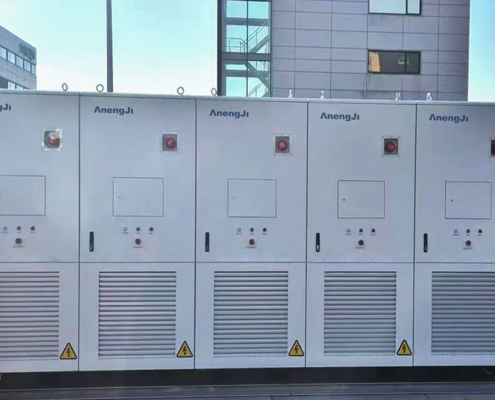 https://anengjipower.com/wp-content/uploads/2026/03/new-zealand-500kw-industrial-bess-outdoor-installation.webp
675
1000
Charging Station Engineer
https://anengjipower.com/wp-content/uploads/2025/09/anengji-dc-fast-charging-station-manufacturer-and-supplier-logo-white-1.png
Charging Station Engineer2026-03-06 07:28:092026-03-06 07:28:31New Zealand BESS: 500kW/1165kWh Frequency Regulation Solution
https://anengjipower.com/wp-content/uploads/2026/03/new-zealand-500kw-industrial-bess-outdoor-installation.webp
675
1000
Charging Station Engineer
https://anengjipower.com/wp-content/uploads/2025/09/anengji-dc-fast-charging-station-manufacturer-and-supplier-logo-white-1.png
Charging Station Engineer2026-03-06 07:28:092026-03-06 07:28:31New Zealand BESS: 500kW/1165kWh Frequency Regulation Solution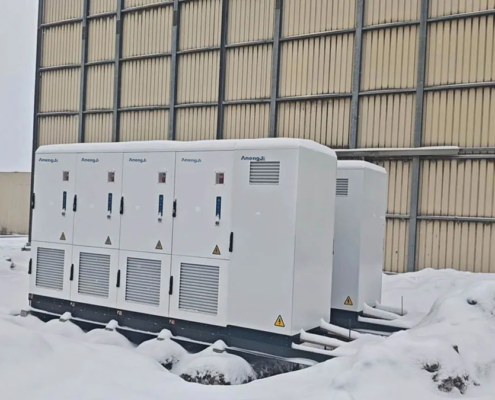 https://anengjipower.com/wp-content/uploads/2026/03/Ukraine-1MW2MWh-battery-energy-storage-system-installation.webp
675
1000
Charging Station Engineer
https://anengjipower.com/wp-content/uploads/2025/09/anengji-dc-fast-charging-station-manufacturer-and-supplier-logo-white-1.png
Charging Station Engineer2026-03-06 07:05:042026-03-06 07:21:46Ukraine 1MW/2MWh Energy Storage: 20ms Seamless Backup for Industrial Resilience
https://anengjipower.com/wp-content/uploads/2026/03/Ukraine-1MW2MWh-battery-energy-storage-system-installation.webp
675
1000
Charging Station Engineer
https://anengjipower.com/wp-content/uploads/2025/09/anengji-dc-fast-charging-station-manufacturer-and-supplier-logo-white-1.png
Charging Station Engineer2026-03-06 07:05:042026-03-06 07:21:46Ukraine 1MW/2MWh Energy Storage: 20ms Seamless Backup for Industrial Resilience


Leave a Reply
Want to join the discussion?Feel free to contribute!