
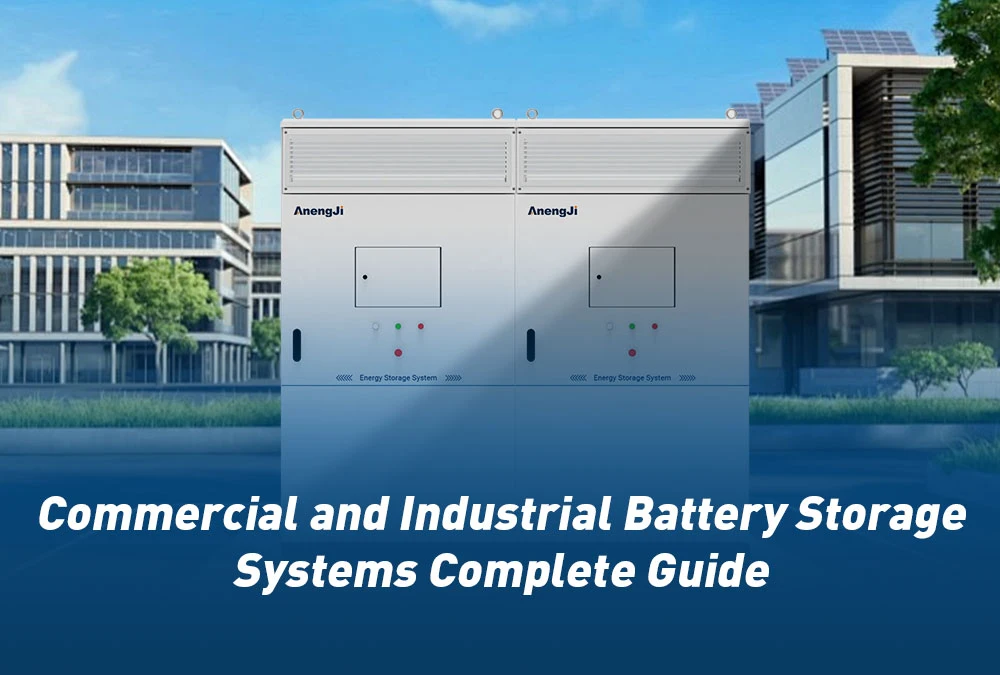
Introduction
As we navigate the complexities of the 2026 global energy transition, the landscape of power management for businesses has fundamentally shifted. High electricity volatility and the push for aggressive decarbonization have made Commercial and Industrial Battery Storage Systems a mechanical and financial cornerstone for modern infrastructure. For facility managers and electrical engineers, understanding how to leverage these systems is no longer optional; it is a prerequisite for operational resilience. According to recent insights from McKinsey’s Powering the Future report, the battery energy storage market is projected to reach significant double-digit growth as developers and industrial players realize that energy is no longer just an overhead cost—it is a strategic asset that can be optimized for profit. In this guide, we will analyze why the 261kWh battery storage system for commercial applications has become the industry standard for those seeking high ROI and technical reliability.
What Are Commercial and Industrial Battery Storage Systems (C&I Energy Storage Systems)?
Definition of C&I battery energy storage systems (BESS)
A Commercial and Industrial Battery Storage System, often referred to as a battery energy storage system (BESS), is a high-capacity energy reservoir designed to store electricity from the grid or renewable sources (like solar) and discharge it when needed. Unlike small residential units, these systems are engineered for “Behind-the-Meter” (BTM) applications, providing the high-current output required by industrial machinery, cooling systems, and large-scale lighting.
How they differ from residential and utility-scale systems
The primary difference lies in the duty cycle and scale. Residential systems (usually <20kWh) focus on simple backup. Utility-scale systems (>10MWh) focus on grid stabilization. C&I systems sit in the “sweet spot”—typically ranging from 100kWh to 5MWh. They are characterized by sophisticated commercial energy storage solutions that must balance rapid discharge for peak shaving with long-duration storage for energy arbitrage.
Why factories and businesses are rapidly adopting energy storage
The adoption is driven by the “energy trilemma”: cost, reliability, and sustainability. As grid infrastructure ages, businesses face increasing “Demand Charges”—fees based on the highest 15-minute peak of energy usage. A lithium battery storage for commercial use allows a factory to decouple its power needs from the grid’s most expensive hours, directly impacting the bottom line.
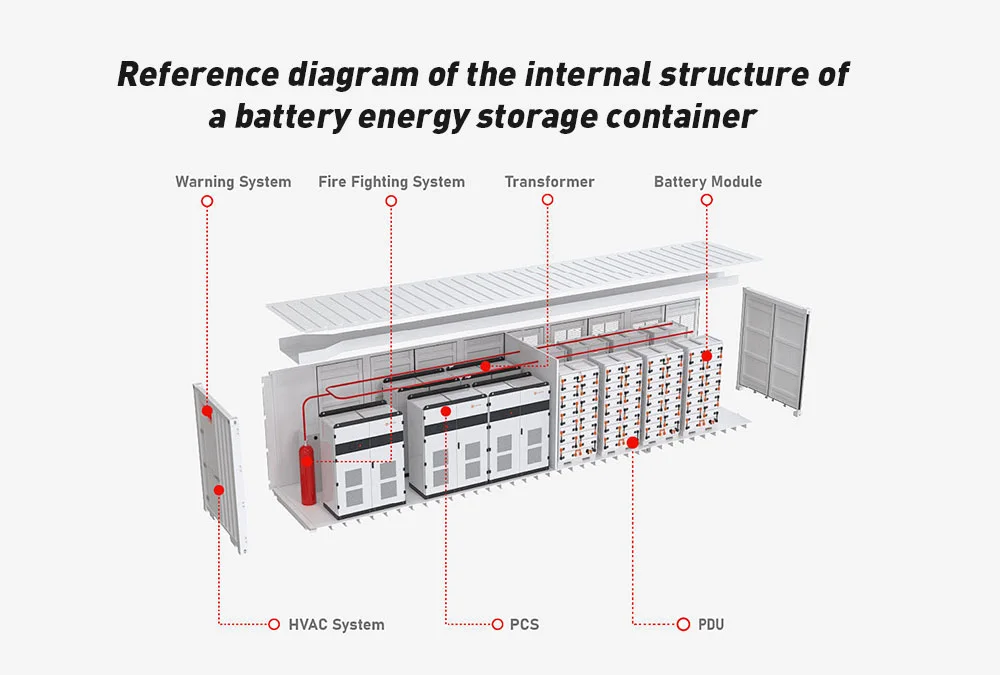
Key Components of Commercial and Industrial Battery Storage Systems (BMS, PCS, EMS Explained)
To understand the commercial and industrial battery storage system cost per kWh, one must look at the sophisticated hardware and software integration that determines the system’s lifespan and efficiency.
Battery System: Lithium-ion cells, LFP vs NMC
Most modern industrial battery storage systems utilize Lithium Iron Phosphate (LFP) chemistry. While NMC (Nickel Manganese Cobalt) offers higher energy density, LFP has become the industry standard for C&I applications due to its superior thermal stability and cycle life (often exceeding 6,000 to 8,000 cycles). In a 2025 technical outlook, McKinsey’s Battery 2035 report emphasized that LFP’s lower risk of thermal runaway makes it the preferred choice for indoor and factory-adjacent installations.
Battery Management System (BMS): Safety and lifecycle management
The BMS is the “nervous system.” It monitors every cell’s voltage, temperature, and State of Charge (SoC). A professional-grade BMS doesn’t just monitor; it actively balances cells to prevent premature degradation, ensuring the 261kWh battery storage system for commercial applications performs consistently over a 10-15 year lifespan.
Power Conversion System (PCS): AC/DC Conversion
The PCS is the “heart” of the system. It handles the bi-directional conversion of electricity—AC from the grid/factory to DC for the batteries, and vice versa. High-quality PCS units feature “grid-forming” capabilities, allowing the system to maintain local frequency and voltage even during a total grid failure.
Energy Management System (EMS): Optimization and Monitoring
The EMS is the “brain.” It uses AI-driven algorithms to predict factory load patterns and weather forecasts. By identifying when to charge (low-cost hours) and when to discharge (peak-cost hours), the EMS maximizes the C&I battery storage system for factories energy savings.
Thermal Management & Fire Protection Systems
Industrial systems generate heat during rapid discharge. Modern solutions utilize liquid cooling rather than air cooling to maintain a uniform temperature within ±3°C across all cells. Coupled with aerosol fire suppression and explosion-proof venting, these systems meet rigorous international safety standards like UL 9540A.
How Commercial and Industrial Battery Storage Systems Reduce Energy Costs
Peak shaving and demand charge reduction
This is the most common application. Peak shaving energy storage monitors the facility’s power intake. When the load spikes—for example, when a heavy conveyor system starts—the battery discharges to cover the excess, keeping the grid-drawn power below a specific threshold and slashing demand charges by up to 40%.
Time-of-use (TOU) energy arbitrage
In many regions, electricity at 2:00 PM costs five times more than electricity at 2:00 AM. Solar battery storage for businesses allows companies to store “free” solar energy during the day or cheap grid power at night, then use it during the most expensive “peak” windows.
ROI and Payback Period for Industrial Users
Based on 2026 market data, the typical ROI for a well-sized system is between 3 and 5 years.
| Financial Metric | Without BESS | With C&I BESS Solution |
| Peak Demand Charges | $15,000/month | $9,000/month |
| Energy Usage Cost | $45,000/month | $38,000/month (via Arbitrage) |
| Avoided Downtime Cost | High Risk | Near Zero |
| Annual O&M Costs | N/A | Reduced by 60% (Liquid Cooling) |
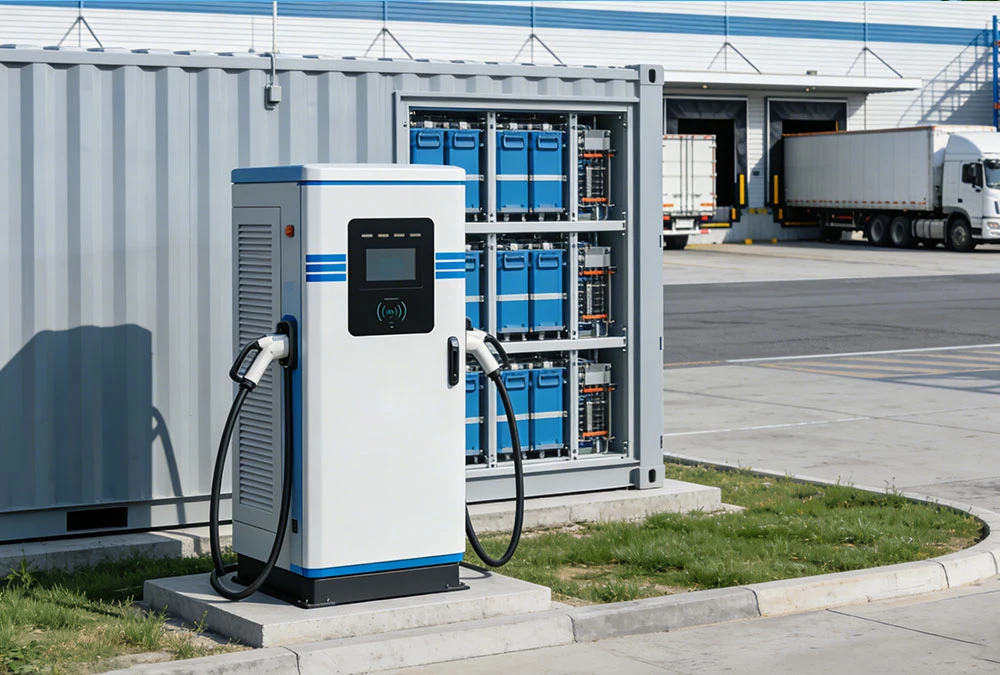
Types of Systems: Containerized vs Cabinet Energy Storage
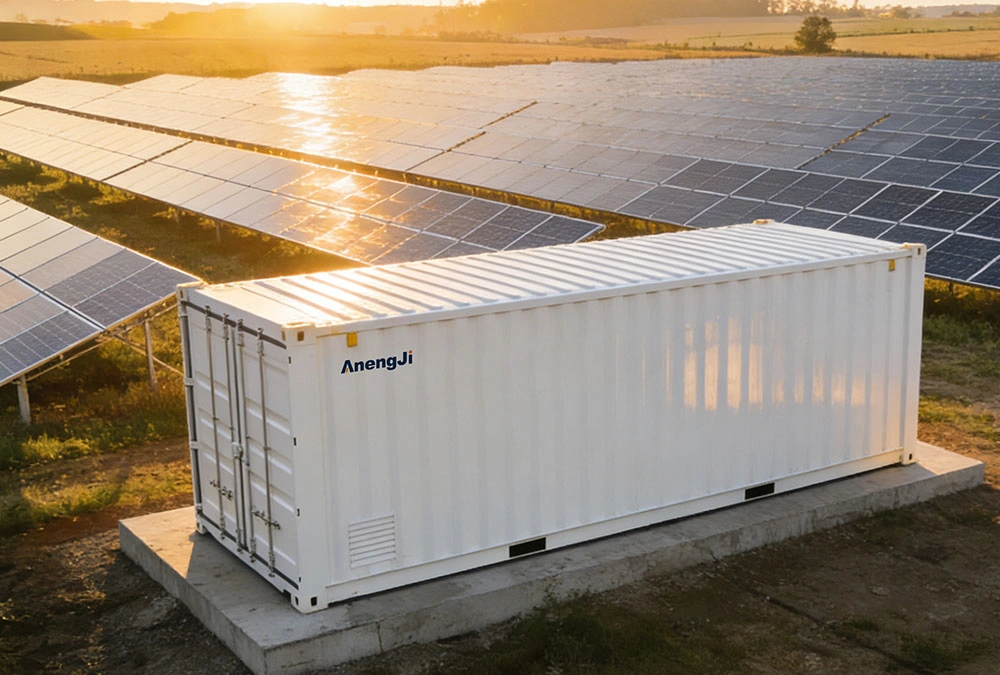
Containerized battery energy storage systems (1MWh–5MWh+)
A containerized battery energy storage system for industrial use is essentially a power plant in a box. Usually housed in 20ft or 40ft shipping containers, these are ideal for massive manufacturing sites or regional microgrids. They offer the highest energy density and are “plug-and-play” after being dropped onto a concrete pad.
Integrated battery storage cabinets (50kWh–500kWh)
An energy storage cabinet system is designed for smaller footprints. These units, such as the 261kWh integrated cabinet, are roughly the size of a large industrial refrigerator. They are perfect for commercial buildings, retail centers, and smaller factories where space is at a premium.
Scalable and Modular Solutions
The hallmark of a best commercial battery storage system supplier for industrial projects is scalability. Modern cabinets can be connected in parallel—up to 16 units in many configurations—allowing a business to start with 261kWh and scale up to over 4MWh as their energy needs grow.
Commercial and Industrial Battery Storage System Applications
The versatility of the modern BESS allows it to adapt to diverse business scenarios:
1. Manufacturing Plants (Energy Cost Optimization)
Factories with high-torque motor startups face massive penalties. By using battery storage for factories, they can smooth out their load profile, improving their “Power Factor” and avoiding utility-imposed fines.
2. EV Charging Stations (Power Buffering)
High-speed DC chargers (180kW+) can put immense strain on local transformers. An energy storage for EV charging stations solution acts as a buffer, slowly pulling power from the grid and “dumping” it quickly into the EV, avoiding million-dollar grid transformer upgrades.
3. Microgrids and Islanding
For island resorts or remote industrial parks, a BESS allows for the integration of solar and wind with diesel generators. The system can operate in “off-grid” mode, providing emergency backup for critical medical equipment or industrial production lines without the need for a transformer.
4. Data Centers and Warehouses
Data centers use lithium battery storage for commercial use to replace aging lead-acid UPS systems. These systems provide 24/7 reliability and can participate in “Virtual Power Plants” (VPP) to generate revenue when the grid is stressed.
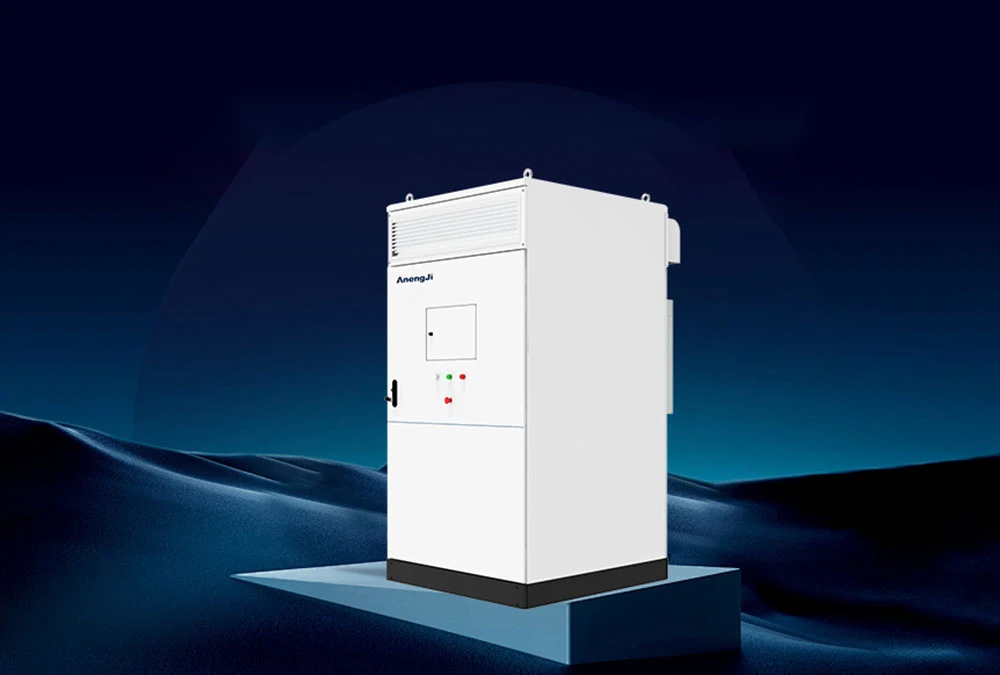
C&I Battery Storage System: 261kWh Integrated Solution
When evaluating the best commercial battery storage system suppliers for industrial projects, AnengJi’s 261kWh Integrated Solution stands out as a flagship for mid-to-large-scale commercial use.
Product Overview: 261kWh All-In-One Cabinet
This system represents the next generation of C&I energy storage solutions. It integrates the PCS, battery racks, BMS, and TMS into a single unit.
Key Technical Features:
- All-Liquid Cooling Technology: Achieving a power density increase of over 20% compared to air-cooled systems, while reducing auxiliary energy consumption by 30%.
- Extreme Adaptability: Engineered to perform in harsh environments, from 4000m high-altitude regions to extreme heat (+50°C), with IP55 and C5 anti-corrosion ratings.
- Smart Cloud-Edge EMS: Features centralized monitoring and predictive maintenance via the S-Miles cloud, reducing on-site maintenance time by 60%.
- Unmatched Safety: A “Triple-Level, Six-Category” safety design including early warning sensors, rack-level fire suppression, and explosion-pressure relief.
Scalability and Integration
For larger industrial parks, the AnengJi system supports up to 16 units in parallel, scaling the capacity from 261kWh up to 4.1MWh. This modularity ensures that the containerized battery energy storage system for industrial use footprint is minimized while power output is maximized.
Safety, Reliability, and Standards
Engineers must prioritize safety above all. A commercial and industrial battery storage system is a high-energy asset that requires:
- Multi-level BMS Protection: Monitoring at the cell, module, and rack levels.
- Fire Protection: Integrated aerosol or gas-based suppression that can be triggered at the cabinet level.
- Certifications: Always ensure your supplier holds CE, IEC 62619, and UL 9540 certificates to ensure local grid compliance.
- Quiet Operation: Modern high-end cabinets operate at noise levels ≤60 dB, making them suitable for commercial areas and office parks.
Future Trends: The Growth of EV Charging + Storage Synergy
As we look toward 2030, the synergy between renewable energy storage solutions and EV infrastructure will be the dominant trend. The concept of the Virtual Power Plant (VPP) is becoming a reality. In a VPP, thousands of commercial energy storage solutions are linked via the cloud. When the grid is stressed, the VPP operator discharges these batteries collectively, and the business owners receive direct payments for their contribution to grid stability.
Furthermore, the rise of Long-Duration Energy Storage (LDES) will see systems providing 8-12 hours of backup, further increasing the energy independence of industrial facilities.
Why Businesses Are Investing in Commercial and Industrial Battery Storage Systems Now
The window for early-adopter advantage is closing as energy storage becomes a standard industrial requirement.
- Economic Defense: Protects against the rising “Peak Demand” tariffs that utilities are implementing to fund grid upgrades.
- ESG and Decarbonization: Essential for companies aiming for “Zero Carbon Parks” and sustainable supply chain certification.
- Operational Resilience: Ensures that a 5-minute grid outage doesn’t result in an 8-hour production reset.
FAQ: Commercial and Industrial Battery Storage Systems
1. What is a commercial and industrial battery storage system?
A commercial and industrial battery storage system (C&I BESS) is an integrated unit that stores electricity for businesses to reduce costs, provide backup, and optimize solar energy usage.
2. How much can a factory save with battery storage?
By leveraging C&I battery storage system for factories energy savings, most facilities see a 20% to 50% reduction in their monthly electricity bills, primarily through demand charge capping.
3. What is the difference between containerized and cabinet systems?
Containerized systems are for MWh-level industrial scale. Cabinet systems (like the 261kWh unit) are compact, modular, and designed for easier deployment in commercial and factory settings.
4. What is the typical ROI of a commercial battery storage system?
With current electricity rates and battery costs, the average payback period is 3 to 5 years, depending on the local tariff structure and available incentives.
5. Is battery storage safe for high-temperature environments?
Yes. Systems using advanced liquid cooling and LFP chemistry can operate safely and efficiently even in temperatures up to 50°C and high-altitude locations.
This guide was developed to assist engineers and decision-makers in navigating the Commercial and Industrial Battery Storage Systems market. By focusing on high-safety, liquid-cooled, and modular solutions, businesses can secure a more stable and profitable energy future.
 https://anengjipower.com/wp-content/uploads/2026/03/romania-3-5mw-industrial-bess-pcs-array.webp
675
1000
Charging Station Engineer
https://anengjipower.com/wp-content/uploads/2025/09/anengji-dc-fast-charging-station-manufacturer-and-supplier-logo-white-1.png
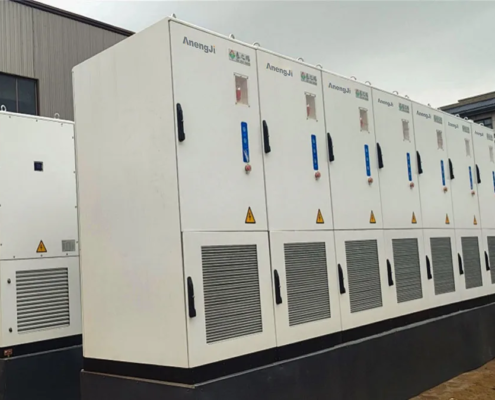
Charging Station Engineer2026-03-06 17:30:032026-03-06 09:27:24Romania 3.5MW/7.3MWh Industrial Energy Storage: High-Capacity Grid Integration
https://anengjipower.com/wp-content/uploads/2026/03/romania-3-5mw-industrial-bess-pcs-array.webp
675
1000
Charging Station Engineer
https://anengjipower.com/wp-content/uploads/2025/09/anengji-dc-fast-charging-station-manufacturer-and-supplier-logo-white-1.png
Charging Station Engineer2026-03-06 17:30:032026-03-06 09:27:24Romania 3.5MW/7.3MWh Industrial Energy Storage: High-Capacity Grid Integration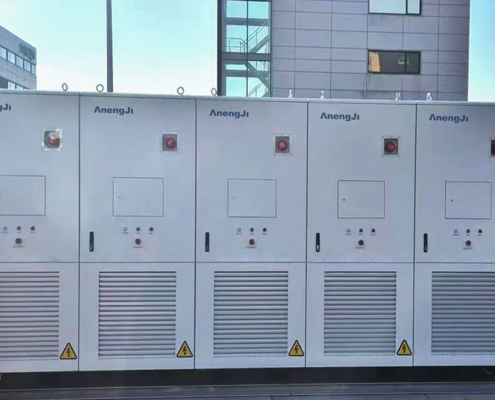 https://anengjipower.com/wp-content/uploads/2026/03/new-zealand-500kw-industrial-bess-outdoor-installation.webp
675
1000
Charging Station Engineer
https://anengjipower.com/wp-content/uploads/2025/09/anengji-dc-fast-charging-station-manufacturer-and-supplier-logo-white-1.png
Charging Station Engineer2026-03-06 07:28:092026-03-06 07:28:31New Zealand BESS: 500kW/1165kWh Frequency Regulation Solution
https://anengjipower.com/wp-content/uploads/2026/03/new-zealand-500kw-industrial-bess-outdoor-installation.webp
675
1000
Charging Station Engineer
https://anengjipower.com/wp-content/uploads/2025/09/anengji-dc-fast-charging-station-manufacturer-and-supplier-logo-white-1.png
Charging Station Engineer2026-03-06 07:28:092026-03-06 07:28:31New Zealand BESS: 500kW/1165kWh Frequency Regulation Solution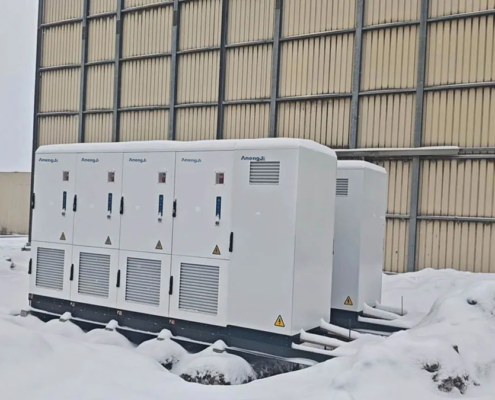 https://anengjipower.com/wp-content/uploads/2026/03/Ukraine-1MW2MWh-battery-energy-storage-system-installation.webp
675
1000
Charging Station Engineer
https://anengjipower.com/wp-content/uploads/2025/09/anengji-dc-fast-charging-station-manufacturer-and-supplier-logo-white-1.png
Charging Station Engineer2026-03-06 07:05:042026-03-06 07:21:46Ukraine 1MW/2MWh Energy Storage: 20ms Seamless Backup for Industrial Resilience
https://anengjipower.com/wp-content/uploads/2026/03/Ukraine-1MW2MWh-battery-energy-storage-system-installation.webp
675
1000
Charging Station Engineer
https://anengjipower.com/wp-content/uploads/2025/09/anengji-dc-fast-charging-station-manufacturer-and-supplier-logo-white-1.png
Charging Station Engineer2026-03-06 07:05:042026-03-06 07:21:46Ukraine 1MW/2MWh Energy Storage: 20ms Seamless Backup for Industrial Resilience


Leave a Reply
Want to join the discussion?Feel free to contribute!